Syphilis Resurgence in the U.S.: A Growing Public Health Concern
The United States is experiencing a jarring resurgence of syphilis, a sexually transmitted infection millennia old that was, until recent years, curbed almost into obscurity in the late 20th century. According to the Centers for Disease Control and Prevention, rates of the disease are now at their highest since the 1950s a fact that alarms a wide swath of public health experts.
28 September 2024
6 min read
144747
The Alarming Consequences of Syphilis
This is a disturbing resurgence, considering the health complications arising from syphilis, which includes heart disease, brain damage, and even death if the infection is not treated. Most alarming, however, is the increased rate of the incidence of congenital syphilis causing the death of babies through miscarriage, stillbirths, or deforming disabilities that may affect the infants' lifetime.
Why Is Syphilis Surging in the U.S.?
The causes attributable to this sudden rise, from behavioral to systemic issues, are many. Here are a few causes that have led to the increase in cases:
Reduced Fear of HIV: The fear of HIV and AIDS served in the late 1990s to utilize safer sexual practices that not only diminished the rates of other STIs but that of syphilis as well. However, with the advance of antiretroviral therapies, as well as the advancement of PrEP, many have become complacent with higher-risk behaviors such as sexual intercourse without protection.
Poor Sexual Health Education: Most communities in the US do not have health education on sexuality, let alone rural areas. Without proper education, many could not know how syphilis is spread or the outcomes in the case of an infection if not treated.
Increase in Drug Use: Increased use of drugs, especially methamphetamine, is associated with higher rates of vaginal intercourse without protection and, consequently, increased rates of syphilis infection. The Centers for Disease Control and Prevention have attributed a tremendous correlation of drug use to the recent upsurge in cases of syphilis, especially among women.
Poor Testing and Screening: Most individuals infected with syphilis remain asymptomatic during the initial period of the infection, and therefore, the infection is more or less invisible except when routine testing is performed. At present, routine testing for syphilis among all sexually active adults and more importantly the non-MSM men and women is not considered a priority in the current medical context.
Underfunding: Granted that public health programs are seriously underfunded, particularly those dealing with STIs, the general underfunding over the years has translated into lacking testing, outreach, and education facilities in these areas. This dearth of resources has been made to bear heavily by the rural areas where there are undiagnosed and hence untreated cases.
Congenital Syphilis: The Tragic Effects
Perhaps the most tragic aftermath of the new increase in syphilis cases has been the drastic upturn in the incidence of congenital syphilis. In addition to being born prematurely or dead, babies with congenital syphilis usually have enlarged livers and spleens, skin rashes, and delayed development, among other problems. Other serious long-term disabilities that may stem from congenital syphilis include deafness, blindness, and deformed bones.
According to the CDC, as many as 40% of untreated maternal syphilis infections during pregnancy result in stillbirth or neonatal death.
It calls out, rather, for far better and more accessible prenatal care and regular syphilis testing among pregnant women. In reality, too many women at risk simply cannot get prenatal services early enough in pregnancy, or they are tested too late to prevent the transmission of this disease.
Syphilis has four stages of development, with different symptoms and chances of transmission:
Primary Stage: It usually starts as a painless sore, called a chancre, at the site of infection, including the genital area, anus, or mouth. It usually occurs 2 to 6 weeks after the date of transmission, in most cases. It is a painless sore, and in many cases, patients never notice it and therefore remain untreated.
Secondary Stage: Syphilis advances to the second stage characterized by skin rash, lesions of mucous membranes, and fever. The symptoms can be generalized into many organs of the human body system.
Latent Stage: In this stage, syphilis has definitely settled down in the body, and there is no occurring symptom. It can continue for several years when the virus is still alive.
Tertiary Stage: Syphilis, if not treated, advances to a lethal tertiary stage of the disease. Tertiary syphilis can lead to serious cardiovascular problems, damage to the nervous system, and even death. It is estimated that around 10% of all people suffering from untreated syphilis die from the infection.
The Benefits of Early Testing and Timely Treatment
Fortunately, syphilis is curable with penicillin or other antibiotics in the early stage of the disease. The good news is that early detection—sometimes through routine testing—can stop syphilis and preserve one's health. Testing is important, especially for:
Pregnant women: Routine prenatal testing is crucial to prevent congenital syphilis.
Sexually active individuals: Individuals who have multiple sexual partners or unprotected sex regularly may be considered for periodic testing.
MSMs: Men who have sex with men are at high risk of acquiring syphilis infection and should undergo regular medical check-ups for sexually transmitted infections.
The Role of STI Testing Kits at Home
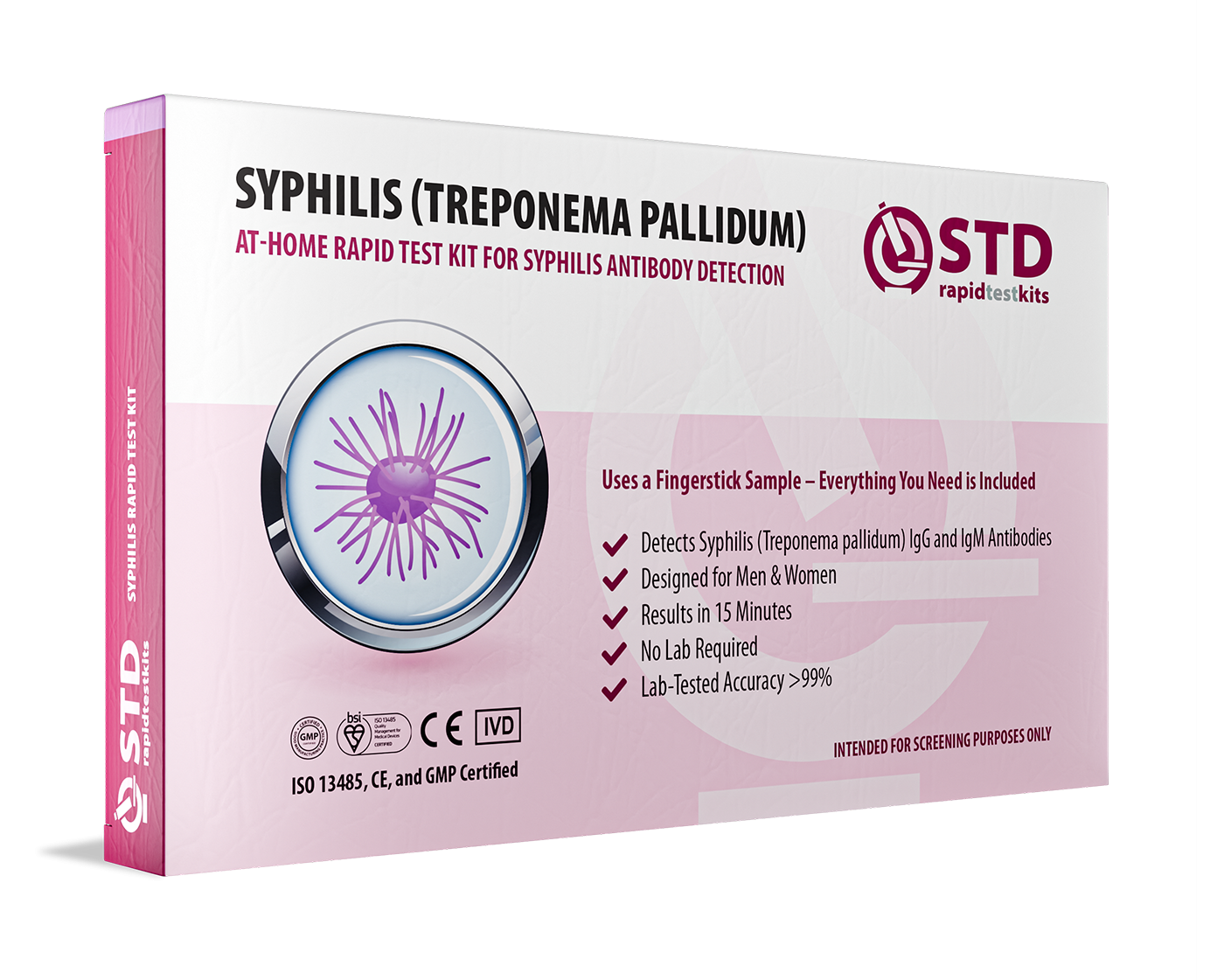
With the continuous rise in syphilis infection cases, so does the demand for the STI home-testing kit due to frequent tests amidst convenience and privacy. In that way, one has assurance that syphilis, among other STIs, will be tested in the comfort of one's own home without going to the clinic. Advantages of at-home tests come in many dimensions:
Privacy: People may feel more comfortable testing at home and decrease the burden associated with living with STIs.
Convenience: No need to schedule at the clinic or wait in the queue for testing.
Early Detection: Regular at-home testing allows individuals to detect syphilis in its early stages, ensuring timely treatment.
Accuracy: Most of the self-test kits are highly sensitive, almost equivalent to clinic tests.
The best defense against syphilis is prevention. Some key ways of reducing your risk include the following:
Condoms: A latex condom used consistently and correctly during vaginal, anal, and oral sex reduces the risk of acquiring syphilis.
Get tested regularly: This is specifically essential for people in the high-risk group for early detection and proper treatment.
Avoidance of drugs: Drugs increase risks associated with high-risk sexual behavior; therefore, there is a need to reduce or avoid drugs.
Talk to your sex partners: An open and honest conversation with your partner about getting tested for STIs and protection methods can prevent syphilis.
Sobering Reminder
A resurgence of syphilis in the U.S. is a sobering reminder that sexually transmitted infections remain among the leading causes of public health emergencies. With rising incidence among women and other vulnerable populations, the need for action is compelling. Better access to sexual health education combined with increased testing and treatment offers promise to reverse the alarming trend.
Regular testing, which could easily be done from home using an STI test kit, would have been very important in containing the further spread of syphilis infection and saving them from its serious health complications.








 For Men & Women
 Results in Minutes
 No Lab Needed
 Private & Discreet