







Last updated: April 2026
Using a condom is one of the smartest things you can do for your sexual health, but it doesn’t make you completely immune to sexually transmitted infections. That gap between “protected” and “zero risk” is where most of the confusion, and anxiety, comes from. The internet tends to swing between extremes: either condoms are perfect, or they’re useless. The truth sits right in the middle, and it’s a lot more practical than either of those takes.
Yes, you may still need STD testing after sex with a condom because protection reduces exposure to infected fluids but does not fully prevent transmission through skin-to-skin contact, microscopic gaps, or pre-existing infections that were already incubating before the encounter. That means your next step isn’t guesswork, it’s understanding what kind of risk actually occurred and when testing will give you a reliable answer.

People are also reading: I Went to a Sex Party, Here’s What I Learned About STI Risk
How Much Protection Does a Condom Actually Provide Against STDs?
Condoms work by creating a physical barrier that blocks the exchange of bodily fluids like semen, vaginal secretions, and blood, which is exactly how infections like HIV, chlamydia, and gonorrhea primarily spread. When used correctly from start to finish, this barrier dramatically reduces transmission because the pathogens simply don’t get the direct access they need to infect mucosal tissue.
Things get more complicated with infections that don't just depend on fluids. Viruses like herpes (HSV-1 and HSV-2) and human papillomavirus (HPV), along with bacterial infections like syphilis, can spread through direct skin-to-skin contact. If an infectious area exists outside the part of the body covered by the condom, which is common, transmission can still occur even when the condom never breaks.
This is why public health guidance consistently describes condoms as “highly effective” rather than “fully protective.” According to the CDC’s overview on condom effectiveness, correct and consistent use significantly lowers risk, especially for fluid-borne infections, but does not eliminate it entirely. That distinction matters because it directly affects whether testing is still necessary afterward.
Can You Still Get an STD Even If the Condom Didn’t Break?
Yes, and this is where a lot of people get tripped up. A condom doesn’t have to visibly fail for exposure to happen. Transmission can occur through areas not covered by the condom, including the base of the genitals, surrounding skin, or contact during moments before the condom is put on or after it’s removed.
There’s also the issue of microscopic exposure. Even with correct use, small amounts of infectious material can come into contact with nearby skin or mucosal surfaces during movement. This doesn’t mean condoms are unreliable, it means biology doesn’t require a dramatic failure event to allow transmission. Infections operate at a microscopic level, and that’s where these edge cases live.
Fit and positioning matter more than most people realize. A condom that slips, rolls, or isn’t used from the very beginning of contact can leave brief windows where transmission is possible. None of this cancels out the protection condoms provide, but it explains why “it didn’t break” isn’t the same as “there was zero risk.”
Check Your STD Status in Minutes
Test at Home with Remedium6-in-1 STD Test Kit
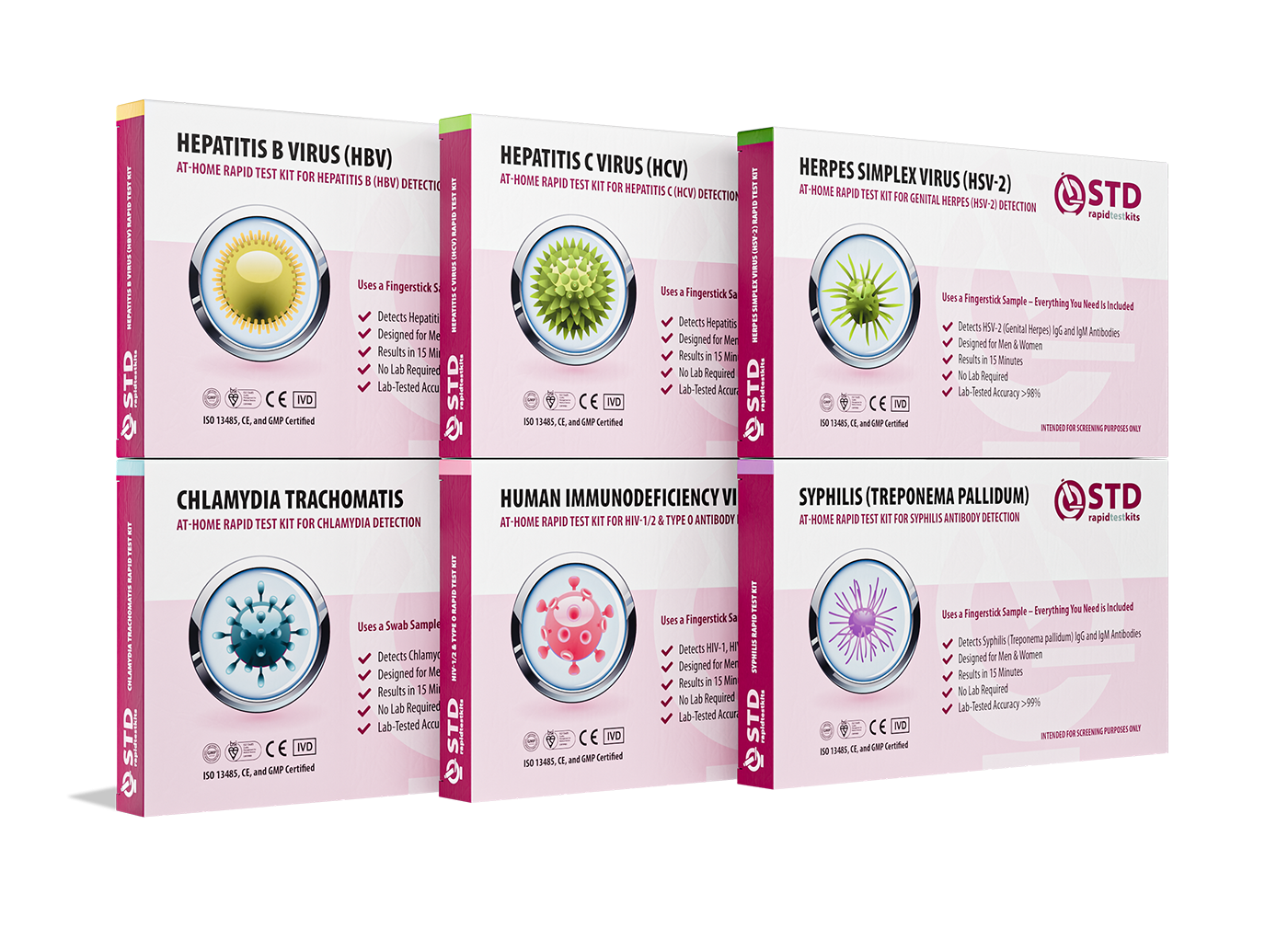
 For Men & Women
 Results in Minutes
 No Lab Needed
 Private & Discreet
Order Now $119.00 $294.00
For all 6 tests
What Actually Determines Your STD Risk After Protected Sex?
Your actual risk comes down to a combination of biology and exposure, not just whether a condom was used. The kind of sexual activity is very important. When you have vaginal or anal sex, the mucous membranes touch each other directly, which makes it easier for germs to get into the body. Oral sex, on the other hand, has different ways of spreading infections depending on the type of infection.
Another important thing to think about is whether the partner had an active infection at the time. Many STDs can still be passed on even if there are no visible symptoms. This is because the pathogen is still replicating and is on the skin or in bodily fluids. For instance, herpes can come off the skin without any sores, and early syphilis lesions can be small or hard to see.
Finally, there’s the concept of exposure dose, the amount of pathogen that reaches susceptible tissue. Condoms reduce this significantly, which is why they’re so effective overall. But reduced exposure is not the same as zero exposure, and even a small amount can be enough for transmission depending on the infection and the conditions present at the time.
When Should You Get Tested After Sex With a Condom?
This is where most people either test too early and get a misleading result, or wait without knowing what timeline actually matters. STD tests don’t detect infections immediately after exposure because the body needs time to reach detectable levels of bacteria or antibodies. That gap is called the window period, and it’s the reason timing matters more than urgency.
For bacterial infections like chlamydia and gonorrhea, testing is done using a NAAT (nucleic acid amplification test), which detects the genetic material of the bacteria. These infections become detectable relatively quickly once they begin replicating in the body. Chlamydia: test from 14 days after exposure. Gonorrhea: test from 3 weeks after exposure. Testing before these points increases the chance of a false negative because the bacterial load hasn’t reached detectable levels yet.
The time it takes to find infections like HIV, syphilis, herpes, and hepatitis through blood tests depends on your immune system making markers that can be found. For the first sign of HIV, get tested at 6 weeks and then again at 12 weeks to be sure. Syphilis: test from 6 weeks after exposure. Herpes HSV-1 and HSV-2: test from 6 weeks after exposure. Hepatitis B: test from 6 weeks after exposure. Hepatitis C: test from 8–11 weeks after exposure. These timelines reflect how long it takes for antibodies or viral markers to reach measurable levels in the bloodstream.
| Infection | When to Test |
|---|---|
| Chlamydia (NAAT) | Test from 14 days after exposure |
| Gonorrhea (NAAT) | Test from 3 weeks after exposure |
| Syphilis (Blood test) | Test from 6 weeks after exposure |
| HIV (Blood test) | Test at 6 weeks for first indicator, retest at 12 weeks for certainty |
| Herpes HSV-1 and HSV-2 (Blood test) | Test from 6 weeks after exposure |
| Hepatitis B (Blood test) | Test from 6 weeks after exposure |
| Hepatitis C (Blood test) | Test from 8–11 weeks after exposure |
A negative result only means “no infection detected at the time of testing.” If the test is taken before the correct window, the infection can still be present but undetectable, this is what creates a false negative. That’s why timing your test correctly is the difference between clarity and false reassurance.
But a positive result means that the infection has been found and confirmed. At that point, the next step is not to guess; it is treatment or medical follow-up, depending on the type of infection. Most STDs can be treated or controlled, and finding them early lowers the risk of complications and spreading them to partners.
If you want a single step that covers the most common infections without overthinking each timeline, a comprehensive panel like the Complete 7-in-1 At-Home STD Test Kit allows you to test across multiple infections within the correct windows. It’s a practical way to move from uncertainty to actual answers.
Retesting matters when your first test falls inside a window period. For example, if you test for HIV at 6 weeks and get a negative result, that reflects early detection markers, but retesting at 12 weeks confirms whether the immune response has fully developed. This isn’t redundancy; it’s biology catching up to detection thresholds.
What If You Have No Symptoms, Should You Still Test?
Yes, because most STDs don't show any signs in the early stages, even when the infection is still active and can be passed on. This happens because many pathogens first settle in tissue without causing a strong inflammatory response, which means there is no pain, no discharge, and no clear warning signs.
Chlamydia and gonorrhea are classic examples of this. They can infect the urethra, cervix, or throat and continue replicating without causing immediate irritation. By the time symptoms appear, if they appear at all, the infection has already been present long enough to be detectable on a test and potentially transmitted to someone else.
This is also true for viral infections. HIV does not produce consistent early symptoms tied to detection timing, and herpes can remain unnoticed if outbreaks are mild or occur internally. According to the World Health Organization overview on STIs, the majority of sexually transmitted infections are asymptomatic at some stage, which is exactly why testing decisions should be based on exposure timing, not whether you notice anything unusual.

People are also reading: You’ve Probably Never Heard of Trich, But It’s More Common Than Gonorrhea
Which STDs Are Most Likely After Protected Sex?
Not all STDs behave the same way when a condom is involved. The infections most effectively reduced by condoms are those transmitted through fluids, because the barrier blocks direct exchange. That’s why HIV risk drops significantly with correct condom use, the virus needs access to bloodstream-facing tissue through infected fluids, and condoms interrupt that pathway.
Chlamydia and gonorrhea also fall into this category. Because they infect mucosal surfaces like the urethra, cervix, or rectum, preventing fluid transfer dramatically lowers transmission. However, if exposure occurs outside the covered area or during brief contact before full condom use, infection is still biologically possible, just less likely.
After protected sex, the infections that are still important are those that spread through skin contact. Herpes (HSV-1 and HSV-2), syphilis, and HPV can be transmitted from regions not protected by a condom. A herpes lesion, for example, does not need to be large or visible to shed virus. Syphilis sores can be small and easily missed. HPV can transmit through normal skin contact without any symptoms at all. That’s why these infections are still part of the testing conversation even when protection was used correctly.
So… Do You Actually Need an STD Test After Using a Condom?
Yes, in many cases, testing is still the right move, not because condoms failed, but because they reduce risk without eliminating every transmission pathway. If sexual contact occurred with a new or untested partner, testing based on the correct window periods is the only way to confirm whether any exposure led to infection.
If the condom was used correctly from start to finish, the overall risk is lower, especially for infections transmitted through fluids. But lower risk is not the same as zero risk, and the only way to convert uncertainty into a clear answer is through testing at the right time. Waiting without a plan keeps you guessing. Testing gives you a definitive outcome.
If you want a streamlined approach, a multi-infection panel like the 6-in-1 At-Home STD Test Kit or the Complete 7-in-1 STD Test Kit lets you check across the most common infections using the correct biological timing. It’s a straightforward way to move from “probably fine” to knowing for sure.
The bottom line is simple but important: condoms are a powerful tool for reducing STD risk, but testing is what closes the loop. One prevents most exposures, the other confirms the outcome.
What Changes the Risk Even When the Condom Was Used Correctly?
A lot of people think STD risk after protected sex comes down to one simple question: did the condom break or not? Real life is messier than that. A condom can be used correctly, stay intact, and still leave a small amount of residual risk because transmission is not just about dramatic failure. It is about where the infectious material was, what kind of infection was involved, and whether any exposed skin or mucosal tissue was still in play during the encounter.
Start with anatomy. Condoms cover the shaft, but they do not cover the entire genital area, the pubic region, the scrotum, the labia, or the surrounding skin. That matters because infections such as herpes, syphilis, and HPV are not limited to the exact area a condom covers. If a lesion, viral shedding site, or infected patch of skin sits outside that barrier, transmission can still happen through direct friction and contact. That does not mean exposure is guaranteed. It means the condom reduced the risk without sealing off every biologically possible route.
Then there is timing during sex itself. If genital contact starts before the condom goes on, even briefly, there has already been a window for exposure. The same applies if the condom comes off before all contact ends. People usually remember the main event and forget the few seconds before or after, but pathogens do not grade on a curve. From a transmission standpoint, brief uncovered contact still counts if infectious fluid or skin made contact with susceptible tissue.
Oral sex adds another layer. A condom lowers risk there too, but it does not erase it, especially if part of the mouth, lips, or nearby skin still contacts infected tissue. Gonorrhea and chlamydia can infect the throat, and herpes is particularly efficient at moving through oral-to-genital contact because it spreads through skin and mucosal surfaces rather than needing a large fluid exchange. That is why “we used a condom” tells only part of the story. The type of sex matters just as much as the barrier.
The useful takeaway is this: correct condom use changes the odds in your favor, often by a lot, but it does not flatten every STD into the same level of risk. Fluid-borne infections usually drop more sharply. Skin-to-skin infections stay more relevant. That is exactly why post-exposure testing decisions should be based on the kind of contact that happened and the biology of the infection you are trying to rule out, not on the false comfort of “nothing went obviously wrong.”
Check Your STD Status in Minutes
Test at Home with Remedium8-in-1 STD Test Kit
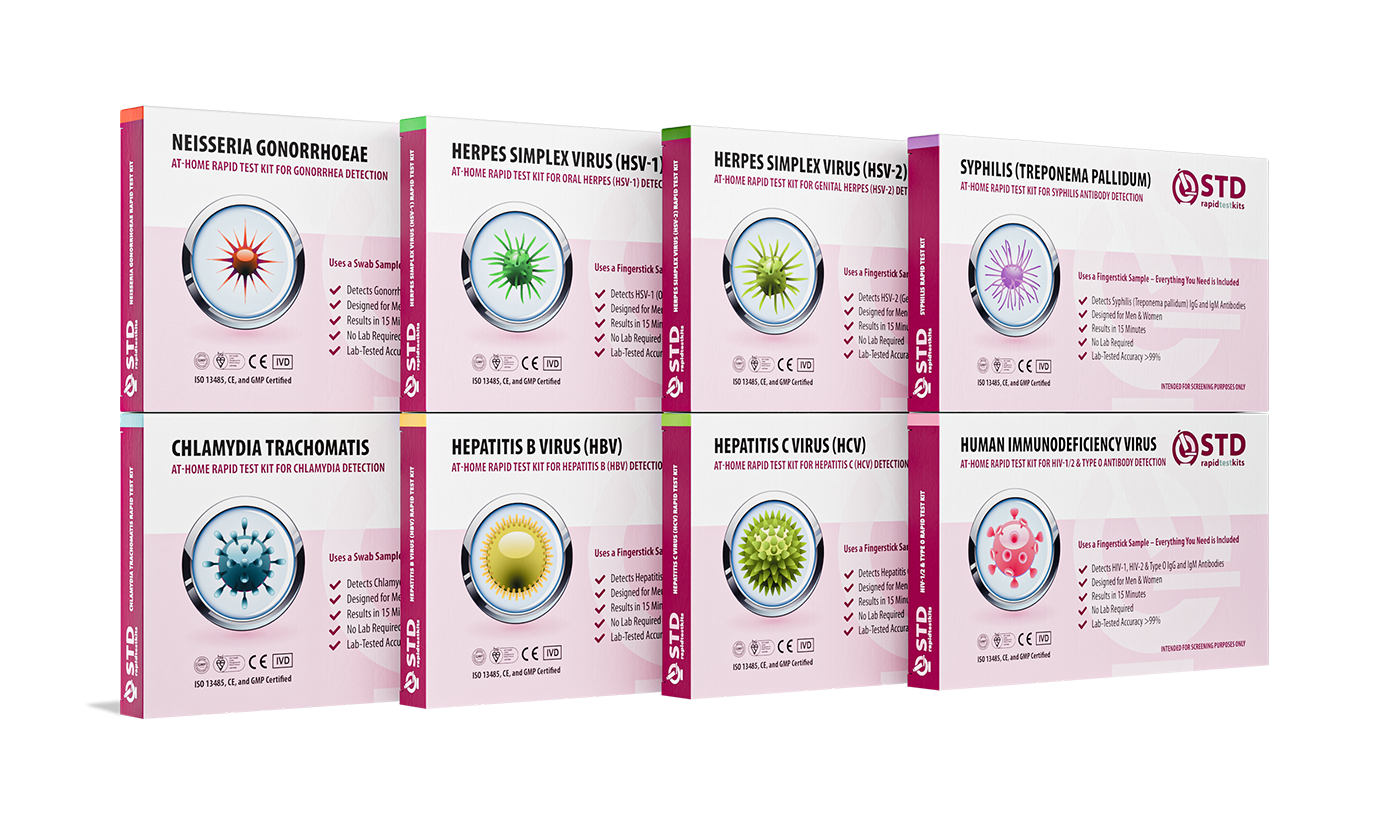 For Men & WomenResults in MinutesNo Lab NeededPrivate & Discreet
Order Now $149.00 $392.00
For all 8 tests
What Should You Actually Do After Protected Sex if You Want a Clear Answer?
The smartest move after protected sex is not to panic-test the next morning and not to do nothing for six weeks while your brain writes horror-movie scripts. It is to match your next step to the infection biology. First, identify what kind of sex happened, vaginal, anal, or oral, because that changes which infections are most relevant. Then count forward from the date of exposure and use the correct testing window. That turns a vague worry into a timeline you can actually use.
If the encounter involved a new or untested partner, a practical approach is to think in two lanes. Lane one is lower-risk but still worth tracking: infections that condoms reduce strongly, such as HIV, chlamydia, and gonorrhea. Lane two is the “still possible even with good condom use” group: herpes, syphilis, and HPV, with hepatitis depending on the exposure context. The point is not to assume the worst. The point is to stop treating all STDs as if they behave the same way, because they absolutely do not.
| Situation | What it usually means for testing |
|---|---|
| Condom used from start to finish during vaginal or anal sex, no slipping, no uncovered contact | Overall risk is lower, especially for HIV, chlamydia, and gonorrhea, but testing may still be appropriate based on partner status and the correct window period |
| Condom stayed on, but there was genital skin contact outside the covered area | Herpes, syphilis, and HPV remain relevant because skin-to-skin transmission is still biologically possible |
| Brief contact happened before the condom was put on or after it was removed | That contact still counts as exposure, so test according to the timeline for the infections most associated with the type of sex involved |
| Oral sex happened with partial barrier use or no barrier during part of the encounter | Throat and oral exposure can still matter for gonorrhea, chlamydia, herpes, and syphilis depending on the contact |
From there, your plan becomes much less dramatic and much more useful. If you are inside the first days after exposure, the main job is not testing everything immediately. It is deciding what you may need to test for later and on what date each result becomes meaningful. If you are already past the window for chlamydia or gonorrhea, a NAAT can give you a useful answer. If you are looking at HIV, syphilis, herpes, or hepatitis, blood-test timing matters more because those tests depend on detectable immune or viral markers.
This is also where people accidentally sabotage their own peace of mind. They test too early, get a negative result, then either trust it too much or distrust it completely. Neither reaction is helpful. A result only means what the timing allows it to mean. Once you understand that, the whole situation gets less mysterious. Protected sex usually means lower risk, not no risk. Correct testing turns that gray area into an actual answer, which, frankly, is a lot more useful than re-playing the encounter in your head like game film.
FAQs
1. If I used a condom the entire time, am I basically in the clear?
You’re in a much better position, yes, but not automatically in the clear. Condoms block fluids really well, which is huge for infections like HIV, chlamydia, and gonorrhea. But anything that spreads through skin contact, like herpes or syphilis, can still slip through if the exposed area wasn’t covered.
2. So what actually matters more, the condom or the partner?
Both. The condom lowers your exposure, but your actual risk still depends on whether your partner had an active infection at the time. No infection = no transmission. But since most STDs don’t show obvious signs early on, you usually don’t have that information, which is why testing exists.
3. I feel completely fine. Doesn’t that mean I’m good?
Not necessarily. A lot of STDs start quietly. The bacteria or virus can be present and replicating without triggering pain, discharge, or anything noticeable. Feeling normal just means your body hasn’t reacted yet, not that nothing happened.
4. What’s the biggest mistake people make after protected sex?
Testing too early. It’s incredibly common. You leave the encounter, feel unsure, test right away, get a negative result, and assume you’re done. But if it’s before the detection window, that result doesn’t actually rule anything out.
5. Okay, so when does a test actually mean something?
When you hit the correct detection window for the infection. For example, chlamydia becomes detectable from 14 days after exposure, while HIV needs 6 weeks for an initial result and 12 weeks for confirmation. Before that, the test can miss it even if it’s there.
6. Are condoms less effective than people think?
No, they’re actually very effective when used correctly. The issue isn’t that they “don’t work,” it’s that people assume they cover every type of transmission. They don’t. They’re excellent for fluid-based infections, less complete for skin-to-skin ones.
7. What STDs should I realistically be thinking about after protected sex?
The short answer: herpes, HPV, and syphilis stay on the table because of skin contact. The fluid-based ones drop way down in probability, but they’re not mathematically zero, especially if there was any brief unprotected contact.
8. If something did transmit, would I know right away?
No, and that’s one of the most frustrating parts. There’s always a biological delay between exposure and detection. Even infections that eventually cause symptoms don’t announce themselves immediately. That delay is exactly why testing windows exist.
9. Do I really need to retest if my first result is negative?
If your first test was done before the full window period, yes. Think of the first test as an early snapshot. The follow-up test confirms whether your body has reached detectable levels. It’s not overkill, it’s just how detection works.
10. Bottom line, am I overthinking this?
Probably a little, but that’s normal. The smart move isn’t to ignore the risk or spiral about it, it’s to match your next step to biology. If the timing lines up, test once and get a real answer. That’s how you close the loop.
Take the Next Step, Get Clear Answers
If you’ve had sex with a condom and still have that lingering “what if,” testing is the fastest way to resolve it. You can check multiple infections at once with the Complete 7-in-1 STD Home Test Kit, or explore all options directly on the STD Rapid Test Kits homepage. Your results stay private, and the process is designed to give you answers without the waiting room.
How We Sourced This: Our article was constructed based on current advice from the most prominent public health and medical organizations, and then molded into simple language based on the situations that people actually experience, such as treatment, reinfection by a partner, no-symptom exposure, and the uncomfortable question of whether it "came back." In the background, our pool of research included more diverse public health advice, clinical advice, and medical references, but the following are the most pertinent and useful for readers who want to verify our claims for themselves.
Sources
3. WHO, Sexually Transmitted Infections Overview
5. CDC — STD Screening Recommendations
6. CDC — Genital Herpes Fact Sheet (Transmission and Skin-to-Skin Risk)
About the Author
Dr. F. David, MD is a board-certified infectious disease specialist focused on STI prevention, diagnosis, and treatment. He writes with a direct, sex-positive, stigma-free approach designed to help readers get clear answers without the panic spiral.
Reviewed by: STD Rapid Test Kits Medical Review Team | Last medically reviewed: April 2026
This article is for informational purposes and does not replace medical advice.


