Can You Get Tested for STDs While on PrEP? The Truth About Results and Timing
PrEP changes HIV prevention, but it does not magically scramble STD testing. You can absolutely get tested while on PrEP, and for most STDs, your results are read the same way they would be for anyone else. The one place where things get more nuanced is HIV testing, because PrEP can change how quickly early infection shows up on certain tests.
01 April 2026
20 min read
850
Last updated: April 2026
PrEP has changed the sexual health conversation in a big way. It gives people a highly effective tool for preventing HIV, but it has also created a lot of confusion about testing. A very common fear is that being on PrEP somehow “covers up” infections, throws off lab work, or makes a result harder to trust. That fear makes sense, especially if you are already doing the mental gymnastics that tend to happen after a new partner, a broken condom, or a text message that ruins an otherwise decent afternoon.
The good news is that PrEP does not turn STD testing into a mystery. Most tests still work by detecting the organism itself or the immune response your body builds against it. The part that needs extra explanation is HIV, because PrEP is designed to interfere with HIV replication, and that means the earliest stage of infection can look different on some tests than it would in someone who is not taking PrEP.
Yes, you can get tested for STDs while on PrEP, because PrEP does not interfere with standard testing for bacterial STDs and most non-HIV infections, though it can make early HIV detection more nuanced by suppressing viral replication during the first stage of infection.
How PrEP Works Inside the Body, And What It Does Not Change
PrEP works by keeping anti-HIV medication in your system before exposure happens, so if HIV enters the body, the virus has a much harder time copying itself inside your cells. That mechanism matters because HIV is not dangerous simply because it arrives; it becomes established by replicating and spreading. PrEP is built to interrupt that replication step. According to CDC guidance on PrEP, this strategy is specifically about preventing HIV, not about preventing every sexually transmitted infection you could pick up during sex.
That distinction is where a lot of internet confusion starts. Chlamydia and gonorrhea are bacterial infections, not HIV. Syphilis is caused by a different bacterium. Herpes and hepatitis are different viruses with different biology. PrEP is not a force field for your sex life; it is a targeted HIV prevention tool. So if someone is on PrEP and has sex with a partner who has chlamydia, gonorrhea, or syphilis, PrEP does not neutralize those organisms, does not lower bacterial DNA in a swab or urine sample, and does not make a NAAT suddenly forget how to do its job.
In plain English: PrEP changes one lane of the highway, not the whole road system. It lowers the risk of acquiring HIV when taken correctly, but it does not stop exposure to other STDs and does not rewrite how those other infections are detected. CDC’s patient-facing PrEP materials say this directly: PrEP protects against HIV, but it does not protect against other STDs, which is exactly why regular screening stays part of the deal when you are using it as prevention. CDC also notes this in its PrEP patient brochure.
Does PrEP Affect STD Test Results?
For most STD tests, the answer is no. PrEP does not affect the accuracy of standard testing for chlamydia, gonorrhea, or syphilis in the way people usually fear. A gonorrhea or chlamydia NAAT looks for genetic material from the bacteria. If the bacteria are present at the site being tested, the test is designed to detect them. PrEP does not target those bacteria, and it does not erase their DNA from urine, vaginal swabs, rectal swabs, or throat swabs.
The same logic applies to most of the broader STD testing conversation. If a blood test is looking for antibodies or antigens related to infections that PrEP is not designed to suppress, PrEP is not expected to distort that result just because you happen to be taking it. That is why CDC’s PrEP clinical guidance still recommends routine screening for chlamydia, gonorrhea, and syphilis before starting PrEP and during follow-up care. The point is not that testing becomes less reliable on PrEP. The point is that testing becomes more important, because PrEP covers HIV prevention but leaves the rest of the STD landscape very much alive. CDC’s PrEP clinical guidance and the current CDC STI screening recommendations both reinforce that screening schedule.
Where people get tripped up is that they use “STD test” as one giant category, when it is really a stack of different tests aimed at different organisms. That matters a lot. If you are worried about chlamydia, gonorrhea, or syphilis, PrEP is not the thing making your result weird. If you are worried about HIV, that is where we need a more careful conversation, because PrEP can reduce viral activity enough in very early infection to delay how quickly some tests turn positive. That does not mean HIV becomes invisible. It means the timing and test type matter more than most people realize.
So the clean takeaway here is this: PrEP does not invalidate STD testing. What it does is create one important exception inside the HIV lane, where early detection can become less straightforward if infection occurs despite PrEP use. That is exactly why smart testing on PrEP is not just “get a test and move on.” It is about matching the right test to the right infection at the right time and understanding what a negative result actually means in context.
PrEP can make early HIV detection more complicated, but not because it “breaks” HIV tests. The issue is biology. HIV tests work by detecting either the virus itself, the p24 antigen, or the antibodies your immune system makes after infection. When PrEP is doing part of its job during a very early infection, it can suppress viral replication enough to lower the amount of virus and sometimes slow the rise of detectable markers. That is why CDC’s clinical PrEP guidance recommends careful HIV testing before starting or continuing PrEP, and why oral rapid tests are not the preferred screening method in that setting.
This is the nuance people need spelled out clearly: PrEP does not create fake reassurance for chlamydia, gonorrhea, or syphilis tests, but it can delay how fast HIV shows up on certain tests if infection happens despite PrEP use. CDC explains that different HIV tests have different window periods, with a NAT able to detect infection earlier than most antibody-based tests, while lab-based antigen/antibody testing also detects infection sooner than many rapid options. On CDC’s current HIV testing page, an antigen/antibody lab test using blood from a vein can usually detect HIV 18 to 45 days after exposure, while a NAT can usually detect HIV 10 to 33 days after exposure. CDC’s HIV testing guidance lays out those windows directly.
That matters because a negative HIV result while on PrEP does not always mean “case closed” if the exposure was recent. It may mean there has not been enough viral replication, antigen production, or antibody development yet for that specific test to turn positive. Published evidence has also described delayed detection in some infections that occurred around PrEP use, which is why HIV testing on PrEP is more about choosing the right method and timing than just grabbing the nearest test and hoping for the best. A negative result is reassuring only when it is interpreted against the exposure date and the type of test used, not as a magical all-clear divorced from timing.
When Should You Test for STDs While on PrEP?
If you are on PrEP, the smart testing question is not “Should I test?” but “What am I testing for, and when does that test become reliable?” For chlamydia and gonorrhea, NAAT is the key test type because it looks for bacterial genetic material at the exposed site, whether that is urine, vaginal, rectal, or throat testing. For HIV, syphilis, herpes, and hepatitis, the relevant conversation is usually blood testing, because those tests look for viral material, antigen, antibodies, or other blood-based markers depending on the infection and test format.
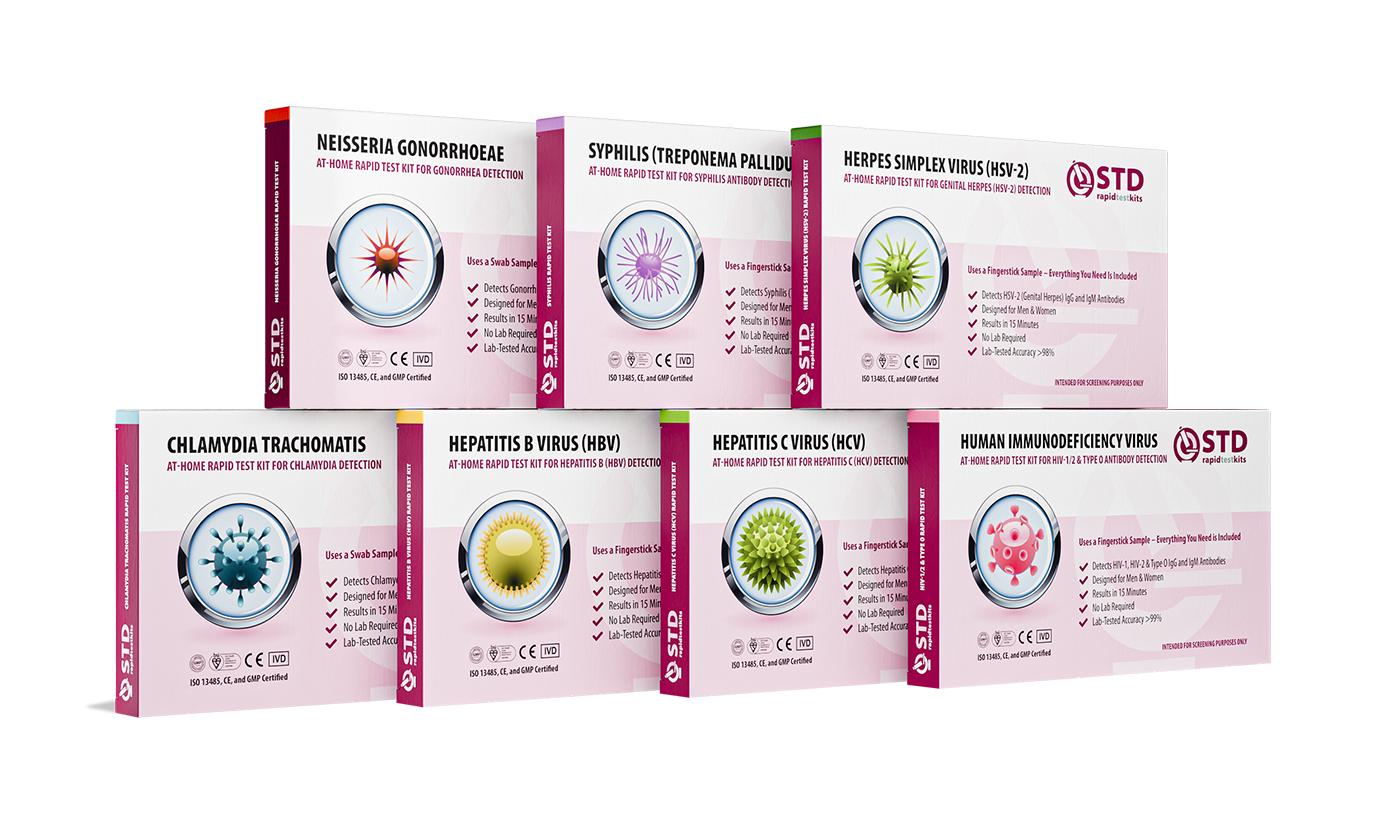
The timing windows below matter because each infection has its own detection biology. A test taken before enough bacterial DNA, antigen, or antibody is present can come back negative even when infection is already incubating. That is the classic false negative setup, and it is exactly why testing too early creates more confusion instead of more clarity. For readers who want broad screening while staying on top of routine sexual health, the Complete 7-in-1 At-Home Rapid Test Kit can make sense as a follow-up option once the relevant windows have been reached.
Table 1. STD Testing Windows While on PrEP
Infection
When to test and what type of test fits
Chlamydia
Chlamydia: test from 14 days after exposure. NAAT is the preferred test because it detects bacterial genetic material from the site exposed during sex.
Gonorrhea
Gonorrhea: test from 3 weeks after exposure. NAAT is also the preferred test, including throat or rectal testing when those sites were exposed.
Syphilis
Syphilis: test from 6 weeks after exposure. Blood testing matters here because syphilis screening relies on serologic markers rather than a standard urine NAAT.
HIV
HIV: test at 6 weeks for first indicator, retest at 12 weeks for certainty. On PrEP, this timing matters even more because suppressed viral replication can complicate very early detection.
Herpes HSV-1 and HSV-2
Herpes HSV-1 and HSV-2: test from 6 weeks after exposure. Blood testing may help in the right context, especially when the question is past exposure rather than swabbing an active lesion.
Hepatitis B
Hepatitis B: test from 6 weeks after exposure. Blood testing is used because detection depends on hepatitis B markers in the bloodstream.
Hepatitis C
Hepatitis C: test from 8–11 weeks after exposure. Blood testing is used because hepatitis C detection depends on blood-based markers rather than a genital swab.
In practical terms, that means you should not collapse every exposure into one same-day testing event and expect perfect answers. Chlamydia: test from 14 days after exposure, because the NAAT needs enough bacterial material to detect. Gonorrhea: test from 3 weeks after exposure, especially if the exposure involved the throat or rectum and you need site-specific testing. Syphilis: test from 6 weeks after exposure, because the blood test depends on the body producing detectable serologic markers. HIV: test at 6 weeks for first indicator, retest at 12 weeks for certainty, which is especially important on PrEP because early replication may be partly suppressed. Herpes HSV-1 and HSV-2: test from 6 weeks after exposure. Hepatitis B: test from 6 weeks after exposure. Hepatitis C: test from 8–11 weeks after exposure.
A negative result only means the test did not detect infection at the time you took it. If that test was done before the relevant window, the result may simply reflect incomplete detectability rather than true absence of infection. A positive result means the infection has been detected and you should move to confirmatory follow-up and clinical management, not spiral into internet detective mode. Retesting is needed when an earlier test happened before the immune system or the organism itself had produced enough detectable material. That is not bureaucracy. That is just how window-period biology works. CDC’s STI screening recommendations also reinforce routine screening for people with ongoing exposure risk, including those engaged in HIV prevention care.
For standard STD testing, PrEP is not the thing causing false negatives. A false negative for chlamydia or gonorrhea is usually about timing, sample site, or testing before enough detectable bacterial material is present. If someone had receptive oral sex and only does a urine test, that does not mean PrEP hid gonorrhea. It means the throat was the exposure site and the throat needed to be tested. The same basic logic applies to other non-HIV infections: the biggest problems are usually testing too early, testing the wrong body site, or misunderstanding what the test actually detects.
HIV is the exception that deserves more respect. Because PrEP can suppress early viral replication, a person who acquires HIV while taking PrEP may have lower viral levels or delayed antibody development during the earliest phase of infection. That can make a very early negative result less definitive than people expect. It does not mean PrEP makes HIV permanently undetectable. It means the test result has to be interpreted in context, with attention to exposure date, symptoms of acute infection if present, and the type of test used.
So when people ask whether PrEP can cause a false negative, the clean answer is this: for most STDs, no; for HIV, it can complicate very early detection enough that follow-up testing may be needed. That is why a negative HIV result immediately after a recent exposure is not the same thing as a final answer. The result may simply reflect that the marker being measured has not crossed the detection threshold yet.
Why Regular Testing Is Built Into PrEP Use
Regular testing is not an annoying extra attached to PrEP. It is part of how PrEP is supposed to be used safely and intelligently. CDC’s clinical guidance recommends repeat HIV testing for people taking PrEP and continued STI screening based on sexual exposure, because prevention works best when it is paired with surveillance. In other words, PrEP is not “take pills and stop checking.” It is “prevent HIV while keeping an eye on the infections PrEP does not cover.”
This is especially important because PrEP changes the emotional math for many people. Once the fear of HIV drops, it becomes easier to forget that gonorrhea, chlamydia, and syphilis are still very much in the chat. That is not a moral judgment. It is just biology and human behavior doing what they do. Regular screening catches infections that may be silent, especially at rectal or throat sites where someone can carry an infection without obvious symptoms.
There is also a practical reason to keep a routine. If you already know you test on a schedule, exposure anxiety tends to become more manageable because you are not improvising every time something happens. You have a framework: what exposure happened, what site was involved, what window applies, what test matches it, and whether you need repeat HIV testing because the exposure was recent. That is a much better system than doom-scrolling symptoms at 1:17 a.m. and letting your search history become a horror movie.
Table 2. What Your Results Mean While on PrEP
Result scenario
What it means for you
Negative chlamydia or gonorrhea NAAT after the correct window
The infection was not detected at the site tested after the relevant detection window. If another exposure site was involved, that site may still need testing.
Negative HIV result too soon after exposure
This is not a final answer. Early HIV markers may still be below detection, especially if PrEP has suppressed early viral replication.
Positive bacterial STD result
The infection has been detected. The next step is confirmatory clinical follow-up and treatment planning, not guessing whether PrEP changed the result.
Positive HIV result while on or around PrEP use
This requires urgent confirmatory medical follow-up because HIV has been detected despite prevention efforts, and the treatment plan needs to be adjusted by a clinician.
Negative result before the correct testing window
The result may reflect incomplete detectability rather than true absence of infection, which is why retesting after the proper window matters.
A negative STD result while on PrEP means the infection tested for was not detected in that sample at that point in time. That is useful, but it is not magic. If the sample came from the wrong site, if the test was done before the correct window, or if the exposure was too recent, the result may be incomplete rather than truly reassuring. This is where people get burned by overconfidence. A clean result is only as good as the timing and the sample behind it.
A positive result means the test found what it was built to detect. If that is chlamydia, gonorrhea, or syphilis, PrEP did not create a fake positive. It means an infection has been identified and you need the normal next step: medical follow-up, treatment, partner notification where appropriate, and a plan to avoid repeat transmission. If the positive result is HIV, that needs prompt confirmatory care because PrEP is no longer serving as prevention in the usual sense and a clinician needs to guide the next phase.
The biggest thing readers need to leave with is this: PrEP does not make STD testing pointless. It makes interpretation more precise. For non-HIV STDs, testing works the way it normally works. For HIV, testing still works, but timing and method matter more because PrEP can blunt the earliest biological signals that some tests rely on. That is not a reason to panic. It is a reason to test on purpose instead of testing blindly.
If you want a practical at-home next step after the correct testing window has passed, the Complete 7-in-1 At-Home Rapid Test Kit is useful for broad screening, while the HIV 1&2 At-Home Rapid Test Kit can be a more focused option when HIV follow-up is the immediate question. The point is not to test randomly. It is to match the test to the exposure, the site, and the right window.
FAQs
1. Can you actually get tested for STDs while on PrEP, or does it mess everything up?
You can absolutely get tested, and for most STDs, nothing changes. PrEP doesn’t scramble your results or “hide” infections like chlamydia or gonorrhea. The only place where things get a little more nuanced is HIV, and even there, it’s about timing and test type, not broken tests.
2. So PrEP doesn’t protect me from other STDs?
Nope. PrEP is laser-focused on HIV. It doesn’t stop chlamydia, gonorrhea, syphilis, herpes, or hepatitis. Think of it like wearing noise-canceling headphones for one specific sound, everything else is still happening in the background.
3. Could PrEP make my STD test come back negative even if I have something?
For bacterial STDs, no. If a test misses something, it’s almost always because it was done too early or the wrong site wasn’t tested, like skipping a throat swab after oral sex. PrEP isn’t the reason.
4. What about HIV, can PrEP make that harder to detect?
This is where it gets interesting. If HIV infection happens while on PrEP, the medication can slow down how quickly the virus builds up. That means some early tests might take a bit longer to turn positive. It doesn’t make HIV invisible, it just changes the timeline slightly.
5. If I test negative while on PrEP, can I trust it?
Yes, as long as the timing makes sense. A negative test after the correct window is solid. A negative test taken too soon after exposure? That’s more of a “not yet” than a definitive answer. Timing is everything here.
6. Do I still need regular STD testing if I’m on PrEP and feel totally fine?
Yes, and this is a big one. A lot of STDs don’t cause obvious symptoms, especially in the throat or rectum. People feel completely normal and still test positive. PrEP lowers HIV risk, it doesn’t replace routine screening.
7. What’s the best type of HIV test if I’m on PrEP?
Lab-based blood tests (especially antigen/antibody tests or NATs) tend to pick things up earlier than rapid antibody-only tests. If there’s been a recent exposure, choosing the right test matters more than people think.
8. How often should I be testing if I’m using PrEP regularly?
PrEP isn’t a “set it and forget it” situation. Testing is part of the routine. Most people test for HIV and other STDs every few months as part of staying on PrEP safely, not because something is wrong, but because that’s how you stay ahead of things.
9. If something does come back positive, does PrEP affect what happens next?
For non-HIV STDs, not really, you just move forward with standard care. If it’s HIV, that’s when things shift, because you’ll need proper medical follow-up and a different treatment approach. Either way, the result is actionable, not something to second-guess endlessly.
10. What’s the smartest move after a risky hookup while on PrEP?
Skip the panic-Google loop. Think in steps: what kind of exposure happened, which body site was involved, what infections are possible, and when each test actually becomes reliable. Then test at the right time. That’s how you stay in control instead of guessing.
Choose the Right Test and Get Clear Answers Fast
If you want clear answers without turning this into a week-long Google spiral, start with the test that matches your exposure. The HIV 1&2 At-Home Rapid Test Kit is a focused option when HIV is the immediate concern, and the Chlamydia & Gonorrhea 2-in-1 makes sense when the question is bacterial exposure.
For broader screening, the Complete 7-in-1 At-Home Rapid Test Kit covers the infections that cause the most second-guessing after sex. You can also browse the full store at STD Rapid Test Kits if you already know which result you need clarity on.
How We Sourced This: Our article was constructed based on current advice from the most prominent public health and medical organizations, and then molded into simple language based on the situations that people actually experience, such as treatment, reinfection by a partner, no-symptom exposure, and the uncomfortable question of whether it "came back." In the background, our pool of research included more diverse public health advice, clinical advice, and medical references, but the following are the most pertinent and useful for readers who want to verify our claims for themselves.
Dr. F. David, MD is a board-certified infectious disease specialist focused on STI prevention, diagnosis, and treatment. He writes with a direct, sex-positive, stigma-free approach designed to help readers get clear answers without the panic spiral.
Reviewed by: STD Rapid Test Kits Medical Review Team | Last medically reviewed: April 2026
This article is for informational purposes and does not replace medical advice.








 For Men & Women
 Results in Minutes
 No Lab Needed
 Private & Discreet