
Published: November 2025 | Last updated: May 2026 | Editorial review and quality control: Martina N.
How often should polyamorous people test for STIs?
Most polyamorous networks test every 3 to 6 months as a standing cadence, with an extra test before any new partner or before going barrier-free. Always pair an initial post-exposure test with a follow-up after the relevant window closes, since chlamydia and gonorrhea need about 14 days and an early negative is not definitive.
Polyamory does not raise STI risk on its own. Risk lives in behavior: how often you test, how honestly you talk about exposures, whether barriers are used with newer partners. Polyamorous networks tend to test more often and talk about results more openly than monogamous couples who stop screening the moment exclusivity feels settled. Communication and timing matter far more than partner count.
Having more partners does change the planning required. That means a baseline test paired with a planned follow-up at the right window, a standing cadence the whole network can trust, and an agreed approach for handling a positive result without triggering shame or chaos. The rest of this guide walks through the moving pieces, with current CDC guidance and the timing math that keeps everyone in the network informed.
Key Takeaways
- Most polyamorous networks settle on testing every 3 to 6 months, plus an additional test before any new partner or before going barrier-free.
- Window periods vary widely: roughly 14 days for chlamydia and gonorrhea, 18 to 45 days for HIV, and 6 to 12 weeks for HSV-2 antibody serology, so a single immediate post-exposure test is rarely the final answer.
Why polyamory needs its own testing rhythm
Solo dating tends to follow a simple pattern: meet someone, sleep with them, maybe test if a relationship gets serious. Polyamory rearranges that. You may have a nesting partner whose other partner just started seeing someone new. You may have a casual play partner whose other connections you never meet. The exposure pathways extend further than your direct hookups, and they update faster than any single test result can keep up with.
This is why most poly-aware clinicians and educators recommend a recurring testing cadence rather than one-off testing tied to specific encounters. The CDC and USPSTF recommend at least annual chlamydia and gonorrhea screening for sexually active women under 25 and for anyone with multiple partners or a partner with multiple partners (CDC STI Treatment Guidelines, 2021). Many sexual-health clinicians push that to every 3 to 6 months for people in active poly networks.
Treat the testing cadence as information infrastructure that the whole network benefits from. If your last test is six months old and three partners ago, the snapshot your network is making decisions on has gone stale, which means consent based on it has gone stale too. A standing rhythm keeps the snapshot fresh enough to be useful.
Risk is about behavior, not relationship structure
Most American sex education never covered how to navigate relationships outside the monogamous binary. So when someone says they are polyamorous or in an open relationship, the cultural reflex often defaults to judgment: "That sounds risky," or "You must catch everything." The judgment is medically inaccurate.
Research on consensual non-monogamy consistently finds that people in openly non-monogamous relationships test more often and use barriers more reliably with new partners than people in self-described monogamous relationships, especially when monogamy is assumed rather than verified (Lehmiller, Journal of Sexual Medicine, 2015). The structural reason is simple: explicit multi-partner relationships build testing and disclosure into the operating system. Implicitly exclusive ones do not.
The lens to use throughout the rest of this article: risk lives in behavior, not in identity. Across studies of consensual non-monogamy, the people with the lowest transmission rates tend to be those with consistent testing habits and honest disclosure, whatever their relationship structure.
People in openly consensually non-monogamous relationships report higher rates of STI testing and more consistent barrier use with new partners than people in self-described monogamous relationships, especially when monogamy is assumed rather than explicitly verified (<a href="https://pubmed.ncbi.nlm.nih.gov/26395880/" target="_blank" rel="noopener noreferrer">Lehmiller, Journal of Sexual Medicine, 2015</a>). In that study, roughly a quarter of the self-described monogamous participants reported sex outside the relationship that their partner did not know about. What separates higher-risk from lower-risk patterns is whether the relationship builds disclosure and screening into its norms, more than how many partners are involved.
Comparing testing cultures: poly versus assumed monogamy
Picture two situations side by side. In the first, a married couple has opened their relationship after months of conversation and therapy. Each person has one additional partner. Every 90 days, the four of them test together using rapid at-home kits for chlamydia, gonorrhea, syphilis, and HIV. They share results, agree on which barriers stay in place for which partners, and revisit the agreement when something changes.
In the second, a couple has been together for three years and considers themselves monogamous. One partner has hooked up with two different people while traveling, has never told the other, and has never tested.
The second couple looks lower-risk on paper. In reality, their household has an undisclosed exposure history and zero detection mechanism. The polyamorous household has more partners and a detection mechanism running every quarter. The table below shows where the two patterns diverge in practice.
| Risk factor | Polyamorous (open, communicating) | Assumed-monogamous (no testing) |
|---|---|---|
| Number of partners | Higher, typically disclosed | Lower in theory; undisclosed contact raises the real number |
| Testing frequency | Often regular and planned, every 3 to 6 months | Rarely discussed unless symptoms appear |
| Communication about risk | Explicit conversations are the norm | Safety is assumed, often unspoken |
| Condom and barrier use | Defined by agreement; often consistent with newer partners | Often fades over time in long-term pairings |
| Speed of partner notification | Built into the structure; usually within days | Inconsistent; depends on whether anyone knows to notify |
Three testing models that fit polycules
Most polyamorous networks settle into one of three testing patterns. The right one depends on how interconnected the network is, how often new partners enter the picture, and how much logistical overhead the group can sustain. Event-based testing schedules a panel before any meaningful change in the network. Time-based testing sets a fixed cadence regardless of recent activity. Rolling-status logs blend the two with a shared running record. The table below sketches what each approach is good for and where it tends to break down.
| Approach | How it works | Best for | Drawbacks |
|---|---|---|---|
| Event-based testing | Test before new partners or milestones like fluid bonding | Networks with occasional new connections or play events | May miss silent infections from existing partners |
| Time-based testing | Test on a fixed schedule, often quarterly, regardless of recent events | Established polycules with steady activity | Can feel redundant during quiet stretches |
| Rolling-status logs | Shared running record of each person's last test plus any new risk | Highly communicative, interconnected groups | Requires honesty, organization, and sustained habit |
What a sexual health agreement covers
Polyamorous communities often build a detection mechanism into the relationship itself, calling it a sexual health agreement. The agreement can be casual or written down. It typically spells out how often everyone tests, what protection looks like with which partners, who is fluid bonded with whom, and how new partners are introduced into the network. Getting tested together and sharing results is one of the six prevention strategies the CDC outlines for reducing STI transmission, alongside vaccination, fewer partners, condoms, mutual monogamy, and abstinence (CDC, How to Prevent STIs).
The agreement is most useful when it answers practical questions before anyone needs them. The starting checklist below covers the ground that comes up first in most networks.
- Baseline testing cadence (often every 3 months) and which infections are included on the panel.
- Which partners are fluid bonded and which keep barriers in place.
- How a new partner is introduced into the network, and any retesting that triggers.
- How a positive result is communicated, and how quickly.
- What happens if someone notices a symptom between scheduled tests.
When no symptoms still means risk
The single most common testing mistake, in poly and monogamous contexts alike, is using how you feel as the screen for whether you need to test. Most STIs do not announce themselves. The World Health Organization estimates that more than a million curable STIs are acquired every day worldwide, the majority of them without symptoms (WHO STI fact sheet). The UK's NHS makes the same point plainly: many STIs have no symptoms, so you can have one without knowing and pass it to a partner during sex (NHS, sexually transmitted infections). Chlamydia in particular often produces no symptoms at all, and the same holds for many gonorrhea infections at the throat or rectum, which are very often silent.
Left untreated, a silent infection can still do real harm. Chlamydia, for example, can ascend to cause pelvic inflammatory disease and, in some cases, scarring that affects future fertility (CDC, About Chlamydia). That is exactly why catching a quiet infection early matters more than waiting for a symptom to appear. Herpes and HPV stretch the timeline further: both can stay dormant for months or years, then reactivate or become detectable later. HSV-2 antibody tests typically take 6 to 12 weeks after exposure to turn positive, and even then they only confirm seroconversion, without pinpointing when the infection started.
Symptom-based screening is therefore incomplete in any sexually active population, and especially in interconnected ones, where one missed asymptomatic infection can cycle through several partners before anyone notices.
No symptoms is the most common presentation of chlamydia, gonorrhea, early HIV, and HPV. Feeling healthy tells you nothing about whether you carry one of these infections, which is the whole reason a scheduled testing cadence outperforms symptom-watching.
What to test for, and what each test measures
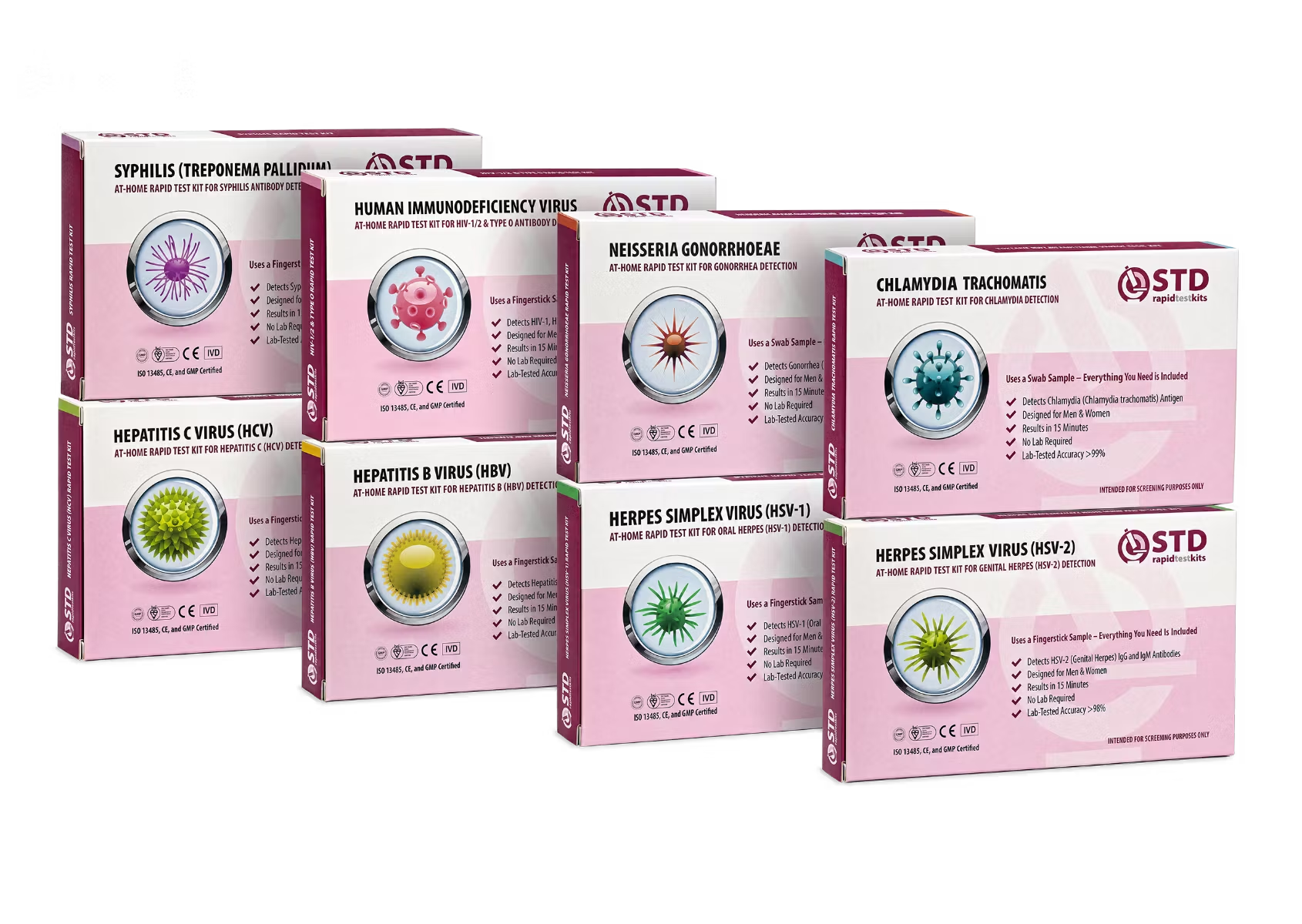
A so-called "full panel" varies by clinic. The standard polyamory-relevant tests cover chlamydia, gonorrhea, syphilis, and HIV at minimum. Many clinicians add trichomoniasis, hepatitis B and C, and herpes serology depending on risk profile. HPV is rarely included in standard STI panels for asymptomatic adults; cervical screening, a Pap test or HPV co-test, is the typical pathway for HPV detection in women.
The laboratory gold standard for chlamydia and gonorrhea is the NAAT, or nucleic acid amplification test, which can run on either a urine sample or a swab from the relevant site. NAATs are the most sensitive screening tests available for these infections and become reliable a couple of weeks after exposure. At-home rapid tests use lateral-flow immunoassay technology rather than NAAT. They are designed for screening: faster, more private, less expensive, and useful as a first answer when timed correctly. Labs use NAAT for higher analytical sensitivity, so the two approaches are complementary rather than equivalent, and a positive at-home result should be confirmed with a lab NAAT or a clinic visit.
HIV testing has its own sensitivity profile. Fourth-generation antigen-antibody combo tests detect most infections by 18 to 45 days post-exposure, a window covered in detail below. Earlier RNA-based testing is available in clinical settings for very recent exposures, though it is reserved for specific situations rather than first-line screening. This article is published by stdrapidtestkits.com, which sells at-home rapid STI test kits of the lateral-flow type described here; we recommend products based on fit for your concern, not commercial benefit. Any positive screening result should be confirmed with a clinical lab test.
| Infection | Lab gold standard | At-home rapid option | Earliest reliable detection |
|---|---|---|---|
| Chlamydia | NAAT (urine or swab) | Lateral-flow swab | About 14 days post-exposure |
| Gonorrhea | NAAT (urine or swab) | Lateral-flow swab | About 14 days post-exposure |
| Syphilis | Treponemal antibody test | Lateral-flow fingerstick blood test | 3 to 6 weeks post-exposure |
| HIV | 4th-generation Ag/Ab combo test | Lateral-flow fingerstick blood test | 18 to 45 days for 4th-gen tests |
| Trichomoniasis (women) | NAAT or culture | Lateral-flow swab (women) | 1 to 4 weeks post-exposure |
| Herpes (HSV-2) | Type-specific antibody test or PCR if lesions present | Lateral-flow fingerstick blood test | 6 to 12 weeks for antibodies |
Window periods, and why timing beats test count
A negative test taken too early tells you about the test, not about the infection in your body. The window period is the interval between exposure and when a given test can reliably detect what it is looking for. Tests run before the window closes can return a false negative even when an infection is present.
The general windows to know: roughly 1 to 2 weeks for chlamydia and gonorrhea on NAAT testing; HIV NAAT around 10 to 33 days, lab-based fourth-generation antigen-antibody around 18 to 45 days, and rapid antigen-antibody or antibody-only tests up to 90 days; 3 to 6 weeks for syphilis; and 6 to 12 weeks for reliable HSV-2 antibody seroconversion, with outliers occasionally extending to 16 weeks (CDC HIV testing).
The implication for polyamory is that an immediate post-exposure test seldom answers the question on its own. A layered approach works better: a baseline test soon after a new exposure (informative if positive, inconclusive if negative), followed by a planned follow-up once the relevant window closes. Running two tests, one early and one after the window, is what allows a single exposure event to be cleared with reasonable confidence using current screening tools.
| Scenario | Initial test timing | Follow-up test timing | Why both |
|---|---|---|---|
| New partner, barrier use | 7 to 10 days post-exposure | 14 to 21 days post-exposure | Catches infections missed during the early window |
| New partner, no barriers | 10 to 14 days post-exposure | 30 to 45 days post-exposure | Improves accuracy for slower-detection infections like HIV and syphilis |
| Group event with multiple exposures | 14 days after the last encounter | 6 weeks after the final exposure | Accounts for staggered risk timelines |
| Possible HSV-2 exposure | If lesions present, swab as soon as possible | Antibody test at 12 weeks | Antibodies take 6 to 12 weeks to develop reliably |
How to talk about testing without killing the mood
The hardest part of polyamorous testing is rarely the test itself. It is the conversation. "When did you last test, and for what?" can land as care or as accusation, depending entirely on how it is framed. Most experienced poly communicators offer their own status first, then invite the partner to share theirs.
If a new partner has not tested recently, or is not sure exactly what they were screened for, the constructive move is offering a path forward: testing together, sharing a link to a discreet kit, or pausing higher-risk activity until both of you have current results. Shaming or treating an honest gap as a moral failure is rarely useful. Almost everyone has a gap somewhere; what matters is what happens next.
How a partner reacts to the testing conversation often previews how they will handle other negotiations: changes in the agreement, new boundaries, or unexpected exposure events.
One pattern that works: "I last tested on [date] and was negative for the standard panel. Since then I have had [zero, one, or N] new partners. What is your testing rhythm right now?" Putting your information first makes it a swap rather than an interrogation, and it models the level of detail you are inviting in return.
Many STIs have no symptoms or may only cause mild symptoms, so people can have an infection but not know it.
When someone tests positive: a calm playbook
A positive test inside a polycule is rarely the disaster the moment feels like. Most bacterial STIs (chlamydia, gonorrhea, syphilis, trichomoniasis) are curable with a short course of antibiotics. Herpes and HIV have no cure, though both are highly manageable with current treatment. People with well-controlled HIV on antiretroviral therapy who maintain a sustained undetectable viral load do not transmit the virus to sexual partners, a finding documented across multiple large studies and reflected in current CDC guidance.
The first step after a positive result is confirmation. Lateral-flow rapid tests are screening tools; a positive screen warrants a confirmatory lab test, especially for HIV, syphilis, and herpes serology. The second step is honest, prompt notification of any sexual partner who falls inside the relevant exposure window, with enough detail for them to decide whether and when they should test.
Healthy poly networks tend to plan for this scenario before it happens, with temporary barrier use during retest windows, pauses on new partner introductions, and a check-in once the situation resolves all written into the standing agreement. These arrangements are easier to negotiate before anyone needs them.
Three-step playbook after a positive screen
- Step 1: Confirm the result with a lab test, especially for HIV, syphilis, and herpes serology.
- Step 2: Notify any sexual partner inside the relevant exposure window so they can test on their own timeline.
- Step 3: Pause new partner introductions until everyone in the chain has results and any treatment is complete.
Partner notification without the confession vibe
Notifying multiple partners is often the most stressful part of testing positive, especially in a poly network. Fear of judgment, of being excluded, of becoming the cluster's cautionary tale, all of it shows up at once. The reframing is the same as with testing: you are giving people information they need to take care of their own bodies, not confessing to a crime.
For close partners, a direct conversation usually lands best: "I tested positive for X today. You should test too. Here is when the window opens for an accurate result." Lead with the test name, the treatment plan, and the timing they need. Having that script written into the relationship agreement before it is ever needed removes most of the friction when a positive result does come in.
When direct conversation is hard, anonymous tools can carry the message. State or county public health partner-notification services exist in most U.S. jurisdictions, and a counselor will reach out on your behalf without naming you. Several nonprofit services also send anonymous text or email alerts.
- TellYourPartner.org and SoTheyCanKnow.org: nonprofit services that send anonymous text or email alerts to partners on your behalf.
- State or county public health partner-notification services: most U.S. jurisdictions offer a free counselor who reaches out on your behalf without naming you.
- Direct one-on-one conversation: usually best for close partners. Lead with the test name, your treatment plan, and when the window opens for them.
Does group sex automatically mean more risk?
The cultural narrative says yes. The reality depends almost entirely on context. Group sex with no testing protocol, no communication, and no barriers is high risk. Group sex inside an organized community that requires recent testing, posts safer-sex norms, and provides barriers can be surprisingly structured. Some sex-positive events require proof of negative testing within the past 30 to 90 days, a higher bar than most one-on-one dating-app hookups.
The variable that matters most is the number of unknowns, more than the number of bodies. If you walk into a scene with no idea what anyone's testing status is and no shared safer-sex norm, you have just added several unknown exposure histories to your own. If everyone has tested in the last month and barriers are mandatory, the math looks very different.
Barriers, here, are broader than condoms. Dental dams, gloves, condom changes between partners during a session, and clean-toy protocols all matter. So does communication during the encounter, including check-ins and the explicit right to stop.
- How recent does my testing have to be, and what panel does the host expect?
- What barriers (condoms, dental dams, gloves) are mandatory versus optional?
- Are toys cleaned or condom-covered between users?
- Is there a clear way to slow down or stop participation mid-session?
- Is there a host or steward who handles a disclosure if someone reports a positive result afterward?
When a partner refuses to test
This is one of the most painful conversations in any relationship style, and it shows up often enough in poly networks that it deserves direct treatment. Sometimes a partner avoids testing because they are scared. Sometimes they feel ashamed of past partners they have not disclosed. Sometimes they say, "I know I am fine," which is not a medical statement.
The honest response is that testing creates a shared baseline everyone in the network can act on, which is the only way consent stays informed when more than two people are involved. If a partner declines to test, the other partners in the network have a right to pause physical intimacy with that person until something changes. Declining intimacy under those conditions is a fair exercise of the same informed consent the asker is using.
Before walking away from the conversation, offer concrete options. Many people resist a clinic visit but will use an at-home kit. Others will agree to test together as a shared activity rather than alone. Pointing to a free local clinic, a state public health hotline, or a discreet at-home kit shipped to their address sometimes removes whatever the practical barrier is.
Try this opener: "Testing is how we set a shared baseline so everyone can make informed decisions. Would you feel more comfortable doing an at-home kit together this weekend, or going to separate clinics on the same day?" People who refuse a clinic visit will often agree to an at-home kit when the option is named.
Closed polycules and why testing still matters
Some networks operate as a closed group: an agreed-upon set of partners who do not have sex outside the group. The intuitive belief is that once everyone has tested clear, ongoing testing becomes unnecessary. The math is more complicated.
Agreements get broken, sometimes openly with renegotiation, sometimes quietly. People sometimes pick up infections from skin-to-skin contact at a play party even with barrier use elsewhere. Latent infections like HPV and herpes can remain undetectable for years before surfacing on a routine screen. False negatives happen. None of these are accusations of bad behavior; they are reasons that even a fully honest closed network does not reach zero risk.
The pragmatic answer is a lighter cadence rather than a stop. Many closed groups settle on a yearly check-in, with event-based testing layered on top if anything in the agreement changes.
Even with full honesty across the group: agreements get renegotiated; latent infections like HPV and herpes can surface years after the original exposure; and screening tests sometimes return false negatives. A lighter cadence keeps the habit alive without anyone having to break the seal under crisis pressure.
Testing fatigue and the role of at-home options
Frequent testing is sustainable for some people and exhausting for others. Clinic visits take time and often involve insurance friction, awkward intake forms, or wait times. Anyone who has had a negative experience with a healthcare provider around sexual health, which is a large fraction of LGBTQ+ adults specifically, carries that history into every appointment.
At-home rapid tests are screening tools. Confirmatory lab testing and clinical evaluation when symptoms appear are still necessary. What at-home kits do well is handle the routine work of regular check-ins without requiring a clinic visit. They use lateral-flow immunoassay technology that is well-suited to screening once the relevant window has closed, and they let testing happen on your own timeline. For the highest-frequency new-partner check, an at-home chlamydia and gonorrhea test covers the two most common bacterial infections from a single self-collected swab.
A common pattern in poly households: someone in the network orders enough rapid kits for everyone, sets a shared testing day, and uses the kits on the morning of. Results are read at home within 15 minutes for rapid lateral-flow tests, and everyone shares results in a group thread or in pairs, so the household can plan within the same morning.
Stocking the cabinet: which kits to keep on hand
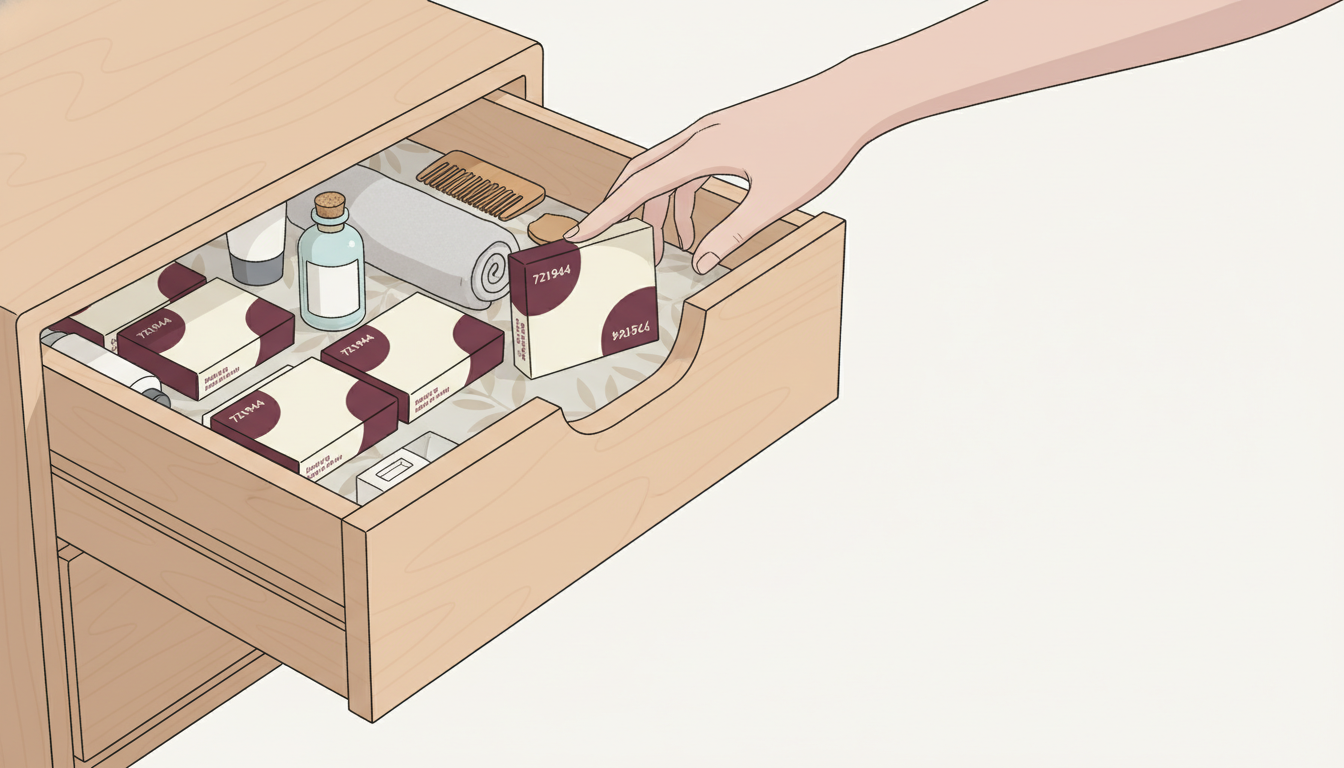
If you are managing testing for a network, building a small reserve of kits at home removes one of the most common reasons people skip rounds: the activation energy of getting to a clinic this week. A practical starter cabinet usually combines two things: a swab combo for the most common new-partner concerns, and a broader panel for quarterly whole-network testing days.
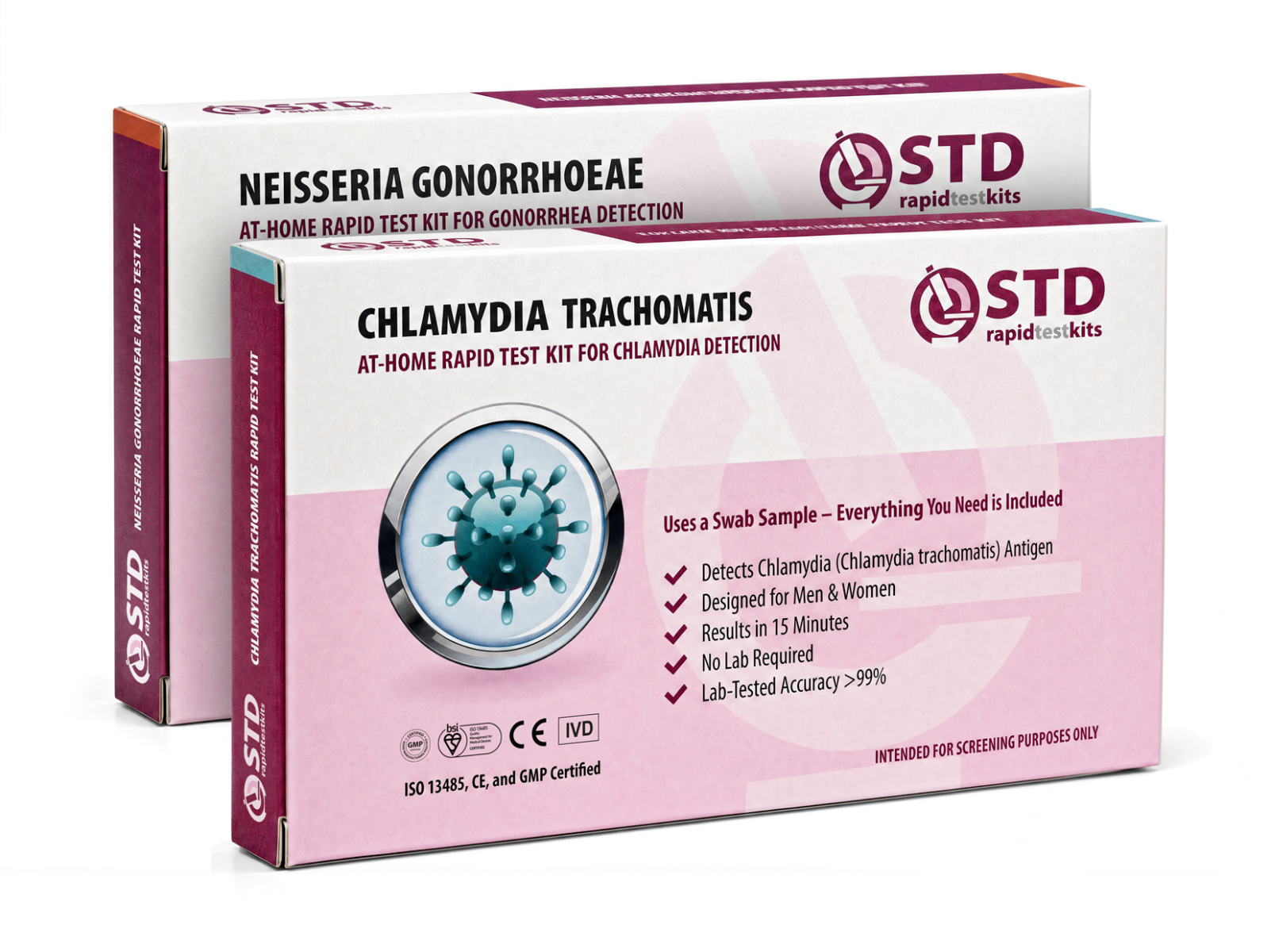
The chlamydia-gonorrhea swab combo handles the highest-frequency check. Both infections are bacterial, both are commonly asymptomatic, both have similar windows, and both are easy to self-swab at home. Keeping one or two on hand means a new-partner check can happen the same week instead of waiting for an open clinic slot.
Monogamous couples are borrowing from the poly playbook
A growing number of monogamous couples have started using polyamorous testing rhythms. The reasoning is straightforward. Assumed exclusivity has never been a reliable prevention strategy at population level. People in long-term monogamous relationships still acquire infections from accumulated exposure history, undisclosed encounters, vertical transmission, or shifts that happened years before the relationship started.
Public-health surveillance consistently finds that a large share of STIs go undiagnosed at any given time, including among people in stable, supposedly exclusive relationships. Quarterly screening for sexually active adults, regardless of relationship structure, makes infections visible while they are still small and treatable. Some monogamous couples now sync STI panels with their annual physical, or test before stopping condoms, or test before trying to conceive. These are practices polyamorous communities have normalized for years.
- Annual or biannual STI screening as part of a standard physical, regardless of perceived exclusivity.
- Joint testing before stopping condoms in a new relationship, or before trying to conceive.
- A short, written check-in on sexual health at the same yearly cadence as financial or relationship reviews.
Testing as ongoing care, not a one-time clearance
The most useful reframing in polyamorous health is moving from "clean panel" language to "current-status" language. "Clean" implies that an infection is a moral state. STIs are something humans transmit to each other through ordinary contact, and the only meaningful question is whether everyone in the network has the information they need to make decisions about their own bodies.
Setting a cadence, sharing results, and following through after exposure events does not require a perfect system, only a system everyone actually uses. The decision aid below maps the most common situations to a concrete next step.
Should you test now, and with what?
Do you have symptoms right now, such as sores, unusual discharge, burning when you urinate, or a new rash?
Yes: See a clinician for an in-person exam and swab. Active symptoms need evaluation that an at-home screening kit cannot replace.
Have you had a new partner or condom-free sex in the last 1 to 3 months?
Yes: Run a baseline test now, then a follow-up once the window closes (about 14 days for chlamydia and gonorrhea, 18 to 45 days for a 4th-generation HIV test). A chlamydia and gonorrhea swab combo covers the most common new-partner concerns.
Is your whole network due for a routine round, or about to go barrier-free with someone?
Yes: Schedule a shared testing day on a 3 to 6 month cadence. A broader multi-infection panel keeps everyone on the same rhythm.
No: If it has been more than 6 to 12 months since your last panel, test once to reset your baseline, then settle into a standing 3 to 6 month rhythm.
Guidance only. A clinician can advise based on your specific exposures and any symptoms.
FAQs about STI testing in polyamory
- How often should I test if I have multiple partners?
- For active polyamorous networks, sexual-health clinicians often recommend testing every 3 to 6 months rather than the CDC annual minimum, with an extra test before any new partner connection or before going barrier-free. The floor is once a year for sexually active people with multiple partners; the ceiling is whenever circumstances in your network change. Many polycules pick a fixed cadence within that range and add event-based tests on top.
- Is polyamory actually riskier than monogamy?
- Not on its own. The risk in any sexual configuration depends on testing rhythms, communication, and how exposures are handled. Many monogamous couples stop testing after committing, even though latent infections, past exposures, or quiet agreement lapses still happen. Polyamorous networks tend to test more often and talk about results more openly, which often makes them lower-risk in practice than non-testing monogamy.
- Do I need to test after every new partner?
- It depends on what kind of contact happened and how recently you tested. For barrier-protected encounters that did not involve fluid exchange, your standing cadence may be sufficient. For higher-risk encounters (no barriers, oral contact with someone whose status you do not know, broken condom), a baseline test plus a follow-up after the relevant window period closes is the safer pattern.
- What if I tested too early after exposure?
- The result is not invalid; it just is not definitive. A test taken within the first few days after exposure can return a false negative even if the infection is present. The fix is straightforward: schedule a follow-up after the relevant window period closes, usually about 14 days for chlamydia and gonorrhea, 18 to 45 days for fourth-generation HIV testing, and 6 to 12 weeks for HSV-2 antibody serology.
- What should I do if my metamour tests positive?
- If your direct partner has had unprotected contact with the metamour during the relevant exposure window, your partner is in the chain, and so are you. The right move is for everyone in the relevant window to test, with confirmatory lab follow-up if any screening result is positive. This is about closing the loop so the infection does not keep cycling through the network.
- What if one of my partners refuses to get tested?
- Start by removing the practical barrier: offer to order the kit for them, test on the same day as a shared activity, or share your own recent results as a model. If they decline every accommodation, pausing physical intimacy is a reasonable response, a boundary that requires a shared health baseline before continuing.
- Are at-home rapid tests reliable?
- For screening purposes, yes. At-home rapid tests use lateral-flow immunoassay technology, well-validated for detecting infections once the relevant window has passed. Lab NAAT remains the clinical gold standard for chlamydia and gonorrhea, and any concerning symptoms still warrant a clinical evaluation. For routine cadence testing in a polyamorous network, at-home kits handle the job well. Always confirm any positive screening result with a lab test.
- Is HPV included in standard STI panels?
- Usually not. HPV testing for asymptomatic adults is typically handled through cervical screening (a Pap test or HPV co-test) rather than as part of a general STI panel. Most rapid at-home STI kits do not screen for HPV in any-gender adults; the available HPV self-test on this site is a vaginal swab validated for women. People needing HPV screening should follow their provider's cervical-screening schedule.
- Are condoms enough to prevent herpes?
- Condoms lower the risk of herpes and HPV but cannot remove it, because both can shed from skin a condom does not cover, including the upper thighs, buttocks, and scrotum. Honest disclosure, awareness of outbreak symptoms, and daily suppressive antiviral therapy for some people with herpes all reduce transmission further. Testing is part of the picture, not the whole of it.
- Can two partners share one at-home test kit?
- No. Each rapid kit is designed for one person's sample per cassette. Sharing a kit cross-contaminates samples and produces unreliable results, so order one kit per person testing. For a whole-network testing day, that usually means buying a multi-pack or several single kits at once so each person reads their own clear result.
- U.S. Centers for Disease Control and Prevention. Sexually Transmitted Infections Treatment Guidelines, 2021. Screening recommendations by age, sex, and risk profile, including the annual chlamydia and gonorrhea screening recommendation for sexually active women under 25 and people with multiple partners.
- U.S. Centers for Disease Control and Prevention. About Chlamydia. Confirms that chlamydia often produces no symptoms yet can cause serious health problems, supporting the asymptomatic-screening and fertility-complication points in this article.
- U.S. Centers for Disease Control and Prevention. HIV Testing. Window periods and test-technology comparisons, including the 18 to 45 day window for fourth-generation antigen-antibody testing and the 10 to 33 day window for NAT.
- U.S. Centers for Disease Control and Prevention. How to Prevent STIs. The six prevention strategies, including getting tested together and sharing results, condoms, vaccination, fewer partners, mutual monogamy, and abstinence.
- World Health Organization. Sexually Transmitted Infections (STIs) fact sheet. Global STI burden and the finding that more than a million curable STIs are acquired daily worldwide, the majority asymptomatic.
- National Health Service (UK). Sexually transmitted infections (STIs). States that many STIs have no symptoms, so a person can carry and pass on an infection without knowing, supporting the routine-testing rationale.
- Lehmiller JJ. A Comparison of Sexual Health History and Practices among Monogamous and Consensually Nonmonogamous Sexual Partners. Journal of Sexual Medicine, 2015. Found higher testing and condom-use rates among CNM partners and undisclosed outside contact among many self-described monogamous participants.
