







Last updated: April 2026
Condoms are one of the most effective tools for reducing STD risk, but they don’t eliminate it completely. Some infections spread through skin contact outside the area a condom covers, which means protection is high, but not absolute. Understanding exactly what condoms do (and don’t) protect against is the difference between guessing and making informed decisions.
If you’ve ever used a condom and still found yourself second-guessing afterward, you’re not alone. That moment, usually later that night or the next morning, where your brain goes, “Wait… am I actually safe?” is incredibly common. This article breaks down what’s really happening, biologically and practically, so you’re not stuck relying on internet myths.
No buildup: condoms significantly reduce the risk of most STDs, especially those spread through bodily fluids like chlamydia and gonorrhea. But they don't completely stop all STDs because some infections, like herpes, HPV, and syphilis, can spread through skin-to-skin contact in places where a condom doesn't cover. That’s the real answer, and everything else builds from that.
People are also reading: This STD Can Steal Your Fertility Without a Warning Sign
Do Condoms Fully Prevent STDs? The Short Answer
Let’s say you had sex, used a condom the entire time, and everything seemed fine. Logically, it feels like that should equal zero risk. But biology doesn’t work in absolutes, it works in probabilities.
Condoms act as a physical barrier. They block the exchange of fluids like semen, vaginal fluids, and blood. That matters because infections like chlamydia and gonorrhea live in those fluids. If the barrier holds, transmission risk drops dramatically.
But here’s where things get more nuanced: not all STDs rely on fluids to spread. Some live on the skin itself, particularly in areas like the base of the penis, the scrotum, the vulva, or surrounding groin skin. If infected skin comes into contact with your partner’s skin, transmission can still happen even when a condom is used perfectly.
So when people ask, “Do condoms fully prevent STDs?” the honest answer is: they’re extremely effective for some infections, less effective for others, and never 100%. That doesn’t make them unreliable, it just means they’re one part of a bigger protection strategy.
And this is where a lot of confusion starts. People tend to think in binary terms, safe vs unsafe. In reality, it’s more like a sliding scale of risk reduction.
How Condoms Actually Work Against STDs (Biological Breakdown)
You need to know how different infections spread from one person to another in order to understand what condoms can protect against. There are two main ways that the disease spreads: through fluids and skin-to-skin contact.
Fluid-based infections, like chlamydia, gonorrhea, and HIV, require direct contact with infected bodily fluids. These pathogens are not just sitting on the skin; they live inside fluids and mucous membranes. When a condom is used correctly, it creates a sealed barrier that prevents those fluids from reaching your body.
This is why condoms are so good at keeping these infections from spreading. Research conducted in laboratory settings and in real-world scenarios demonstrates that consistent condom usage significantly reduces the transmission of sexually transmitted infections (STIs) via bodily fluids. The CDC and other groups always stress this protective effect because it's simple: if there is no fluid exchange, infection can't spread easily.
Now, think about how this is not the same as herpes (HSV-1 and HSV-2), syphilis, and human papillomavirus (HPV). These germs can stay on the skin's surface, especially if there are small cuts or active lesions. They don't have to exchange fluids in the same way; they just have to touch each other's skin.
Picture this: a condom covers the shaft of the penis, but not the base or surrounding skin. If there’s viral shedding or a lesion in an uncovered area, contact can still happen. That’s how transmission occurs even when protection is used.
According to public health guidance from the CDC, condoms reduce, but do not eliminate, the risk of these skin-to-skin transmitted infections because coverage is incomplete. This isn’t a flaw in condoms; it’s simply a limitation of what a barrier can physically cover.
Timing is another thing that people don't often think about. Some infections can be passed on even if there are no signs of them. For instance, herpes can spread even when there are no obvious sores, which is called "asymptomatic viral shedding." So, just using visual cues doesn't work.
This is why the conversation around “condom vs STD protection” needs to be more specific. It’s not about whether condoms work, they do. It’s about understanding exactly where their protection starts and where it stops.
Check Your STD Status in Minutes
Test at Home with Remedium7-in-1 STD Test Kit

 For Men & Women
 Results in Minutes
 No Lab Needed
 Private & Discreet
Order Now $129.00 $343.00
For all 7 tests
What STDs Can You Still Get With a Condom?
This is the part most people aren’t told clearly enough. You can absolutely reduce your risk with condoms and still be exposed to certain infections. That doesn’t mean you did something wrong, it means the type of infection matters.
Skin-to-skin transmitted STDs are the main ones to understand here. Herpes, HPV, and syphilis can all spread through contact with infected skin or lesions that exist outside the area covered by a condom. If contact happens in those uncovered zones, transmission is biologically possible.
For example, herpes lesions can appear in areas like the upper thigh, pubic region, or base of the genitals. If those areas come into contact during sex, the virus can transfer even with a condom in place. The same applies to HPV, which often spreads through microscopic skin contact rather than fluid exchange.
Syphilis adds another layer. It typically starts with a painless sore (called a chancre) at the site of infection. If that sore is located somewhere a condom doesn’t cover, the bacteria can still transmit through direct contact. According to CDC guidance on syphilis transmission, these sores are highly infectious even when they’re not obvious.
To make this clearer, here’s how condom effectiveness varies by infection type:
| STD | Condom Protection Level |
|---|---|
| Chlamydia | High (fluid-based transmission blocked) |
| Gonorrhea | High (fluid-based transmission blocked) |
| HIV | High (fluid-based transmission blocked) |
| Herpes (HSV-1 & HSV-2) | Moderate (skin contact outside coverage) |
| HPV | Moderate (skin contact transmission) |
| Syphilis | Moderate (lesion-based transmission) |
Looking at this, the pattern becomes obvious. If an infection relies on fluids, condoms are highly effective. If it relies on skin contact, protection becomes partial.
This is also why people sometimes experience symptoms after protected sex and feel confused. They did everything “right,” but still notice something unusual, maybe irritation, a bump, or a sore. Sometimes it’s not an STD at all (friction, razor burn, or a harmless skin condition), but sometimes it is. The only way to know for sure is testing.
And this is where most articles stop, but we’re not going to do that. Because the real question isn’t just what condoms prevent. It’s what you should actually do next if you’re unsure.
You Used a Condom, So Why Are You Still Worried?
You’re lying in bed afterward, maybe scrolling your phone, and the thought sneaks in: “What if that wasn’t enough?” This isn’t overthinking, it’s your brain trying to reconcile two things that don’t perfectly match: you did something protective, but you still know risk exists.
Part of this anxiety comes from how we’re taught to think about condoms. They’re often presented as a complete solution, not a risk-reduction tool. So when you later learn that some infections can still pass through skin contact, it feels like the rules suddenly changed.
There’s also a biological reason for the uncertainty. Most STDs don’t cause immediate, obvious symptoms. You won’t feel chlamydia the next morning. Gonorrhea doesn’t send a notification. Even herpes, which can cause visible sores, may take days to show up, or may not show noticeable symptoms at all during certain transmissions.
That gap between exposure and symptoms is where anxiety lives. You’re not reacting to what you feel, you’re reacting to what you don’t know yet. And the internet doesn’t help. It tends to jump straight to worst-case scenarios, which makes a very manageable situation feel much bigger than it is.
Here’s the grounded reality: if you used a condom correctly, your risk is significantly lower, especially for fluid-based infections. But “lower” doesn’t mean zero, and your brain picks up on that uncertainty. The goal isn’t to ignore it, it’s to replace guessing with clarity.
That clarity comes from understanding testing timelines, not from trying to read your body like a warning system.
People are also reading: Used a Condom? You’re Still at Risk for These STDs
At-Home STD Testing After Protected Sex, What to Do Next
This is the part most people actually need but rarely get explained clearly: what to do after protected sex if you’re unsure. Not in a vague “get tested eventually” way, but in a precise, biological timeline that actually makes sense.
First, let’s talk about the types of tests. For infections like chlamydia and gonorrhea, the most accurate method is a NAAT (Nucleic Acid Amplification Test). This test detects the genetic material of the bacteria, which means it can identify an infection even before symptoms appear.
For infections like HIV, syphilis, herpes, and hepatitis, testing is done through blood tests. These detect antibodies or antigens your body produces in response to infection. That’s important, because your body needs time to build those detectable markers.
And this is where timing matters more than most people realize. Testing too early can give you a false negative, not because you’re clear, but because your body hasn’t produced enough detectable material yet.
Here are the exact testing windows you need to follow:
- Chlamydia: test from 14 days after exposure
- Gonorrhea: test from 3 weeks after exposure
- Syphilis: test from 6 weeks after exposure
- HIV: test at 6 weeks for first indicator, retest at 12 weeks for certainty
- Herpes HSV-1 and HSV-2: test from 6 weeks after exposure
- Hepatitis B: test from 6 weeks after exposure
- Hepatitis C: test from 8–11 weeks after exposure
These timelines aren’t arbitrary. They reflect how long it takes for each infection to reach detectable levels in your body. For example, NAAT tests for chlamydia depend on being able to measure the point at which bacteria start to replicate. Blood tests rely on your immune system making antibodies in response to the infection.
So what does your result actually mean?
A negative result within the correct testing window means no infection was detected at a level the test can measure. If you tested too early, however, a negative result does not rule out infection, that’s what creates false reassurance.
A positive result means the infection is present and confirmed. At that point, the next step is straightforward: seek appropriate medical care. Most STDs are treatable or manageable, and early detection makes that process significantly easier.
Retesting is sometimes necessary because of how these infections develop. For example, HIV testing includes a follow-up at 12 weeks because the immune response becomes fully detectable by that point. This isn’t guesswork, it’s based on well-established biological timelines.
If you want clarity without the clinic wait, using a high-quality at-home kit can be a practical next step. A comprehensive option like a STD combo test kit allows you to screen for multiple infections at once, which is especially useful when the exact risk isn’t clear.
For many people, this is the moment things shift. Instead of replaying the situation in your head or checking symptoms that may never appear, you’re moving toward a clear answer. That’s the difference between anxiety and control.
| STD | When to Test |
|---|---|
| Chlamydia | 14 days after exposure |
| Gonorrhea | 3 weeks after exposure |
| Syphilis | 6 weeks after exposure |
| HIV | 6 weeks (initial), 12 weeks (confirm) |
| Herpes | 6 weeks after exposure |
| Hepatitis B | 6 weeks after exposure |
| Hepatitis C | 8–11 weeks after exposure |
What Actually Makes Sex Safer (Beyond Condoms)
Condoms are powerful, but they’re not meant to carry the entire weight of STD prevention on their own. The most reliable approach is layered protection, combining multiple strategies that work together to reduce risk further.
Testing is a big part of that. Not just reactive testing after a scare, but routine testing based on your sexual activity. If you’re sexually active with new or multiple partners, regular screening becomes your baseline, not a last resort.
Communication also plays a role, even though it’s often the most uncomfortable part. Asking a partner about their testing status might feel awkward in the moment, but it directly reduces uncertainty. It turns a guessing game into an informed decision.
There’s also consistency. Condoms only work when they’re used correctly every time, from start to finish. Partial use or late application significantly reduces their effectiveness because exposure can happen early in contact.
And then there’s awareness of symptom changes. Not obsessive monitoring, but paying attention to your body in a grounded way. If something feels off, burning, unusual discharge, sores, it’s a signal to test, not to panic.
The key shift here is moving from a single-solution mindset (“I used a condom, so I’m covered”) to a layered strategy (“I used protection, and I’ll follow up with testing if needed”). That’s how people actually reduce risk in real life.
Check Your STD Status in Minutes
Test at Home with Remedium6-in-1 STD Test Kit
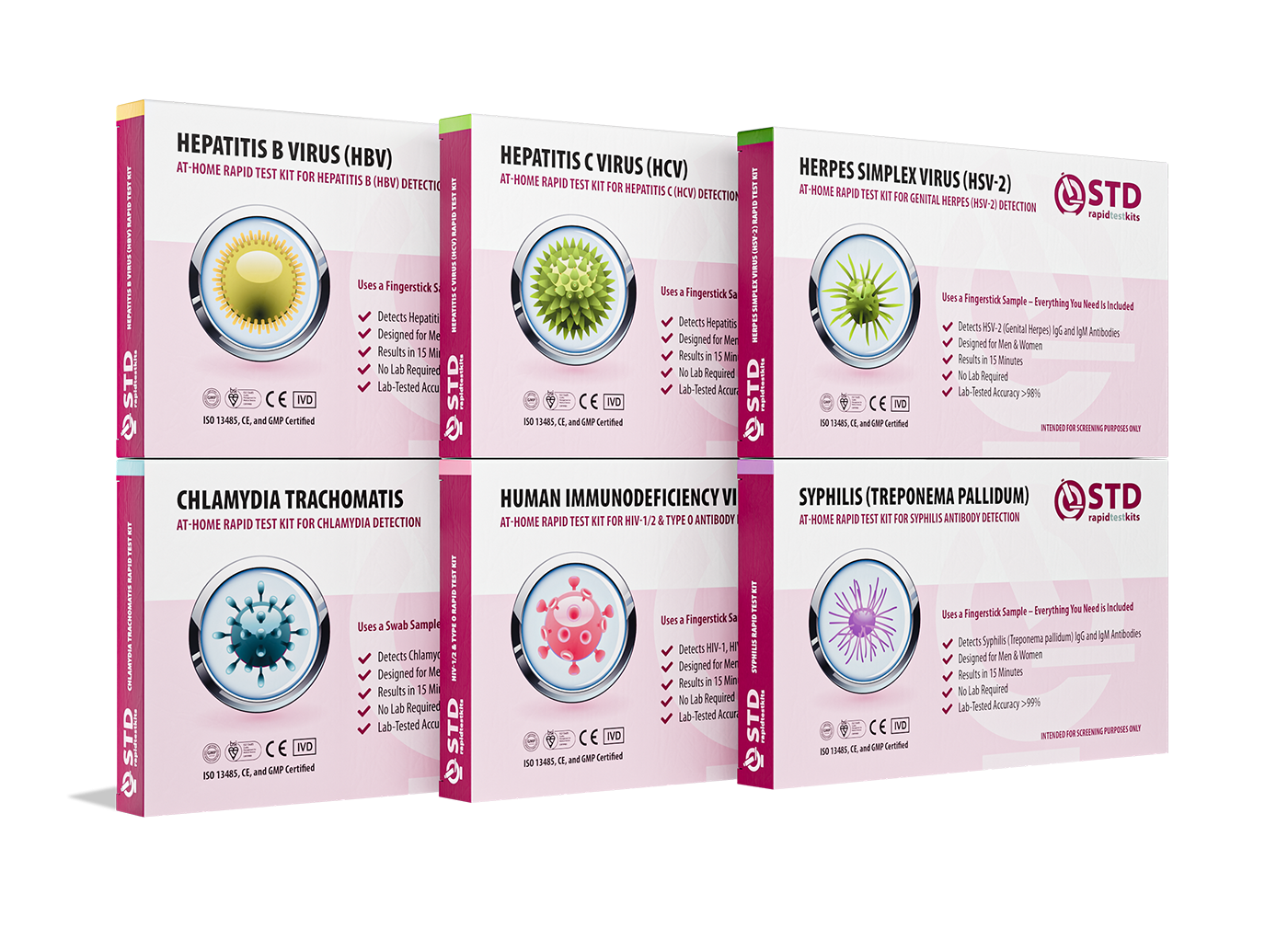 For Men & WomenResults in MinutesNo Lab NeededPrivate & Discreet
Order Now $119.00 $294.00
For all 6 tests
When You Should Definitely Get Tested (Even If You Used Protection)
There’s a common moment people don’t talk about enough: you did everything “right,” used a condom, and now something feels slightly off. Maybe it’s a mild burning sensation, a small bump, or just a gut feeling that you want certainty. This is exactly when testing matters, not because something is definitely wrong, but because guessing won’t give you a real answer.
Testing becomes non-negotiable in a few specific situations. If you notice symptoms like discharge, sores, irritation, or pain during urination, your body is signaling that something has changed. That doesn’t automatically mean an STD, but it does mean your baseline has shifted, and that’s worth checking.
Another situation is not knowing how much exposure there is. The condom might have slipped, broken, or you might not be sure that it was used correctly from start to finish. Even small holes in protection can let infections spread, especially those that are spread through fluids.
Then there’s timing. If you’ve had a new partner or a one-time encounter, even with protection, testing gives you a clean, objective answer instead of relying on probability. This is especially important because many STDs remain asymptomatic while still being transmissible. According to WHO guidance on STIs, a large percentage of infections show no immediate symptoms but can still spread.
Think of testing less like a reaction to danger and more like a routine check-in. It’s how you close the loop. Without it, you’re left in that in-between space where everything feels uncertain.
And if you’re already thinking about it, that’s usually your answer. Testing is the fastest way to stop the mental back-and-forth and replace it with something concrete.
Bottom Line, Condoms Help, But They’re Not the Full Strategy
So let’s bring this back to the original question: do condoms fully prevent STDs? No, but they are still one of the most effective tools you have.
They greatly lower the chance of getting infections that spread through bodily fluids, such as chlamydia and gonorrhea, which are two of the most common STDs. That’s a big deal. Used consistently and correctly, condoms are doing a lot of heavy lifting in protecting your health.
But they don’t cover everything, literally. Skin-to-skin transmitted infections like herpes, HPV, and syphilis can still pass through areas outside condom coverage. That’s not a failure of protection; it’s just how these infections behave biologically.
The real takeaway isn’t to trust condoms less, it’s to understand them better. When you know exactly what they protect against and where their limits are, you can make smarter decisions without second-guessing yourself later.
The most effective approach is simple and realistic: use condoms consistently, stay aware of your body, and test based on actual timelines, not panic. That combination gives you both protection and clarity.
And if you’re ever stuck in that loop of “what if,” remember this: testing isn’t an admission that something went wrong. It’s how you take control of your sexual health with real information instead of assumptions.
FAQs
1. I used a condom the whole time… am I actually safe?
You’re significantly safer, yes, but not completely risk-free. Condoms do a great job blocking fluid-based STDs, which covers a lot. But because they don’t cover all surrounding skin, infections like herpes or HPV can still pass through contact. Think “strong protection,” not “invincibility mode.”
2. So… can you really get an STD even with a condom?
Yeah, it’s possible, and this is where people get frustrated. It doesn’t mean condoms failed; it means some infections don’t need fluid exchange to spread. Skin-to-skin contact is enough for certain STDs, and condoms don’t cover every inch of skin involved.
3. If something feels off after sex, should I panic?
No, but you also shouldn’t ignore it. A lot of post-sex symptoms turn out to be irritation, friction, or even anxiety showing up physically. But if something is new for your body, burning, discharge, a sore, it’s worth testing instead of guessing.
4. How effective are condoms, realistically?
Very effective for what they’re designed to do. They dramatically reduce the risk of infections like chlamydia, gonorrhea, and HIV. The confusion comes from expecting them to cover infections that spread differently, once you understand that, their effectiveness actually makes a lot more sense.
5. What’s the biggest mistake people make with condoms?
Assuming they’re all-or-nothing protection. Either “I’m totally safe” or “they don’t work.” The truth sits in the middle. Also, things like putting it on late or not using it the entire time matter more than people think.
6. Do I really need to get tested if I used protection?
If you want certainty, yes. Protection lowers risk, but testing removes the question entirely. A lot of people don’t test because they feel like they “should be fine”, and then end up stressing longer than necessary.
7. How long should I wait before testing?
This is where timing actually matters more than the test itself. Testing too early can miss an infection completely. Following the exact window periods (like 14 days for chlamydia or 6 weeks for HIV) is what makes your result reliable.
8. What if I have no symptoms at all?
That’s incredibly common. Many STDs don’t cause noticeable symptoms right away, or ever. So feeling “fine” doesn’t always equal being in the clear, which is why routine testing is part of smart sexual health.
9. Are condoms still helpful if they aren't 100%?
Absolutely. They reduce risk in a major way, especially for the most common infections. The goal isn’t perfection, it’s stacking protection in your favor, and condoms are a big part of that.
10. What is the best way to stay safe all the time?
Think in layers: use condoms consistently, test based on real timelines, and keep communication open with partners. That combination gives you both protection and clarity, which is really what most people are looking for in the first place.
Take Control of Your Sexual Health
If you’ve read this far, you already understand the key point: condoms reduce risk, but testing gives you certainty. That combination is what actually puts you in control.
A full STD combo test kit lets you check for multiple infections at once, covering both fluid-based and skin-contact risks. If you want something more specific, you can also look into single STD tests.
If you’re not sure where to start, browsing the STD Rapid Test Kits homepage can help you choose the right option based on your situation. Peace of mind isn’t about guessing, it’s about getting clear answers.
How We Sourced This: Our article was constructed based on current advice from the most prominent public health and medical organizations, and then molded into simple language based on the situations that people actually experience, such as treatment, reinfection by a partner, no-symptom exposure, and the uncomfortable question of whether it “came back.” In the background, our pool of research included more diverse public health advice, clinical advice, and medical references, but the following are the most pertinent and useful for readers who want to verify our claims for themselves.
Sources
3. WHO – Sexually Transmitted Infections Fact Sheet
5. CDC – Genital Herpes Fact Sheet
7. Planned Parenthood – Safer Sex and STD Prevention
About the Author
Dr. F. David, MD is a board-certified infectious disease specialist focused on STI prevention, diagnosis, and treatment. He writes with a direct, sex-positive, stigma-free approach designed to help readers get clear answers without the panic spiral.
Reviewed by: Rapid STD Test Kits Medical Review Team | Last medically reviewed: April 2026
This article is for informational purposes and does not replace medical advice.


