






Quick Answer: Symptoms that worsen after swimming are often caused by chlorine irritation, but they can also reveal an underlying infection like a yeast infection, BV, or STD that was already present but unnoticed.
This Isn’t Random, Why Water Changes How Your Body Feels
Water, especially chlorinated pool water, doesn’t just sit on your skin. It interacts with it. Chlorine is designed to kill bacteria, but in doing so, it also strips away natural oils and disrupts your skin’s protective barrier.
That matters more than people realize. The genital area is already sensitive, with thinner skin and a delicate balance of bacteria and pH. When chlorine hits that environment, it can cause dryness, irritation, and microscopic inflammation that makes everything feel amplified.
So if you step out of a pool and suddenly notice itching or burning, your first instinct might be, “Did something just happen?” But in many cases, what actually happened is that chlorine exposed something that was already there.
“I didn’t feel anything before swimming,” one patient shared. “But after the pool, it felt like my whole body was trying to tell me something.”
That “something” isn’t always new. It’s often just more noticeable.
Chlorine Irritation vs Infection: What Feels Different in Real Life
This is where things get confusing, and where most people spiral. Because chlorine irritation and infections can overlap in how they feel, especially in the early stages.
The main difference isn't just how it feels; it's also how it happens, when it happens, and what happens next.
| Feature | Chlorine Irritation | Possible Infection (Yeast, BV, STD) |
|---|---|---|
| Onset | Immediately or within hours after swimming | May already exist but becomes noticeable after swimming |
| Itching/Burning | Surface-level, dry, stinging sensation | Deeper, persistent, may intensify over time |
| Discharge | Usually none | Often present (thick, thin, or unusual color/odor) |
| Odor | No change | Possible strong or unusual odor |
| Duration | Improves within 24–48 hours | Persists or worsens without treatment |
If your symptoms fade quickly, it’s likely irritation. But if they linger, evolve, or come with discharge or odor, that’s when the conversation shifts toward infection.
And this is where people often get tripped up: chlorine doesn’t cause STDs, but it can make existing symptoms impossible to ignore.
People are also reading: No Symptoms, Still Positive: What Hep C Means for You Now
When Chlorine “Triggers” Symptoms You Didn’t Notice Before
This is the part no one explains clearly enough. Chlorine doesn’t create infections like herpes or chlamydia. But it can absolutely aggravate the skin and mucous membranes in a way that makes underlying conditions suddenly obvious.
Think of it like turning up the contrast on a photo. The details were always there, you just couldn’t see them as clearly.
For example, someone with a mild yeast imbalance might not feel anything during the day. But after swimming, when the skin is dry and slightly inflamed, that same imbalance can suddenly feel like intense itching.
In other cases, friction from swimsuits combined with chlorine can irritate areas where viral infections like herpes are active, making tingling or sensitivity more noticeable.
“I thought I got something from the pool,” another patient explained. “But my doctor told me it was already there, I just hadn’t noticed it until the irritation made it flare.”
This is why timing matters so much. If symptoms appear after swimming but don’t resolve, it’s worth asking a deeper question: not “What did I get from the pool?” but “What was already going on that this revealed?”
The Pool Isn’t the Risk, But Your Timeline Matters
Let’s clear this up directly: you cannot get an STD from swimming in a pool. Chlorinated water does not facilitate the survival of pathogens such as gonorrhea, chlamydia, or HIV.
But the timing of symptoms can still feel suspicious, especially if you’ve had a recent sexual encounter. That’s where understanding your own timeline becomes more important than the pool itself.
| Scenario | What It Likely Means |
|---|---|
| Symptoms start immediately after swimming and fade quickly | Likely chlorine irritation |
| Symptoms appear after swimming and persist for days | Possible underlying infection revealed |
| Recent sexual exposure + symptoms worsen after swimming | Swimming may have amplified early infection symptoms |
| No prior symptoms, but now itching/burning continues | Worth testing to rule out yeast, BV, or STD |
This is where people often sit in uncertainty, trying to connect the pool to something it didn’t cause, while missing the bigger picture.
If something feels different in your body and it doesn’t go back to baseline, that’s your signal. Not panic. Not assumptions. Just a signal to check in and get clarity.
What It Actually Feels Like: Real Symptoms People Notice After Swimming
People rarely describe this in clinical terms. They don’t say “mild irritation” or “transient inflammation.” They say things like: “It burns when I sit down,” or “It suddenly feels raw,” or “Why does it itch so much now?”
That language matters, because the way symptoms feel can tell you more than the fact that they exist. Chlorine irritation tends to feel sharp, dry, and immediate. It’s the kind of discomfort that makes you hyper-aware of your skin, especially when you move or touch the area.
Infections, on the other hand, often feel worse and last longer. The sensation doesn’t just sit on the surface, it lingers, evolves, and sometimes brings other changes with it.
“It wasn’t just itching,” one person explained. “It was like this constant awareness that something wasn’t right, even hours later.”
That distinction, surface irritation versus something that sticks around, is one of the most useful clues your body gives you.
Check Your STD Status in Minutes
Test at Home with Remedium7-in-1 STD Test Kit

 For Men & Women
 Results in Minutes
 No Lab Needed
 Private & Discreet
Order Now $129.00 $343.00
For all 7 tests
Beyond Chlorine: Other Poolside Factors That Make Symptoms Worse
Chlorine gets all the blame, but it’s not working alone. Swimming environments create a perfect storm of small stressors that can push your body just enough to reveal underlying issues.
Wet swimsuits, for example, trap moisture and heat. That environment can encourage yeast overgrowth or bacterial imbalance, especially if you stay in damp fabric for hours.
Then there's friction. Swimsuits that are too tight, sand, and moving around can make skin that is already sensitive even more so, especially if there is a small infection or inflammation starting to form.
Even the act of shaving before swimming can play a role. Micro-abrasions in the skin combined with chlorine exposure can make everything feel more intense than it actually is.
So when symptoms show up after swimming, it’s rarely just one cause. It’s usually a combination, chemical irritation, moisture, friction, and whatever your body was already dealing with quietly.
When It’s Not Just Irritation Anymore
This is the turning point most people struggle with. How long do you wait before deciding it’s not “just the pool” anymore?
The answer isn’t about a specific hour count, it’s about progression. Irritation should calm down as your skin recovers. Infection tends to do the opposite.
If your symptoms change, get worse, or spread beyond the original feeling, it's time to take them seriously.
These are the patterns that are most important:
- Symptoms lasting more than 48 hours: Irritation should improve, not linger
- New discharge or odor: Strong indicator of infection rather than chlorine
- Pain during urination or sex: Suggests deeper involvement beyond surface irritation
- Visible sores, bumps, or lesions: Not caused by chlorine alone
If you’re seeing any of these, it’s no longer about guessing. It’s about confirming what’s going on.
The Quiet Infections That Swimming Can Reveal
Not all infections announce themselves loudly. Some sit in the background, subtle enough to ignore, until something like chlorine irritation brings them into focus.
Yeast infections can start as mild imbalance and suddenly feel intense after swimming. Bacterial vaginosis (BV) may not be obvious until changes in discharge or odor become more noticeable.
And then there are STDs like chlamydia or gonorrhea, which can be completely silent at first. No pain. No clear symptoms. Just a vague sense that something feels “off” once irritation enters the picture.
This is why relying on symptoms alone can be misleading. The absence of dramatic signs doesn’t mean nothing is there, it just means your body hasn’t made it obvious yet.
“I kept telling myself it was just the chlorine,” one patient said. “But it didn’t go away. That’s when I knew I needed to check.”
People are also reading: Sore Throat After a Hookup? It Might Be an STD
You’re Not Overreacting, You’re Noticing a Pattern
There’s a moment a lot of people hit where they second-guess themselves. “Am I overthinking this?” “Is this normal?” “Should I just wait it out?”
But noticing that your symptoms got worse after swimming isn’t overreacting, it’s pattern recognition. Your body changed, and you’re paying attention to it.
The goal isn’t to jump to worst-case scenarios. It’s to move from uncertainty to clarity. And the fastest way to do that isn’t guessing, it’s testing.
If something feels different and it’s not resolving, you deserve a clear answer. Not in a week. Not after endless Googling. Just a straightforward result you can act on.
Take control of that uncertainty. You can use a discreet at-home combo STD test kit to check multiple infections at once, without waiting rooms or awkward conversations.
Because peace of mind doesn’t come from guessing, it comes from knowing.
So… What Should You Actually Do Next?
This is where everything comes together. You’ve noticed the symptoms. You’ve connected that they got worse after swimming. Now the question becomes: do you wait, treat it like irritation, or take the next step?
The answer depends on how your body responds over the next 24 to 48 hours. If things calm down quickly, you’re likely dealing with chlorine-related irritation. That’s uncomfortable, but temporary.
But if your symptoms stick around, or start evolving into something more specific, that’s your signal to stop guessing and start confirming.
Because here’s the reality: irritation fades. Infections persist.
A Simple Decision Path You Can Actually Follow
When your brain is spinning, you don’t need more information, you need a clear path. Here’s a grounded way to think through what’s happening in your body.
| What You’re Experiencing | What It Likely Means | What To Do |
|---|---|---|
| Mild itching or burning that fades within 1–2 days | Chlorine or friction irritation | Let skin recover, avoid further irritation |
| Persistent itching, discomfort, or sensitivity | Possible yeast or bacterial imbalance | Monitor closely or consider testing |
| Discharge, odor, or unusual texture changes | Likely infection (BV, yeast, or STD) | Get tested as soon as possible |
| Sores, bumps, or pain that worsens | Possible STD or active infection | Do not wait, seek testing and care |
This isn’t about jumping to conclusions, it’s about matching your next step to what your body is showing you.
Testing Isn’t a Last Resort, It’s Clarity
A lot of people treat testing like something you do only when things get “bad enough.” But that mindset is what keeps people stuck in anxiety loops for days or even weeks.
Testing isn’t an overreaction. It’s a way out of uncertainty.
If you’ve had a recent sexual encounter and something feels different, even if it only became obvious after swimming, that’s reason enough to check. Not because something is definitely wrong, but because you deserve to know either way.
“I wish I hadn’t waited,” one person shared. “The not knowing was worse than the result.”
That’s the part no one talks about enough. The mental load of uncertainty can be heavier than the outcome itself.
You can skip that spiral. Start with a trusted at-home testing option or go straight to a combo STD test kit that checks for multiple infections in one go.
No waiting rooms. No awkward conversations. Just answers.
Check Your STD Status in Minutes
Test at Home with Remedium8-in-1 STD Test Kit
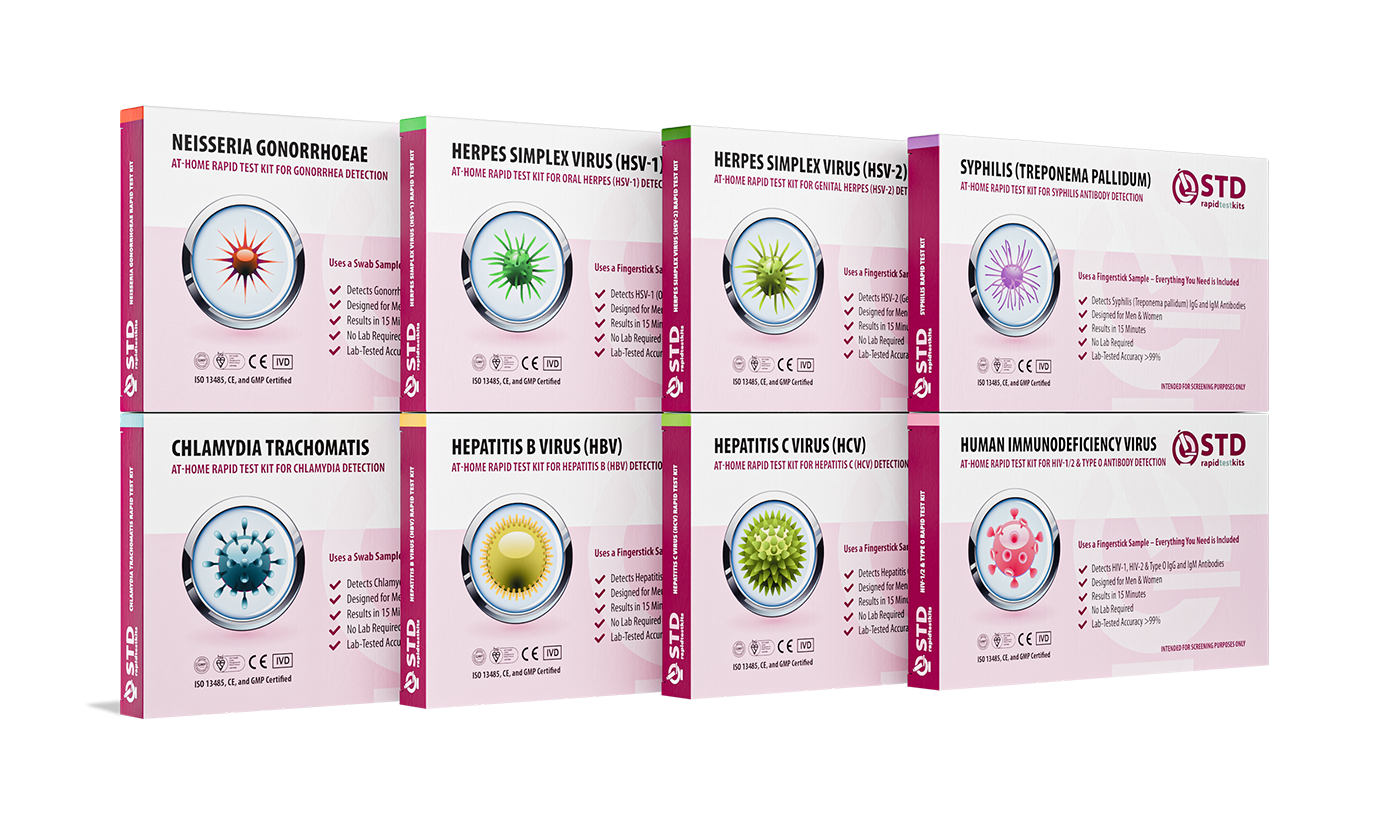 For Men & WomenResults in MinutesNo Lab NeededPrivate & Discreet
Order Now $149.00 $392.00
For all 8 tests
Before You Panic, Read This Part Twice
Swimming didn’t give you an STD. Chlorine didn’t create an infection out of nowhere. What it may have done is highlight something your body was already trying to tell you.
And that’s not a failure, it’s awareness.
Your body isn’t working against you here. It’s giving you a signal, and you’re paying attention to it. That’s exactly what you’re supposed to do.
Whether this turns out to be simple irritation or something that needs treatment, you’re already doing the right thing by asking questions instead of ignoring it.
Clarity is always better than guessing. Every time.
FAQs
1. Wait, so chlorine didn’t actually cause this?
Right. Chlorine didn’t give you an infection out of nowhere. What it can do is irritate your skin just enough to make something that was already there suddenly feel obvious, like turning the lights on in a room you thought was empty.
2. Why did it feel totally fine before I got in the pool? Because a lot of infections start quietly. No drama, no obvious signs. Then you add chlorine, friction, and dryness, and suddenly your body’s like, “Hey… we need to talk.”
3. It burns after swimming, should I be worried? Not automatically. A quick, stingy, surface-level burn right after the pool is usually just irritation. But if you’re still noticing it the next day, or it starts to feel deeper, sharper, or more constant, that’s when it’s worth paying closer attention.
4. Can chlorine mess with things like yeast or BV? Yeah, indirectly. Chlorine can throw off your natural balance a bit, especially if you’re sitting in a wet swimsuit for a while. It doesn’t “create” an infection, but it can make your environment more welcoming for one that was already starting.
5. I’m noticing discharge now too… does that change things? It does. Chlorine irritation alone doesn’t usually cause discharge. If you’re seeing changes in texture, color, or smell, your body is likely dealing with something beyond simple irritation, and that’s your cue to stop guessing.
6. Could this be herpes flaring up after swimming? It’s possible, but not because of the chlorine itself. More because of the irritation and friction that come with swimming. If there’s tingling, sensitivity, or small sores showing up, that’s something to take seriously and get checked.
7. How long should I wait before I do something about it? Give it about 24 to 48 hours. If it’s just irritation, your body usually settles down pretty quickly. If it’s still there, or evolving, you’ve got your answer: it’s time to look deeper.
8. Is it weird that I’m overthinking this? Not even a little. This is exactly how people figure things out, something feels off, and you start connecting dots. You’re not being dramatic. You’re being aware.
9. What if I just ignore it and hope it goes away? Sometimes it will. But if it doesn’t, you’ve just delayed getting clarity, and probably stressed yourself out in the process. There’s a difference between giving your body a day to recover and pretending nothing’s happening.
10. What’s the easiest way to just know what’s going on? Testing. Not as a worst-case move, but as a clarity move. You check, you get an answer, and you stop running scenarios in your head. That shift alone is worth it.
You Deserve Clarity, Not Guesswork
Symptoms after swimming can feel confusing fast. One minute you’re fine, the next your body feels off, and your brain starts filling in worst-case scenarios. The goal isn’t to panic over every itch or sensation. The goal is to figure out what’s just irritation… and what isn’t.
If your symptoms faded within a day or two, your skin likely just reacted to chlorine, friction, or moisture. If they stuck around, changed, or started bringing new signs like discharge or pain, that’s your cue to look deeper. Not because something is definitely wrong, but because clarity matters more than guessing.
Don’t wait and wonder. If infection is even a possibility, start with a private, straightforward screen like the Combo STD Home Test Kit. Your results stay confidential. Your next steps stay in your control. And knowing what’s actually going on always feels better than guessing.
How We Sourced This Article: This guide blends clinical guidance on skin irritation, vaginal health, and sexually transmitted infections with peer-reviewed research on chemical irritants and mucosal sensitivity. We used real-world symptom patterns and patient-reported experiences to show how these problems really show up outside of clinical settings, and we based all of our differences on trusted medical sources.
Sources
1. Centers for Disease Control and Prevention – Sexually Transmitted Diseases Overview
3. The World Health Organization's fact sheet on sexually transmitted infections
4. PubMed – Skin Barrier Function and Chemical Irritants
5. Planned Parenthood – STD Symptoms and Testing
6. Cleveland Clinic – Vaginitis Overview
7. DermNet NZ – Irritant Contact Dermatitis
8. American College of Obstetricians and Gynecologists – Vaginitis FAQ
About the Author
Dr. F. David, MD is a board-certified infectious disease specialist focused on STI prevention, diagnosis, and treatment. He combines clinical precision with a direct, sex-positive approach that prioritizes clarity, privacy, and patient empowerment.
Reviewed by: Daniel R. Kessler, MD, Sexual Health & Infectious Disease Specialist | Last medically reviewed: March 2026
This article is only meant to give you information and should not be used as a substitute for professional medical advice, diagnosis, or treatment.


