Published: October 2025 | Last updated: May 2026 | Editorial review and quality control: Martina N.
A positive hepatitis C result when you feel completely fine is one of the most disorienting test outcomes there is. No fatigue. No yellowing of the eyes. No abdominal pain. And yet the screen says positive. That gap between how you feel and what the test shows trips up almost everyone who lands here, and it is the single biggest reason hepatitis C earned the nickname “the silent virus.”
The reassuring part: a positive screening test is the start of a process, not a verdict. Modern hepatitis C is curable in over 95% of cases with a short course of daily pills, and the steps from result to recovery are well mapped. This guide walks you through what to do next, what the second test actually proves, and what treatment looks like in 2026.
Key Takeaways
- An antibody test only confirms past exposure. A follow-up HCV RNA (PCR) test is what confirms an active infection.
- Direct-acting antiviral pills cure over 95% of cases in 8 to 12 weeks. Treatment today is short, oral, and well tolerated.
When the diagnosis doesn't match how you feel
Hepatitis C does not announce itself the way the flu or strep does. The U.S. Centers for Disease Control and Prevention notes that most people with acute hepatitis C have no symptoms at all, and many people with chronic infection feel fine for years or even decades (CDC Hepatitis C Basics). The virus settles into liver cells quietly and damages them slowly. By the time symptoms like jaundice, persistent fatigue, dark urine, or abdominal pain show up, scarring may already be advanced.
That is why screening matters more than waiting for symptoms. The CDC now recommends at least one hepatitis C screen for every adult age 18 and older, regardless of perceived risk, and screening during every pregnancy. You cannot rule out hepatitis C based on how you feel.
Feeling healthy right now does not mean the result is wrong. It means the virus has not yet produced the kind of damage that breaks through into noticeable symptoms. Some people do report subtle clues in hindsight, persistent low-grade tiredness, foggy thinking, or longer-than-usual recovery from a few drinks, but those signs are easy to attribute to almost anything else. A positive test cuts through the guesswork.
The CDC recommends at least one hepatitis C screen for every adult aged 18 and older, regardless of perceived risk, and screening during every pregnancy. The reason is that most chronic infections show no symptoms for years, so a risk-based approach misses too many cases. Screening is the only reliable way to catch the virus before liver damage accumulates.
So you tested positive. What now?
The first instinct is usually detective work: did it come from an ex, a tattoo, an old hospital visit? Save that question for later. Step one is confirming the result. Most rapid hepatitis C tests detect antibodies, which prove your immune system has encountered the virus at some point. Antibodies cannot tell whether the virus is still active in your blood right now. That is what the second test is for.
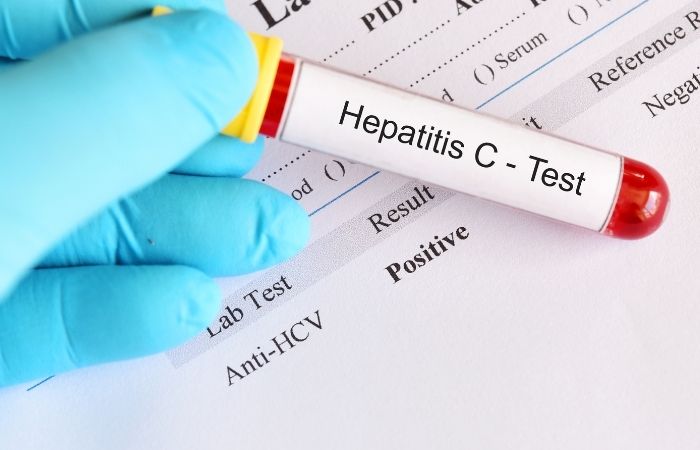
The confirmatory test is an HCV RNA test, also called a PCR test. It looks for genetic material from the virus itself, not the antibody response. A reactive antibody plus a positive RNA test means the infection is active and you are a candidate for treatment. A reactive antibody with a negative RNA test usually means one of two things: you cleared the virus spontaneously (around 30% of people clear the virus on their own within 6 months of infection, with estimates ranging from 15% to 45%, per the WHO hepatitis C fact sheet), or the antibody screen was a false positive.
To get the RNA test, contact a primary care provider, a sexual health clinic, a telehealth service, or your local health department. Most offer the blood draw within a few days. If insurance is a barrier, ask about free or sliding-scale clinics; the CDC's hepatitis division also maintains a national directory of testing and treatment sites.
| Test | What it detects | What a positive result means |
|---|---|---|
| HCV antibody test (rapid or lab) | Antibodies from past or present exposure | You have been exposed at some point; active infection not yet confirmed |
| HCV RNA / PCR (confirmatory) | Viral genetic material in the blood | Active hepatitis C infection; eligible for treatment |
| HCV viral load (quantitative RNA) | Amount of virus in the blood | Used to monitor treatment response over time |
But I don't know how I got it
Plenty of people who test positive for hepatitis C cannot point to a clear exposure. That is normal, and it does not change what the test shows or what you need to do next. The CDC lists the most common transmission routes as injection drug use (including a single past episode), receipt of blood products before widespread donor screening began in 1992, occupational needle-stick injuries, birth to a parent with hepatitis C, and tattoos or piercings in unregulated settings.
Less commonly, the virus passes through shared personal items that may carry trace blood, such as razors, toothbrushes, or nail clippers, and through sexual contact involving blood (rough sex, sex during menstruation, or sex among people with HIV co-infection). Casual contact like hugging, sharing meals, kissing, or coughing does not transmit hepatitis C.
Some exposures trace back decades. A medical procedure done before sterilization standards tightened. A transfusion in childhood. A dental visit during a trip abroad. Many people never identify the source. That uncertainty does not make the diagnosis less real, and it does not make treatment any less effective. How the virus entered matters less than what happens next, and what happens next is a short course of antiviral medication that clears the infection in the large majority of cases.
Treatment today is short, oral, and curative
If the RNA test confirms active hepatitis C, the next step is treatment with direct-acting antivirals (DAAs). These are pills, usually taken once a day for 8 to 12 weeks. They work by blocking specific proteins the virus needs to copy itself, and they have transformed hepatitis C from a long, harsh treatment course into a short, generally well-tolerated one. Cure rates with modern DAAs run above 95% across most populations, including people who have lived with the virus for decades (AASLD and IDSA HCV Guidance).
Older interferon-based therapies, the ones that gave hepatitis C treatment its grim reputation, are no longer first-line. Most patients now take a single pill or a fixed-dose combination, often without needing genotype testing for certain pan-genotypic regimens. Common side effects are mild: headache, fatigue, sometimes nausea. Severe side effects are uncommon.
Before starting, the provider typically runs a few baseline labs (a complete blood count, liver function panel, kidney function) and assesses for liver scarring with a FibroScan or, in some cases, an ultrasound. Scarring does not disqualify you from treatment. Even people with cirrhosis can be treated successfully, and clearing the virus reduces the risk of further damage, liver cancer, and the need for transplant.
| Treatment generation | Length | Side effect profile | Cure rate (SVR12) |
|---|---|---|---|
| Direct-acting antivirals (current standard) | 8 to 12 weeks | Mild: fatigue, headache, occasional nausea | Above 95% |
| Older interferon plus ribavirin (legacy) | 24 to 48 weeks | Severe: flu-like symptoms, depression, anemia | Approximately 50% to 70% |
Do you need to retest after treatment?
Yes. The retest is not a formality. It is what proves the cure. Twelve weeks after the last dose of antiviral medication, your provider will order another HCV RNA test. If the virus is undetectable at that point, you have achieved sustained virologic response (SVR12), the clinical definition of cure. SVR12 is considered a functional cure; late relapses after completing treatment are clinically rare, and any post-cure positive RNA is more often a new exposure than true relapse (AASLD and IDSA HCV Guidance).
One source of confusion after treatment: your antibody test will stay positive for life, even after you are cured. That is your immune memory, not active infection. Going forward, the only test that matters for current status is the RNA test. If you ever have a new blood-contact exposure, the antibody test cannot tell whether the new event led to infection. Only the RNA test can.
People who continue to have risk factors after cure (new partners with unknown status, ongoing injection drug use, hemodialysis, certain occupational exposures) should plan on regular RNA testing rather than relying on antibody screens. Reinfection is possible, and the antiviral medications work just as well the second time around.
Direct-acting antiviral medicines (DAAs) can cure more than 95% of persons with hepatitis C infection, but access to diagnosis and treatment is low.
Who should you tell, and when?
You are not obligated to broadcast a hepatitis C diagnosis. The relevant question is who has shared the kinds of contact that could have transmitted it: blood, needles, sometimes high-risk sex. Public health practice usually focuses on partners and household contacts over the recent past, often the last six months for sexual partners and longer for people who shared injection equipment.
Telling someone gives them the option to get tested and, if positive, to start treatment before damage accumulates. A notification is not a confession, it is information. Many local health departments offer anonymous partner notification services where the department contacts named partners without revealing your identity. Those services exist precisely so the burden of the conversation does not fall on one person.
If you decide to do it yourself, the simpler the message, the easier it lands. Something like: “I recently tested positive for hepatitis C. It spreads mainly through blood and rarely through sex. I am starting treatment. I wanted to let you know so you can get tested if you choose to.” That covers what they need without inviting argument or self-blame.
Most U.S. local health departments offer anonymous partner notification services. The department contacts named sexual or needle-sharing partners about a possible exposure without revealing your identity. If a direct conversation feels too heavy, this is a way to give partners the chance to test without taking on the full emotional weight yourself. Search your state or county health department site for “partner services” or call their STI/HCV line.
Can you live normally after hepatitis C?
For almost everyone who completes treatment and achieves SVR12, yes. Daily life looks the same as before. You can have sex, get tattoos at a licensed studio, donate blood after the required waiting period and per your country's rules, travel, exercise. The virus is gone, and the liver, in most cases, recovers significantly even where scarring was present.
A few practical caveats during and after treatment. Alcohol stresses the liver, so most providers recommend reducing or stopping intake at least during the treatment window, and longer if scarring was significant. People with advanced fibrosis or cirrhosis at diagnosis stay in liver-cancer surveillance with periodic ultrasound for years after cure, because the cancer risk does not drop to zero immediately even when the virus is eliminated. And new exposures still matter: cured does not mean immune.
The emotional side often lingers longer than the medical side. A positive result can shake your sense of your own body, especially if the diagnosis came out of the blue. That part is normal too, and it tends to settle once treatment is underway and the second RNA test comes back negative.

Untangling stigma from the science
Hepatitis C stigma is largely a holdover from older public health messaging that tied the virus tightly to injection drug use. The science has moved past that framing. Blood-to-blood contact in any form can transmit hepatitis C: medical equipment that was not properly sterilized, tattoos or piercings in unlicensed shops, transfusions before donor screening was universal, occupational exposures in healthcare, and shared personal-care items at home where blood may be involved.
None of these routes implies anything about who you are or how you have lived. Millions of people in the United States are estimated to be living with hepatitis C, and a meaningful share have no behavioral risk factor they can identify (CDC Hepatitis C). The CDC's universal screening recommendation exists precisely because risk-based screening misses too many cases.
Honest information also corrects a lot of the rumors that still circulate. The table below gathers the most common claims and where they stand against current evidence.
| Common claim | Reality |
|---|---|
| You can catch hepatitis C from kissing or sharing food | No. Hepatitis C does not spread through saliva or casual contact. |
| Only people who use injection drugs get hepatitis C | No. Medical, occupational, household, and tattoo-related exposures are common too. |
| Hepatitis C is a sexually transmitted disease | Sometimes. Sexual transmission is uncommon unless blood is involved or HIV co-infection raises risk. |
| You will always feel symptoms if you have it | No. Most people with chronic infection feel fine for years. |
| Hepatitis C is incurable | No. Direct-acting antivirals cure over 95% of cases in 8 to 12 weeks. |
Private at-home testing as a first step
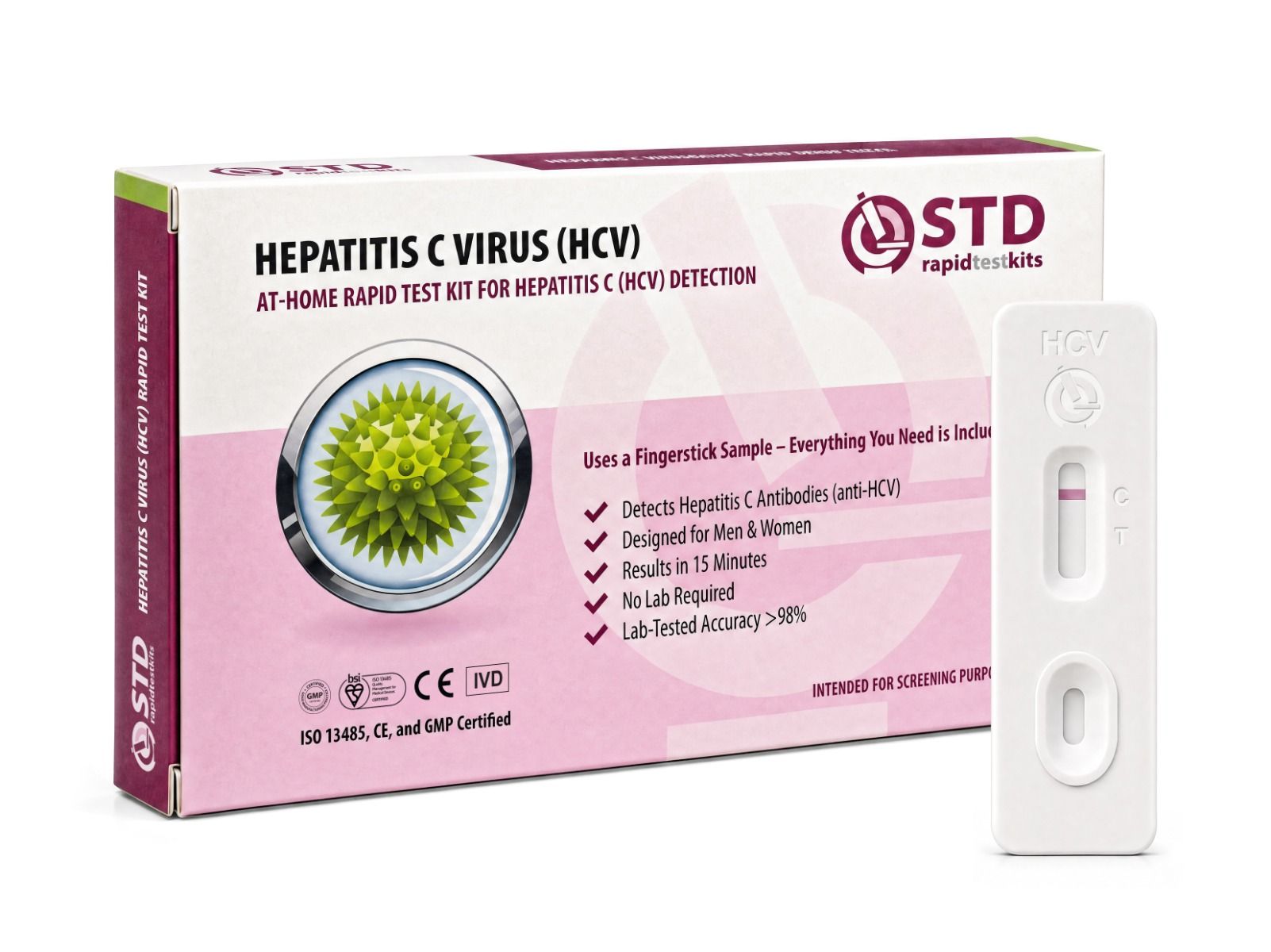
One of the practical barriers to hepatitis C testing is not the test itself; it is everything around it. The clinic visit, the awkward intake form, the possibility of running into someone you know in the waiting room. At-home antibody screening removes that friction. A rapid fingerstick test ordered to your home gives you a result in about 15 minutes, in plain unmarked packaging, on your own schedule.
What a home test cannot do is replace the confirmatory RNA test. The antibody result is the first step. If it is reactive, the next step is a clinic blood draw for HCV RNA. That two-step pattern is the same one clinics use; the difference is only where the first step happens. People without a primary care provider can ask any telehealth service to order the RNA confirmation; many will issue the lab order without an in-person visit.
Combination kits when you want broader coverage
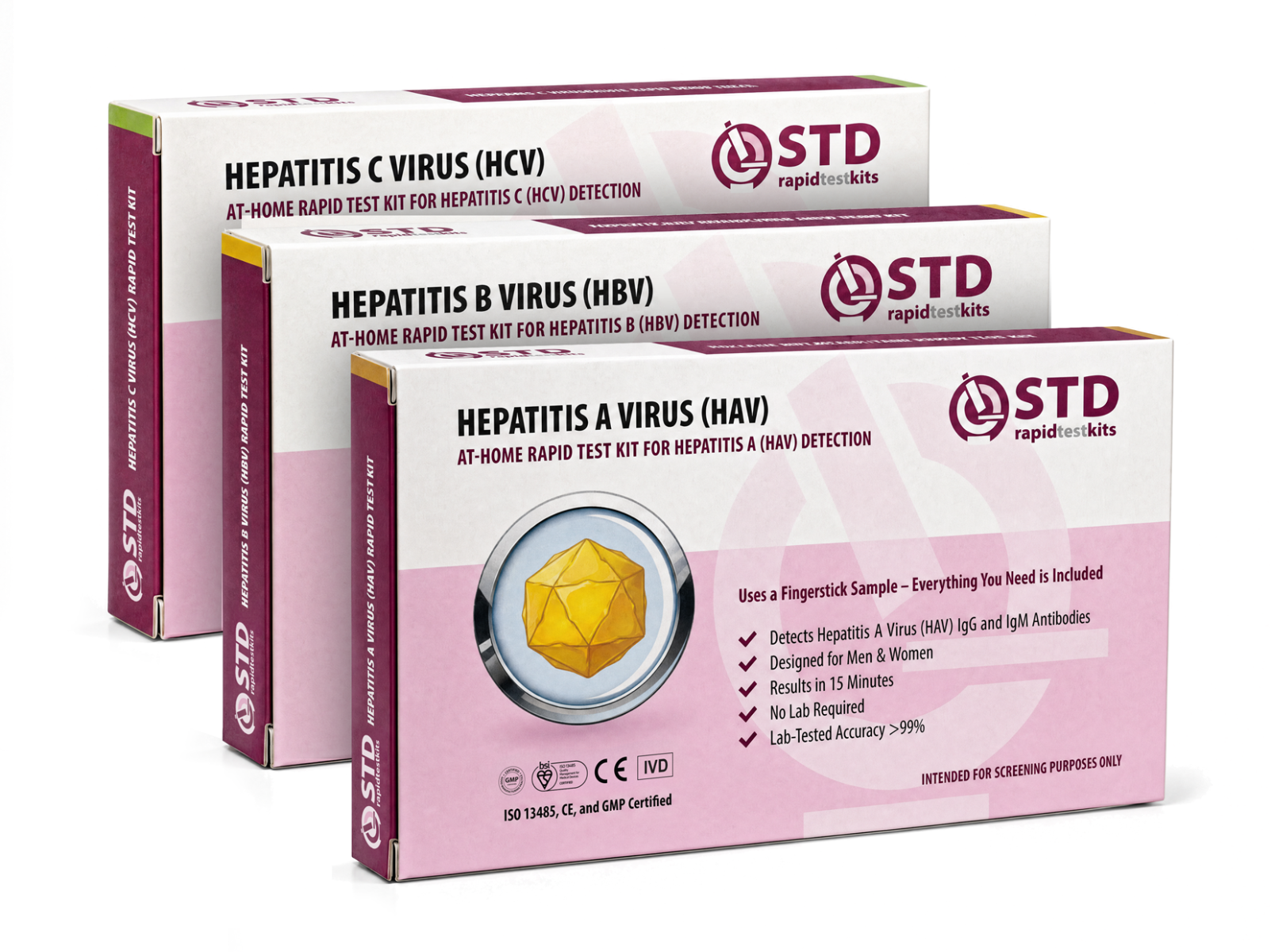
For people screening more broadly, especially with a new partner or after a single uncertain exposure, a combo home kit can cover hepatitis B and C in one fingerstick. Both are bloodborne, both have their own window-period considerations, and both benefit from regular checks if any of your circumstances has changed.
Hepatitis B is worth screening for alongside hepatitis C because the two viruses share some transmission routes and because hepatitis B has its own vaccination story that hepatitis C does not. Knowing your status on both opens up vaccination, surveillance, and treatment options that a single-virus test cannot.
You took the harder step already
Testing in the absence of symptoms is one of the highest-yield things anyone can do for their own health, and it is the only way most hepatitis C infections come to light. The result you have now, even if it landed harder than expected, gives you options the people who do not test do not have.
The roadmap from here is short and concrete. None of it requires you to feel sick first, and none of it requires you to know exactly how you got here.
Your next steps
- Confirm a reactive antibody result with an HCV RNA (PCR) blood test through a provider or telehealth service.
- If RNA is positive, start direct-acting antiviral pills, usually 8 to 12 weeks of once-daily oral medication.
- Retest with HCV RNA 12 weeks after your last dose to document SVR12 and confirm cure.
- Notify anyone who may have shared a relevant blood exposure so they can test, using anonymous partner-notification services if direct conversation feels too hard.
- Reduce or stop alcohol during treatment, and longer if liver scarring is present.
- Stay in routine HCV RNA screening if any of your circumstances changes again, since cure does not mean immunity.
FAQs
- Can I really have hepatitis C and feel completely fine?
- Yes. The CDC notes that chronic hepatitis C infection is typically asymptomatic, with jaundice or persistent fatigue appearing only after substantial liver scarring has accumulated. Feeling well is not evidence against an active infection, which is why universal screening is recommended for every adult.
- If I have no symptoms, do I actually need treatment?
- Yes. Symptoms are not the trigger for treatment; viral presence is. As long as the virus is active in your blood, it continues to damage liver tissue, raising the long-term risk of cirrhosis and liver cancer. Direct-acting antivirals work just as well in asymptomatic infections, and starting earlier preserves more liver function.
- Could the rapid test be a false positive?
- Yes, which is why a reactive antibody result always requires an HCV RNA confirmation test before any treatment decision is made. A negative RNA after a reactive antibody usually means either a false positive on the antibody screen, or a true past infection that you cleared on your own. The confirmation test removes the guesswork.
- Can I pass hepatitis C to someone if I have no symptoms?
- If the virus is active in your blood (positive RNA), you can transmit it through blood-to-blood contact regardless of how you feel. That includes shared injection equipment, shared razors or toothbrushes that may carry trace blood, and rough sex or sex during menstruation. It does not include kissing, hugging, sharing food, or coughing.
- After treatment, will I still test positive?
- Your antibody test will likely stay positive for the rest of your life. That is immune memory, not active infection. The test that matters for current status is HCV RNA. After successful treatment, RNA should be undetectable at the 12-week post-treatment check. If RNA stays negative at that point, you are considered cured.
- How is hepatitis C cured exactly?
- Direct-acting antivirals (DAAs) block proteins the virus needs to replicate. Most regimens are oral pills taken once daily for 8 to 12 weeks. Cure rates exceed 95%, including in patients with longstanding infection and in those with some liver scarring. The clinical endpoint of cure is sustained virologic response at 12 weeks post-treatment (SVR12), measured by HCV RNA.
- Do I need to tell my sexual partner?
- Sexual transmission of hepatitis C is uncommon outside of blood-involved scenarios or HIV co-infection, but anyone you have shared blood exposure with (rough sex, sex during menstruation, shared razors at home) deserves the chance to test. Local health departments offer anonymous partner notification if a direct conversation feels too hard.
- Can I still drink alcohol with hepatitis C?
- Most providers recommend reducing or stopping alcohol during treatment, and longer if liver scarring is present. Alcohol stresses the liver independently, and combining it with active hepatitis C accelerates damage. After cure, moderate intake is generally tolerated in patients without significant fibrosis, but discuss with your doctor based on your liver assessment.
How we sourced this article: This guide summarizes current hepatitis C guidance from the U.S. Centers for Disease Control and Prevention, the World Health Organization, the American Association for the Study of Liver Diseases (AASLD), Mayo Clinic, and peer-reviewed clinical references. It is intended as a plain-language explainer to help readers move from a screening result to next steps. It is not a substitute for advice from a licensed clinician.
- U.S. Centers for Disease Control and Prevention. Hepatitis C overview, screening recommendations, and transmission information.
- U.S. Centers for Disease Control and Prevention. Hepatitis C basics: symptoms, testing, asymptomatic infection, and treatment outcomes.
- World Health Organization. Hepatitis C fact sheet: global epidemiology, spontaneous clearance rates (around 30%, range 15 to 45%), and direct-acting antiviral cure rates above 95%.
- American Association for the Study of Liver Diseases and Infectious Diseases Society of America. HCV guidance: testing, managing, and treating hepatitis C, including DAA regimens, SVR12 follow-up, and post-cure relapse vs. reinfection.
- Mayo Clinic. Hepatitis C: symptoms, causes, complications, and treatment overview.
- U.S. Centers for Disease Control and Prevention. Vital Signs: Newly reported acute and chronic hepatitis C cases in the United States.
