







Quick Answer: Symptoms after a threesome can include burning, discharge, sores, or nothing at all. Most STDs don’t show symptoms immediately, so testing at the right time, usually 7 to 14 days and again at 4 to 6 weeks, is key.
This Is the Part No One Talks About After the Fun Ends
In the moment, everything feels controlled. Maybe there were boundaries, maybe protection was used, maybe everyone seemed healthy. But afterward, your brain starts replaying the details in slow motion.
Did the condom stay on the whole time? Was there oral contact between partners? Did anything switch mid-way without you noticing? These are the questions that creep in when your body does something even slightly unfamiliar.
One patient described it like this:
“I wasn’t panicking right away. It was day four when I noticed a weird irritation. That’s when everything hit me at once.”
That delay is important. Most STD symptoms don’t show up immediately, and some don’t show up at all. That’s why what you’re feeling right now might be something, or it might be nothing. But guessing is where people get stuck.
What Your Body Might Be Telling You (And What It Might Not)
Let’s get grounded in reality. After a threesome, your body can react in ways that have nothing to do with an infection. Friction, new partners, different microbiomes, and even stress can create symptoms that feel alarming but aren’t dangerous.
At the same time, some of the earliest STD symptoms are subtle enough to ignore. That overlap is where confusion lives.
| Symptom | Possible Cause | When to Pay Attention |
|---|---|---|
| Burning when peeing | Irritation, UTI, chlamydia, gonorrhea | If it lasts more than 48 hours |
| Unusual discharge | pH imbalance, infection | If color, smell, or texture changes |
| Itching or irritation | Friction, yeast, herpes | If worsening or paired with sores |
| Sore throat | Oral sex exposure, gonorrhea | If persistent or painful swallowing |
| No symptoms | Very common in STDs | Still requires testing |
The last row is the one most people underestimate. No symptoms doesn’t mean no infection. It just means your body isn’t giving you obvious signals yet.

People are also reading: STD or UTI? How Discharge and Pain Can Mislead You
The Most Common Symptoms People Notice First
There’s a pattern to what people feel after a new or multiple-partner encounter. Not because every case is the same, but because the body tends to react in predictable ways when something is off.
Burning or discomfort during urination is one of the earliest complaints. It’s often brushed off as dehydration or irritation, but if it lingers, it needs attention. Infections like chlamydia and gonorrhea often start quietly like this.
Changes in discharge can be subtle. Maybe it’s thicker, maybe it smells different, maybe there’s more of it than usual. These shifts are easy to rationalize, especially if you’ve had similar experiences before. But context matters, new exposure changes the equation.
Skin changes are where anxiety spikes the most. A bump, a red patch, a sore that wasn’t there before. Not every bump is an STD, but some are. Herpes, for example, can start as mild irritation before turning into something more obvious.
Sore throat after oral contact is another one people don’t connect right away. Oral transmission of infections like gonorrhea is real, and symptoms can feel like a standard throat infection at first.
And then there’s the most confusing category of all, feeling completely fine.
“That was the worst part,” one patient said. “Nothing felt wrong, so I kept telling myself I was overthinking it. I almost didn’t get tested.”
That’s the trap. Silence from your body doesn’t always mean safety.
Why “I Feel Fine” Is the Most Misleading Symptom
Most sexually transmitted infections are asymptomatic in the early stages. That’s not rare, it’s the default. Your body doesn’t always react loudly, especially in the first one to two weeks.
This is where people delay testing. Not because they don’t care, but because nothing feels urgent enough to act on. And by the time something does feel off, the timeline gets harder to trace.
Here’s what’s happening behind the scenes: bacteria or viruses can be present and transmissible before your body shows any visible signs. That means you can feel normal and still need testing.
If you’re searching things like “no symptoms after threesome STD,” you’re already in the window where timing matters more than symptoms.
Let’s Talk About Timing, Because This Is Where People Mess Up
Testing too early is one of the most common mistakes. You want reassurance, so you test immediately. The result comes back negative, and you relax. But biologically, that result might not mean what you think it does.
Every infection has a window period, the time between exposure and when a test can actually detect it. If you test before that window closes, you can get a false negative.
| Time After Exposure | What to Do | Why It Matters |
|---|---|---|
| Day 0–3 | Optional baseline test | Too early for most infections |
| Day 7–14 | Test for common bacterial STDs | More accurate detection window |
| Week 4–6 | Test for syphilis and HIV | Early blood detection possible |
| Week 8–12 | Final confirmation testing | Highest accuracy window |
This timeline isn’t about worst-case scenarios. It’s about giving your body enough time to show what’s actually going on so your test results mean something real.
If a Test Comes Back Positive, Here’s What Actually Happens Next
This is the part people fear the most, but it’s also the part that’s far more manageable than your brain is telling you right now.
A positive STD result after a threesome doesn’t mean your life just flipped upside down. It means you have information. And once you have that, the next steps are usually straightforward, treatable, and time-sensitive in a good way.
Most common bacterial infections, like chlamydia, gonorrhea, and trichomoniasis, are treated with antibiotics. That’s it. No long-term consequences if caught early, no permanent damage if handled properly.
“I thought it was going to be this huge, life-altering thing,” one person said. “It turned out to be a prescription and a follow-up test.”
Viral infections like herpes or HIV are different, but even then, modern treatment is effective, accessible, and designed for real life, not worst-case scenarios.
Check Your STD Status in Minutes
Test at Home with Remedium8-in-1 STD Test Kit
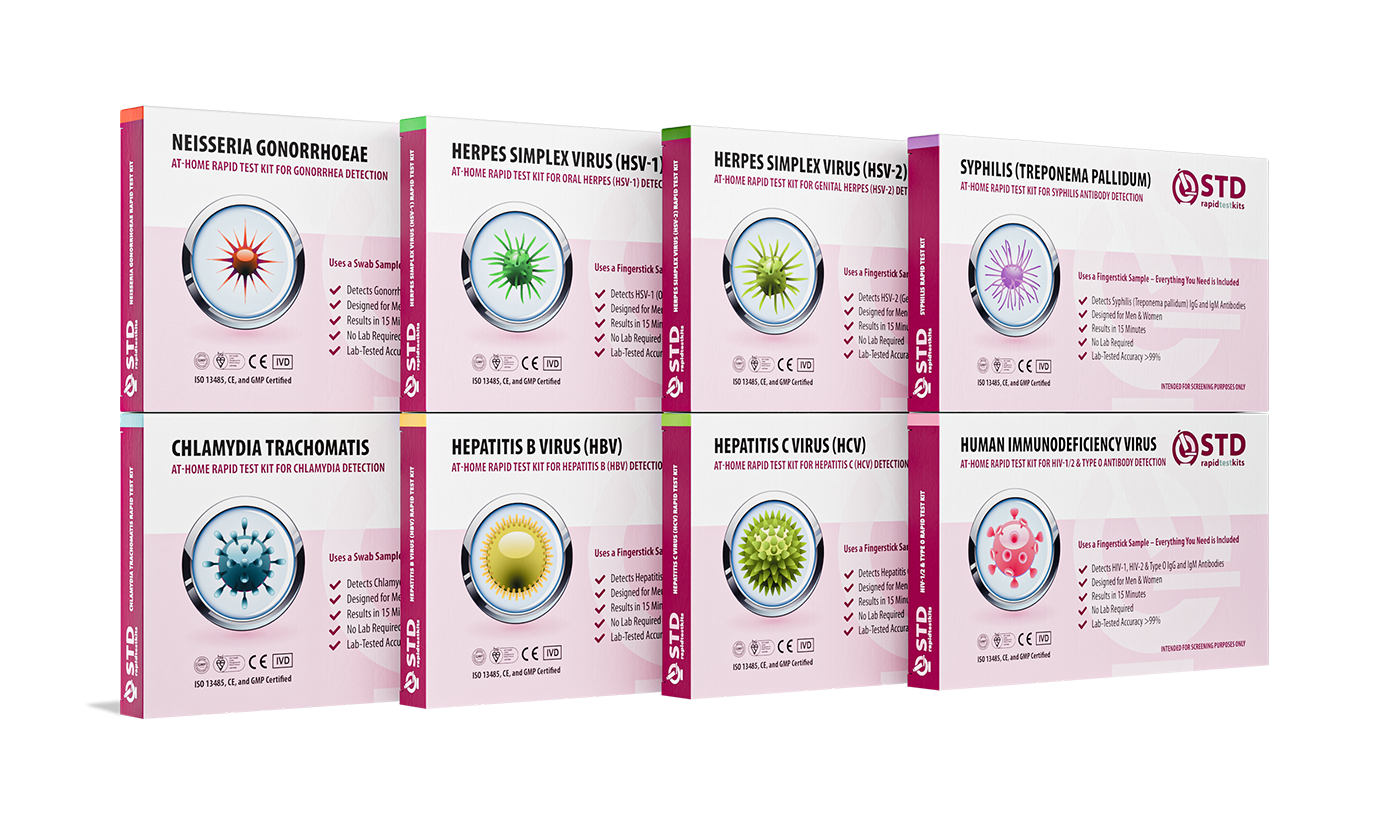
 For Men & Women
 Results in Minutes
 No Lab Needed
 Private & Discreet
Order Now $149.00 $392.00
For all 8 tests
What About That “Negative but Still Worried” Feeling?
This is more common than people admit. You test, it comes back negative, but something still feels off, physically or mentally.
There are three main reasons this happens:
1. You tested too early
If you’re still within the window period, your result might not be conclusive yet. This is why timing matters more than the test itself.
2. It’s not an STD
Irritation, yeast infections, bacterial vaginosis, or even stress can mimic STD symptoms closely. Not every symptom points to an infection.
3. Your body just feels different
After a new sexual experience, especially one involving multiple partners, your baseline can shift temporarily. That doesn’t always mean something is wrong.
The key is not to chase reassurance through constant testing. Follow the timeline. Let each test mean something.
What People Regret Most (And How to Avoid It)
Looking back, most people don’t regret the experience itself. They regret how they handled the aftermath.
The patterns are predictable:
- Testing too early and trusting the result too much
- Waiting too long because symptoms weren’t obvious
- Ignoring subtle signs hoping they’d go away
- Not completing the full testing timeline
All of these come down to one thing: uncertainty.
When you replace uncertainty with a plan, everything shifts. You stop reacting and start managing.
How to Tell If It’s Urgent or Can Wait
You don't have to treat all of your symptoms right away. Knowing the difference can help you stay out of trouble and make things less stressful.
| Symptom | Action | Why |
|---|---|---|
| Painful sores or blisters | Get tested immediately | Possible herpes, early diagnosis helps |
| Severe pelvic or testicular pain | Seek urgent care | Could indicate complications |
| Fever with genital symptoms | Immediate evaluation | Systemic infection possible |
| Mild irritation or itching | Monitor 24–48 hours | Often non-infectious |
| No symptoms | Follow testing timeline | Silent infections are common |
This isn’t about overreacting, it’s about responding appropriately.
You Don’t Have to Tell Everyone, But You Should Tell Someone
There’s a quiet layer of stress that comes with this: “Do I need to tell the people involved?”
The honest answer is, it depends on what you know. If you test positive, partner notification matters. Not as a moral obligation, but as a public health one. It helps stop the cycle of reinfection.
If you’re still in the testing phase, communication is optional but can be helpful. It gives context, reduces guesswork, and sometimes brings useful information to light.
But here’s the important part: this isn’t about blame. It’s about shared responsibility.

People are also reading: Should You Get Tested After Every Hookup? Here’s the Real Answer
Let’s Pull This Together Into Something You Can Actually Follow
If everything above feels like a lot, that’s because it is. You’re dealing with biology, timing, and uncertainty all at once.
So here’s the simplified version you can actually use:
Right now: Don’t panic-test unless symptoms are severe. Observe.
- At 7–14 days: Get your first meaningful test.
- At 4–6 weeks: Follow up with blood testing.
- At 8–12 weeks: Confirm everything.
That’s it. That’s the roadmap.
Everything else, symptoms, anxiety, Google searches, fits around that structure.
What No One Tells You After the Hookup Ends
There’s this weird gap after something like a threesome. During it, everything is clear, who’s where, what’s happening, what feels good. Afterward, it’s the opposite. You’re left piecing together fragments, trying to remember details that suddenly feel way more important than they did in the moment.
That mental rewind? It’s normal. But it’s also unreliable. Memory fills in gaps, smooths over transitions, and sometimes completely misses the small things that actually matter for STD risk, like timing, sequence, and contact points.
And this is where people get stuck. Not because they’re careless, but because they’re trying to solve a biological question with memory alone.
Let’s Separate Signal From Noise
Right now, everything might feel like a symptom. A slight itch, a random sensation, a change that may have always been there but suddenly feels new. When your awareness spikes, your body can feel louder than it actually is.
So here’s the reset: not every sensation is meaningful. What matters is consistency, progression, and timing.
If something appears and disappears quickly, that’s usually noise. If something sticks around, evolves, or becomes more defined, that’s when it becomes signal. That’s when you pay attention, not because it’s guaranteed to be serious, but because it’s worth checking.
“I kept thinking every little thing meant something,” one person said. “But when I looked back, the only thing that mattered was what didn’t go away.”
The Part About Multiple Bodies That People Forget
Every person brings their own microbiome into a sexual experience. Different bacteria, different chemistry, different baseline. When those mix, even safely, your body can react.
This is why symptoms like mild irritation, temporary discharge changes, or even a short-lived imbalance can happen after sex with a new partner. Multiply that by two partners, and your body has even more adjusting to do.
That adjustment phase can feel like something is wrong, even when it isn’t. But here’s the distinction: adjustment stabilizes. Infection progresses.
If your body settles back into normal within a few days, that’s usually your answer. If it doesn’t, that’s your cue to move forward with testing, not panic, just process.
Why Waiting Feels So Hard (And Why It Matters Anyway)
The hardest part of all of this isn’t the testing. It’s the waiting. Waiting to see if symptoms appear. Waiting for the right testing window. Waiting for results that actually mean something.
Waiting feels passive, but it’s actually strategic. Testing too early gives you answers that aren’t reliable. Waiting gives you answers you can trust.
This is where most people either rush or avoid. They either test immediately and cling to the result, or delay entirely because they don’t want to deal with it. Both come from the same place, wanting certainty now.
But certainty comes from timing. Not urgency.
Check Your STD Status in Minutes
Test at Home with Remedium6-in-1 STD Test Kit
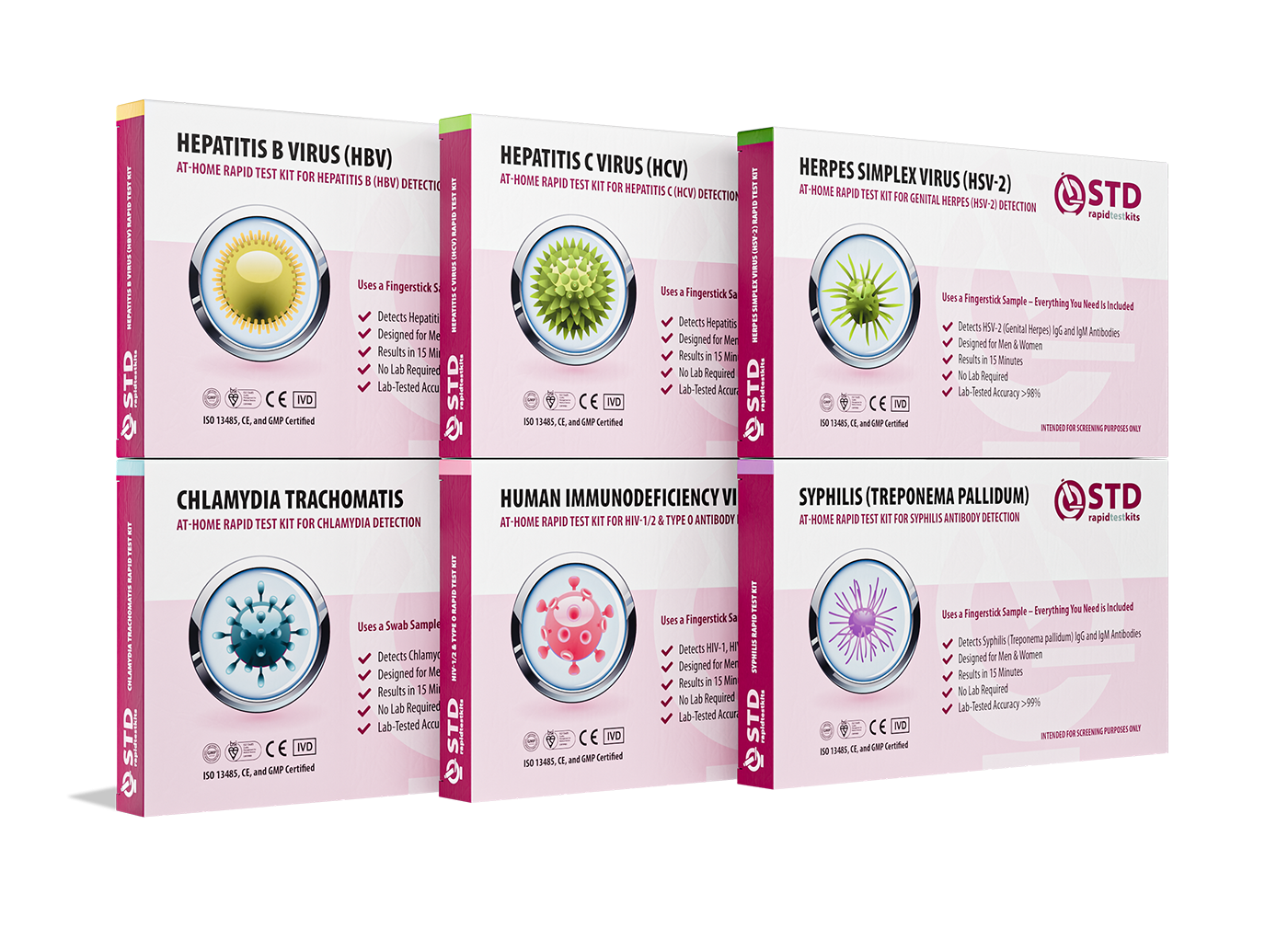 For Men & WomenResults in MinutesNo Lab NeededPrivate & Discreet
Order Now $119.00 $294.00
For all 6 tests
Control Isn’t About Preventing Everything, It’s About What You Do Next
You can do everything “right” and still end up needing to test. That’s not failure, that’s just how exposure works. What actually puts you in control is how you respond afterward.
Following a testing plan, paying attention to patterns instead of panic, and choosing clarity over guessing, that’s what shifts this from overwhelming to manageable.
Because once you remove the unknowns, everything else gets quieter. Your body makes more sense. Your decisions feel grounded. And that constant mental loop starts to slow down.
This isn’t about assuming something went wrong. It’s about making sure you’re actually okay, and knowing that for real, not just hoping it’s true.
FAQs
1. I had a threesome and feel totally fine… am I overthinking this?
I get why your brain wants to move on, but no, you’re not overthinking it. Most STDs are quiet at first, like “no symptoms at all” quiet. Feeling fine is common, but it’s not a green light, it just means you need to rely on timing, not vibes.
2. Okay but seriously, how fast would I notice something if it was an STD?
Sometimes fast, sometimes not at all, that’s the frustrating part. You might feel irritation in a few days, or nothing for weeks. I’ve seen people spiral on day two over nothing… and others feel completely normal while testing positive later. The timeline matters more than the sensation.
3. We used protection the whole time. Doesn’t that basically make this risk-free?
It definitely lowers the risk, a lot, but it doesn’t erase it. Oral, skin contact, or even switching between partners without changing condoms can still pass things along. Protection is strong, not perfect.
4. I’ve got a little itching… how do I not immediately assume the worst?
First, pause. Your body reacts to new situations all the time: friction, new bacteria, even different chemistry between partners. If it fades in a day or two, that’s usually your answer. If it lingers, evolves, or starts pairing with other symptoms, then it’s time to take it seriously.
5. What’s the one symptom that actually makes you go, “yeah, get tested now”?
Painful sores or blisters. That’s the one that jumps the line. Also strong burning when you pee that doesn’t go away, or discharge that clearly isn’t your normal. Those aren’t “wait and see” moments, they’re “let’s check this” moments.
6. I tested already and it came back negative… why am I still uneasy?
Because your gut knows something your timeline might not. If you tested too early, that result can be misleading. This is where people get false reassurance. A negative test only means something if the timing was right.
7. Do I really need to test my throat too? That feels excessive.
If oral was involved, even briefly, it’s not excessive, it’s accurate. Throat infections like gonorrhea can just sit there quietly, no drama, no obvious symptoms. People skip this all the time and miss infections because of it.
8. How do I stop checking every single sensation in my body?
You replace obsession with a plan. Right now your brain is trying to solve uncertainty in real time. Once you know, “I’m testing at 10 days, then again at 5 weeks,” you stop needing every itch to mean something. Structure kills the spiral.
9. Be honest, what do people usually regret after situations like this?
Not the threesome. Almost never that. It’s either testing too early and trusting it, or waiting too long because nothing felt urgent. The regret isn’t the moment, it’s the confusion afterward.
10. What’s the easiest way to just get clarity and move on?
You pick a test that covers what matters and follow the timeline without overcomplicating it. That’s it. No guessing, no piecing things together symptom by symptom. Just a clean, private way to get answers so you can actually relax again.
You Deserve Clarity, Not Guesswork
That post-threesome headspace hits differently. It’s not just about symptoms, it’s the uncertainty that gets under your skin. Every sensation starts to feel loaded. Every “maybe” turns into a late-night search spiral.
The goal isn’t to decode every itch or overanalyze every feeling. It’s to follow a clear plan. Test when it actually matters, not just when anxiety peaks. Give your body enough time to show what’s real, then act on facts, not assumptions.
Don’t wait and wonder. If there’s even a small question in your mind, start with a discreet screen like the Combo STD Home Test Kit. Private, straightforward, and designed to give you answers without dragging this out longer than it needs to be.
How We Sourced This Article: This guide combines current clinical guidance on sexually transmitted infections with peer-reviewed research and real-world patient scenarios. We reviewed CDC, WHO, and major clinical resources alongside published studies on STI transmission, symptom presentation, and testing windows. The goal was to translate medical accuracy into practical, stigma-free guidance you can actually use in real life.
Sources
1. Centers for Disease Control and Prevention – Sexually Transmitted Infections Overview
2. Planned Parenthood: The Basics of STDs
4. The World Health Organization's Fact Sheet on STIs
5. Mayo Clinic: Symptoms and Causes of STDs
6. PubMed – STI Research Database
About the Author
Dr. F. David, MD is a board-certified infectious disease doctor who specializes in preventing, diagnosing, and treating STIs. His direct, sex-positive approach puts clinical accuracy, clarity, privacy, and patient empowerment first.
Reviewed by: Dr. Elena Marquez, MD | Last medically reviewed: March 2026
This article is not meant to give you medical advice; it's meant to give you information.


