






Quick Answer: STDs can lead to serious complications and, in rare cases, death, but almost all are treatable or manageable today. The real danger isn’t the infection itself, it’s not knowing you have it and leaving it untreated.
This Is Where the Fear Comes From (And Why It Feels So Real)
There’s a reason this question hits so hard. For decades, sexually transmitted infections were framed as something shameful, dangerous, and irreversible. If you grew up hearing about HIV in the early 2000s or stories about untreated syphilis, it makes sense your brain jumps straight to worst-case scenarios.
One patient once told me, “I went from noticing a bump to planning my funeral in under an hour.” That’s not dramatic, that’s how anxiety works when you don’t have clear information. Your brain fills in the blanks with fear.
The truth is, most STDs today don’t kill people directly. But they can become dangerous if ignored long enough. That’s the part people miss. It’s not instant. It’s gradual, quiet, and often invisible.
So… Can You Actually Die From an STD Today?
Yes, but not in the way most people think.
Modern medicine has changed the entire landscape. What used to be life-threatening decades ago is now often treatable, manageable, or even curable. But “treatable” only works if you actually know you have something and take action.
Here’s how the reality breaks down:
| STD | Curable? | Can It Become Dangerous? | Fatal Risk (Untreated) |
|---|---|---|---|
| Chlamydia | Yes | Yes (PID, infertility) | Extremely rare |
| Gonorrhea | Yes | Yes (blood infection) | Rare but possible |
| Syphilis | Yes | Severe organ damage | Yes (late stages) |
| HIV | No (manageable) | Yes (immune system damage) | Preventable with treatment |
| HPV | No | Yes (cancer risk) | Yes (indirectly) |
Notice the pattern? The danger isn’t immediate. It’s what happens when infections quietly progress without treatment. That’s where risk builds over time.

People are also reading: This STD Can Still Spread Through “Protected” Sex
The Real Risk Isn’t the STD, It’s Silence
Here’s the part no one explains clearly: most STDs don’t announce themselves loudly. There’s no dramatic moment where your body says, “This is serious.”
Instead, it’s more like this:
“I felt fine, so I assumed everything was fine.”
That assumption is where problems start. Chlamydia and gonorrhea can live in the body without symptoms for months. HPV can quietly change cells over years. Even syphilis can disappear and come back in more dangerous stages later.
Another patient once said, “I only got tested because my partner told me they had something. I had zero symptoms, and it turned out I’d had it for who knows how long.”
This is why testing isn’t about panic, it’s about clarity. You’re not reacting to symptoms. You’re staying ahead of them.
When STDs Become Dangerous (And Why Timing Matters)
Not all infections follow the same timeline. Some escalate slowly, others create complications faster if they spread beyond their original site. Understanding this timing is everything.
| STD | Early Stage | Mid Stage | Late Risk |
|---|---|---|---|
| Chlamydia | Often no symptoms | Pelvic inflammation | Fertility damage |
| Gonorrhea | Discharge or none | Spreads to bloodstream | Sepsis (rare) |
| Syphilis | Painless sore | Rash, flu-like symptoms | Brain/heart damage |
| HIV | Flu-like illness | Silent phase | AIDS without treatment |
| HPV | Often unnoticed | Cell changes | Cancer risk |
The key takeaway isn’t that these outcomes are common. It’s that they’re preventable. Almost every serious complication comes from delayed testing or untreated infection, not from the infection itself being inherently deadly in modern settings.
What Modern Treatment Actually Changed
If you’re imagining worst-case scenarios, it’s probably because you’re thinking about outdated versions of these diseases. The reality today is completely different.
HIV used to be a fatal diagnosis. Now, with consistent treatment, people can live long, healthy lives and even reach undetectable levels where they don’t transmit the virus. That’s not a small shift, that’s a complete transformation.
Syphilis, once called “the great imitator” because of how destructive it could become, is now curable with antibiotics when caught early. Even infections that sound scary, like gonorrhea, are typically treatable in days, not years.
The difference between danger and safety isn’t luck. It’s timing. It’s knowing. And it’s acting before something silent becomes something serious.
That’s why access matters. That’s why privacy matters. And that’s why options exist now that didn’t before.
Take back control of your health. You can explore discreet, doctor-trusted options at STD Rapid Test Kits, no waiting rooms, no guessing, just answers.
“But I Feel Fine…”, The Most Dangerous Thought in Sexual Health
There’s a moment that comes up again and again in real conversations: someone feels completely normal, so they assume nothing’s wrong. No pain. No discharge. No obvious symptoms. So the thought process is simple, “I’m probably good.”
But this is where things get tricky. Many of the most common infections, like chlamydia, HPV, and even early HIV, can exist in the body without any clear warning signs. Not for a few days, but sometimes for months or even years.
“I thought STDs always had symptoms. Like something obvious. I had nothing, until I got tested and everything changed.”
This isn’t rare. It’s actually the norm. The absence of symptoms doesn’t mean the absence of risk, it often just means the infection is still under the radar.
Check Your STD Status in Minutes
Test at Home with Remedium6-in-1 STD Test Kit
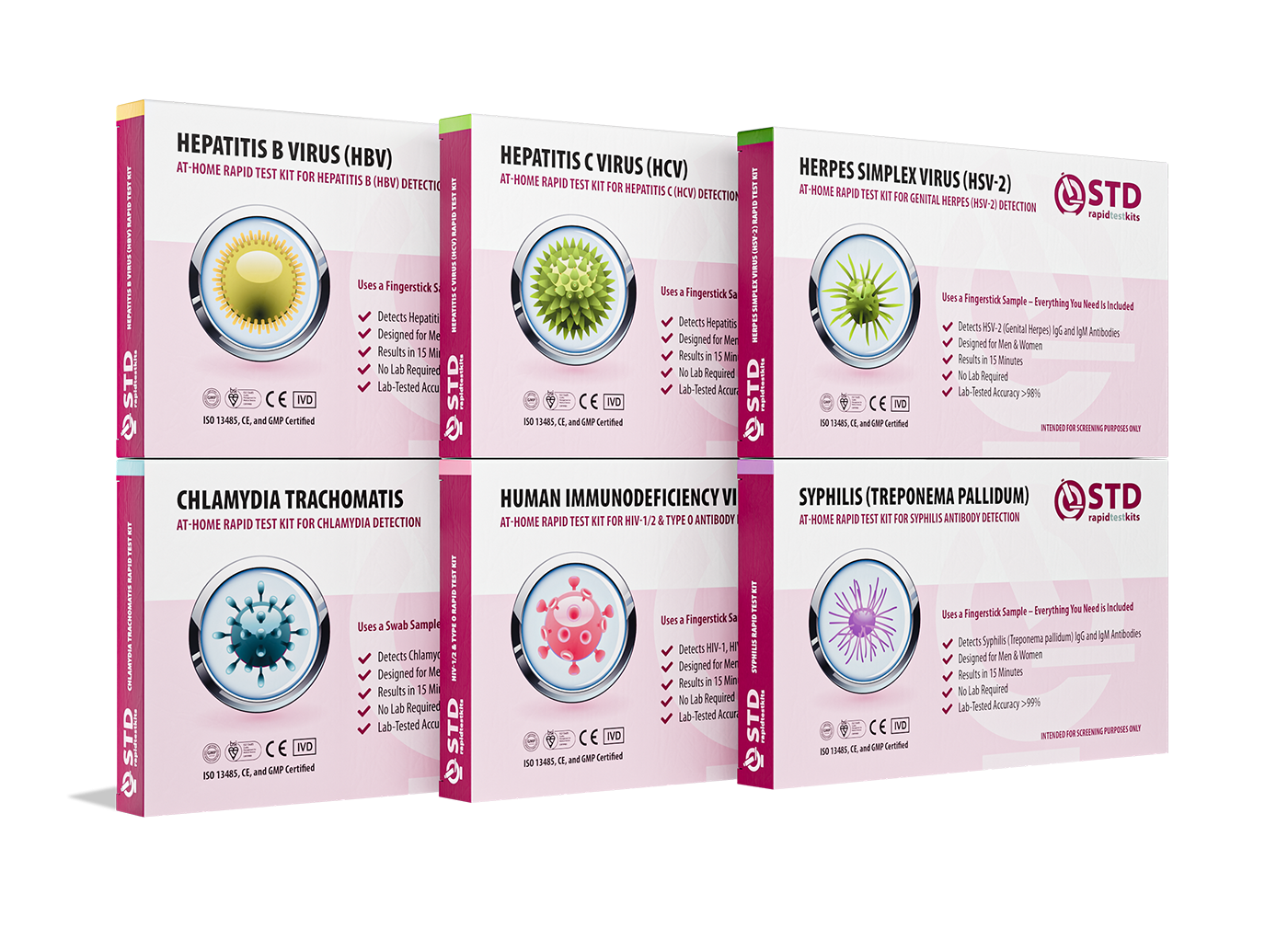
 For Men & Women
 Results in Minutes
 No Lab Needed
 Private & Discreet
Order Now $119.00 $294.00
For all 6 tests
Which STDs Are Actually the Most Dangerous (And Why)
Not all STDs carry the same level of risk, and that’s where a lot of confusion comes from. People often assume the most “talked about” infections are the most dangerous, but that’s not always true.
The real danger depends on two things: how the infection behaves in the body, and how long it goes untreated.
Let’s break it down in a more practical way:
| STD | Typical Public Fear Level | Actual Medical Risk Today | Why It Matters |
|---|---|---|---|
| HIV | Very High | Manageable | Treatment prevents progression |
| HPV | Low–Medium | Potentially serious | Linked to multiple cancers |
| Syphilis | Medium | High if untreated | Can damage brain and heart |
| Gonorrhea | Medium | Moderate | Can spread to bloodstream |
| Chlamydia | Low | Moderate | Often silent but damaging |
| Herpes | Very High | Low | Emotional impact > physical risk |
One of the biggest misconceptions is that herpes is extremely dangerous. In reality, it’s usually not medically severe for otherwise healthy adults. Meanwhile, infections like HPV, which many people barely think about, can lead to cancers if not monitored over time.
So when people ask “what’s the worst STD,” the answer isn’t about fear, it’s about what goes unnoticed the longest.
When Things Go Wrong: Real-Life Scenarios That Change Everything
Let’s bring this out of theory for a second.
Daniel, 28, ignored mild pelvic discomfort for months. It didn’t seem urgent, no dramatic symptoms, just something slightly off. When he finally got tested, it turned out to be untreated gonorrhea that had begun to spread.
“I kept thinking, if it was serious, I’d feel worse. That assumption almost cost me a lot more than I realized.”
Another case: Lina, 34, had no symptoms at all. She only got screened during a routine checkup. The result? Early cell changes linked to HPV.
“I didn’t feel sick. I didn’t feel anything. That was the scariest part, something was happening and I had no idea.”
These aren’t extreme cases. They’re everyday examples of how STDs become serious, not overnight, but through delay, uncertainty, and assumptions.
Why Google Makes STDs Feel Deadlier Than They Are
If you’ve ever searched your symptoms and felt your chest tighten, you’re not alone. The internet tends to show extremes, the worst-case scenarios, the rare complications, the things that grab attention.
But here’s what it doesn’t show clearly enough: context.
Yes, untreated syphilis can affect the brain. Yes, HIV can progress without treatment. Yes, HPV can lead to cancer. But those outcomes are typically tied to lack of testing, lack of access, or long-term neglect, not immediate outcomes after exposure.
What you don’t see trending on search results are the millions of people who get tested, get treated, and move on with their lives without long-term issues. That story isn’t dramatic, but it’s far more common.

People are also reading: Trichomoniasis Rapid Test Accuracy and Common Mistakes
So What Should You Actually Do If You’re Worried?
This is where we shift from fear to control.
You don’t need to diagnose yourself based on symptoms. You don’t need to spiral through worst-case scenarios. You just need one thing: clarity.
Testing isn’t about assuming the worst, it’s about ruling things out or catching them early, when they’re easiest to handle. And today, that process is faster, more private, and more accessible than ever.
If you’re in that space of uncertainty, something feels off, or you just want peace of mind, you can take a step without overcomplicating it. A discreet at-home STD test kit can screen for multiple infections at once, giving you answers without the stress of a clinic visit.
Because at the end of the day, the question isn’t really “can an STD kill you.” The real question is: are you going to leave it unknown?
If You’re Still Wondering “Can an STD Kill You?”, Read This Part Carefully
Let’s bring it all the way back to the original question, because this is where clarity matters most.
Yes, in rare and untreated cases, certain STDs can lead to life-threatening complications. But that outcome is not the default, it’s the result of infections being missed, ignored, or left untreated for long periods of time.
The version of STDs that people fear, the ones that “kill you”, are usually outdated, untreated, or completely misunderstood versions of these infections. What exists today is different. Manageable. Detectable. Often curable.
“I thought if I had something, my life would be over. It turned out it was just something I needed to deal with, not something that defined me.”
That shift, from fear to understanding, is everything.
What Low Risk Actually Looks Like (And Why Most People Fall Into This Category)
Most people who contract an STD today do not experience severe complications. That’s not wishful thinking, it’s the reality of modern screening, antibiotics, antiviral therapy, and awareness.
If you’re generally healthy, have access to testing, and take action when something feels off, your risk of serious outcomes drops dramatically. Not slightly, dramatically.
Even infections that sound intimidating behave very differently when caught early:
- Early detection: Most bacterial STDs are treated quickly with antibiotics
- Ongoing management: Viral STDs like HIV are controlled with medication
- Monitoring: Conditions like HPV are tracked to prevent complications
The system works, but only if you use it.
What to Do Next (Without Overthinking It)
If you’ve read this far, chances are you’re not just curious, you’re trying to figure out where you stand. That’s a good instinct. Acting on that curiosity is what keeps things simple instead of complicated.
You don’t need to wait for symptoms. You don’t need to guess. And you definitely don’t need to panic.
Start with information. Then get clarity. That’s it.
Don’t wait and wonder, get real answers from home. You can check multiple infections quickly and privately with a combo STD home test kit, designed to give you clarity without the stress.
Check Your STD Status in Minutes
Test at Home with Remedium7-in-1 STD Test Kit
 For Men & WomenResults in MinutesNo Lab NeededPrivate & Discreet
Order Now $129.00 $343.00
For all 7 tests
What People Really Mean When They Ask “Can an STD Kill You?”
Most people aren’t actually asking about death in a literal sense. They’re asking something deeper, something harder to say out loud. They’re asking: “Did I just change my life permanently?”
That question carries a lot of weight. It’s not just about health. It’s about relationships, identity, sex, and the quiet fear that something is now “wrong” with you. And that’s where things get tangled, because medically, most STDs today are manageable, but emotionally, they can feel overwhelming in the moment.
“I didn’t think I was going to die. I just thought everything was going to be different forever.”
But here’s the reality that doesn’t get enough airtime: most outcomes are far more boring, and far more manageable, than people expect. You test, you get an answer, and then you either treat it or monitor it. Life keeps moving. Sex keeps being part of your life. You’re still you.
Even in cases where something does require long-term management, like HIV or certain strains of HPV, the story isn’t about decline, it’s about control. Medication, monitoring, and routine care turn what used to be life-altering into something that fits into your life, not something that defines it.
The real danger isn’t that an STD will suddenly kill you. It’s that fear might stop you from getting clarity. That hesitation, that “I’ll deal with it later” moment, is where small problems get the chance to grow.
So if you’re asking the question, you’re already doing the right thing. You’re paying attention. The next step isn’t panic, it’s action. Because once you know where you stand, the fear usually loses its grip.
FAQs
1. Can an STD kill you quickly, like within days?
No, this isn’t how STDs work. They don’t hit like a sudden illness that takes you down overnight. When people get into serious trouble, it’s usually because something went unnoticed or untreated for months or even years, not days.
2. Which STD should I actually be worried about?
The honest answer? The one you don’t know you have. People tend to fixate on HIV or herpes, but infections like HPV or syphilis can quietly cause more damage if they’re ignored long enough.
3. If I feel completely fine, does that mean I’m safe?
Not necessarily, and this is where people get tripped up. A lot of STDs are basically silent at first. Feeling “normal” doesn’t guarantee anything, it just means nothing obvious has shown up yet.
4. Is HIV still something people die from today?
It can be, but that’s no longer the typical story. With modern treatment, many people with HIV live long, full lives, work, relationships, everything. The risk comes from not knowing or not treating it.
5. Can something like chlamydia turn into something serious?
Yes, but not right away. Chlamydia can cause issues like pelvic infections or trouble getting pregnant if you don't treat it. It's one of those infections that isn't very loud but is still very important.
6. Why does Google make STDs sound so terrifying?
Because worst-case scenarios get clicks. You’re seeing rare outcomes without context, not the millions of people who get tested, treated, and move on like it was a temporary inconvenience.
7. What’s the biggest mistake people make with STDs?
Waiting. Waiting for symptoms, waiting for things to “go away,” or waiting until it feels serious enough. That delay is what turns something simple into something complicated.
8. Can STDs go away on their own if I just leave them?
Most don’t. Some symptoms might fade, which tricks people into thinking it’s gone, but the infection can still be there in the background doing its thing.
9. What if I’m too nervous or embarrassed to get tested?
That’s more common than people admit. But testing today can be private, quick, and low-stress, especially with at-home options. You don’t have to sit in a clinic waiting room replaying your life choices.
10. So what’s the smartest next step if I’m even a little unsure?
Get clarity, not guesses. One simple test can answer the question your brain keeps circling at 2AM, and once you know, everything else gets a lot easier to handle.
You Deserve Clarity, Not Catastrophizing
Hearing “STD” and thinking “death” is understandable. That association didn’t come out of nowhere. But today, that fear is usually outdated, exaggerated, or missing context. The real shift isn’t pretending STDs are harmless, it’s understanding what actually makes them dangerous and what keeps them manageable.
If something happened recently, test. If you feel off, don’t wait for it to get worse. If everything comes back clear, that’s your answer, and your peace of mind. If something does show up, you’re catching it early, when it’s easiest to handle.
Don’t sit in that in-between space of guessing. If there’s even a small question in your mind, start with a private, straightforward screen like the Combo STD Home Test Kit. No spiraling, no assumptions, just answers you can actually use.
How We Sourced This Article: This guide blends current clinical guidance on sexually transmitted infections with peer-reviewed research and real-world patient scenarios. We reviewed data from public health authorities, infectious disease literature, and behavioral search trends to reflect both medical accuracy and how people actually experience STD anxiety and decision-making in real life.
Sources
1. Centers for Disease Control and Prevention – Sexually Transmitted Diseases Overview
2. Fact Sheet from the World Health Organization on Sexually Transmitted Infections
3. Mayo Clinic: Signs and Symptoms of STDs
4. Overview of STIs in the NHS
5. PubMed – STI Research Database
6. Centers for Disease Control and Prevention – Syphilis Fact Sheet
7. American Cancer Society – HPV and Cancer
About the Author
Dr. F. David, MD is a board-certified infectious disease specialist focused on STI prevention, diagnosis, and treatment. His work centers on making sexual health information direct, stigma-free, and actually useful, especially in moments when people feel uncertain or overwhelmed.
Reviewed by: Board-Certified Infectious Disease Specialist | Last medically reviewed: March 2026
This article is meant to give you information, not to replace professional medical advice, diagnosis, or treatment.


