






Quick Answer: Hormonal changes can mimic STD symptoms by altering discharge, smell, and sensitivity throughout your cycle. Infections usually cause persistent, worsening, or unusual symptoms that don’t follow a predictable monthly pattern.
This Is Where the Confusion Starts: Your Body Doesn’t Stay the Same All Month
Here’s the part most people never get taught: your vaginal environment is not static. It’s not supposed to look, smell, or feel the same every day. Hormones, mainly estrogen and progesterone, are constantly shifting, and those shifts directly affect your discharge, your pH, and even how sensitive your skin feels.
That means what feels “normal” one week can feel completely different the next. Around ovulation, discharge can become slippery, clear, and stretchy. Before your period, it might get thicker, cloudier, or even a little sticky. These changes don't happen by chance. They are biological signals that have to do with hormone and fertility cycles.
But here’s where anxiety creeps in: those same changes, especially when unexpected, can look a lot like symptoms people associate with infections. And if you’ve had a new partner, missed protection once, or even just scrolled too long on health forums, your brain fills in the worst-case scenario fast.
What Hormones Actually Do (And Why It Can Feel Like Something’s Wrong)
Hormones don’t just regulate your period, they reshape your entire vaginal ecosystem. Estrogen, in particular, increases moisture and changes the texture of discharge. It also changes the pH of the vagina, making it a little more acidic or neutral depending on where you are in your cycle.
That shift in pH is important. It can subtly change how things smell, how your body feels after sex, and even how sensitive your skin is. Some people notice mild itching before their period. Others feel a temporary burning sensation after ovulation. These are real sensations, but they’re not automatically signs of infection.
“I kept thinking something was wrong because it would itch for a day or two every month,” one patient shared. “But then it would disappear like nothing happened. It took me months to realize it was tied to my cycle.”
Hormonal fluctuations can also make discharge appear heavier or more noticeable, especially if you’re paying attention because something feels “off.” The more you monitor, the more changes you’ll notice, and not all of them mean danger.
People are also reading: Virgin but Tested Positive? Here's What That Means
When It’s Just Your Cycle vs When It’s Something Else
This is the line everyone is trying to find. Not every symptom is harmless, but not every symptom is a red flag either. The key difference often comes down to consistency, intensity, and timing.
| Feature | Hormonal Changes | Possible Infection |
|---|---|---|
| Timing | Follows a monthly pattern | Appears suddenly, no pattern |
| Discharge | Changes predictably (clear → thick) | Unusual color (green, gray, yellow) |
| Smell | Mild or slightly different | Strong, fishy, or foul odor |
| Itching/Burning | Mild, temporary | Persistent or worsening |
If something shows up, disappears, and then repeats at the same point in your cycle next month, that’s a strong clue your hormones are involved. Infections don’t usually follow a neat calendar. They tend to linger, intensify, or spread.
“The difference was how it stayed,” another patient explained. “When I had BV, it didn’t come and go. It just… stayed until I treated it.”
The Symptoms That Freak People Out the Most (And What They Usually Mean)
Let’s get honest about the symptoms that send people into a Google spiral. Because most of them live in that gray zone where hormones and infections overlap.
Discharge is the biggest one. Clear, stretchy discharge? That’s often ovulation. Thick, white discharge before your period? Also common. Even a slightly tangy or musky smell can shift naturally with your cycle. These are not automatic signs of STDs or infections.
Itching is another trigger. Mild itching right before your period can happen because of hormonal dips and changes in moisture. It doesn’t always mean yeast. The same goes for a brief burning sensation, especially after sex, when friction meets a temporarily sensitive environment.
But here’s the pivot point: when symptoms escalate, persist, or feel distinctly “off,” that’s when you stop assuming and start checking. Your body doesn’t just whisper, it gets louder when something is wrong.
When Your Brain Jumps to Worst-Case Scenario (And Why That Happens)
There’s a psychological piece to this that no one talks about enough. Symptoms don’t exist in a vacuum. They show up in context, after a hookup, after a condom breaks, after a new relationship starts. And suddenly, every normal body change feels suspicious.
“I convinced myself I had an STD because I noticed discharge I’d literally had every month before,” one person admitted. “It just felt different because I was paying attention.”
This is what anxiety does. It rewires your perception. It makes normal fluctuations feel like evidence. And when you combine that with incomplete sex education, it’s easy to misread your own body.
The goal isn’t to ignore symptoms, it’s to understand them. To know what patterns look like. To recognize when something fits your cycle versus when it breaks it.
When You Should Actually Get Tested (And Not Just Wait It Out)
There’s a point where guessing stops being helpful. If symptoms don’t match your usual cycle, or if they stick around longer than expected, that’s your cue to get clarity. Not panic. Just clarity.
You should consider testing if symptoms persist beyond a few days, worsen over time, or feel completely unfamiliar to your normal patterns. Sudden strong odors, unusual colors, or pain during urination or sex are all signs that deserve attention.
This is where having access matters. You don’t have to sit in uncertainty or wait weeks for an appointment. You can get answers privately, quickly, and without judgment.
Take back control of your health. You can explore discreet options like an at-home STD test kit that gives you real answers without the waiting room anxiety.
Because the real difference between hormones and infection isn’t just symptoms, it’s what you do next. Guessing keeps you stuck. Testing moves you forward.
Check Your STD Status in Minutes
Test at Home with Remedium7-in-1 STD Test Kit
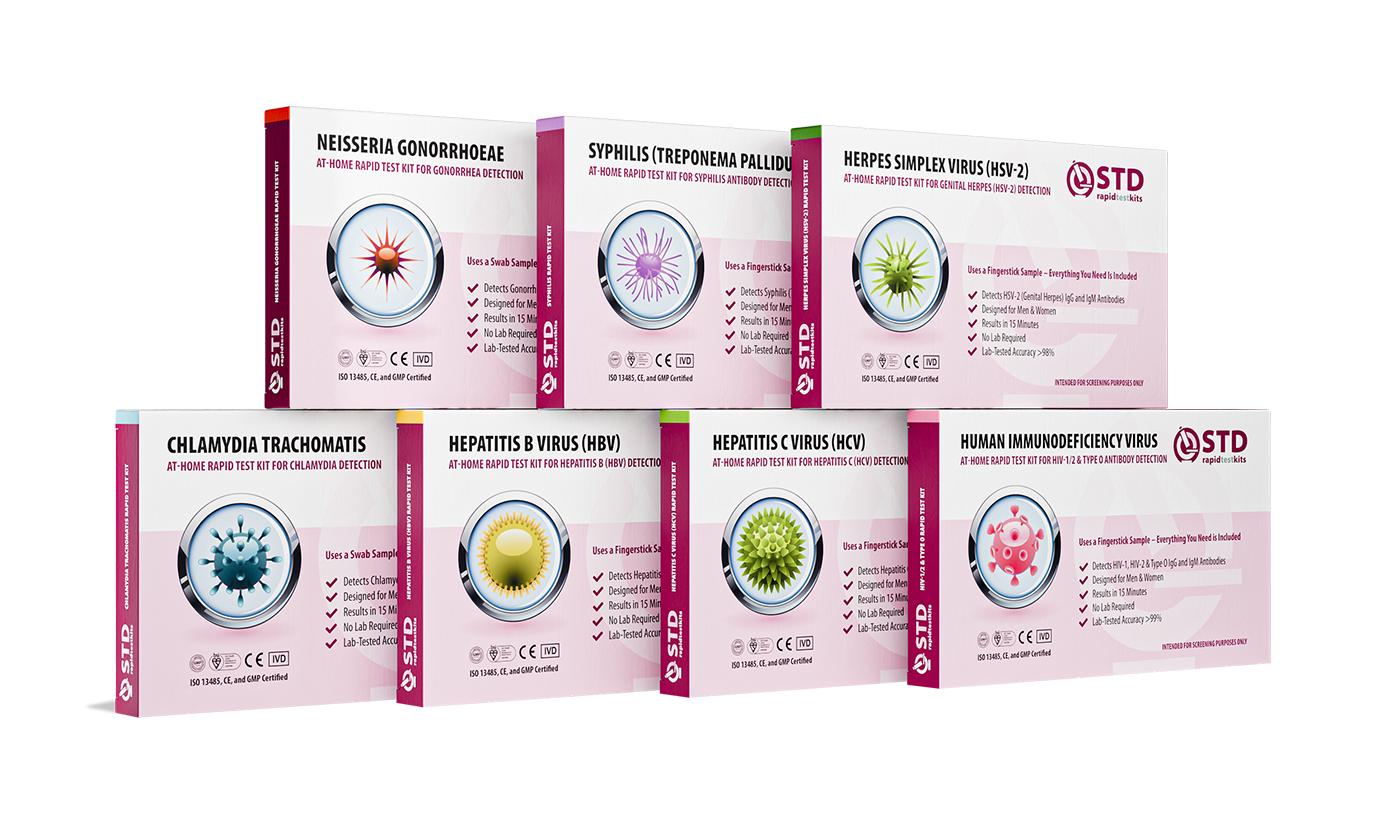
 For Men & Women
 Results in Minutes
 No Lab Needed
 Private & Discreet
Order Now $129.00 $343.00
For all 7 tests
The Middle-of-the-Month Shift That Feels Suspicious (But Usually Isn’t)
There’s a very specific moment in the cycle where people start to spiral, and it’s not random. It’s ovulation. Around this time, estrogen peaks, cervical fluid increases, and everything suddenly feels wetter, more noticeable, sometimes even slightly different in smell or texture.
This is the phase where discharge can become clear, stretchy, and almost egg-white-like. For someone who isn’t expecting it, that change can feel dramatic. It can feel like something new is happening, especially if you’re not tracking your cycle closely.
“I thought I had an infection because it was so much more than usual,” one patient shared. “But it literally happened again the next month at the exact same time.”
That repetition is the clue. Hormonal patterns repeat. Infections don’t follow a script like that. If something shows up right around the same cycle day every month, your body is likely doing exactly what it’s supposed to do.
Why Smell Changes More Than People Expect
This is one of the most misunderstood pieces of vaginal health. People expect things to smell exactly the same all the time, and that’s just not how biology works. Your natural scent can shift depending on hormones, sweat, sex, and even what you wear.
During certain phases of your cycle, especially before your period, pH can shift slightly. That can lead to a more noticeable or different smell. Not necessarily bad, just different. And “different” is often what triggers concern.
What matters is intensity and persistence. A mild, temporary change is usually hormonal. A strong, fishy, or consistently unpleasant odor that doesn’t go away is more likely tied to something like bacterial imbalance or infection.
| Type of Change | Likely Hormonal | Possible Infection |
|---|---|---|
| Subtle shift | Yes | Unlikely |
| After sex change | Common (pH shift) | Sometimes |
| Strong fishy odor | Rare | Common sign |
| Persistent odor | No | Yes |
The key question isn’t “Does it smell different?” It’s “Does it stay different?” Hormones fluctuate. Infections linger.
After Sex: The Most Misread Symptoms
Let’s talk about the timing that causes the most panic, right after sex. This is where people notice burning, discharge changes, or smell shifts and immediately connect it to infection.
But sex itself changes your internal environment. Semen has a higher pH, which temporarily alters vaginal balance. Friction can be annoying, especially if you weren't using enough lubrication or if you were already in a sensitive part of your cycle.
That means you can feel “off” after sex without anything being wrong. Slight burning, increased discharge, or a different smell for a short period can all be normal responses.
“Every time after sex I thought something was wrong,” one person explained. “But it would go away within a day. It was just my body reacting, not an infection.”
Where you draw the line is duration. If symptoms fade within 24–48 hours, hormones and physical factors are likely at play. If they stick around or intensify, that’s when testing becomes the smarter move.
Recurring Monthly Symptoms: The Pattern Most People Miss
Here’s one of the biggest clues hiding in plain sight: repetition. If something happens once, it’s confusing. If it happens twice, it’s a coincidence. But if it happens three months in a row at the same time? That’s a pattern.
Hormonal symptoms often follow a loop. You might notice itching right before your period every month. Or thicker discharge during the same week. Or sensitivity at ovulation that feels new the first time, but becomes predictable once you recognize it.
Infections don’t behave like that. They don’t politely wait for day 21 of your cycle to show up again. They persist, spread, or worsen without regard for your hormonal timeline.
This is where tracking, even casually, becomes powerful. Not obsessively, but just enough to recognize your own baseline. Because once you know your pattern, it’s much easier to spot when something breaks it.
People are also reading: Scared to Tell Them You Have an STD? Here’s How to Say It
When It’s Not Hormones Anymore: The Red Flags You Shouldn’t Ignore
There are moments when your body stops hinting and starts signaling clearly. These are the symptoms that don’t just feel different, they feel wrong in a way that doesn’t resolve.
Persistent pain, strong odor, unusual discharge colors like green or gray, or discomfort during urination are not typical hormonal shifts. These signs deserve attention, not guesswork.
And here’s the part people avoid: waiting too long doesn’t make things clearer. It just stretches out the uncertainty. The sooner you test, the sooner you know what you’re dealing with, and what you’re not.
Don’t wait and wonder. If something feels off beyond your usual cycle patterns, a combo STD home test kit can give you answers quickly and privately.
Because peace of mind isn’t about assuming the best or worst. It’s about knowing.
Why Google Makes This Worse (And How to Read Your Body Instead)
If you’ve ever typed something like “itching before period normal or STD” at 2AM, you already know how this goes. You get a flood of worst-case scenarios, vague symptom lists, and just enough overlap to make everything feel possible. The internet doesn’t separate context, it just stacks symptoms on top of each other.
That’s why discharge, smell, and itching become such a mental trap. These symptoms exist in both hormonal shifts and infections. But Google doesn’t know your cycle, your patterns, or what’s normal for your body. It only knows keywords.
The difference comes from context. Hormonal symptoms tend to be temporary, patterned, and tied to specific points in your cycle. Infection-related symptoms usually break that rhythm. They feel more random, more persistent, and often more intense.
“I kept searching the same symptoms every month,” one person said. “It wasn’t until I tracked when they happened that I realized it was always the week before my period.”
Once you shift from panic-searching to pattern-recognizing, everything starts to make more sense. Your body isn’t random, it’s repeating signals. You just need to learn how to read them.
The Decision Moment: Wait, Watch, or Test?
This is the part no one gives clear guidance on. You notice something. It could be nothing. It could be something. So what do you actually do?
Start with timing. If the symptom lines up with a familiar phase, like ovulation or pre-period, and it feels similar to what you’ve experienced before, it’s usually safe to watch and give your body a little time.
Next is duration. Hormonal symptoms tend to resolve within a few days. They don’t escalate. They don’t spread. They don’t suddenly intensify out of nowhere.
But if something stays the same, gets worse, or feels very different from what you normally feel, waiting is no longer helpful. That's when you should test, not because something is definitely wrong, but because you need to know what's going on.
| Situation | Best Move |
|---|---|
| Matches your usual cycle pattern | Wait and monitor |
| Mild symptoms that fade quickly | Watch for recurrence |
| New or unusual symptoms | Consider testing |
| Persistent or worsening symptoms | Test as soon as possible |
This isn’t about guessing correctly. It’s about responding appropriately. There’s no reward for waiting it out if something is actually wrong, and no harm in confirming when it’s not.
Check Your STD Status in Minutes
Test at Home with Remedium6-in-1 STD Test Kit
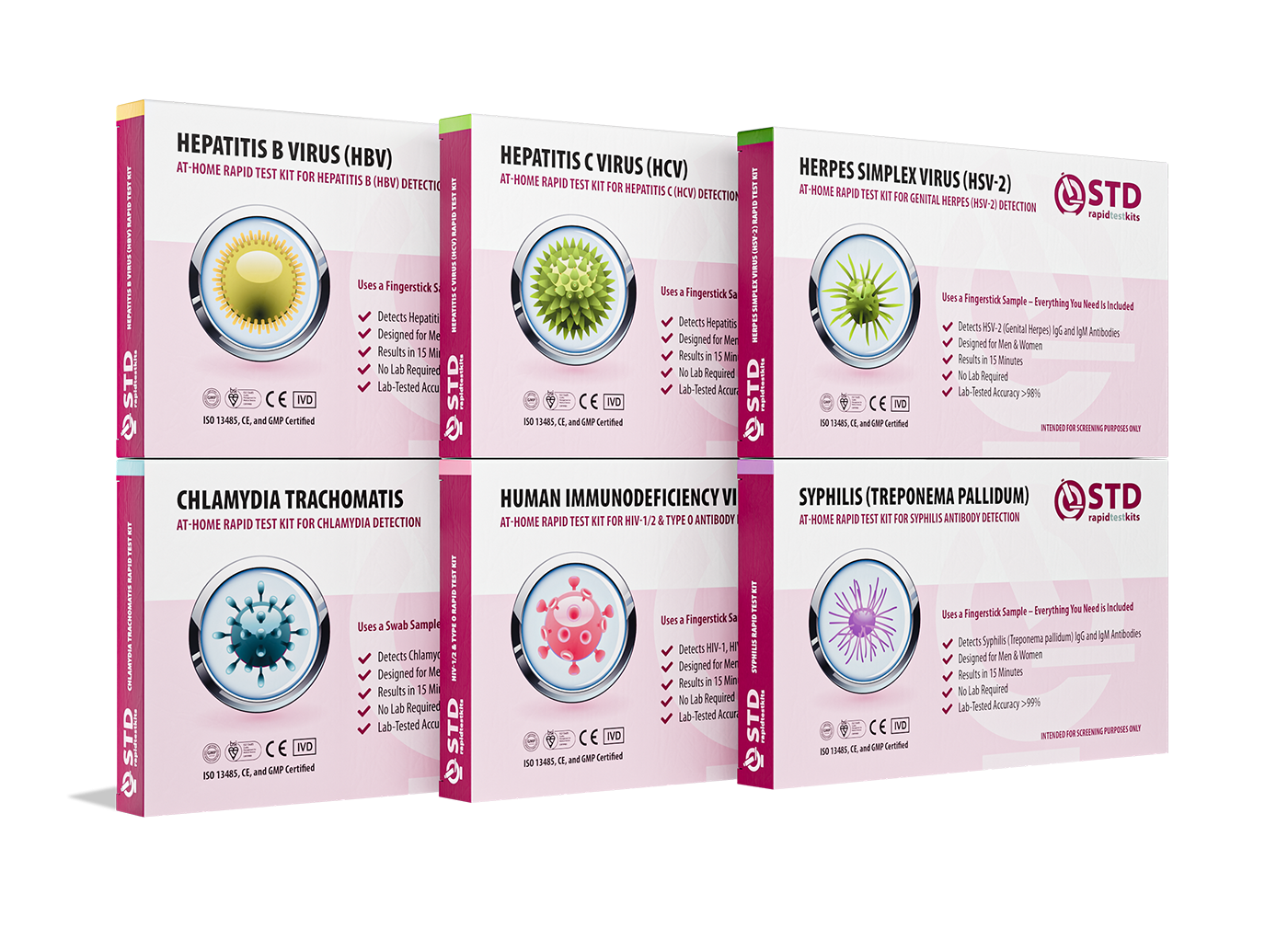 For Men & WomenResults in MinutesNo Lab NeededPrivate & Discreet
Order Now $119.00 $294.00
For all 6 tests
The Emotional Reality No One Talks About
Let’s be honest for a second. This isn’t just about symptoms, it’s about what those symptoms mean to you. For a lot of people, the fear isn’t just physical. It’s tied to shame, regret, or that quiet question: “Did I make a mistake?”
That emotional layer can make normal body changes feel loaded. It can turn a harmless shift into something that feels like proof of something bigger. And that’s where things spiral, not because your body is out of control, but because your interpretation of it is.
“I wasn’t just worried about the symptom,” someone admitted. “I was worried about what it said about me.”
Here’s the reality: bodies change. Sex happens. Protection isn’t perfect. None of that makes you careless or reckless, it makes you human. What matters is how you respond, how you take care of yourself, and how you get the information you need.
You Deserve Clarity, Not Guesswork
Your cycle is not your enemy. It’s a system, predictable, responsive, and constantly communicating. The more you understand it, the less power those moments of panic have over you.
But understanding doesn’t mean ignoring. If something doesn’t fit your pattern, if it lingers, or if your gut tells you something’s off, listen to that too. You don’t have to sit in uncertainty or rely on guesswork.
Getting tested isn’t an overreaction. It’s a decision. A grounded, informed, self-respecting decision to know what’s happening in your body.
Start with answers, not assumptions. You can explore discreet, reliable options at STD Rapid Test Kits and take that uncertainty off your plate.
Because once you know, everything changes. The anxiety fades. The what-ifs disappear. And you can move forward, clear, informed, and back in control.
FAQs
1. Do changes in hormones really feel like an STD, or am I just thinking too much?
Yes, they can, and no, you're not thinking too much about it. Hormones can change your discharge, your smell, even how sensitive your skin feels, sometimes overnight. The difference is they tend to calm down on their own, while infections usually hang around and make themselves known.
2. Why does my discharge suddenly look different one week and totally normal the next?
Because your hormones are basically running a schedule behind the scenes. Around ovulation, things get clear and slippery. Before your period, it can turn thicker or cloudy. It feels random if you’re not tracking it, but your body is actually being very consistent.
3. I get itching before my period every month… should I be worried?
If it shows up like clockwork and disappears just as predictably, that’s usually hormonal. Your skin can get more sensitive right before your period, kind of like how lips get dry in certain weather. If it suddenly gets worse, spreads, or doesn’t go away, that’s when you look closer.
4. Okay but what about smell? Because that’s what really freaks me out.
Totally fair, smell is the number one panic trigger. A slight change, especially before your period or after sex, is common and usually harmless. What’s not typical is a strong, fishy, or lingering odor that doesn’t fade. That's your cue to stop guessing and start searching.
5. Why do things feel off after sex even when everything was consensual and protected?
Because sex itself changes your internal environment for a bit. Semen shifts pH, friction can irritate sensitive tissue, and if you were already in a hormonal phase, it can amplify everything. If it settles within a day or two, your body just hit a temporary reset, not a red flag.
6. How can I tell the difference between “new symptom” and “I’m just noticing more”?
This one’s tricky, but honest answer: patterns don’t lie. If you start noticing something and then realize it’s happened before, same timing, same feeling, that’s awareness, not danger. Truly new symptoms tend to feel different and don’t follow your usual rhythm.
7. If something comes and goes, does that mean it’s definitely not an STD?
Not automatically, but it leans heavily toward hormonal. Most infections don’t politely disappear and reappear on a schedule. They stick around, get worse, or stay noticeable until treated.
8. I keep going back and forth in my head, should I just get tested anyway?
If you’re stuck in that loop, testing can honestly be the fastest way out of it. Not because something is definitely wrong, but because uncertainty is exhausting. A clear answer lets your brain finally relax.
9. Can stress make all of this feel worse?
Oh, absolutely. Stress can shift hormones, which can affect discharge, sensitivity, even how strongly you notice sensations. It doesn’t create infections, but it can make normal changes feel way more intense.
10. What’s the one sign that should make me stop guessing and take action?
If something doesn’t go away, doesn’t match your usual cycle, or feels like it’s getting worse instead of better, that’s your sign. Your body is pretty good at self-correcting when it’s hormonal. When it doesn’t, it’s asking for attention.
You Deserve Clarity, Not Guesswork
Your body isn’t random, it’s rhythmic. Hormones rise, fall, and reshape everything from discharge to sensitivity, often in ways that feel suspicious if you don’t know what you’re looking at. The goal isn’t to panic every time something shifts. The goal is to recognize patterns and notice when something breaks them.
If it lines up with your cycle, give it a moment. If it fades, trust that signal. If it lingers, worsens, or feels unfamiliar, that’s your cue to stop guessing and get clarity. You don’t need to play detective with your health, you just need the right information at the right time.
Don’t wait and wonder. If infection is even a small possibility, start with a discreet screen like the Combo STD Home Test Kit. Your results are private. Your body is yours. And knowing always feels better than guessing.
How We Sourced This Article: This guide has both clinical advice on vaginal health, hormonal cycles, and sexually transmitted infections, as well as peer-reviewed studies on the vaginal microbiome and pH levels. We used real-life patient symptom patterns and medical literature from groups like the CDC, WHO, and Mayo Clinic to make sure that the differences between hormonal changes and infections are correct, useful, and based on real life.
Sources
1. Centers for Disease Control and Prevention – Sexually Transmitted Infections Overview
2. NHS – Vaginal Discharge Explained
3. National Institutes of Health – Hormonal Effects on Vaginal Microbiome
4. World Health Organization – Sexually Transmitted Infections Fact Sheet
5. American College of Obstetricians and Gynecologists – Vaginitis FAQ
6. StatPearls – Vaginitis Overview
About the Author
Dr. F. David, MD is a board-certified infectious disease specialist focused on STI prevention, diagnosis, and treatment. He combines clinical precision with a direct, sex-positive approach that prioritizes clarity, privacy, and patient empowerment.
Reviewed by: Board-Certified Sexual Health Specialist | Last medically reviewed: March 2026
This article is meant to give you information, not medical advice.


