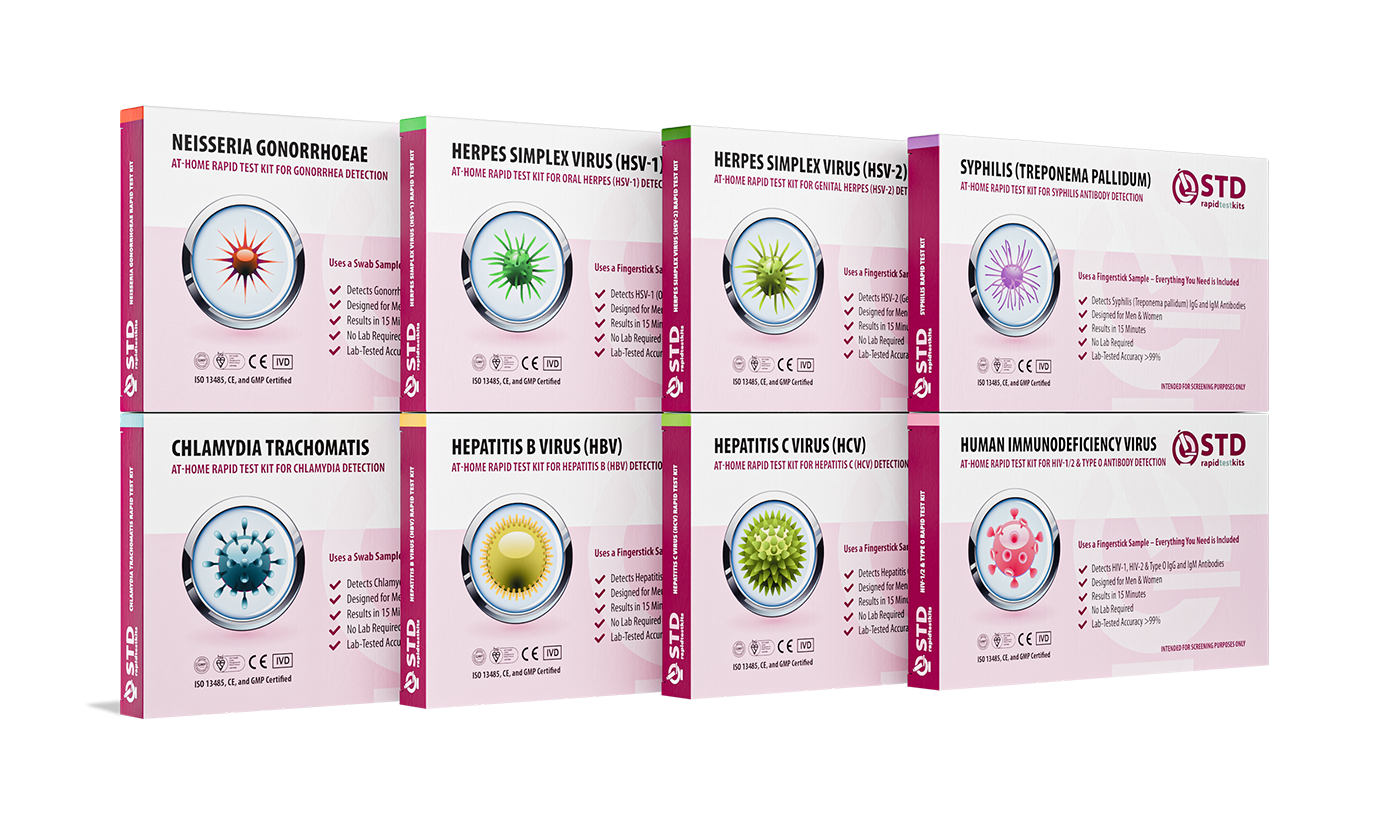
Can STDs Kill You? How Testing Prevents Deadly Outcomes
It usually doesn’t start with panic. It starts with a thought you try to push away. A weird symptom. A hookup you replay in your head. A moment where you think, “It’s probably nothing.”
That’s how a lot of serious infections begin, not with drama, but with silence. And for some people, that silence stretches long enough to become something much harder to undo.
18 March 2026
18 min read
816
Quick Answer: If not treated, STDs can become deadly, especially HIV, syphilis, and hepatitis. Early STD testing finds infections before they do a lot of damage, which lets doctors treat them to stop complications and death.
This Isn’t About Fear, It’s About Timing
Most people don’t think of STDs as something that can kill them. That belief isn’t entirely wrong, but it’s dangerously incomplete. The real risk isn’t the infection itself. It’s what happens when it goes unnoticed, untreated, and allowed to quietly progress.
A lot of infections don’t announce themselves. No pain. No obvious symptoms. Nothing that forces you to stop and get checked. That’s exactly how they slip through months or even years undetected.
One patient described it like this:
“I felt completely fine. I only tested because my partner suggested it. I had no idea anything was wrong.”
That test came back positive for a late-stage infection that had already started affecting internal organs. Not because it was aggressive, but because it had time.
What Actually Makes an STD Dangerous Over Time
STDs rarely cause death overnight. What they do instead is interfere with your body slowly, often in ways you can’t feel right away. The danger builds in layers, damage that accumulates quietly until it reaches a point where it’s harder to reverse.
Here’s what that progression can look like across some of the most serious infections:
How Untreated STDs Progress Over Time
Infection
Early Stage
Hidden Phase
Advanced Risk
Syphilis
Small sore (often painless)
No symptoms for years
Brain, nerve, and heart damage
HIV
Flu-like illness
Years without symptoms
Severe immune failure (AIDS)
Hepatitis B
Fatigue, mild illness
Chronic infection without signs
Liver failure or cancer
None of these infections are automatically fatal. But when they’re left untreated long enough, they start affecting critical systems, your brain, your immune system, your liver.
And by the time symptoms become obvious, the damage is often already advanced.
The most dangerous part of many STDs isn’t the beginning. It’s the middle, the phase where nothing feels wrong, but the infection is still active inside your body.
This is where people delay testing the longest. Not because they’re careless, but because there’s no signal pushing them to act. No pain. No urgency. Just a sense that everything is probably fine.
But infections like HIV and syphilis are still progressing during this time. The virus is replicating. The bacteria is spreading. The body is adapting, but not necessarily winning.
Another patient explained it bluntly:
“If I had felt something, I would’ve gone in sooner. But I didn’t feel anything. That’s what made it worse.”
This is why relying on symptoms alone is one of the biggest risks. Feeling fine is not the same as being clear.
Where Testing Changes Everything
Testing interrupts that silent timeline. It pulls the infection out of hiding before it has the chance to escalate into something more serious.
When an STD is caught early, the outcome changes dramatically. Treatment is simpler. Recovery is faster. Long-term damage is often completely avoided.
Early Detection vs Delayed Detection Outcomes
Stage of Detection
Treatment Complexity
Long-Term Risk
Early (weeks–months)
Simple, often short-term
Minimal to none
Delayed (years)
Complex, ongoing care
Organ damage, chronic illness
This is the part most people don’t hear enough: testing doesn’t just diagnose. It prevents escalation.
It changes the story before it becomes something harder to manage.
And in many cases, it’s the difference between something temporary and something life-altering.
Testing Isn’t About Assuming the Worst, It’s About Staying in Control
There’s a reason people avoid testing. It’s not ignorance, it’s emotion. Fear of what you might find. Shame around how it happened. The hope that if you ignore it, it will go away.
But infections don’t respond to avoidance. They respond to time.
Testing flips that dynamic. It gives you information early, when you still have the most options. When treatment is straightforward. When outcomes are still fully in your control.
If there’s one thing to take from this, it’s this: the danger isn’t just the STD itself. It’s the delay.
And that delay is something you can change.
Take back control of your health. You can start with a discreet, doctor-trusted option like at-home STD testing, or choose a comprehensive option like a complete STD test kit that checks for multiple infections at once.
The Infections People Underestimate the Most
When people ask, “Can STDs kill you?” they’re usually picturing something dramatic. But the infections that actually lead to serious outcomes don’t behave that way. They’re quiet, persistent, and often misunderstood.
Some of the most dangerous STDs today are also the ones people tend to downplay, or assume are “treatable later.” That assumption is where risk starts to build.
Let’s break down a few that matter most when it comes to long-term complications and mortality risk.
Syphilis: The Infection That Disappears… Until It Doesn’t
Syphilis has a reputation for being “old” or rare, but cases have been rising globally. What makes it especially dangerous is how it tricks people into thinking it’s gone.
The early sore is often painless and easy to miss. Then symptoms disappear entirely. That doesn’t mean the infection is gone, it means it’s moved deeper into the body.
Years later, untreated syphilis can affect the brain, nerves, and heart. This stage, called tertiary syphilis, can lead to paralysis, dementia-like symptoms, and life-threatening complications.
“I thought I was in the clear because the sore healed. I didn’t know that was just the beginning.”
Testing during the early or even silent phase completely prevents this progression. That’s the difference, timing, not luck.
HIV: From Fatal to Manageable, But Only If You Know
HIV is one of the clearest examples of how testing saves lives. Without treatment, HIV gradually weakens the immune system until the body can no longer fight off infections.
But with early detection, people living with HIV can take medication that suppresses the virus to undetectable levels. That means they can live long, healthy lives, and not pass the virus to partners.
The catch is simple: you have to know you have it.
Without testing, HIV can remain unnoticed for years. By the time symptoms appear, the immune system may already be significantly damaged.
Hepatitis B: The Liver Damage You Don’t Feel Coming
Hepatitis B is another infection that often flies under the radar. Many people never experience clear symptoms during the early phase, but the virus can quietly persist in the body.
Over time, chronic infection can lead to liver scarring, liver failure, or cancer. These are not immediate outcomes, they develop gradually, which is exactly why testing matters.
Early detection allows monitoring and treatment strategies that significantly reduce the risk of severe liver disease.
“But I Feel Fine”, Why That’s Not a Reliable Signal
One of the most common reasons people delay testing is simple: they don’t feel sick. No pain, no discharge, no obvious signs that something is wrong.
But many STDs don’t follow that script. In fact, some of the most serious infections are known for being asymptomatic in their early and middle stages.
That creates a dangerous gap between infection and awareness.
Here’s how that disconnect plays out:
Symptoms vs Reality in STD Infections
What You Feel
What Might Be Happening
Nothing unusual
Infection progressing silently
Mild or temporary symptom
Early stage of a larger issue
Symptoms disappear
Infection enters hidden phase
This is where a lot of people get misled. They assume that no symptoms means no infection, or that symptoms going away means the problem resolved itself.
In reality, some infections are most active when they’re least noticeable.
“I kept waiting for something obvious to happen. It never did. That’s why I didn’t go in sooner.”
The Cost of Waiting vs the Simplicity of Knowing
There’s a moment that happens for a lot of people, the point where uncertainty turns into urgency. It might be triggered by a symptom, a partner conversation, or just a gut feeling that something isn’t adding up.
The problem is that by the time that moment arrives, the infection may have already had time to progress.
Testing earlier changes that timeline completely. It removes the waiting, the guessing, and the false reassurance that comes from “feeling fine.”
And it doesn’t have to be complicated.
Access to testing has shifted in a major way. You don’t always need to schedule an appointment, sit in a waiting room, or explain your situation face-to-face if that feels uncomfortable.
You can get clear answers privately, on your own terms.
Don’t wait and wonder. If there’s even a question in your mind, you can use a complete at-home STD test kit to check for multiple infections quickly and discreetly.
Because the earlier you know, the more control you have over what happens next.
What Actually Happens When an STD Goes Untreated
There’s a common assumption that if something were serious, your body would make it obvious. Pain, fever, something dramatic enough to force action. But with many STDs, the body adapts quietly while the infection continues to move forward.
That’s what makes untreated infections dangerous. Not because they explode overnight, but because they slowly interfere with systems you rely on every day, your immune response, your organs, your nervous system.
And by the time symptoms finally demand attention, the infection may already be in a more advanced stage.
Let’s walk through what that progression can actually look like in real terms.
Step 1: Initial Infection (Often Overlooked)
This is where most people miss their window. Symptoms, if they appear at all, are usually mild, something easy to dismiss or misattribute. A sore that doesn’t hurt. A slight fatigue. Maybe nothing at all.
At this stage, testing is simple. Treatment is straightforward. Outcomes are clean and contained.
But this is also the stage most people skip.
Step 2: The “Nothing’s Wrong” Phase
This is where infections like HIV, syphilis, and hepatitis become most deceptive. The body feels normal. Daily life continues. There’s no immediate feedback that anything is happening beneath the surface.
But internally, the infection is still active. Replicating. Spreading. Slowly increasing its impact.
This phase can last months, or years.
“Looking back, that was the window I missed. Everything felt normal, so I assumed I was fine.”
Step 3: Complications Begin to Surface
The body starts to show signs that something is wrong after a while. But at this point, the infection may have already harmed important systems.
Depending on the STD, this could mean neurological symptoms, immune suppression, or organ stress. These aren’t early warnings, they’re signals that the infection has progressed.
Step 4: Advanced Disease
This is the stage people rarely think about, but it’s where untreated infections can become life-threatening.
Late-stage syphilis affecting the brain. HIV progressing to AIDS. Chronic hepatitis leading to liver failure or cancer.
None of this is inevitable. But all of it becomes possible when testing is delayed long enough.
There’s a specific window where testing has the most impact, not because the infection is more dangerous then, but because it’s still manageable.
This is the period after exposure, during early infection or even before symptoms appear. It’s when detection changes everything.
Understanding that timing matters more than people realize.
Why Timing Matters in STD Testing
When You Test
What It Means
Impact on Outcome
Early (after exposure window)
Infection caught before damage
Full control, minimal risk
Mid-stage (no symptoms)
Infection present but hidden
Still highly manageable
Late (symptoms appear)
Damage already developing
Treatment more complex
This is why phrases like “I’ll wait and see” don’t work well with STDs. Waiting doesn’t stop progression, it just delays awareness.
Testing, on the other hand, shifts the timeline back in your favor.
The Emotional Side of Delaying Testing (That No One Talks About)
Not testing isn’t usually about not caring. It’s about avoidance, and that’s human. People delay testing because they’re afraid of what they might find, or because they don’t want to confront a situation that feels uncomfortable or uncertain.
There’s also stigma. Even now, STD testing carries emotional weight that other types of health testing don’t. That alone is enough to make people hesitate.
But here’s the part that often gets overlooked: the stress of not knowing tends to last longer than the process of finding out.
“The waiting was worse than the result. I built it up in my head way more than it actually was.”
Testing doesn’t just give you medical clarity. It removes the mental loop, the constant guessing, the second-guessing, the background anxiety that doesn’t fully go away.
And if something is there, you find it early, when it’s still manageable.
Access Has Changed, And That Changes Outcomes
One of the biggest shifts in recent years is how accessible STD testing has become. What used to require appointments, scheduling, and in-person visits can now often be done privately, quickly, and on your own timeline.
This matters more than it might seem. Because the easier testing becomes, the earlier people tend to act, and that directly impacts outcomes.
You don’t need a major reason to test. You don’t need symptoms. Sometimes the only reason is a question in your mind, and that’s enough.
You deserve clarity, not uncertainty. If you’re unsure, you can start with a discreet option like an at-home STD test or choose a broader screening with a multi-STD test kit that checks several infections at once.
Because catching something early isn’t about overreacting. It’s about staying ahead of something that doesn’t always announce itself.
Before It Becomes Something Bigger, Here’s What Matters Most
If you take anything from this, let it be this: STDs don’t become dangerous because they exist. They become dangerous when they’re given time.
Time to stay hidden. Time to progress. Time to quietly affect systems that don’t send clear warning signals until much later. That’s the pattern across nearly every serious complication tied to untreated infections.
But that timeline isn’t fixed. It’s something you can interrupt.
Testing is that interruption. It pulls the situation out of uncertainty and into something you can actually respond to, early, clearly, and with options.
FAQs
1. Can you actually die from an STD, or is that just outdated fear?
Yeah, it can happen, but not in the way people imagine. It’s rarely sudden. It’s the slow burn of something untreated, like HIV weakening your immune system or syphilis quietly reaching your brain years later. The good news? When you catch these early, they’re manageable, and often completely preventable from ever getting that far.
2. Which STDs are the ones that get serious if ignored?
The ones that stay quiet the longest tend to cause the biggest problems. HIV, syphilis, and hepatitis B are the main ones to watch, not because they’re rare, but because they can sit in your body without making noise. It’s like a leak behind a wall. You don’t see it until the damage shows up.
3. How long could I have something without knowing?
Longer than most people are comfortable admitting. Months, sometimes years, especially with infections like HIV or syphilis. I’ve had patients say, “I swear I would’ve noticed,” and that’s the trap. You don’t always notice. That’s why testing exists in the first place.
4. If I feel completely fine, is testing still worth it?
Honestly, that’s the exact moment testing matters most. Feeling fine doesn’t mean nothing’s there, it just means nothing is loud yet. A lot of serious infections are at their most active when they’re least noticeable. That’s the uncomfortable truth people don’t hear enough.
5. What actually happens if you ignore an STD for too long?
It depends on the infection, but the pattern is similar: it spreads, it settles in, and it starts affecting things you can’t easily reverse. We’re talking immune damage, organ strain, neurological issues. It’s not instant, but it’s not harmless either.
6. Is HIV still a death sentence if you catch it?
Not anymore, not even close. With early testing and consistent treatment, people with HIV live long, full lives. The real risk is not knowing you have it. Once you know, everything changes in your favor.
7. When should I actually get tested after something risky?
There’s usually a short waiting period, called the window period, before a test can pick things up. For a lot of infections, that’s around a couple of weeks, sometimes longer. If you’re unsure, testing once and then retesting later is a solid move. It’s not about perfection, it’s about timing it smartly.
8. Are at-home STD tests legit, or should I just go to a clinic?
They’re legit when used correctly. The biggest difference isn’t accuracy, it’s access. At-home tests remove the friction. No waiting rooms, no awkward conversations. Just you getting answers. And honestly, that convenience is what gets people tested sooner.
9. Can an STD just go away on its own if symptoms disappear?
That’s one of the most common, and risky, assumptions. Symptoms fading doesn’t mean the infection is gone. It often means it’s moved into a quieter phase. Still there, just less obvious. That’s why testing matters even after things “seem fine.”
10. Why do people put off testing even when they’re worried?
Because it’s human. People avoid things that feel heavy, fear, shame, uncertainty. But here’s the twist: the anxiety of not knowing usually lasts longer than the few minutes it takes to get tested. Once you know, you can actually do something about it. And that shift? It’s powerful.
You Deserve Clarity, Not Delay
STDs don’t become dangerous because they exist, they become dangerous when they’re given time. Time to stay quiet, time to move deeper, time to turn something manageable into something harder to undo. That’s the part most people don’t see happening.
The goal isn’t to panic over every exposure. It’s to stay ahead of uncertainty. If something’s been on your mind, test. If results are clear, you move on. If something shows up, you catch it early, when treatment is simple and outcomes are still completely in your control.
Don’t wait and wonder. If there’s even a small question, start with a discreet option like the Complete STD Test Kit. Your results are private. Your timeline is yours. And knowing early changes everything.
How We Sourced This Article: This article combines advice from top public health groups with peer-reviewed studies on the spread of STDs, the risk of death, and the benefits of early detection. We examined clinical data concerning HIV, syphilis, and hepatitis, in conjunction with behavioral research on delayed testing, to ensure precision while mirroring real-world decision-making processes. The conclusions presented here were based solely on established medical authorities and published studies.
Dr. F. David, MD is a board-certified infectious disease specialist focused on STD prevention, early detection, and long-term outcomes. His work centers on helping people understand risk without shame and take control of their sexual health with clarity and confidence.
Reviewed by: Board-Certified Infectious Disease Specialist | Last medically reviewed: March 2026
You should not use this article as medical advice; it is only meant to give you information.








 For Men & Women
 Results in Minutes
 No Lab Needed
 Private & Discreet