







Quick Answer: Not all STDs are permanent. Bacterial STDs like chlamydia, gonorrhea, and syphilis are curable with antibiotics, while viral STDs like herpes, HPV, and HIV stay in the body but can be managed effectively.
The Moment Everyone Asks: “Is This Forever?”
Jordan, 24, stared at their phone for almost an hour before opening the test result. They already knew something was off, burning, discomfort, that gut feeling you can’t shake. But the real fear wasn’t the symptom. It was the question underneath it.
“I didn’t care what it was at first. I just needed to know if it was something that never goes away.”
That fear, of permanence, is one of the biggest emotional drivers behind STD-related searches. People aren’t just asking what they have. They’re asking what it means for their future, their relationships, their identity, and their sense of normal.
And here’s the truth most sites don’t explain clearly: “incurable” does not mean “your life is over.” It simply means the infection stays in your body. What happens next depends on the type of STD, and how you manage it.
Why Some STDs Can Be Cured, and Others Can’t
The difference between curable and incurable STDs comes down to one thing: what kind of organism is causing the infection.
Some infections are caused by bacteria. Others are caused by viruses. And your body, and modern medicine, handles those very differently.
| Type | Examples | Curable? | How Treatment Works |
|---|---|---|---|
| Bacterial | Chlamydia, Gonorrhea, Syphilis | Yes | Antibiotics kill the bacteria completely |
| Viral | Herpes, HPV, HIV | No | Medication manages symptoms and viral activity |
Think of it this way: bacteria are like invaders your body can fully eliminate with the right medication. Viruses, on the other hand, integrate into your cells. That’s why they tend to stick around.
But, and this is critical, “staying in your body” does not mean constantly active, contagious, or dangerous. Many viral STDs spend most of their time dormant, with little to no impact on your daily life.

People are also reading: The Syphilis Timeline How Long After Sex Can You Really Test?
The STDs You Can Cure Completely
This is the part most people don’t hear enough: several of the most common STDs are not lifelong. They are treatable and curable, often with straightforward medication.
But there’s a catch, timing matters. The earlier you test and treat, the simpler everything becomes.
| STD | Curable? | Treatment | What Happens If Untreated |
|---|---|---|---|
| Chlamydia | Yes | Antibiotics | Infertility, pelvic pain |
| Gonorrhea | Yes | Antibiotics | Joint infection, infertility |
| Syphilis | Yes | Penicillin | Organ damage, neurological issues |
| Trichomoniasis | Yes | Antibiotics | Increased HIV risk |
Here’s what’s important: these infections don’t “fade away” on their own reliably. They require treatment. Waiting it out isn’t just ineffective, it can lead to long-term complications that are much harder to fix later.
“I almost ignored it because the symptoms got better,” said Elena, 29. “Turns out it wasn’t gone. It was just getting worse quietly.”
This is where testing changes everything. You don’t need to guess, spiral, or wait for symptoms to “prove” something.
Take back control early: You can use a discreet at-home STD testing kit to check multiple infections quickly, without the stress of clinic visits or waiting rooms.
When “Curable” Doesn’t Mean “Harmless”
There’s a dangerous misconception floating around: if something is curable, it’s not serious. That’s not how this works.
Untreated bacterial STDs can cause permanent damage even though they’re technically curable. The cure removes the infection, but it doesn’t always reverse the harm already done.
That’s why phrases like “it’s just chlamydia” can be misleading. Left untreated, it can affect fertility, cause chronic pain, and lead to complications that follow you for years.
The real takeaway isn’t just that some STDs are curable. It’s that timely action is what keeps them simple.
The STDs That Stay in Your Body (But Don’t Define Your Life)
This is the part that tends to hit hardest emotionally. Not because these infections are unmanageable, but because of what people think they mean.
When people hear “incurable,” they often translate that into something much heavier: permanent damage, constant symptoms, a completely different life. But medically, that’s not what incurable means.
It simply means the virus remains in your body. What happens next varies widely depending on the infection, and in many cases, symptoms are rare, mild, or completely absent most of the time.
| STD | Curable? | What Management Looks Like | Long-Term Reality |
|---|---|---|---|
| Herpes (HSV-1 & HSV-2) | No | Antiviral medication, outbreak control | Often dormant, manageable |
| HPV | No (but often clears) | Monitoring, immune response | Many cases resolve naturally |
| HIV | No | Daily antiretroviral therapy | Undetectable = untransmittable |
The key shift here is understanding the difference between presence and impact. A virus can be present in your body without actively affecting your health, relationships, or quality of life.
“I thought herpes meant constant outbreaks,” said Luis, 31. “But I’ve had maybe two in three years. Most days, I forget I even have it.”
That experience is far more common than the worst-case scenarios people imagine during those first Google searches.
The Biggest Myth: “If It’s Incurable, It’s Always Active”
This is where misinformation causes the most anxiety, and the most unnecessary shame.
Incurable does not mean constantly contagious, constantly symptomatic, or constantly visible. In fact, many viral STDs spend the majority of their time inactive.
Take herpes, for example. After the initial infection, the virus lives in nerve cells and can reactivate occasionally. But for many people, outbreaks become less frequent over time, or stop entirely.
HPV is even more misunderstood. In most cases, the immune system clears the virus naturally within one to two years, even though technically it’s classified as “incurable.”
And with HIV, modern treatment has completely changed the landscape. People who maintain an undetectable viral load cannot transmit the virus sexually, a concept known as U=U (Undetectable = Untransmittable).
So while these infections stay in the body, their day-to-day impact can be minimal or even nonexistent.
Check Your STD Status in Minutes
Test at Home with Remedium7-in-1 STD Test Kit
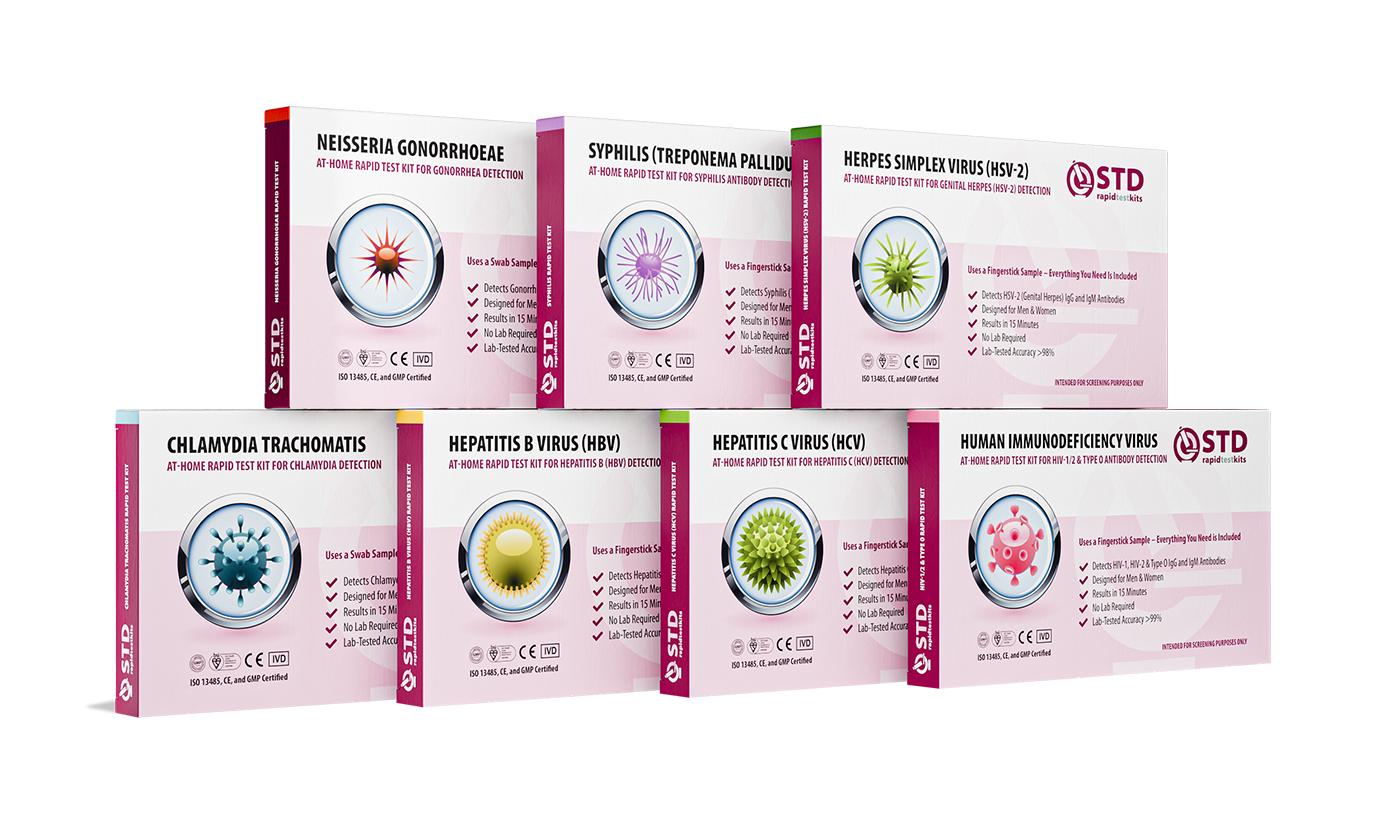
 For Men & Women
 Results in Minutes
 No Lab Needed
 Private & Discreet
Order Now $129.00 $343.00
For all 7 tests
What About STDs That “Go Away on Their Own”?
This is one of the most searched, and most dangerous, questions: can STDs go away without treatment?
The honest answer is complicated. Some viral infections, like HPV, can be cleared by your immune system over time. But relying on that outcome without testing is risky, because you won’t know what you’re dealing with, or whether complications are developing.
Bacterial STDs are different. While symptoms may fade, the infection often remains. That’s how people end up thinking something “went away” when it’s actually progressing silently.
“The discharge stopped, so I assumed it was fine,” said Andre, 27. “A few months later, I found out it never left.”
This is why symptom-based guessing doesn’t work. The absence of symptoms doesn’t equal the absence of infection.
If there’s even a small question mark, testing gives you clarity fast, and removes the guesswork entirely.
How Testing Changes the Entire Conversation
There’s a moment where everything shifts, from uncertainty to clarity. And that moment is testing.
Without testing, everything is hypothetical. You’re guessing based on symptoms, timing, or something you read online at 2AM. With testing, you’re dealing with facts.
And once you have facts, decisions become simple:
- If it’s bacterial: Treat it and move on
- If it’s viral: Manage it and understand what it actually means
- If it’s nothing: Breathe again
That’s why access matters. Not everyone wants, or feels comfortable, walking into a clinic. That’s where at-home testing becomes a powerful option.
A combo STD home test kit kit lets you check for several infections without anyone knowing, so you can get answers right away without having to talk about them or feel judged.
Because at the end of the day, the scariest part isn’t the result, it’s not knowing.
When Symptoms Disappear… But the STD Doesn’t
One of the most misleading experiences people have is this: something feels off, then it fades. No more burning. No more itching. No visible signs. And the immediate assumption is relief, “okay, it’s gone.”
But here’s the uncomfortable reality: symptoms and infection are not the same thing. Many STDs can go quiet without actually leaving your body.
Bacterial infections like chlamydia and gonorrhea are especially known for this. Symptoms can be mild, inconsistent, or disappear entirely, while the infection continues spreading internally.
“I thought my body fought it off,” said Renee, 26. “Turns out it was still there months later. I just couldn’t feel it anymore.”
This is how people end up with complications they never saw coming. Not because they ignored something obvious, but because their body stopped sending clear signals.
And this is why the question “are all STDs permanent?” gets tangled. Some aren’t permanent, but they can feel invisible long enough to become serious.

People are also reading: Can You Catch an STD from a Hotel Towel?
The Quiet Damage: What Happens If You Don’t Treat a Curable STD
Let’s clear something up: curable does not mean harmless, and it definitely doesn’t mean optional.
Untreated bacterial STDs can move deeper into the body and cause long-term consequences that don’t go away, even after the infection is treated.
| STD | Short-Term Symptoms | Long-Term Damage if Untreated |
|---|---|---|
| Chlamydia | Mild discharge, burning, or none | Infertility, pelvic inflammatory disease |
| Gonorrhea | Painful urination, discharge | Joint infection, reproductive damage |
| Syphilis | Painless sore, rash | Brain, heart, and nerve damage |
What makes this tricky is timing. By the time complications show up, the infection may have been present for months, or longer.
That’s why early testing isn’t just about peace of mind. It’s about preventing problems you can’t always reverse later.
Living With a “Lifelong” STD: What It Actually Feels Like
There’s a huge gap between what people imagine and what people actually experience.
When someone hears “you have herpes” or “you have HPV,” their brain often jumps to worst-case scenarios: constant outbreaks, rejection, isolation, a completely different dating life.
But most people living with these infections describe something much quieter, and much more normal.
“The diagnosis was the hardest part,” said Imani, 33. “After that, it just became a small part of my health, not my whole identity.”
For many:
- Herpes becomes occasional and predictable, with long periods of no symptoms
- HPV often clears without causing any long-term issues
- HIV, with proper treatment, allows for a full, healthy life with zero transmission risk
The emotional weight tends to be heavier than the physical reality, especially at the beginning.
And that’s where accurate information matters. Because fear thrives in uncertainty, not in facts.
So… Are All STDs Permanent?
No, and that’s the most important takeaway from everything you’ve read so far.
Some STDs are completely curable. Others stay in your body but don’t necessarily stay active. And many are far more manageable than people expect.
The real dividing line isn’t “your life before vs after.” It’s whether you know your status and take action.
Because once you know:
- You stop guessing
- You stop spiraling
- You start making clear, informed decisions
And that shift, from fear to clarity, is what actually changes everything.
Check Your STD Status in Minutes
Test at Home with Remedium8-in-1 STD Test Kit
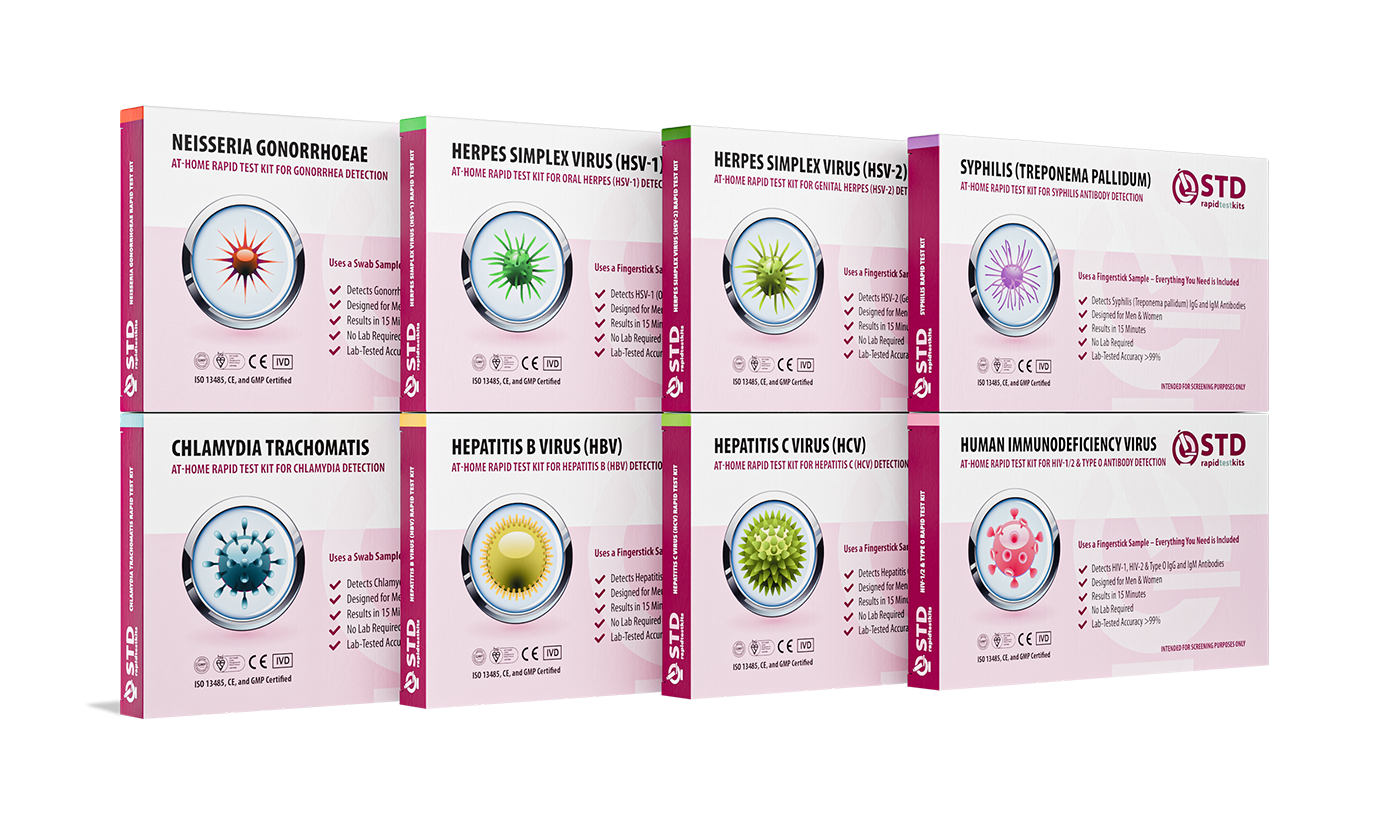 For Men & WomenResults in MinutesNo Lab NeededPrivate & Discreet
Order Now $149.00 $392.00
For all 8 tests
What Actually Changes After You Know Your Status
There’s a very specific kind of anxiety that comes from not knowing. It’s not just about symptoms, it’s about the stories your brain fills in when there’s no clear answer. Every sensation feels bigger. Every possibility feels more permanent than it actually is.
But once you know what you’re dealing with, things tend to get a lot more grounded, very quickly. If it’s something curable, the path is simple: treat it, retest if needed, and move forward. If it’s something that stays in your body, the next step isn’t panic, it’s understanding how it behaves and what control actually looks like.
That shift, from uncertainty to clarity, is where most of the emotional weight lifts. You stop imagining worst-case scenarios and start working with real information.
“The waiting was worse than the result,” said Darius, 30. “Once I knew what it was, I could actually do something about it.”
And that’s the part people don’t talk about enough. Knowing your status doesn’t trap you, it gives you options. It gives you timelines, treatments, conversations, and next steps that are based in reality, not fear.
Whether the answer is “this is gone with antibiotics” or “this is something you manage,” both are far easier to deal with than sitting in that gray area of not knowing what’s happening in your own body.
FAQs
1. Are all STDs permanent?
No, and this is where a lot of people spiral unnecessarily. Some STDs are completely curable and leave your body once treated, while others stay but don’t keep causing problems. The word “permanent” sounds heavier than the reality for most people.
2. Can STDs go away on their own without treatment?
Sometimes, but it’s not something you want to gamble on. HPV, for example, often clears on its own, but infections like chlamydia or gonorrhea can quietly stick around even when symptoms disappear. Feeling better doesn’t always mean you’re actually clear.
3. Is herpes something you have forever?
Yes, herpes stays in your body, but that doesn’t mean constant outbreaks or a totally different life. Many people have very few flare-ups after the first year, and some barely notice it at all. It’s a diagnosis that sounds louder than it usually lives.
4. Does chlamydia go away completely after treatment?
Yes, it does, when treated properly. A short course of antibiotics clears the infection, and that’s it. The only catch is reinfection, which can happen if a partner isn’t treated too.
5. Is HPV permanent or does it go away?
It can go either way, and that’s what confuses people. In many cases, your immune system clears HPV within a couple of years without you ever knowing it was there. But some strains stick around longer, which is why regular screening matters.
6. Can you live a normal life with an incurable STD?
Yes, completely. People date, have sex, build relationships, and live full lives with things like herpes or HIV. The adjustment is mostly mental at first, not physical long-term.
7. How do I know if an STD is gone after treatment?
You don’t guess, you confirm. The only real way to know is follow-up testing, because symptoms can be misleading. A clean test result gives you actual closure instead of just hoping.
8. What happens if you ignore a curable STD?
This is where things can get serious. If you don't treat it, it could get worse and cause problems like infertility or pain that lasts a long time. It’s one of those situations where “easy fix” turns complicated if you wait too long.
9. Is HIV still incurable, even today?
Yes, but that's not the end of the story. With modern treatment, people with HIV can reach undetectable levels, meaning they stay healthy and can’t pass it to partners. It’s one of the biggest medical shifts people still don’t fully realize.
10. Should I get tested even if nothing feels wrong?
Honestly, yes, because a lot of STDs don’t announce themselves. No symptoms doesn’t mean no infection, and testing is the only way to replace that uncertainty with something solid.
You Deserve Clarity, Not Guesswork
Finding out something might be an STD hits deeper than just a physical symptom. It messes with your head, your confidence, your sense of control. And the hardest part isn’t always the diagnosis, it’s the not knowing, the back-and-forth between “it’s probably nothing” and “what if it’s forever?”
But here’s the truth: most STDs fall into two clear paths. Either they’re treatable and gone, or they’re manageable and far less disruptive than people expect. The real problem isn’t which category they fall into, it’s staying stuck in uncertainty without answers.
If there’s even a small question in your mind, don’t sit in it. The Combo STD Home Test Kit is a good place to start if you want a simple, private option. No waiting rooms, no guessing, just clear answers on your terms.
How We Sourced This Article: This guide is based on CDC and WHO clinical guidelines, peer-reviewed research on infectious diseases, and real-life patient experiences. We used medically accurate sources to help people understand the difference between STDs that can be treated and those that will last a lifetime. We also thought about how people really search, think, and act in real life.
Sources
1. Centers for Disease Control and Prevention – Sexually Transmitted Diseases Overview
2. World Health Organization – Sexually Transmitted Infections Fact Sheet
3. Mayo Clinic – STDs Symptoms and Causes
4. Planned Parenthood – STD Basics
5. NHS – STIs Overview and Treatment
6. Healthline – Sexually Transmitted Diseases Overview
About the Author
Dr. F. David, MD is a board-certified infectious disease specialist focused on STD prevention, diagnosis, and treatment. He blends clinical precision with a direct, stigma-free approach that helps people understand their health without fear or judgment.
Reviewed by: Board-Certified Infectious Disease Specialist | Last medically reviewed: March 2026
This article is only for informational purposes and should not be used instead of professional medical advice, diagnosis, or treatment.


