Published: October 2025 | Last updated: May 2026 | Editorial review and quality control: Martina N.
You used a hotel towel. Then your friend mentioned that herpes can “live on stuff,” and suddenly you're spiraling. Or maybe you're itchy after a spa day and half-convinced something terrible happened in that steam room. Either way, you're not the first person to Google “STD from towel” at 2 a.m., and you won't be the last.
Here's the short version before we go deeper. Most sexually transmitted infections cannot survive outside the human body in any meaningful way. A handful linger on damp surfaces for hours rather than minutes, but documented towel-based transmission is rare even for those. The pages below walk through which infections warrant concern, which don't, and how to decide whether testing makes sense after your trip.
Key Takeaways
- Bacterial and viral STIs like chlamydia, gonorrhea, HIV, and syphilis die within minutes outside the human body. There are no documented cases of these being passed through towels.
- Trichomoniasis (a parasite) and pubic lice can survive briefly on moist fabric, but real-world towel transmission is uncommon and typically requires direct, immediate contact with heavily contaminated material.
First: What's a Fomite, and Why Does It Matter Here?
“Fomite” is the clinical term for any inanimate object that might carry an infectious agent. Towels, sheets, doorknobs, gym benches, razors, and shared underwear all qualify. Being a fomite, though, doesn't mean an object actively transmits infection. For that to happen, a long chain of conditions has to line up: the pathogen has to survive outside the body, in large enough numbers, on a suitable surface, for long enough, and in a state that lets it cross into your tissues. Each link in that chain reduces the odds further.
Most STIs are fragile organisms. They evolved to live inside warm, moist human bodies, and they fall apart fast once exposed to air, light, drying, or temperature changes. This is why sexual contact is so efficient at spreading them, and why casual contact almost never is. Per the World Health Organization, more than one million curable STIs are acquired every day worldwide, and the overwhelming majority come from sexual contact, not surface contamination.
That said, “almost never” isn't “never,” and the exceptions matter when your brain won't quiet down. Let's get specific about what could actually live on a hotel towel and what couldn't.
Can you catch an STD from a hotel towel?
For almost every STI people worry about, the answer is no. Chlamydia, gonorrhea, syphilis, HIV, and herpes have no documented towel-transmission routes and die within minutes outside the body. The two real exceptions are trichomoniasis (which can survive 2 to 3 hours on damp fabric under lab conditions, though clinical fomite transmission is rare) and pubic lice (which can live 24 to 48 hours on fabric and are well-documented to spread via shared bedding or towels). Routine testing after towel contact alone is not recommended unless symptoms develop.
Which Infections Could Actually Live on a Towel
The STIs people fear most after a towel scare are usually the wrong ones. Chlamydia and gonorrhea, the headline-grabbing bacterial names, are also the most fragile outside the body. The two organisms that genuinely tolerate fabric for a while are a parasite (trichomoniasis) and an insect (pubic lice). Here's how each behaves.
Trichomoniasis: The One That Lasts Longest
Trichomonas vaginalis is a single-celled parasite, not a virus or bacterium. Under laboratory conditions it can survive on damp washcloths and towels for roughly 2 to 3 hours, and scattered case reports in the clinical literature describe fomite transmission. Clinically, though, the parasite usually needs direct genital contact to establish a new infection. Sharing a visibly damp towel immediately after someone with an active, untreated infection used it on their genitals is a theoretical risk; using a laundered hotel towel that has been sitting dry for hours is not.
Symptoms to watch for include frothy yellow-green vaginal discharge, a musty or fishy odor, genital itching, and sometimes painful urination. About 70% of people with trichomoniasis have no symptoms at all. The WHO STI fact sheet classifies trichomoniasis among the most widespread curable STIs globally, so a symptomatic shared-towel scenario is worth testing. If you're symptom-free, your statistical risk from a hotel towel is extremely low.
Pubic Lice: The Most Towel-Friendly STI
Pubic lice (Pthirus pubis), often called “crabs,” are tiny insects that grip onto coarse body hair. Per CDC guidance on pubic lice, adult lice will die within 24 to 48 hours without a blood meal, and their eggs (nits) can persist on bedding, towels, or clothing for roughly a week. That makes them the one truly fomite-transmissible “STI” in the textbook sense.
Strictly speaking, pubic lice are a parasitic infestation rather than a sexually transmitted infection in the bacterial or viral sense. They're treatable with over-the-counter permethrin lotion or pyrethrin shampoo, plus a hot-water laundry cycle for anything fabric. If you spot tiny crawling insects in your pubic hair or notice fresh itching two to four weeks after a hotel stay, lice are far more plausible than any viral STI.
Herpes: Big Reputation, Almost Zero Towel Risk
Herpes simplex virus (HSV-1, the typical cold-sore strain, and HSV-2, the more common genital strain) is fragile outside the body. The virus needs a moist environment and direct skin or mucous-membrane contact to establish infection. Small amounts of intact virus can survive briefly on damp surfaces in tightly controlled lab settings, but those conditions don't translate to real-world towel use. Even in close-quarters households, the virus is essentially never passed through shared towels.
The reason herpes feels “stickier” in popular imagination is that it's so common and so persistent inside the body. Once infected, the virus stays for life and can shed asymptomatically, which makes person-to-person transmission very efficient. The actual route is direct skin contact with active lesions or shedding mucosa, and shared fabric is not a meaningful pathway.
Chlamydia, Gonorrhea, HIV, and Syphilis: Zero Documented Towel Cases
These four are the heavyweights of public-health concern, and they're also the least towel-relevant. Chlamydia trachomatis and Neisseria gonorrhoeae are bacterial organisms that die within seconds to a few minutes once exposed to air. HIV is a fragile retrovirus that loses infectivity rapidly outside human cells. Treponema pallidum, the syphilis bacterium, is famously delicate and was nicknamed the “delicate spirochete” by microbiologists. The CDC addresses this explicitly on its syphilis information page, noting that syphilis is not transmitted through casual contact with toilet seats, doorknobs, swimming pools, hot tubs, shared clothing, or eating utensils.
If one of these four is your specific worry after a towel incident, you can put it down. Transmission requires sexual contact (vaginal, anal, or oral) or, for HIV and syphilis, occasional non-sexual routes like shared injection equipment or mother-to-baby transmission during pregnancy or delivery.
Syphilis is not transmitted through casual contact with objects such as toilet seats, doorknobs, swimming pools, hot tubs, bathtubs, shared clothing, or eating utensils.
How Long Do STIs Survive Outside the Body?
Surface viability is the technical term for how long a pathogen stays infectious once it leaves a host. The numbers in the table below come from a combination of CDC surface-stability guidance and peer-reviewed laboratory studies on individual organisms. Fabric is generally a more forgiving environment than dry hard surfaces like plastic or ceramic, but it's still not a long-term reservoir for most STIs. The table below maps survival windows per pathogen, drawn from lab data and CDC surface-stability guidance.
| Infection | Can it survive on towels? | Typical viability on fabric | Documented towel transmission? |
|---|---|---|---|
| Trichomoniasis | Yes, briefly | Up to 2–3 hours on damp fabric | Rare case reports |
| Pubic lice | Yes | 24–48 hours for adult lice; up to a week for nits | Yes, well-documented |
| Herpes (HSV-1, HSV-2) | Very unlikely | Minutes on dry fabric; longer only in tight lab conditions | No |
| Chlamydia | No | Seconds to minutes | No |
| Gonorrhea | No | Seconds to minutes | No |
| HIV | No | Dies rapidly outside human cells | No |
| Syphilis | No | Minutes; the organism is fragile | No |
| HPV (genital strains) | Theoretical only (genital strains) | Limited surface-stability data for genital strains; non-genital strains (e.g., plantar-wart HPV) have different surface profiles | No |
When Should You Test After a Towel “Incident”?
For most towel-only exposures, testing is not necessary. If your only exposure was using a hotel towel and you have no symptoms, current screening guidance from the CDC's STD program does not recommend testing on the basis of indirect contact alone. The pretest probability is low enough that a screening result, even a negative one, doesn't change much.
Testing makes more sense if any of these apply: you're experiencing new genital symptoms (itching, discharge, sores, painful urination); you also had sexual contact during the trip with a partner whose status you don't know; you used a visibly damp shared towel directly on your genitals right after someone else used it; or your anxiety about the situation is interfering with sleep and daily life. The anxiety case is legitimate, and a clean negative test can sometimes be the only way to redirect a stuck thought loop.
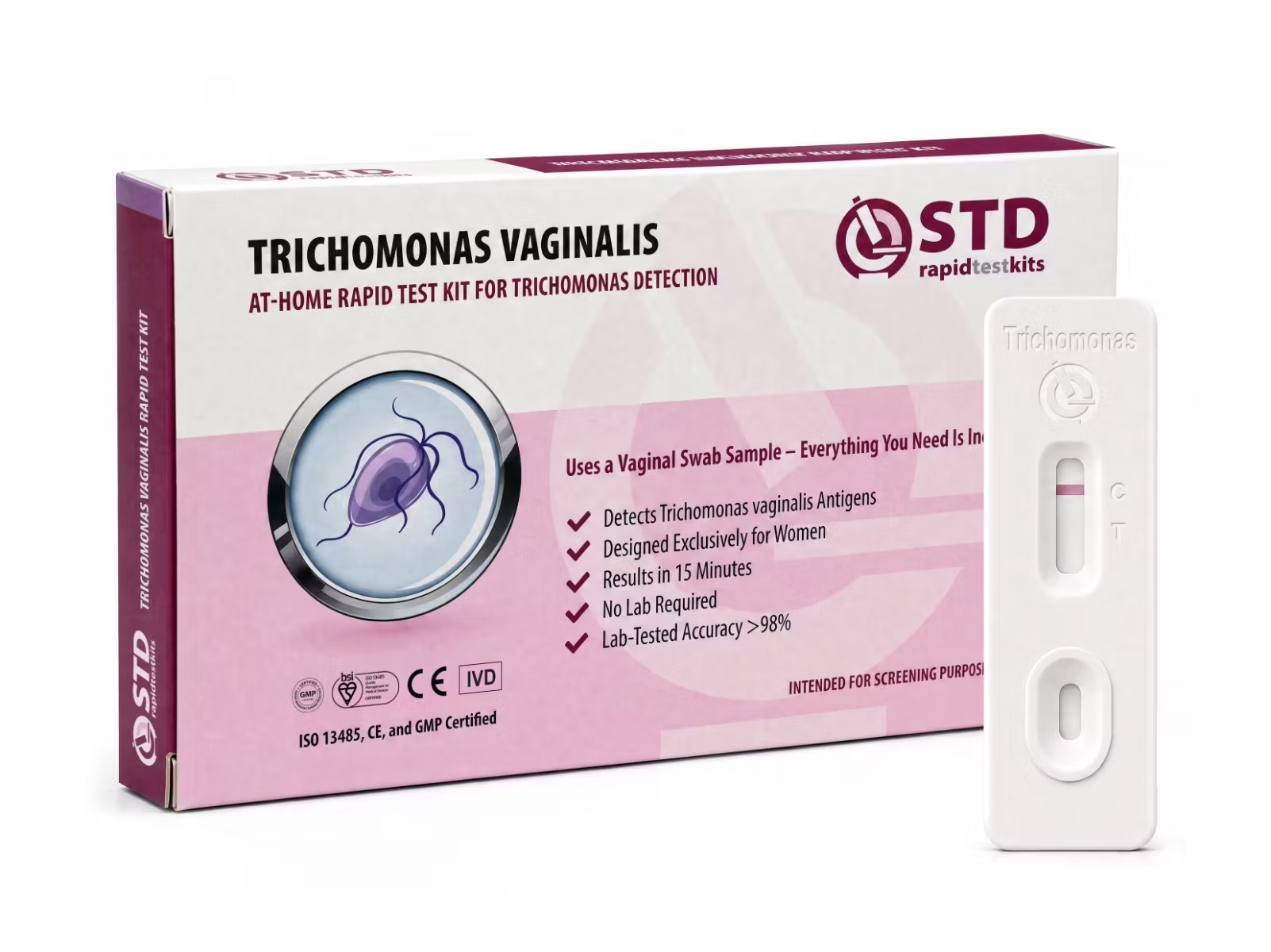
One specific scenario worth flagging: if you're a woman with new vaginal symptoms after a shared-linens situation, trichomoniasis is the one infection where towel-based exposure has any clinical plausibility, however small. A quick at-home swab test can rule it in or out within minutes.
Smarter Travel Hygiene Habits (No Germ Paranoia Required)
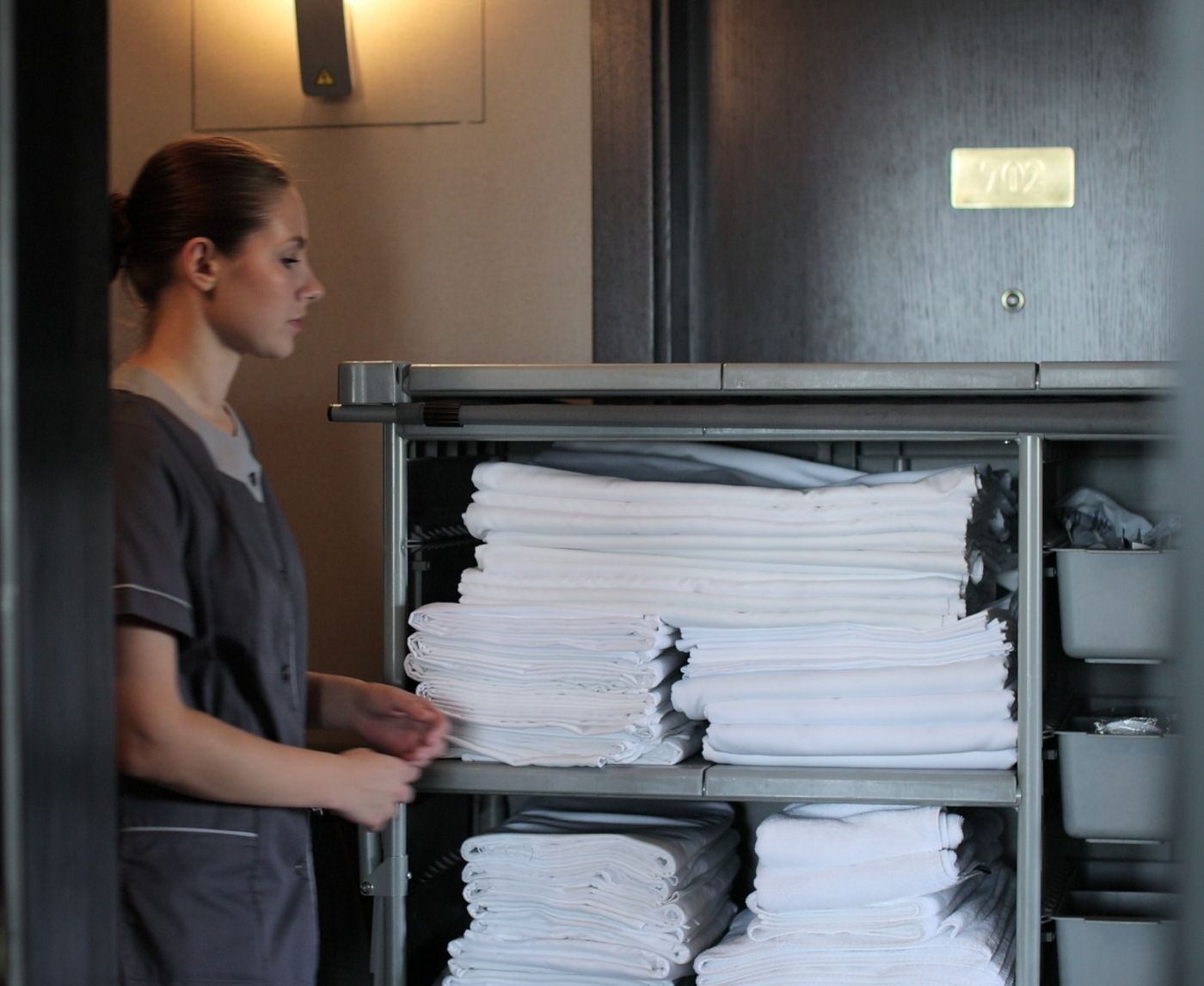
You don't need to wipe down every hotel surface with bleach, and you don't need to pack your own linens. A short list of small habits handles nearly all of the realistic fomite risk.
If you're staying somewhere where the linens look or smell off, ask for replacements or escalate. Housekeeping staff have heard worse requests, and you're paying for clean fabric.
- Don't share towels with travel companions, especially damp ones. This is the single highest-yield habit. Damp shared towels are where trichomoniasis and pubic lice have any chance to spread.
- Hang towels to dry between uses. A wet towel on the bathroom floor or back in a hamper creates the warm, damp environment that helps any pathogen persist a little longer.
- Ask for a fresh towel each day. Housekeeping will swap them out without a fuss. If a towel looks or smells off, get an instant replacement.
- Avoid rubbing shared linens on broken skin or active rashes. Intact skin is a strong barrier; open wounds, weeping eczema, or recent abrasions are the situations where clean fabric matters most.
- At gyms, saunas, and spas, use your own towel as a barrier. This is mostly about athlete's foot, staph, and skin yeast organisms, but it also covers the rare fomite STI scenarios in the literature.
- Wash anything questionable in hot water. Commercial laundries use temperatures and detergents that kill bacteria, viruses, parasites, and lice. A 60 degree Celsius (140 degree Fahrenheit) wash at home does the same.
Surface vs Sex: The Real Risk Comparison
Towels get an outsized share of STI anxiety because we can't see what's on them and don't want to think about who used them last. It's worth zooming out, though. Compared to the actual transmission routes for STIs, the towel-anxiety conversation is a rounding error. The table below puts towel exposure next to other common scenarios that bring people to a clinic.
| Exposure type | Realistic STI risk | Should you test? |
|---|---|---|
| Hotel towel on intact dry skin | Negligible | No, unless symptoms develop |
| Damp shared towel post-sauna or post-sex | Low (trichomoniasis, pubic lice) | Only if symptoms or a known partner exposure |
| Unprotected vaginal or anal sex with a new partner | Moderate to high (multiple STIs) | Yes, at appropriate testing windows |
| Unprotected oral sex | Low to moderate (gonorrhea, HSV-1, syphilis) | Yes, especially if symptoms develop |
| Shared sex toy without cleaning | Moderate to high | Yes, full panel |
| Deep kissing with someone with an active cold sore | Low to moderate (HSV-1) | Only if oral or facial sores develop |
| Needlestick or shared injection equipment | High (HIV, hepatitis B, hepatitis C) | Yes, follow post-exposure protocol |
If You're Still Worried, Testing Is a Reasonable Choice
Read all of that and still can't shake the feeling? Sexual-health anxiety has its own internal logic, and “the odds are low” doesn't always close the loop. Sometimes a clean negative test is the only thing that lets your brain move on.
Testing makes especially good sense when any of these are true:
- You had unprotected sex (vaginal, anal, or oral) during the trip and don't know your partner's status.
- You've noticed any genital symptoms (itching, discharge, bumps, sores, painful urination, unusual odor) since the trip.
- You shared linens, towels, or razors with someone whose health you don't know, especially in damp conditions like a spa or pool day.
- You're in a high-anxiety loop and need a concrete result to redirect your attention.
- You're due for routine STI screening anyway. Trips are an easy “deadline” for keeping up with annual or semiannual testing.
The catch with same-week testing is the window period. STIs don't show up on tests instantly after exposure. Testing too early gives you a false negative and a louder anxiety voice three weeks later. Time it right.

Testing Window Periods by Infection
Every STI has a window between exposure and when a test can reliably detect it. Test before the window opens and you risk a false negative. The table below gives general guidance based on common rapid and at-home test technologies. Lab-based NAAT (PCR) testing for some infections has shorter windows than rapid lateral-flow tests, so this is the conservative, home-test version. A positive at-home rapid result is always worth confirming with a clinical lab when possible.
| Infection | Earliest reliable test | Retest recommended? |
|---|---|---|
| Trichomoniasis | About 7–14 days after exposure | Yes if symptoms persist after a negative result |
| Chlamydia | About 14 days after exposure | Yes at 3 months if sexually active or partner positive |
| Gonorrhea | About 14 days after exposure | Yes if partner status changes or symptoms develop |
| HIV (rapid antibody) | About 3 months for definitive; some 4th-gen lab tests detect earlier | Yes at 3 months for final clearance |
| Syphilis | About 3–6 weeks | Yes at 3 months if the first test was negative but exposure was high-risk |
| Hepatitis B | About 6 weeks (surface antigen) | Yes at 3 months for confirmation |
| Hepatitis C | About 8–11 weeks for antibody seroconversion | Yes at 6 months for final clearance |
| HSV-2 antibody | About 6–12 weeks for seroconversion | Yes if the first test was negative and exposure was high-risk |
| Pubic lice | Visible immediately if present | Visual recheck after treatment |
The Real Takeaway: Clarity Beats Catastrophizing
If you're still mentally rewinding that hotel-towel moment, the issue probably isn't the towel itself. It's the loop of “what if I missed something,” and that loop only ends with information. The information here is fairly settled. Hotel towels are not a meaningful vector for almost any sexually transmitted infection. Trichomoniasis and pubic lice are the two narrow exceptions, and both have specific symptoms you'd notice within days to a few weeks if you contracted them.
If you also had sexual contact during the trip and want to clear the slate, a multi-infection home panel is the most efficient option. A multi-STI home panel covers bacterial and blood-borne infections in one session from your own bathroom, with results in about 15 minutes per test once the window period opens.
Frequently Asked Questions
- Can you really catch an STD from a hotel towel?
- For nearly every infection people worry about, no. Chlamydia, gonorrhea, syphilis, HIV, and herpes do not have documented towel-transmission routes and die within minutes outside the body. The only two exceptions are trichomoniasis, which can briefly survive on damp fabric, and pubic lice, which can live 24 to 48 hours on towels or bedding. Both require specific conditions that are rare in a routine hotel-stay context.
- I'm itchy after using a hotel towel. What could it be?
- Most often it's not an STI. Detergent residue, fragrance sensitivity, dry skin after travel, post-shaving irritation, and yeast overgrowth in warm humid conditions all cause itching that mimics an STI feel. If you spot visible insects in pubic hair, that's pubic lice and is treatable with over-the-counter permethrin or pyrethrin. If the itch comes with discharge, odor, or new bumps, see a clinician or run a targeted test.
- Could I get herpes from a hotel towel?
- No documented case of household towel transmission exists for HSV-1 or HSV-2. Both strains need live virus in sufficient concentration reaching a mucous membrane or broken skin, conditions that dry fabric cannot sustain. The transmission route is always direct contact with active lesions or infected fluid, not indirect surface contact. If your only exposure was a folded hotel towel, you can take that worry off the list.
- How does trichomoniasis actually transmit through fabric?
- The parasite can stay viable on damp fabric for up to 2 to 3 hours in lab conditions, and isolated case reports confirm fomite transmission is possible. In practice, the risk scenario is narrow: a moist towel used directly on an infected area and then immediately shared. A laundered or air-dried towel carries no meaningful risk. If you have new vaginal symptoms after sharing wet linens, a rapid trichomoniasis test is the right next step.
- Do hotel laundries actually kill STI pathogens?
- Yes. Commercial laundry temperatures (typically above 60 degrees Celsius or 140 degrees Fahrenheit) combined with detergent kill bacteria, viruses, parasites, and lice. A properly laundered hotel towel is functionally sterile from an STI standpoint. The remaining risk is towels that someone else used after laundering, which is the actual concern in shared bathrooms or family-style stays.
- How long do STIs live outside the body in general?
- Most bacterial and viral STIs lose infectivity within seconds to minutes on dry surfaces. Trichomoniasis is the longest-living protozoan STI on fabric, at a few hours under lab conditions. Pubic lice are the longest-surviving fomite-associated STI in the broader sense, at 24 to 48 hours for adult insects and up to a week for eggs. Outside of those, surface persistence is not a meaningful transmission route.
- Should I get tested if I'm symptom-free and only worried about a towel?
- Standard screening guidance does not recommend testing on the basis of indirect contact alone if you're symptom-free. That said, if you also had sexual contact during the trip, are due for routine screening, or simply can't stop thinking about it, an at-home test is a reasonable way to put the question to bed. Just observe the testing window for each infection so the result actually means something.
- Are gym towels riskier than hotel towels?
- Slightly, but the risk is still low. Gym towels are more often shared between strangers in damp post-workout conditions, which is the closest real-world match to the fomite scenarios in the medical literature. The most common gym-towel skin issues are not STIs but rather staphylococcal infections, athlete's foot, and plantar-wart HPV strains (different from the genital HPV strains our home kits screen for). Bringing your own towel and using it as a barrier on benches or in saunas removes most of the practical risk.
How We Sourced This Article: Our article was constructed based on current advice from the most prominent public health and medical organizations, and then molded into simple language based on the situations that people actually experience. We drew on CDC, WHO, and Mayo Clinic guidance, with priority given to root-domain pages on STI transmission routes, surface viability, and screening recommendations. The sources below informed every numerical and clinical claim in the article.
- U.S. Centers for Disease Control and Prevention. About Sexually Transmitted Infections (STIs): overview of transmission routes and surveillance data.
- U.S. Centers for Disease Control and Prevention. About Syphilis: explicit guidance that syphilis is not transmitted through casual contact with towels, shared clothing, or other objects.
- U.S. Centers for Disease Control and Prevention. About Pubic Lice: survival time on fabric and bedding (adult lice die within 24 to 48 hours without a blood meal) and treatment guidance.
- U.S. Centers for Disease Control and Prevention. STD treatment, screening, and testing-window guidelines.
- World Health Organization. Sexually transmitted infections fact sheet, including global incidence (more than one million new STIs acquired daily, primarily through sexual contact) and the status of trichomoniasis among widespread curable STIs.
- Mayo Clinic. Sexually transmitted diseases (STDs) topic page: transmission-route summaries and symptom overviews for common infections.
