







Quick Answer: Purple spots in the mouth are usually caused by minor bleeding under the skin (like petechiae or bruising), not STDs or HIV. While some infections can affect the mouth, purple discoloration alone is rarely a primary STD or HIV symptom.
The Moment Your Brain Goes Worst-Case
Let’s be honest about how this usually unfolds. You notice something new in your body, and within minutes you’re deep into search results that casually mention things like HIV, syphilis, or “oral lesions.” There’s no context, no probability, just a list of possibilities that all sound serious.
Jared, 26, described it like this:
“I saw two purple dots on the roof of my mouth and immediately assumed I had HIV. I hadn’t even had symptoms. I just… spiraled.”
This reaction isn’t irrational, it’s human. Your brain is wired to flag unfamiliar changes as threats. But the internet rarely tells you how likely something is, only that it’s possible.
So let’s slow this down and actually look at what these spots tend to be in real life.
What Purple Spots in Your Mouth Usually Are (And Why They Happen)
Most purple spots inside the mouth come down to one simple thing: tiny blood vessels breaking just under the surface. That’s it. No infection required.
This is called petechiae or minor oral bruising, and it can happen more easily than people realize. The skin inside your mouth is delicate, and even small amounts of pressure or irritation can cause visible discoloration.
Here’s where these spots commonly come from:
| Cause | What It Looks Like | Why It Happens |
|---|---|---|
| Minor trauma | Small purple/red dots | Biting, rough food, toothbrush pressure |
| Suction or pressure | Clustered spots on palate | Oral sex, coughing, or suction |
| Irritation | Flat discoloration | Hot foods, alcohol, smoking |
| Blood vessel sensitivity | Random small spots | Natural fragility in oral tissue |
One detail that surprises people: oral sex itself can cause these spots, not because of an STD, but because of suction and pressure. The same mechanism as a hickey, just inside your mouth.
Elena, 31, put it bluntly:
“I thought I had some rare STD. Turns out it was basically a hickey on the roof of my mouth. No one tells you that’s a thing.”
And yet, it is. Very much a thing.

People are also reading: When It Burns but Your Gonorrhea Test Is Negative
So… Could It Still Be an STD?
This is the part you actually care about. Yes, some STDs can affect the mouth. But here’s the key distinction: they usually don’t show up as random purple spots by themselves.
When STDs involve the mouth, they tend to have very specific patterns, textures, and additional symptoms. Not just color changes.
| STD | Typical Oral Symptoms | Do They Look Purple? |
|---|---|---|
| Herpes | Painful blisters or ulcers | No, usually red/white sores |
| Syphilis | Single painless ulcer (chancre) | Not typically purple |
| Gonorrhea | Sore throat, redness | No visible purple spots |
| HPV | Warts or growths | No, flesh-colored or white |
Notice the pattern? These infections tend to create lesions, sores, or growths, not subtle purple dots.
That doesn’t mean you should ignore symptoms. It means the visual you’re seeing matters. A flat purple spot is telling a very different story than a painful ulcer or raised lesion.
What About HIV? This Is Where Anxiety Spikes
If your mind jumped straight to HIV, let’s talk about that directly, without sugarcoating, but also without feeding unnecessary fear.
HIV can cause mouth-related symptoms, but usually not in the way people imagine. Early HIV symptoms tend to look more like:
- Flu-like illness: fever, fatigue, sore throat
- Oral thrush: white patches, not purple
- Ulcers: painful sores, not flat discoloration
In later or untreated stages, HIV can be associated with more unusual lesions, including darker ones, but these are not subtle, isolated purple spots. They’re typically part of a broader pattern of symptoms and immune suppression.
Marcus, 34, shared:
“I convinced myself those spots were HIV. Got tested twice. Both negative. The doctor said if it were HIV, I’d have way more going on than just that.”
That’s the piece Google often leaves out: context. HIV doesn’t quietly show up as two random purple dots and nothing else.
When a Spot Is Just a Spot, and When It’s Not
This is where things get practical. Because while most purple spots are harmless, you still need a way to decide whether to ignore it, monitor it, or get tested.
Here’s a grounded way to think about it:
| Situation | What It Likely Means | Next Step |
|---|---|---|
| Small, painless purple dots | Minor trauma or petechiae | Monitor for a few days |
| Appeared after oral sex | Pressure-related spotting | Usually resolves on its own |
| Painful sores or ulcers | Possible infection (not just bruising) | Consider testing |
| Spots that grow or spread | Needs evaluation | Seek medical advice |
The biggest signal isn’t just what it looks like, it’s what else is happening in your body.
Are you feeling sick? Do you have other symptoms? Or is it just… a couple of spots and a lot of anxiety?
Those are very different situations.
Check Your STD Status in Minutes
Test at Home with Remedium6-in-1 STD Rapid Test Kit

 For Men & Women
 Results in Minutes
 No Lab Needed
 Private & Discreet
Order Now $119.00 $294.00
For all 6 tests
What No One Tells You After the Hookup
There’s a very specific kind of anxiety that hits after oral sex. Not always during, during, everything can feel normal, consensual, even connected. But later? That’s when your brain starts replaying details you didn’t question in the moment.
Did I notice anything unusual? Was there a sore I missed? Why does my mouth feel different now?
And then, maybe the next morning, you see something like a purple spot, and suddenly it feels like evidence.
Rafael, 29, described it like this:
“It wasn’t even painful. Just a couple of spots. But because it showed up after oral, I couldn’t stop thinking it had to be something serious.”
This is where context matters more than fear. Oral sex can expose your mouth to friction, pressure, and minor trauma, especially if things were enthusiastic, prolonged, or involved suction. The tissue on the roof of your mouth and inner cheeks is thin, and it reacts quickly.
So yes, timing can make it feel suspicious. But timing alone doesn’t equal infection.
What Real STD Symptoms in the Mouth Actually Feel Like
Instead of focusing only on how something looks, it helps to understand how oral STDs usually behave in the body. Because they don’t tend to stay subtle.
When an STD affects the mouth, it often brings other sensations with it, things you’d notice even if you weren’t staring in the mirror.
Here’s how that usually plays out:
| Symptom Type | What You’d Notice | Common With |
|---|---|---|
| Painful sores | Sharp or burning pain when eating or swallowing | Herpes, syphilis |
| Persistent sore throat | Feels like strep but doesn’t go away | Gonorrhea |
| White patches | Creamy coating that doesn’t wipe off easily | Oral thrush (sometimes linked to immune changes) |
| Raised growths | Small bumps or wart-like textures | HPV |
Purple spots don’t really fit into this pattern. They’re usually flat, painless, and don’t interfere with eating, swallowing, or talking.
That doesn’t make them irrelevant. It just means they’re telling a different story, one that’s more about physical irritation than infection.
Let’s Talk About HIV, Without Feeding the Spiral
This is the part where most articles either scare you or oversimplify things. We’re not doing either.
Yes, HIV can affect the mouth. But it doesn’t present as a single, isolated cosmetic change. It shows up as part of a bigger picture, something systemic, not subtle.
In early HIV infection, people typically experience:
- Fever and fatigue that feel like a heavy flu
- Swollen lymph nodes in the neck or jaw
- Body aches and sore throat
Later, if untreated, oral symptoms might include persistent infections like thrush or recurring ulcers. But again, these aren’t just visual quirks. They affect how your mouth feels and functions.
Ashwin, 33, said it best after going through testing:
“I thought HIV was something that would show up quietly, like a mark or something. But the doctor told me it’s not subtle like that. You feel it.”
That’s the key distinction. HIV is not a “silent purple spot” condition.
If You’re Still Worried, Testing Is the Reset Button
Even when something is probably harmless, your brain doesn’t always accept “probably.” It wants certainty. And honestly? That’s reasonable.
If you’ve had a recent exposure, or if your anxiety isn’t settling, testing gives you a clear answer instead of a mental loop.
This is where a lot of people hesitate, not because they don’t want to know, but because they don’t want the process to feel complicated, public, or overwhelming.
That’s why at-home testing has become such a relief for people in exactly this situation.
Take back control of your health without the waiting room stress. You can use a discreet at-home STD test to check for common infections quickly and privately, including after oral exposure.
And if you want broader clarity instead of guessing which test you need, a combo STD home test kit covers multiple infections at once, so you’re not left second-guessing yourself.
Testing doesn’t mean something is wrong. It just means you’re choosing clarity over speculation.

People are also reading: Can You Have an STD and Not Know It? Here’s What to Watch For
Timing Matters More Than the Spot Itself
One of the biggest mistakes people make is testing too early, then trusting a negative result that came before the body had time to show anything.
Every infection has a “window period”, a stretch of time between exposure and when a test can reliably detect it.
So if your concern is tied to a recent encounter, the real question isn’t just what is this spot? It’s when should I test for real accuracy?
| Infection | Earliest Reliable Test Time | Best Accuracy Window |
|---|---|---|
| Gonorrhea | 3–5 days | 1–2 weeks |
| Chlamydia | 5–7 days | 2 weeks |
| Syphilis | 2–3 weeks | 4–6 weeks |
| HIV | 10–14 days (early tests) | 4–6 weeks |
This is why symptoms alone can be misleading. You might see something harmless early on and assume it’s connected, or miss a real infection because it hasn’t shown up yet.
Testing at the right time matters more than trying to decode a single visual symptom.
This Isn’t Just About Spots, It’s About Uncertainty
Most people don’t actually panic because of the spot itself. They panic because of what it could mean. It’s the uncertainty that gets loud, the “what if I missed something?” voice that doesn’t shut up, even when the symptom is small.
You start checking again. Maybe the spot looks darker. Maybe there are more. Maybe there aren’t, but now you’re not sure if you just didn’t notice them before.
Camila, 24, explained it in a way a lot of people recognize:
“I kept going back to the mirror like it was going to change in real time. I wasn’t even sure what I was looking for anymore, I just wanted it to not be something serious.”
This is where it helps to ground yourself in patterns, not panic. Because bodies do weird, temporary things all the time. And not every new mark is a warning sign.
Common Things People Mistake for STDs (But Aren’t)
There’s a huge gap between what people think STD symptoms look like and what they actually look like. And that gap is where most of the anxiety lives.
Purple spots in the mouth sit right in that space, they look unfamiliar, slightly alarming, and easy to misinterpret.
Here are a few of the most common non-STD explanations people mistake for infections:
| Condition | What It Looks Like | Why It Gets Confused |
|---|---|---|
| Petechiae | Tiny purple/red dots | Color looks “serious” or unusual |
| Bruising | Dark patches or spots | Appears suddenly after friction |
| Blood blisters | Raised, dark red/purple bumps | Can look dramatic but are harmless |
| Irritation spots | Flat discoloration | Triggered by food, alcohol, or friction |
The common thread here is simple: these are mechanical or physical reactions, not infections. They happen because something irritated the tissue, not because something invaded your body.
And importantly, they tend to fade on their own.
How Long Should You Watch It Before Worrying?
This is one of the most practical questions, and one of the least clearly answered online.
Most harmless purple spots in the mouth follow a predictable timeline. They show up out of nowhere, stay visible for a few days, and then slowly fade away as the tissue heals.
Here’s a realistic expectation:
| Timeframe | What Usually Happens |
|---|---|
| Day 1–2 | Spots appear, may look darker initially |
| Day 3–5 | Color starts fading or softening |
| Day 5–10 | Spots often disappear completely |
If your spots look like this, it's a good sign that they aren't caused by an infection.
On the other hand, if something lingers, worsens, or changes shape significantly, that’s your cue to get it checked, not because it’s definitely serious, but because it’s outside the usual pattern.
What Actually Deserves a Second Look
There’s a difference between being aware of your body and being trapped in hypervigilance. The goal isn’t to ignore symptoms, it’s to recognize which ones actually need attention.
Here are the signs that make something worth following up on:
- Pain: especially sharp, persistent, or worsening discomfort
- Ulceration: open sores instead of flat spots
- Growth: raised, spreading, or changing lesions
- Systemic symptoms: fever, fatigue, swollen lymph nodes
Notice what’s missing from that list: color alone. A purple spot without any of these features is rarely the main signal of an STD or HIV.
That doesn’t mean your concern isn’t valid. It just means your body isn’t sending the kind of signal those infections usually produce.
Check Your STD Status in Minutes
Test at Home with Remedium8-in-1 STD Test Kit
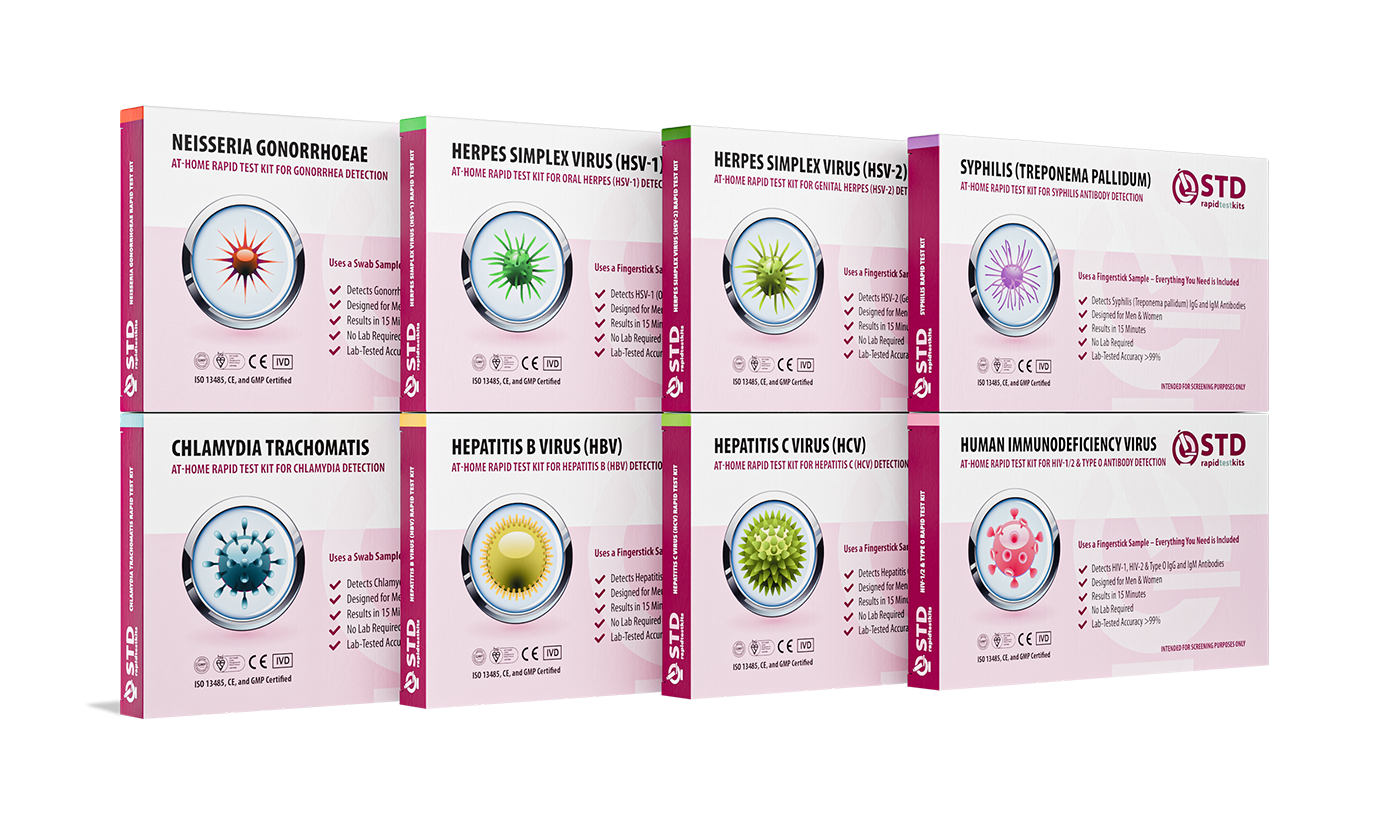 For Men & WomenResults in MinutesNo Lab NeededPrivate & Discreet
Order Now $149.00 $392.00
For all 8 tests
You’re Allowed to Check Without Assuming the Worst
There’s a quiet pressure people feel in these moments, to either ignore it completely or jump straight to panic. But there’s a middle ground that’s actually healthier: checking without catastrophizing.
You can monitor a symptom and still stay grounded. You can decide to test without assuming something is wrong. You can notice your body without turning every change into a diagnosis.
And if your brain keeps circling back to the same question, what if this is something?, you don’t have to sit in that loop.
Whether it’s a bump, a spot, or just a lingering doubt, you deserve a clear answer. That’s the whole point of testing, not fear, not judgment, just information you can actually use.
Before You Spiral, Here’s the Reality Check
If you’ve made it this far, you’re probably still thinking about the same question: what if this is something serious and I’m missing it?
That question doesn’t make you dramatic, it makes you human. Especially when it comes to anything involving your mouth, your health, or a recent sexual experience. But here’s the grounded truth after everything we’ve walked through:
Most purple spots in the mouth are not STDs. They’re not HIV. They’re not early warning signs of something hidden. They’re usually small, temporary responses to pressure, irritation, or minor injury that your body resolves on its own.
And when something is related to an infection, it almost never shows up as just a color change. It comes with sensation, progression, and other signals that are hard to ignore once you know what to look for.
If You Need Certainty, Here’s Your Next Move
You don’t have to keep guessing. And you don’t have to wait until anxiety turns into full-blown panic before you act.
If there’s any chance your concern is tied to a recent encounter, or if your brain just won’t let this go, testing gives you a clean, factual answer. No more late-night searches. No more trying to compare your mouth to random images online.
Don’t wait and wonder. Get clarity from home with a combo STD home test kit that checks for multiple infections quickly and discreetly. You can also explore all options directly at STD Rapid Test Kits if you’re not sure what you need yet.
Testing isn’t an admission of risk, it’s a decision to stop guessing and start knowing.
FAQs
1. I found purple spots in my mouth and now I’m freaking out, should I be?
Short answer: probably not. Most of the time, these spots are just tiny bruises from something minor like food, suction, or even brushing too hard. Your brain jumps to worst-case scenarios fast, but your mouth is actually pretty easy to irritate.
2. Be honest, could this actually be HIV?
I’ll be straight with you: it’s extremely unlikely. HIV doesn’t quietly show up as a couple of purple dots and nothing else. When it affects the mouth, it usually comes with bigger, more noticeable symptoms, like ulcers, infections, or feeling genuinely unwell.
3. What if this showed up right after oral sex?
That timing can feel suspicious, but it’s actually very common. Oral sex can create enough pressure to cause tiny blood vessels to break, basically the same idea as a hickey, just inside your mouth. It looks scary, but it’s usually harmless.
4. How do I tell the difference between a harmless spot and something serious?
Not only how it looks, but also how it feels. Most of the time, harmless spots are flat, don't hurt, and go away in a few days. It's worth checking out if you have pain, open sores, or something that isn't getting better.
5. Mine don’t hurt at all, is that a good sign?
Yes, actually. Most oral STDs come with some level of discomfort, burning, tenderness, or irritation. If it’s just there visually and not bothering you, that leans much more toward something benign.
6. How long should I wait before I start worrying?
Give it about a week. Most minor spots will fade within a few days as your mouth heals. If you’re still seeing it after 10 days or it’s changing in a weird way, that’s your cue to get a professional opinion.
7. Should I still get tested just to be safe?
If it’s going to keep you up at night, yes. Testing isn’t about assuming something is wrong, it’s about getting out of your head and into a clear answer. Peace of mind is a valid reason.
8. Can stress or anxiety actually cause this?
Not directly, but it can lead to things that do. Clenching your jaw, grinding your teeth, or even just being more aware (and rougher) when brushing can irritate the tissue enough to cause spots.
9. Do STDs in the mouth always look obvious?
Most of the time, yes. They tend to show up as sores, patches, or growths that feel noticeable, not subtle color changes you only catch under bright light while inspecting your gums.
10. Why does Google make this feel way worse than it probably is?
Because Google shows you what’s possible, not what’s likely. And when it comes to symptoms like this, the scary explanations are technically real, but they’re not the most common outcome. Your job isn’t to assume the rare case, it’s to look at the full picture.
You Deserve Clarity, Not Guesswork
Purple spots in your mouth are unsettling, yes. Not because they hurt, but because they leave too much room for interpretation. A small visual change can quickly turn into a much bigger question. The goal isn’t to assume the worst. The goal is to separate what your body is signaling from what your mind is projecting.
If the spots appeared after friction or oral sex, monitor them. If they fade within a few days, let them go. If you’ve had recent sexual exposure, test at the right window. If something persists, changes, or comes with other symptoms, get it evaluated. Each step removes uncertainty and replaces it with something concrete.
Don’t wait and wonder. If infection is even a small possibility, start with a discreet screen like the Combo STD Home Test Kit. Your results are private. Your decisions stay in your hands. And clarity always feels better than guessing.
How We Sourced This Article: This guide blends current clinical guidance on sexually transmitted infections with peer-reviewed research on oral lesions, petechiae, and HIV-related symptoms. We reviewed medical literature on oral manifestations and symptom presentation patterns to distinguish common benign causes from true infection signals. Only established medical authorities and research publications informed the clinical distinctions presented here.
Sources
1. Centers for Disease Control and Prevention – STDs Overview
2. World Health Organization – Sexually Transmitted Infections
3. Mayo Clinic – HIV/AIDS Symptoms
4. PubMed – Oral Manifestations of Systemic Disease
6. Planned Parenthood – HIV & AIDS Information
7. National Cancer Institute – Kaposi Sarcoma Definition
About the Author
Dr. F. David, MD is a board-certified specialist in infectious diseases who works to prevent, diagnose, and treat STIs. He combines clinical precision with a direct, sex-positive approach that prioritizes clarity, privacy, and patient empowerment.
Reviewed by: Board-Certified Medical Reviewer | Last medically reviewed: March 2026
This article is only meant to give you information and should not be used as medical advice.


