







Quick Answer: STDs are often asymptomatic because many infections don’t trigger strong immune responses right away, allowing them to live in the body without causing noticeable symptoms.
This Is More Common Than You Think
There’s a persistent myth that if something is wrong in your body, you’ll feel it. Pain means problem. No pain means safety. That logic works for a twisted ankle, maybe even a cold. But sexually transmitted infections don’t follow that script.
In reality, a huge percentage of STDs are asymptomatic, meaning people feel completely normal while the infection is active. Chlamydia, for example, is called a “silent infection” for a reason. Most people who have it don’t notice anything at all. No warning signs. No obvious symptoms. Just bacteria doing its thing quietly.
“I only tested because my friend told me she had something,” one patient shared. “I felt totally fine. I almost didn’t go.”
That moment, testing without symptoms, is where a lot of people first realize how unreliable “feeling okay” actually is. And it’s also where a lot of infections get caught before they cause long-term damage.
Why Your Body Doesn’t Always React
So why don’t STDs show symptoms? It comes down to how your immune system interacts with different pathogens. Not every infection causes inflammation or visible changes right away. Some viruses and bacteria are surprisingly good at hiding.
Your immune system is always deciding what to react to. If an infection is slow-growing, localized, or doesn’t immediately threaten your system, your body might not launch a dramatic response. No swelling. No fever. No obvious discomfort.
Think of it less like an invasion and more like a quiet guest that overstays its welcome. It’s there, but it’s not setting off alarms, at least not yet.
This is especially true in mucosal areas like the cervix, urethra, throat, or rectum. These tissues are designed to tolerate exposure to different bacteria, which means infections can exist there without causing immediate irritation.
The Infections That Stay the Quietest
Not all STDs behave the same way. Some are loud and obvious. Others are almost invisible. Here’s how some of the most common ones behave when it comes to symptoms:
| STD | Often Asymptomatic? | What Happens Silently |
|---|---|---|
| Chlamydia | Very common | Infects cervix or urethra without pain |
| Gonorrhea | Common | Can live in throat or rectum unnoticed |
| HPV | Extremely common | No symptoms unless warts or cell changes occur |
| Herpes | Often mild or unnoticed | Outbreaks may be mistaken for irritation |
| HIV | Early stage often silent | Initial symptoms can be mild or missed |
The key takeaway here is simple: the absence of symptoms doesn’t mean the absence of infection. It just means your body isn’t reacting in a way you can feel.

People are also reading: Can a Baby Get an STD from Breastfeeding? What Doctors Say
“I Thought I’d Know”, The Myth That Keeps People From Testing
This belief shows up everywhere: “I would know if I had something.” It sounds logical. It feels reassuring. And it’s one of the biggest reasons infections go undiagnosed for months or even years.
The truth is, many people only discover an STD during routine screening, a partner notification, or a completely unrelated doctor visit. Not because they ignored symptoms, but because there weren’t any to notice.
“I kept waiting for something to feel off,” another patient said. “But nothing ever did. That’s what scared me the most after.”
This is where asymptomatic infections become more than just a biological quirk. They become a public health issue. Because if you don’t know you have something, you can unknowingly pass it to someone else.
What’s Actually Happening Inside Your Body
Even without symptoms, infections are not inactive. Bacteria like chlamydia and gonorrhea can slowly replicate and spread within the reproductive tract. Viruses like HPV can begin altering cells long before anything visible appears.
That’s the uncomfortable truth: silence doesn’t mean harmless.
In some cases, the damage builds quietly. Infections can move upward into the uterus or fallopian tubes, potentially affecting fertility. Others may linger in the throat or rectum, especially after oral or anal sex, without ever causing pain.
And because there’s no immediate feedback loop, no discomfort telling you to act, testing often gets delayed.
A Quick Reality Check: Symptoms vs. No Symptoms
| What You Feel | What Might Actually Be Happening |
|---|---|
| Nothing at all | Active infection present |
| Mild irritation | Early or overlooked symptoms |
| Symptoms come and go | Intermittent viral shedding or immune response |
| Completely normal routine | Infection spreading unnoticed |
That gap between what you feel and what’s actually happening is where most confusion, and risk, lives.
If You Feel Fine, Should You Still Test?
Short answer: yes. Longer answer: especially then.
Testing isn’t just for when something feels off. It’s for when you’ve had a new partner, a change in protection, or even just time passing. Because waiting for symptoms with STDs is like waiting for smoke before checking for a fire that doesn’t always produce visible flames.
If you’re not sure where to start, this is a simple place to explore at-home testing options. It removes the guesswork, the waiting rooms, and a lot of the anxiety that keeps people from taking that first step.
And if you want something broader, a combo STD home test kit can check for multiple infections at once, especially helpful when symptoms aren’t guiding you toward a specific answer.
How Long Can an STD Stay Hidden?
This is the part that tends to sit heavy once people realize it: some STDs don’t just stay silent for days or weeks, they can go unnoticed for months or even years. And during that time, nothing feels off enough to trigger concern. Life keeps moving. So does the infection.
Different infections behave differently, but many don’t follow a clear timeline where symptoms show up quickly and obviously. Instead, they settle in quietly. Some may never cause noticeable symptoms at all.
“I hadn’t been with anyone new in over a year,” one person said. “So when I tested positive, I didn’t even know when it started.”
That uncertainty, when did this happen, how long has it been there, is one of the most disorienting parts of asymptomatic infections.
Check Your STD Status in Minutes
Test at Home with Remedium6-in-1 STD Test Kit
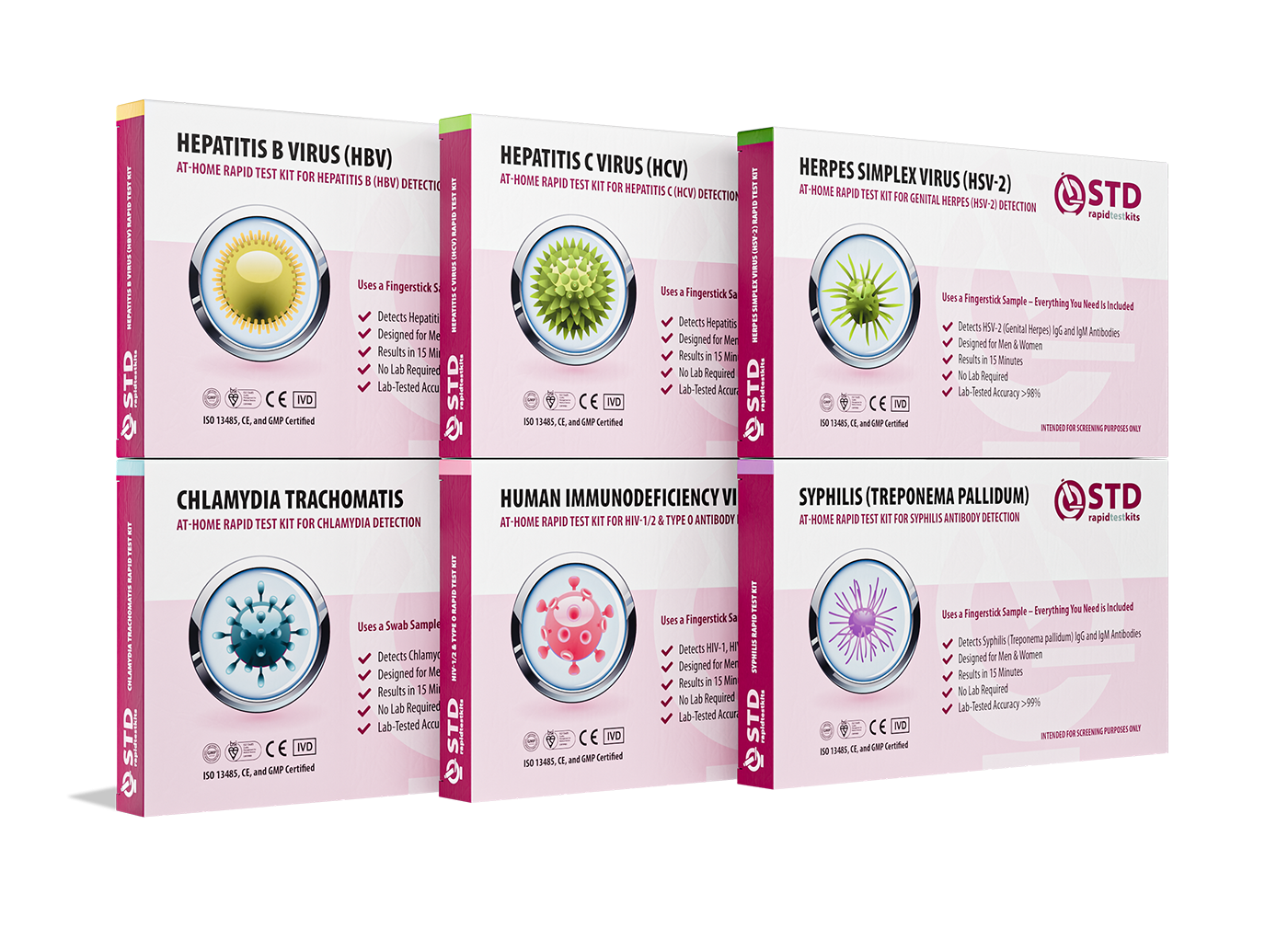
 For Men & Women
 Results in Minutes
 No Lab Needed
 Private & Discreet
Order Now $119.00 $294.00
For all 6 tests
The Timeline Problem: Incubation vs. Silence
There are two timelines happening with STDs, and people often confuse them. One is the incubation period, which is how long it takes after exposure for an infection to establish itself. The other is the symptom timeline, which is how long it takes (if ever) for your body to react in a noticeable way.
Here’s the catch: those two timelines don’t always match.
An infection can be active and detectable through testing, even while you feel completely normal. That’s why someone can test positive despite having no symptoms at all.
| STD | Detectable by Test | Symptoms (If Any) |
|---|---|---|
| Chlamydia | 1–2 weeks | Often none |
| Gonorrhea | 1–2 weeks | Sometimes mild or absent |
| HIV | 2–6 weeks | Flu-like or none |
| HPV | Weeks to months | Usually none |
| Herpes | 2–12 days | May be mild or unnoticed |
So if you’re asking, “How long can you have an STD without knowing?”, the honest answer is: longer than most people expect.
Where STDs Hide in the Body
Another reason infections stay asymptomatic is location. Not every infection sits somewhere you can easily feel. In fact, some of the most common places for STDs to live are areas that don’t always produce obvious sensations.
For example, infections in the throat after oral sex can exist without pain, especially early on. Rectal infections may not cause noticeable symptoms unless they become more advanced. Even infections in the cervix can go completely unnoticed because that area doesn’t have the same nerve sensitivity as external skin.
This is why people sometimes test negative in one area but positive in another. It’s not that the infection is inconsistent, it’s that it’s localized in places you wouldn’t think to check.
That’s also why comprehensive testing matters. If exposure included oral or anal contact, testing should reflect that, not just urine or blood alone.
The Risk You Don’t Feel Is Still Real
It’s easy to trust what your body is telling you. It's normal to think that everything is fine if nothing feels wrong. But that instinct can be wrong when it comes to STDs.
Even without symptoms, infections can still be transmitted. This is one of the biggest reasons asymptomatic STDs continue to spread. People aren’t being careless, they’re operating based on incomplete information from their own bodies.
“I kept thinking, ‘I feel fine, so I must be fine,’” someone explained. “It never crossed my mind that I could pass something without knowing.”
That gap between perception and reality is where a lot of unintended transmission happens. Not because people don’t care, but because they don’t have a signal telling them to act.
Why This Hits Women and People with Vaginas Differently
There’s a reason you’ll often see higher rates of asymptomatic STDs reported in women and people with vaginas. It’s not because infections behave differently in a moral or behavioral sense, it’s because of anatomy and biology.
The cervix, where infections like chlamydia and gonorrhea often settle, doesn’t produce strong pain signals. That means inflammation can be happening without noticeable discomfort. No burning. No urgency. Just a quiet infection sitting in place.
Over time, if untreated, these infections can move upward into the reproductive system. That’s when complications like pelvic inflammatory disease (PID) can develop, but by then, the infection may have been present for a long time.
This is one of the reasons routine screening is often emphasized more strongly in these populations. Not because the risk is higher, but because the silence is deeper.
So What Should You Actually Do With This Information?
Learning that STDs can be asymptomatic can go one of two ways. It can create anxiety, or it can create clarity. The goal isn’t to make you paranoid. It’s to shift the way you think about testing.
Testing isn’t a reaction to symptoms. It’s part of regular health maintenance, like dental checkups or routine blood work. You don’t wait for something to hurt before you take care of it, you check in before it gets there.
If there’s been any recent exposure, uncertainty, or just time since your last test, it’s worth getting clarity. Not because something is definitely wrong, but because silence isn’t reliable data.
And if going to a clinic feels like a barrier, you’re not alone in that. A lot of people delay testing because of logistics, privacy concerns, or just not wanting to deal with the experience. That’s exactly where at-home options come in, they lower the threshold for actually following through.
People are also reading: When a Rash Is the Only Clue: Could It Be Herpes?
Why Some STDs Eventually Do Show Symptoms (But Still Get Missed)
Not all infections stay silent forever. Some eventually make themselves known, but not always in ways people recognize. And that’s where things get complicated. Because even when symptoms do show up, they’re often subtle, inconsistent, or easy to dismiss.
Maybe it’s a slight irritation that comes and goes. A discharge that seems normal. A sore that heals quickly. None of it dramatic enough to trigger urgency. Just enough to create doubt.
“I remember thinking, ‘That’s weird,’ but not ‘that’s serious,’” someone explained. “It went away, so I let it go.”
That’s the second layer of silence, not total absence, but symptoms that don’t feel important enough to act on.
The Gray Zone: When Symptoms Don’t Feel Like Symptoms
When people search things like “STD symptoms vs no symptoms” or “can you have an STD and feel normal,” they’re usually sitting in this exact space. Something feels slightly off, but not clearly wrong.
And to be fair, the body produces all kinds of normal variations. Hormones shift. Skin reacts. Discharge changes. Not every change means infection. But that also means infections can blend in with what feels normal.
Here are some ways that people can get symptoms wrong:
- Symptom: Mild itching → Assumed: irritation, shaving, or sweat
- Symptom: Slight discharge → Assumed: normal cycle variation
- Symptom: Small bump → Assumed: ingrown hair or pimple
- Symptom: Sore throat → Assumed: cold or allergies
None of those assumptions are unreasonable. But they show how easily infections can hide in plain sight.
Testing Isn’t About Panic, It’s About Closing the Gap
There’s a difference between being anxious and being informed. Understanding that STDs can be asymptomatic isn’t about assuming the worst, it’s about removing guesswork.
Because right now, without testing, you’re relying on indirect signals. How you feel. What you notice. What seems “normal.” And as you’ve seen, those signals aren’t always reliable when it comes to infections.
Testing closes that gap. It replaces uncertainty with data.
That’s why even people who feel completely fine still choose to test regularly. Not because they expect something to be wrong, but because they don’t want to rely on silence as reassurance.
If you’re in that space, feeling okay but still wondering, this is exactly when testing makes the most sense. Not after symptoms. Not after something changes. Just as a check-in.
What Testing Actually Looks Like (And Why It’s Easier Than You Think)
For a lot of people, the biggest barrier isn’t fear of the result, it’s the process. Scheduling appointments. Sitting in waiting rooms. Explaining things out loud. That friction alone is enough to delay testing for months.
But testing has changed a lot. You don’t always need to go through a clinic if that feels like a hurdle. At-home testing exists specifically for situations like this, when you want clarity without the extra layers.
Most kits are straightforward. You collect a sample, send it in or read results at home, and get answers without having to navigate the system in person. It’s private, direct, and designed for people who might otherwise put it off.
And if you’re not sure what to test for, that’s where broader panels help. Instead of guessing which infection fits your situation, you check for several at once, especially useful when symptoms aren’t guiding the decision.
Check Your STD Status in Minutes
Test at Home with Remedium8-in-1 STD Test Kit
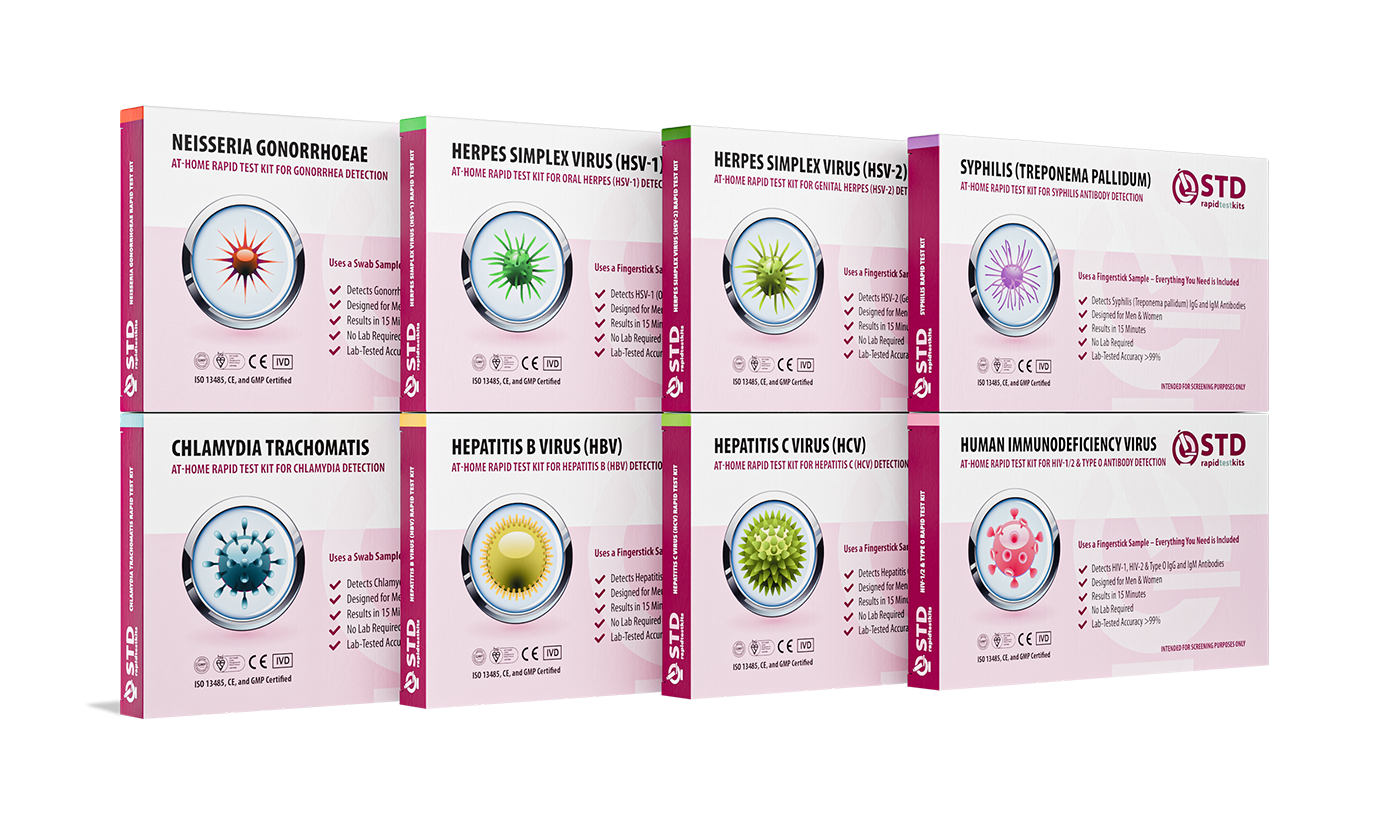 For Men & WomenResults in MinutesNo Lab NeededPrivate & Discreet
Order Now $149.00 $392.00
For all 8 tests
Let’s Be Honest About the Emotional Side
There’s a quiet tension that comes with this topic. On one hand, you’re told to listen to your body. On the other, you’re learning that your body might not tell you everything.
That can feel unsettling. Even frustrating.
But here’s the reframing that matters: your body isn’t failing you. It’s just not built to flag every infection immediately. That’s not negligence, it’s biology.
And once you understand that, the next step becomes clearer. You don’t wait for a signal that may never come. You create your own clarity through testing.
“I stopped thinking of testing as something I do when I’m worried,” someone shared. “Now it’s just something I do to stay in control.”
That shift, from reactive to proactive, is where a lot of the anxiety starts to fade.
FAQs
1. Wait… so I can feel completely normal and still have an STD?
Yeah, and that’s the part that throws people. You can wake up, go to work, hit the gym, text your situationship, and still be carrying something like chlamydia without a single clue. It doesn’t mean your body is broken. It just means these infections don’t always make noise.
2. How does my body not notice something like that?
It’s not that your body “misses” it, it’s more like it doesn’t see it as urgent. Some infections are low-key enough that your immune system doesn’t go into full alarm mode. No swelling, no pain, no drama… just quiet activity in the background.
3. So when people say “you’d know if you had something”… that’s just wrong?
Honestly? Yeah. It sounds reassuring, but it’s not based in reality. A lot of people who test positive were convinced they were fine right up until they saw the result.
4. How long can something stay in your body like that?
Longer than most people are comfortable with. Weeks, months, sometimes even years depending on the infection. That’s why people are often shocked, not just that they have it, but that they have no idea when it started.
5. Can you pass it to someone even if you have zero symptoms?
You can, and that’s exactly how a lot of transmission happens. Not recklessness, just lack of visible signs. Someone feels fine, assumes everything’s fine, and doesn’t realize there’s something to pass on.
6. Okay, but wouldn’t something feel off eventually?
Sometimes, yeah, but not always in a way that screams “STD.” It might be so mild you brush it off. A little irritation, something that comes and goes, or nothing at all. That gray zone is where a lot gets missed.
7. Is this more common for certain people or bodies?
It tends to be more common in people with vaginas, mostly because of anatomy. Infections can sit in places like the cervix where you don’t really feel much. But honestly, anyone, regardless of body, can have an asymptomatic infection.
8. If I feel fine, is testing really necessary?
This is actually when testing matters most. If you only test when something feels wrong, you’ll miss the majority of infections. Think of testing less like a reaction and more like a check-in.
9. Can these silent infections actually cause damage?
They can, especially if they stick around untreated. Some affect fertility, others just keep spreading quietly. The lack of symptoms doesn’t mean the infection is harmless, it just means it’s not obvious.
10. What’s the easiest way to stop guessing?
Get tested, plain and simple. Not because you should panic, but because you deserve a clear answer instead of sitting in that “I think I’m fine?” loop. Once you know, everything else gets easier to handle.
You Don’t Need Symptoms to Take This Seriously
If there’s one thing to take from all of this, it’s that silence isn’t reassurance, it’s just absence of noise. Your body isn’t broken for not flagging everything. It’s just not designed to make every infection obvious.
What matters is what you do with that knowledge. You don’t have to wait for discomfort, visible signs, or a moment that forces you to act. You can choose clarity earlier, on your terms, without relying on guesswork.
Don’t wait and wonder. If there’s even a small chance of exposure, start with a discreet screen like the Combo STD Home Test Kit. It’s private, straightforward, and gives you real answers, something your body might not.
How We Sourced This Article: This article combines guidance from public health authorities like the CDC, WHO, and NHS with peer-reviewed research on asymptomatic infection rates and transmission patterns. We also incorporated real-world patient experiences to reflect how these infections actually show up, or don’t, in everyday life. The goal is clinical accuracy without losing the human reality behind the data.
Sources
1. Centers for Disease Control and Prevention – STD Overview
2. World Health Organization – Sexually Transmitted Infections Fact Sheet
4. Planned Parenthood – STD Basics
5. Mayo Clinic – STD Symptoms and Causes
6. Centers for Disease Control and Prevention – Chlamydia Fact Sheet
7. Centers for Disease Control and Prevention – Gonorrhea Fact Sheet
8. Centers for Disease Control and Prevention – What Is HIV?
About the Author
Dr. F. David, MD is a board-certified expert in infectious diseases who works to stop, diagnose, and treat STIs. He has a direct, sex-positive approach that puts clarity, privacy, and patient empowerment first, along with clinical accuracy.
Reviewed by: Board-Certified Infectious Disease Specialist | Last medically reviewed: March 2026
This article is only meant to give you information and should not be used as medical advice.


