
Published: October 2025 | Last updated: May 2026 | Editorial review and quality control: Martina N.
Most parents who land on this page are scared they have already done something wrong. Maybe a partner just disclosed an exposure. Maybe a postpartum panel came back positive. Maybe a friend mentioned something that is now living rent-free in your head at 3 a.m. The short answer first, because that is what you came for: most STDs do not pass through breast milk, and the ones that can, primarily HIV and CMV, are managed with specific guidance from the CDC and the WHO rather than a blanket ban on nursing.
The longer answer matters too. Some infections that are not shed in milk can still reach a baby through cracked nipples, active sores on breast skin, or close contact during feeding. That is why two parents with the same diagnosis can get different advice, depending on whether they have visible lesions, whether their viral load is suppressed, and which infection is involved. This article walks through it the way a calm clinician would, by infection, by scenario, and by the actual question you are asking.
Key Takeaways
- Breast milk itself does not carry chlamydia, gonorrhea, syphilis, hepatitis B, or hepatitis C, but cracked or bleeding nipples and visible breast lesions can change the safety calculus.
- For HIV-positive parents in the United States, current CDC guidance supports shared decision-making: formula feeding is the option that eliminates transmission risk entirely, while antiretroviral therapy with sustained viral suppression reduces the breastfeeding risk to under 1% but does not bring it to zero.
How STD transmission actually works through breast milk
Different infections live in different parts of the body. Bacterial STDs like chlamydia, gonorrhea, and syphilis colonize mucous membranes, the thin pink tissue that lines the genital tract, the rectum, and the throat. They are not shed into milk because the mammary gland is not where those bacteria live. The CDC's contraindications page reflects that distinction: chlamydia, gonorrhea, syphilis, trichomoniasis, and herpes are not listed as contraindications to breastfeeding (CDC, contraindications to breastfeeding).
Viral infections sit in a different category. HIV is present in blood, genital fluids, and breast milk; the virus can be transmitted through breastfeeding even when the parent is on antiretroviral therapy. Current CDC guidance for the United States supports shared decision-making with parents living with HIV: formula feeding is presented as the option that eliminates transmission risk entirely, while sustained antiretroviral therapy with viral suppression reduces breastfeeding transmission risk to under 1% but does not bring it to zero (CDC, HIV and breastfeeding). Cytomegalovirus (CMV) is also shed into breast milk (CDC, CMV). Clinically, nursing is generally considered compatible with CMV exposure for full-term healthy infants, while premature or immunocompromised babies need extra caution because of the risk of postnatal CMV disease, a distinction reflected in pediatric and neonatology guidance rather than in the CDC fact sheet itself.
The second piece of the puzzle is what is happening on the skin. A cracked, fissured, or bleeding nipple can introduce maternal blood into the feeding process. For infections that travel in blood, that opens a route that does not exist when the skin is intact. So the answer to “can it pass through breast milk?” often comes back with two parts. The milk itself is generally safe, while a cracked or bleeding nipple opens a separate route. That route applies only to infections the bloodstream can carry.
Bacterial STDs (chlamydia, gonorrhea, syphilis, trichomoniasis) live in mucous membranes and are not shed into breast milk. Viral infections (HIV, CMV) can be present in milk, with different risk profiles for each. Skin findings on the breast can change the calculus for either category.
Risk by infection: which STDs cross into milk and which do not
Below is the simplest version of the breakdown clinicians use. The headline is the same for most infections: not in the milk. The footnote, when it exists, almost always involves nipple injury or active breast lesions. The table draws on the CDC's contraindications page and the AAP's lactation guidance.
| STD | Transmitted in breast milk? | Notes |
|---|---|---|
| HIV | Yes | HIV can be transmitted through breast milk. CDC supports shared decision-making in the United States: formula feeding eliminates transmission risk, while antiretroviral therapy with sustained viral suppression reduces but does not eliminate it. |
| CMV (Cytomegalovirus) | Yes | CMV is shed into milk. For full-term healthy babies, generally compatible with nursing. For preterm or immunocompromised infants, neonatologists may advise pasteurization or freezing milk. |
| Syphilis | Not in milk | Not shed in milk, but an active syphilitic chancre on the breast or nipple can transmit through skin contact during direct nursing. |
| Herpes (HSV-1 or HSV-2) | Not in milk | Not in milk. If active vesicles are on the breast or nipple, pump from the affected side and discard, or feed from the unaffected breast, until lesions fully heal. |
| Chlamydia | No | Not transmitted via milk. Newborn eye infections come from delivery exposure, not from nursing. |
| Gonorrhea | No | Not in milk. Infant infections come from birth canal exposure, not breastfeeding. |
| Hepatitis B | No | Compatible with nursing. Universal infant hepatitis B vaccine and HBIG at birth protect the baby. Cracked or bleeding nipples warrant temporary caution. |
| Hepatitis C | No (caveat for bleeding nipples) | No documented transmission through intact-nipple breastfeeding. Pause direct feeding from a cracked or bleeding side and pump-and-discard until healed. |
| Trichomoniasis | No | No evidence of transmission through breast milk. Metronidazole treatment is generally compatible with nursing. |
When the issue is not the milk, it is the skin
If you scan the table above, the pattern jumps out. Most “no, but” notes are pointing at the same thing. The skin can become a transmission route even when the milk is not.
Three skin findings change the safety conversation: cracked or bleeding nipples, active herpes (HSV) vesicles on the breast or nipple, and a syphilitic chancre on the breast. Each of these has been documented as a route by which an infection can reach a newborn during direct feeding, separate from anything happening in the milk itself. The CDC's general guidance is to express milk and discard it (or feed from the unaffected side) until breast lesions fully heal (CDC, contraindications to breastfeeding).
The figures below show what each pattern looks like at a glance. We have used neutral body areas (lip and hand) so the visual pattern is clear without zooming on breast tissue, but the appearance is the same on areolar and nipple skin. The take-home is: if you can see vesicles, ulcers, or open fissures on the breast, that is the trigger for a clinician conversation, not a pre-existing diagnosis on its own.
What to do if you have already nursed before testing positive
This is the question most parents are too embarrassed to ask, and it is worth saying out loud. Nursing during a window when you did not yet know you were positive is common, not catastrophic, and not a reason for self-blame. The next step depends on the infection.
For chlamydia, gonorrhea, syphilis without breast lesions, trichomoniasis, hepatitis B (with the standard infant vaccination at birth), or hepatitis C without bleeding nipples, retrospective nursing is generally low-risk. The CDC and AAP both treat these as compatible with continued breastfeeding when standard postpartum infant care has been delivered (CDC, contraindications to breastfeeding). Talk to your pediatrician, but the call is rarely an emergency.
For HIV the equation is different. If a parent who has been breastfeeding receives a new HIV diagnosis or learns they were positive earlier than they realized, the standard pediatric workup includes infant HIV testing on a defined schedule. The HIVinfo.NIH.gov perinatal HIV resources walk through what that looks like in practice (HIVinfo.NIH.gov perinatal HIV resources). Risk depends on duration of nursing, whether antiretroviral therapy was on board, and viral-load status. Even in the highest-risk picture, the protocol is testing, not panic.
For CMV in a full-term healthy baby, infection is usually subclinical, with no symptoms and no long-term effects. For preterm or immunocompromised infants, the picture is more nuanced, and the neonatologist will guide what monitoring is needed (CDC, CMV).
Retrospective-nursing action steps by infection
- Chlamydia, gonorrhea, syphilis without breast lesions, trichomoniasis, hepatitis B (with infant vaccination), and hepatitis C without bleeding nipples: retrospective nursing is generally low-risk; standard postpartum care covers it.
- HIV: standard pediatric workup includes infant HIV testing on a defined schedule, regardless of viral load.
- CMV in a full-term healthy infant: usually subclinical with no monitoring needed.
- CMV in a preterm or immunocompromised infant: neonatologist input on milk-handling and monitoring.
- Active herpes or syphilis lesion on the breast during a nursing window: pediatric evaluation of the infant for direct skin-to-skin exposure.
When direct nursing should pause
There are scenarios where clinicians will recommend pumping and discarding, or feeding from the unaffected breast, until the situation changes. These are not lifelong stops. In most cases they are days-to-weeks pauses tied to a visible finding.
The first is an active herpes lesion on the breast or nipple. Direct contact between the lesion and the baby's skin or mouth is the concern, not the milk. Pumping from the affected side and discarding (or covering the lesion completely) is standard until the lesion has crusted and healed. Pumped milk from the unaffected side is generally fine.
The second is untreated syphilis with a chancre on the breast or nipple. The same logic applies. The chancre is the transmission point, and it heals after appropriate antibiotic treatment with benzathine penicillin G.
The third is HIV. In the United States, the CDC supports shared decision-making with parents living with HIV: formula feeding is presented as the option that eliminates transmission risk, while sustained antiretroviral therapy with an undetectable viral load reduces but does not eliminate the breastfeeding transmission risk. Your infectious-disease team will walk through the trade-offs and how viral-load monitoring fits in (CDC, HIV and breastfeeding).
- Active herpes (HSV) vesicles or ulcers on the breast or nipple. Resume after lesions crust and heal.
- A syphilitic chancre on the breast or nipple. Resume after antibiotic treatment is complete and the chancre has healed.
- An untreated, brand-new HIV diagnosis. In the United States, your team will discuss formula vs continued nursing on antiretroviral therapy as part of shared decision-making.
- Cracked or actively bleeding nipples in combination with hepatitis C. Pump and discard from the affected side until the skin is intact.
Continuing to nurse with treatment: medications and lactation safety
Most antibiotics used to treat common STDs are compatible with breastfeeding. Azithromycin and doxycycline (chlamydia), ceftriaxone (gonorrhea), benzathine penicillin G (syphilis), and metronidazole (trichomoniasis) are widely considered lactation-safe. The NIH-maintained LactMed database is the standard reference clinicians use to confirm; it summarizes infant exposure data for each drug.
One nuance with metronidazole. Some clinicians historically advised pumping and discarding for 12 to 24 hours after a single high-dose course, out of concern about a bitter taste in milk. Current LactMed entries do not require that, and the AAP considers metronidazole compatible with nursing at standard doses. If you are unsure, ask your pharmacist or check the LactMed entry directly.
Antiviral medications used for herpes (acyclovir, valacyclovir) are also documented as compatible with breastfeeding at standard doses. They are often used precisely so a parent can stay on suppression therapy while continuing to nurse from the unaffected side during an outbreak.
Doxycycline merits one note: short courses (one to three weeks) used for chlamydia or syphilis treatment are generally fine for breastfeeding. Long-term doxycycline use (months) raises a theoretical concern about infant tooth enamel and bone, so longer courses warrant a conversation with the pediatrician. Most STD treatment courses are short.
If you are being treated for HIV, the antiretroviral combinations used in pregnancy and postpartum are reviewed individually for lactation safety. That is a conversation with the infectious-disease team, not a generic answer.
| Medication | Used for | Lactation status |
|---|---|---|
| Azithromycin | Chlamydia | Compatible at standard doses |
| Doxycycline | Chlamydia, syphilis | Compatible for short courses (1 to 3 weeks) |
| Ceftriaxone | Gonorrhea | Compatible at standard doses |
| Benzathine penicillin G | Syphilis | Compatible at standard doses |
| Metronidazole | Trichomoniasis | Compatible at standard doses (older pump-and-discard advice no longer required) |
| Acyclovir | Herpes (HSV-1, HSV-2) | Compatible at standard doses |
| Valacyclovir | Herpes (HSV-1, HSV-2) | Compatible at standard doses |
How to test for STDs while breastfeeding
Testing while you are nursing is straightforward. None of the standard sample types interfere with milk supply, milk composition, or the baby. Fingerstick blood tests for HIV, syphilis, hepatitis B, and hepatitis C use a small lancet draw and have no impact on lactation. Self-collected vaginal swabs for chlamydia, gonorrhea, trichomoniasis, and HPV are equally compatible.
A couple of practical notes. Schedule the test for shortly after you have nursed or pumped so the baby is settled and you are not racing the clock. If you are going to a clinic, bringing the baby is fine; most providers expect it, and a provider who pushes back on that is signaling something about the practice rather than about you.
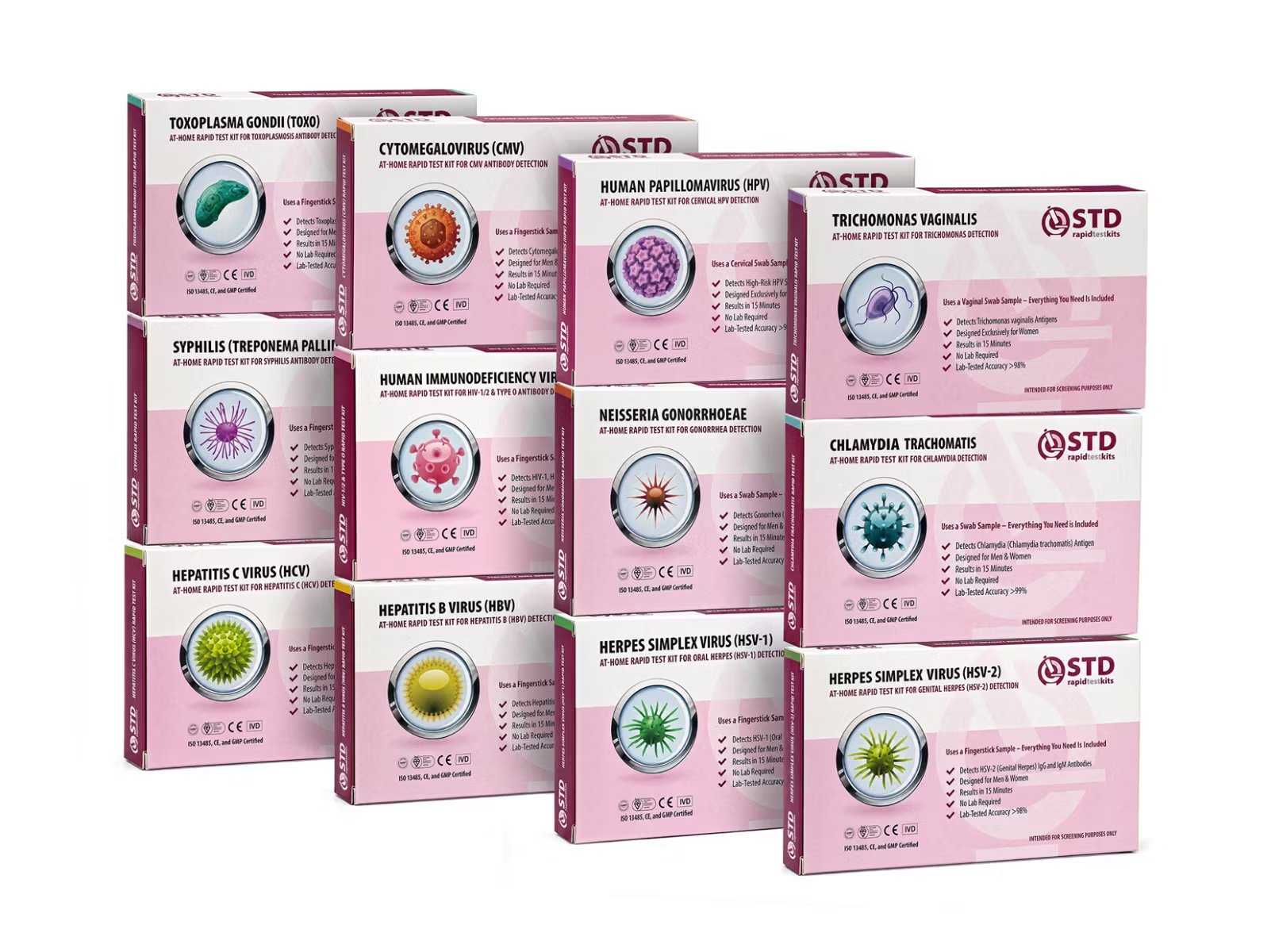
For parents who want to test at home and skip the clinic visit, a self-collected rapid panel is a reasonable starting point. The lateral-flow chemistry used in at-home rapid tests is not identical to the laboratory NAAT (nucleic acid amplification test) that clinics run on the gold-standard chlamydia and gonorrhea screen. They are complementary. The home test is fast, private, and useful for screening. A positive result is worth confirming with a lab NAAT, and a negative result during a window period before seroconversion may need a repeat at the recommended retest interval.
If you are nursing and worried about a recent exposure, get the timing right. For HIV, fourth-generation antigen-antibody tests detect most infections by 45 days after exposure per CDC guidance. For syphilis, a treponemal antibody test is reliable a few weeks after the initial chancre would have appeared. For chlamydia and gonorrhea, swab-based tests are reliable about two weeks after exposure. Testing inside those windows can produce a false negative. Plan accordingly.
This site sells at-home rapid STD test kits; the panel below is one of our products. We recommend products based on fit-for-purpose for the reader's concern, not commercial benefit.
Beyond breast milk: other infant exposure routes
Breast milk is one piece of a bigger picture. The other infant exposure routes that come up in postpartum conversations are skin-to-skin, kissing, and shared bath time. The short version: the routes are real but the risk is generally low, and they are managed with the same hygiene that everyday parenting already involves.
Cold sores on the mouth (HSV-1) can be passed to a newborn through direct contact, which is why a parent or visitor with an active cold sore should avoid kissing the baby's face until the sore has fully crusted. Neonatal HSV is rare but can be serious, so this is a strict rule rather than a soft suggestion. Babies in the first six weeks of life are particularly vulnerable.
For genital infections after delivery, hand washing, frequent peri-pad changes, and avoiding direct lesion-to-baby contact handle the main concerns. Babywearing, holding, and nursing in cradle position are all low-risk. The body of someone with an STD is not, in itself, hazardous to their child.
- Active cold sores (HSV-1) on the face or mouth: avoid kissing the baby until lesions fully crust, especially during the first six weeks of life.
- Skin-to-skin contact and babywearing: low-risk with intact skin and routine hand washing.
- Postpartum genital lesions: hand washing, frequent peri-pad changes, and keeping any open lesion covered handle the main concerns during diaper changes and bath time.
Why shame is the silent risk factor
One thing public health data is unambiguous about. Parents who delay testing because they feel embarrassed end up with worse outcomes than parents who test early and get treated. That is true across STD categories and it is especially true postpartum, when sleep is short and the bandwidth for advocating for yourself is thin.
If you have a partner whose STI status you are uncertain about, if you had unprotected sex during pregnancy, or if your prenatal panel was incomplete, getting tested now is the proactive move, not the panicky one. The data does not punish parents who test. It punishes parents who do not.
For people with HIV who are taking antiretroviral therapy as prescribed and have a sustained undetectable viral load throughout pregnancy and postpartum, the risk of transmission through breastfeeding is less than 1% but is not zero.
FAQs
- Can a baby really get an STD from breastfeeding?
- Two infections, HIV and CMV, can transmit through breast milk. For the other seven STDs covered in this article (chlamydia, gonorrhea, syphilis, hepatitis B, hepatitis C, herpes, trichomoniasis), the milk itself is not the route. Any risk in those cases involves a cracked nipple, an active breast lesion, or direct skin contact during feeding. Most parents can nurse safely after appropriate testing and treatment.
- What if I breastfed before I knew I had an STD?
- It is more common than people admit. Your next step depends on the infection. For chlamydia, gonorrhea, syphilis without breast lesions, trichomoniasis, hepatitis B (with infant vaccination at birth), or hepatitis C without bleeding nipples, retrospective nursing is generally low-risk. For HIV, the standard pediatric workup includes infant testing on a defined schedule. Talk to your pediatrician; in most cases the conversation ends in reassurance, not alarm.
- Should I stop nursing while I wait for test results?
- Usually not. Unless you have cracked or bleeding nipples or visible sores on the breast (such as an HSV outbreak), nursing can continue while you wait. If your provider has flagged a high-likelihood exposure to HIV specifically, they will give you specific interim guidance.
- Can herpes spread to my baby during breastfeeding?
- Only if there is an active vesicle or ulcer on or near the breast. HSV is not in the milk itself. Skin-to-skin contact with the lesion is the route. If you have an active outbreak on one breast, pump from that side and discard, or feed from the unaffected breast, until the lesion has crusted and fully healed. Suppression therapy with valacyclovir or acyclovir is compatible with nursing.
- Does my baby need to be tested if I have HIV and breastfed?
- Yes. The U.S. perinatal HIV guidelines recommend infant HIV testing on a defined schedule when there has been any breastfeeding exposure. The earlier the testing starts, the better. If you were on antiretroviral therapy and your viral load was undetectable, the risk of transmission is much lower, but the testing protocol is the same. Your provider will walk through the timeline.
- Will STD medications hurt my milk or my baby?
- Most will not. Azithromycin, ceftriaxone, benzathine penicillin G, metronidazole, and the antivirals acyclovir and valacyclovir are all considered compatible with breastfeeding at standard treatment doses. The NIH's LactMed database is the standard reference; your pharmacist can also confirm. Do not skip treatment out of fear about milk safety.
- Is it okay to keep nursing if I have hepatitis C?
- Yes, with one caveat. Hepatitis C is not transmitted through intact-nipple breastfeeding. The CDC considers it compatible with nursing. If your nipples are cracked or actively bleeding, pause direct feeding from that side and pump-and-discard until the skin is intact again, since blood mixing in is the theoretical concern.
- How accurate are at-home rapid STD tests compared to clinic tests?
- Clinic NAATs for chlamydia and gonorrhea typically exceed 95% analytical sensitivity. At-home lateral-flow tests screen effectively but at lower sensitivity. Think of the home test as the first filter: a positive result should be confirmed with a clinic NAAT, and a negative result inside the relevant window period needs a repeat at the recommended retest interval.
This article summarizes current public-health guidance from the CDC, the WHO, and the U.S. perinatal HIV guidelines, alongside the NIH-maintained LactMed database for medication-and-lactation safety. We do not provide clinical diagnosis. For symptoms or scenarios that concern you, please contact your pediatrician, OB-GYN, or infectious-disease specialist directly.
- U.S. Centers for Disease Control and Prevention. Contraindications to breastfeeding or feeding expressed breast milk to infants: clinical guidance for clinicians.
- U.S. Centers for Disease Control and Prevention. HIV and breastfeeding: clinical guidance on shared decision-making for parents living with HIV in the United States, including the under-1% transmission risk on sustained antiretroviral therapy.
- U.S. Centers for Disease Control and Prevention. Cytomegalovirus (CMV): about CMV including breast milk as a transmission route.
- World Health Organization. HIV/AIDS fact sheet: global overview of HIV epidemiology and transmission, including the existence of mother-to-child routes during pregnancy, delivery, and breastfeeding.
- U.S. National Institutes of Health. HIVinfo.NIH.gov perinatal HIV resources: infant feeding, testing, and clinical-care guidance for individuals with HIV in the United States.
- U.S. Centers for Disease Control and Prevention. Breastfeeding frequently asked questions: general guidance for parents on common breastfeeding topics.
- U.S. Centers for Disease Control and Prevention. STI treatment guidelines: current recommended antibiotic regimens for chlamydia, gonorrhea, syphilis, and trichomoniasis.
- National Institutes of Health. LactMed (Drugs and Lactation Database): peer-reviewed summaries of medication safety during breastfeeding for individual drugs.
