Chlamydia is a sexually transmitted infection that, although mostly asymptomatic, may develop serious consequences. This infection results from the bacterium Chlamydia trachomatis; it is affecting both men and women, with about 2.8 million new infections annually. Of the infected men, as many as half never show symptoms, thereby rendering testing the only means of being absolutely certain to have an infection. Here's a quick look at some of the essential things to understand about chlamydia symptoms in men, its transmission, how it is diagnosed, and its treatment.
07 October 2024
4 min read
5722
1. Transmission: How Chlamydia Spreads
Chlamydia can be transmitted by having vaginal, anal, or even oral sex with a person infected with it. The disease does not necessarily need semen to spread. Thus, men who have sex with men are more vulnerable to getting this infection and spreading it further.
2. Silent Yet Significant: Unmasking Symptoms of Chlamydia in Men
Amazingly, most men with chlamydia experience few to no symptoms; hence it has been described as a 'silent' infection. The remaining male clients may also have some of the following symptoms, which include:
Painful urination
Discharge of white, cloudy, or watery from the penis
Burning or itching sensation within the urethra
Pain in the testicles
This infection rarely spreads to the testicles and the tube carrying sperm from the testicles, called the epididymis, causing painful inflammation and swelling of both. This condition is known as epididymitis or epididymo-orchitis.
3. Understanding Chlamydia-Linked Complications: From Reactive Arthritis to Infertility
Sometimes, chlamydia may cause reactive arthritis, a type of condition that causes inflammation-especially of the knees, feet, toes, hips, and ankles. In general, this heals in some months, but during the period, it heals, the redness and swellings may be painful. Though anybody from any age group and gender is affected, it is most commonly found in men between the ages of 20 and 40.
If left unattended, chlamydia advances into grave health complications. Of importance, it exposes one to the risk of HIV/AIDS and, after some time, causes infertility among men. Therefore, it is not only your health that is in jeopardy but that of your partner as well, with infertility being a major risk accompanying the disease among women.
4. Testing for Chlamydia: The Need to be Cautious
Having unprotected sex requires testing for STIs, and this is particularly more important in the case of men having sex with men. For this category, including those who are already living with HIV, frequent chlamydia screening at 3 to 6-month intervals is recommended if risk behaviors continue or if they or their sexual partners have multiple partners.
Chlamydia testing options are flexible. You will have the option to visit your health care provider, who will take a urine sample or your secretions from your penis or rectum for testing. Results usually take a day and you should not have sexual relations until the results are obtained.
Or order the privacy of at-home testing with a kit from STDRapidtestkits.com. The chlamydia test kit from STDRapidtestkits.com is giving results in 10 minutes.
5. Coping with Chlamydia: How to Treat It and Prevention
Fortunately, most chlamydia infections are curable with a single dosage of some antibiotics, such as azithromycin or doxycycline. However, the patients must avoid sexual practices for at least seven days after commencing treatment. They must also ensure that the partner is also treated to prevent reinfection.
Retesting in about 3-4 weeks after treatment is recommended since most persons become re-infected with chlamydia within a few months after treatment.
6. Conclusion: Protection Against the Silent Threat
The given possible severe consequences of chlamydia-the 'silent threat' of the risk of infertility, conjunctivitis, and arthritis-emphasize how important prevention is.
The only sure way to avoid chlamydia is to practice absolute abstinence. However, a more realistic approach is the correct and consistent use of a latex condom during every exposure. Note that each incidence of unprotected sex necessitates another round of testing, so the use of condoms is better performed consistently.
Being in a long-term, mutually monogamous relationship with a partner who has been tested for and does not have chlamydia is another behavior that is considered safe.
The final important thing one can do with a home test for chlamydia would be to have it tested regularly. With these measures in place, the threat posed by chlamydia can be greatly curtailed.







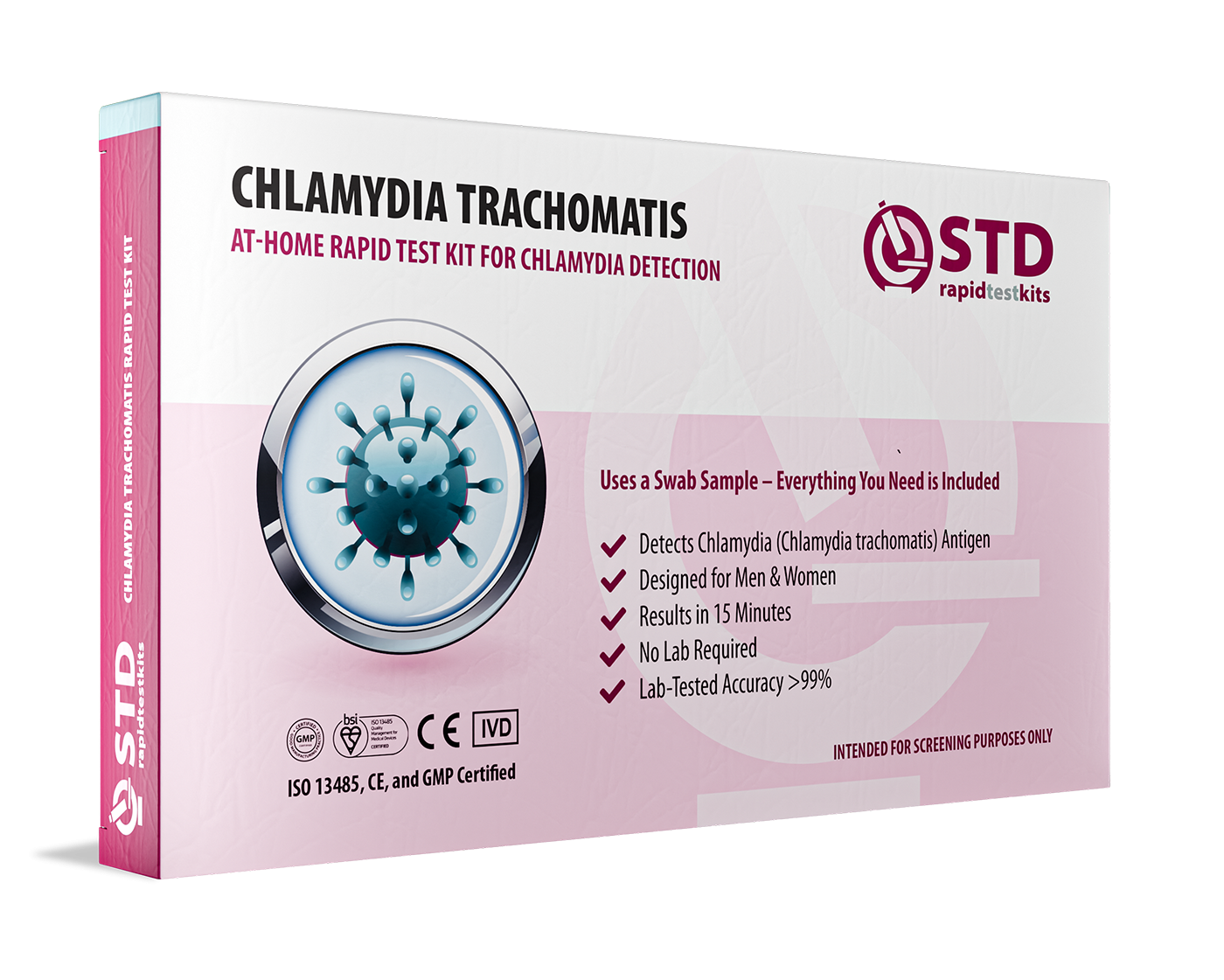
 For Men & Women
 Results in Minutes
 No Lab Needed
 Private & Discreet


