







Quick Answer: If someone has oral herpes (HSV-1), especially if they have a cold sore, kissing them can spread the virus. When people touch each other's skin or share saliva during an outbreak, the virus spreads. There is less risk, but not none, if there are no sores.
First, Let’s Talk About What “Herpes” Actually Means
When people say “herpes,” they’re usually talking about one of two viruses: HSV-1 or HSV-2. Both are part of the herpes simplex family, and both can infect skin around the mouth or genitals. The difference is mainly where they tend to show up most often.
HSV-1 is traditionally associated with oral herpes, things like cold sores or fever blisters around the lips. It’s extremely common. In fact, global estimates suggest that a majority of adults carry HSV-1 by middle age.
HSV-2 is more commonly linked to genital herpes, though either virus can technically infect either location through oral sex or other contact.
The key takeaway is simple: most herpes infections spread through direct skin contact with the virus. Kissing, oral sex, and other close contact can all be pathways depending on where the infection lives.
How Herpes Spreads Through Kissing
Herpes isn’t airborne and it doesn’t float around the room waiting for someone to catch it. The virus spreads through direct contact with infected skin or fluids. Kissing becomes a risk when the virus is actively present around someone’s mouth.
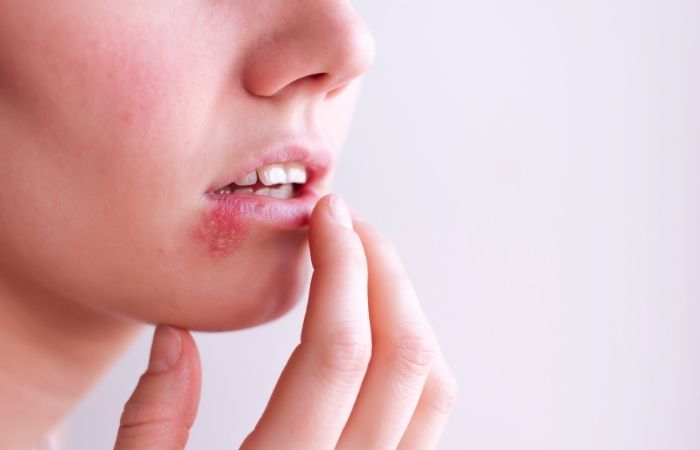
This usually happens when there is a cold sore outbreak. Cold sores are small blisters that form on or around the lips and fill with fluid. The herpes virus is very concentrated in those blisters, which makes it much more likely to spread.
If someone with an active cold sore kisses another person, the virus can move through tiny breaks in the skin or mucous membranes. That’s how HSV-1 passes from person to person.
| Scenario | Risk Level | Explanation |
|---|---|---|
| Kissing someone with an open cold sore | High | Virus concentration is highest during active sores. |
| Kissing when a sore is healing or crusted | Moderate | The virus may still be present until the skin fully heals. |
| Kissing when no symptoms are visible | Low | Possible through asymptomatic shedding, but less common. |
So yes, kissing can spread herpes, but it usually requires close contact during a time when the virus is active.

People are also reading: From Sperm Trouble to Shrinking Size: How STDs Affect Your Manhood
What Most People Don’t Realize About Cold Sores
One of the most confusing parts of herpes is that people can carry the virus for years without knowing it. After the initial infection, HSV hides inside nerve cells and stays there for life. Most of the time it’s dormant.
When the virus reactivates, it can cause outbreaks. These outbreaks are what people recognize as cold sores. They often start with a tingling or burning sensation before small blisters appear.
A person might experience outbreaks rarely, sometimes only once or twice in their lifetime. Others get them more frequently, especially during periods of stress, illness, sun exposure, or immune system changes.
“I honestly thought it was just a cracked lip,” one patient once told me. “Then the blister showed up the next day and I realized it was a cold sore.”
This unpredictability is why herpes spreads so widely. Many people simply don’t know when the virus is active.
The Timeline: What Happens After Exposure
If someone kisses someone who has HSV-1, they don't get sick right away. During the incubation period, the virus quietly copies itself before the immune system kicks in.
For oral herpes, this window usually lasts between two and twelve days. During that time, a person might feel completely normal.
| Stage | What Happens | Approximate Timing |
|---|---|---|
| Exposure | Virus enters skin through contact. | Day 0 |
| Incubation | The virus grows without showing any signs. | 2–12 days |
| Early symptoms | Tingling, itching, or burning sensation. | Day 3–10 |
| Cold sore formation | Small fluid blisters appear. | Shortly after early symptoms |
Not everyone who encounters HSV develops symptoms. Some infections stay completely silent, which is another reason the virus spreads easily through everyday contact.
A Very Common Scenario: “I Kissed Someone With a Cold Sore”
This is one of the most common questions people ask. Someone notices a cold sore on a partner, or remembers one later, and panic sets in. The reality is that transmission is possible, but it doesn’t happen every time.
Skin contact needs to occur while the virus is active, and the receiving person needs a small opening in the skin or mucous membrane where the virus can enter. Even then, the immune system may stop the infection before symptoms appear.
“I kept replaying the moment in my head,” another patient once said. “But weeks went by and nothing ever happened.”
In other words, exposure doesn’t automatically mean infection. It just means the virus had an opportunity.
What Actually Makes Kissing Riskier
Certain factors make herpes transmission through kissing more likely. Most of them involve situations where the virus is active or where the skin barrier is compromised.
- Active cold sores: the highest risk for transmission.
- Cracked or chapped lips: small openings allow the virus to enter.
- Compromised immune system: infections may take hold more easily.
- Prolonged contact: longer kissing increases exposure time.
If none of these factors are present, the chance of transmission becomes much lower.
Check Your STD Status in Minutes
Test at Home with Remedium8-in-1 STD Test Kit
 For Men & Women
 Results in Minutes
 No Lab Needed
 Private & Discreet
Order Now $149.00 $392.00
For all 8 tests
When Testing Makes Sense
Herpes testing is a little different from testing for other sexually transmitted infections. Many standard STD panels don’t automatically include HSV tests unless symptoms are present.
If someone develops suspicious sores after a possible exposure, testing is recommended. A healthcare provider can swab the blister directly to detect the virus.
Blood tests can also look for herpes antibodies, but they are usually only correct after the immune system has had time to react.
There are discreet home testing options for people who want privacy and convenience. For example, STD Rapid Test Kits let people check for several common infections without having to go to a clinic.
Knowing your status not only lowers your anxiety, but it also keeps you from unknowingly passing infections on to your partners.
Can You Get Herpes from Kissing Someone Without a Cold Sore?
This is where herpes gets confusing. Most people assume the virus can only spread when a cold sore is visible. In reality, the herpes virus can occasionally spread even when the skin looks completely normal.
This is what is known as asymptomatic shedding. This means that the virus is active on the skin for a short time without causing any noticeable symptoms. During that time, it could spread to another person through close contact, like kissing.
The good news is that this type of transmission is less common than spread during a visible outbreak. Cold sores contain much higher concentrations of the virus, which makes them far more contagious.
Still, asymptomatic shedding is one reason oral herpes is so widespread worldwide. Many people carry HSV-1 without realizing it, and most never think to avoid kissing when they feel completely healthy.
The First Signs of Oral Herpes
If someone does contract HSV-1 through kissing, the first outbreak can look different from the cold sores people usually recognize. Initial infections sometimes cause more noticeable symptoms.
Early signs often start out small. The skin around the lips may feel tingly, itchy, or burning. The prodrome stage is another name for this stage. This is when the virus starts to spread to the skin's surface.
Within a day or two, small clusters of fluid-filled blisters may develop. These blisters can break open, form shallow ulcers, and eventually crust over as they heal.
Other symptoms occasionally appear during a first infection, including mild fever, swollen lymph nodes, sore throat, or fatigue. These symptoms are usually temporary and resolve as the immune system gains control of the virus.
“I remember the tingling before anything was visible,” one patient explained. “By the next morning there were tiny blisters on my lip.”
After healing, the virus retreats into nearby nerve cells where it remains dormant until a future reactivation.
How Common Oral Herpes Actually Is
One of the biggest myths surrounding herpes is that it’s rare. In reality, oral herpes is incredibly common across the globe. Public health researchers estimate that billions of people carry HSV-1.
Most infections happen when people are very close to each other, like when family members kiss kids, share utensils, or spend time together in the same room. A lot of adults already have the virus, even if they don't remember getting it.
That context matters because it changes how we should think about herpes. Instead of being a rare or scandalous infection, HSV-1 is more like a persistent skin virus that quietly circulates through normal human contact.
| Region | Estimated Adult Prevalence | Notes |
|---|---|---|
| Global average | ~60–70% | Most adults have been exposed at some point. |
| North America | ~50–60% | Rates vary by age and demographics. |
| Parts of Europe | ~60% | Often acquired during childhood. |
| Developing regions | 70%+ | Exposure tends to occur earlier in life. |
Because the virus is so widespread, two people kissing may both already carry HSV-1 without knowing it. In that situation, there’s no “new” infection occurring at all.
People are also reading: Can a Hidden STD Make You Infertile? Here’s the Truth
How to Reduce the Risk of Herpes from Kissing
The simplest way to prevent herpes transmission through kissing is also the most obvious: avoid direct contact when a cold sore is present. Because active sores carry the highest viral load, skipping kisses during outbreaks dramatically lowers the chance of spreading the virus.
Once a sore has fully healed and new skin has formed, the contagious period has generally passed. At that point, normal contact can safely resume.
There are also a few everyday habits that reduce risk further:
- Avoid kissing during visible cold sores.
- Do not share lip balm, utensils, or drinks during outbreaks.
- Wash hands after touching a cold sore.
- Allow sores to fully heal before resuming close contact.
These precautions are simple but effective. In most relationships, they’re enough to prevent transmission entirely.
When People Start Wondering About Testing
After a possible exposure, many people search the internet trying to decide whether they should get tested. In some cases, testing for herpes can be helpful, but it's not always necessary for someone who doesn't have any symptoms.
If you see sores on your body or if you get unexplained sores in your mouth or genitals after being with someone who has herpes, doctors usually recommend getting tested. In those cases, lab tests can confirm which virus is to blame.
Blood tests can find antibodies to HSV-1 and HSV-2, but they are most accurate a few weeks after you have been exposed to the virus. Your immune system may not have made antibodies that can be found yet if you test too soon. This can cause false negatives.
People who want privacy or convenience can use at-home testing services like the Combo STD Home Test Kit to get screened without going to a clinic.
Testing isn’t about panic. It’s about clarity. When people understand what’s actually happening in their body, they can make better decisions about their health and relationships.
Why Herpes Carries So Much Unnecessary Stigma
Despite how common HSV-1 is, the word “herpes” still carries a lot of social anxiety. That stigma often has more to do with misunderstanding than with the virus itself.
Cold sores have been part of human life for centuries. Many people who carry HSV-1 experience only occasional outbreaks or none at all. The virus doesn’t define someone’s hygiene, morality, or relationship choices.
What matters most is awareness. Understanding how herpes spreads, and when it doesn’t, helps people protect their partners without unnecessary fear.
“Once I realized how common it was, I stopped feeling embarrassed about it,” another patient said. “It’s just something you manage.”
That perspective is becoming more common as sexual health education improves. Knowledge replaces panic, and conversations become easier.
When Kissing Isn’t the Only Way HSV-1 Spreads
Even though kissing is the situation people worry about most, it isn’t the only way oral herpes spreads. HSV-1 moves through skin-to-skin contact and saliva, which means several everyday behaviors can theoretically pass the virus along during an active outbreak.
This doesn’t mean normal life is dangerous. It simply means that when a cold sore is present, it’s smart to avoid sharing items that touch the mouth. Most transmission outside of kissing happens when people unknowingly interact with the sore itself.
For example, touching a cold sore and then touching another person’s mouth area can transfer the virus. Sharing objects like straws, lip balm, or utensils during an outbreak can also create a pathway for HSV-1.
| Situation | Risk Explanation |
|---|---|
| Kissing during an active cold sore | Direct skin contact with virus-filled blisters. |
| Sharing drinks or utensils | Saliva containing virus may transfer between people. |
| Sharing lip balm or lipstick | Virus may remain on surfaces touching the sore. |
| Touching a sore then touching another person | Virus transfers from fingers to skin. |
The pattern is straightforward: the virus needs contact with the infected area to spread. When that contact doesn’t happen, transmission becomes very unlikely.
Check Your STD Status in Minutes
Test at Home with Remedium6-in-1 STD Test Kit
 For Men & WomenResults in MinutesNo Lab NeededPrivate & Discreet
Order Now $119.00 $294.00
For all 6 tests
What to Do If You’re Worried After a Kiss
If you kissed someone and later realized they had a cold sore, your brain might immediately jump to the worst conclusions. In reality, the best response is usually to wait and watch rather than panic.
Herpes infections take time to show themselves. If a new infection occurs, symptoms typically appear within a couple of weeks. The most common early sign is a tingling or burning sensation around the lips before blisters form.
If nothing appears after that window passes, infection becomes less likely. Many exposures never result in transmission at all.
During that period, it can help to simply monitor for symptoms. If blisters, sores, or unusual irritation develop around the mouth, a healthcare provider can evaluate the area and perform testing if needed.
Some people prefer testing for peace of mind. Services like STD Rapid Test Kits allow individuals to check for several sexually transmitted infections privately at home, which can remove some of the anxiety around clinic visits.
Living Normally Around Someone With Oral Herpes
Another common concern people have is whether it’s safe to date or kiss someone who occasionally gets cold sores. The answer is yes, relationships with HSV-1 are extremely common and manageable.
The key is communication and timing. Most couples simply avoid kissing or oral contact while a sore is present or healing. Outside of that period, everyday affection carries much lower risk.
Some people with frequent outbreaks also take antiviral medications prescribed by a doctor. These medications can reduce both symptoms and the likelihood of transmission.
In other words, herpes doesn’t eliminate intimacy. It just means being mindful during the short periods when the virus becomes active.
Why Accurate Information Matters
People often become more afraid of herpes when they don't have clear information. A lot of people think that the virus spreads easily through casual contact or a short kiss. Things are actually more down-to-earth.
During an active outbreak, transmission usually needs contact. Even then, there is no guarantee of infection. The immune system has a big say in whether or not the virus can set up shop.
Knowing those things makes you feel differently about the situation. People don't have to panic. They can do things like recognizing symptoms, staying away from sick people during outbreaks, and getting tested when they need to.
When people understand how HSV-1 actually behaves, the virus becomes far less mysterious, and far less frightening.
FAQs
1. So… can you actually get herpes from one kiss?
Yes, it can happen, but it’s not the automatic outcome people imagine. The real risk shows up when someone has an active cold sore and there’s direct lip-to-lip contact. Think of it like touching a tiny blister full of virus particles. Without that kind of contact, the odds drop pretty quickly.
2. I kissed someone and later noticed a cold sore. Should I panic?
Take a breath, panic rarely helps anything. Exposure doesn’t equal infection. Most people who have this exact “oh no” moment end up completely fine. What you want to do instead is watch your lips over the next week or two for tingling or small blisters. If nothing shows up, chances are your immune system handled things just fine.
3. What does the first herpes cold sore actually feel like?
Most people notice a strange tingling or itching before they see anything. It’s subtle at first, almost like your lip is slightly irritated. Then tiny fluid-filled blisters appear, usually clustered together. They break, crust over, and heal within about 7–10 days. Once you’ve had one outbreak, you’ll probably recognize the sensation immediately if it ever happens again.
4. Can someone give you herpes even if they don’t have a cold sore?
Yes, but it’s much less common. The virus sometimes “sheds” quietly from the skin without visible symptoms. Doctors call this asymptomatic shedding. It’s part of why HSV-1 spreads so widely, though the highest risk by far is still during a visible outbreak.
5. If I already get cold sores, can I catch herpes again from someone else?
Usually not in the way people worry about. If you already carry HSV-1, the virus that causes most cold sores, your immune system already recognizes it. That means another person with oral herpes typically isn’t giving you a “new” infection through kissing.
6. Can kissing give someone genital herpes?
Not by itself. Kissing spreads oral herpes around the mouth. Genital herpes usually spreads through genital contact or oral sex with someone who carries the virus. In other words, lips-to-lips contact affects the lips.
7. How long after kissing would symptoms show up if I did get infected?
Herpes moves quietly at first. If a new infection happens, symptoms usually appear somewhere between two days and about twelve days later. The first clue is often that strange tingling sensation before anything is visible.
8. Is it safe to kiss someone who gets cold sores sometimes?
Absolutely, with one simple rule: avoid kissing during outbreaks. When the sore is gone and the skin has healed, normal affection is usually fine. Many couples navigate this without ever passing the virus.
9. Do I need a herpes test just because I kissed someone?
Not very often. Doctors usually only suggest testing if you have symptoms, like new sores or irritation that doesn't make sense. Sometimes, testing when you don't have any symptoms can make things harder to understand. If something strange does happen, that's when you should talk to a doctor.
10. Why does herpes sound so scary if it’s so common?
Mostly because of stigma and misinformation. In reality, oral herpes is one of the most common viruses humans carry. For many people it shows up as the occasional cold sore and that’s it. Once you understand how it spreads and how manageable it is, the fear tends to shrink pretty quickly.
You Deserve Clarity, Not Guesswork
Kissing someone and later worrying about herpes can mess with your head. Suddenly a completely normal moment starts feeling like a medical mystery. The goal isn’t to turn every kiss into a risk calculation. The goal is to understand when something actually matters, and when it doesn’t.
If a cold sore was present, monitor your lips over the next couple of weeks. If nothing appears, the moment likely passes without consequence. If symptoms show up, get clarity from a proper evaluation. Knowing what’s happening replaces a lot of unnecessary anxiety.
And if you simply want answers rather than speculation, start with a discreet screen like the Combo STD Home Test Kit. Testing is private, simple, and often far less stressful than weeks of wondering.
How We Sourced This Article: This guide brings together current public health information about how the herpes simplex virus spreads with insights from infectious disease research and real clinical experience. We reviewed educational resources from trusted health organizations along with studies looking at how common HSV-1 is, how it moves between people, and how it can sometimes spread even when no symptoms are visible. The goal was simple: explain the science accurately while speaking in the same straightforward way people actually ask questions and search for answers when they’re worried about herpes exposure.
Sources
1. Centers for Disease Control and Prevention – Genital and Oral Herpes Overview
2. World Health Organization – Herpes Simplex Virus Fact Sheet
4. Planned Parenthood – Herpes Overview
5. Johns Hopkins Medicine – Herpes HSV-1 and HSV-2 Overview
6. DermNet NZ – Herpes Simplex
About the Author
Dr. F. David, MD is a board-certified infectious disease specialist focused on STI prevention, testing, and treatment. His work centers on translating complex clinical information into clear, stigma-free guidance so people can make confident decisions about their sexual health.
Reviewed by: Clinical Sexual Health Review Board | Last medically reviewed: March 2026
This article is for informational purposes only and should not be taken as medical advice from a licensed healthcare provider.


