





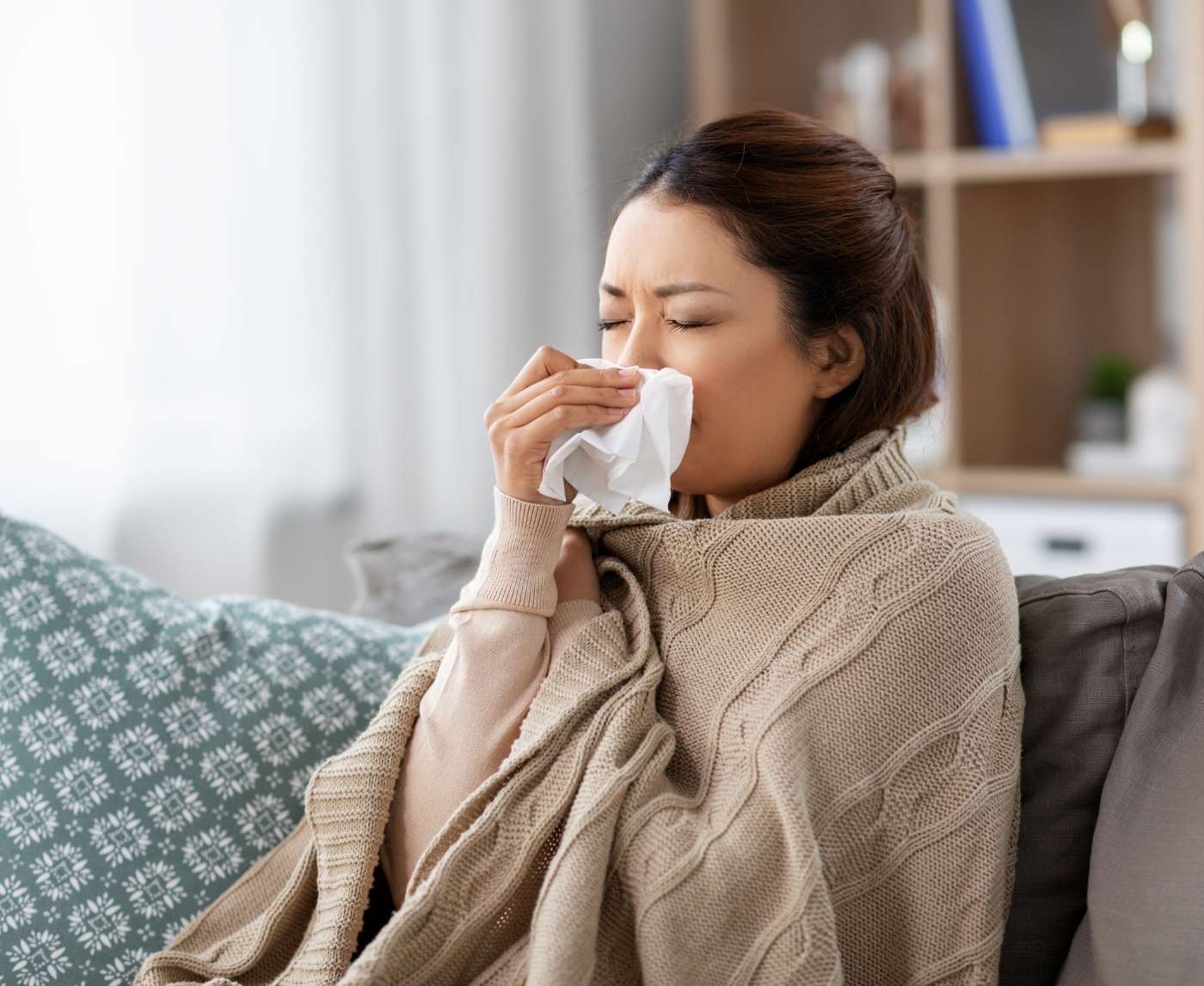

Quick Answer: Flu symptoms or an STD can overlap when infections like HIV, syphilis, or herpes trigger early immune responses. Timing after exposure, presence of rash or sores, and proper testing windows are the key differences.
Why Some STDs Feel Like the Flu in the First Place
Your immune system doesn’t care how you caught something. Whether it’s influenza from a coworker or a virus from a sexual partner, your body reacts the same way at first: inflammation. Cytokines surge. Lymph nodes swell. You feel exhausted.
That’s why people ask, “Can an STD feel like the flu?” The answer is yes, certain ones absolutely can.
Early HIV infection, sometimes called acute HIV, often causes fever, chills, sore throat, night sweats, swollen lymph nodes, and body aches within 2–4 weeks after exposure. The CDC describes this as a temporary viral-like illness that many people mistake for seasonal flu.
Primary herpes outbreaks can also cause systemic symptoms the first time the virus appears in the body. People report fever, muscle aches, and exhaustion before or alongside painful sores.
Even early syphilis can include fatigue or low-grade fever before its hallmark rash appears.
Meanwhile, infections like chlamydia and gonorrhea rarely cause full-body flu-like illness unless they become more serious or spread. That distinction matters.
Flu vs STD: The Differences That Actually Matter
When you’re sick and anxious, nuance feels impossible. So let’s slow this down and separate what overlaps from what doesn’t. The key variables are timing, symptom pattern, and risk context.
| Feature | Seasonal Flu | STD With Flu-Like Symptoms (HIV, Herpes, Syphilis) |
|---|---|---|
| Onset Timing | 1–4 days after exposure to virus | 2–4 weeks after sexual exposure (HIV), 2–12 days (herpes), ~3 weeks (syphilis) |
| Fever | Common and often high | Common but may be low-grade |
| Body Aches | Very common | Possible, especially in acute HIV or primary herpes |
| Respiratory Symptoms | Cough, congestion common | Usually absent or mild |
| Rash | Rare in adults | Common in secondary syphilis; possible in acute HIV |
| Genital or Oral Sores | Never | Common in herpes; possible in syphilis |
| Exposure Context | Close contact with sick person | Recent sexual contact |
Notice what stands out: coughing and stuffy nose are strong signs of the flu. Meanwhile, swollen lymph nodes without heavy respiratory symptoms, especially after a recent sexual encounter, raise different questions.
This is where context becomes everything. A fever in January during peak flu season is statistically different than a fever two weeks after unprotected sex.
People are also reading: Inside Delaware’s Chlamydia Surge: What’s Causing the Spike?
The Timeline Is the Clue Most People Miss
Here’s where we get practical. When someone types “fever first sign of STD” into Google, what they’re really asking is about timing.
If your symptoms start three days after sex, that is extremely unlikely to be acute HIV. Most acute HIV symptoms develop 2–4 weeks after exposure. Testing too early can produce a false negative because the virus hasn’t reached detectable levels yet.
If your symptoms start within 2–12 days and include painful sores or swollen glands, primary herpes becomes more plausible.
If you feel fine for a few weeks and then notice a rash on your palms or soles with fatigue, secondary syphilis enters the conversation.
The flu does not follow sexual exposure. STDs do not follow exposure to someone coughing on a bus. That distinction sounds obvious, but anxiety blurs logic.
This is where testing shifts you from guessing to knowing. If you’re within the appropriate window period, an at-home option from STD Rapid Test Kits can provide clarity without waiting in a clinic lobby replaying your weekend choices.
Which STDs Commonly Cause Fever or Body Aches?
Not all sexually transmitted infections create systemic symptoms. Many are silent. But the ones that mimic the flu most often include viral infections or infections that enter the bloodstream.
| STD | Flu-Like Symptoms? | When They Appear | Other Clues |
|---|---|---|---|
| HIV | Yes, commonly in early infection | 2–4 weeks after exposure | Rash, sore throat, swollen lymph nodes, night sweats |
| Herpes (HSV-1/2) | Sometimes in first outbreak | 2–12 days | Painful blisters or ulcers |
| Syphilis | Possible in secondary stage | Weeks after initial sore | Rash on palms/soles, painless ulcer earlier |
| Hepatitis B | Yes, can include fatigue and fever | 6 weeks–6 months | Jaundice, dark urine |
| Chlamydia/Gonorrhea | Rare unless complications occur | 1–3 weeks | Discharge, pelvic pain, often no symptoms |
The pattern here matters. Viral infections are more likely to trigger whole-body symptoms. Bacterial infections often stay localized unless untreated.
That doesn’t mean panic. It means perspective.
“I Thought It Was COVID.”, A Case Study in Second-Guessing
Marcus, 27, called it “the longest three weeks of my life.” He’d hooked up with someone he met while traveling. They used protection for intercourse but not for oral sex. He didn’t think much of it.
About eighteen days later, he woke up drenched in sweat. His throat burned. His muscles felt like he’d run a marathon. “I was convinced it was COVID or the flu,” he said. “I even took two rapid flu tests. Both negative.”
Then came the swollen lymph nodes in his neck. No cough. No congestion. Just fever, fatigue, and this growing sense that something didn’t line up.
“I typed ‘is it the flu or HIV’ into Google and didn’t sleep that night.”
Marcus eventually tested for HIV at the four-week mark using a lab-based antigen/antibody test. It was negative. He retested at six weeks for confirmation. Still negative. What he had was a viral illness unrelated to sex.
The point isn’t that every fever is HIV. The point is that anxiety without timing is chaos. Anxiety with timing becomes strategy.
Check Your STD Status in Minutes
Test at Home with Remedium7-in-1 STD Test Kit

 For Men & Women
 Results in Minutes
 No Lab Needed
 Private & Discreet
Order Now $129.00 $343.00
For all 7 tests
When It’s Probably Just the Flu
Let’s de-escalate something important. Most fevers are not sexually transmitted infections. Most fatigue after a hookup is dehydration, lack of sleep, travel stress, or a circulating respiratory virus.
If you have heavy nasal congestion, a productive cough, sinus pressure, and you were recently around someone visibly sick, that pattern leans strongly toward influenza or another respiratory virus.
Flu symptoms also tend to hit hard and fast, often within one to four days of exposure. Sexual transmission doesn’t follow that timeline for systemic infections like acute HIV. That lag matters.
People searching “body aches STD” are usually experiencing whole-body discomfort without respiratory symptoms. That’s when context becomes the anchor.
When It’s Worth Getting Tested Instead of Waiting It Out
Testing isn’t about assuming the worst. It’s about removing uncertainty.
If your flu-like symptoms appear two to four weeks after unprotected sex, especially if accompanied by rash, swollen lymph nodes, sore throat without congestion, or night sweats, testing becomes a reasonable next step.
If you develop painful blisters, ulcers, or genital discomfort alongside fever within two weeks of exposure, that timing aligns more with primary herpes.
If you notice a rash on your palms or soles weeks after a painless sore that you may have dismissed, secondary syphilis should be ruled out.
This isn’t about fear. It’s about pattern recognition.
For people who want clarity without the waiting room spiral, options like the At-Home Combo STD Test Kit allow you to screen for multiple infections discreetly. Your results are private. Your timeline is yours. Peace of mind is not trivial, it’s protective.
Swollen Lymph Nodes: The Detail That Changes the Story
Swollen lymph nodes are one of the most searched symptoms in STD anxiety spirals. They are also one of the least specific findings in medicine.
Your lymph nodes swell whenever your immune system is working. That includes the flu. It includes strep throat. It includes dental infections.
In acute HIV, lymph nodes often enlarge in multiple regions, neck, armpits, groin, rather than just one tender node under the jaw. In primary herpes, nearby lymph nodes may swell close to the outbreak site.
The presence of lymph node swelling without respiratory symptoms after a sexual exposure is not diagnostic. It is contextual.
And context is why testing exists.
The Symptoms That Tip the Scale Toward an STD
Here’s where we get specific. Because when people type “STD symptoms flu-like” into a search bar, they’re not looking for philosophy. They want red flags.
If your illness includes a new rash, especially one that doesn’t itch and appears on your palms, soles, or torso, that leans away from influenza and toward secondary syphilis. Flu rarely causes a body rash in adults.
If you develop small, painful blisters or open sores around your genitals or mouth along with fever and body aches, that pattern fits a primary herpes outbreak much more than the flu.
If your sore throat is intense but you have no congestion, no cough, and significant night sweats with swollen glands two to four weeks after exposure, early HIV enters the differential. Acute HIV can feel like mononucleosis. It can feel like a bad flu. It can also feel mild and pass quickly, which is why so many people miss it.
And here’s the uncomfortable truth: sometimes there are no genital symptoms at all. That’s why people searching “STD symptoms no discharge” are often confused. Viral STDs especially can begin systemically before any local sign appears.
The Window Period Reality Check
One of the most common mistakes people make is testing too early. They feel sick five days after sex, test immediately, get a negative result, and assume they’re safe.
But infections like HIV have a window period. Antigen/antibody tests typically detect infection around 18–45 days after exposure. Nucleic acid tests can detect it earlier, often around 10–33 days, but are less commonly used as first-line screening.
Herpes testing depends on lesion presence or antibody development. Syphilis blood tests usually turn positive several weeks after infection.
So when someone asks, “How soon do STD symptoms start?” the honest answer is: symptoms and detectability are not the same clock.
This is why strategy beats panic. If you test during the window period, plan a retest at the optimal time. Knowing that ahead of time prevents emotional whiplash.

People are also reading: One Testicle Hurts But No Lump, Should I Be Worried?
The Symptoms That Lean Toward Flu or Respiratory Virus
If you’re blowing through tissues, coughing constantly, and your roommate is sick with the same thing, this is almost certainly not a sexually transmitted infection.
Flu and other respiratory viruses tend to bring congestion, productive cough, sinus pressure, and rapid onset after close non-sexual contact. They also tend to improve steadily within a week for most healthy adults.
Sexually transmitted infections do not cause chest congestion. They do not cause thick nasal discharge. They do not spread because someone sneezed next to you.
That distinction can feel grounding when your brain is spiraling.
What Anxiety Does to Symptom Perception
Let’s say this gently: once the thought “Is this HIV?” enters your mind, your body becomes louder.
You notice every ache. Every swallow. Every bead of sweat. Normal fluctuations suddenly feel sinister.
As an infectious disease physician, I’ve seen this countless times. Someone develops a mild viral illness after a hookup and interprets each symptom through a fear filter. The anxiety amplifies physical sensations.
“I swear my lymph nodes doubled in size the moment I Googled,” one patient told me.
Anxiety doesn’t mean your symptoms aren’t real. It means your interpretation may need structure. Testing provides that structure.
Testing Strategy: From Guessing to Knowing
If it has been less than ten days since exposure, you may be too early for reliable blood-based detection of certain infections like HIV or syphilis. In that case, testing now and planning a retest later can be a reasonable two-step strategy.
If you are within the 2–4 week window after exposure and experiencing flu-like symptoms without heavy respiratory involvement, this is often the optimal time to test for acute HIV using a fourth-generation antigen/antibody test.
If sores are present, herpes testing is most accurate when lesions are swabbed early.
And if you simply don’t want to wait and wonder, a discreet option like the Multi-STD Rapid Test Kit allows you to screen for multiple infections in minutes from home. You don’t need to explain anything to a receptionist. You don’t need to sit under fluorescent lights replaying your life choices.
Your results are yours. Your body is yours. Testing is an act of responsibility, not confession.
If It Is an STD, What Happens Next?
Here’s another truth that deserves oxygen: most sexually transmitted infections are treatable. Many are curable. And even chronic viral infections are manageable with modern medicine.
If you test positive for syphilis, antibiotics are highly effective. If you test positive for herpes, antiviral medication can reduce outbreaks and transmission risk. If you test positive for HIV, early treatment allows people to live long, healthy lives and reach undetectable viral levels.
Testing doesn’t create disease. It reveals it. And revelation is power.
The scariest part is almost always the waiting.
Check Your STD Status in Minutes
Test at Home with Remedium8-in-1 STD Test Kit
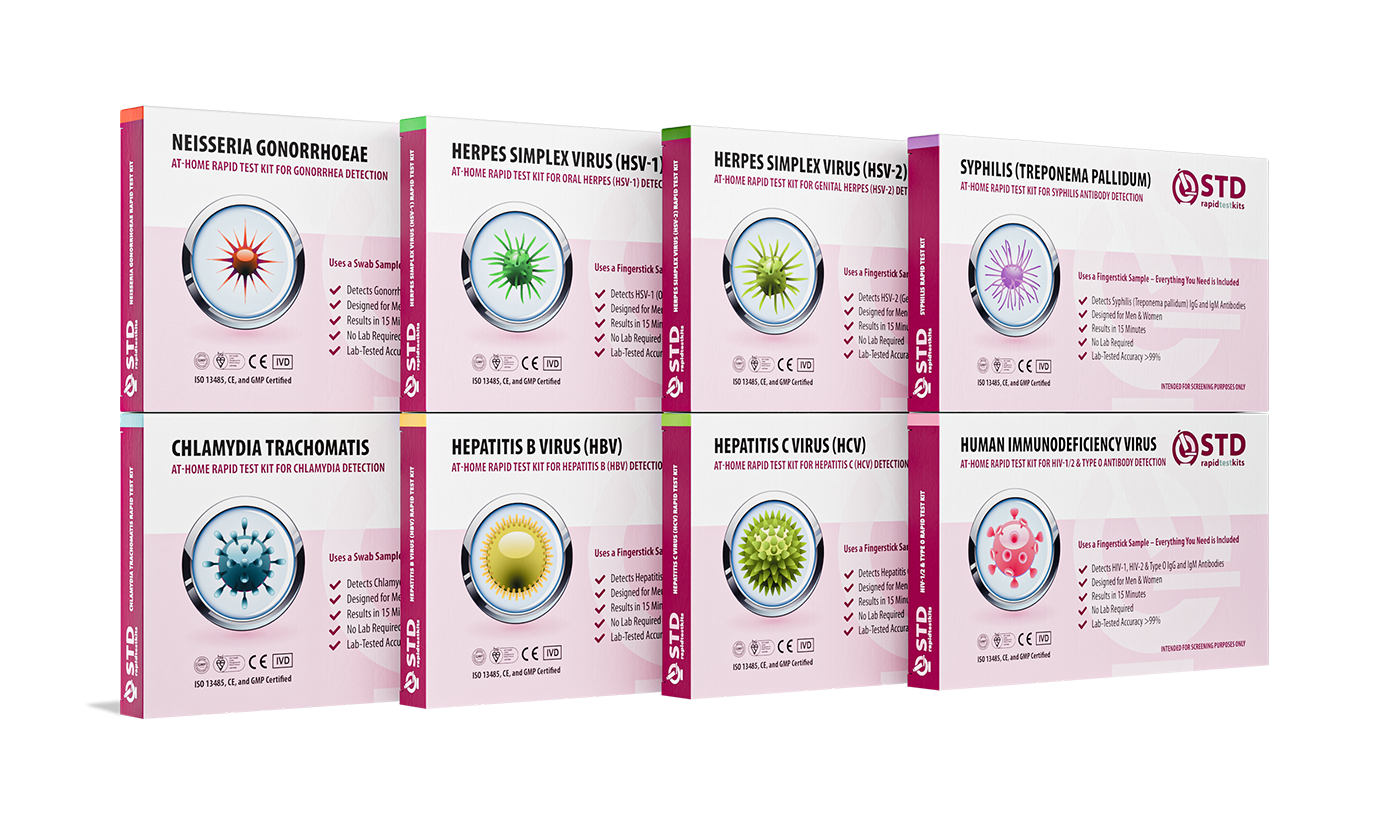 For Men & WomenResults in MinutesNo Lab NeededPrivate & Discreet
Order Now $149.00 $392.00
For all 8 tests
When to Seek Immediate Medical Care
While most flu-like illnesses can be monitored at home, certain symptoms warrant urgent medical evaluation regardless of cause.
Severe headache with stiff neck, confusion, difficulty breathing, chest pain, persistent high fever above 103°F, or signs of dehydration require prompt care.
If you suspect recent high-risk exposure to HIV within the last 72 hours, post-exposure prophylaxis (PEP) may be available through emergency or urgent care settings. Timing is critical in that situation.
This article is about clarity, not delay. If something feels medically urgent, act first and research later.
Before You Spiral: A Grounded Way to Think About It
If you’re here because you woke up sweating and your brain immediately jumped to “STD,” take a breath. Most flu-like illnesses are exactly that, viral respiratory infections that resolve on their own.
But if your symptoms line up with a recent sexual exposure and the timing fits known incubation windows, testing is not dramatic. It’s responsible. It’s calm. It’s clarity.
You don’t have to guess whether fever after sex means something. You don’t have to live inside a Google tab. You can know.
If uncertainty is keeping you up at night, start with a discreet, medically aligned option at STD Rapid Test Kits. Whether it’s a single infection or a broader screen, the goal is simple: replace fear with facts.
FAQs
1. Be honest, can an STD really feel just like the flu?
Yes. And that’s what makes it so unsettling. Early HIV or a first herpes outbreak can absolutely feel like a bad viral illness, fever, body aches, sore throat, exhaustion. The difference usually shows up in timing and context. The flu doesn’t care who you slept with. Some infections do.
2. I got sick three days after sex. Is that acute HIV?
Almost certainly not. Acute HIV symptoms typically appear two to four weeks after exposure, not a few days later. When symptoms hit immediately, it’s far more likely to be coincidence, a regular virus you picked up from daily life. Your brain connects the dots dramatically. Biology usually doesn’t move that fast.
3. What if I have a fever but zero genital symptoms?
That’s where people spiral. Some viral STDs can start systemically before you notice anything locally. But so can dozens of everyday viruses. Fever alone isn’t diagnostic. Fever plus timing plus risk exposure, that’s the fuller picture. When in doubt, test during the correct window instead of trying to decode your body like a crime scene.
4. My lymph nodes feel swollen. Should I panic?
No. Lymph nodes swell when your immune system clocks in for work. That includes the flu, strep throat, dental infections, even stress-related immune responses. Widespread lymph node swelling weeks after exposure might warrant testing, but a tender node under your jaw during a sore throat isn’t a smoking gun.
5. Can anxiety actually make symptoms feel worse?
Absolutely. Once the thought “Is this HIV?” lands, every normal ache becomes amplified. You swallow more often. You check your temperature repeatedly. You poke your neck. Anxiety doesn’t invent symptoms, but it can magnify perception. Testing gives your nervous system something solid to stand on.
6. If it is herpes, will I always feel this sick?
Typically no. The first outbreak is usually the most intense. That’s when fever and body aches are most likely. Recurrent outbreaks, if they happen, are usually milder and shorter. Antiviral medication can reduce both severity and transmission risk.
7. What’s the smartest testing move if I’m in that 2–4 week window?
If you’re within that timeframe after unprotected sex and experiencing flu-like symptoms without heavy congestion, this is often the right time for a fourth-generation HIV test. If sores are present, get them evaluated quickly. If you’re unsure, a multi-panel test can help cover multiple possibilities at once.
8. If my test is negative, can I finally relax?
If it’s negative and you tested within the correct window period, yes, you can exhale. If you tested very early, plan a follow-up at the recommended interval. Think of it as confirming a good outcome, not chasing disaster.
9. Does having flu-like STD symptoms mean I was “reckless”?
No. It means you’re human. Sex-positive adults make choices. Sometimes protection isn’t perfect. Sometimes risk isn’t obvious. Testing isn’t punishment. It’s maintenance, like getting your oil changed. Shame doesn’t belong in the exam room.
10. What’s the most important takeaway from all of this?
Timing beats panic. Context beats Google spirals. And knowing your status, whatever it is, is always more powerful than guessing.
You Deserve Answers, Not Assumptions
When your body feels off, your mind fills in worst-case scenarios. Fever turns into fear. Fatigue turns into guilt. But symptoms aren’t accusations, they’re information.
Most flu-like illnesses are just that. And when timing after sex makes you question it, the answer isn’t spiraling, it’s testing.
You don’t have to guess. You don’t have to sit in uncertainty. Explore discreet options at STD Rapid Test Kits and replace assumptions with facts.
Clarity is calm. And you deserve it.
How We Sourced This Article: This guide was developed using current guidance from the Centers for Disease Control and Prevention, peer-reviewed infectious disease literature, and clinical practice standards for diagnosing acute HIV, herpes, and syphilis. We looked over about fifteen references in total, putting a lot of weight on how clear they were, how medically correct they were, and how well they showed real-world symptoms.
Sources
3. CDC – Genital Herpes Fact Sheet
4. World Health Organization – HIV Overview
5. Mayo Clinic – Influenza (Flu)
6. CDC – Clinical Overview of HIV (STI Treatment Guidelines)
8. Johns Hopkins Medicine – Herpes (HSV-1 and HSV-2)
About the Author
Dr. F. David, MD is a board-certified infectious disease specialist focused on STI prevention, diagnosis, and treatment. He blends clinical precision with a no-nonsense, sex-positive approach and is committed to expanding access for readers in both urban and off-grid settings.
Reviewed by: J. Ramirez, PA-C | Last medically reviewed: March 2026
This article is meant to give you information, not medical advice.


