







Quick Answer: You can have more than one STD at the same time. Co-infections are common, especially with infections like chlamydia and gonorrhea, and having one STD can increase your risk of acquiring another.
This Is How It Actually Happens
Let’s start with a simple scene. Two people hook up. Maybe they use a condom. Maybe they don’t. Maybe it breaks. Maybe there’s oral sex involved. Maybe neither person has symptoms. That part is important.
Sexually transmitted infections do not politely line up and take turns. If one partner is carrying gonorrhea and chlamydia, transmission can happen simultaneously. If someone has herpes and doesn’t know it because they’ve never had a noticeable outbreak, that virus can transmit alongside something bacterial.
And here’s where biology gets blunt: inflammation makes tissues more vulnerable. If you already have one infection irritating the lining of your cervix, urethra, rectum, or throat, that microscopic inflammation can make it easier for another pathogen to enter and establish itself. That’s not a moral statement. It’s a cellular one.
Public health data consistently shows overlap between certain infections. Co-infection rates between chlamydia and gonorrhea are particularly well documented, especially in younger sexually active populations. That’s why clinicians often test for both at the same time, even if only one seems likely.
It’s not because they assume the worst. It’s because experience has taught them that infections often travel in pairs.
Which STDs Commonly Show Up Together?
Some infections overlap more frequently than others. That overlap is not random. It usually shows how people share transmission routes, how they tend to get sick, and how the body reacts to inflammation.
| Infection Pair | Why They Commonly Overlap | Symptom Pattern |
|---|---|---|
| Chlamydia + Gonorrhea | Spread through the same types of sexual contact and often circulate in the same sexual networks. | Often mild or no symptoms; discharge or burning may overlap. |
| Chlamydia + HIV | Untreated bacterial STDs increase inflammation, which can raise HIV transmission risk. | Early HIV may have flu-like symptoms or none at all. |
| Gonorrhea + Syphilis | Shared exposure risk and overlapping high-risk encounters. | Symptoms may appear at different times, creating confusion. |
| Herpes + Bacterial STDs | Open sores or microscopic skin breaks can increase susceptibility to bacterial infections. | Herpes outbreaks may mask or distract from other infections. |
The key pattern here is this: many STDs share transmission routes. Vaginal sex, anal sex, and oral sex can all transmit multiple pathogens at once. If exposure happens, more than one organism can establish infection.
Sometimes symptoms overlap so completely that it’s impossible to tell what’s happening without testing. Sometimes there are no symptoms at all.
And that’s where anxiety spikes. Because when your body is quiet, your brain gets loud.

People are also reading: Can You Have Syphilis and Not Know It Heres the Truth
“I Thought It Was Just One Thing.”
Marcus was 26 when he tested positive for gonorrhea. He felt relieved, oddly. There was a name for the burning sensation when he peed. There was a treatment plan. Antibiotics. Done.
Two weeks later, he got a call back from the clinic. His additional screening had come back positive for chlamydia too.
“I felt stupid,” he said. “Like I should have known. Like I did something extra wrong.”
He hadn’t. He had one exposure. One partner. One weekend. But that partner was carrying two infections.
What caught Marcus off guard wasn’t the biology. It was the assumption that infections happen one at a time, like chapters in a book. In reality, they stack. Quietly. Efficiently.
And because both infections often cause minimal symptoms, he might never have known about the second one if the clinic hadn’t run a full panel.
This is why full STD panels matter. Not because you should expect the worst. But because guessing is unreliable, and symptoms don’t tell the whole story.
Symptoms Overlap More Than You Think
Imagine trying to identify a song when three tracks are playing at once. That’s what overlapping STD symptoms can feel like.
Burning during urination? Could be chlamydia. Could be gonorrhea. Could be both. Could be a urinary tract infection. Vaginal discharge? Same story. Rectal discomfort? Same again.
And sometimes, nothing. Zero symptoms. No pain. No discharge. No rash. No warning.
Studies consistently show that a significant percentage of bacterial STDs are asymptomatic, especially in women and people with cervixes. That means you can have multiple infections and feel completely fine. The absence of symptoms does not equal the absence of infection.
This is where people delay testing. They wait for something dramatic. A fever. A sore. A sign. But many infections are subtle or silent.
If you’ve been exposed and you’re asking whether you could have more than one STD at the same time, the honest answer is: yes, and you may not feel it.
Does Having One STD Make It Easier to Get Another?
This part feels unfair, but it’s important.
When your body is fighting one infection, especially a bacterial STD, the affected tissues become inflamed. Inflammation increases blood flow and recruits immune cells to the area. That sounds protective, and in many ways it is. But it also creates microscopic openings and a higher concentration of target cells for viruses like HIV.
That’s why untreated bacterial STDs can increase susceptibility to HIV transmission. It’s not about morality or “risk level.” It’s about biology and surface vulnerability.
Picture someone with untreated syphilis sores. Those open lesions provide a direct pathway for viral entry. Now imagine someone with untreated chlamydia. The inflammation may not be visible, but the tissue environment is altered.
One infection can create a doorway for another.
That’s also why public health guidelines emphasize treating bacterial STDs quickly. Not only to resolve symptoms, but to reduce broader transmission risk.
When Should You Test for More Than One STD?
If you test positive for one infection, it’s reasonable to ask whether you should test for others. In most cases, the answer is yes.
Clinicians commonly recommend broader testing after a positive result because co-infections are frequent enough to justify it. Timing matters, though. Testing too early after exposure can miss infections still in their window period.
| Infection | Typical Window Period | Best Time for Reliable Testing |
|---|---|---|
| Chlamydia | 7–14 days | 2 weeks after exposure |
| Gonorrhea | 7–14 days | 2 weeks after exposure |
| Syphilis | 3–6 weeks | 6 weeks or later |
| HIV (antigen/antibody test) | 2–6 weeks | 6 weeks for high accuracy |
Let’s say you had unprotected sex ten days ago and just tested positive for gonorrhea. Testing for chlamydia at that same time makes sense because the window periods overlap. Testing for syphilis or HIV might require a follow-up depending on the exact timing of exposure.
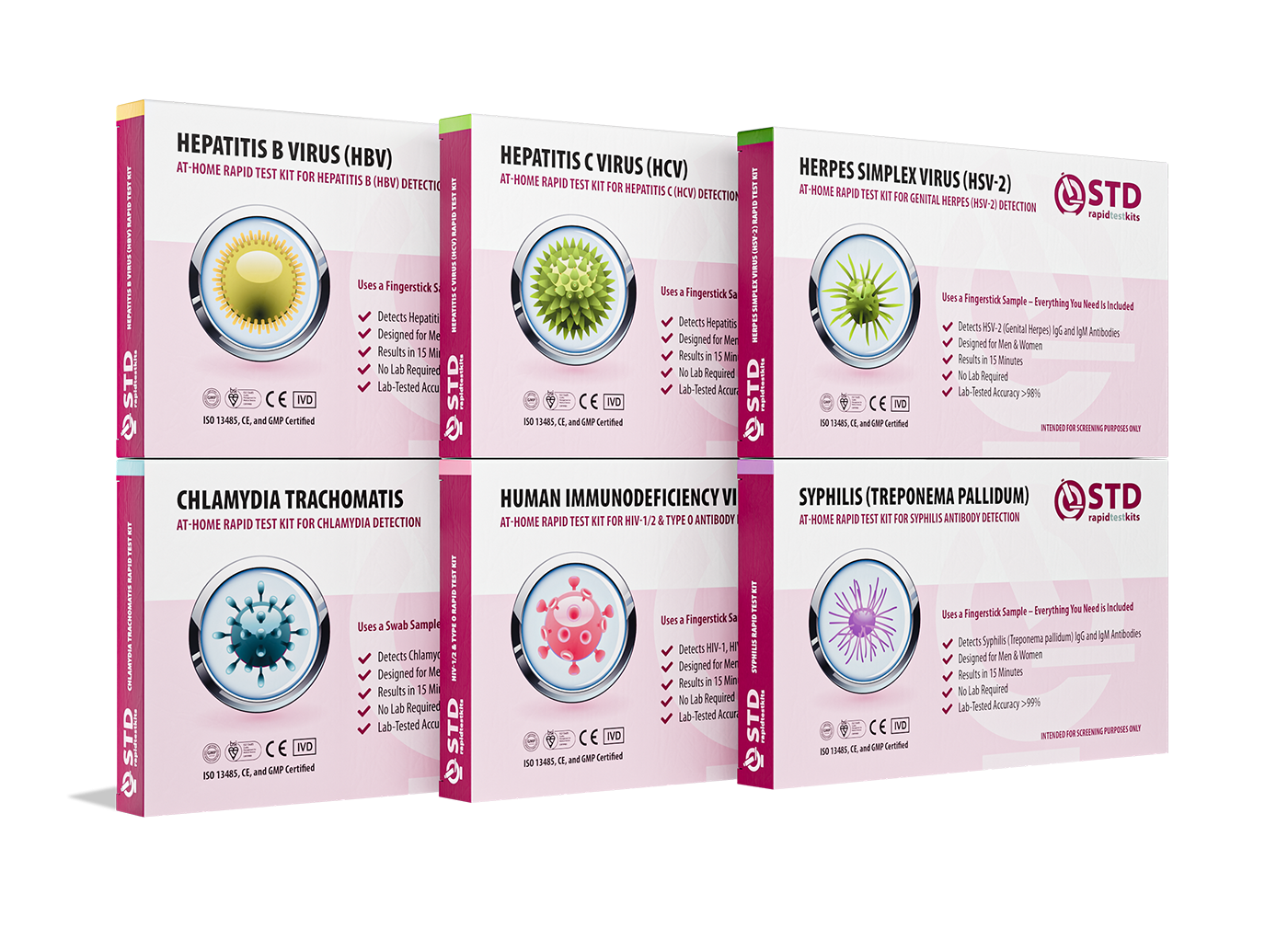
This is where structured, at-home panel testing can offer clarity without another waiting room. A comprehensive kit from STD Rapid Test Kits allows you to check for multiple infections at once, discreetly and on your own schedule.
If you’re already navigating the stress of one diagnosis, adding convenience and privacy matters. A combo STD home test kit can screen for several common infections simultaneously, reducing the guesswork and the second round of anxiety.
Peace of mind is not dramatic. It’s practical.
Check Your STD Status in Minutes
Test at Home with Remedium6-in-1 STD Test Kit
 For Men & Women
 Results in Minutes
 No Lab Needed
 Private & Discreet
Order Now $119.00 $294.00
For all 6 tests
The Silence Is What Trips People Up
Alyssa almost didn’t get tested at all. She felt fine. No burning. No discharge. No sores. The only reason she ordered a test was because a past partner texted her, awkward and brief: “Hey, I tested positive for something. You should probably check.”
Her results came back positive for chlamydia. She cried for twenty minutes, then steadied herself. Antibiotics. Manageable. Embarrassing, but manageable.
What she didn’t expect was the second result: early syphilis.
She had zero symptoms. No rash. No ulcer she noticed. Nothing dramatic enough to send her to urgent care. If she had only tested for the infection she assumed was likely, the second one might have progressed quietly.
This is the part that matters: multiple STDs at the same time don’t always announce themselves. Sometimes they whisper. Sometimes they overlap. Sometimes one distracts you from the other.
And when people search “can you have more than one STD at the same time,” what they’re really asking is whether they could be missing something.
The honest answer is yes, and that’s exactly why broad testing exists.
Why Doctors Rarely Test for Just One Thing
When someone walks into a clinic and says, “I think I have gonorrhea,” most providers don’t stop there. They don’t test one pathogen in isolation and call it a day. They zoom out.
Sexual exposure is rarely specific to one microbe. The same encounter that transmits gonorrhea can transmit chlamydia, syphilis, HIV, or trichomoniasis. It depends on what the partner carries, the type of contact involved, and timing.
Testing only for the most obvious infection can create false reassurance. A negative result for one STD does not mean you’re clear across the board.
That’s why full panels are common in sexual health settings. Not because providers assume high risk, but because co-infections are statistically frequent enough to justify thoroughness.
If you’ve tested positive for one infection already, expanding the scope isn’t overreacting. It’s completing the picture.
How Multiple Infections Affect Treatment
Here’s another fear that creeps in: if you have more than one STD, does treatment get complicated?
Yes and no at times. There are many different kinds of antibiotics that can be used to treat bacterial STDs, and the dose can also be different. For example, you need different antibiotics to treat gonorrhea and chlamydia. The treatment plans are changed to fit if both are present.
Viral infections like herpes or HIV involve entirely different management pathways. That’s why identifying all active infections matters before assuming one prescription solves everything.
Early detection simplifies treatment. Late detection increases complexity.
| Scenario | Impact on Treatment | Why Early Detection Helps |
|---|---|---|
| Bacterial + Bacterial (e.g., Chlamydia + Gonorrhea) | Multiple antibiotics or adjusted dosing may be needed. | Reduces risk of complications and reinfection. |
| Bacterial + Viral (e.g., Chlamydia + HIV) | Separate treatment plans; viral management is long-term. | Prevents immune stress and further transmission. |
| Untreated Co-Infections | Higher risk of pelvic inflammatory disease, infertility, or systemic spread. | Stops complications before they escalate. |
Treatment becomes harder when infections go undetected. That’s the real risk. Not the number of infections, but the delay.
The Emotional Spiral No One Talks About
When people discover one STD, they often assume it’s a contained event. A mistake. A blip. A solvable chapter. Finding out there’s more than one can feel like confirmation of every worst fear.
“I felt disgusting,” Marcus admitted later. “Like my body was out of control.”
That reaction isn’t about microbiology. It’s about stigma. We’ve been culturally trained to think of STDs as singular punishments instead of common infections.
The truth is less dramatic and more ordinary. Sexual networks overlap. Many infections are asymptomatic. Screening isn’t universal. People pass things unknowingly all the time.
Having more than one STD does not mean you did something extreme. It means exposure occurred in a system where multiple pathogens circulate.
Shame thrives in silence. Testing interrupts it.
What About Asymptomatic Co-Infections?
Here’s where it gets clinically important. A large percentage of chlamydia and gonorrhea infections produce mild or no symptoms, especially in women and people with cervixes. HIV can remain asymptomatic for years. Early syphilis symptoms can be painless and easily missed.
So yes, you can absolutely have multiple STDs and feel completely normal.
This is why relying on symptoms alone is unreliable. If you’re searching phrases like “multiple STDs no symptoms” or “do STDs overlap without signs,” you’re not being paranoid. You’re recognizing that absence of discomfort doesn’t equal safety.
Routine testing isn’t about fear. It’s about information.
Can You Get Two STDs From One Person?
Short answer: yes.
If your partner carries more than one infection, transmission can happen in the same encounter. There’s no biological rule that limits transfer to a single organism per exposure.
Think of it this way. If someone has both gonorrhea in their throat and chlamydia genitally, oral sex and penetrative sex could transmit different infections to different anatomical sites. That complexity often surprises people.
Transmission isn’t selective. It’s opportunistic.
This is also why anatomical site matters in testing. Throat, rectal, and genital exposures may require site-specific screening. Missing one site can mean missing an infection.
So What Should You Actually Do?
If you’ve tested positive for one STD, consider expanding your screening based on timing and exposure type. If you’ve had unprotected sex and haven’t tested at all, a comprehensive panel reduces guesswork.
Imagine sitting at your kitchen table with a sealed test kit instead of sitting in a waiting room replaying conversations. You collect the sample. You wait. You get results privately. No fluorescent lights. No awkward eye contact.
A combo STD home test kit checks for multiple common infections at once, which is particularly useful when co-infection is a possibility. Instead of testing sequentially and extending your anxiety over weeks, you get a broader answer in one step.
If you’re not sure where to begin, starting at STD Rapid Test Kits gives you options based on your situation, not assumptions.
The goal isn’t to scare yourself into testing everything forever. The goal is to match your testing strategy to your exposure reality.
People are also reading: It Started as a Cold Sore, Then I Got Genital Herpes
The Bigger Picture: Prevention Without Panic
Understanding that multiple STDs at the same time are possible changes how we think about prevention. It encourages broader testing. It supports condom use. It normalizes conversations with partners.
But it should not create paranoia.
Sex is human. Exposure risk exists on a spectrum. Infections are common, treatable, and manageable when caught early. The real danger isn’t multiplicity. It’s avoidance.
If you’re reading this because you’re afraid, pause. Take a breath. One infection does not mean catastrophe. Two infections do not mean collapse. They mean it’s time to gather information and respond calmly.
Testing isn’t an admission of guilt. It’s maintenance.
When Window Periods Complicate the Picture
There’s another layer people don’t think about when they ask whether you can have more than one STD at the same time. It’s not just whether co-infection is possible. It’s whether you could test for one infection now and unknowingly miss another because of timing.
This is where window periods quietly shape outcomes. Every infection has a detection window, the time between exposure and when a test can reliably identify it. If two infections have different window periods, they might not happen on the same day.
Picture this: Jordan has unprotected sex. Ten days later, they test and come back positive for chlamydia. Relief and panic hit at the same time. They assume that’s the full story. But if the same exposure transmitted early syphilis or HIV, those might not be detectable yet.
That doesn’t mean testing was pointless. It means follow-up timing matters.
| Exposure Timeline | Possible Detection at 10 Days | Possible Detection at 6 Weeks |
|---|---|---|
| Single exposure carrying Chlamydia + Syphilis | Chlamydia likely detectable | Syphilis more reliably detectable |
| Single exposure carrying Gonorrhea + HIV | Gonorrhea often detectable | HIV antigen/antibody test more accurate |
| Single exposure carrying Chlamydia + HIV | Chlamydia likely detectable | HIV more reliable after full window period |
The takeaway isn’t that you should delay testing. Early testing provides useful information. But if exposure was recent and high risk, retesting after the full window period may be recommended.
This is especially important when someone searches “tested positive for one STD should I test for others.” The answer depends not just on risk, but on timing.
What Happens If Multiple STDs Go Untreated?
Untreated infections don’t compete with each other. They compound.
In people with cervixes, untreated chlamydia or gonorrhea can lead to pelvic inflammatory disease. Add another infection into the mix, and inflammatory damage can increase. Fertility complications become more likely. Chronic pelvic pain becomes more likely.
In people with penises, untreated infections can spread to the epididymis or prostate. Discomfort intensifies. Transmission risk continues.
Layer in untreated syphilis, and systemic complications can develop over time. Layer in untreated HIV, and immune suppression changes everything.
The problem isn’t that you have more than one STD. The problem is not knowing and not treating them.
Most bacterial STDs are curable with antibiotics. Many viral STDs are manageable with proper care. The difference between manageable and dangerous is almost always early detection.
Why Combo Testing Reduces Mental Whiplash
There’s a particular kind of anxiety that comes from serial testing. You test for one infection. You wait. You process the result. Then someone tells you that you should test for something else. You wait again. Your nervous system never settles.
Comprehensive testing shortens that cycle.
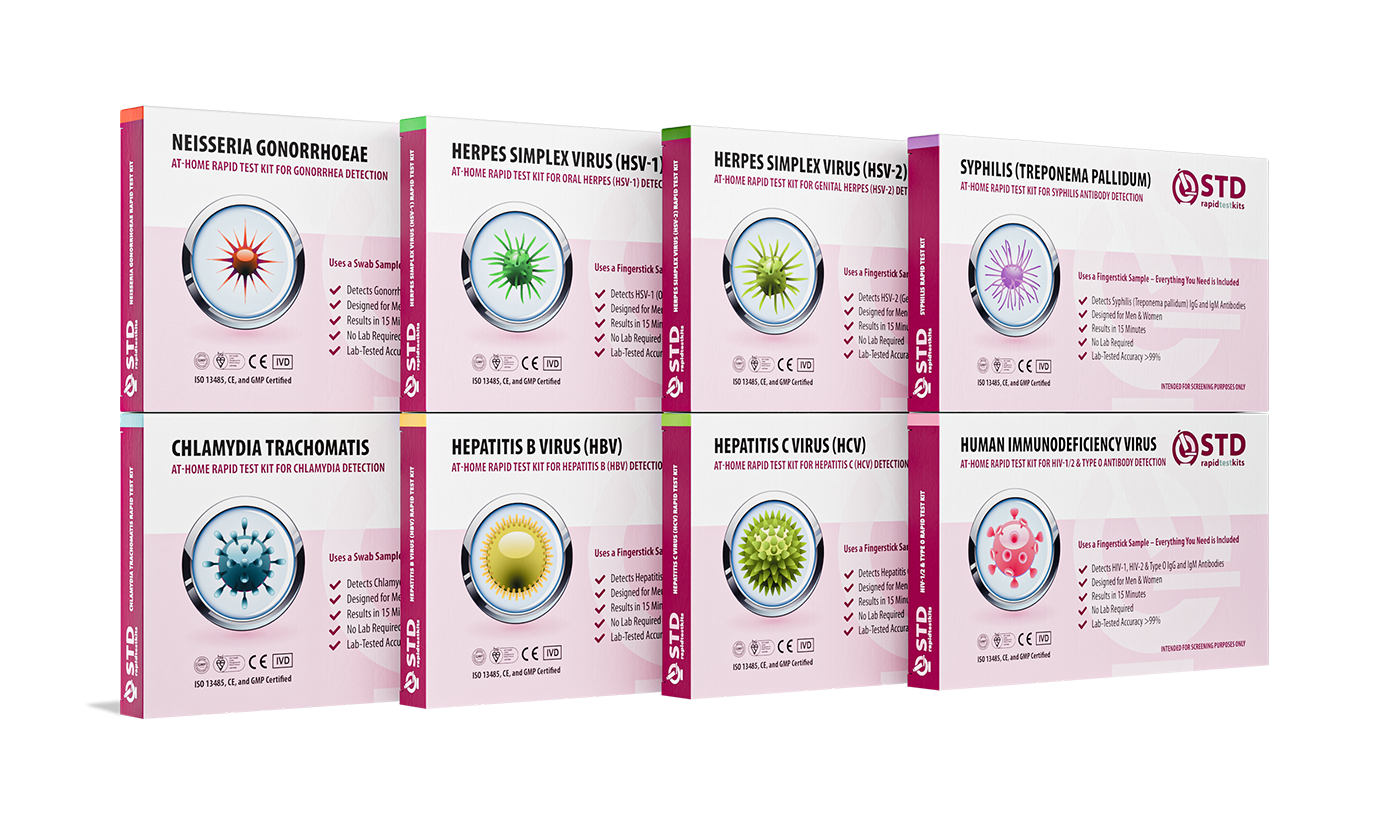
Instead of playing infection whack-a-mole, you assess the most common risks in one sweep. That’s why many people choose a combo STD home test kit after a high-risk encounter or after testing positive for a single infection.
It doesn’t mean you expect disaster. It means you want clarity.
Testing broadly once is often less stressful than testing narrowly multiple times.
Check Your STD Status in Minutes
Test at Home with Remedium8-in-1 STD Test Kit
 For Men & WomenResults in MinutesNo Lab NeededPrivate & Discreet
Order Now $149.00 $392.00
For all 8 tests
What If Your Partner Had More Than One STD?
This question usually arrives quietly: “If they had two infections, does that mean they were sleeping with a lot of people?”
Not necessarily.
Transmission chains are invisible. Your partner could have acquired one infection months ago from a previous relationship and another more recently. They may not have had symptoms. They may not have known.
It’s tempting to translate infection count into moral narrative. But infection count reflects exposure patterns and screening gaps, not character.
Multiple STDs do not automatically mean multiple partners in the same week. They mean testing wasn’t done earlier, or infections were asymptomatic, or someone else in the chain wasn’t screened.
Blame doesn’t treat infections. Testing does.
How to Move Forward Without Spiraling
If you’ve just learned that you have more than one STD at the same time, your body might feel tight. Your chest might feel hot. You might be rehearsing conversations in your head.
Pause there.
Start with treatment. Follow medical guidance. Complete antibiotics if prescribed. Schedule follow-up testing if recommended. Avoid sexual contact until cleared.
Then have the partner conversation. Not accusatory. Not theatrical. Clear and factual. “I tested positive for these infections. You should get tested too.” That’s it.
If you haven’t tested yet but you’re worried about possible co-infection, begin with information. A discreet order through STD Rapid Test Kits allows you to gather data privately. That shift from uncertainty to clarity is powerful.
You are not the first person to navigate this. You will not be the last.
The Truth Beneath the Fear
When people ask whether you can have multiple STDs at the same time, they’re often asking something deeper. They’re asking whether their situation is catastrophic. Whether it means they were reckless. Whether it defines them.
It doesn’t.
Co-infections are documented. They’re common enough that clinicians expect them. They’re manageable when addressed. The only real danger is pretending one diagnosis is the entire story without confirming it.
Sexual health isn’t about perfection. It’s about maintenance, communication, and timely testing.
You don’t need to panic. You need accurate information and a plan.
FAQs
1. Okay, but seriously, is it actually common to have more than one STD at the same time?
Yes. Not “you’re doomed” common. Not “everyone has five infections” common. But common enough that doctors routinely test for multiple infections at once. Certain STDs travel in the same sexual networks and spread the same way, so if exposure happens, more than one organism can show up. It’s biology, not a scandal.
2. If I tested positive for chlamydia, does that automatically mean I probably have gonorrhea too?
Not automatically. But it’s common enough that providers usually check for both. Think of it like finding out it rained, you’d probably check for puddles too. The infections often overlap, and symptoms alone won’t reliably separate them.
3. Can I get two STDs from one person in one hookup?
Yes. If that person carries more than one infection, transmission can happen during the same encounter. There’s no built-in biological limit of “one per night.” It depends on what they had, what kind of sex happened, and whether protection was used consistently.
4. What if I feel completely fine? Could I still have multiple STDs?
Absolutely. Many infections are asymptomatic, especially early on. You can feel normal, go to work, hit the gym, laugh at memes, and still carry an infection. Symptoms are unreliable narrators. Testing is the only way to know for sure.
5. Does having one STD make me more likely to catch another?
Sometimes, yes. Infections that cause inflammation or sores can make tissue more vulnerable to additional pathogens. That’s one reason untreated bacterial STDs can increase HIV transmission risk. It’s not about “riskiness” as a person. It’s about how inflamed tissue behaves under a microscope.
6. If I already treated one infection, am I in the clear?
You’re in the clear for that infection once treatment is completed properly. But treatment for one STD doesn’t magically treat another unless the medications overlap. If you weren’t tested broadly, it’s reasonable to check whether anything else was present at the same time.
7. Do multiple STDs mean I was reckless?
No. It means exposure occurred in a network where more than one infection was circulating. People carry infections without symptoms all the time. Screening gaps are common. Shame makes it feel dramatic. Epidemiology makes it feel ordinary.
8. Is it worse to have two STDs instead of one?
It can increase complication risk if left untreated, but the real danger is delay, not the number. Two treatable infections caught early are still treatable infections. What escalates risk is ignoring symptoms or avoiding testing out of fear.
9. Should I just get a full panel instead of guessing?
A full panel often makes things clearer more quickly if you have had a meaningful exposure or have already tested positive for an infection. Comprehensive screening answers more questions at once than waiting, testing again, and worrying for weeks.
10. How do I tell a partner without it turning into a courtroom scene?
Keep it factual. “I tested positive for these infections. You should get tested too.” No speeches. No accusations. No detective board with red string. Just information. The goal is health, not blame.
You Deserve Clarity, Not Catastrophe
Finding out you have one STD can feel destabilizing. Discovering you might have more than one can amplify that fear. But the number of infections does not determine your worth, your future, or your health outcome.
What determines outcomes is information and action. Most bacterial STDs are curable. Viral infections are manageable with proper care. Early detection dramatically reduces long-term complications.
If you're not sure if your testing was thorough enough, don't stay in the dark. This at-home combo STD test kit lets you check for multiple infections at once, in a private and thorough way. Clarity replaces speculation. Data replaces dread.
You are not defined by exposure. You are defined by what you do next.
How We Sourced This Article: This guide integrates current clinical guidance from leading public health authorities, peer-reviewed infectious disease research, and real-world sexual health reporting. We reviewed epidemiological data on STD co-infection rates, transmission biology, and testing window periods.
Sources
1. CDC Sexually Transmitted Infections Treatment Guidelines
2. World Health Organization – Sexually Transmitted Infections Fact Sheet
3. Mayo Clinic – Sexually Transmitted Diseases Overview
4. Planned Parenthood – STD Information
5. StatPearls – Sexually Transmitted Infections
6. NHS – Sexually Transmitted Infections (STIs)
7. Clinical Infectious Diseases – Coinfections Among Patients with STIs
About the Author
Dr. F. David, MD is a board-certified infectious disease specialist focused on STI prevention, diagnosis, and treatment. He combines clinical precision with a candid, stigma-aware approach to sexual health education.
Reviewed by: L. Martinez, MPH | Last medically reviewed: February 2026
This article is only meant to give you information and should not be used instead of medical advice.


