





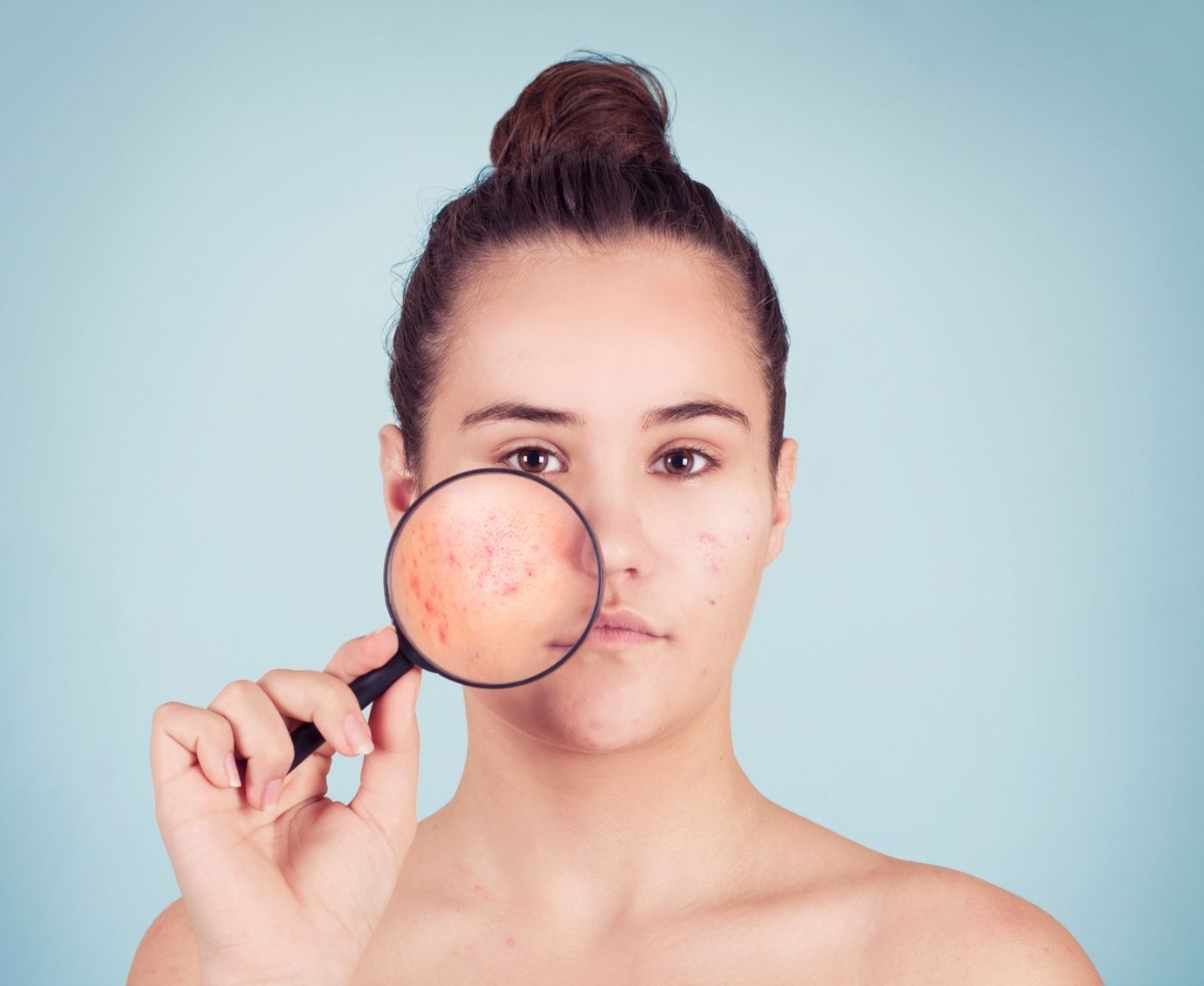

Quick Answer: Herpes bumps often appear in small clusters of fluid-filled blisters that may burn, tingle, or hurt before they show up. But not all clustered genital bumps are herpes, and testing at the right time is the only way to know for sure.
The Word “Cluster” Gets Thrown Around, Here’s What It Actually Means
When people search “do herpes bumps come in clusters,” what they’re really asking is whether herpes shows up as a group instead of a single bump. And yes, classically, herpes simplex virus outbreaks often produce multiple blisters close together on a red base of skin. Think small dew drops on irritated skin rather than one isolated pimple.
But cluster doesn’t mean dozens. It doesn’t always mean symmetrical. And it definitely doesn’t mean dramatic. For some people, it’s three tiny blisters barely visible. For others, it’s five or six that merge into a shallow sore. The key is that they tend to form in the same localized patch rather than scattered randomly across the entire groin.
Imagine Maya, 27, who noticed what she thought were “three little paper cuts” on one side of her labia after a weekend hookup. They weren’t spread everywhere. They were close. Tight. Tender. That grouping, plus the burning sensation, ended up being more telling than the number itself.
According to clinical guidance from the Centers for Disease Control and Prevention, herpes lesions typically begin as vesicles, small, fluid-filled blisters, that can rupture and form shallow ulcers. That evolution pattern matters more than the raw bump count.
What a Typical Herpes Cluster Looks and Feels Like
Let’s slow this down and look at the sequence. Because herpes is rarely just “a bump.” It’s usually a progression.
Many people describe a tingling, itching, or burning sensation 12 to 48 hours before visible blisters appear. That prodrome phase can feel like nerve irritation beneath the skin. Then small clear blisters form. They’re often painful to the touch. Within days, they can break open and crust over before healing.
The experience can vary between HSV-1 and HSV-2, and between first outbreaks and recurrences. First outbreaks tend to be more intense. Recurrences are often milder and smaller in area.
| Stage | What You Might See | What You Might Feel | Typical Timing |
|---|---|---|---|
| Prodrome | No visible bumps yet | Tingling, burning, nerve sensitivity | 1–2 days before lesions |
| Blister Phase | Small grouped clear vesicles on red skin | Tenderness, pain | 2–4 days |
| Ulcer Phase | Open shallow sores where blisters broke | Stinging, discomfort | 3–7 days |
| Healing | Crusting or smooth new skin | Reduced pain | 1–2 weeks total duration |
Notice what’s missing here. There’s no mention of firm flesh-colored bumps that stay unchanged for months. There’s no isolated ingrown hair with a central follicle. Herpes tends to evolve over days, not linger unchanged.
If your bumps have stayed identical for weeks without pain, that pattern points elsewhere.
People are also reading: Still Have Symptoms? You Might Be on the Wrong STD Antibiotic
Not All Clusters Are Herpes, And This Is Where People Spiral
Three bumps appear and suddenly the mind goes nuclear. But clustering alone doesn’t equal herpes.
Take razor burn. After shaving, especially in coarse hair areas, multiple inflamed follicles can appear close together. They may be red, slightly raised, and tender. But they usually center around hair follicles and do not turn into fluid-filled blisters. They also improve steadily without ulcerating.
Or consider HPV genital warts. These can appear in small grouped flesh-colored or cauliflower-like growths. They’re usually painless. They do not blister. They don’t burn before appearing. And they don’t typically crust and heal within two weeks, they persist.
Then there’s molluscum contagiosum, which can show up as small, dome-shaped bumps with a tiny central dimple. These can cluster, especially in shaved areas. But again, they are firm, not fragile blisters, and they don’t follow the same rupture-and-crust cycle.
Jordan, 31, once spent three days convinced he had herpes because six bumps appeared after a beach vacation. They were clustered and red. What he didn’t notice? Each bump had a hair in the center. It was folliculitis triggered by sweat and friction. Same number of bumps. Completely different pattern story.
Pattern Comparison: Herpes vs Other Clustered Bumps
This is where we zoom out and compare evolution, sensation, and persistence. Because pattern is more than appearance, it’s behavior over time.
| Condition | Clustered? | Painful? | Evolves Into Open Sores? | Duration Without Treatment |
|---|---|---|---|---|
| Herpes | Often yes | Often yes | Yes | 1–2 weeks per outbreak |
| HPV Warts | Sometimes | Usually no | No | Months to years |
| Folliculitis | Yes | Mildly | No | Days to 1 week |
| Molluscum | Yes | No | No | Months |
| Syphilis (Primary) | Usually single sore | Often painless | Ulcer forms | 3–6 weeks |
Notice something critical. Syphilis typically presents as a single painless ulcer, not a cluster of small blisters. HPV persists. Molluscum stays dome-shaped. Herpes evolves rapidly.
If what you’re seeing is changing daily, that’s a stronger herpes signal than simply “there are several bumps.”
Where Herpes Clusters Tend to Appear
Herpes lesions often recur in roughly the same location because the virus lives in nearby nerve roots. That’s why some people say, “It always comes back in the same spot.”
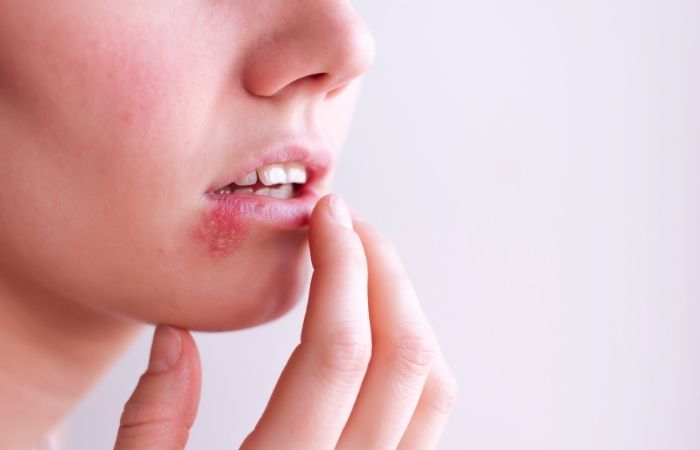
Clusters commonly appear on the labia, shaft of the penis, base of the penis, anus, buttocks, or inner thighs. Oral herpes clusters tend to form at the lip border.
Location alone doesn’t diagnose anything, but recurrent clustering in the exact same patch is a pattern worth noting.
And if this is your first episode, the first outbreak can be larger, more widespread, and sometimes accompanied by fever, swollen lymph nodes, or body aches. That systemic component is less common with razor irritation or HPV.
When to Test Instead of Guessing
If you are counting bumps instead of sleeping, it may be time to move from speculation to clarity. Visual comparison can only take you so far. Herpes can be confirmed with a swab test when lesions are active, or with a blood test after the window period has passed.
Testing too early can produce false reassurance. Testing during an active blister phase provides the most accurate swab results. Blood tests typically become more reliable several weeks after exposure because they detect antibodies your immune system has produced.
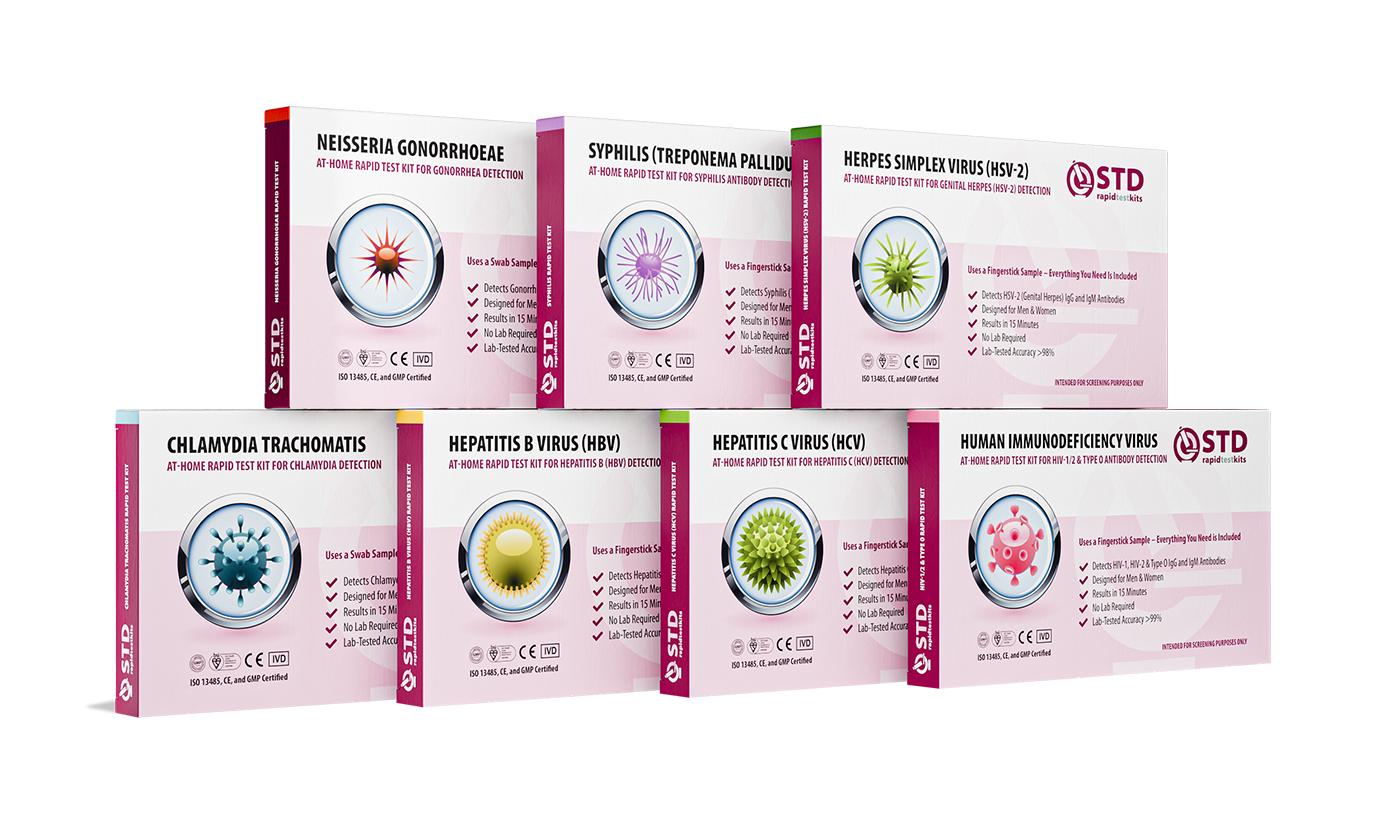
Peace of mind matters. If you want discreet answers without sitting in a waiting room, you can explore options at STD Rapid Test Kits. If lesions are present, an at-home herpes test kit can help you take the next step privately and quickly.
The goal is not panic. It’s precision. Pattern awareness helps. Testing confirms.
If It Burns Before You See Anything, Pay Attention
One of the most overlooked herpes clues isn’t what you see. It’s what you feel before you see anything at all. That low, electric tingling. The strange sensitivity in one small patch of skin. The sense that something is about to surface.
Herpes is a nerve-based virus. It lives quietly in nerve roots and can reactivate under stress, illness, friction, or sometimes for no obvious reason. When it reactivates, it often sends a signal before the skin changes. That pre-lesion sensation is far less common with razor irritation, HPV, or molluscum contagiosum.
Alex described it as “a sunburn feeling under the skin.” Two days later, four small blisters appeared exactly where that sensation had been. They were tight together, almost in a semicircle. That sequence told a clearer story than the cluster alone.
If your bumps appeared with no warning and no discomfort, that doesn’t rule herpes out. But if there was nerve-like pain beforehand, that detail becomes meaningful.
Check Your STD Status in Minutes
Test at Home with Remedium7-in-1 STD Test Kit
 For Men & Women
 Results in Minutes
 No Lab Needed
 Private & Discreet
Order Now $129.00 $343.00
For all 7 tests
First Outbreaks vs Recurring Clusters
The first time someone experiences genital herpes, it can look dramatically different from later recurrences. This is where a lot of confusion happens. People Google photos and expect the most severe examples. Real life is often more nuanced.
Primary outbreaks can include larger areas of blistering, flu-like symptoms, body aches, and swollen lymph nodes. Multiple clusters may appear across a broader region. Healing may take longer, sometimes up to three weeks.
Recurrent outbreaks, by contrast, are often smaller and more contained. A person who has lived with herpes for years may notice two or three tiny blisters in the same location that resolve in under a week.
| Feature | First Outbreak | Recurrent Outbreak |
|---|---|---|
| Number of Lesions | Often multiple clusters | Usually fewer lesions |
| Pain Level | Moderate to severe | Mild to moderate |
| Systemic Symptoms | Possible fever, body aches | Rare |
| Healing Time | 2–3 weeks | 5–10 days |
| Location Pattern | May be more widespread | Often same localized spot |
So if you’re seeing a few clustered bumps for the first time and you feel otherwise fine, that does not automatically exclude herpes. But severe body symptoms combined with clusters lean more toward a primary episode.
Clusters That Spread vs Clusters That Stay Put
Herpes lesions usually stay within a defined patch. They may merge. They may ulcerate. But they do not typically scatter randomly across distant areas overnight.
If you’re noticing bumps appearing in widely separated areas at the same time, that pattern may suggest folliculitis, allergic dermatitis, or another inflammatory reaction. Herpes tends to follow the path of a specific nerve distribution rather than jumping zones.
Consider Sam, who noticed bumps along his inner thigh and assumed herpes. Within 24 hours, similar bumps appeared on his abdomen and chest. The pattern turned out to be heat rash from a humid gym session. Viral clusters do not migrate like that.
Pattern consistency over days matters more than the first glance in the mirror.
What Herpes Clusters Do Not Usually Look Like
Herpes does not typically form thick, rough, cauliflower-textured growths. That description aligns more closely with HPV genital warts. It does not create firm dome-shaped bumps with a central indentation that persist for months, which is more characteristic of molluscum contagiosum.
It also rarely presents as dozens of uniform whiteheads across the entire shaved region. That scenario is far more consistent with razor burn or ingrown hairs.
If you gently stretch the skin and see that each bump centers around a hair follicle, that detail strongly points away from herpes.
The Emotional Spiral Is Real, Let’s Interrupt It
When you see multiple bumps, your brain often jumps to worst-case scenarios. That’s not weakness. That’s self-protection. Sexual health anxiety can feel urgent because it touches identity, relationships, and vulnerability.
But guessing visually for hours rarely produces clarity. It usually produces stress. And stress itself can trigger or worsen outbreaks in people who already carry HSV.
Clarity comes from timing and testing. Not from zooming in closer.
Testing Strategy: When Clusters Appear
If you currently have fluid-filled blisters, a swab test taken directly from a fresh lesion provides the most accurate confirmation. That window is short. Once sores have crusted over, swabs become less reliable.
If bumps have healed or you never saw open blisters, a blood test can detect antibodies after the window period, which is typically several weeks post-exposure. Testing too early may return a negative result even if exposure occurred.
If you want private, fast answers without scheduling a clinic appointment, you can explore discreet options at STD Rapid Test Kits. Their Herpes HSV-1 & HSV-2 Rapid Test Kit allows you to test confidentially from home.
The goal isn’t to assume the worst. It’s to confirm the truth so you can move forward calmly.
People are also reading: The Chlamydia Cure We’ve Been Waiting For Might Not Be Pills
How Long Do Herpes Clusters Last?
Most untreated herpes outbreaks resolve within one to two weeks. Primary outbreaks may take slightly longer. Recurrent episodes are often shorter.
If your bumps have remained unchanged for over a month without ulcerating, that persistence makes herpes less likely. Viral blister cycles do not typically freeze in time.
Healing progression is part of the pattern. If something isn’t progressing, reassessment makes sense.
When It’s Not About Diagnosis, It’s About Power
Whether this turns out to be herpes or not, you deserve clarity instead of spiraling. Many adults carry HSV-1 or HSV-2, often without symptoms. A positive result does not define your worth or desirability. It defines a manageable health condition.
And if it isn’t herpes, knowing that matters too. It allows you to treat what it actually is and stop scanning your skin for hidden meaning.
You do not need to panic tonight. You need information, accurate timing, and the next right step.
What If It’s Only Two or Three Bumps?
This is where people hesitate. They expect herpes to look dramatic. They expect ten lesions. Obvious sores. Something undeniable. But herpes does not follow your expectations. It follows viral biology.
Two or three tightly grouped, fluid-filled blisters that feel tender and evolve over several days can absolutely represent a mild herpes outbreak. A small cluster is still a cluster. The number matters less than the behavior of the bumps over time.
Picture Lena, who noticed just two bumps near the base of her vagina. They were small and stung slightly when she peed. She almost dismissed them because “it wasn’t that many.” Three days later, they had opened and begun to crust. That evolution pattern told the story more clearly than the count ever could.
If the bumps remain firm, dry, unchanged, and painless for weeks, herpes becomes less likely. If they shift daily and follow a blister-to-ulcer-to-heal progression, herpes moves higher on the list.
Clusters After Sex: Timing Changes Everything
Another question hiding under “do herpes bumps come in clusters” is this: how soon after sex would they show up? The incubation period for herpes simplex virus typically ranges from two to twelve days after exposure. Many primary outbreaks occur around day four or five.
If bumps appear the morning after sex, that timeline may point more toward friction irritation or folliculitis than a brand-new herpes infection. Viral replication takes time. The immune system takes time to respond.
But here’s the nuance. Someone who already carries herpes can experience a recurrence triggered by sex itself, even if their partner did not transmit anything new. That recurrence can happen quickly because the virus is already present in the body.
So when clusters appear, ask yourself not only what they look like, but when they appeared relative to exposure.
Do Herpes Clusters Always Hurt?
Not always. Pain is common, especially during first outbreaks, but not universal. Some people describe discomfort as mild irritation. Others notice only tenderness when urine touches the area. A small percentage report no pain at all.
This variability is part of why visual guessing fails so often. The internet often shows severe cases because they are more photographically obvious. Real-world herpes presentations can be subtle.
If your clustered bumps are painless and have remained flesh-colored and stable for weeks, HPV or molluscum may be more consistent patterns. If they were initially clear blisters that became raw and then healed within two weeks, herpes becomes more plausible.
Check Your STD Status in Minutes
Test at Home with Remedium8-in-1 STD Test Kit
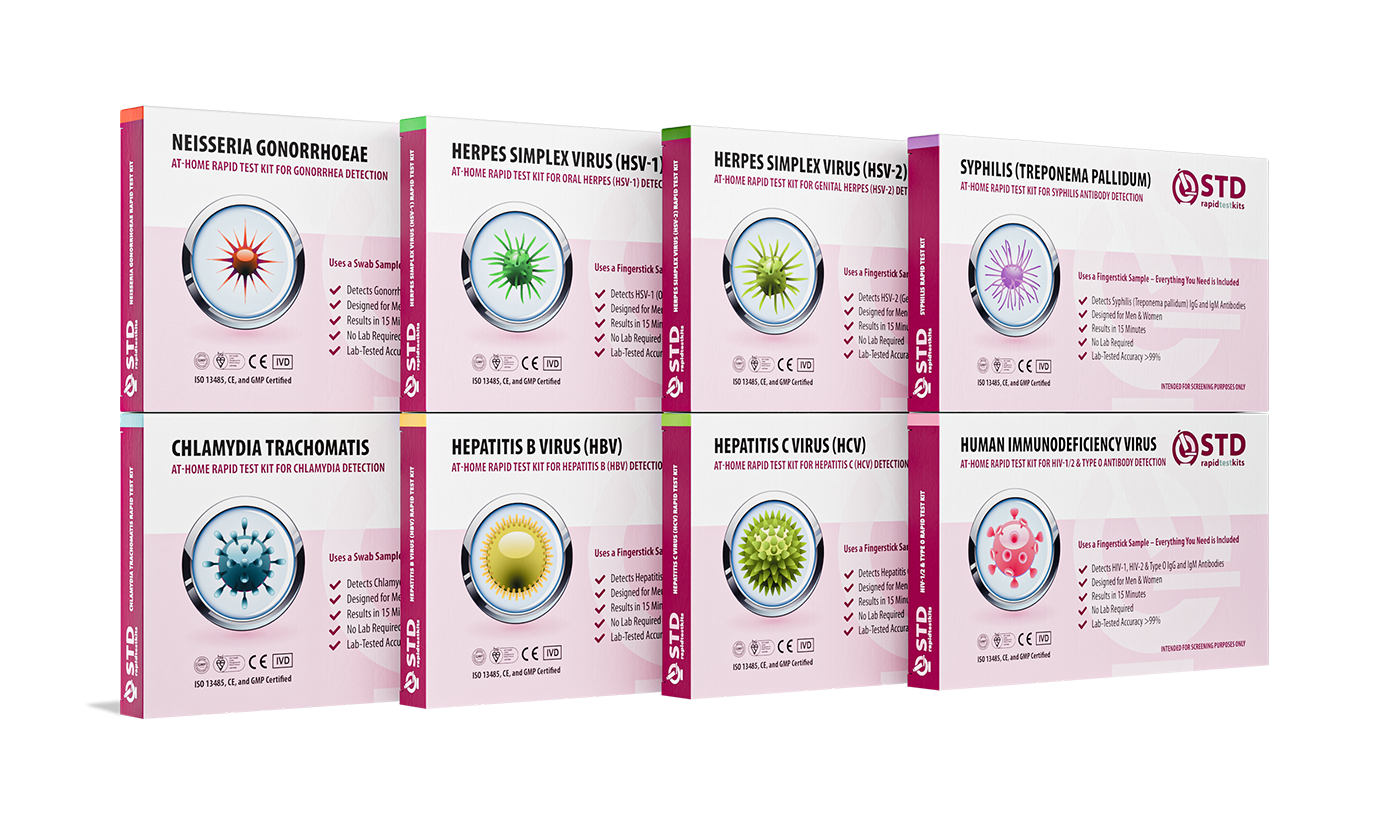 For Men & WomenResults in MinutesNo Lab NeededPrivate & Discreet
Order Now $149.00 $392.00
For all 8 tests
When Clusters Keep Coming Back
Recurrent clusters in the exact same location are one of the strongest pattern clues for herpes. The virus establishes latency in specific nerve ganglia, which is why outbreaks often recur in a familiar spot.
Daniel noticed that every few months, three tiny blisters would appear on the same patch of skin near the base of his penis. They tingled first. They healed within a week. The consistency of location told him more than the severity ever did.
If bumps reappear randomly in completely different zones with no predictable pattern, consider other causes. Recurrence precision is part of herpes behavior.
When to Seek Medical Care Immediately
Most genital herpes outbreaks are uncomfortable but manageable. However, severe pain, inability to urinate, high fever, or widespread lesions warrant prompt medical evaluation. Primary infections can occasionally be intense enough to require antiviral medication quickly.
If you are pregnant and experiencing new genital lesions, urgent evaluation is important for both your health and the baby’s safety. Early assessment allows proper planning and care.
Testing provides answers. Medical care provides treatment. Both exist to reduce harm, not increase shame.
If It Is Herpes, What Comes Next?
Let’s say testing confirms herpes. Take a breath. Millions of adults carry HSV-1 or HSV-2, often unknowingly. For many, outbreaks are infrequent and manageable. Antiviral medications can shorten episodes and reduce transmission risk.
Disclosure conversations feel heavy in your imagination, but in reality they often sound like this: calm, direct, factual. Herpes is common. It is manageable. It does not erase your desirability or your future.
If your test is negative, that clarity matters too. It allows you to focus on the correct diagnosis and move forward without lingering doubt.
FAQs
1. So… do herpes bumps always show up in neat little clusters like the photos online?
Not always. Textbook herpes often appears as a tight group of small blisters, but real life is messier than medical slides. Sometimes it’s three obvious blisters huddled together. Sometimes it’s one that split from a tiny pair. The internet tends to show dramatic cases. Your body may not.
2. If it’s only two bumps, can that still be herpes?
Yes. Herpes does not require a dramatic headcount. Two blisters that tingle first, fill with clear fluid, then open and heal within about a week can absolutely fit the pattern. It’s the evolution that matters, not whether you can count to five.
3. What if they don’t hurt at all?
Pain is common, especially in a first outbreak, but it is not mandatory. Some people describe mild sensitivity. Others only notice discomfort when clothing rubs the area. And a small percentage feel nothing beyond “that looks weird.” Absence of pain lowers suspicion slightly, but it doesn’t clear herpes completely.
4. How fast would herpes bumps show up after sex?
Typically between two and twelve days after exposure. If something appears the next morning, that’s more likely friction, irritation, or shaving-related inflammation. Viruses need time. They don’t clock in overnight. That said, if you already carry herpes, sex itself can trigger a recurrence quickly because the virus is already in your system.
5. Can herpes look like pimples?
Early on, yes. A small fluid-filled blister can resemble a tiny pimple at first glance. The difference usually shows up in what happens next. Pimples tend to fill with pus and stay centered around a hair follicle. Herpes blisters are clearer, more fragile, and usually rupture within a few days.
6. What’s the biggest red flag that it’s probably herpes?
A tingling or burning sensation before the bumps appear, followed by small blisters that evolve into shallow sores and heal within one to two weeks. That sequence is classic. When someone says, “It felt electric first,” my clinical ears perk up.
7. And what’s the biggest sign it’s probably not herpes?
Bumps that stay identical for weeks without blistering or changing. Firm flesh-colored growths that don’t hurt and don’t open are more consistent with HPV warts. Dome-shaped bumps with a tiny center dent that linger for months lean toward molluscum contagiosum. Herpes rarely freezes in place.
8. If I test positive, does that mean my sex life is over?
Absolutely not. Millions of adults live with HSV-1 or HSV-2 and have healthy relationships, fulfilling sex lives, and long-term partners. Antiviral medications reduce outbreaks and lower transmission risk. Conversations can feel intimidating at first, but they are manageable. A diagnosis changes logistics. It does not change your value.
9. If I test negative, can I finally relax?
If you tested at the right time, yes, that result should bring real reassurance. Timing matters. Testing too early can produce false negatives. If you’re unsure about window periods, retesting after a few weeks adds confidence. Clarity beats endless mirror inspections.
10. I keep checking the bumps every hour. Is that making it worse?
Physically, probably not. Emotionally? Definitely. Stress can amplify sensations and, in people who carry herpes, even trigger recurrences. Step away from the flashlight. Observe once daily if you need to track changes. Then live your life in between.
What’s the calmest next step if I’m still unsure?
Get tested instead of guessing. If lesions are active, a swab offers the clearest answer. If they’ve healed, a properly timed blood test can confirm status. Information quiets the spiral. You deserve that quiet.
Before You Spiral Again Tonight
Step back from the mirror. Patterns matter more than panic. Clusters that blister, change, and heal in a set cycle are more likely to be herpes. Clusters that stay the same, stay strong, or are centered around hair follicles point in a different direction.
If you need certainty, choose testing over speculation. Visit STD Rapid Test Kits to explore discreet options. Knowing the answer is calmer than guessing.
You deserve facts. Not fear.
How We Sourced This Article: This guide combines the most up-to-date clinical advice from the Centers for Disease Control and Prevention, peer-reviewed studies on herpes lesion patterns, and personal stories to explain how clustered bumps change over time. We focused on medically accurate descriptions while translating complex terminology into accessible language.
Sources
1. CDC – Genital Herpes Fact Sheet
2. World Health Organization – Herpes Simplex Virus
3. Mayo Clinic – Genital Herpes Overview
5. CDC – Human Papillomavirus (HPV) Fact Sheet
6. NCBI – Molluscum Contagiosum Overview
About the Author
Dr. F. David, MD is a board-certified infectious disease specialist focused on STI prevention, diagnosis, and treatment. He combines clinical rigor with a sex-positive, stigma-free approach to sexual health education.
Reviewed by: Medical Review Team, RN | Last medically reviewed: February 2026
This article is for informational purposes and does not replace medical advice.


