







Quick Answer: Clinic vs at-home STD tests depends on timing, symptoms, and privacy needs. At-home tests are often the fastest and most discreet first step for recent exposure, while clinics are best for severe symptoms or when confirmatory lab testing is required.
This Isn’t Just About Accuracy. It’s About Your Situation.
People assume clinics are automatically better. That belief feels safe because it sounds medical and official. But modern at-home STD tests use many of the same scientific detection principles as clinical testing, especially for infections like Chlamydia, Gonorrhea, HIV, and Syphilis. The real difference isn’t always science. It’s logistics.
Picture two different people. One wakes up with sharp pelvic pain and a fever. That person needs a clinic immediately. Another had a new partner two weeks ago, feels completely fine, but wants peace of mind. That person might benefit from ordering a discreet kit and testing at home tonight.
The right first step isn’t about fear. It’s about fit.
What Actually Changes Between Clinic and At-Home Testing?
Let’s pull the curtain back on what you’re actually choosing between. Both settings aim to detect infection through urine samples, swabs, or small blood samples. Many infections are identified using nucleic acid amplification testing, often called NAAT or PCR, which detects genetic material from bacteria or viruses. According to guidance from the Centers for Disease Control and Prevention, these methods are highly sensitive when used at the right time after exposure.
The difference often lies in where the sample is collected, who processes it, and how quickly results return. Some at-home rapid tests give answers within minutes. Mail-in kits are processed by certified laboratories. Clinic testing may offer same-day blood draws but sometimes requires follow-up appointments.
| Factor | At-Home Rapid or Mail-In Test | Clinic Testing |
|---|---|---|
| Privacy | Test discreetly at home; no waiting room | Requires in-person visit and documentation |
| Speed of Results | Minutes to a few days depending on type | Same day to several days |
| Medical Oversight | Remote support or telehealth follow-up | Immediate clinician evaluation |
| Best For | Routine screening, privacy concerns, recent exposure without severe symptoms | Severe symptoms, complex cases, urgent treatment |
Neither column screams “always better.” They solve different problems.

People are also reading: The Hepatitis Risk That’s Lurking in Casual Sex
The Timing Trap: When You Test Matters More Than Where
Here’s the part people rarely talk about at 2AM: testing too early can give you a false sense of relief. Every STD has a window period, which is the time between exposure and when a test can reliably detect infection.
Imagine someone named Alex. Three days after a hookup, Alex orders a rapid test. It’s negative. Relief floods in. But ten days later, symptoms appear. The first test wasn’t wrong. It was just too early.
Window periods are not moral judgments. They’re biological timelines. Understanding them helps you decide whether ordering an at-home test tonight makes sense or whether waiting a few days will give you a clearer answer.
| Infection | Earliest Detection Window | Optimal Testing Time |
|---|---|---|
| Chlamydia | 7 days | 14 days after exposure |
| Gonorrhea | 7 days | 14 days after exposure |
| Syphilis | 3 weeks | 6 weeks for stronger accuracy |
| HIV | 10–33 days depending on test type | 45 days or later for most antibody tests |
If it has been less than five days since exposure and you have no symptoms, ordering an at-home kit now may ease anxiety but may also require retesting. If it has been two weeks or more, an at-home test can often provide reliable first-line answers.
The Emotional Reality No One Puts in a Brochure
Clinics can feel clinical. Bright lights. Clipboards. Questions asked at full volume through thin doors. For some people, especially queer individuals or those in small towns, that environment feels vulnerable in ways that go beyond medicine.
At-home testing removes that layer. You open a discreet package. You follow instructions privately. You control who knows.
But privacy cuts both ways. If the result is positive, you may still need confirmatory testing or prescriptions. That’s where clinics or telehealth providers step in. The smartest approach isn’t choosing sides. It’s understanding sequence.
Sometimes the best first move is an at-home test for clarity. Sometimes the best first move is walking into urgent care because something hurts in a way that cannot wait.
Real-Life Scenarios: What Should You Order First?
Let’s step out of theory and into real life. Because when people search “clinic vs at-home STD test,” they are not looking for a textbook. They are looking for reassurance. They are looking for direction. They are looking for a plan.
Imagine Jordan. The condom broke last weekend. No symptoms yet. It has been nine days. Jordan feels fine physically but mentally cannot focus on anything else. In this situation, ordering an at-home combo STD test kit makes practical sense. The window period for Chlamydia and Gonorrhea is approaching reliable detection. There are no severe symptoms requiring urgent care. Privacy and speed matter most right now.
Now picture Sam. Two days after sex, there is burning with urination and thick discharge. Waiting for shipping suddenly feels risky. In this case, a clinic visit should come first. If you have symptoms that are painful, getting worse, or come with a fever, you should see a doctor in person and possibly get treatment right away.
Different bodies. Different timelines. Different first steps.
Check Your STD Status in Minutes
Test at Home with Remedium7-in-1 STD Test Kit
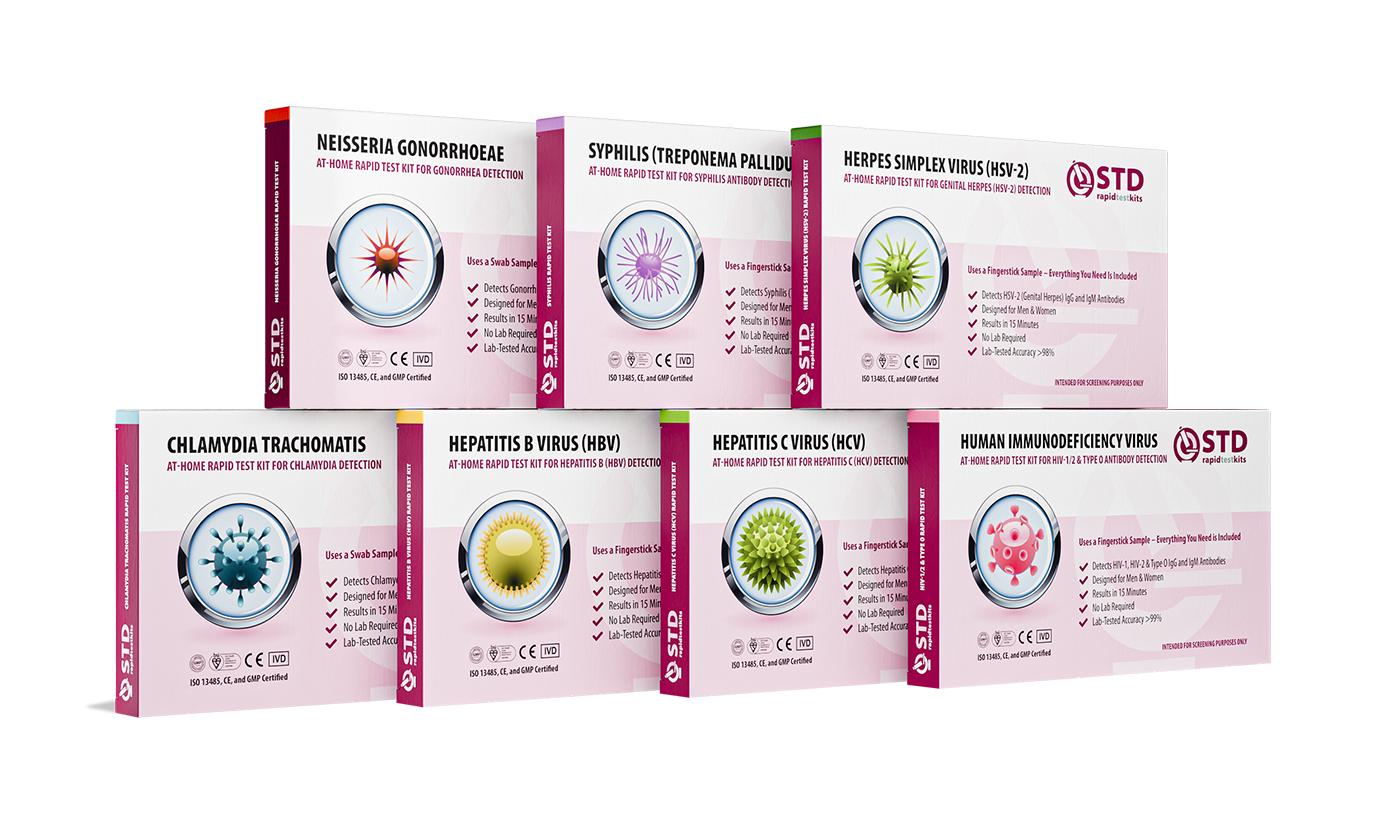
 For Men & Women
 Results in Minutes
 No Lab Needed
 Private & Discreet
Order Now $129.00 $343.00
For all 7 tests
The Cost Conversation No One Likes to Have
Money influences health decisions more than people admit. Some readers quietly Google “cheapest STD testing option” before anything else. Others worry about insurance explanations of benefits being mailed to their home.
At-home testing often has transparent pricing. You pay once. It ships discreetly. There are no surprise lab facility fees. Clinic testing, depending on insurance coverage, can range from free at public health departments to unexpectedly expensive at urgent care centers.
Let’s look at how the numbers often compare in real-world situations.
| Consideration | At-Home Testing | Clinic Testing |
|---|---|---|
| Upfront Cost | Flat kit price, typically $50–$200 depending on panel | Varies widely; may involve copays, lab fees, or be free at public clinics |
| Insurance Required | No | Sometimes, depending on provider |
| Time Investment | 5–20 minutes at home | Travel + wait time + appointment |
| Billing Privacy | Discreet packaging and direct purchase | Insurance statements may list services |
For college students on a parent’s insurance plan, billing privacy alone can influence the decision. For someone without insurance, knowing the exact cost upfront may feel empowering instead of stressful.
Accuracy: The Question Everyone Asks Out Loud
“Are home STD tests accurate?” It is usually the first skeptical thought. It deserves a real answer.
Accuracy depends on three things: the type of infection, the type of test, and the timing. Many mail-in at-home kits are processed in certified laboratories using the same NAAT methods used in clinics. Rapid tests can vary slightly in sensitivity compared to full laboratory processing, but they are designed to detect infections reliably when used after the appropriate window period.
Think of accuracy like a photograph. If you take it in bright daylight, you see everything clearly. If you take it too early, before enough light exists, details may not show yet. The test is not defective. The timing changes the clarity.
For asymptomatic screening two weeks after exposure, an at-home test is often a perfectly appropriate first step. For complex cases involving pelvic inflammatory symptoms, genital ulcers, or systemic illness, clinical evaluation remains critical.
Speed vs Certainty: What Do You Need Right Now?
Some people need answers fast. They are flying home to a partner in three days. They cannot sleep until they know. For them, a rapid at-home test offers psychological relief that matters. Even if confirmatory testing is later required, the immediate result reduces spiraling.
Others prioritize maximum lab certainty from the start. They would rather wait a few extra days and have a clinician interpret the results in person. That approach makes sense when anxiety is lower but medical complexity is higher.
This is not a competition between methods. It is a sequence decision. Many people begin with an at-home test for clarity and follow up at a clinic if anything comes back positive or unclear.
When At-Home Should Absolutely Come First
If you have no severe symptoms, it has been at least one to two weeks since exposure, and privacy is a priority, ordering a discreet at-home kit is often the smartest first move. It allows you to act immediately without waiting for appointment availability. It provides control at a moment that may feel out of control.
You can explore confidential testing options directly through STD Rapid Test Kits, where discreet combo panels check for the most common infections in one order. For many readers, that single step replaces days of uncertainty.
Peace of mind is not dramatic. It is practical. It is a package arriving in plain wrapping. It is a result that lets you breathe again.
When a Clinic Should Be Your First Call
If you are experiencing high fever, intense abdominal pain, genital sores that are rapidly spreading, testicular pain, or symptoms following sexual assault, skip the shipping window. Seek in-person care. Clinics can provide immediate physical exams, prescriptions, and additional testing beyond standard screening panels.
Everything changes when there is urgency. When pain is escalating or systemic symptoms appear, medical supervision is not optional. It is protective.
And here is the part people sometimes forget: choosing a clinic first is not admitting failure. It is responding appropriately to what your body is telling you.
People are also reading: Testing in Polyamory: How to Stay Safe Without Killing the Mood
So You Tested. Now What?
Let’s say the package arrived. You closed your bedroom door. You followed the instructions carefully, double-checking each step because suddenly you didn’t trust your own hands. Now you’re staring at a result.
If it’s negative, relief may hit fast and hard. Your shoulders drop. You exhale for the first time all week. But here’s the grounded part: ask yourself whether you tested inside the optimal window period. If it has been less than two weeks for infections like Chlamydia or Gonorrhea, or less than six weeks for Syphilis, retesting later may still be wise.
If it’s positive, pause. Most sexually transmitted infections are treatable. Some are manageable long term. A positive result is not a moral verdict. It is information. And information is power when you act on it quickly.
Positive at Home: Do You Still Need a Clinic?
This is where sequence matters again.
For bacterial infections such as Chlamydia or Gonorrhea, you will need antibiotics. Some at-home testing services include telehealth follow-up that can prescribe treatment. In other cases, you will bring your results to a clinic for confirmation and medication. That does not erase the value of testing at home first. It simply moves you to the next step.
For infections like HIV or Syphilis, confirmatory laboratory testing is standard medical practice. Rapid tests are strong screening tools, but confirmatory blood testing ensures accuracy before long-term treatment decisions are made.
Picture Riley sitting in their car after seeing a positive result. The first feeling is shock. The second is fear. The third is clarity: “Okay. Now I know.” That shift from unknown to known is why testing matters in the first place.
The Retesting Question That Keeps People Up at Night
Even after a negative test, some people spiral into calendar math. Was it 12 days or 13? Should I wait 30 more days? Did I test too soon?
Retesting depends on two main things: timing and ongoing risk. If you tested before the optimal window period, schedule a follow-up test at the recommended time. If you were treated for a bacterial infection, most guidelines suggest retesting after several weeks to ensure reinfection has not occurred, especially if partners were not treated simultaneously.
The key is structured follow-up, not obsessive testing. A plan calms anxiety. Random retesting fuels it.
The Privacy Layer Most People Don’t Talk About
For some readers, privacy is not a preference. It is protection. Small towns talk. Shared insurance plans generate mailed statements. Cultural stigma still exists, especially for LGBTQ+ individuals and young adults.
At-home STD testing removes the waiting room dynamic. It removes overheard names. It removes the anxiety of running into someone you know while holding a clipboard.
Clinics, however, provide something different: direct physical evaluation. If your symptoms are severe or complicated, that oversight matters more than discretion.
The real decision is not which method is superior. It is which layer of safety you need first: medical immediacy or privacy control.
Check Your STD Status in Minutes
Test at Home with Remedium8-in-1 STD Test Kit
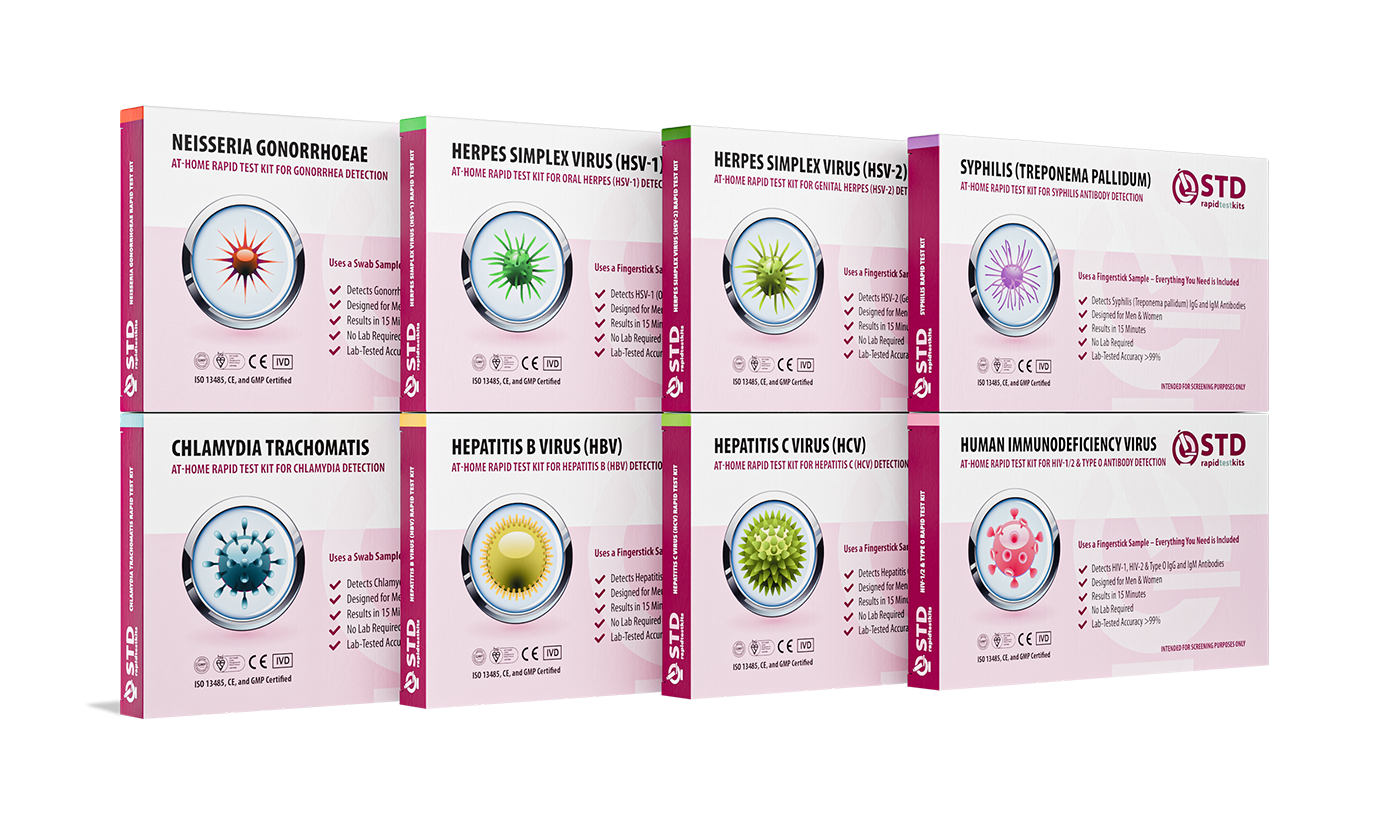 For Men & WomenResults in MinutesNo Lab NeededPrivate & Discreet
Order Now $149.00 $392.00
For all 8 tests
The Smartest Strategy Isn’t Either/Or. It’s First/Next.
People often think they must commit to one path. In reality, many testing journeys look like this: order a discreet combo STD test kit, get results quickly, then follow up with a clinic if necessary. It is a sequence. Not a rivalry.
If you are asymptomatic and past the window period, starting with a comprehensive at-home combo panel is a proactive move. If results are negative and timing was appropriate, you move forward confidently. If positive, you bring documentation to a healthcare provider for treatment.
You can explore comprehensive testing panels designed for privacy and clarity at STD Rapid Test Kits. For many people, that first step replaces uncertainty with action.
Before You Decide, Ask Yourself These Three Quiet Questions
First, do I have severe or escalating symptoms? If yes, seek clinical care immediately.
Second, am I within the reliable testing window for the infection I’m worried about? If yes, at-home testing can be an effective first move.
Third, what matters most right now: speed, privacy, or immediate medical supervision? Your answer reveals the path.
No one earns extra credit for suffering in silence. No one wins by waiting longer than necessary. Testing is not dramatic. It is responsible. It is protective. It is something adults do when they care about themselves and the people they sleep with.
FAQs
1. Are at-home STD tests actually reliable, or am I just buying peace of mind?
Fair question. You’re not paying for a placebo. Many at-home tests, especially mail-in kits, use the same laboratory methods clinics rely on, particularly for infections like Chlamydia and Gonorrhea. The catch isn’t quality. It’s timing. If you test too early, even the best test can’t detect what your body hasn’t produced yet. Think of it like trying to read a text that hasn’t been sent. When used after the proper window period, these tests are legitimate tools, not gimmicks.
2. If I test positive at home, do I have to deal with this on my own?
Absolutely not. A positive result is a starting line, not a dead end. Most bacterial infections are treatable with straightforward antibiotics. Many at-home services connect you to telehealth providers, or you can take your result to a clinic for confirmation and prescriptions. You’re not “on your own.” You’re just informed sooner.
3. Is clinic testing more accurate just because it’s in a medical building?
The building doesn’t make it better. The method does. Clinics often use laboratory-based NAAT or blood testing, which are highly sensitive. But many at-home mail-in kits use the same lab methods. The real difference is immediate medical oversight. If you have severe symptoms, a clinician can examine you on the spot. That’s the advantage, not magical test superiority.
4. I tested negative but still feel anxious. Should I test again?
Maybe. Let’s slow it down. When did the exposure happen? If you tested within the window period, schedule a follow-up test at the recommended time. If you tested at the right time and symptoms persist, a clinic visit makes sense. But if the anxiety is louder than the science, sometimes the next step isn’t another test, it’s reassurance grounded in timing facts.
5. What if I don’t have symptoms? Is testing even necessary?
Here’s the uncomfortable truth: many STDs are silent. No discharge. No rash. No burning. Just existing quietly. That’s why routine screening matters, especially after a new partner. Waiting for symptoms is like waiting for smoke before checking if the stove is on. Responsible doesn’t mean paranoid. It means proactive.
6. Is it weird to order a combo STD test kit instead of just one test?
Not weird. Smart. Most exposures aren’t neatly labeled. You rarely know exactly what you were exposed to, if anything. A combo panel checks multiple common infections at once, which often saves time and prevents repeat testing. It’s like casting a wider net instead of guessing which fish might be in the water.
7. Can I skip the clinic completely if everything is negative?
If you tested after the proper window period and you feel fine, often yes. That’s the beauty of modern screening. However, if symptoms develop later or you continue having new exposures, retesting becomes part of responsible sexual health. It’s not about perfection. It’s about staying current.
8. I’m embarrassed to go to a clinic. Does that make me irresponsible?
No. It makes you human. Clinics can feel intimidating. Small towns talk. Insurance statements show up in mailboxes. Choosing at-home testing for privacy is not avoidance, it’s strategy. What would be irresponsible is ignoring the situation entirely. Testing, in any form, is an act of care.
9. How fast do I really need to act?
Faster than avoidance, slower than panic. If you have severe pain, fever, or rapidly worsening symptoms, act immediately and seek in-person care. If you’re asymptomatic and within the recommended testing window, ordering a kit tonight is reasonable. The goal isn’t drama. It’s momentum.
10. What’s the healthiest mindset to have about STD testing?
Think of it like dental cleanings. Routine. Responsible. Sometimes inconvenient. Rarely catastrophic. Testing isn’t a confession. It’s maintenance. It says, “I care about myself and the people I sleep with.” That’s not shameful. That’s grown.
You Deserve Clarity, Not Guesswork
Choosing between clinic and at-home STD testing is not about picking the “best” option in a vacuum. It is about responding to your specific situation with clarity and intention. Sometimes that means walking into a clinic. Sometimes it means ordering a discreet kit tonight and reclaiming your sleep.
Whatever you choose, choose action. If privacy and speed matter most, you can order a confidential combo test kit directly through STD Rapid Test Kits and take control of your next step from home.
How We Sourced This Article: This guide blends current clinical guidance from leading public health authorities with peer-reviewed infectious disease research and real-world patient experience reporting. We reviewed laboratory accuracy data, window period timelines, and national screening recommendations to ensure the comparison between clinic and at-home STD testing reflects current medical standards.
Sources
1. Centers for Disease Control and Prevention – STD Treatment Guidelines
2. CDC – STD Screening Recommendations
3. World Health Organization – Sexually Transmitted Infections Fact Sheet
4. Mayo Clinic – STD Testing Overview
5. Planned Parenthood – Getting Tested for STDs
About the Author
Dr. F. David, MD is a board-certified expert in infectious diseases who works to stop, diagnose, and treat sexually transmitted infections. He has a direct, stigma-free way of talking to patients that helps them make clear and confident decisions about testing.
Reviewed by: A. Martinez, MSN, FNP-BC | Last medically reviewed: March 2026
This article's goal is to inform you, not to offer medical advice.


