







Quick Answer: Most STDs can be detected accurately 14 days after exposure. Testing earlier is possible but may require a retest to confirm results.
Who This Guide Is For (And Why It Matters)
Maybe you’re traveling. Maybe you’re in a college dorm, too embarrassed to go to campus health. Maybe you’re lying in bed next to someone whose name you’re not sure you ever got. Or maybe you’re alone, phone at 1%, Googling whether burning while peeing could be from dehydration or something much more complicated.
This guide is for you, especially if you don’t remember everything. Especially if you feel like your experience might not “count.” Especially if part of you is worried it wasn’t fully consensual, or if you said yes but now feel unsure. Testing isn't about punishment. It’s about information. It’s about protecting yourself, your future partners, and your peace of mind.
We’ll walk through exactly what qualifies as an STD test, how soon to take one, how long results take, and how to protect your privacy while doing it. Whether you're off-grid, urban, in a new relationship, or figuring things out post-party, testing is care, not confession.
What Actually Counts as an STD Test?
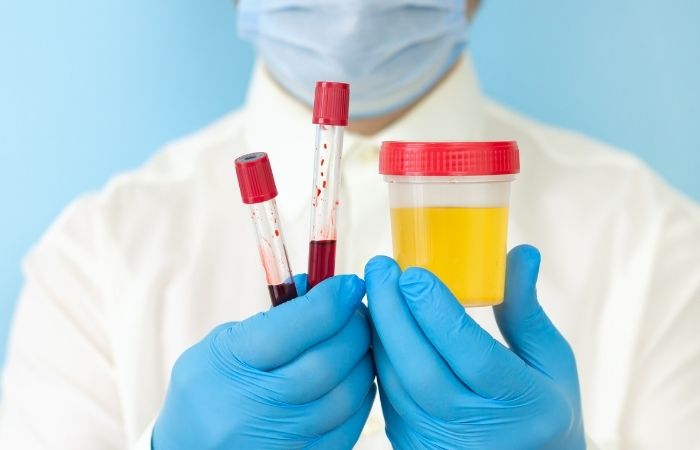
Let’s demystify the basics. An STD test isn’t just one test, it’s often a panel. That panel might include chlamydia, gonorrhea, syphilis, HIV, herpes, trichomoniasis, and hepatitis B/C, depending on what kind of test you choose and where you take it. Different STDs require different samples: some need urine, others need a swab, and some need blood.
At a clinic, you'll often get a NAAT (nucleic acid amplification test) for infections like chlamydia or gonorrhea. These are extremely accurate and usually done via urine or vaginal/cervical swabs. Blood tests are used for HIV, syphilis, and hepatitis. Rapid tests are also available, they use fingerstick blood or oral fluid to give results in minutes, often with a line (like a pregnancy test). Some herpes tests detect antibodies, while others detect viral DNA, but very few are routine unless requested.
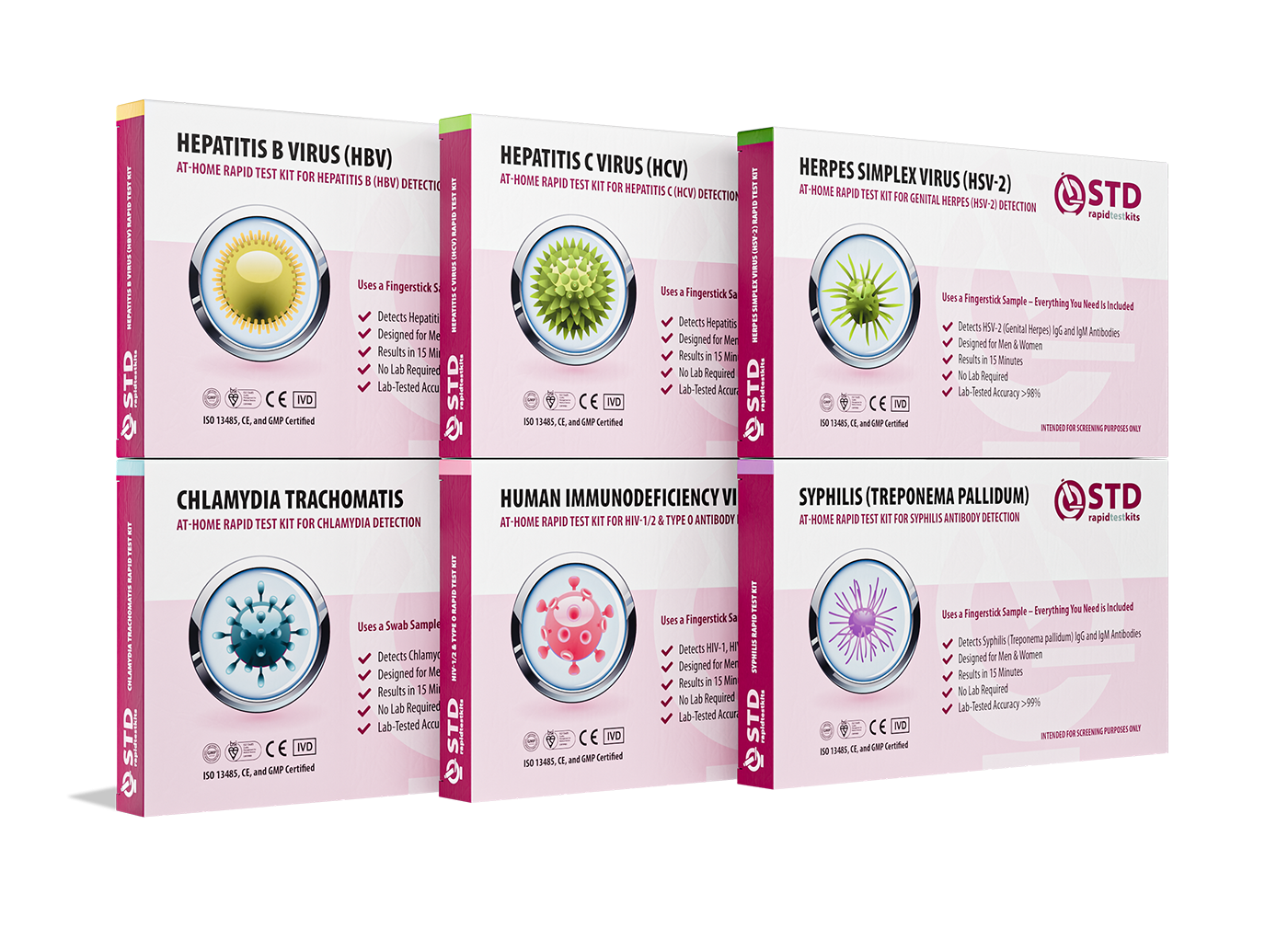
At-home tests come in two types: rapid lateral flow kits, which you use and read yourself (often with results in 10–15 minutes), and mail-in lab kits, where you collect a sample and ship it to a certified lab. Both are legal, accurate, and discreet. You can start with something simple like the Combo STD Home Test Kit, which covers multiple infections in one box, no clinic required.
Not every test checks for everything. Most "routine" panels don’t test for herpes unless requested. Some don’t include trichomoniasis. That’s why clarity matters, especially when the memory doesn’t.
Need privacy? You can start here: STD Rapid Test Kits
People are also reading: Can Chlamydia Damage Your Fertility, Even After It’s Gone?
Window Periods: How Soon Is Too Soon?
This is where most people trip up. You wake up panicking and want to test immediately, but your body may not have built up enough of an infection to detect yet. The window period is the time between exposure and when a test can reliably detect the infection. Testing too early may give you a false negative and a false sense of security.
Below is a general guide, but remember: everyone’s body is different, and test types matter. According to the CDC, most infections will show up clearly within 14 days, but some take longer, especially HIV and syphilis.
| STD | Common Test Type | Sample | Window Period | When Accuracy Peaks |
|---|---|---|---|---|
| Chlamydia | NAAT/PCR | Urine or swab | 7–14 days | 14+ days |
| Gonorrhea | NAAT/PCR | Urine or swab | 7–14 days | 14+ days |
| Syphilis | Antibody (RPR/VDRL) | Blood | 3–6 weeks | 6–12 weeks |
| HIV | Ag/Ab Combo or NAAT | Blood or oral fluid | 10–33 days | 6+ weeks |
| Trichomoniasis | NAAT or Rapid Antigen | Urine or swab | 5–28 days | 2–4 weeks |
Figure 1. Window periods and test accuracy based on common infections.
If you test too early and get a negative result, don’t toss the box and move on. Retesting at the right time gives you the clarity you deserve.
Check Your STD Status in Minutes
Test at Home with Remedium6-in-1 STD Test Kit
 For Men & Women
 Results in Minutes
 No Lab Needed
 Private & Discreet
Order Now $119.00 $294.00
For all 6 tests
Rapid Test or Lab? What to Pick When You’re Panicking
Let’s say it’s Sunday. You’re back from a music festival, your crotch is irritated, and your anxiety is doing laps. You don’t want to wait until a clinic opens. You don’t even want to leave your room. The idea of explaining your situation to a nurse, when you’re not even sure what happened, feels unbearable. That’s where at-home rapid tests can be a lifeline.
But not all testing methods are the same. Each option comes with its own strengths, and trade-offs. When you’re panicked, knowing what each test can (and can’t) tell you helps prevent more confusion.
| Method | Privacy | Speed | Accuracy | Best When… |
|---|---|---|---|---|
| At-Home Rapid Test | Very High | 10–15 minutes | Moderate–High | You need fast reassurance and can follow instructions |
| Mail-In Lab Kit | High | 2–5 days after mailing | High | You want clinic-level accuracy without leaving home |
| Clinic Visit | Moderate | Same-day to 1 week | Very High | You have symptoms or need in-person care |
Figure 2. Comparing STD testing methods across privacy, speed, and reliability.
At-home kits are especially helpful when you’re scared, ashamed, or just not ready to explain everything. Rapid kits don’t give lab-level sensitivity for every infection, but for chlamydia, gonorrhea, and syphilis, many are highly reliable. They offer a powerful first step: a private result you can interpret in minutes.
Do I Even Need to Test? Exposure Scenarios That Still Count
Sometimes the scariest thing is not knowing whether something even “counts” as sex. Here’s the hard truth: STDs don’t care how clearly you remember. They don’t require orgasm, penetration, or even memory. All they need is exposure, skin, fluid, or blood. If that happened, you could be at risk.
Scene 1: You wake up in a stranger’s apartment. You’re fully clothed. But your underwear is missing. You don’t remember sex. You don’t feel sore. But your stomach won’t stop churning. In this case, testing is still valid. Even if you’re unsure, peace of mind is worth it.
Scene 2: You made out at a party. No sex. Just kissing, hands, maybe oral. You didn’t see a condom get used. Two days later, you notice a bump. It might be a pimple. It might not be. Again: testing is a smart move. Herpes, HPV, and syphilis can spread through oral-genital contact, even when the giver has no visible symptoms.
Scene 3: You remember sex. You’re sure a condom was used. But it broke, or slipped. Or maybe you pulled out and realized it was gone. That definitely counts as exposure. Most tests recommend waiting 14 days for accuracy. But if you’re spiraling, an early rapid test followed by a retest can give you peace of mind.
Here’s what matters more than certainty: intuition. If you feel like something’s off, or like your memory has holes, it’s okay to act on that. You’re allowed to seek care without having a complete story.
If your head keeps spinning, peace of mind is one test away. Order a discreet combo kit that checks for the most common infections in minutes.
People are also reading: No One Told Me Sex Would Feel Different at 50, Or That It Came with These Risks
Should You Retest? Maybe, and Here’s Why
You tested negative five days after the hookup. You felt a little better. Then day fifteen hits, and suddenly you’ve got discharge and a dull ache that won’t quit. That’s when the anxiety rushes back: “Was I too early? Did I miss something?”
Here’s the truth: some infections can be missed on early tests. That doesn’t mean the test was wrong, it means your body hadn’t produced enough of the virus or bacteria to be detected yet. That’s why many experts recommend a retest 14 to 21 days after the possible exposure, especially if you tested very early.
Now let’s say you did test positive. You took antibiotics for chlamydia or gonorrhea, and you’re wondering whether it worked. Retesting too soon after treatment can pick up dead genetic material from the infection, leading to a “false positive.” Most guidelines recommend waiting at least three weeks post-treatment before retesting, unless symptoms persist.
Another reason to retest? Ongoing exposure. Maybe you didn’t stop sleeping with your partner. Maybe you hooked up with someone new before you got your results. In that case, waiting another 30 to 45 days to check again is often wise, just to be safe, just to be sure.
Still unsure what to do next? You can return to the STD Rapid Test Kits homepage to explore retesting options without leaving home.
Discreet Testing, Shipping, and Privacy in Real Life
You’re not alone if the word “STD test” makes your stomach drop, not because of the result, but because you don’t want your name on a label or a box arriving that screams “I’m worried I got something.” The good news? Discreet shipping is real, and it works.
Tests from STD Rapid Test Kits arrive in plain, unbranded packaging. There’s no logo. No bold letters. No neon “STD ALERT!” on the shipping label. Just a regular-looking box, tucked into your mailbox or parcel locker like anything else. Inside, you’ll find individually sealed components, sterile tools, and clear instructions. Nothing feels clinical. Nothing feels exposed.
Shipping times vary by region, but most customers in the U.S. receive their test kits within 2–4 business days. If you’re traveling or living remotely, plan ahead, especially if you're waiting for a window period to pass. Some users have them shipped to P.O. boxes. Others to their office. Some wait until a roommate’s out of town. You’re allowed to be strategic. Privacy doesn’t make you secretive, it makes you smart.
Worried about what happens to your data? These kits don’t require you to upload ID or register your name unless you’re opting for mail-in lab analysis. And even then, results are sent privately via encrypted systems, not to your family email or your insurance dashboard.
Check Your STD Status in Minutes
Test at Home with Remedium7-in-1 STD Test Kit
 For Men & WomenResults in MinutesNo Lab NeededPrivate & Discreet
Order Now $129.00 $343.00
For all 7 tests
If You Test Positive: What to Know Before You Spiral
Your hands are shaking. The line is faint, but it’s there. You check the instructions again. Then again. Then you start to cry, and not because it hurts, but because you have no idea what comes next.
First, breathe. A positive test is not a sentence. It’s a signal. Most STDs are treatable, many with a single round of antibiotics. Others, like herpes or HIV, are manageable with daily meds and regular care. A positive test doesn’t mean you’re “dirty.” It means your immune system had a visitor, and now you’re taking steps to show it the door.
If you used an at-home test, the next step might be confirmatory testing at a clinic, especially for infections like HIV or syphilis, where a second test can confirm results. You don’t need to tell the whole story. You don’t even have to give your real name at some clinics. What matters is that you’re taking care of yourself.
Partner notification feels scary. But it doesn’t have to be humiliating. Some services offer anonymous texting or email notifications. Others let you call with support from a nurse or public health worker. One user described sitting in their car, holding their phone, texting their last partner: “Hey, I tested positive for chlamydia. You might want to get checked too. No pressure, just wanted you to know.” They said it was the hardest sentence they’ve ever sent, and the most liberating.
If you’re ready to help someone else take the same step, you can send them a discreet test kit or suggest they order their own. Testing isn’t just a solo act. It’s community care.
FAQs
1. Can you really get an STD if you don’t remember having sex?
Yep. Unfortunately, STDs don’t care whether you remember what happened. They don’t need penetration or even what most people would call “sex.” Skin contact, oral stuff, or just someone’s fluids getting into the wrong place? That can be enough. If there’s a question mark, there’s a reason to test, no memory required.
2. I feel fine. No burning, no bumps, do I really need to test?
Here’s the wild part: most people with STDs feel totally normal at first. Like, “not even a tingle” normal. Especially with things like chlamydia or trich, symptoms can be mild or just... not there at all. So yes, if something happened, or maybe happened, it’s worth testing. Silence doesn’t mean safety.
3. How long do I actually have to wait to get tested?
We get it, you want answers now. But testing too early can give you a false negative and false peace of mind. For most STDs, 14 days is the sweet spot. That’s when your body has had time to show something if there’s something to show. If you’re spiraling now, early testing is okay, as long as you plan to retest later.
4. Can I use a home test even if I’m on my period?
Totally depends on the test. If it’s a blood-based fingerstick or a cheek swab, you’re good. But if it’s a vaginal swab or urine test, it’s usually best to wait until bleeding stops. You want the sample to be as clean and undiluted as possible. A little planning goes a long way with these things.
5. I took antibiotics for something else, does that mess up my results?
Kind of. Some antibiotics can partially clear bacterial STDs like gonorrhea or chlamydia even if that wasn’t what you were being treated for. That could delay detection or give you a false sense that things are fine. Bottom line: if you were exposed, test anyway. Mention any meds you took when you talk to a provider, if you end up doing that.
6. My partner says they tested negative. Does that mean I’m safe?
Not necessarily. If they tested too early, or used a test with a longer window period, their result might’ve missed the infection. Or, bluntly: they could be lying. (We hate that this needs to be said, but you’re here for honesty, not sugarcoating.) Trust, but test. Your body = your call.
7. What if I blacked out and I’m not even sure what happened?
You still deserve answers. And support. Even if you’re not sure there was sex, or whether you were able to consent, getting tested can give you back a piece of control. Some people wait. Some test right away. Either way is valid. Testing doesn’t mean you’re accusing anyone, it just means you’re taking care of yourself.
8. Should I test again if I already got treated?
Yes, usually. Especially if symptoms come back, or if you think you might’ve been re-exposed. For bacterial infections, like syphilis or chlamydia, a 3-week follow-up is smart. For viral ones, like herpes or HIV, you may need longer-term testing plans. Think of it like brushing your teeth, you don’t do it once and call it a lifetime of hygiene.
9. Will my name be on anything if I use a home test?
Not unless you want it to be. Most at-home rapid tests don’t require registration or ID. If you use a lab test that gets shipped back for analysis, then yes, your name may be attached. But results are delivered privately, never to your employer, family, or inbox unless you say so. And shipping? Totally discreet. No one will know what’s in that box unless you tell them.
10. Is it dumb to test if I don’t even know what I’m testing for?
Nope. It’s smart. It’s proactive. And it’s actually one of the most common reasons people test: “I just want to know if I’m okay.” You don’t have to have the whole story. You just have to care enough to check. That’s not dumb, that’s badass.
You Deserve Answers, Not Assumptions
You don’t have to know exactly what happened to know your health matters. You don’t need a memory to deserve clarity. Whether you’re scared, confused, angry, or just need to stop guessing, STD testing can be an act of relief, not regret.
Don't put off getting the clarity you need. This discreet and quick at-home combo test kit checks for the most common STDs.
How We Sourced This Article: We combined current guidance from leading medical organizations with peer-reviewed research and lived-experience reporting to make this guide practical, compassionate, and accurate.
Sources
1. CDC STD Treatment Guidelines
2. Mayo Clinic – STD Symptoms and Testing
4. CDC's Recommendations and Things to Think About for STI Testing
5. NIH: Sexually Transmitted Infections Treatment Guidelines, 2021 (Full Text)
6. What Kind of STD Testing Is Right for You? | Mayo Clinic
7. WHO: STI Testing and Diagnostics
8. Which STI Tests Should I Get? | CDC
9. Get Tested for STIs | American Sexual Health Association
About the Author
Dr. F. David, MD is a board-certified infectious disease specialist focused on STI prevention, diagnosis, and treatment. He blends clinical precision with a no-nonsense, sex-positive approach and is committed to expanding access for readers in both urban and off-grid settings.
Reviewed by: M. Kelly, RN, MPH | Last medically reviewed: February 2026
This article is for informational purposes and does not replace medical advice.


