







Quick Answer: Yes, you can get an STD in a monogamous marriage. Some infections lay dormant for years or were never detected before marriage. Regular testing is essential even in long-term, exclusive relationships.
“But We’ve Been Together for Years”: Why This Guide Matters
If you’re here, maybe something’s already happened. A test. A symptom. A question you can’t shake. Or maybe you’re the partner who just heard, “I need to talk to you.” Either way, this guide is for people who are trying to make sense of something that isn’t supposed to happen. People who thought commitment meant protection. People who feel blindsided, scared, confused, or worse, ashamed.
Marriage doesn’t come with an STD exemption. This isn’t about blame. It’s about biology, gaps in routine screening, dormant infections, and the kind of silence that spreads faster than any bacteria. This guide will walk you through what infections can lie low, how long STDs can stay hidden, what to do if one shows up, and why testing is an act of love, not accusation. If your stomach’s in knots or your world just cracked open, keep reading. You are not alone.
The Dormant STD Problem: It Was There Before the Wedding
Here’s what most people don’t realize: some STDs can stay in your body for years without a single symptom. They can be caught from one partner, show no signs, and then show up years later, long after wedding vows and monogamy began. That’s not betrayal. That’s virology.
Herpes is a perfect example. You can get it, never have a visible outbreak, and pass it to your partner without knowing. HPV? It can sit in cervical cells for years before abnormal changes appear. Even chlamydia and gonorrhea can linger silently, especially in people without penises, causing long-term damage while showing no signs at all.
What this means is: just because an STD shows up during marriage doesn’t mean it started there. Sometimes the infection is older than the relationship. That doesn’t make it any easier to explain, but it does make testing important, even when everyone’s been “faithful.”
| STD | Can It Be Dormant? | How Long? | Commonly Symptom-Free? |
|---|---|---|---|
| Herpes (HSV-1 & HSV-2) | Yes | For life | Yes (especially HSV-1) |
| HPV | Yes | Months to years | Yes |
| Chlamydia | Yes | Months to years untreated | Often |
| Gonorrhea | Rarely | Weeks to months | Sometimes |
| Syphilis | Yes (latent stage) | Decades if untreated | Yes (in latent phase) |
Figure 1: Dormancy and asymptomatic periods vary by STD. This is why testing, even years after your last partner, is sometimes necessary.

People are also reading: How to Talk to Your Therapist About an STD (Without the Shame)
No Symptoms Doesn’t Mean No Infection
Ask around and you’ll hear it: “But I would’ve known.” That’s the trap. Many STDs are completely symptomless, until they’re not. They sit quietly while you go about your life, have children, age into comfort. Then one day, a pap smear flags something. A new partner tests positive. Or you develop pelvic pain or a urethral itch you can’t ignore.
Take Jake and Melissa. Married eight years. No known outside partners. No symptoms. Then Jake had a routine blood panel that included an HIV test. Positive. Melissa tested too, also positive. After reeling, blaming, crying, it turned out he had likely contracted HIV from a single encounter six months before they met. Neither had tested before marriage.
This is why public health experts recommend screening even for people in long-term relationships, especially if testing was skipped in the early days or monogamy wasn’t immediate. Knowing your status isn’t about distrust. It’s about protecting your future together.
What Testing Usually Misses: The “Before Us” Problem
Many couples assume they’re safe because neither had symptoms, or because they were “careful” in the past. But careful doesn’t always mean clean. Condoms reduce risk but aren’t perfect. Not all tests are routinely offered. And not everyone gets a full panel. A classic missed scenario? The person who got a pap smear and thought they were “tested for everything.” Spoiler: that’s not how it works.
Full STD screening requires specific tests for each infection. Clinics often skip HSV entirely unless there are symptoms. Many routine blood draws don’t include HIV unless requested. And oral or rectal swabs for chlamydia or gonorrhea? Usually not done unless you ask. That means some couples start marriage without ever actually knowing their baseline.
If your partner had a previous partner who never disclosed symptoms, or if you did, then an infection could have silently entered the relationship before it officially began. This isn’t rare. It’s common. It’s human. And it’s exactly why testing after marriage isn’t a betrayal. It’s hygiene.
STD Rapid Test Kits offers at-home options that let you both get tested without awkward clinics or paperwork trails. Whether it’s for peace of mind or post-scare clarity, you can order a discreet combo kit here.
The Shock of Testing Positive “After Nothing Happened”
Janelle had been married for twelve years when she went in for a postpartum checkup. She’d just had her third child. Exhausted, leaking milk, still wearing mesh underwear. When the nurse practitioner told her she tested positive for trichomoniasis, she froze. “That’s…an STD, right?” she asked, unsure if she’d misheard. Her husband hadn’t cheated. She hadn’t. So how?
After hours of crying, Googling, and confronting her partner, they learned that trich can live in the body undetected, especially in people with penises, for months, even years. He had never been tested for it. Neither had she. It was likely there before their first child.
Most people expect STDs to arrive with betrayal. A hookup. A secret. But often the origin is older, foggier, wrapped up in trust that was always misplaced, not because someone lied, but because no one had ever tested.
Check Your STD Status in Minutes
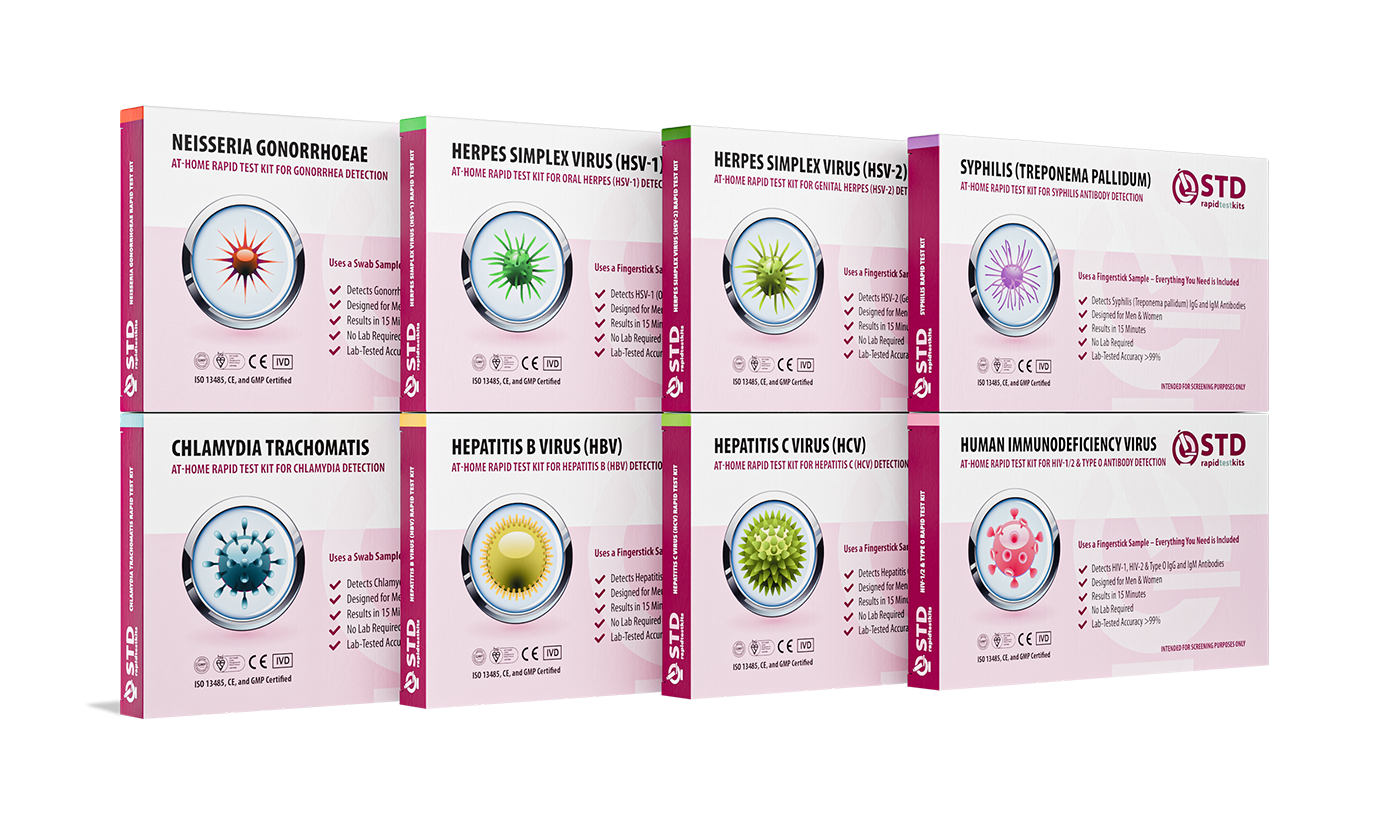
Test at Home with Remedium8-in-1 STD Test Kit
 For Men & Women
 Results in Minutes
 No Lab Needed
 Private & Discreet
Order Now $149.00 $392.00
For all 8 tests
Cheating, Trust, and Testing: It's Complicated
Let’s say it straight: yes, sometimes a positive STD result means someone cheated. And yes, that deserves its own emotional and logistical response. But assuming that’s always the case does harm. It can push people into silence. Or worse, prevent someone from disclosing a mistake out of fear that honesty will destroy everything.
More often than you’d think, people test positive for an STD with zero current infidelity. The source is a one-night stand from 2015. An untested partner from college. An old cold sore mistaken for stress. And the window from infection to detection can be surprisingly long. Some STDs can lay dormant. Others don’t show on tests right away. Timing matters, and that’s where many couples get confused.
Look at syphilis. It can infect someone, disappear for months, and resurface with bloodwork years later. HIV may take up to 45 days to reliably show up on a standard test. HPV? It can exist in your body for over a decade without symptoms or detection.
This is why STDs don’t always follow the logic of betrayal. The real question isn’t just “Who cheated?” It’s “What didn’t we know?”
Window Periods for Married Couples: Timing Is Everything
If you’re married and worried about an STD, when you test matters. The “window period” is the time between when someone is infected and when a test can detect it. Testing too early after a possible exposure, whether it’s a suspected cheating incident or a long-past partner, can lead to false negatives.
Let’s say you found out your partner had a one-time slip-up at a bachelor party two weeks ago. Or maybe you just learned their ex tested positive years after they split. Either way, knowing when to test (and when to retest) is crucial for clarity, and for your peace of mind.
| Infection | Earliest Reliable Test Date | Best Time to Test | Retest Recommended? |
|---|---|---|---|
| Chlamydia | 7 days after exposure | 14 days after exposure | Yes, if tested early |
| Gonorrhea | 5–7 days | 10–14 days | Yes, if symptoms appear later |
| HIV (Ag/Ab Combo) | 18–45 days | 4–12 weeks | Yes, at 3 months |
| Syphilis | 3 weeks | 6–12 weeks | Yes, if exposure was recent |
| Trichomoniasis | 5–10 days | 2–4 weeks | Sometimes |
| HPV | Not routinely screened in men | Often detected via pap smear | No test for clearance in men |
Figure 2: These testing windows reflect general consensus from CDC and WHO guidance but may vary based on test type. Retesting ensures accuracy if symptoms persist or if testing occurred early.
If you're not sure where to begin, a combo at-home STD kit can help cover the most common infections in one go, discreetly, quickly, and without judgment. If your head keeps spinning, peace of mind is one test away. Try a combo test kit here.
“We Both Tested Negative Before Marriage. So What Happened?”
First, if you actually did a full panel right before the wedding, congrats, you’re ahead of most people. But even then, timing matters. If you or your partner tested within days or weeks of a previous encounter, some infections may not have shown up yet. False negatives can happen if you test too early in the window period.
Second, many people believe they were tested “for everything,” but weren’t. Most STI panels don’t include herpes unless specifically requested. Many clinics won’t test for trichomoniasis or HPV in men. Unless you had a candid talk with your provider and asked for every relevant test (blood + swab + urine), you probably didn’t cover all your bases.
Third, infections can be transmitted non-sexually, rarely, but it happens. Shared razors, non-sterile tattoo equipment, or even vertical transmission (from mother to baby) can occasionally introduce infections that later show up in adult screening. These are not common, but they complicate assumptions about when and how STDs enter the picture.
So if you’re sitting on a test result wondering who messed up or who lied, you may want to consider the third option: nobody did. Biology just kept the secret longer than either of you expected.
How to Talk About STD Testing in Your Marriage Without It Blowing Up
“Hey, I think we should both get tested.” It sounds simple in your head. But the second it leaves your lips, the air changes. Maybe your partner stiffens. Maybe they laugh it off. Maybe they say, “Why? What did you do?”
Bringing up STD testing in a long-term relationship, especially one that’s supposed to be monogamous, feels like stepping on a minefield. But it doesn’t have to be an accusation. It can be a check-in. A tune-up. A quiet promise to protect each other, even from the past.
When you start the conversation, lead with health, not suspicion. Try: “We’ve never really done a full panel, and I’ve been reading that a lot of things don’t show up unless you ask. I just want us to be sure.” Or: “I read this story about someone who had HPV from years ago and didn’t know, maybe we should both test, just to be safe.”
If you’ve already tested positive and need to tell your partner, breathe. You’re not alone. You’re not broken. And how you share the news will shape how they respond. Be clear, be calm, and focus on the facts. Let them ask questions. Then, get tested together.
If that conversation feels too heavy to have face-to-face, consider using anonymous partner notification tools like TellYourPartner.org. They're discreet, medically backed, and built for exactly this.

People are also reading: Can’t Reach a Clinic? Here’s the Best At‑Home STD Test for Hawaii Residents
Retesting, Reinfection, and Reality Checks
Let’s say you got treated for an STD during marriage. That’s step one. But what happens next matters just as much. If your partner wasn’t treated at the same time, or if either of you resumed sex before finishing meds, you could pass it back and forth like a ping-pong ball.
This is frustrating. It's also common. Reinfection doesn’t mean cheating. It usually means mis-timing treatment or skipping a test. For many bacterial STDs, like chlamydia, gonorrhea, or trich, both partners need to be treated simultaneously. Otherwise, it just comes back.
After treatment, wait at least 3 weeks before retesting. For HIV or syphilis, a 3-month follow-up is standard. And if you’re not sure you finished the antibiotics properly or had unprotected sex before your partner was cleared, yes, test again. Better an awkward second test than a lingering infection.
If you’re cycling through symptoms, blame, and confusion, pause. It’s not always about betrayal. It’s often about timing, biology, and communication breakdowns. And sometimes, the cure is a shared test result and a plan moving forward, not a divorce lawyer.
Take control of what happens next. Return to STD Rapid Test Kits to explore your options. Privacy, clarity, and action, all in one place.
Privacy, Discreet Testing, and When You Just Need Answers
If you’re scared your partner will see the shipping label. If you’re worried about someone finding the test box in your drawer. If you live in a small town and the nearest clinic receptionist is also your neighbor, breathe. We get it. You are exactly who these kits were designed for.
At-home STD test kits ship in unmarked packaging. There’s no mention of STDs on the box. You can track delivery, stash the kit in a backpack or medicine cabinet, and test in the bathroom while your partner watches Netflix. Some tests take 15 minutes. Others you mail back. Either way, the results come directly to you. No waiting rooms. No judgment.
This is about giving you control in a moment when everything feels uncertain. It’s about getting information without triggering a fight, outing yourself to a nosy pharmacist, or panicking alone. Because sometimes peace of mind means knowing before you ask the hard questions. Or before you answer them.
Whatever happened, or didn’t, you deserve to know. Your marriage deserves honesty, yes, but it also deserves clarity. And sometimes that clarity starts with a discreet test kit, a locked bathroom door, and a deep breath.
Check Your STD Status in Minutes
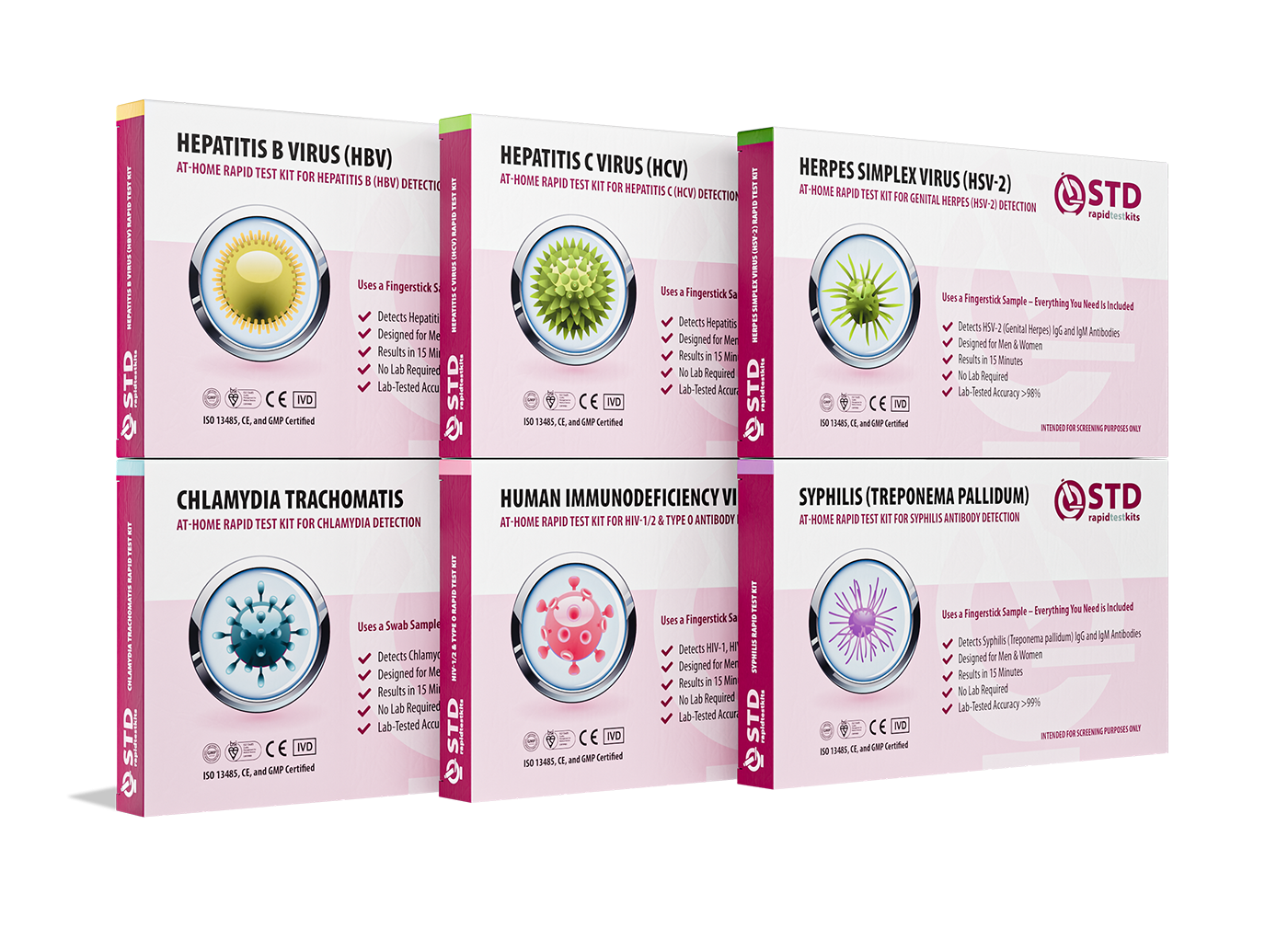
Test at Home with Remedium6-in-1 STD Test Kit
 For Men & WomenResults in MinutesNo Lab NeededPrivate & Discreet
Order Now $119.00 $294.00
For all 6 tests
Testing Positive in Marriage: Now What?
Let’s say the result is positive. That little line appeared. The email came in. The lab confirmed it. Now what?
First, know this: most STDs are treatable. Some are curable. All are manageable. You are not dirty. You are not alone. Millions of people get treated for STDs every year, including married people. Including people who didn’t cheat.
Second, don’t spiral. Make a plan. If it’s bacterial, chlamydia, gonorrhea, trich, syphilis, you’ll likely need antibiotics. For herpes or HIV, treatment is longer-term but extremely effective. Schedule a follow-up test. Talk to a provider. And if possible, loop your partner in. Because you’ll need to coordinate care to prevent reinfection.
And third: protect your mental health. Being diagnosed with an STD can feel like a moral indictment. It’s not. It’s a medical condition. Reach out to a therapist, a support group, or even a Reddit thread. Say it out loud. Let yourself grieve the shock. Then get back to building whatever comes next, together or separately.
If you're ready to start somewhere, start with information. This combo test kit checks for common infections quickly and discreetly. It won’t solve everything, but it will help you begin.
FAQs
1. Wait… how can someone get an STD without cheating?
It happens more than you think. Some STDs can stay hidden for years, literally years, without symptoms. Herpes and HPV are the sneakiest, but even chlamydia can chill quietly for months. If neither partner was fully tested before the relationship started, it’s possible something’s just been there the whole time. Silent doesn’t mean safe.
2. We both tested “clean” before marriage. So why am I testing positive now?
Let’s unpack “clean.” A lot of people get partial testing, maybe just HIV and syphilis, maybe a pap smear and nothing more. Herpes? Not usually included. Trich? Rarely tested unless you ask. HPV? Often not checked in men. So if either of you had a past partner and never got a full-panel test, something could’ve slipped through the cracks.
3. Is it even worth testing if we’ve been together for 10 years?
Yes. Yes. Absolutely yes. Especially if you never did a full panel when you got together. Some infections don’t announce themselves. They just sit tight until a pap smear flags something weird, or someone gets a random UTI that won’t go away. Testing now doesn’t accuse your past. It protects your future.
4. How do I bring this up without sounding like I think they cheated?
Try this: “Hey, I’ve been reading about how a lot of STDs don’t show symptoms or even show up on basic tests. I kind of want us to do a full check, just for peace of mind.” It’s about health, not blame. Lead with curiosity and care, not confrontation. If it helps, blame this article. Seriously, say, “I read this blog and now I can’t stop thinking about it.”
5. What if I test positive and they flip out?
Deep breath. Let them feel things. Shock, hurt, suspicion, it’s part of the deal. But remember: a result isn’t a confession. It’s information. Focus on timelines, testing windows, and science. You can say: “I don’t know how long I’ve had this. I just know I do. And I want us both to be okay.” That’s a lifeline, not a grenade.
6. Can we just test once and move on?
Depends. If you tested after a known window period and haven’t had new exposures, great, you’re probably good. But if you tested right after a scare (like a cheating confession), retest in 3 to 6 weeks to be sure. Some infections, like HIV or syphilis, take a little longer to show up reliably. One-and-done is tempting, but clarity often needs a follow-up.
7. Is it true you can get STDs from things like toilets or towels?
No. Let that myth die. STDs don’t survive long on surfaces. You’re not getting chlamydia from a gym bench or herpes from your cousin’s loofah. These infections need body-to-body contact, usually sexual, sometimes skin-to-skin. If you’ve tested positive, don’t let shame detour into superstition. Look at real timelines, not bathroom paranoia.
8. Do we both need to get treated if just one of us tests positive?
100% yes. If one partner has a bacterial STD, chlamydia, gonorrhea, trichomoniasis, and only one gets treated, you’ll keep passing it back and forth. It's called “ping-pong infection” for a reason. Even if the other person tests negative, they may just be early in their window. Always treat as a team.
9. What if we’re poly or open but careful, do we need to test more often?
Yup. “Careful” isn’t the same as “invincible.” If you or your partner(s) have outside partners, regular testing is your safety net. Think of it like dental cleanings, but for your genitals. Every 3–6 months is a solid rhythm, especially if things get fluid (pun intended).
10. Can I really trust an at-home test?
If it’s FDA-cleared and from a verified provider, yes. At-home STD tests like the ones from STD Rapid Test Kits are legit when used correctly. Read the instructions. Time things right. And if something’s unclear or you need backup, follow up with a clinic test. But for privacy, convenience, and quick peace of mind? They're a solid move.
You Deserve Answers, Not Assumptions
Testing isn’t about blame. It’s about information. And if you’re here, whether you’re scared, confused, angry, or numb, you’re already doing the hard part. You’re facing it. You’re choosing clarity over assumptions, care over chaos.
Whatever your results, whatever your next move, know this: you are not the first married person to Google “Can I get an STD without cheating?” You won’t be the last. But you can be one of the few who chooses to get tested, to talk openly, and to take action.
Don’t wait and wonder, get the clarity you deserve. This at-home combo test kit checks for the most common STDs discreetly and quickly.
How We Sourced This Article: We combined current guidance from leading medical organizations with peer-reviewed research and lived-experience reporting to make this guide practical, compassionate, and accurate.
Sources
1. How to Avoid Getting STIs | CDC
2. CDC's Suggestions for STI Testing
3. Mayo Clinic: How to Diagnose and Treat Sexually Transmitted Diseases (STDs)
4. Re-examining the Effectiveness of Monogamy as an STI Prevention Strategy (PubMed)
5. Association of Marital Status in the Testing and Treatment of STIs (PMC)
6. Which STI Tests Should I Get? | CDC
7. Relationship Dynamics and Sexual Risk Reduction Strategies (PMC)
About the Author
Dr. F. David, MD is a board-certified infectious disease specialist focused on STI prevention, diagnosis, and treatment. He blends clinical precision with a no-nonsense, sex-positive approach and is committed to expanding access for readers in both urban and off-grid settings.
Reviewed by: [Reviewer Name, Credentials] | Last medically reviewed: February 2026
This article is only for information and should not be used as a substitute for medical advice.


