






Quick Answer: Herpes symptoms in women can start with tingling, itching, nerve pain, or irritation days to weeks after exposure, and many women never develop visible sores. Testing accuracy depends heavily on timing, with swab tests working best during symptoms and blood tests becoming reliable weeks later.
This Guide Is for Women Who Feel “Not Quite Right”
This article is for women who don’t see obvious blisters but feel something is wrong. It’s for the person with internal vaginal discomfort, burning without discharge, or a recurring “mystery irritation” that keeps coming back. It’s also for women with no symptoms at all who are trying to make sense of a partner’s diagnosis or a recent exposure.
Herpes doesn’t follow a single script, especially in female bodies. Hormones, anatomy, immune response, and even stress levels shape how symptoms appear. Some women get painful outbreaks. Others get subtle nerve sensations or nothing noticeable for years. Both experiences are medically real.
By the end of this guide, you’ll understand what herpes symptoms in women actually look like from start to finish, how long they take to appear, when tests work or fail, and what to do next without panic or shame.
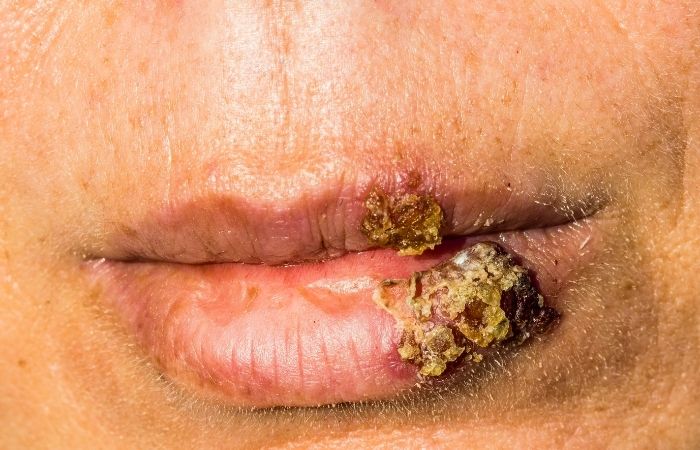
People are also reading: Is My Cold Sore an STD? What It Means If You’ve Never Had Herpes Before
The Moment After Exposure: What Happens Before Symptoms
After exposure to the herpes simplex virus, either HSV-1 or HSV-2, your body enters what’s called the incubation period. This is the stretch of time when the virus is present but hasn’t triggered noticeable symptoms yet. For women, this period is often silent.
The incubation window for herpes typically ranges from two days to twelve days, though it can be longer. During this time, the virus travels through nerve endings near the site of exposure and settles into nearby nerve clusters. Nothing may look different on the surface, but activity is happening underneath.
This is also why early testing is tricky. During incubation, both symptoms and test results can be negative even if infection has occurred. Many women assume this means they’re “in the clear,” only to notice symptoms weeks or months later.
Early Herpes Symptoms in Women (Before Any Sores)
One of the most misunderstood parts of herpes is the prodrome stage, the early warning phase before an outbreak. In women, prodrome symptoms are often subtle and easy to mislabel as shaving irritation, hormonal changes, or everyday friction.
Common early herpes symptoms in women include tingling, itching, or a pins-and-needles sensation around the vulva, labia, inner thighs, anus, or lower back. Some women feel deep nerve pain, shooting sensations, or a dull ache that seems to come from inside rather than on the skin.
Fatigue, headache, low-grade fever, and swollen groin lymph nodes can also appear during a first infection. These flu-like symptoms often happen without any visible genital sores, which is why many women never connect them to herpes.
| Where Symptoms Appear | What It Can Feel Like | Why It’s Often Missed |
|---|---|---|
| Internal (vaginal canal or cervix) |
Burning or deep irritation that doesn’t show on the skin. Pressure or aching during sex. Light bleeding afterward. A raw or sore feeling without anything visible. |
These areas can’t be seen without a speculum exam, so sores may exist without any external clues. Symptoms often get blamed on friction, hormones, or “normal” vaginal sensitivity. |
| External (vulva, labia, surrounding skin) |
Redness, swelling, tenderness, or sensitivity instead of obvious blisters. Discomfort when wiping, sitting, or wearing tight clothing. Irritation that comes and goes. |
Many women expect dramatic sores. When symptoms look mild or inconsistent, they’re often dismissed as razor burn, chafing, or skin irritation. |
| Mixed or shifting locations |
Sensations that seem to move—tingling near the vulva one day, discomfort near the anus or inner thighs another. Symptoms that don’t stay in one exact spot. |
Because herpes lives in nerve pathways, not just skin, symptoms don’t always follow clean patterns. This makes them easy to mislabel as unrelated issues. |
| Overall symptom pattern |
Mild, inconsistent, or short-lived symptoms that never fully escalate. Irritation that improves on its own, then returns weeks or months later. |
This stop-and-start pattern leads many women to treat symptoms as yeast infections, BV, allergies, or reactions for months or even years before testing. |
The First Herpes Outbreak in Women: What It Can Look Like
When a first outbreak does occur, it’s often the most intense, but even then, it doesn’t always match the photos online. Some women develop clusters of small blisters that break open into shallow sores. Others get a few isolated lesions that heal quickly.
Pain levels vary widely. While some women describe severe burning and difficulty urinating, others report mild soreness or irritation that resolves within a week. The average first outbreak lasts two to four weeks from first symptom to full healing.
Importantly, many women never experience a noticeable first outbreak at all. Studies consistently show that a large percentage of people with herpes are asymptomatic or have symptoms so mild they go unrecognized.
When Symptoms Don’t Show Up at All
Asymptomatic herpes is extremely common in women. You can carry and transmit the virus without ever developing sores, itching, or discomfort. This doesn’t mean the virus is inactive, it means your immune system is keeping visible symptoms in check.
Even without symptoms, the virus can shed intermittently from the skin or mucous membranes. This is why herpes often spreads between partners who feel completely healthy.
For women, hormonal shifts, stress, illness, or immune changes can trigger symptoms years after initial exposure. What feels like a “sudden” infection is often a delayed first recognized outbreak.
Check Your STD Status in Minutes
Test at Home with Remedium7-in-1 STD Test Kit

 For Men & Women
 Results in Minutes
 No Lab Needed
 Private & Discreet
Order Now $129.00 $343.00
For all 7 tests
How Long After Exposure Do Herpes Symptoms Appear?
For women who do develop symptoms, the timeline varies. Most first symptoms appear within two to twelve days after exposure, but some take weeks or longer. There is no single clock that applies to every body.
Later outbreaks, if they occur, are usually shorter and milder. Many women notice prodrome sensations, tingling or nerve pain, a day or two before symptoms return. Others skip this stage entirely.
Because timing is unpredictable, symptoms alone can’t confirm or rule out herpes. This is where testing windows become critical.
Herpes Testing Options for Women (And When They Work)
There are two main ways to test for herpes: swab tests and blood tests. Each works best at different stages of infection, and misunderstanding this is a major source of false reassurance or unnecessary panic.
A PCR or viral culture swab is the most accurate test when active sores are present. The sample is taken directly from a lesion and can distinguish between HSV-1 and HSV-2. Once sores heal, swab tests no longer work.
Blood tests measure antibodies, not the virus itself. IgG antibodies usually become detectable between twelve and sixteen weeks after exposure. Testing earlier can produce false-negative results, especially in women with mild or no symptoms.
Herpes Testing Window Timeline
| Testing Method | When It Works Best | What It Detects | Limitations |
|---|---|---|---|
| PCR Swab Test | During active sores | Live virus | Useless once lesions heal |
| IgG Blood Test | 12–16 weeks after exposure | Antibodies | False negatives if taken too early |
What to Do While You’re Waiting for Answers
The hardest part of the waiting game is, of course, waiting for clarity to come. If you fall in this period, it’s imperative that you do not assume the worst, nor do you assume the opposite, dismissing your symptoms altogether. Note the changes, avoid sexual activity if you're in an irritated phase, and plan to get tested on the basis of timing, not fear.
In addition, if you're concerned about privacy and access, home-based tests will allow you to take control of the situation without jumping the gun and risking false results. STD Rapid Test Kits provide confidential testing opportunities, allowing you to select the one that suits you best.
It’s imperative to remember that it’s not negligence to need the time to get it right; it’s the only way to achieve medical accuracy.
Recurrent Herpes Symptoms in Women: Why Later Outbreaks Feel Different
After the first time herpes symptoms are experienced, many women expect future symptoms of herpes to be just as they were in the first episode. However, this is not usually the case. When herpes symptoms recur in women, they may be less noticeable, less severe, and even easier to overlook because their immune system has learned how to fight off the virus.
Future herpes symptoms may be less severe, such as just tingling, itching, or being sensitive in the area. It may also be accompanied by discomfort during intercourse, burning when urinating, or an area of irritation.
It is also common for recurrent herpes symptoms in women to appear in different areas, such as the thighs, buttocks, or perianal area. This is because the virus is in the nerve roots in these areas, not in just one place on the body.
Common Triggers That Reactivate Herpes in Women
Herpes does not recur at random times. In women, herpes outbreaks are often related to physical or hormonal stress factors that temporarily compromise the immune response. Thus, some women experience long periods without symptoms followed by a sudden onset of an outbreak.
Menstrual cycles are a common trigger for herpes outbreaks. Hormonal changes before or during the menstrual period can compromise the immune response and make the prodrome symptoms more noticeable. Infections, lack of sleep, emotional stress, and immune-suppressing drugs can have the same effect.
Friction during intercourse, shaving, or tight clothing can stimulate the nerve endings and make the symptoms more noticeable without causing an actual herpes outbreak. Thus, herpes is often mistaken for razor burn or contact dermatitis.
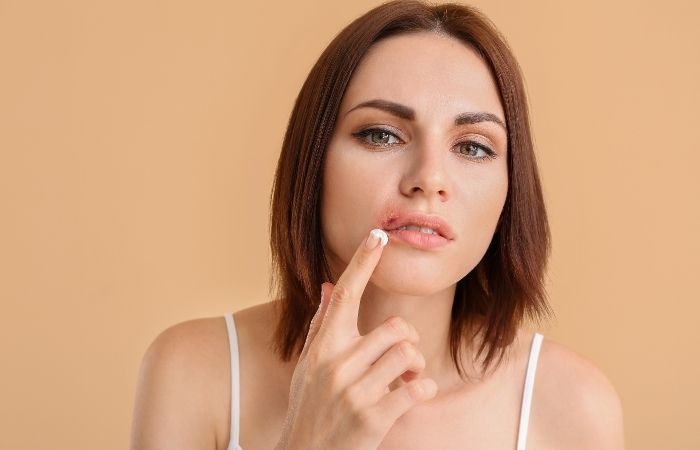
People are also reading: Cold Sore Kisses and Herpes Transmission: What This Story Reveals About Silent Spread
Herpes vs Yeast Infection, BV, or Razor Burn
One of the biggest reasons women miss herpes symptoms is that they overlap with far more common vaginal conditions. Itching, redness, and burning are not exclusive to herpes, and assuming the most familiar explanation feels safer.
Yeast infections typically cause thick discharge and widespread itching inside the vagina. Bacterial vaginosis often produces odor and discharge changes. Razor burn usually appears exactly where hair removal occurred and improves quickly.
Herpes tends to involve nerve sensations, localized tenderness, or recurring irritation in the same general area. When symptoms repeat in cycles or don’t fully match common infections, herpes testing becomes a reasonable next step.
Why Symptoms Alone Can’t Confirm Herpes
Even experienced clinicians cannot reliably diagnose herpes by sight alone, especially in women. Lesions can be tiny, internal, or already healing by the time someone seeks care. Many women never develop sores at all.
This uncertainty is frustrating but important. Treating symptoms without testing can lead to months of confusion, unnecessary medications, or false reassurance. Herpes is a diagnosis that depends on timing, testing method, and context, not appearance.
If symptoms are active, a swab test provides the clearest answer. If symptoms have passed or never appeared, blood testing becomes the tool of choice, but only once enough time has passed for antibodies to develop.
When to Test After Possible Exposure
If you’re worried about a recent exposure, timing matters more than urgency. Testing too early is one of the most common mistakes women make, often driven by anxiety rather than accuracy.
Swab testing should be done as soon as possible if active sores are present. Blood testing should generally wait at least twelve weeks after exposure for reliable results. Testing earlier can produce a negative result that later turns positive, which is emotionally exhausting.
If you’re unsure where you are in the window, planning a two-step approach, early evaluation if symptoms appear, followed by confirmatory blood testing later, offers the clearest path forward.
Should You Retest for Herpes?
Retesting depends on your situation. If an early blood test was negative but exposure was recent, retesting after sixteen weeks improves accuracy. If symptoms continue or change, reevaluation is reasonable even after a previous negative result.
Women in long-term relationships sometimes discover herpes years after exposure when a partner is tested. In these cases, a positive result does not indicate recent infidelity, it reflects delayed detection.
Retesting is not a failure or overreaction. It’s part of how herpes is responsibly diagnosed.
Living with Herpes as a Woman
Living with herpes is not just a medical condition, but also a very emotional one. For most women, the emotional impact of herpes is worse than the physical. However, this is not inherent in herpes. Rather, it is a learned response.
From a medical standpoint, herpes is a manageable condition. Antiviral drugs can minimize outbreaks, shorten outbreak duration, and lower transmission rates. Women also have the option to be on suppressive therapy or to only take medication during outbreaks.
Emotionally, herpes is manageable as well. Knowing your body and what to expect is very empowering. Herpes does not determine your desirability, your cleanliness, or your future relationships.
Sex, Dating, and Disclosure
Telling your partner that you have herpes is a very personal decision. There is no right or wrong way to do it. For most women, telling your partner that you have herpes is easier once you understand herpes and your body.
From a medical standpoint, it is best to avoid sex while experiencing herpes symptoms. Protection is also a must. Antiviral therapy also lessens the transmission rate, especially in a relationship where one partner is positive and the other is negative.
Telling your partner that you have herpes is not about confession. Rather, it is about informed consent. Take your time, ask questions, and protect your emotional health.
Check Your STD Status in Minutes
Test at Home with RemediumGenital & Oral Herpes Test Kit
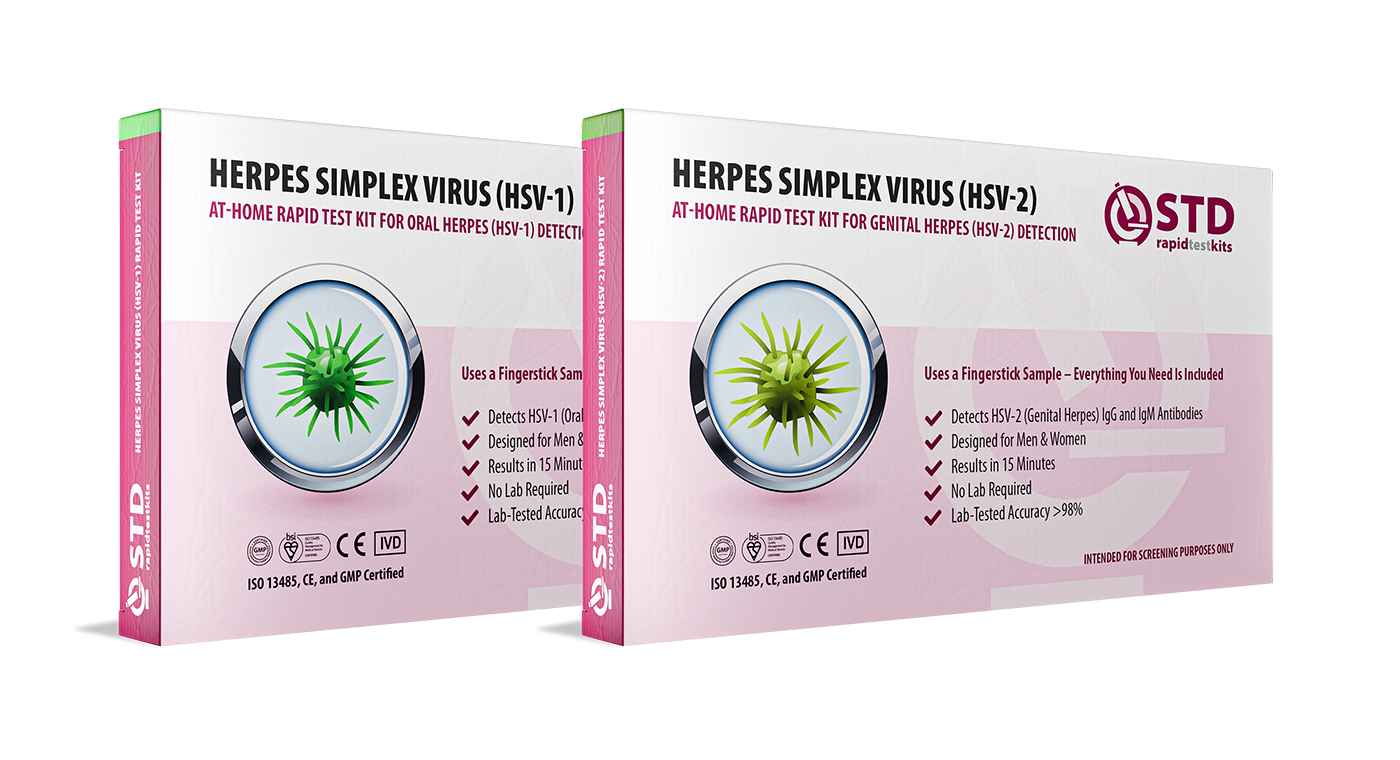 For Men & WomenResults in MinutesNo Lab NeededPrivate & Discreet
Order Now $75.00 $98.00
For all 2 tests
FAQs
1. Can herpes symptoms in women be so mild that you don’t notice anything is wrong?
Yes. And this is where herpes really messes with your head. Herpes symptoms in women are basically more of an “oh, that’s weird” sort of deal. A little tingling that comes and goes. A little irritation that goes away after a day. A little something that feels off but is never dramatic enough to worry you. So don’t think that just because you don’t notice anything out of the ordinary, herpes is not messing with you. It is. It’s just not very loud.
2. Can herpes cause pain inside your vagina when nothing is wrong outside your vagina?
Yes. And this is where herpes really messes with your head. Herpes does not always cause lesions that are visible. It can cause lesions inside your vagina or on your cervix that you would never know about unless you got an exam. So you could be experiencing burning, pressure, pain during sex, or spotting after sex and never know that herpes is what’s causing it.
3. How soon after herpes infection do herpes symptoms show up in women?
Well, sometimes right away. Sometimes never. Herpes symptoms in women show up anywhere from two to twelve days after infection. Sometimes much later. Sometimes never. So don’t think that you don’t feel anything for weeks, months, or years after you got herpes that it means the herpes was dormant or that you did something wrong. It simply means herpes has its own timeline and that’s that.
4. If you have herpes and your blood test comes back negative, does that mean you are safe?
Not necessarily. Blood tests for herpes only detect herpes antibodies, not the virus itself. It also takes time to build up herpes antibodies. If you are tested too soon after exposure—say, in the first few weeks—you could be infected with herpes, yet still test negative. Timing is more important than you realize.
5. Is itching on its own a symptom of herpes?
It could be, but only in combination with other symptoms or not in a pattern that looks like a yeast infection. Itchiness by itself is not a smoking gun, so to speak.
6. Does having herpes mean I’m stuck with recurring outbreaks forever?
No. Some women only have one outbreak in their lifetime and then no more. Others have recurring outbreaks, which tend to be less frequent and less severe over time. Your immune system gets better at keeping the virus at bay, especially after the first year or so.
7. Could my period actually cause herpes symptoms?
Yes, it could, and you are not imagining it. Hormones can temporarily weaken your immune system in the days leading up to your period, which can cause a herpes outbreak.
8. Could stress really cause herpes symptoms?
Yes, it can, unfortunately. It’s not just you; it’s the virus taking advantage of a weakened immune system brought on by major stress, lack of sleep, illness, or anything else that makes your immune system work overtime.
9. Can I give herpes to a partner even if I’m feeling totally fine?
Yes. Herpes can be shed from the skin without causing any symptoms, and this is the reason it is so easily and silently transmitted. This is also the reason so many people unknowingly transmit it. It is common, not careless.
10. Is herpes dangerous to women long term?
For most women, the answer is no. Herpes is simply a skin and nerve infection, not a health threat. The hardest part of the disease for most people is not the physical symptoms, but the social stigma. Herpes is just plain ordinary from a medical perspective.
Before You Spiral, Here’s What Actually Helps
If you’ve read this far, you’re likely searching for certainty, not judgment, not fear, not worst-case scenarios. Herpes symptoms in women are often confusing because they don’t follow dramatic patterns. That doesn’t mean you missed something or did something wrong.
The most important takeaway is this: clarity comes from timing and testing, not from staring at symptoms. Whether you’re symptom-free, mildly uncomfortable, or in the middle of an outbreak, there is a medically sound next step that doesn’t involve panic.
If you want privacy, control, and the ability to test on your timeline, explore discreet options through STD Rapid Test Kits. Answers don’t require shame, or a waiting room.
How We Sourced This: This article was built using current guidance from leading medical organizations, peer-reviewed research, and lived-experience reporting to reflect how herpes actually presents in women. Around fifteen reputable sources informed the writing; below, we’ve highlighted some of the most relevant and reader-friendly sources. Our goal was accuracy without alarm, clarity without stigma, and information that helps readers make calm, informed decisions.
Sources
1. Mayo Clinic – Genital Herpes
2. World Health Organization – Herpes Simplex Virus
3. Planned Parenthood – Herpes Overview
5. Genital Herpes – Symptoms and causes (Mayo Clinic)
About the Author
Dr. F. David, MD is a board-certified infectious disease specialist with a specialization in STI prevention, diagnosis, and treatment. Dr. F. David is a no-nonsense, sex-positive doctor with a focus on precision and an extension of access to his readers in urban and off-grid areas.
Reviewed by: S. Kim, MPH | Last medically reviewed: February 2026
This article is for informational purposes and does not replace medical advice.


