





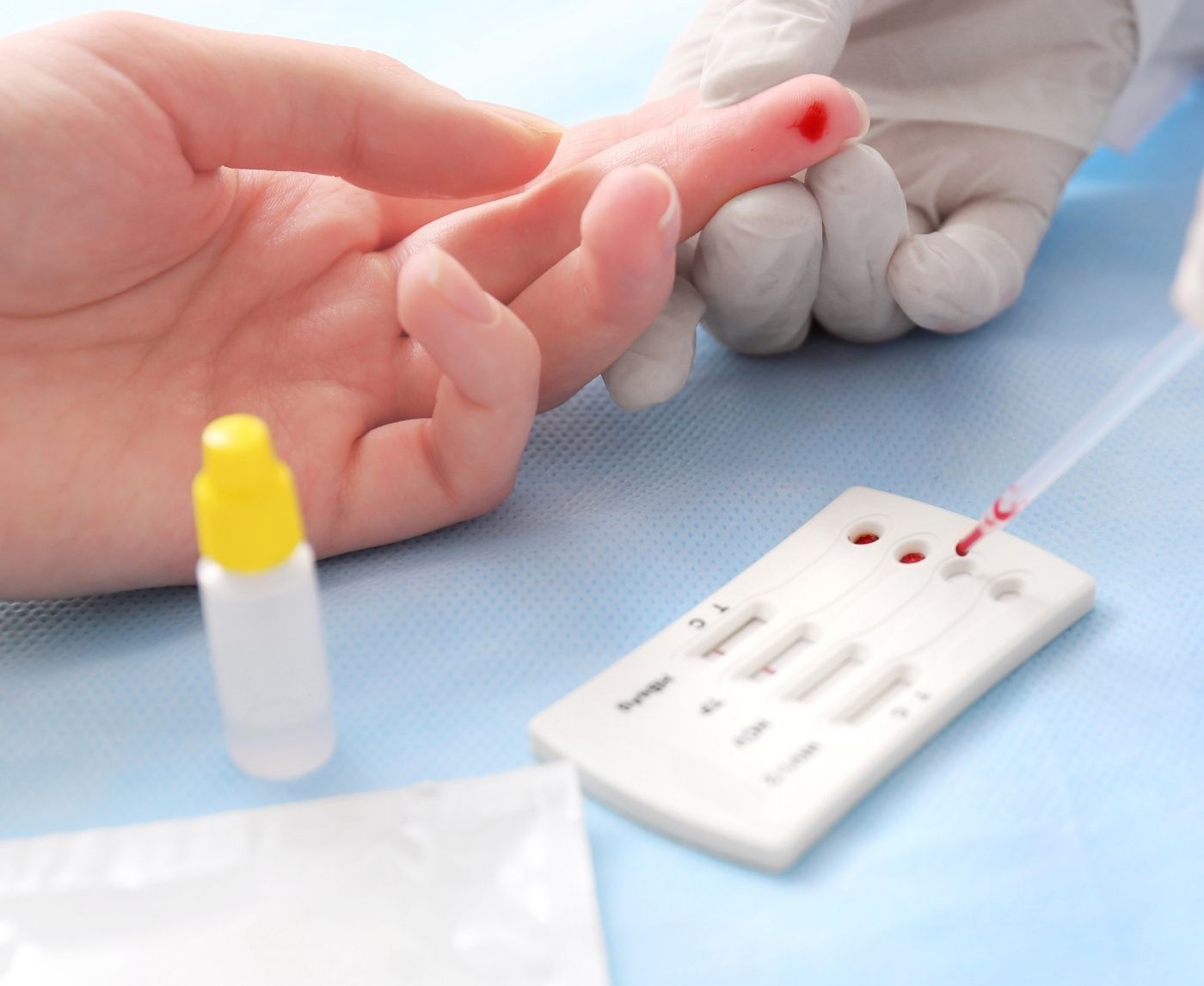

Quick Answer: HIV rapid tests are over 90% accurate when used correctly and at the right time, usually 3+ weeks after exposure. A faint line can still mean positive, and confirmatory testing is essential.
What HIV Rapid Tests Actually Look For (And What They Miss)
Most at-home HIV rapid tests work by detecting antibodies, the proteins your immune system produces in response to the virus. Some newer kits, including those used in clinics, also detect antigens, which appear earlier during infection. But here’s the catch: your body doesn’t produce enough detectable antibodies immediately after exposure. This is why even the best rapid test can miss early infections if used too soon.
The most common U.S. FDA-approved at-home test is OraQuick, which uses an oral swab and delivers results in about 20 minutes. It's discreet, user-friendly, and generally accurate when used correctly, but it relies only on antibody detection. That makes timing everything. Unlike lab-based tests, which can detect the virus earlier through antigen or RNA methods, rapid tests are more likely to give false negatives during the window period, the time between infection and detectability.
That’s why someone like Luis, 29, who tested just 10 days after a risky encounter, got a negative result that didn’t match his gut feeling. “I had flu-like symptoms and a weird rash,” he said. “I tested negative at home, but something didn’t sit right.” A week later, his lab test came back positive. His story isn’t rare, it’s a case study in why accuracy isn’t just about the test, but when and how you use it.
HIV Window Periods and Why They Mess With Your Mind
Let’s break down the most misunderstood part of HIV testing: the window period. This is the time it takes after exposure for the virus (or your body's response to it) to show up on a test. Use a test too early, and it might say you’re negative, even if you’re not. That’s not because the test is broken; it’s because your body hasn’t had time to react in a way the test can measure.
Here's a comparison of common HIV test types, what they detect, and when they’re most accurate:
| Test Type | What It Detects | Sample Type | Window Period | Peak Accuracy |
|---|---|---|---|---|
| At-Home Rapid (OraQuick) | HIV antibodies | Oral fluid | 18–90 days | 3+ months |
| Lab Antigen/Antibody (4th Gen) | p24 antigen + antibodies | Blood | 18–45 days | 4–6 weeks |
| Lab RNA or NAAT | HIV RNA (virus itself) | Blood | 10–33 days | 3–4 weeks |
Table 1. Different HIV test types and their window periods. OraQuick is highly accurate after the 3-month mark, but earlier testing may need follow-up.
So if you tested two weeks after a hookup and saw one line (negative), you might feel relief, but it may be too soon. That’s the core reason false negatives happen: people test during the window and think they’re in the clear. The solution? Wait at least 3 weeks after possible exposure, and if you test before that, plan to test again later.
People are also reading: Why Monogamy Isn’t a Foolproof Shield Against STDs
That Faint Line: What It Means (And Doesn’t Mean)
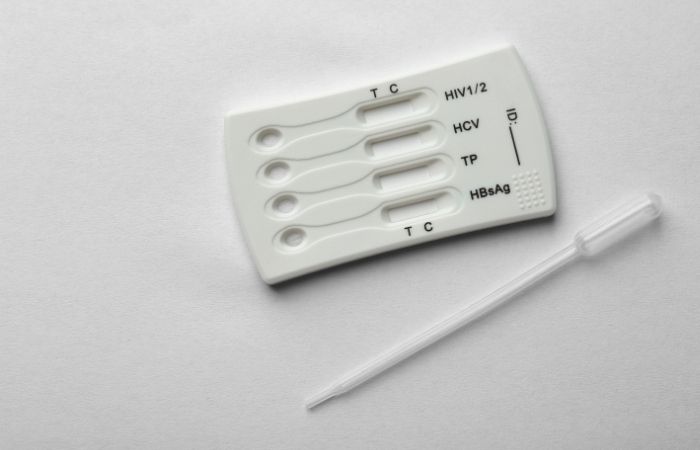
Let’s talk about the line that launches a thousand panic spirals. You’re staring at the test window. There’s a control line (as expected), and next to it, faint, blurry, barely there, a second line. Do you have HIV? Is it a mistake? What now?
First, understand this: any visible second line, no matter how faint, may indicate a positive result. The color intensity can vary based on how much antibody is present, but intensity doesn’t determine positivity. A faint line still means the test detected HIV antibodies.
However, other things can cause test lines to appear “off.” Improper timing (reading too early or too late), saliva contamination, or damage from heat or moisture can all distort results. That’s why following the kit’s instructions to the letter matters, set a timer, use clean hands, and avoid eating, drinking, or brushing teeth 30 minutes before an oral swab.
Consider Janelle, 34, who tested at home after a breakup. “I followed the directions, but my hand was shaking. I got a faint line and freaked out,” she recalls. “The next day I went to a clinic, and it was confirmed. It was devastating, but I’m glad I knew. I started treatment right away.” Her story underscores why faint lines should never be dismissed, and why confirmatory testing matters.
Still unsure? Here’s a visual summary:
| Test Result Appearance | Likely Meaning | What To Do |
|---|---|---|
| One control line, no test line | Negative (but depends on timing) | Retest after window period if recent exposure |
| Two lines, one faint | Presumptive positive | Get confirmatory lab test |
| No control line | Invalid test | Discard and retest with a new kit |
Table 2. How to interpret HIV test lines and what actions follow.
If your test looks confusing or you’re second-guessing yourself, take a photo, write down the time you took it, and call a health provider or HIV support line. You don’t have to figure this out alone.
The Most Common Mistakes That Undermine Your Results
Even the most accurate HIV rapid test can give a false sense of security, or a completely wrong result, if it’s not used correctly. And let's be real: most of us don't read instructions like a lab tech. Maybe you're sweating in your car, rushing before your partner gets home, or just too nervous to focus. These moments matter.
Andre, 24, ordered an HIV test kit online after an unplanned hookup. “I was so freaked out I didn’t wait 30 minutes after eating like it said,” he admitted. “The result came back invalid, but I didn't even realize it at first. I just saw no second line and thought I was good.” He wasn't. A week later, the clinic test showed he was newly positive. The error wasn’t in the test, it was in the rush.
Here’s the truth: most rapid test “failures” are user errors. Not inserting the swab far enough into the gums. Touching the swab with fingers. Testing too early. Reading the result outside the valid time window. Storing the test kit somewhere humid. Every one of these small mistakes can alter your result, and your peace of mind.
Rapid HIV tests are sensitive to timing and technique. A kit that’s left in a hot mailbox or read an hour too late might show misleading lines or no result at all. These aren’t flaws in the science, they’re risks of DIY testing. But when used correctly, these tests can be powerful tools. They’re fast, private, and, when taken at the right time, highly accurate.
Check Your STD Status in Minutes
Test at Home with Remedium7-in-1 STD Test Kit
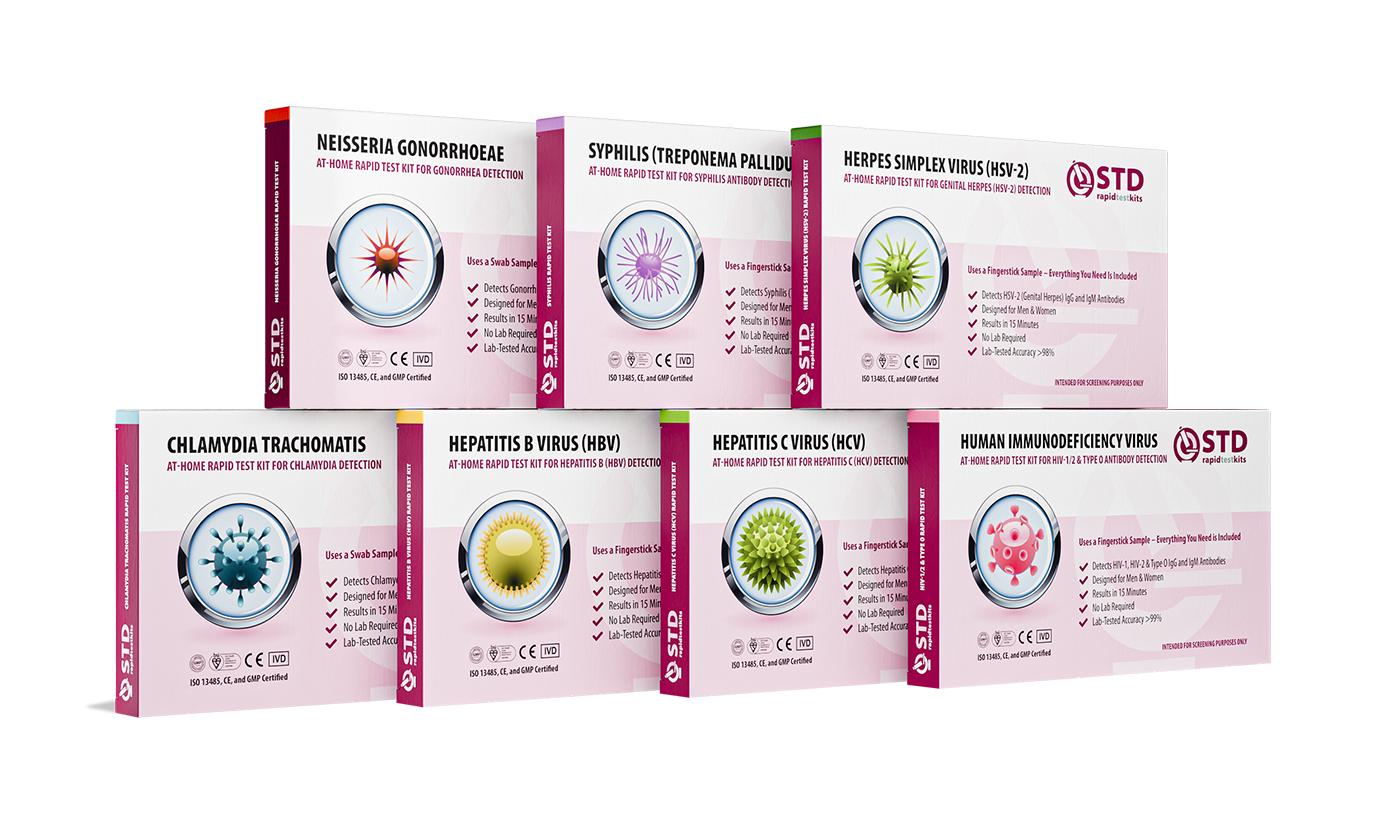
 For Men & Women
 Results in Minutes
 No Lab Needed
 Private & Discreet
Order Now $129.00 $343.00
For all 7 tests
Can a Rapid Test Be False Positive?
This is one of the most common and most panic-inducing questions: Can a faint positive result be wrong? The short answer: yes, false positives can happen, but they’re rare. And when they do occur, there’s usually a reason.
At-home tests can pick up background noise, especially if someone has certain autoimmune conditions, recent vaccinations, or other viral infections. But according to the CDC, the chance of a false positive on a properly timed and used FDA-approved HIV rapid test is less than 1%. That means if your test shows a faint line, the safest assumption is that it’s reacting to HIV antibodies, and you need a confirmatory test.
False positives are more common when people test without known exposure, or test multiple times and misinterpret wear-and-tear on the strip. That’s why clinics always follow up a positive rapid with a lab-based confirmatory test. And you should, too.
It's worth noting that while false positives can rattle your world, false negatives, especially during the window period, are more dangerous. They offer comfort where vigilance is still needed. That's why two-step testing (rapid followed by lab) remains the gold standard.
What to Do If You Get a Positive or Invalid Result
Let’s say you’ve taken the test. You waited the right amount of time. You didn’t eat beforehand. And now... you’re staring at two lines, one of them ghost-faint. Your stomach drops. Your mind races. What now?
Breathe first. Then act.
If the result is positive, especially if it was taken three weeks or more after a possible exposure, schedule a confirmatory test immediately. This will typically be a 4th generation antigen/antibody test done through a clinic, telehealth service, or lab. You do not need to explain or justify your home test result to get care. Just say: “I had a positive rapid HIV test at home and need confirmation.”
While waiting for confirmation, avoid unprotected sex, and if symptoms appear, rash, fever, fatigue, see a provider immediately. Early HIV is highly treatable, and starting care quickly not only improves health outcomes but drastically reduces the risk of transmission to partners.
If the result is invalid (no control line, weird coloration), don’t try to interpret it. That test is void. Throw it out and use a new one, or consider a mail-in or lab-based test for extra certainty.
We know these moments are hard. Bryce, 42, described it like this: “I was sitting in my truck behind the gas station, holding the test like a bomb. When the line showed up, I cried for ten minutes. But then I drove to urgent care. I needed to know for sure.” He did. And now he’s undetectable, and thriving.
If your head keeps spinning, peace of mind is one test away. Order a discreet HIV rapid test here, or follow up with a combo test if you're unsure about timing.
When Should You Retest, and Why It’s Not Overkill
Many people assume one negative result means they’re in the clear. But HIV testing is more like photography than a snapshot, it takes the right light and timing to capture the truth. And if you test too early, or risk factors continue, retesting isn’t neurotic. It’s smart.
If you tested less than 3 weeks after a risky event (condom break, needle sharing, sex with a new or multiple partners), you may have tested too early. HIV antibodies take time to build, and your test may not have caught them yet. Retest 3–6 weeks after the event, and again at 12 weeks for final confirmation.
If you’re sexually active and not in a mutually monogamous relationship, retesting every 3 to 6 months is recommended. And if you start PrEP (pre-exposure prophylaxis), many providers will want an HIV test every 3 months as part of ongoing monitoring.
Testing isn’t paranoia, it’s power. It’s a habit of self-awareness and protection for you and your partners. Just like brushing your teeth or getting a flu shot, it’s a small step with big impact.
Need privacy and speed? Explore discreet options here for combo tests that check multiple STDs from home with lab-level accuracy.
People are also reading: Why Anal Sex Raises Your Risk for STDs (Even with Condoms)
Why Some People Still Don’t Trust HIV Rapid Tests (And Why That’s Changing)
There’s a lingering stigma about HIV testing, especially the rapid kind. Some people still think, “It can’t be that easy,” or “If it’s not from a doctor, it’s not real.” This mistrust isn’t new. Decades of fear, misinformation, and institutional trauma around HIV have made testing feel clinical, cold, and full of consequences. But the landscape has shifted, quietly, and for the better.
Rapid HIV tests have been studied, vetted, and approved by global health organizations including the World Health Organization. OraQuick, for example, was evaluated in multiple field trials and consistently showed over 91% sensitivity and 99% specificity when used correctly. That means it correctly identifies HIV-positive people about 91 times out of 100, and correctly gives a negative result 99 times out of 100 when there’s no infection.
But numbers don’t always ease emotions. If you’ve ever been gaslit, misdiagnosed, or dismissed by a provider, trusting a piece of plastic with your future may feel impossible. And yet, for thousands, these tests are lifelines. A means to know without judgment. To face truth on their own terms. To protect partners. To plan pregnancies. To reclaim power after trauma.
Take Devon, 21, who had never told anyone he was sexually active. “I lived in a small town. Everyone knew everyone. I ordered the test online, got it in this plain brown envelope. I was shaking, but I did it. Negative. That gave me the courage to go get tested for everything else too. That test changed my whole trajectory.”
Stories like his are why these tests matter. Not just for speed, but for agency. For moments when privacy isn’t a preference, it’s survival.
At-Home Rapid vs Lab Testing: What’s the Real Difference?
Let’s say you’re deciding between swabbing your gums at home or booking a lab test. Here’s how those options really compare, not just in numbers, but in lived experience.
Sandra, 37, had two kids, a busy job, and no time to sit in a waiting room. “I needed to know, but I couldn’t disappear for half a day,” she says. “So I did the rapid test in my bathroom. It felt weird, like I was doing something medical without permission. But when the result came up negative, I felt this wave of peace. I followed up at the clinic later, but the at-home test got me through the panic.”
Her story illustrates the trade-off. Here’s a clear comparison to guide your decision:
| Test Type | Speed | Privacy | Accuracy | Best For... |
|---|---|---|---|---|
| At-Home Rapid | 20–40 minutes | Very high | 91–99% | Immediate reassurance, first-time testers, privacy concerns |
| Mail-In Lab | 2–5 days | High | ~99% | High accuracy with flexibility, combo STD screening |
| Clinic Lab Test | Same day–3 days | Low–moderate | ~99.9% | Confirmatory testing, ongoing care, complex cases |
Table 3. Comparing HIV testing methods by speed, accuracy, and situation fit.
No one test is “better” than the others, it’s about fit. If you’re in a high-risk situation or have symptoms, a clinic visit is wise. If you need privacy and are only checking after one low-risk exposure, a rapid test may be enough, but keep in mind that retesting later will give you more certainty.
And remember: positive or negative, knowing your status is the first step toward clarity and control. That’s true no matter where or how you test.
Check Your STD Status in Minutes
Test at Home with Remedium6-in-1 STD Test Kit
 For Men & WomenResults in MinutesNo Lab NeededPrivate & Discreet
Order Now $119.00 $294.00
For all 6 tests
Privacy, Shipping, and How Discreet HIV Tests Actually Are
If you’ve ever delayed testing because you worried someone might see the box or ask questions, welcome to the club. One of the biggest appeals of at-home tests is how discreet they really are. But let’s get specific.
Most reputable test kit providers ship in unbranded packaging. No logos, no medical words, no giveaways. Tracking is optional. Some even offer same-day or overnight delivery to PO boxes, Amazon lockers, or alternate addresses. Inside, the kits come with easy instructions and everything you need, swab, test device, and sometimes a secure disposal bag.
Mina, 28, had just moved back in with her parents after a breakup. “There was no way I could get to a clinic without explaining why,” she said. “I ordered the test to a locker and did it at midnight while they were asleep. It was negative. I felt like I could breathe again.”
Results aren’t sent to your phone or cloud unless you opt in. You’re in control. No one else has to know, unless you choose to share.
If you’re wondering where to start, order an HIV rapid test kit that ships discreetly and includes step-by-step guidance for peace of mind.
FAQs
1. Does a faint second line on my HIV rapid test mean I'm positive?
It might, yes. A faint line still counts as a line, and most test kits make that clear in their instructions. But that doesn’t mean panic is your only option. Sometimes that line is picking up antibodies your body made in response to HIV, and sometimes it’s reacting to something else entirely, like a contaminated swab or a test that's past its prime. The next step isn’t guessing. It’s getting a lab test to confirm. That’s what clinics do too, by the way. A rapid test gives you a signal. The lab gives you the final word.
2. I tested negative, but it’s only been a week since the hookup. Am I good?
Not yet. One week is way too early for most rapid tests to give you a clear answer. Your body needs time to create detectable antibodies, think 18 to 30 days minimum. You might be negative today and still be in the window period, which is like the test version of a blind spot. If the exposure was recent, mark your calendar for 3 weeks out and plan to test again. And if you're really worried now, some lab-based tests can catch HIV earlier through RNA detection. It’s not overkill, it’s just smart.
3. What if there’s no control line at all?
Toss that test. Seriously. The control line is the test’s way of saying, “Hey, I worked!” If it's missing, the result is meaningless. Could be a bad swab, a storage issue, or maybe you timed it wrong. Whatever the reason, don't try to decode a dud. Get a fresh test and try again, carefully this time. Set a timer. Follow the instructions like you’re baking something complicated. Your peace of mind is worth a few extra minutes.
4. Is it true that stress can mess with your results?
Nah. Stress can mess with your digestion, your sleep, and your ability to stop Googling symptoms at 3AM, but it won’t change your HIV status or the antibodies in your body. That said, anxiety can absolutely affect how you read your results, people miss lines, misread smudges, or panic when something looks off. If you're freaking out, ask someone you trust to double-check. Or better yet, snap a pic and show it to a provider or HIV helpline.
5. I don’t feel sick, should I still test?
Yes, yes, and one more time for the folks in the back: YES. HIV often shows zero symptoms in the early stages. No fever, no rash, no clue. And the only way to really know your status is to test. We see this all the time, people think “I feel fine” equals “I’m fine,” and that’s not how it works. If you’ve had a potential exposure, even with protection, testing is the only way to know for sure. It’s care, not confession.
6. Can I just test once and be done with it?
Depends on your timing and your lifestyle. If it's been 12+ weeks since your last potential exposure and your test is negative, you can probably exhale. But if you’re sexually active, dating, or just living life, one test isn't a forever pass. Think of it like brushing your teeth, something you do regularly to stay on top of your health. A good rhythm? Every 3 to 6 months, or sooner if something new happens.
7. Are online test kits really private?
Yep. Most providers ship in plain, boring packaging that looks like a random Amazon order. No red flags, no bold labels, no awkward conversations. You can ship to a PO box, a locker, a friend’s house, whatever works for you. Inside, it’s just you and the kit. No clinics, no forms, no judgment. Your status is your business until you decide otherwise.
8. How accurate are at-home HIV tests compared to lab tests?
Pretty close, honestly, if you use them at the right time. Most FDA-approved at-home tests (like OraQuick) are 91–99% accurate once you're past the 3-month window. Lab tests do have a slight edge, especially for early detection, since they can pick up the virus itself (not just the antibodies). If you're testing super early, or your exposure was high-risk, the lab route is the better bet. Otherwise, at-home tests are legit.
9. I got a positive result and I’m spiraling. What now?
First: breathe. Then retest. A rapid test is a flag, not a final sentence. Schedule a confirmatory lab test as soon as you can. If that test confirms HIV, treatment today is nothing like it was in the past. Many people living with HIV are now undetectable, meaning the virus is controlled, untransmittable, and they live full, healthy lives. This moment feels huge. But it’s the start of something manageable, not the end of your story.
10. Where can I get a reliable at-home HIV test?
Right here. This at-home HIV rapid test is FDA-approved, ships discreetly, and comes with clear instructions. You can take it in your bedroom, your car, or wherever you feel safe. Their support team can help you figure out what kind of test you need without judging you or putting you under pressure.
You Deserve Answers, Not Assumptions
The most important thing to remember from this whole guide is that the way and when you do something will affect how accurate your result is. You can feel better about yourself if you take a quick HIV test at home, but only if you follow the directions, know when to confirm with a lab, and respect the window period.
Don’t let fear or shame keep you in limbo. Testing is care. Testing is control. Testing is how you move forward, whatever the result. And you don’t have to do it alone.
Don’t wait and wonder, get the clarity you deserve. This HIV test kit lets you test yourself at home and get results quickly and accurately.
How We Sourced This Article: We combined current guidance from leading medical organizations with peer-reviewed research and lived-experience reporting to make this guide practical, compassionate, and accurate.
Sources
3. Clinical Testing Guidance for HIV | CDC
4. Self Testing | HIV Testing | CDC
5. Information regarding the OraQuick In-Home HIV Test | FDA
6. Diagnostics for HIV Diagnosis | NCBI Bookshelf
7. HIV Testing - StatPearls | NCBI Bookshelf
8. Revising Expectations from Rapid HIV Tests in the Emergency Department | NIH
9. How accurate are rapid, point-of-care tests for HIV? | aidsmap
About the Author
Dr. F. David, MD is a board-certified infectious disease specialist focused on STI prevention, diagnosis, and treatment. He blends clinical precision with a no-nonsense, sex-positive approach and is committed to expanding access for readers in both urban and off-grid settings.
Reviewed by: Angela Patel, NP | Last medically reviewed: January 2026
This article is for informational purposes and does not replace medical advice.


