







Quick Answer: STD and STI refer to the same group of infections, but “STI” is now preferred by many experts because not all infections cause disease. The difference is about language, not severity or treatment.
When the Words Get in the Way
Picture this: someone gets a text from a past partner that says, “Hey, just a heads up, I tested positive for an STI.” The first reaction isn’t always calm understanding. Sometimes it’s confusion. “Wait, STI? Is that just another way to say STD, or is it something different?” That little acronym swap can spiral into stress, self-doubt, and Google searches like: “Is STI worse than STD?” or “Did they just say that to make it sound less bad?”
Language holds power, especially when it comes to our bodies. For decades, STD, sexually transmitted disease, was the dominant term in clinics, school lectures, and awkward family health talks. But in the early 2000s, many medical professionals and sex educators started pushing for “STI” instead: sexually transmitted infection.
Why the shift? Because most of these conditions are infections, not diseases. You can have Chlamydia, for example, and have zero symptoms. Same goes for HPV, Gonorrhea, and even early-stage Syphilis. You might carry the infection, but without clear signs or complications, there’s no “disease” in play, at least not yet. Calling everything a disease puts pressure on the word itself. It sounds more dangerous. More shameful. More final.
When “Infection” Feels Less Scary (But Still Isn’t Easy)
Jaylen, 24, remembers the exact moment the shift in language made a difference. “I got tested because I had some discharge and pain when I peed. I was convinced it was an STD. But when the nurse called, she said I had an STI. I remember feeling… relieved? Like, maybe this wasn’t as bad as I thought.”
But here’s the thing. Jaylen had Gonorrhea. Left untreated, it could have caused painful complications, even infertility. His relief was short-lived, and that’s part of the problem. The word “infection” can sound minor, even manageable, like something that’ll just go away on its own. But many STIs don’t.
This is where education has to step in. The goal of using “STI” isn’t to downplay risk, it’s to be precise. And that precision helps with prevention. Because if you know you can be infected and not know it, you're more likely to get tested even if you feel fine.
But emotional reactions still matter. For some, hearing “disease” triggers panic. For others, “infection” sounds dismissive or vague. The word that hits hardest often depends on your personal experience, background, and what you’ve been taught, or not taught, about sexual health.
That’s why the shift to “STI” doesn’t automatically remove stigma. Sometimes it just rearranges it. And that’s where the next part of this conversation becomes crucial: how stigma operates, regardless of what we call it.

People are also reading: Do I Need to Disclose an STD to a Travel Hookup?
What the Medical Field Actually Says
Here’s where it gets trickier: not all doctors use the same language. One nurse practitioner might say, “We’re testing for STIs today,” while another will hand you a pamphlet titled “STD Testing 101.” Public health campaigns still use both terms, often interchangeably. Even the CDC uses both depending on the page or guideline. This isn’t inconsistency, it’s a reflection of changing norms in real time.
Dr. Elaine Romero, an infectious disease specialist in New York, put it this way: “We say ‘infection’ to be more medically accurate and less alarming. But we keep ‘disease’ in some contexts because that’s still the word most patients recognize.”
So when people ask, “Is STI just a politically correct way to say STD?” the honest answer is more layered. It’s not about being soft or sanitized, it’s about aligning the term with the reality. And the reality is that many STIs cause no disease. Others do. And nearly all are treatable, especially when caught early.
| Term | Full Meaning | Emphasis | Common Usage |
|---|---|---|---|
| STD | Sexually Transmitted Disease | Implies symptoms or complications | Still widely used in public health materials |
| STI | Sexually Transmitted Infection | More accurate for early or asymptomatic cases | Preferred in medical and sex-ed communities |
Table 1. Comparison of the terms STD and STI by meaning and usage context.
The takeaway? You’re not wrong to feel confused. Even clinicians toggle between terms depending on the audience. But if you’re trying to understand what you’ve been diagnosed with, or whether to get tested, the label matters less than the facts behind it.
And here’s one fact to hold onto: Whether it’s called an STD or an STI, it’s never a moral failure. It’s a medical situation. One that deserves respect, attention, and zero shame.
Stigma Doesn’t Care What You Call It
There’s a quiet moment many people don’t talk about. It happens after the test, before the results. You’re brushing your teeth, scrolling your phone, replaying every sexual decision you’ve ever made, and one thought keeps looping: “If this comes back positive, what does that make me?” That thought doesn’t hinge on whether the result says STD or STI. It hinges on shame.
Stigma has a way of attaching itself to outcomes, not definitions. You can soften the language, modernize the acronym, and make the pamphlets look friendlier, but if someone grew up hearing that STDs only happen to “irresponsible” people, the fear sticks. It shows up as delayed testing, avoidance, or convincing yourself that symptoms will just disappear.
Public health researchers have seen this pattern play out repeatedly. When language feels harsh or judgmental, people wait longer to test. When they wait longer, infections spread silently. That’s part of why many clinics now default to “STI.” It’s an attempt to remove one barrier, even if it can’t remove them all.
But stigma is stubborn. It doesn’t vanish because the word changed. It fades when people understand that infections are common, manageable, and often unavoidable simply by being sexually active. That understanding takes repetition, clarity, and a lot more honesty than most of us were ever given.
Check Your STD Status in Minutes
Test at Home with Remedium6-in-1 STD Rapid Test Kit

 For Men & Women
 Results in Minutes
 No Lab Needed
 Private & Discreet
Order Now $119.00 $294.00
For all 6 tests
Does the Difference Affect Testing?
On paper, no. In real life, absolutely.
Clinically speaking, the tests are the same. Whether a provider says they’re running “STD tests” or “STI screening,” the lab is still looking for the same bacteria, viruses, or antibodies. Urine samples, swabs, and finger-prick blood tests don’t change based on terminology.
Emotionally, though, the difference can be huge. People are more likely to test when they believe they might have an infection rather than a disease. “Infection” feels temporary, solvable, and less tied to identity. “Disease” can feel permanent, defining, or catastrophic, even when that’s not medically accurate.
This matters because many STIs don’t cause symptoms right away. Chlamydia and Gonorrhea are notorious for being quiet, especially in women and people with vaginas. HPV often produces no symptoms at all. If people wait for something to feel wrong before testing, weeks or months can pass.
| Infection | Symptoms Always Present? | Can Be Transmitted Without Knowing? | Treatable? |
|---|---|---|---|
| Chlamydia | No | Yes | Yes |
| Gonorrhea | No | Yes | Yes |
| HPV | No | Yes | Managed |
| Syphilis | No (early stages) | Yes | Yes |
Table 2. Common sexually transmitted infections that may cause no symptoms but still require testing and treatment.
Understanding this table changes how people approach testing. Instead of asking "Do I feel sick?" it asks "Could I be infected without knowing?" That change alone finds a lot of infections earlier, which lowers the risk of complications and keeps partners safe.
If you’re someone who avoids clinics because of time, privacy concerns, or past judgment, at-home testing can remove another barrier. Options like discreet kits from STD Rapid Test Kits let people test on their own terms, without sitting in a waiting room replaying worst-case scenarios in their head.
Treatment Doesn’t Change, No Matter the Term
One of the most persistent myths around STD versus STI language is that one is “less serious” or treated differently. That’s not how medicine works. If you test positive for Chlamydia, you’re prescribed antibiotics. If you test positive for Gonorrhea, antibiotics again, often with specific combinations. If you’re diagnosed with Herpes, antiviral management becomes the focus.
The treatment plan is based on the organism, not the acronym. Calling something an STI doesn’t downgrade its importance. Calling it an STD doesn’t upgrade it. The bacteria and viruses involved don’t care what we name them.
Where the language does matter is follow-through. People who feel less ashamed are more likely to complete treatment, notify partners, and return for retesting if recommended. That ripple effect protects entire communities.
Consider someone standing in their kitchen at midnight, holding a positive test result. The next steps matter more than the label. Do they freeze, spiral, and avoid telling anyone? Or do they take a breath, make a plan, and move forward? Education, and compassion, push people toward the second option.
If you’re in that moment now, know this: treatment is routine, manageable, and common. You’re not broken. You’re informed. And that’s a powerful place to be.
People are also reading: When Pleasure Meets Risk: How Hepatitis Spreads Without Penetration
Why the Question Still Comes Up
If STD and STI refer to the same group of conditions, why does this question keep resurfacing? Because language evolves faster than public understanding. Schools teach one term, clinics use another, and search engines surface both depending on phrasing.
It’s also because people want reassurance. When someone asks, “Is STI better than STD?” they’re often really asking, “Am I okay?” They’re hoping the newer term means less damage, less judgment, or less impact on their future.
The honest answer is nuanced. The term “STI” reflects modern medical accuracy. It also opens the door to earlier testing and more honest conversations. But the seriousness of any infection depends on timely care, not terminology.
And that brings us to the most important part of this discussion: what actually matters after you understand the difference.
What Actually Matters More Than the Label
Knowing whether something is called an STD or an STI won’t protect your health by itself. Testing will. Treatment will. Communication will. Those are the things that change outcomes.
The people who fare best aren’t the ones who memorize definitions. They’re the ones who test when something feels off, or even when it doesn’t. They’re the ones who follow up, retest when advised, and talk openly with partners even when it’s uncomfortable.
If you’re deciding whether to test right now, the name shouldn’t be the deciding factor. Your peace of mind should be. Tools like comprehensive at-home panels make it easier to take that step without adding stress or exposure. A discreet option like a combo STD home test kit can screen for multiple infections at once, removing the guesswork.
The bottom line is simple, even if the language isn’t. Infection or disease, STD or STI, your health deserves attention, clarity, and care.
“I Thought It Was Just a UTI”, When Labels Delay Action
Rosa, 32, thought she had a mild urinary tract infection. She’d felt a weird pressure, some stinging, and a general sense of off-ness after a weekend with someone new. “I’ve had UTIs before,” she said. “This wasn’t that different.” So she drank cranberry juice, took some old antibiotics a friend had lying around (not great advice), and waited. Weeks passed. The discomfort lingered. When she finally got tested, it wasn’t a UTI, it was Chlamydia.
Here’s where things get real. Rosa told me that part of the delay wasn’t just confusion over symptoms. It was the word “STD.” She didn’t think that label could apply to her. “STD sounded like something serious people got from cheating or being reckless,” she admitted. “That wasn’t me.” So she ruled it out, until she couldn’t.
This is what happens when language carries judgment. People opt out of testing not because they’re careless, but because they don’t see themselves in the narrative. The term “STI” helps with that. It’s less weighted, more clinical, more inclusive of silent symptoms. That alone makes people more likely to say, “Okay, maybe I should check just in case.”
The difference between “STD” and “STI” won’t change your diagnosis. But it might change when you get diagnosed, and that can make all the difference.
Check Your STD Status in Minutes
Test at Home with Remedium8-in-1 STD Test Kit
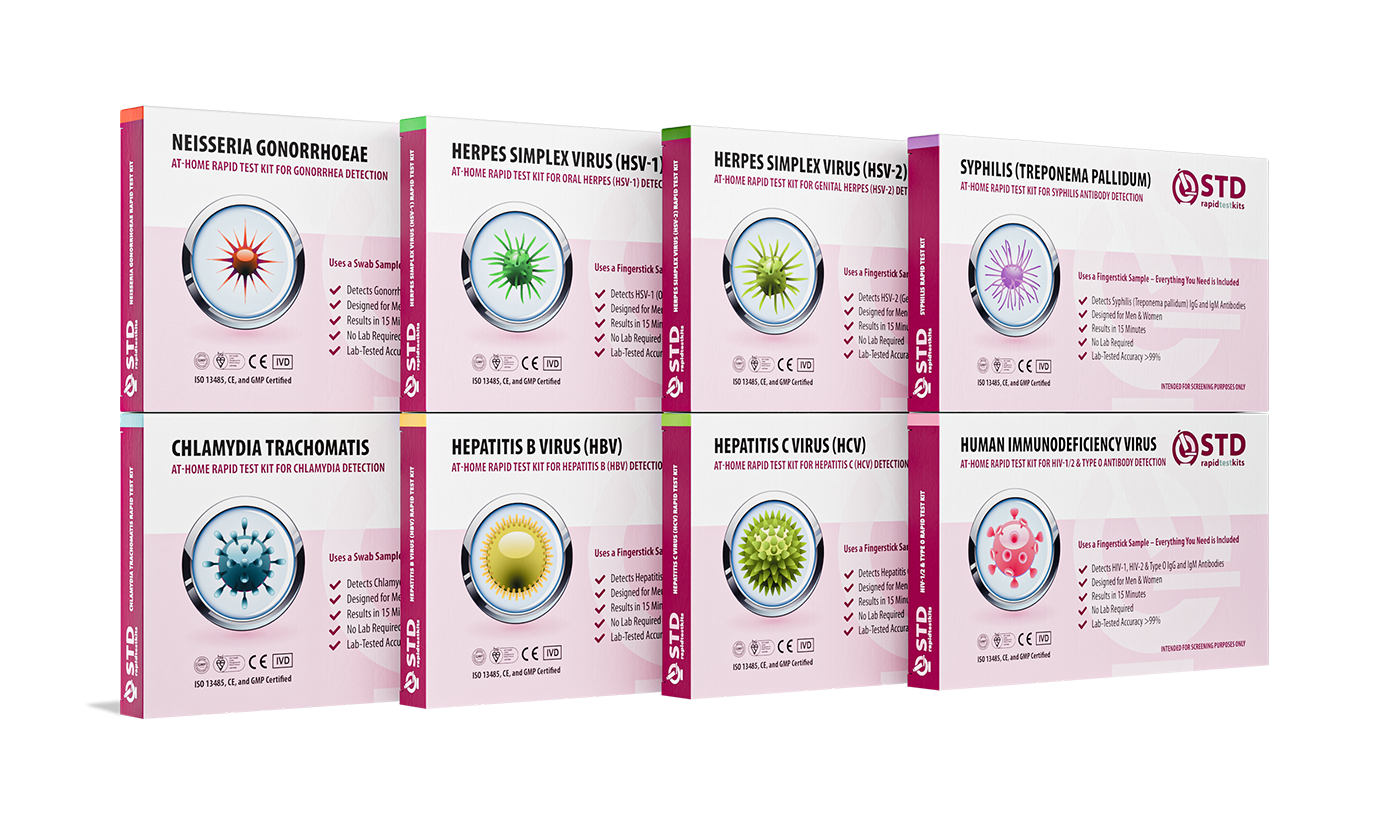 For Men & WomenResults in MinutesNo Lab NeededPrivate & Discreet
Order Now $149.00 $392.00
For all 8 tests
Why This Isn’t Just Semantics
If all this feels like a technicality, remember that language shapes behavior. It determines whether someone clicks on a testing link or closes the tab. Whether they talk to a partner or stay quiet. Whether they spiral into shame or step into action.
You don’t need to memorize the clinical definition of an infection versus a disease. What you need is clarity, access, and compassion. That’s what the STI label is trying to move us toward: earlier testing, less stigma, and better care, for you and everyone you connect with.
If this article brought up questions, anxiety, or maybe even some relief, that’s normal. Let’s keep going. Below are answers to the real-world questions people ask all the time, without the judgment, and with just enough grit to be honest.
FAQs
1. Is there really a difference between an STD and an STI?
Yeah, but not the kind that changes how you’re treated. Technically, an STI is an infection you’ve picked up, and an STD is when that infection causes actual symptoms or complications. Think of STI as the earlier stage. But most people (and even clinics) use the terms interchangeably. You’re not wrong either way.
2. So... why does everyone still say STD if STI is more accurate?
Old habits die hard. “STD” was the go-to term for decades, it’s in our movies, sex ed classes (the cringey ones), and late-night panic Googling. But many health experts now use “STI” because not every infection becomes a disease. It’s just more precise. Still, you’ll hear both, and that’s okay.
3. Does STI sound less scary on purpose?
Kinda, yeah. “Infection” sounds more fixable than “disease,” and that can make testing feel less terrifying. But that softer tone doesn’t mean you should ignore it. Some STIs are totally silent, no symptoms at all, and still do damage if left untreated. Less scary doesn’t mean less serious.
4. What do test results usually say, STD or STI?
It depends on where you’re tested. Some clinics call it an “STD panel,” others label it “STI screening.” At-home kits usually just list what they’re checking for, like Chlamydia, Gonorrhea, Syphilis, etc. Don’t get caught up in the label. Focus on the results.
5. Can I have an STI and feel totally fine?
Yes, and that’s one of the scariest parts. Many infections, especially early on, don’t throw up any red flags. You might not get discharge, itching, bumps, nothing. That’s why people who only test when they feel “off” often miss it. Regular testing = power move.
6. What happens if I ignore an STI because I don’t feel sick?
You risk letting it spread to others and possibly turn into something more serious. Chlamydia can cause pelvic inflammatory disease. Syphilis can move into your nervous system. HPV can lead to cancer. Bottom line: silence isn’t safety. It’s just sneaky.
7. Okay, but are STIs even that common?
Oh yeah. Millions of people get one every year. You know someone who’s had one, even if they haven’t said it out loud. They don’t make you dirty or reckless. They make you human. What matters is getting tested and treated, not playing the shame game.
8. If I test positive, will it say STD or STI?
Neither, usually. It’ll say what you tested positive for, like Herpes Type 2 or HIV. Whether it’s listed under “STD” or “STI” doesn’t matter. What matters is knowing what you’re dealing with and getting the right next steps lined up.
9. Do at-home test kits use the term STI or STD?
Most use “STD” in the marketing because that’s what people search for. But the tests themselves are medically legit, whether they’re checking for “infections” or “diseases.” If you want to skip the awkward clinic visit, you can test from home with the same accuracy. Privacy plus peace of mind? Yes, please.
10. Is it possible to fully recover from an STI?
Totally. Most STIs are curable, like Chlamydia and Gonorrhea. Others, like Herpes or HIV, are manageable with treatment. Early detection makes all the difference. And no, your sex life isn’t over. You just have new info to work with.
You Deserve Answers, Not Assumptions
At the end of the day, the question isn’t just “What does STI mean?” It’s “What does this mean for me?” The truth is that both STD and STI refer to infections that millions of people experience every year. They’re not rare. They’re not shameful. And they’re not the end of anything.
What matters is what you do next. If you’re worried, curious, or just haven’t been tested in a while, you don’t need to wait for a clinic appointment. This at-home combo test kit checks for the most common STIs quickly and privately. No labels. Just clarity.
How We Sourced This Article: We combined current guidance from leading medical organizations with peer-reviewed research and lived-experience reporting to make this guide practical, compassionate, and accurate.
Sources
1. Facts about STDs and STIs from the Centers for Disease Control and Prevention
2. World Health Organization: STIs
3. Planned Parenthood: A Place to Learn About STDs and STIs
4. The CDC's Information on Sexually Transmitted Infections (STIs)
5. Sexually Transmitted Infections (STIs) | CDC Overview
6. CDC's Guidelines for Treating STIs
7. Cleveland Clinic: Sexually Transmitted Infections (STIs and STDs)
8. Sexually Transmitted Infections | MedlinePlus (NIH)
10. Sexually Transmitted Disease (STD) Symptoms | Mayo Clinic
About the Author
Dr. F. David, MD is a board-certified infectious disease specialist focused on STI prevention, diagnosis, and treatment. He blends clinical precision with a no-nonsense, sex-positive approach and is committed to expanding access for readers in both urban and off-grid settings.
Reviewed by: Jamie Chen, MPH | Last medically reviewed: January 2026
This article is only for information and should not be used instead of medical advice.


