Among the vast landscape of sexually transmitted diseases, there are few conditions as insidious and pervading as herpes. It is a viral infection with a lot of stigma and myths but among the most prevalent STDs around the globe. The aim of this article is to demystify it by shedding light upon its causes, symptoms, treatment, and prevention. We also take a look at how far modern self-testing methods can go, with the likes of at-home STD test kits offering immediate, direct results, in helping to combat this prevalent disease.
04 October 2024
4 min read
1705
History of Herpes
Herpes is an STD caused by two types of viruses: the herpes simplex virus type 1, commonly known as HSV-1, and herpes simplex virus type 2, or HSV-2. Both viruses can give a person sores on their mouth—oral herpes, commonly known as cold sores—and genital areas—genital herpes. The major cause of genital herpes is HSV-2; however, HSV-1 has become a major cause of genital herpes because of changes in sexual behavior.
Prevalence of Herpes
Herpes is anything but a rare infection. According to the World Health Organization, about 67% of the global population below 50 years has HSV-1, while about 11% of the population aged between 15 and 49 have HSV-2 infection. It is also important to note here that many people with herpes are unaware of their status because of the dormant nature of the disease showing no symptoms whatsoever.
Transmission of Herpes
Herpes is contracted through direct contact with a herpes sore or lesion or by contact with the skin of an infected person during a time when the virus is being shed from the skin, but there are no sores or lesions. The virus primarily spreads through sexual contact. Following the initial infection, the virus becomes latent in your body and can reactivate several times a year.
Symptoms and Complications
Some people may not notice symptoms of herpes at all. Most of the time, herpes produces blisters or sores in the mouth, face, or genital areas. Symptoms begin to appear in a few days or even weeks after infection and continue for some weeks.
Serious complications include the appearance of widespread blisters, infection in other parts of the body, and even meningitis, which, in severe cases, may affect people with particularly poor immunity.
Testing and Diagnosis
Herpes is diagnosed through physical examination and investigation by various tests in the laboratory. If you feel you have developed herpes, you are to consult the doctor for diagnosis.
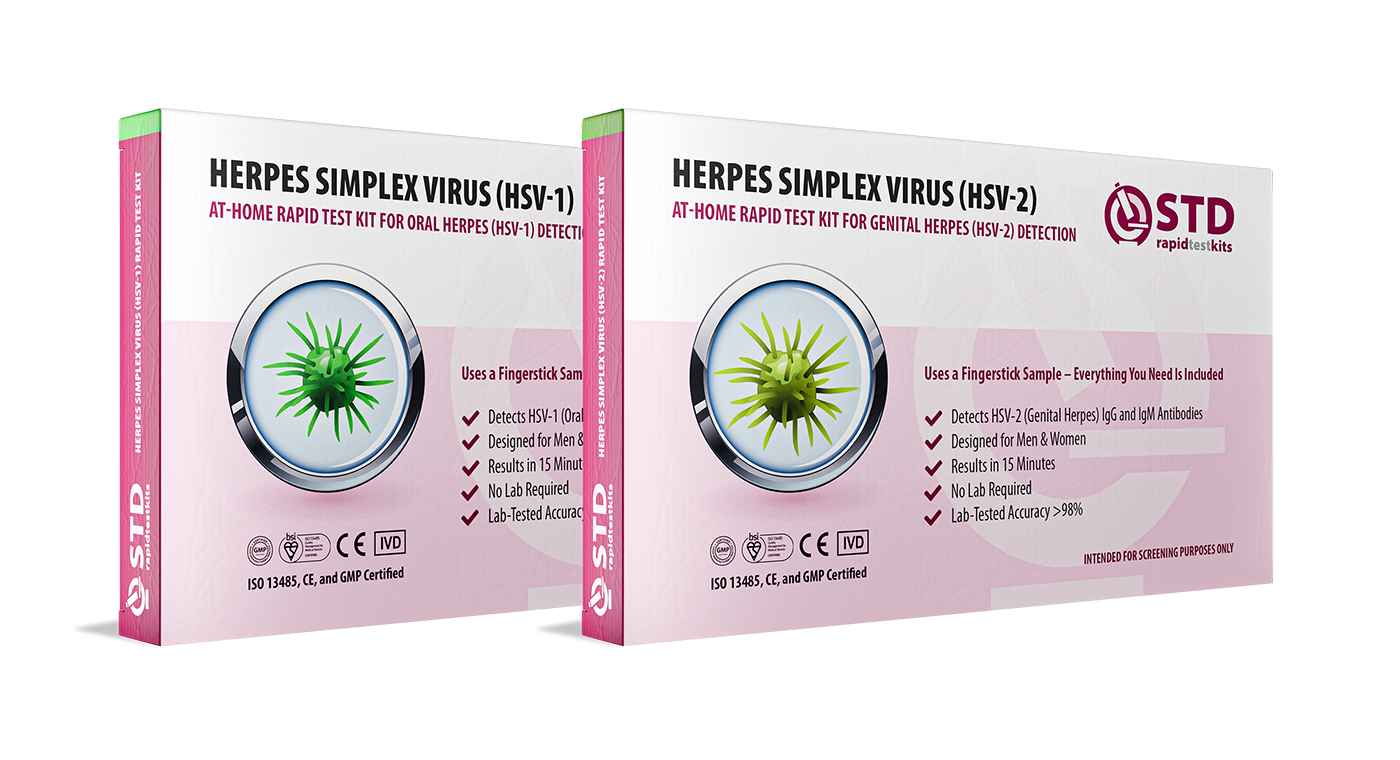
These have extended to include home STD testing kits for herpes that give direct, immediate results in this digital health age. The kits involve one's ability to take a sample from home and send them to a lab for testing. While these home kits offer a convenient and privacy-oriented avenue, they should never take the place of professional medical consultation and diagnosis.
Check Your STD Status in Minutes
Test at Home with Remedium Genital & Oral Herpes Test Kit
Though there is no cure for herpes at present, antiviral drugs can be prescribed to reduce outbreaks or their duration, cut transmission rates, and alleviate symptoms of patients with grave conditions or frequent recurrences.
Prevention of Herpes
The risk of giving or acquiring herpes may be reduced, particularly by using condoms during sexual intercourse. However, the most important thing to note is that the virus can be transmitted even when symptoms are not present. Education about the virus and how it is transmitted is indeed one of the essential modes of prevention.
Living with Herpes
A diagnosis of herpes does not mean the end of a person's dating or sex life, but it does mean that communication and honesty with partners are key. Safe sex, prescribed medication, and regular medical check-ups will help to manage the disease and decrease the chances of transmission.
Herpes is among the most common STDs; however, its prevalence does not make it an insignificant infection. Knowledge of this malady, its forms of transmission, symptoms, and complications makes a great difference in management and prevention efforts. Though herpes is a lifelong affliction, proper treatment nevertheless allows one to handle the condition and go on to lead productive, active lives.
Another vastly important aspect of herpes management, much like with other STDs, is regular testing. The innovation in testing methodologies—for example, at-home STD test kits that provide direct, instant results—makes it increasingly easier and more comfortable for ever more people to learn their status.
Lastly, while stigma about herpes and other STDs is ongoing, it remains vital that this be opened up to many with compassion. Education and communication are indeed strong tools in promoting sexual health and minimizing the impact of such diseases.
Remember, one is never alone in herpes or any other STD. Resources abound, support groups abound, and medical persons do abound to offer advice and treatment. We can learn how to decrease the toll that herpes and other STDs inflict on our global community.








 For Men & Women
 Results in Minutes
 No Lab Needed
 Private & Discreet


