Public restrooms have been the center of attention, eliciting numerous health hazards for many years. Amidst these health hazards, one such question has never stopped boiling in contention: "Can you get an STD from a public toilet?" It sounds as daunting as it does, but again, necessary awareness about the risk is needed. We will delve into great detail into the topic, shun several of the common myths, and offer useful information regarding how likely it is to get STDs from a public toilet. Additionally, we shall be discussing the use of home testing for the quick self-testing of STDs.
03 October 2024
6 min read
2342619
Understanding STDs
The most common modes of acquiring STDs are through sexual contact: oral, vaginal, or anal. They are caused by bacteria, parasites, yeast, and viruses, including well-known diseases like HIV/AIDS, chlamydia, genital herpes, and gonorrhea. However, while sexual contact is the most common mode of acquiring these diseases, certain types of STDs can be passed via non-sexual routes, such as sharing needles or from mother to child during childbirth or breastfeeding.
Can STDs Survive on a Toilet Seat?
Although it is scientifically correct that the pathogens at the root of STDs can survive outside the human organism, their survival time is different. Thus, viruses cannot survive for a long period of time outside the human body - for example, the herpes or HIV virus. Bacteria that cause syphilis or gonorrhea can survive a bit longer but also have a limited life. Thus, the risk of being infected with such types of STDs from a toilet seat is very low.
The Transmission Pathway
Another important factor to consider is the mode of transmission of the STDs. Most of the STDs require person-to-person transmission, involving a degree of genital, anal, or oral contact. The kind of skin-to-skin contact that occurs when using a toilet seat is impossible to transmit infections of STDs, especially if skin is thick in that part of the body, like in the buttocks, thighs, or legs. Thus, even in the event of a trace amount of bacteria or virus being present on the toilet seat, the likelihood of its triggering off an infection is relatively low.
Understanding the Risk
The risk of acquiring an STD from a public toilet is well below one percent but not exactly non-existent. Some parasites, such as Trichomonas vaginalis, can survive for brief lengths of time on a wet, moist surface such as a toilet seat. Trichomoniasis, the STD caused by this parasite, is in effect contractible from a toilet seat. But again, the possibility is minute and should not be unnecessarily panicked upon.
Toilet Hygiene and Safety Precautions
The greatest weapon of defense against any disease, including those of a sexually transmitted nature, involves hygiene. This includes washing hands well and completely after use of the restroom, avoiding any fluids that may be on the toilet seat, and using either a toilet seat cover or toilet paper between yourself and the seat. Of course, these are not absolute means, but they greatly reduce your chances of contracting any type of disease from a public toilet.
The Worth of Early Detection
If left undiagnosed and hence untreated, STDs can give rise to serious complications, such as infertility and a risk for certain types of cancer. For this reason, early initiation of treatment is highly important. Most STDs do not show symptoms in the initial period; therefore, periodic testing is very much the need of the hour.
Home STD Testing: A Reliable Solution
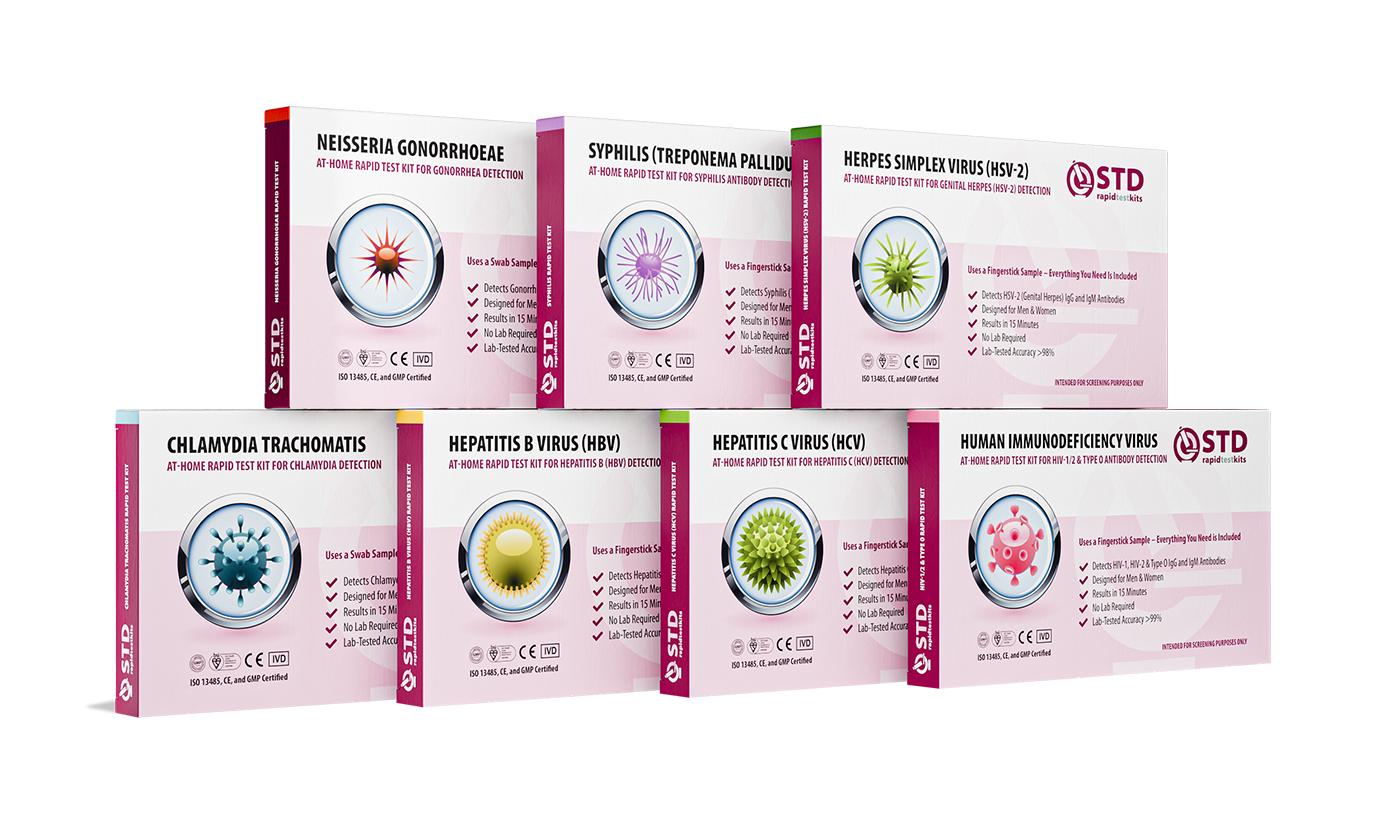
Available self-testing rapid kits mark a breakthrough in early detection. These testing kits are designed to provide instantaneous results and can be an excellent solution for people who may feel uneasy discussing their sexual health with health care providers. They are also a fast, private, and very reliable means of finding out your status regarding STDs.
How Do Home STD Testing Kits Work?
The principle of the work of home test kits is based on the detection of certain antigens or antibodies to sexually transmitted diseases in the blood, urine, or saliva. Generally, one is supposed to provide a specimen, usually place it into the testing device, and wait for the results that will appear in minutes. The test can detect such STDs as chlamydia, gonorrhea, and HIV. While these home testing STD kits offer convenience and faster results, they cannot replace a professional medical consultation in case of positive results.
Reliability of Home STD Testing
Home STD testing kits are FDA-approved and relatively accurate. In that regard, they are a decent solution for preliminary testing. However, they will not detect each and every STD, especially in its early infection stages. If you are sexually active, have multiple partners, or suspect that you have been exposed to an STD, it is always advisable to seek the professional assistance of a healthcare provider to receive comprehensive testing.
While home STD tests are mainly correct, there is a risk of false negatives or false positives. In the case of false negatives, it means that the test indicates that you are free from an STD, although practically it is not the case. On the other hand, if a test result is a false positive one, then you get to know that you have an STD, though practically you do not have any. The accuracy of a test is affected by: window period, which is the time from possible STD exposure into its appearance on the test, and how well you have followed the test instructions.
Next Steps If Your Result Is Positive
A positive result of a home STD test means you have to go see a doctor right away. Doubtless, a confirmation test may be conducted; the doctor will prescribe the right treatment. Besides that, it is important for you to tell your sexual partners about your status so that they can get themselves tested.
Many have probably harbored the question, "Can you get an STD from a public toilet?" Much as it may be possible theoretically, it is highly improbable. This can even be lower if one observes proper hygiene. The probability, however, stands high in cases of sexual contact. Testing yourself regularly through home STD kits or professional medical services will go a long way in ensuring early detection and hence effective treatment.
A Final Word on Prevention
Knowing the facts about how STDs are spread and how to prevent contraction will help us make educated choices regarding our sexual health. Public toilets have nothing to worry about when taking proper precautions. The key is to be abstinent, maintain safe sexual practices, and regularly visit the doctor. The more we know, the better equipped we are in protecting ourselves and others.







 For Men & Women
 Results in Minutes
 No Lab Needed
 Private & Discreet


