You’re staring at the result, reading it over and over like it might change if you blink hard enough. Positive. HSV-2. Maybe you Googled it immediately. Maybe your stomach dropped before you even understood what the test was measuring. And somewhere in that spiral, one question starts to push through the noise: “What if this isn’t even right?”
Here’s the truth most people don’t get told upfront, herpes testing is not perfect. Not even close. And depending on timing, test type, and even how your body responds, a “positive” result doesn’t always mean what you think it means.
21 March 2026
20 min read
847
Quick Answer: HSV-2 test results can be wrong, especially with low-positive blood tests or early testing. False positives and false negatives happen due to timing, test limitations, and how your immune system responds. Confirmatory testing is often needed before accepting a result as final.
This Is Where Most People Panic (And Why It’s Understandable)
Rafael, 29, got tested after a short relationship ended abruptly. No symptoms. No warning signs. Just a routine panel “to be safe.” Two days later, his results came back: HSV-2 positive.
“I didn’t even know what HSV-2 really was. I just saw ‘herpes’ and felt like my entire life had changed in five seconds.”
That reaction? It’s incredibly common. Herpes carries a disproportionate amount of stigma compared to its actual medical impact. But what makes it worse is this: many people never get told that herpes blood tests, especially the common IgG tests, can produce misleading results.
So before you rewrite your identity, your dating life, or your future, we need to slow this down and unpack what your test is actually saying, and what it might not be saying.
Not All “Positive” Results Mean the Same Thing
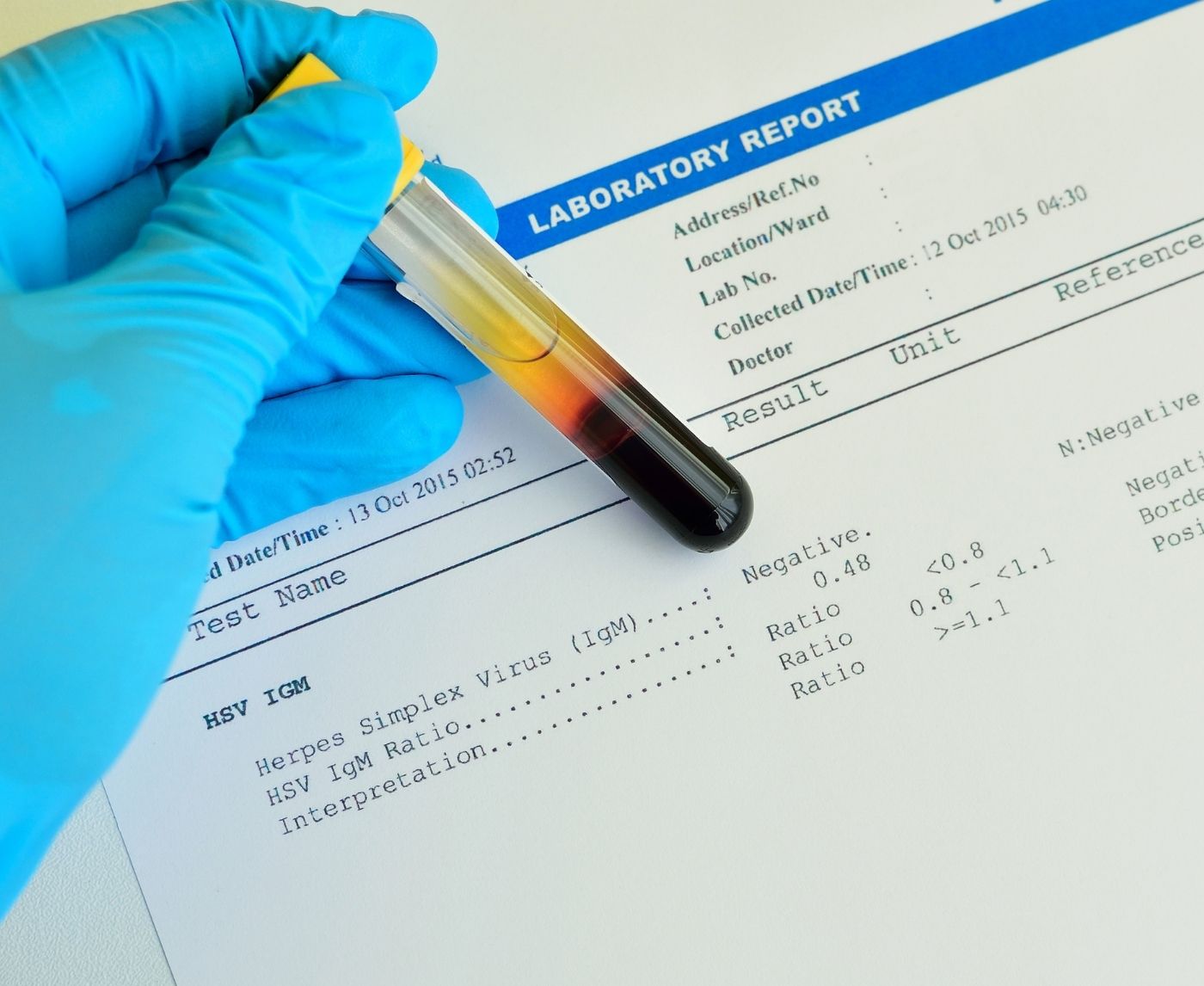
Here’s the part that almost no clinic explains clearly: a positive HSV-2 result exists on a spectrum. It’s not just yes or no. It’s a number, called an index value, that reflects how strongly your body reacted to the test.
And that number matters more than most people realize.
How HSV-2 Blood Test Results Are Typically Interpreted
Index Value
Interpretation
Reliability
Below 0.9
Negative
Generally reliable
0.9 – 1.1
Equivocal
Unclear, needs retesting
1.1 – 3.5
Low positive
High false positive risk
Above 3.5
Positive
More reliable
If your result falls in that low-positive range (1.1–3.5), the odds of a false positive are significantly higher than most people are told. Some studies suggest that up to half of low-positive HSV-2 results may not reflect a true infection.
That means a “positive” result in that range is not a final diagnosis. It’s more like a flag that says: we need to look closer.
A false positive means the test says you have HSV-2, but you actually don’t. And with herpes blood tests, this isn’t rare enough to ignore.
Here’s what’s happening behind the scenes: these tests detect antibodies, not the virus itself. Antibodies are your immune system’s memory. But sometimes, that memory gets a little… messy.
Your body might produce antibodies that look similar to HSV-2 even if they’re responding to something else. This is called cross-reactivity, and it's one of the main reasons why herpes tests can give false positives.
Common Causes of Incorrect HSV-2 Results
Cause
What It Means
Cross-reactivity
Antibodies from other viruses confuse the test
HSV-1 interference
Antibodies to cold sores can cause HSV-2 signals.
Low index values
Weak signals are more likely to be wrong.
Lab variability
Different labs may interpret borderline results differently
So, if someone says, "I tested positive but I've never had symptoms," that doesn't mean they don't have any. It could mean the test picked up something it shouldn’t have.
“I went from thinking I had herpes to finding out it was a false alarm three weeks later,” one patient shared. “No one warned me that could even happen.”
The Other Side: False Negatives and the Timing Trap
Now let’s flip it, because the opposite problem exists too. A false negative means the test says you don’t have HSV-2, but you actually do.
This usually comes down to timing. Your body needs time to produce detectable antibodies after exposure. Test too early, and the infection might not show up yet.
This is what’s known as the “window period,” and it’s one of the biggest reasons herpes tests can feel unreliable.
For HSV-2, it can take anywhere from 2 to 12 weeks for antibodies to reach detectable levels. That means a test at 2 weeks might say “negative”… while a test at 8 weeks could say “positive.”
This is where a lot of confusion, and emotional whiplash, comes from.
If you’re testing after a recent encounter, timing matters just as much as the test itself. Testing too soon doesn’t give you clarity, it gives you a snapshot of an incomplete story.
So… Can You Trust Your Result?
The honest answer? Sometimes yes. Sometimes not yet.
Here’s how to think about it without spiraling:
If your result is clearly negative and you tested well after the window period, it’s probably reliable. If your result is strongly positive (well above 3.5), it’s more likely to be accurate. But if you’re sitting in that gray zone, low positive, no symptoms, or recent exposure, you’re not at the end of the story yet.
This is exactly where confirmatory testing comes in.
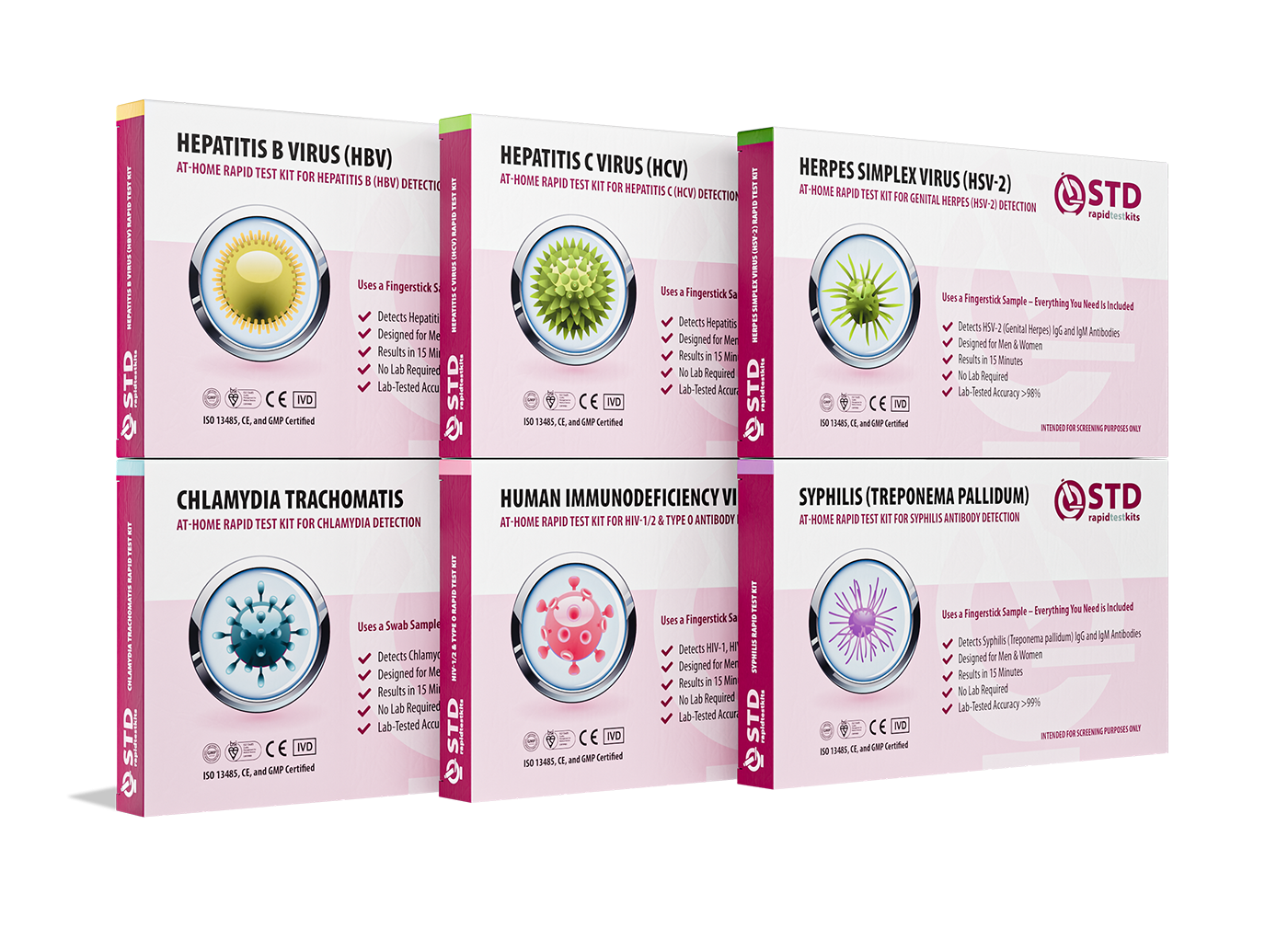
You can explore discreet, reliable options through STD Rapid Test Kits, including follow-up testing that helps you get a clearer answer without the clinic anxiety.
And if you want broader screening, a combo at-home STD test kit can give you a more complete picture, not just one result in isolation.
The Word “Positive” Isn’t the End of the Story
Let’s go back to that moment, you see “positive,” and your brain fills in everything that word implies. Infection. Disclosure. Stigma. A permanent shift in how you see yourself. But in herpes testing, especially with HSV-2, that word can be misleading without context.
A result is not a diagnosis until it’s confirmed. That’s not denial, that’s standard medical practice when dealing with tests known to produce false positives. And herpes blood tests, particularly in the low-positive range, absolutely fall into that category.
This is where most people either spiral… or get stuck. They don’t know whether to trust the result, ignore it, or retest. So let’s make that decision process a lot clearer.
What Confirmatory Testing Actually Means (And Why It Matters)
Confirmatory testing is exactly what it sounds like: a second, more specific test used to verify whether your first result was accurate. It’s not optional in borderline cases, it’s essential.
When your initial HSV-2 test comes back low positive, medical guidelines often recommend a follow-up using a different testing method. Why? Because repeating the same test doesn’t always fix the problem. You need a test that works differently.
The most well-known confirmatory option is the Western Blot test. It’s more precise, more specific, and far less likely to produce false positives, but it’s also less accessible and takes longer.
Initial vs Confirmatory HSV-2 Testing
Test Type
What It Detects
Accuracy
When It’s Used
IgG Blood Test
Antibodies
Moderate
Initial screening
Western Blot
Specific antibody patterns
High
Confirming unclear results
If your provider didn’t mention confirmatory testing, that’s not your fault, but it does mean you’re missing a key step in getting clarity.
“I wish someone had told me to double-check before I told my partner,” one reader shared. “It would have saved me weeks of panic.”
Let’s talk about that gray area again, because this is where most confusion lives.
If your HSV-2 index value falls between 1.1 and 3.5, you are in what clinicians often call the “low positive” range. And this is where false positives are most likely to happen.
What makes this tricky is that labs still label these results as “positive.” There’s no built-in warning that says, “Hey, this might not be accurate.” So people interpret it as definitive when it’s actually uncertain.
Here’s how to think about it in real terms:
A low positive result is not proof of infection, it’s a signal that needs confirmation. Especially if you don’t have symptoms, don’t have a known exposure, or tested shortly after a new partner.
And yes, this is exactly why so many people end up Googling things like “why did my herpes test change” or “should I trust a low positive HSV-2 result.”
What About Symptoms, Do They Make the Test More Reliable?
This is where things get even more complicated. Because symptoms don’t always line up neatly with test results.
You can have HSV-2 and never notice symptoms. You can also have symptoms that feel like herpes, but aren’t. And sometimes, people with false positive results start reinterpreting normal body sensations as “signs.”
This is the psychological side of testing that doesn’t get talked about enough.
“Every itch, every bump, I thought it was proof,” another patient said. “But it turned out I didn’t have it at all.”
Symptoms can guide testing decisions, but they don’t confirm a diagnosis on their own. The only way to confirm herpes from a symptom is to swab an active lesion, and even that depends on timing.
So if you’re symptom-free with a low positive blood test, that combination actually increases the need for confirmation, not decreases it.
Retesting: When, Why, and How to Do It Right
Retesting isn’t about second-guessing yourself, it’s about getting a complete picture.
If your first test was done too early after exposure, your body may not have produced enough antibodies yet. That’s where false negatives come in. On the flip side, if your first test was low positive, retesting helps determine whether that signal holds up or disappears.
The key is timing and method.
Smart Retesting Timeline for HSV-2
Situation
Recommended Action
Tested within 2–4 weeks of exposure
Retest at 8–12 weeks
Low positive result (1.1–3.5)
Get confirmatory test
Equivocal result
Repeat test in a few weeks
No symptoms, unclear exposure
Consider confirmatory testing before diagnosis
If you’re navigating this from home, using a reliable option like STD Rapid Test Kits can make the process more manageable, especially if you’re trying to avoid the stress of repeat clinic visits.
And if you want to rule out other infections at the same time, a comprehensive at-home STD test kit can help you stop chasing one result in isolation.
At-Home Herpes Tests vs Clinic Testing: What Actually Changes?
By the time you’re deep into herpes testing confusion, you’ve probably wondered if where you test changes how accurate the result is. Clinic vs at-home. Lab vs rapid. Blood draw vs finger prick. It starts to feel like maybe one option is “more real” than the other.
The truth is that the accuracy depends more on the test and when it is than on where it is. Just because a test is done in a doctor's office doesn't mean it's better. And an at-home test isn’t automatically less reliable just because you did it yourself.
What matters is what the test is measuring, and how well it’s done.
There’s a specific kind of stress that comes with uncertain test results. It’s not just fear, it’s instability. One result says one thing. Another says something else. And suddenly, you don’t know what to believe.
This is where people start searching obsessively, checking symptoms daily, replaying every sexual encounter in their head. It’s exhausting, and it’s completely human.
But here’s the grounding truth: uncertainty doesn’t mean the worst-case scenario is true. It means you don’t have enough information yet.
And that’s fixable.
Where Things Go Wrong: Common Testing Mistakes People Don’t Realize They’re Making
Let’s talk about the part no one really prepares you for: user error. Not because people are careless, but because when people are nervous, they often rush through, misunderstand, or skip steps.
Mistakes, even small ones, can change the results, especially with tests that use antibodies.
Common Testing Errors That Can Affect HSV-2 Results
Mistake
Why It Matters
Testing too early
Antibodies may not be detectable yet
Improper sample collection
Insufficient blood or contamination affects accuracy
Not following timing instructions
Reading results too early or late can distort interpretation
Mixing up HSV-1 and HSV-2 results
Leads to incorrect beliefs about the kind of infection
This is where good kits really help. Having clear instructions, the right tools, and help available can help you make these mistakes a lot less often. Using something like STD Rapid Test Kits at home gives you a structured way to test instead of just guessing.
Because the truth is, most “bad results” aren’t random. They come from timing issues or small execution mistakes that compound into confusion.
That “Faint Line” or Borderline Result? Here’s What It Actually Means
Few things trigger anxiety faster than a result that isn’t clearly one thing or the other. A faint line. A barely-above-threshold number. Something that looks like it could go either way depending on how you tilt the test.
This is where people start spiraling into interpretation mode, trying to decode something that isn’t meant to be eyeballed emotionally.
A faint or borderline result doesn’t mean “you kind of have herpes.” It means the signal detected was weak, and weak signals are exactly where false positives are most likely.
In other words, ambiguity in the result should trigger more testing, not more assumptions.
“I spent hours staring at the test strip like it was going to confess something,” someone shared. “Turns out, it just needed a better test.”
HSV-1 vs HSV-2 Confusion: A Huge Source of Misdiagnosis
Another layer of confusion comes from the overlap between HSV-1 and HSV-2. These are two different strains of herpes, but they’re closely related, and that similarity can confuse both tests and people.
HSV-1 is extremely common and often shows up as oral cold sores. Many people have it and don’t even realize it. But because the antibodies are similar, some HSV-2 tests can pick up signals that aren’t actually HSV-2.
This is one of the reasons cross-reactivity happens, and why someone with a history of cold sores might end up with a confusing HSV-2 result.
It’s also why understanding your full testing context matters. A single number without context can be misleading. A pattern of results, symptoms, and timing gives us a much clearer picture.
When At-Home Testing Helps, and When It Doesn’t
When done right, testing at home can be very useful. It gives you privacy, speed, and the chance to retest without having to deal with appointments or awkward conversations.
But it's not magic, and it doesn't get rid of the need to interpret.
Where it helps most:
Privacy: No clinic visits, no waiting rooms
Speed: Faster access to results
Follow-up: Easier to retest when needed
Where you still need caution:
Low-positive results: Still require confirmation
Early testing: Still affected by window periods
Ambiguous outcomes: Still need interpretation
This is why many people use at-home tests as part of a process, not a one-time answer. Especially when dealing with something as nuanced as HSV-2.
If you’re looking for a more complete picture, a combo STD home test kit can help rule out overlapping infections and reduce diagnostic guesswork.
What You Should Focus On Instead of the Result Alone
If there’s one shift that changes everything, it’s this: stop treating your test result like a verdict, and start treating it like information.
Information needs context. Timing. Confirmation. And sometimes, correction.
When you zoom out and look at the full picture, when you tested, what kind of test you used, whether symptoms are present, and whether confirmation has happened, you move from panic to clarity.
And clarity is what actually helps you make decisions.
How to Talk to a Partner Without Spiraling
This might be the hardest part emotionally. Not the science. Not the testing. The conversation.
When you don’t fully trust your result, it can feel impossible to explain it to someone else. You don’t want to cause panic, but you also don’t want to hide information.
Here’s a grounded way to approach it:
You don’t have to present uncertainty as certainty. You can say you received a result that isn’t fully clear yet and that you’re in the process of confirming it. That’s honest, responsible, and far more accurate than declaring something you don’t yet know is true.
“I got a result that might not be accurate, and I’m doing a follow-up test to be sure,” is a completely valid way to communicate this.
Most people aren’t reacting to herpes itself, they’re reacting to the fear and confusion around it. When you bring clarity into the conversation, it changes everything.
Let’s Talk About the Stigma, Because It’s Loud, Even When It’s Wrong
Herpes has a reputation that far exceeds its medical reality. It’s common, often mild, and manageable. But culturally, it’s been framed as something life-altering in a way that doesn’t match the science.
And when you combine that stigma with uncertain testing? That’s where the real damage happens.
People begin to perceive themselves differently based on potentially inaccurate results. They withdraw, panic, or make decisions from a place of fear instead of facts.
This is why accuracy matters, but so does perspective.
You are not your test result. Especially not one that hasn’t been confirmed.
FAQs
1. I tested positive for herpes and I’m freaking out, could this actually be wrong?
Yes, it absolutely could be, especially if your result was in that low-positive range. A lot of people get that first result and assume it’s final, but HSV-2 testing has gray zones where false positives happen more often than you’d expect. If no one has talked to you about confirmatory testing yet, that’s your next move, not panic.
2. What does “low positive” even mean? Like… do I have it or not?
It means your test picked up a weak signal, not a clear answer. Think of it like a blurry photo, you can kind of see something, but not enough to be sure what it is. In that range, a surprising number of people turn out not to have HSV-2 after a second, more specific test.
3. Okay but why would a herpes test say I have it if I don’t?
The test isn't looking for the virus; it's looking for how your body reacts to it. Sometimes, though, your immune system reacts to other things in a way that looks the same on the test. Your body isn't "messing up"; it's just how these tests work that makes them limited.
4. I tested negative… but I still feel weird down there. Should I trust it?
Maybe, but timing matters a lot here. If you tested soon after a hookup or exposure, your body might not have had time to show anything yet. That’s how false negatives happen. If something feels off, it’s worth retesting at the right time instead of relying on an early result.
5. What if I’ve never had symptoms? Does that make the positive result less likely?
It can, especially if your result is low positive. Plenty of people with herpes never notice symptoms, but when you combine “no symptoms” with a borderline result, that’s exactly when doctors recommend double-checking. It’s not proof either way, it’s a signal to slow down and confirm.
6. I already told someone I have herpes… what if it turns out I don’t?
That situation happens more than people talk about. If you’re in that spot, the most honest thing you can do is update them: you got an initial result, and now you’re doing confirmatory testing because those results aren’t always accurate. It’s not backtracking, it’s getting it right.
7. Do I really need a second test, or am I just overthinking this?
If your result was clearly positive and well above the cutoff, you might not need one. But if you’re in the gray zone or something doesn’t add up, yes, a second test is the responsible move. This isn’t overthinking. It’s making sure you’re not building your life around a maybe.
8. Can cold sores (HSV-1) mess up an HSV-2 test?
They can, and this surprises a lot of people. HSV-1 is incredibly common, and in some cases, those antibodies can confuse HSV-2 tests. So if you’ve ever had a cold sore, that’s one more reason not to take a borderline HSV-2 result at face value.
9. How long should I wait before I trust a herpes test result?
Ideally, you want to be at least 8–12 weeks out from your last possible exposure. That gives your body enough time to produce detectable antibodies. Testing earlier than that can leave you in that frustrating “not sure yet” zone.
10. Be honest, how often do these tests actually get it wrong?
More often than most people are told, especially in low-positive cases. Some research shows a significant portion of those results don’t hold up under confirmatory testing. It’s not that testing is useless, it’s that it needs context, timing, and sometimes a second look.
You Deserve Clarity, Not a Question Mark
Getting a herpes result, especially one that doesn’t fully make sense, can mess with your head fast. It turns something already loaded with stigma into a guessing game. But this isn’t about labeling yourself based on one confusing data point. It’s about slowing things down and separating what’s real from what just looks convincing on paper.
If your result was low positive, confirm it. If you tested early, give your body time and retest. If nothing is lining up, your symptoms, your exposure, your results, trust that instinct and dig deeper. Every step you take toward better information replaces panic with something a lot more useful: control.
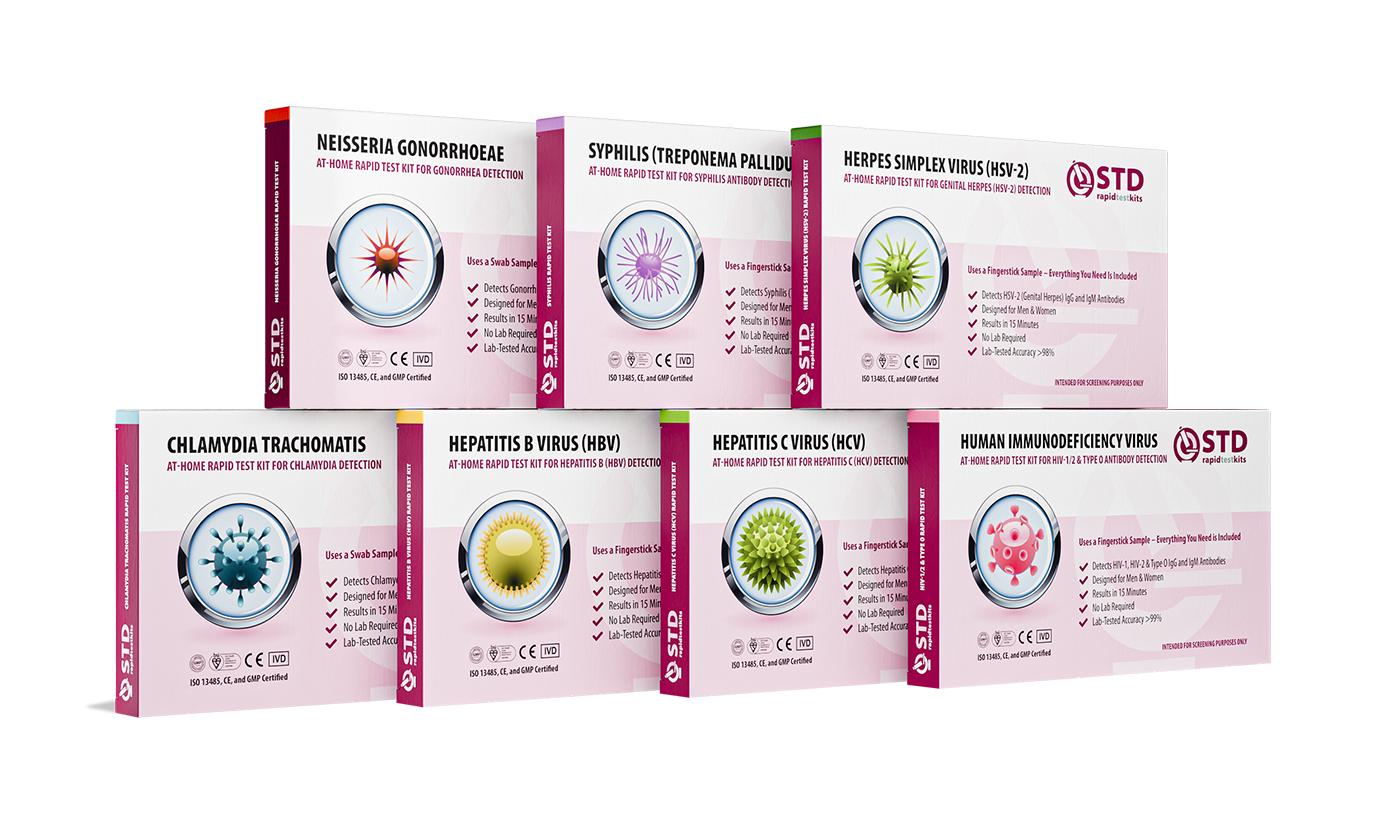
Don’t sit in the gray zone longer than you have to. If there’s even a small chance your result isn’t the full story, get a clearer answer with a Combo STD Home Test Kit. It’s private, straightforward, and built for moments exactly like this, when guessing isn’t good enough.
How We Sourced This Article: This article blends CDC guidance, peer-reviewed research on HSV-2 test performance, and real-world patient scenarios to reflect both clinical accuracy and lived experience. We reviewed studies on false positive rates, antibody cross-reactivity, and herpes testing windows, along with public health recommendations on confirmatory testing. The goal is simple: give you information that’s medically sound and actually usable when you’re sitting with an uncertain result.
Dr. F. David, MD is a board-certified expert in infectious diseases who focuses on accurate STI testing, diagnosis, and patient-centered care. His work emphasizes cutting through misinformation while maintaining a direct, stigma-free, sex-positive approach to sexual health.
Reviewed by: Michael R. Levin, MD, Infectious Disease | Last medically reviewed: March 2026
This article is for informational purposes only and does not replace professional medical advice, diagnosis, or treatment.







 For Men & Women
 Results in Minutes
 No Lab Needed
 Private & Discreet