






Quick Answer: An STD like chlamydia or trichomoniasis can still make sex painful, even if there is no discharge. These infections are often symptomless but may trigger internal inflammation or sensitivity. Get tested if you’ve had any recent exposure, even if your symptoms seem minor.
“It Didn’t Feel Right”, What Pain Without Discharge Can Actually Signal
Rita, 28, had been dating her partner for six months when she first noticed something off. Not pain exactly, but discomfort, deep in her pelvis during sex. No itching. No weird smells. No discharge. She brushed it off as anxiety or lack of lube, but it lingered. Three weeks later, a pelvic exam revealed she had untreated chlamydia. Her partner, symptomless, also tested positive.
This kind of story is maddeningly common. Pain during sex, whether sharp, burning, or achy, is often dismissed as “nothing” if there are no obvious signs like discharge or sores. But internal symptoms are still symptoms. Your cervix, uterus, or urethra doesn’t need to ooze to signal that something is wrong. In fact, one of the most insidious things about certain STDs is their ability to cause inflammation in delicate tissues without creating visible discharge.
In people assigned female at birth, chlamydia and trichomoniasis frequently show up as discomfort with penetration, deep ache during certain positions, or stinging post-intercourse. For those with a penis, the sensation might be a dull ache in the testicles or mild burning after ejaculation, again, with no discharge. These signs are often overlooked, especially if you're told “it’s probably friction” or “your tests were negative last year.”
Could It Be Chlamydia With No Other Symptoms?
Chlamydia is infamous for flying under the radar. According to the CDC, about 70% of women and 50% of men with chlamydia report no symptoms at all. But “no symptoms” doesn’t mean no damage. The infection can quietly inflame your cervix, urethra, or even ascend to your uterus or fallopian tubes. That inflammation is often felt during sex, and often misread as irritation, tightness, or emotional discomfort.
Think of it this way: your pelvic organs don’t talk, they just react. When the cervix is inflamed by infection, it can become sensitive to pressure. That translates to sharp or achy pain during deeper penetration. In some people, the infection affects the urethra instead, causing pain afterward that’s mistaken for a UTI, even when tests for bacteria come back clean.
The worst part? Many people are reassured they’re fine because they don’t have discharge. But discharge is not a universal symptom. Cervical chlamydia might not cause any outward signs. That’s why guidelines recommend routine screening for sexually active people under 25 and testing any time new symptoms, like unexplained pain, arise.
| Symptom | May Appear in Chlamydia? | How Often? |
|---|---|---|
| Vaginal or penile discharge | Yes | 30–50% |
| Pain during sex | Yes | 20–30% |
| Burning with urination | Yes | 50–70% |
| Pelvic pain without discharge | Yes | ~15–20% |
| No symptoms at all | Yes | 50–70% |
Table 1. Chlamydia symptoms and their frequency. Pain during sex may be the only symptom present in some cases.
People are also reading: Is Swallowing Sperm Safe? What Oral Sex Doesn’t Protect You From
When It’s Not an STD (But Still Needs Attention)
It’s easy to panic about STDs, but sometimes pain during sex with no discharge isn’t about infection at all. Pelvic floor tension, vaginal dryness, hormonal shifts (especially from birth control or postpartum), and even trauma responses can all manifest as painful sex. But here’s the trap: these causes often overlap with early STD symptoms, and only testing can rule things out. For instance, both vaginal atrophy and chlamydia can cause spotting or pain during penetration. Only one clears up with antibiotics.
In people with vaginas, a tight or spasming pelvic floor can create a burning or "hitting a wall" sensation during penetration. It’s physical, but it doesn’t show up on STD tests. In people with penises, pain can come from urethral irritation, prostatitis, or even referred pain from the lower back or pelvis, again, often misread as "nothing" because discharge isn’t present.
But one of the most dangerous assumptions you can make is: “It’s probably nothing because it doesn’t look like an STD.” Silent STDs are still STDs. And the longer you wait, the higher the chance of complications like PID (pelvic inflammatory disease), which can impact fertility or cause chronic pain.
Check Your STD Status in Minutes
Test at Home with Remedium6-in-1 STD Test Kit
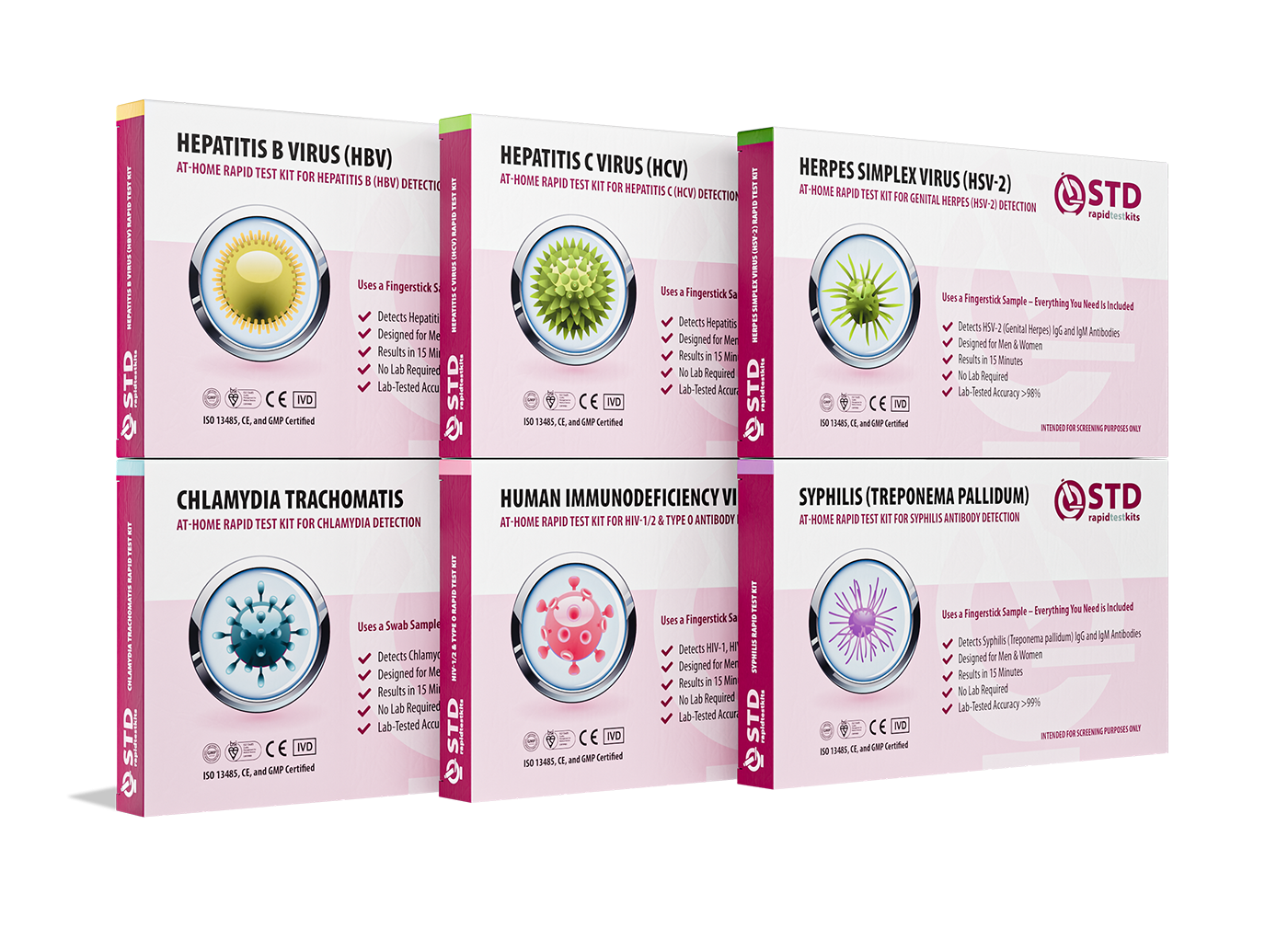
 For Men & Women
 Results in Minutes
 No Lab Needed
 Private & Discreet
Order Now $119.00 $294.00
For all 6 tests
So, When Should You Test?
If you've had unprotected sex, vaginal, anal, or oral, in the past 2–6 weeks and are now experiencing pain during sex, it’s time to test. Especially if that pain is new, worsening, or hard to explain otherwise. Testing sooner than 14 days after exposure may lead to false negatives, but that doesn’t mean you have to wait and suffer. You can test now and retest later if results are unclear.
Consider this scenario: Amanda, 24, took a chlamydia test 5 days after a condom broke. It came back negative, but the dull ache during sex didn’t go away. Two weeks later, she tested again, and this time, the result was positive. Her first test was too early. Her second one gave her the answer, and the antibiotics she needed.
Tests like the Chlamydia Rapid Test Kit can help you start the process from home, discreetly and quickly. If you’re not sure which test to take, combo kits offer coverage for multiple infections in one go. Don’t let silence fool you, get answers, not assumptions.
Still wondering? Peace of mind is just one test away. Explore our full selection of discreet at-home STD test kits for clarity you can trust.
What If Your Tests Come Back Negative?
Let’s say you do the responsible thing, you test, and the results come back negative. But the pain is still there. That moment is deeply frustrating. You did everything “right,” but you’re still left with questions. First, know this: false negatives can happen, especially if you test too early, collect the sample improperly, or are dealing with an infection that’s hiding in tissues not reached by the swab or urine test.
Chlamydia, for example, can reside in the throat or rectum even if your urine test is clean. If you had oral or anal sex, ask for multi-site testing or use test kits that include those options. For people with vaginas, infections can linger in the cervix even when urine results show nothing. And if you’re still within the window period, usually 7 to 14 days post-exposure for most tests, results may not reflect reality yet.
In one Reddit thread, a user described a situation where her test results were negative three times over four weeks, but symptoms persisted. It wasn’t until a pelvic ultrasound showed inflammation that doctors retested her with a cervical swab, and finally found the culprit: chlamydia. She had been told it was “probably stress.”
That’s why listening to your body matters just as much as listening to the lab. If symptoms persist despite negative tests, talk to a provider about retesting or testing at different sites. And if you’re using at-home kits, choose one that’s FDA-approved or CE-marked for better accuracy and follow instructions to the letter.
| Timing After Exposure | Risk of False Negative | Action Recommended |
|---|---|---|
| 0–7 days | High | Test now if urgent, but plan to retest |
| 7–14 days | Medium | Initial testing possible; retest if symptoms continue |
| 14+ days | Low | Best accuracy window for chlamydia, gonorrhea |
Table 2. How testing accuracy changes over time. Retesting may be needed even after a negative result, especially if symptoms persist.
The Invisible Load: Shame, Doubt, and Medical Gaslighting
Here’s what doesn’t show up on test results: the emotional weight of not being believed. Many people, especially women, LGBTQ+ folks, and survivors, report being dismissed when they say sex hurts. They’re told it’s “all in your head,” “you’re just not relaxed enough,” or “you’re probably dry.” And sometimes, that’s true. But often, it's not the whole story.
Chloe, 32, says she saw four providers before anyone suggested it might be an STD. “They kept saying I needed more foreplay,” she recalls. “But I’ve been with the same partner for years. The pain was new, and deep. When I finally tested for STDs at home, I found out I had trichomoniasis. My doctor hadn’t even mentioned that possibility.”
This is why trauma-informed, judgment-free care matters. Pain isn’t weakness. It’s information. Whether your discomfort is from infection, hormones, anatomy, or something else, you deserve to be taken seriously. That starts with listening to your own body, and getting the tools to back it up.
If you’ve ever been brushed off or made to feel paranoid, know that your questions are valid. You don’t need discharge or visible “proof” to be heard. An at-home test kit can be a powerful tool, not just for diagnosis, but for reclaiming agency in spaces that may not always offer it.
Could It Be Something Else? Non-STD Causes That Mimic Infection
There are real, physical reasons for painful sex without discharge that aren’t related to infection, but they’re still medical. Conditions like vaginismus, endometriosis, and interstitial cystitis often masquerade as silent STDs. They don’t cause discharge, but they do cause discomfort. And often, they’re diagnosed only after multiple “normal” test results leave you searching for deeper answers.
Vaginismus involves involuntary muscle spasms of the pelvic floor. Endometriosis can cause inflammation behind the uterus or along the vaginal wall. Interstitial cystitis leads to bladder sensitivity that radiates into the pelvis during sex. All of these can present as deep, sharp, or aching pain with no visible symptoms. They can coexist with or mimic STDs, making differential diagnosis tricky.
In these situations, the best path forward is layered: start with STD testing to rule out infection. Then explore pelvic floor therapy, hormonal evaluation, or gynecological referral if tests come back clean but pain persists. You don’t need to be “bleeding” or “burning” to get help. Pain alone is a reason to act.
One of the most empowering things you can do is track your symptoms, when the pain happens, how long it lasts, and whether it changes with cycle, arousal, or position. That kind of data gives providers (and yourself) a clearer picture of what might be going on beneath the surface.
And if you're still not sure? Don't let the uncertainty spiral. Get clarity with a combo STD test kit that covers multiple common infections. It's a small step that could answer a big question.

People are also reading: This STD Can Steal Your Fertility Without a Warning Sign
What If It’s Not You, But Your Partner?
Sometimes, the reason sex hurts isn’t something happening in your own body, it’s what your partner is carrying without realizing it. Up to 80% of people with trichomoniasis and around 50% with chlamydia have no symptoms. That means they can unknowingly pass an infection that only your body reacts to. And without discharge or visible irritation, the pain you feel might seem like a mystery, until testing reveals the hidden link.
Jordan, 35, found this out the hard way. After several months of monogamy, their partner tested positive for trichomoniasis during a routine check. Jordan had never tested, because they felt fine, aside from “the occasional sting during sex.” They assumed it was just from stress or dryness. Looking back, they realized that pain was the only symptom, and it had been trying to warn them for weeks.
This is why testing as a couple, or encouraging your partner to test, isn’t just about trust. It’s about clarity. If you’re the one feeling symptoms and they’re not, don’t dismiss it. STDs don’t always show up evenly. In fact, one partner can carry the infection asymptomatically while the other develops full-blown discomfort. It’s not about blame. It’s about biology.
You can make this easier by choosing kits that are affordable and private for both of you. Some test bundles are designed for two people, with shared delivery and individual results. That way, you can get tested on your own terms, but still compare results, side by side, without clinic shame or awkward scheduling.
Check Your STD Status in Minutes
Test at Home with Remedium6-in-1 STD Test Kit
For Men & WomenResults in MinutesNo Lab NeededPrivate & DiscreetOrder Now $119.00 $294.00
For all 6 tests
How to Start the Testing Conversation (Even If You're Anxious)
Maybe the hardest part isn’t the pain, it’s bringing it up. If you’re in a new relationship, talking about testing can feel like you’re accusing someone. If you’re with a long-term partner, it can feel like you’re rocking the boat. But your health matters more than discomfort, and there are stigma-free ways to open the door.
Try something like: “Hey, I’ve been feeling some discomfort during sex and I’m not sure what’s causing it. I think it would help if we both got tested, it’s probably nothing, but I want to be sure.” That puts the focus on your shared experience, not blame. Or if it’s easier, say: “I’m due for my regular testing, want to do it together?” Make it a care thing, not a suspicion thing.
At-home tests help here, too. You don’t need to go to a clinic or explain symptoms to a stranger. You can test from home, on your schedule, and share results when you’re ready. It’s not just about safety, it’s about feeling grounded in your body and your choices.
This combo STD kit can help you start that process today. Confidential, fast, and doctor-trusted, because you deserve answers without the awkward waiting room.
FAQs
1. Can chlamydia really cause pain but no discharge?
Totally. It’s one of the most frustrating things about it. You can have zero “classic” symptoms, no discharge, no itching, but still feel a deep ache during sex, or a weird pinch inside. For some, that’s the only warning sign. And it’s easy to miss or brush off until it gets worse.
2. What kind of pain should make me suspicious?
If sex suddenly feels sharp, crampy, or just “off,” pay attention. Especially if it’s happening in deeper positions or afterward. It might feel like pressure on your cervix, a dull ache, or even soreness the next morning. Your body doesn’t lie, even if the internet makes you doubt it.
3. I’ve been with one partner. Do I still need to test?
Yes. STDs don’t always follow relationship timelines. Your partner might not even know they’re carrying something, they could’ve had it before you got together. This isn’t about cheating accusations. It’s about your health, and STDs that hide for months (or years).
4. I tested negative, but the pain is still there. Now what?
First, good job testing. Second, it might be too early (hello, window period), or the sample type wasn’t ideal. But if you’ve ruled out infection and it still hurts? Think pelvic floor tension, endo, dryness, even stress. Pain deserves answers, even if a test says “negative.”
5. Can an STD cause pain even with a condom?
Yep. Condoms lower risk, but don’t block everything. Herpes and trich are examples of STDs that can be spread through skin contact or fluids that are not in the condom zone. If you’re feeling pain after protected sex, it’s still smart to test, just to be sure.
6. What if my partner feels fine and I don’t?
That’s more common than you’d think. STDs often act like ghosts, one person gets symptoms, the other gets nothing. Doesn’t mean anyone did anything wrong. Bodies just react differently. That’s why it’s so important to test both partners, even if only one feels “off.”
7. Can I test from home or do I need a clinic?
You can absolutely test from home. And for lots of people, it’s the better option, no waiting rooms, no awkward questions. Just you, a test, and the truth. Kits like the Combo STD Home Test let you check for multiple infections privately.
8. How soon is too soon to test?
If it’s been less than 7 days since exposure, you might get a false negative. That doesn’t mean wait forever. You can test now and retest later (around day 14+) to catch anything that was too fresh to show up. Pain is reason enough to check sooner rather than later.
9. Is it possible to have an STD and feel totally fine?
Unfortunately, yes. That’s the whole “silent” part. You can have chlamydia, gonorrhea, even trich, and not feel a thing. But the longer it stays untreated, the more damage it can do. That's why testing isn't about being paranoid; it's about stopping things from happening.
10. How do I bring up testing without it getting weird?
Try: “I’ve been feeling some stuff and just want to make sure we’re both good.” Or: “Let’s test together, it’s just health maintenance.” Think of it like getting your teeth cleaned. It’s not a trust issue, it’s just part of being a grown-up with a body and a sex life.
You Deserve Answers, Not Assumptions
Let’s be clear: pain during sex isn’t something you just “put up with.” Whether it’s a sharp sting, a deep ache, or just a nagging sense that something’s off, your body is trying to tell you something. You don’t need to wait for discharge or textbook symptoms to take action. The truth is, STDs like chlamydia can present quietly, and pain may be the only signal your body gives you.
That doesn’t mean you should panic. It means you deserve clarity. A discreet test, done at home and on your terms, can give you the answers that a quick Google search never will. You don’t have to justify your pain to anyone. You don’t have to explain it away. You can just choose to find out, and go from there.
Don’t wait and wonder, get the clarity you deserve. This at-home combo test kit checks for the most common STDs discreetly and quickly.
How We Sourced This Article: We combined current guidance from leading medical organizations with peer-reviewed research and lived-experience reporting to make this guide practical, compassionate, and accurate.
Sources
2. World Health Organization – STIs Overview
3. Planned Parenthood – What Is Chlamydia?
5. Chlamydia Trachomatis Infection 2022 Case Definition (CDC)
6. About Pelvic Inflammatory Disease (PID) (CDC)
7. Cervicitis – Symptoms and Causes (Mayo Clinic)
About the Author
Dr. F. David, MD is a board-certified infectious disease specialist focused on STI prevention, diagnosis, and treatment. He blends clinical precision with a no-nonsense, sex-positive approach and is committed to expanding access for readers in both urban and off-grid settings.
Reviewed by: A. Remy, NP-C | Last medically reviewed: December 2025
This article is meant to give you information, not to replace medical advice.


