






Quick Answer: Transportation barriers keep thousands from accessing timely STD testing, especially in rural and low-income urban areas. At-home STD kits and mobile testing units offer accessible alternatives when traditional clinics are out of reach.
Why Distance Still Decides Who Gets Tested
Maria, 24, lives in a small Alabama town with no public transit, no car, and one community health clinic open three days a week. When her boyfriend tested positive for chlamydia, she panicked, but quickly hit a dead end. “I called the clinic. They didn’t have an appointment for two weeks. I begged my sister for a ride, but she works nights,” she said. By the time Maria got tested, it had been 18 days, and she'd already unknowingly passed the infection to another partner.
This isn’t negligence. It’s infrastructure. Studies show that up to 1 in 4 Americans live in areas federally classified as “medical shortage zones,” with STI clinics increasingly concentrated in urban hubs. And even when services exist, buses don’t always run to them. Weekends aren’t always covered. Appointments are snapped up. Parking may cost more than the test itself.
Transportation isn’t just a “nice to have”, it’s one of the biggest non-medical drivers of untreated STDs in the U.S. According to a 2023 study in the Journal of Adolescent Health, 36% of people who skipped STD testing cited “lack of transportation” as the top reason, outpacing even stigma or cost.
How Geography Becomes a Risk Factor
Let’s say you live in a metro area. There are clinics within a 10-mile radius. Maybe a subway, maybe a rideshare. Testing is an errand, not an odyssey. But if you live in a rural zone, or even an urban neighborhood poorly served by transit, that 10 miles might as well be 100. This is what researchers now call a “testing desert.”
In these zones, infections go undetected. People stay asymptomatic but contagious. Retesting doesn’t happen. And when symptoms finally flare up, the damage is often worse, not just physically, but relationally and emotionally.
Here’s what this testing access gap looks like in real-world terms:
| Location Type | Average Distance to Nearest STD Clinic | Transit Options Available | Reported Testing Rate |
|---|---|---|---|
| Urban (transit-rich) | 1–3 miles | Subway, bus, rideshare | High (68%) |
| Urban (transit-poor) | 3–7 miles | Limited bus only | Medium (51%) |
| Suburban | 7–15 miles | Rideshare only | Low (34%) |
| Rural | 15–30+ miles | None or personal vehicle | Very low (18%) |
Table 1. Estimated access barriers to STD testing by geography. Data sourced from CDC regional outreach studies and urban health access reports.
The result? Higher rates of gonorrhea, syphilis, and trichomoniasis in communities with fewer transportation options. It’s not about behavior, it’s about access.

People are also reading: I Trusted Her. I Got Herpes. Now What?
“I Just Waited It Out”: The Emotional Cost of Inconvenience
Keon, 29, works maintenance at a warehouse outside Phoenix. When he started having burning during urination, he suspected an STD, but with no car and no nearby clinic, he did what many do: he waited. “It got worse. Then it kinda stopped. So I thought, maybe it was nothing,” he recalled. “But then it came back. Stronger.”
By the time Keon got tested via a free mobile van six weeks later, he was positive for both chlamydia and gonorrhea. “I wasn’t trying to be risky. I just couldn’t get there,” he said. His story isn’t rare, it’s representative.
In communities where transit is inconsistent or nonexistent, people delay care not because they don’t care, but because the system is built for people with options. A working car. Flexible hours. A support network. When those fall away, even basic sexual health becomes a logistical nightmare.
What Happens When You Can’t Just “Go Get Tested”
Not everyone has the luxury of walking into a clinic. In fact, for millions, even Googling “STD test near me” is an exercise in frustration. Maps show nothing. Or the closest option is a hospital with a three-week wait. Or you find one clinic, but it’s closed weekends, booked solid, or doesn't offer confidential services if you're on your parent’s insurance.
When transportation becomes the barrier, people fall into patterns: they delay. They guess. They try to self-diagnose. Some even ration sexual activity out of fear, others pretend nothing’s wrong and hope for the best. It's not denial. It’s survival. For many, the gap between “I think I need to get tested” and “I actually got tested” stretches weeks, sometimes months.
This delay doesn’t just affect individuals. It affects partners. It fuels chains of transmission. And it disproportionately impacts Black, brown, LGBTQ+, and low-income populations already facing higher baseline infection rates.
Check Your STD Status in Minutes
Test at Home with Remedium7-in-1 STD Test Kit
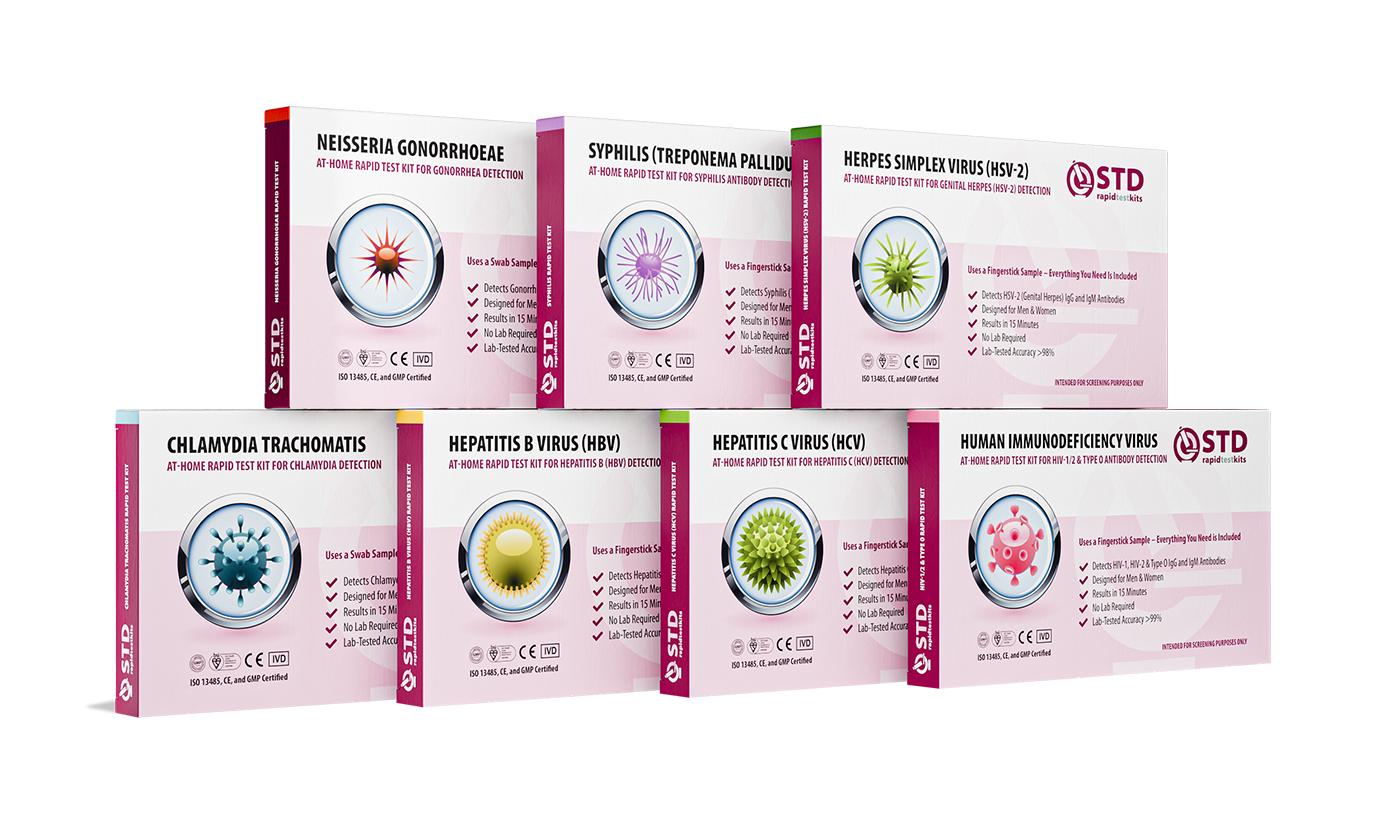
 For Men & Women
 Results in Minutes
 No Lab Needed
 Private & Discreet
Order Now $129.00 $343.00
For all 7 tests
The Rise of At-Home STD Testing as a Lifeline
Enter a new model of care: the at-home STD test kit. These aren’t fringe anymore, they’re FDA-cleared, lab-backed, and in many cases more discreet and faster than traditional testing routes. For people in testing deserts or without transportation, they’re not just a convenience, they’re a necessity.
Consider what it’s like for Jalen, 20, who lives with roommates and has no car. “I didn’t even know you could test at home,” he said. “A TikTok came up about mail-in kits. I ordered one that day. It was easy. Swab, drop it in the box, done.” Jalen’s story isn’t rare, it’s the fastest-growing trend in sexual health access for under-25s. And for good reason.
Let’s break down how the major testing options compare when you can’t rely on transportation:
| Testing Method | Requires Travel? | Turnaround Time | Privacy | Best For |
|---|---|---|---|---|
| Clinic Visit | Yes | Same day to 5 days | Low–Moderate | People with nearby access & urgent symptoms |
| Mail-In Lab Kit | No | 2–4 business days | High | Rural or transit-limited users needing lab-grade results |
| At-Home Rapid Test | No | 10–20 minutes | Very High | Those needing quick answers and full discretion |
| Mobile Testing Van | Yes (local) | Immediate | Moderate–High | Urban areas with community outreach programs |
Table 2. Comparison of STD testing options for users facing transportation or privacy barriers.
At-home kits also remove another huge barrier: fear of being seen. For some, especially teens and people in tight-knit communities, the idea of walking into a public health clinic feels like announcing their sex life on a billboard. But testing at home? That’s private. Empowering. Quiet.
How Mobile Clinics Try to Bridge the Gap
In cities like Philadelphia, Minneapolis, and Oakland, mobile STD testing vans are increasingly used to bring care into the community. These aren’t random buses, they’re staffed with clinicians, often park near public libraries or shelters, and run on a regular schedule.
Shannon, 31, got tested for syphilis and HIV in a mobile unit parked across from her laundromat. “I saw it when I was folding towels,” she said. “I hadn’t been tested in over a year because of work and no car. They swabbed me, gave me info, and I was done in 20 minutes.”
Mobile clinics have proven effective in reaching high-risk populations who otherwise fall through the cracks. According to the CDC, mobile STD units in underserved zip codes increase testing rates by over 40% within the first 12 months of operation.
But they’re not everywhere. Many states lack the funding, staffing, or political will to deploy them widely. That’s where at-home testing fills in the gaps, and scales without limits.
Don’t Wait If You Don’t Have To
If you’re reading this and thinking, “This is me, I don’t have a car, and the nearest clinic is miles away,” then this next part is for you: you don’t have to wait.
Order a discreet at-home combo test kit, it covers the most common infections including chlamydia, gonorrhea, and syphilis. You test in minutes, in your space, on your terms. There’s no waiting room. No awkward paperwork. No begging for a ride. Just clear answers, fast.
Because testing shouldn’t depend on how far you live from a clinic. It should depend on your right to know, to protect yourself, and to make empowered choices, even if the system makes it harder than it should be.
How Long Should You Wait to Test? (And When Waiting Hurts)
The question isn't just how to get tested, it's when. Timing matters. Test too early, and you might get a false negative. Wait too long, and you might spread something without knowing. But what if your reality makes the "perfect time" impossible?
Imagine Ava, 22, who had unprotected sex on a Sunday and started feeling off by Wednesday. She couldn’t take time off work and didn’t have a car. “I was scared, but also stuck. I didn’t even know if it was too early to test anyway,” she said. Ava waited three weeks, then finally ordered an at-home test kit. It came back positive for trichomoniasis.
This scenario plays out every day. So here's a simplified guide, narrative style, for people figuring out when and how to test:
If it’s been less than 5 days since exposure and you’re feeling anxious, know that most STDs won’t show up on tests that early. But that doesn’t mean you have to do nothing. Use this window to prepare, order an at-home test, look up local mobile van schedules, or contact a telehealth provider.
If it’s been 7 to 14 days, you’re in the early detection zone. Many rapid tests and mail-in labs can detect chlamydia, gonorrhea, and trichomoniasis at this stage. You may still want to retest at day 21 or beyond to be sure, but it’s a solid time to act if you're symptomatic or know your exposure was high risk.
If it’s been over two weeks, this is your accuracy sweet spot. Whether you’re testing at home or through a mobile unit, most common STDs can now be picked up with high confidence. If you’re still waiting to “find the time” or “get a ride,” consider this your sign, this is the moment testing matters most.
And if you tested earlier and got a negative, but something still doesn’t feel right? Retest. A false sense of security can be worse than no test at all. Your body knows when something is off, listen to it.

People are also reading: How to Feel Sexy Again After Testing Positive for an STD
The Cost of Waiting: What the Data (and Stories) Show
In a CDC review of 2022 STD surveillance data, delayed testing was linked to a 33% higher rate of untreated gonorrhea and nearly doubled rates of reinfection in certain areas. But what numbers don’t always show is how these delays happen not because people don’t care, but because they’re stuck.
Stuck in remote towns where Uber doesn't exist. Stuck under policies that require parental consent. Stuck in jobs where a day off means losing rent money. And stuck in bodies that give them no obvious signs something’s wrong, until it's really wrong.
Take Devon, a 26-year-old barista in Mississippi. He had no symptoms but knew his last hookup didn’t use protection. “I kept checking online, when to test, how long to wait. Everything said two weeks. But I couldn’t get a ride to the health department.” He eventually tested positive for herpes using an at-home kit nearly a month later. “If I had known about these kits earlier, I wouldn’t have waited so long,” he said.
This isn’t just a cautionary tale, it’s a call to action. Access must meet people where they are, not punish them for where they’re not.
Check Your STD Status in Minutes
Test at Home with Remedium7-in-1 STD Test Kit
For Men & WomenResults in MinutesNo Lab NeededPrivate & DiscreetOrder Now $129.00 $343.00
For all 7 tests
Testing Doesn’t Have to Be a Journey
Maybe you live in a place with no clinic. Maybe your job won’t let you leave. Maybe you’re just done being asked, “How soon can you get here?” when the real answer is, “I can’t.” That doesn’t mean you’re irresponsible. It means the system isn’t built for you. But your health still matters.
Visit STD Rapid Test Kits to find at-home solutions that don’t require travel, shame, or a juggling act. Whether you're worried about a possible exposure, have symptoms, or just want peace of mind, there's an option that works where you are.
Because whether you’re in a downtown apartment, a rural farmhouse, or couch-surfing with spotty Wi-Fi, you still deserve clarity, privacy, and care.
FAQs
1. What if I’m showing symptoms but have no way to get to a clinic?
You’re not stuck. If something’s burning, itching, or just doesn’t feel right, you can take action from wherever you are. At-home STD tests aren’t some sketchy internet thing, they’re legit, accurate, and often faster than booking a clinic. If your symptoms are severe or getting worse fast, a telehealth provider can talk you through next steps, no car or waiting room required.
2. Are at-home STD tests actually reliable, or is that just hype?
Real talk? They’re legit, if you use them right and test at the right time. Rapid tests give results in minutes, while mail-in kits get processed in certified labs. They're designed for the same infections clinics check for: chlamydia, gonorrhea, syphilis, HIV, and more. Just don’t test the day after exposure and expect clarity, accuracy still depends on timing.
3. What’s the best way to test if I live in the middle of nowhere?
If the nearest clinic is hours away and you don’t have wheels, at-home is your best friend. You can swab, pee in a tube, or prick your finger from your kitchen table. All you need is a mailbox. No waiting rooms, no rides, no explanations. Some states also run mobile testing vans or offer telehealth consults, worth checking.
4. How do I get tested without my parents finding out?
You order online. The kit shows up in discreet packaging (seriously, no branding, nothing loud). You test when you have privacy, and the results come straight to you. You don’t need insurance, and no one calls your house. You’re in full control, start to finish.
5. What is a “testing desert”? Is that really a thing?
It is, and it’s more common than you'd think. A testing desert is a place where getting an STD test is way harder than it should be. No clinics nearby, no transit options, maybe no mobile services. Lots of rural areas fall into this category, but some urban spots do too, especially neighborhoods underserved by healthcare or transit.
6. When is the soonest I can test after unprotected sex?
Depends on what you’re checking for. Some infections like chlamydia and gonorrhea can show up after 5–7 days, but testing too early can give you a false sense of safety. Best move? Wait at least a week, and if symptoms show up earlier, test anyway and plan to retest later just in case. Think of it like double-checking your GPS, one result might not be enough.
7. What if my test comes back positive?
First, deep breath. Most STDs are treatable, some with just one round of antibiotics. If you test positive, your next move is getting treated (a telehealth doc can help), and letting partners know. It doesn’t have to be dramatic, just clear. And you don’t have to do it alone. Some services even help send anonymous notifications.
8. Can a mobile STD van really do everything a clinic can?
Pretty close. They usually test for HIV, chlamydia, gonorrhea, and syphilis, plus pregnancy tests or hepatitis screening depending on funding. Some even offer PrEP consults. It’s healthcare on wheels, designed to meet you where you are, literally.
9. Do I need to do anything special before using an at-home test?
Not really. You don’t have to fast or prep like it’s a colonoscopy. Just read the instructions. Most say don’t pee for 30–60 minutes beforehand, and don’t open anything until you’re ready. If you’re nervous, there are even video walkthroughs online, no shame in checking twice.
10. Is it true that places with less access have higher STD rates?
Unfortunately, yes. When clinics are far, buses are rare, and jobs don’t offer sick days, people delay testing, and that leads to more spread. But it’s not about risky behavior. It’s about systems that don’t support real people. That’s why at-home and mobile testing are game-changers. They put power back where it belongs, in your hands.
You Deserve Answers, Not Obstacles
Transportation shouldn’t be the reason you skip testing. Being too far from a clinic doesn't mean you're careless, it means the system needs to evolve. But while we push for better access, you can still take control today.
This at-home combo test kit checks for the most common STDs and arrives in discreet packaging. It’s fast, private, and puts the power back in your hands, no ride required.
How We Sourced This Article: We combined current guidance from leading medical organizations with peer-reviewed research and lived-experience reporting to make this guide practical, compassionate, and accurate.
Sources
1. CDC – Sexually Transmitted Disease Surveillance
2. Access Barriers in Testing for Sexually Transmitted Infections (PubMed)
3. Health-Related Social Needs – Transportation and Health Care Access (CDC)
4. Healthcare Access in Rural Communities Overview (Rural Health Information Hub)
5. Improving Sexual Health in U.S. Rural Communities (NIH/PubMed Central)
7. CDC Recommendations for Providing Quality Sexually Transmitted Disease Clinical Services
About the Author
Dr. F. David, MD is a board-certified infectious disease specialist focused on STI prevention, diagnosis, and treatment. He blends clinical precision with a no-nonsense, sex-positive approach and is committed to expanding access for readers in both urban and off-grid settings.
Reviewed by: Renée W. Simmons, MPH | Last medically reviewed: December 2025
This article is for informational purposes and does not replace medical advice.


