Published: November 2025 | Last updated: May 2026 | Editorial review and quality control: Martina N.
Micah was 28 and six months into a relationship that finally felt steady. His partner had said she was clean. They had stopped using condoms. So when a painful blister showed up near the base of his penis, he did not link it to her at first. After an urgent care visit and a swab test, the result was clear: HSV-2 positive.
The shock hit harder than the symptoms. He felt deceived, then confused, then angry at himself for not asking sharper questions. His story turns out to be more common than most readers realize, and the reason is rarely cheating. It comes down to biology, and a testing system that quietly leaves herpes off the standard menu.
Key takeaways
- Most genital herpes is transmitted by a partner who did not know they were infected, according to the CDC.
- Standard STI panels do not include a herpes test unless you specifically ask for one.
How Herpes Hides in Plain Sight
One of the most misunderstood facts about herpes simplex virus is its ability to lie low. After the initial infection, the virus retreats into the body's nerve cells and stays there indefinitely. Triggers like stress, illness, friction, or hormonal shifts can prompt it to reactivate and travel back to the skin, sometimes causing a visible outbreak, sometimes causing nothing at all (CDC, About Genital Herpes).
Even without symptoms, an infected person can still shed virus from the skin and pass it on. This is called asymptomatic shedding, and it is the single biggest reason herpes spreads inside committed relationships. The World Health Organization estimates that around 520 million people aged 15 to 49 worldwide were living with HSV-2 genital herpes in 2020, and the vast majority had no idea (WHO, Herpes Simplex Virus fact sheet).
Your partner could have carried herpes for years, never had an outbreak, never been tested, and genuinely believed she was free of any infection. Asymptomatic shedding from skin that looks completely normal is how the virus crosses to a new partner, and it can happen during sex that neither person flags as risky.
The WHO estimate of 520 million HSV-2 infections worldwide in 2020 works out to roughly one in eight adults aged 15 to 49. Most of them have no idea they are carriers. If you have just been diagnosed, you are not an outlier, and the partner who passed it to you very likely did not know either.
Why Standard STI Panels Skip Herpes
If your partner had a routine STI screen at her last physical and the results came back negative, that still tells you very little about her herpes status. The U.S. Preventive Services Task Force recommends against routine serologic screening for genital herpes in asymptomatic adults and adolescents, citing the risk of false positives and limited benefit (USPSTF). Most clinics follow that guidance, which means the herpes test is opt-in only.
That is a quietly enormous gap in how Americans understand their own sexual health. A reader who walks out of a clinic with negative results on her chart can be confident about chlamydia, gonorrhea, syphilis, HIV, and hepatitis B, and still have no idea about her herpes status because no one tested for it.
| Test panel type | What it covers | Herpes included? |
|---|---|---|
| Routine STI screen (asymptomatic) | Chlamydia, gonorrhea | No |
| Standard 5-panel | Chlamydia, gonorrhea, syphilis, HIV, hepatitis B | No |
| Extended panel | Adds trichomoniasis and hepatitis C | Sometimes (HSV IgG only if requested) |
| Custom or symptom-driven testing | Varies by clinic | Only if the patient or clinician asks for it |
So How Do You Know It Was Her?
Here is the uncomfortable answer: you usually cannot prove it. Unless you have never had sex or skin-to-skin genital contact with anyone else in your life, the chain of custody for an HSV infection is rarely clean. That ambiguity is where shame and blame spiral fastest, and where the emotional math stops matching the clinical one.
Take this scenario. You are in what feels like a monogamous relationship. You develop a sore about ten days after sex. You have never had an outbreak before. You test positive. She swears she did not cheat. What is the truth?
The incubation period for primary genital HSV of either viral type ranges from 1 to 12 days from exposure (AHRQ technical review on serological screening for genital herpes). That looks like a clean timeline, except for one detail: the first outbreak you notice may not be your first exposure. Herpes can stay dormant for months or years, then surface for the first time during a stressful period, an illness, or even a hormonal shift.
So the most truthful version is also the least satisfying. Your current partner may have transmitted it. A previous partner may have transmitted it years ago. Or she may have carried it asymptomatically and shed it during the encounter that triggered your visible symptoms. All three are clinically plausible.
Why a Positive Test Doesn't Always Mean Cheating
This is where the loop usually starts: "If I have herpes, and I didn't have it before, she must have cheated." The equation feels airtight in the moment. The biology says otherwise.
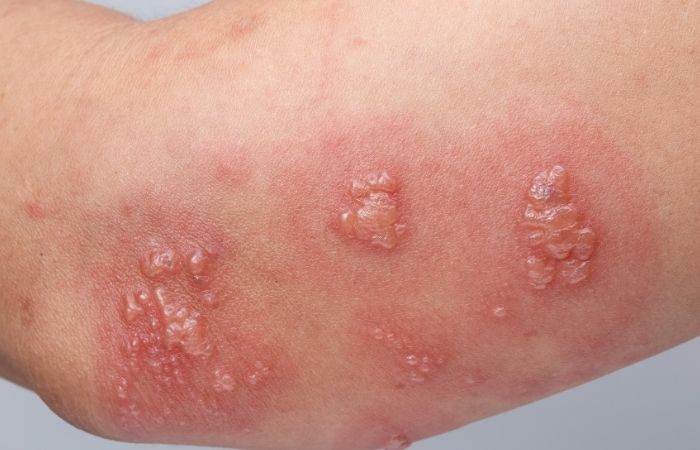
Genital herpes does not need a visible sore to spread. It does not need ejaculation. It does not even require vaginal or anal penetration. Skin-to-skin contact in the area covered by boxer shorts is enough for transmission, and the virus can be shed during periods when the carrier has no symptoms at all. The CDC confirms that most genital herpes infections are passed by people who either have no symptoms or do not recognize the symptoms they have (CDC, About Genital Herpes).
Add oral sex into the picture and the geography gets even messier. Genital HSV-1 infections are often transmitted by a partner with a cold sore, sometimes from a partner who had not seen an active sore in years. None of that requires deception.
That is also why the word "clean" is dangerously misleading. Someone can honestly believe they are STI-free and still transmit herpes. Many sexual health educators now suggest replacing "Are you clean?" with specific questions like "Have you ever been tested for herpes specifically?" or "Have you ever had a cold sore?" The first question almost always returns false reassurance. The second two give you real information.
Most people with genital herpes either do not have symptoms or have very mild symptoms that they do not notice or that they mistake for another skin condition.
Testing, Timing, and Talking About It
If you have not tested yet, now is the time. A swab taken directly from an active sore is the most accurate test available and the first choice when symptoms are visible. Once a sore has healed, swab testing is no longer useful, and the conversation moves to blood-based antibody tests.
HSV antibody tests look for your body's immune response to the virus, which takes time to build. After exposure, it can take roughly 6 weeks to 3 months for the antibody response to reach detectable levels (AHRQ technical review on genital herpes serological screening). When a recent exposure is suspected and an early antibody test is negative, the CDC's STI treatment guidelines recommend repeat type-specific antibody testing 12 weeks after the presumed time of acquisition (CDC STI Treatment Guidelines, Genital HSV Infections). If you test too early, a negative result does not rule out infection.
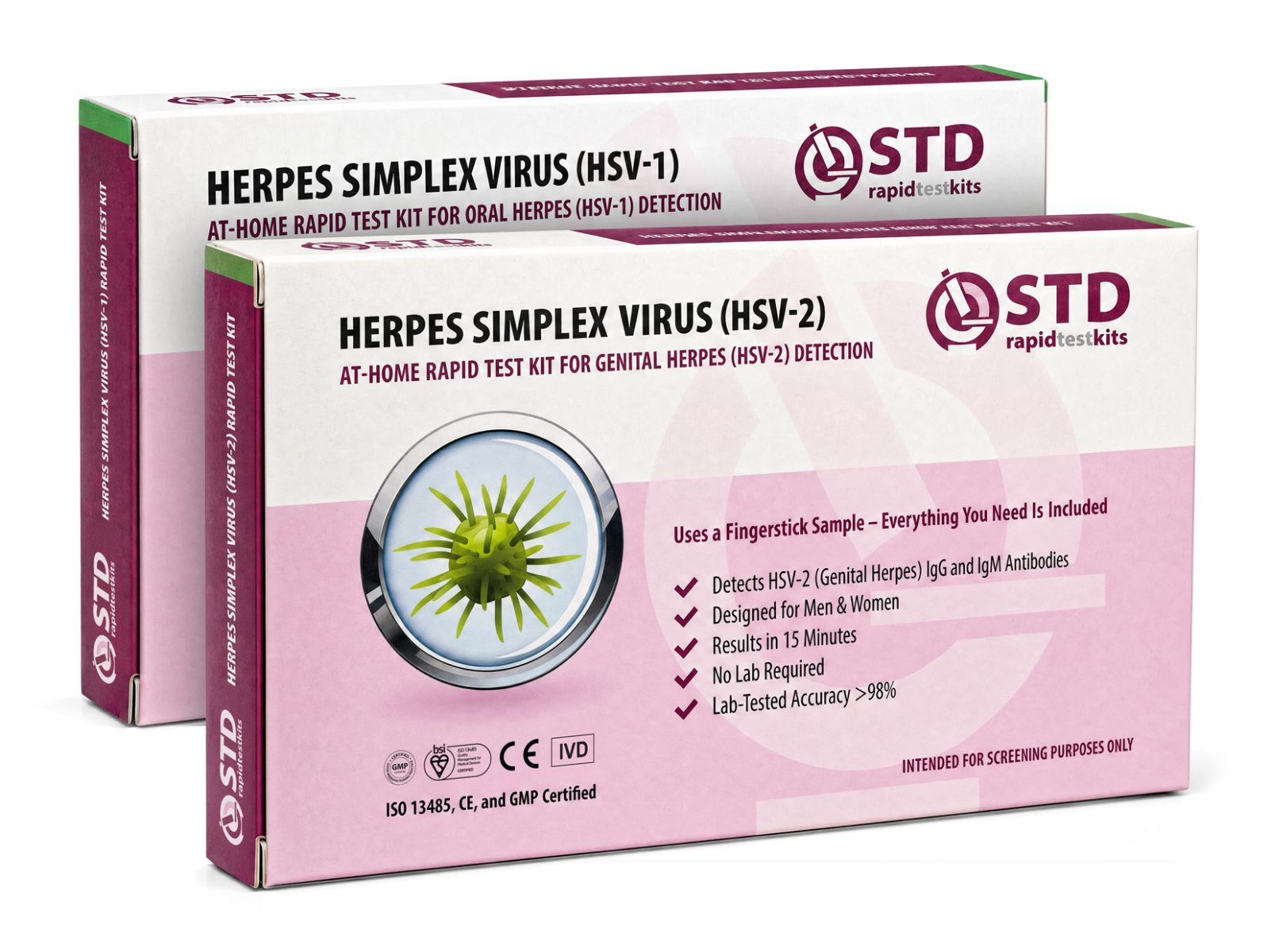
For many readers, at-home testing offers something a clinic cannot: privacy and timing on your own schedule. You can fingerstick at home, get results in minutes, and decide what to do next without sitting in a waiting room. An at-home rapid herpes test is a lateral-flow blood antibody test, which is a useful first screen. A positive home result is worth confirming through a lab when possible, especially before making major decisions about the relationship. (For transparency: STD Rapid Test Kits publishes this article and sells the home tests linked here.)
Talking about it is the harder part. If you are still in contact with your partner, frame the conversation around facts and shared next steps. "I tested positive for herpes. I did not know I had it. I wanted you to know so you can decide about testing too." That framing gives the other person the information she needs to decide about her own testing without turning the conversation into an argument about fault.
Living With Herpes and Moving Forward
For most newly diagnosed people, the physical outbreak passes faster than the emotional one. The first weeks can feel like a stack of small griefs: violated trust, a future that suddenly looks different, a body that no longer feels predictable. The American Sexual Health Association notes that even six months can make a meaningful difference in adjusting to a herpes diagnosis as people get accurate information and build a routine around managing the virus (ASHA, Emotional Issues with Herpes).
The medical picture is more manageable than the cultural narrative suggests. Most people have only a few outbreaks per year, and many notice that recurrences become milder and less frequent over time. Antiviral medications such as acyclovir, valacyclovir, and famciclovir can shorten outbreaks and, when taken daily as suppressive therapy, help reduce the chance of transmitting herpes to a partner, with consistent condom use cutting risk further (WHO, Herpes Simplex Virus). The size of that reduction depends on taking the medication daily and consistently.
A herpes diagnosis does not change your worth or your prospects of finding a healthy long-term relationship. Plenty of people live with the virus quietly and well.
Retesting questions come up often. If your diagnosis came from a swab during an active outbreak, that result is usually conclusive. If it came from a blood test taken soon after a suspected exposure, a follow-up antibody test at 12 weeks confirms whether your body has produced detectable HSV antibodies, which is the timing window CDC treatment guidelines point to for a reliable answer.
Practical steps for managing herpes
- Avoid sexual contact during outbreaks; the virus is most transmissible when sores are active.
- Use condoms consistently; they cut transmission risk further but do not eliminate it because herpes can shed from skin condoms do not cover.
- Ask your clinician about daily suppressive antivirals (acyclovir, valacyclovir, or famciclovir) if you have a regular partner.
- If your initial blood test was taken soon after exposure, retest at 12 weeks to confirm.
The Legal Question: Can You Sue Someone for Giving You Herpes?
This question comes up early for many people. The honest answer depends on where you live, what your partner actually knew, and whether she disclosed her status.
Most people find peace through clarity rather than a lawsuit. That means finding out what happened, making a plan together or apart, and protecting future partners through honest disclosure of your own status going forward.
In many U.S. states, it is technically possible to bring a civil tort claim against someone who knowingly transmitted an STI without informing the other party. These cases are rare, difficult to prove, and emotionally taxing. To prevail, you generally have to show that the other person knew she was infected, knew there was a real risk of transmission, and chose not to disclose. If she had never been tested, had no symptoms, or honestly believed she was uninfected, which is the most common scenario for genital herpes, that legal standard is hard to meet.

Should You Test for More Than Just Herpes?
If you have just been diagnosed with herpes, this is also the smart moment to look at the rest of your sexual health picture. Genital herpes can increase the risk of acquiring or transmitting HIV during exposure to the virus, in part because herpes-related sores and inflammation give HIV easier access to the bloodstream (WHO, Herpes Simplex Virus). The CDC recommends testing for other common STIs when one is diagnosed, because co-infections are common and many run silent for months.
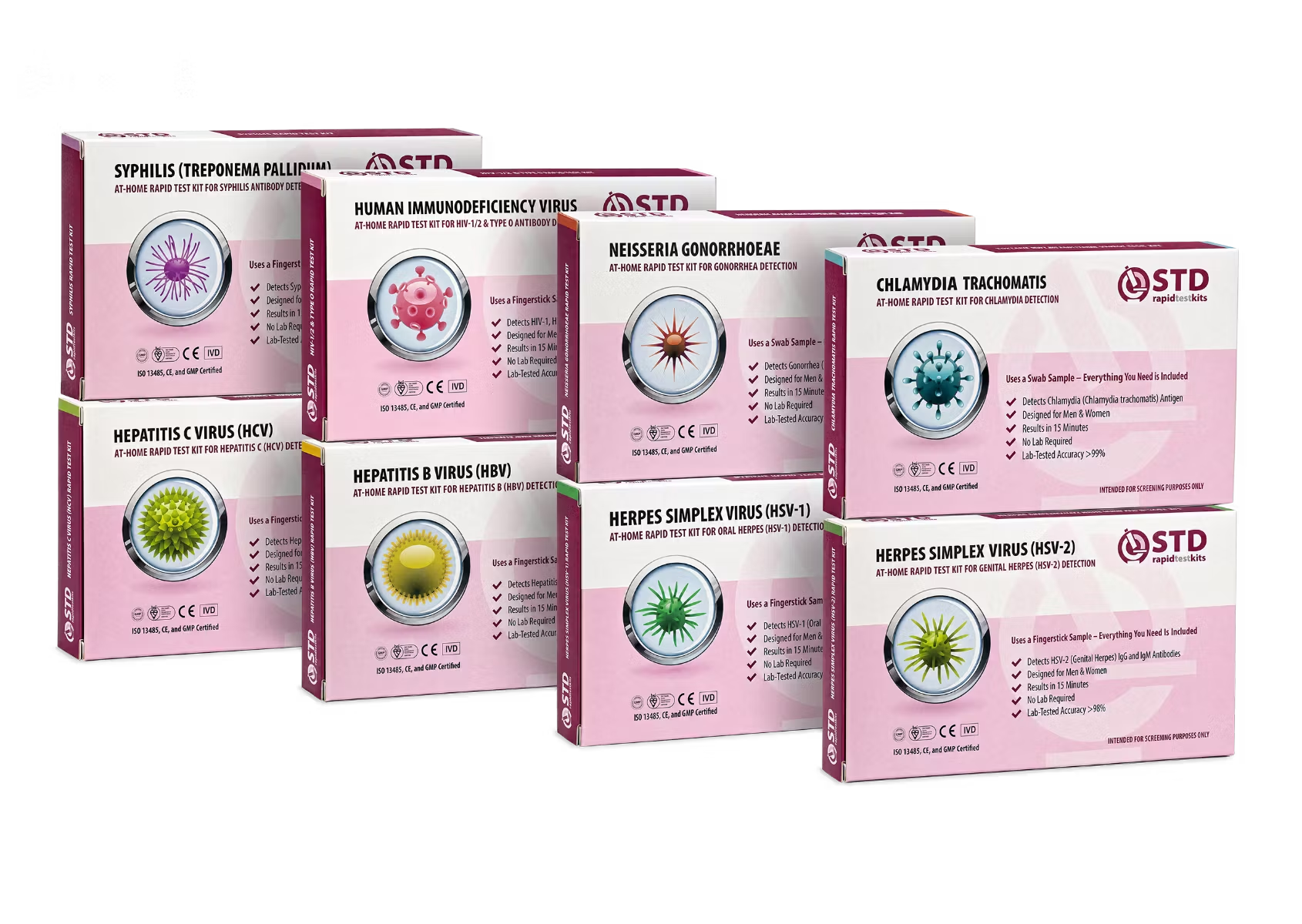
A combination test panel takes one decision and turns it into a clear baseline: a single round of testing tells you where you stand on the most common bloodborne and swab-based infections. If your partner is also testing, doing it together avoids the back-and-forth of partial information. One note for male readers considering the 8-in-1 below: the HPV component uses a vaginal self-swab and applies to female users only; the remaining seven tests (HIV, syphilis, hepatitis B, hepatitis C, herpes, chlamydia, gonorrhea) apply to any reader.
You Deserve Answers, Not Assumptions
You are allowed to feel hurt. You are allowed to feel angry. You are also allowed to step out of the spiral and ask better questions: what does the biology actually say, what does a clean test result really mean, what does treatment look like, and what conversation do I want to have next.
Herpes may have entered your life by surprise. The next few steps are still yours to choose, and the practical ones below are a reasonable place to start.
1. If your sores have healed, take a fingerstick blood antibody test for HSV-1 and HSV-2, ideally 12 or more weeks after the suspected exposure.
2. Notify your current partner using a fact-based script: "I tested positive for herpes. I did not know I had it. I wanted you to know so you can decide about testing too."
3. Confirm any positive home result through a lab before making major relationship decisions.
FAQs
- Can someone give you herpes without knowing they have it?
- Yes, and this is the most common transmission pattern. Herpes often shows no obvious signs, and many people never develop sores at all. They feel healthy, test for the things their clinic offers, and assume they are clear, which is why so many infections happen inside committed, symptom-free relationships.
- How soon after sex would herpes symptoms show up?
- For a new infection, the incubation period typically runs from 1 to 12 days, with most symptomatic cases showing up in the first week. Keep in mind that the first outbreak you notice may not be your first exposure. The virus can stay dormant for months or years before surfacing during stress, illness, or a hormonal change.
- Why is herpes not included in standard STI tests?
- Because false positives outnumber true positives in low-risk populations, the U.S. Preventive Services Task Force concluded routine serologic screening for asymptomatic adults does more harm than good. Most clinics treat the herpes test as opt-in, so you have to ask for it by name. At-home rapid blood tests are another route if you prefer to skip the clinic conversation.
- Can you get herpes from oral sex?
- Yes. Oral herpes, which is usually HSV-1 and the cause of cold sores, can be transmitted to a partner's genitals during oral sex, including when the carrier has no visible sore. Many genital HSV-1 cases trace back to a partner who simply did not connect a past cold sore to genital risk.
- Does a positive herpes test mean my partner cheated?
- Not necessarily. Herpes can stay dormant for years and can be transmitted by a partner who had no idea they were infected. Both possibilities are clinically plausible, which is why a single positive test cannot prove infidelity.
- What is the difference between HSV-1 and HSV-2?
- HSV-1 historically caused most oral cold sores, while HSV-2 caused most genital infections. Those lines have blurred. HSV-1 now causes a significant share of genital herpes infections, often through oral sex, and HSV-2 can show up orally though it does so less commonly. HSV-2 tends to recur and shed more often than genital HSV-1.
- Can I still have sex if I have herpes?
- Yes. Many people with herpes have full, satisfying sex lives. The practical steps are to avoid sexual contact during outbreaks, use condoms consistently, and talk with a clinician about daily suppressive antiviral therapy, which can lower the risk of passing the virus to a partner when taken every day.
- Do I have to tell future partners?
- Disclosing your status before sex is ethically important and, in some jurisdictions, legally required. It does not have to be a dramatic conversation. People who own their diagnosis matter-of-factly tend to have a much easier time with disclosure, and many partners are willing to date someone with herpes once they have the facts.
- Where can I get tested without going to a clinic?
- At-home rapid fingerstick blood tests for HSV-1 and HSV-2 are available without a clinic visit. You run the test at home and read your result in about 15 minutes. A positive home result is worth confirming through a lab when possible, especially before making major relationship decisions.
- U.S. Centers for Disease Control and Prevention. About Genital Herpes, used here for transmission, asymptomatic shedding, and symptom recognition.
- U.S. Centers for Disease Control and Prevention. STI Treatment Guidelines, Genital HSV Infections, used here for the 12-week retest recommendation after suspected acquisition and the standard panel composition.
- World Health Organization. Herpes Simplex Virus fact sheet, used here for global prevalence, transmission dynamics, the HIV co-infection link, and suppressive therapy guidance.
- U.S. Preventive Services Task Force. Recommendations on screening for sexually transmitted infections, including the position against routine serologic herpes screening in asymptomatic adults.
- AHRQ technical review for the USPSTF: Serological Screening for Genital Herpes (NCBI Bookshelf NBK409119). Used here for the 1-to-12-day primary incubation window and the 6-week-to-3-month antibody seroconversion timing.
- American Sexual Health Association. Emotional Issues with Herpes, used here for the expected timeline of psychological adjustment.
