






Quick Answer: STD testing before and after travel helps detect infections picked up or carried unknowingly, protects future partners, and can prevent complications from untreated STDs.
“We Just Met, But It Felt Right”, Why Travel Is a Unique STD Risk
Kiera, 28, met her travel hookup on a layover in Lisbon. “We were both solo travelers, waiting on the same delayed flight. Drinks turned into dinner, and before I knew it, we were sharing a hostel bed that night.” When she returned to California with a tan and a fever, she assumed it was jet lag, until painful urination and pelvic cramps sent her to urgent care. Diagnosis: chlamydia.
Travel lowers inhibitions. We drink more, sleep less, trust faster, and often take more sexual risks. It’s not just vacation sex. It’s honeymoon sex, destination weddings, polyamory-friendly retreats, group travel with blurred boundaries, every scenario that offers adventure also offers a chance for STI transmission.
According to the Journal of Travel Medicine, sexual encounters among travelers account for a significant percentage of reported STDs, especially among those engaging in new or anonymous partnerships.
The Case for Pre-Trip Testing (and Post-Trip, Too)
Testing before a trip isn’t just about what might happen, it’s also about what you might already have. Many STDs are asymptomatic, especially in early stages. If you test before you travel, you're protecting partners you might meet, and giving yourself peace of mind. If you're in a committed relationship and planning to see your partner after time apart, testing becomes a signal of respect and reassurance.
Post-trip testing is equally critical. If you’ve had any unprotected sex, oral or otherwise, or simply don’t know your partner's status, testing afterward helps catch infections before they spread, or worsen silently. Take gonorrhea for example. It can live in the throat, rectum, or urethra without causing symptoms. Left untreated, it can cause infertility and increase HIV risk.
| Testing Timeline | Best Reason to Test | Common Window Periods |
|---|---|---|
| Before Travel | Ensure you're not carrying an asymptomatic STD | 3–14 days post-exposure for most bacterial STDs |
| After Travel | Detect possible new infections from travel exposure | 14–30 days for accurate detection of HIV, chlamydia, gonorrhea, etc. |
Table 1: Pre- and post-travel STD testing windows with common rationales for each.
People are also reading: Herpes Testing at Home: Safe, Private, and Actually Accurate
The Problem With Waiting for Symptoms
Marcus, 31, didn’t think much about his sore throat after hooking up at a beach resort in Tulum. “I thought it was too many margaritas and not enough water,” he says. “Then I got back to New York and started feeling like I had the flu. My doctor ran tests, it was syphilis. I didn’t even think oral sex could do that.”
This is common. Many STDs don’t show symptoms for weeks, or ever. HPV can stay dormant for months. HIV symptoms may look like a mild cold, or nothing at all. Herpes can appear years after exposure. By the time symptoms prompt someone to test, partners may already be infected, or damage may have progressed.
That’s why relying on symptoms to tell you when to test is risky. And for travelers, it's even worse. You're often moving through time zones, changing diets, drinking more, and experiencing stress, all of which can mask or mimic STD symptoms. Testing is the only way to know.
Check Your STD Status in Minutes
Test at Home with Remedium7-in-1 STD Test Kit
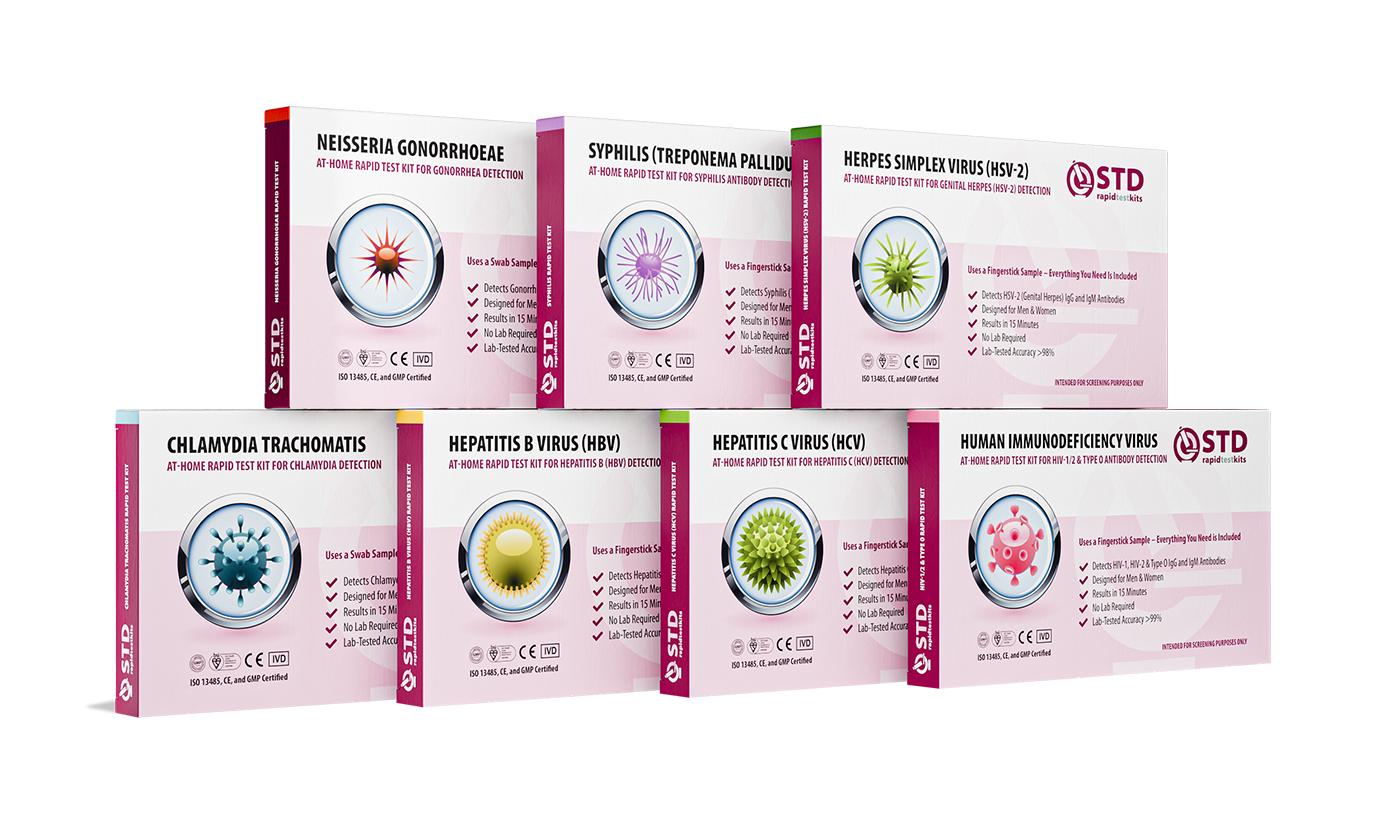
 For Men & Women
 Results in Minutes
 No Lab Needed
 Private & Discreet
Order Now $129.00 $343.00
For all 7 tests
Can You Even Get Tested While Traveling?
If you’re reading this mid-trip and panicking, don’t. Testing during travel is often possible, especially with at-home kits. Whether you’re staying at an Airbnb in the Catskills or hopping hostels in Western Europe, discreet testing options exist. Kits can be shipped to U.S. addresses with neutral packaging. Some even offer international shipping or allow mailing samples from abroad.
One traveler we interviewed used a mail-in test while road-tripping the Southwest. “I had it shipped to a friend’s house along my route,” she says. “Did the swab in their guest bathroom, mailed it the same day, and got results by the time I reached Utah.” Others use test kits before leaving for multi-month trips, especially if they’re planning on dating or hooking up while abroad.
Of course, in some cases, like if you're experiencing acute symptoms, testing locally at a clinic may be necessary. But if you’re symptom-free and want a privacy-first option, STD Rapid Test Kits offers fast, discreet tools that let you test before or after your trip, no matter where you're headed.
If you're unsure what to choose, this combo test kit checks for the most common STDs and fits in a backpack or glovebox.
What If You’re Traveling With an STD?
This might sound like a nightmare scenario, but it happens more than you’d think. You're asymptomatic, unaware, and then, boom, your STD test comes back positive the day before your flight. Or worse, during your trip. Do you cancel? Disclose? Panic?
Let’s cut the shame out of this. Traveling with an STD doesn’t make you dirty, irresponsible, or dangerous. It makes you a human being living in a world where most sexually active adults will encounter an STD at some point. The key is knowing what you have, how it behaves, and what precautions to take.
If you’re diagnosed with chlamydia, for instance, a single round of antibiotics clears it up within days. But you'll still be contagious for at least seven days after treatment begins. If you’re headed to see a partner, this means delaying sex until you're no longer infectious. Traveling with herpes requires awareness of outbreaks and consistent condom use, not abstinence. For HIV, it’s about viral load, medication adherence, and informed conversations.
In fact, many STDs are completely manageable while traveling. But that only works if you know your status before you board the plane. Otherwise, you’re just guessing, and putting partners at risk.
“We Were in the Jungle. I Thought I Was Safe.”
Youssef, 26, met his partner on a volunteer trip in Costa Rica. “We had a tent, a mosquito net, and not much else. Sex felt spontaneous, like part of the magic. We didn’t talk about protection, we just assumed we were both clean.”
Two months later, he developed painful urination and a strange rash on his inner thigh. He assumed it was a jungle allergy. A doctor in San Diego diagnosed him with trichomoniasis and gonorrhea.
It’s easy to mistake STD symptoms for travel-related issues: heat rash, sunburn, insect bites, food poisoning. Especially when your body is out of its usual rhythm. And when hookups are new, fun, and spontaneous, testing and condoms often go out the window. But biology doesn’t care about vibes.
That's why Youssef now tests before and after every major trip. “It’s my new ritual, passport, charger, test kit.”
Can Travel Suppress or Worsen STD Symptoms?
Actually, yes. Travel throws off your immune system. Jet lag, dehydration, alcohol, stress, and interrupted sleep can weaken your body’s ability to manage infections. An STD that was dormant might flare. A mild rash might worsen. And if you’re menstruating or have a pre-existing condition like a UTI, it can complicate symptom recognition even further.
Herpes outbreaks, in particular, are often triggered by stress or sun exposure, two things you’ll encounter on vacation. Similarly, HPV flare-ups and bacterial vaginosis can be exacerbated by changes in pH, which are common with hot tubs, new sexual partners, or even different soaps and detergents in hotels.
| Travel Factor | Possible STD Symptom Triggered | Commonly Affected Conditions |
|---|---|---|
| Jet lag / sleep deprivation | Immune suppression | Herpes, HPV |
| Hot tubs / pools | pH imbalance, irritation | Trichomoniasis, BV |
| Alcohol & low hydration | Delayed immune response, dehydration | Gonorrhea, syphilis symptom intensification |
Table 2: How common travel stressors can influence STD symptoms or increase susceptibility.
Should You Retest After a Trip? Here’s How to Know
If you had any sexual contact, oral, vaginal, anal, or even intense skin-to-skin friction, you should strongly consider retesting 2–4 weeks after returning home. Even if you used protection. Even if you feel totally fine. Especially if you’re planning to have sex with a regular partner again.
The timing matters. Most rapid STD tests have accuracy that improves after a certain “window period.” For example, a chlamydia infection might be detectable within 5–7 days post-exposure but is far more reliably caught after 14 days. HIV tests become more accurate after 21 days, and often require a follow-up at 90 days for confirmation.
This doesn’t mean testing earlier is pointless. It means testing early and again later is often the best strategy, especially for high-risk exposures. If your vacation included multiple partners, group sex, or sex with someone whose status you didn’t confirm, consider a test immediately and another after 30–45 days.
Think of it like airport security. You scan your bags, then they’re sometimes re-scanned if anything suspicious comes up. Your body deserves the same level of care.
For affordable, discreet options that work with your timeline, this combo kit tests for the most common infections with results in minutes.
How to Fit STD Testing Into Your Travel Ritual
Planning a trip means budgeting, prepping, and mentally getting ready for adventure. Testing doesn’t need to derail that. It can be as simple as peeing in a cup or swabbing your cheek at home a few days before you leave. Treat it like packing sunscreen or confirming your Airbnb code, it’s prep, not panic.
If you're visiting a long-distance partner, testing beforehand is one of the most loving things you can do. It says: I respect you. I want us both to feel safe. And if you're exploring or being open while away, testing afterward is part of closing the loop with integrity.
“I test after every trip,” says Nate, 34, who works remotely and travels monthly. “It’s not just for who I might have been with, it’s for who I’ll be with next.”
That mindset isn’t fear-based. It’s future-based. And it's what keeps travel sexy, safe, and stigma-free.
Privacy, Discreet Shipping, and Real-Life Travel Testing Stories
Let’s address the biggest roadblock for most people: privacy. You’re not alone if the idea of your STD test arriving at your parents’ house, or your Airbnb in Montana, makes your stomach drop. But here’s the truth: testing companies know this. That’s why reputable kits like those from STD Rapid Test Kits ship in unmarked packaging with no visible branding or medical language. Nothing on the outside says what’s inside.
Shipping is fast, too. In most parts of the U.S., delivery takes 1–3 business days. Plenty of travelers time it so the kit arrives the day before they fly out, or the day they return. Some even stash one in their luggage for use mid-trip, just in case.
Case in point: Sara, 25, took a test at a rest stop off the Pacific Coast Highway. “It felt ridiculous, swabbing myself in a gas station bathroom. But it was actually empowering. I wanted to be sure before seeing my boyfriend back home. That tiny test kit gave me peace of mind the entire drive.”
Her result? Negative. Her confidence? Sky-high.
What If You Test Positive? (Breathe, You’re Not Alone)
The moment your test shows a faint line or a positive result can feel like your heart drops through the floor. But remember: most STDs are treatable, and nearly all are manageable. Testing positive isn’t the end of your trip, it’s the start of getting clarity, control, and next steps.
First, confirm your result. Many at-home tests are highly accurate, but a follow-up test at a clinic can provide added certainty, especially for infections like HIV or syphilis. Depending on the infection, treatment could be as simple as a single antibiotic pill.
If you’re away from home, don’t panic. Urgent care clinics and public health centers exist in most cities. Telehealth services can guide you, send prescriptions to nearby pharmacies, and even walk you through next steps with your partner(s).
Case story: Mateo, 39, tested positive for gonorrhea after a bachelor party in Miami. “I was humiliated at first. I had a partner back home, and I didn’t know how to tell him.” He eventually messaged, apologized, and they got tested together. “It sucked,” he says. “But it brought us closer, because we were honest.”
Testing isn’t just about infection, it’s about connection. About stepping up. And about refusing to let stigma dictate your story.
People are also reading: How to Have Safe Sex Again After an STD
Talking to Your Partner After Travel: Scripts That Don’t Suck
Maybe you're coming back to a monogamous partner. Maybe you're polyamorous and checking in with a few people. Or maybe you're navigating something new. Whatever the relationship structure, STD transparency after travel is a form of intimacy.
Here are examples of real-world language that works:
“Hey, I took a test when I got back just to be safe. Want to test together before we hook up again?”
“I had a great trip, and I was safe, but I also believe in double-checking. I’m going to test before we hang out, do you want a kit too?”
“I had a bit of a wild night. I’m getting tested just in case. I care about you and want us both to be good.”
Testing becomes less awkward when it's part of the culture of how you care for each other. It’s not about accusing. It’s about aligning. And the more you normalize testing around travel, the more confident, relaxed, and connected your sex life becomes.
Check Your STD Status in Minutes
Test at Home with Remedium6-in-1 STD Test Kit
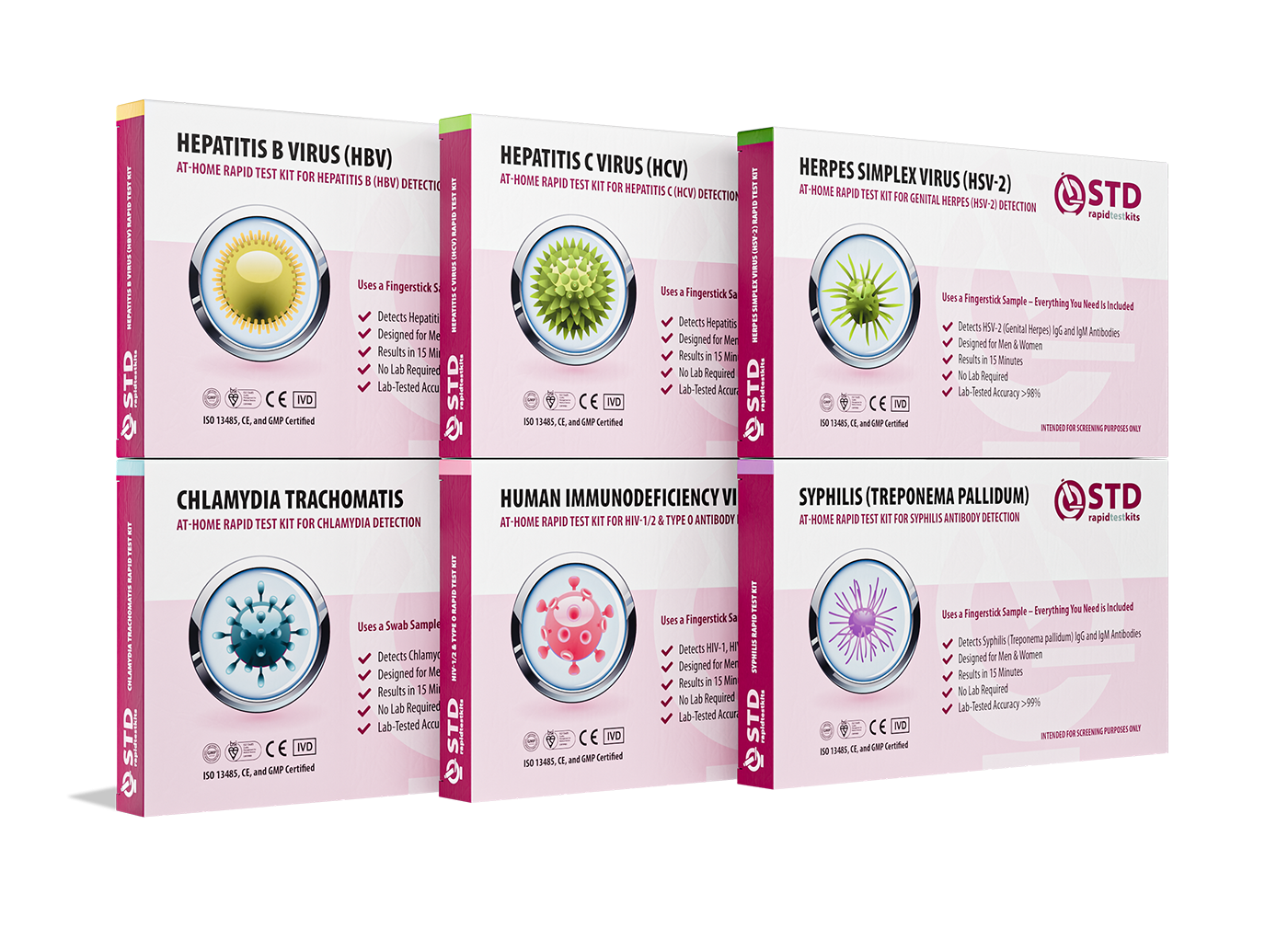 For Men & WomenResults in MinutesNo Lab NeededPrivate & Discreet
Order Now $119.00 $294.00
For all 6 tests
You Can’t Prevent Everything, But You Can Catch It Early
You wear sunscreen not because you expect a burn, but because you respect the sun. You buckle up not because you expect a crash, but because you value your safety. STD testing before and after travel is the same, it’s not about assuming the worst, it’s about protecting your future.
No test will erase the past. But a single 10-minute test could prevent a pelvic infection, protect a partner, or stop an outbreak from spreading. And the sense of power you get from knowing your status? That stays with you long after the flight lands.
Don’t let silence or shame take the wheel. Get tested, get clarity, and get back to living (and loving) on your terms.
Don’t wait and wonder, get the clarity you deserve. This at-home combo test kit checks for the most common STDs discreetly and quickly.
FAQs
1. Do I really need to test for STDs just because I went on vacation?
Short answer? Yes, especially if your trip included sex, kissing, skin-on-skin vibes, or even “just oral.” Travel breaks routines, and so do we. Even if you used protection, it’s smart to test. It’s not about paranoia. It’s about peace of mind when you get home.
2. I used a condom, why would I still need to test?
Condoms are fantastic, but they’re not force fields. They can’t fully protect you from skin-to-skin infections like herpes or HPV, and they definitely don’t cover the mouth during oral sex. If you had a hookup, even a careful one, it’s worth checking in with your body.
3. How soon after a vacation can I get tested?
It depends on what you’re testing for. Many common STDs like chlamydia and gonorrhea can show up in tests after about a week. But for HIV or syphilis, you may need to wait 2–4 weeks, or even retest at 90 days. Early tests are useful, but pair them with a follow-up if needed.
4. What if I didn’t have penetrative sex, could I still have caught something?
Yup. People often overlook oral sex and intense skin contact, but those are legit transmission routes. Gonorrhea can hang out in your throat. Herpes doesn’t need penetration to spread. If things got steamy, even without full sex, testing is still a wise move.
5. Can you use a home test in an Airbnb or hotel?
Absolutely. These kits are designed to be used anywhere with a little privacy and clean hands. We've heard from travelers who've tested in camper vans, rest stop bathrooms, even poolside cabanas. It’s discreet, quick, and doesn’t mess with your itinerary.
6. Will the test kit packaging say anything embarrassing?
Nope. Reputable companies ship in plain, unmarked packaging, no big bold “STD” labels or medical lingo. It’ll look like any other online order, so you can breathe easy if it's being delivered to a shared space or mailbox.
7. What if I test positive while still traveling?
First: take a breath. You’re not dirty, reckless, or doomed. Many STDs are treatable, and being informed means you can act. Look up local clinics, or hop on a telehealth platform. You may be able to get treatment where you are or at least plan next steps before heading home.
8. My partner and I are long-distance, should we both test before we reunite?
100% yes. It’s not about mistrust, it’s about setting the tone for honesty and care. Lots of couples make testing part of their pre-reunion ritual. Think of it as bringing a gift: clarity, safety, and confidence.
9. I’m embarrassed to tell someone I tested positive after a trip. What do I even say?
Try this: “I got tested after my trip and something came up. I care about you, so I wanted to let you know.” Keep it simple, calm, and clear. The goal isn’t to confess, it’s to connect. And many people will respect you more for it.
10. Is retesting really necessary if I already tested once after my trip?
Sometimes, yes. Especially for infections like HIV that take longer to show up. A lot of people do an early test (around 7–14 days) and then a follow-up at 30 or 90 days. It’s not overkill, it’s smart follow-through. Your future self will thank you.
You Deserve Answers, Not Assumptions
Your body doesn’t run on guesses. Neither should your health. Whether your trip was tame or wild, whether you had one drink or six, whether you used protection or just hoped for the best, testing isn’t a punishment. It’s a form of self-respect.
There’s power in knowing. Power in checking in. Power in not letting silence speak louder than truth. When you take a test before or after a trip, you’re not overreacting. You’re leading. You’re protecting yourself and anyone you might be close to next.
Don’t wait and wonder, get the clarity you deserve. This home test kit checks for the most common STDs quickly and without drawing attention to itself.
How We Sourced This Article: We combined current guidance from leading medical organizations with peer-reviewed research and lived-experience reporting to make this guide practical, compassionate, and accurate.
Sources
1. CDC – STD Screening Recommendations
2. Planned Parenthood – Get Tested
3. Sexually Transmitted Infections | Travelers' Health
4. The Pre-Travel Consultation | Yellow Book
5. Getting Tested for STIs | CDC
6. Sex and Travel | Yellow Book
7. Stay Safe This Summer: Protect Yourself From STIs
8. Do Travel Clinic Visitors Read Information on Sexual Risk Abroad?
9. A Systematic Review and Meta-Analysis of Sexually Transmitted Infections and Travel
10. Practice of Travel Medicine: Guidelines by the Infectious Disease Society of America
About the Author
Dr. F. David, MD is a board-certified infectious disease specialist focused on STI prevention, diagnosis, and treatment. He blends clinical precision with a no-nonsense, sex-positive approach and is committed to expanding access for readers in both urban and off-grid settings.
Reviewed by: Nia Collier, MSN, FNP-BC | Last medically reviewed: December 2025
This article is for informational purposes and does not replace medical advice.


