







Quick Answer: Oral HPV may appear as painless bumps, flat patches, or wart-like growths in the mouth or throat, or it may show no visible signs at all. Testing is recommended if symptoms persist beyond two weeks, especially after new oral sexual contact.
What Oral HPV Actually Looks Like (And Why It’s Easy to Miss)
HPV in the mouth rarely screams for attention. Unlike herpes, which often causes painful sores, or strep throat, which brings dramatic swelling, oral HPV tends to be subtle, a whisper rather than a shout.
Here’s what it might look like in real life: A man in his mid-thirties, let’s call him Jordan, notices a small raised patch on the inside of his cheek while flossing. It’s flat. Doesn’t hurt. Doesn’t go away. After four weeks, he finally brings it up at a dental cleaning. The hygienist recommends a referral. The biopsy later confirms low-risk HPV, the kind not linked to cancer but still worth monitoring.
Other people might see:
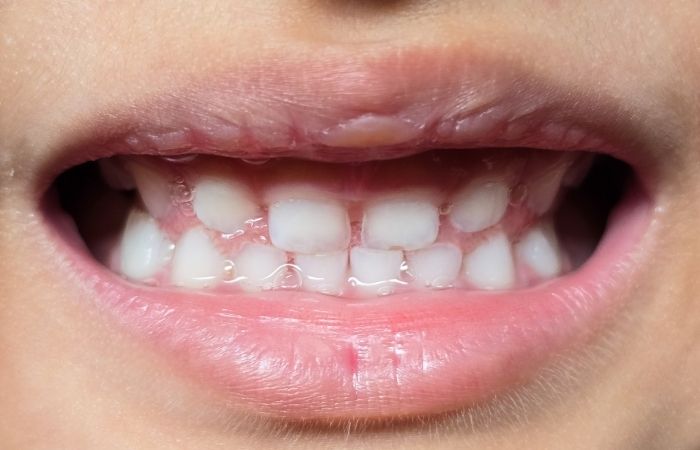
- Small, skin-colored bumps that resemble cauliflower texture (classic wart-like appearance).
- Flat white or red patches that don’t wipe away (often mistaken for irritation).
- Growths at the back of the throat or base of the tongue, difficult to see without a mirror or help.
- No visible signs at all, only symptoms like mild sore throat, ear pain, or feeling like something’s “stuck” when swallowing.
Still, the vast majority of oral HPV infections are asymptomatic, which is why it spreads silently between partners during oral sex, deep kissing, or even shared items like utensils or vape pens in rare cases.
Real Talk: You Can Get HPV in the Mouth Without Penetrative Sex
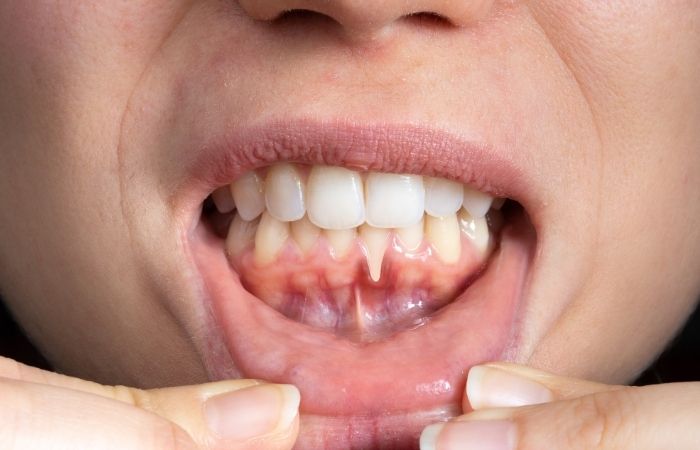
Let’s bust a major myth right now: you do not need to have “real” sex to get HPV. Case in point, Selene, a 24-year-old college student, had only ever engaged in oral and manual sex. She noticed a small wart on her lower gumline and assumed it was irritation from her retainer. When it didn’t go away, her dentist referred her for testing. The result? Oral HPV, likely acquired during unprotected oral sex with a partner six months prior.
This kind of transmission is especially common among younger adults, queer partners, or anyone who believes oral = safe. In truth, oral sex carries its own set of risks, not just for HPV but also gonorrhea, chlamydia, syphilis, and herpes. While condoms and dental dams reduce risk, they don’t eliminate it, especially with skin-to-skin STDs like HPV.
Even kissing may carry risk in rare situations where open sores or active lesions are present. The mouth, with its mucosal tissue and microscopic abrasions, is a fertile entry point for viruses. That’s why testing and symptom awareness matter, even if you haven’t had what most would consider “sex.”
If your partner has a known HPV history or visible genital warts, and you’ve recently engaged in oral sex, it's wise to monitor your mouth and throat for signs. Testing may not be routine, but your vigilance is valid.
People are also reading: STD After Infidelity? Here’s What Happens Next
Table: Comparing Common Oral Conditions to HPV
| Condition | Appearance | Pain Level | Duration | HPV Confusion Risk |
|---|---|---|---|---|
| Canker Sore | White/yellow ulcer with red border | Moderate to high | 7–10 days | Low |
| Oral Thrush | White patches that wipe off | Low to moderate | 1–2 weeks (with treatment) | Moderate |
| Oral HPV | Wart-like bumps, flat patches | Often none | Can persist for months/years | High |
| Cold Sore (HSV-1) | Fluid-filled blister, crusting | High | 7–14 days | Moderate |
Table 1: Common oral issues that mimic or mask HPV. This chart helps clarify key visual and symptomatic differences.
Order Now $129.00 $343.00 Check Your STD Status in Minutes
Test at Home with Remedium
7-in-1 STD Test Kit
 For Men & Women
 Results in Minutes
 No Lab Needed
 Private & Discreet
For all 7 tests
What About HPV in the Throat? Here’s What to Watch For
One of the most overlooked parts of oral HPV is the throat, especially the back third of the tongue, tonsils, and oropharynx. These are difficult to inspect on your own, and symptoms don’t usually show up until the infection has progressed.
Some people say:
- A sensation of something stuck in the throat
- Unexplained persistent sore throat
- Hoarseness or voice changes
- Ear pain without infection
- Trouble swallowing
These signs are concerning because high-risk strains of HPV, particularly HPV-16, are linked to rising rates of oropharyngeal cancer in men and people assigned male at birth. According to the CDC, over 70% of oropharyngeal cancers in the U.S. are now caused by HPV, making early detection critical.
If you experience symptoms lasting longer than two to three weeks, especially if you’ve had recent oral sex or partners with known HPV, it’s time to get checked. Most throat cancers associated with HPV are slow-growing and treatable if caught early.
Here’s where a medical provider may recommend imaging, an ENT consult, or even a biopsy. There are no standard “oral HPV tests” the way there are for cervical HPV, but persistent symptoms demand action.
How Long Does It Take for Oral HPV to Show Symptoms?
This is one of the most frustrating aspects of HPV: it doesn’t operate on a set timeline. In some cases, visible signs appear within a few weeks of exposure. In others, the virus lies dormant for months, even years, before anything surfaces.
The average incubation period for oral HPV is estimated at 1 to 6 months, but symptoms may take longer or never appear. It’s entirely possible to carry and transmit the virus without ever showing outward signs.
That said, if you notice a sore, bump, or patch that hasn’t resolved after two weeks, and especially if it’s been 4+ weeks since a new oral sexual partner, testing and follow-up is appropriate. You don’t need to wait for pain or bleeding, persistence is a red flag in itself.
We’ll talk next about how to test, who should test, and what options you have if you’re not ready to walk into a clinic just yet.
Can You Test for Oral HPV at Home?
Here’s the frustrating truth: there’s no FDA-approved at-home test specifically for oral HPV. While cervical HPV tests are now standard in gynecological exams, and at-home genital HPV kits exist, testing the mouth or throat for HPV is more complex.
That said, some private labs and specialty telehealth platforms offer oral swab kits that test for high-risk HPV strains in the throat. These aren’t widely available and may not be covered by insurance, but they offer an option for those without access to ENT clinics or dental specialists.
Maria, 42, ordered a mail-in oral HPV test after noticing a red patch on her soft palate that hadn’t changed in over a month. She didn’t want to wait for an ENT referral or navigate insurance delays. Her sample came back positive for HPV-16, and she followed up with a provider who initiated early surveillance, potentially catching a precancerous lesion at stage zero.
Even if these tests aren’t yet common, demand is growing. The more we talk about oral HPV, the more pressure there will be to make testing routine and accessible. In the meantime, persistence, and trusted healthcare partners, are your best tools.
For now, you can monitor oral symptoms and screen for other STDs that often travel with HPV using this combo STD test kit, which checks for common infections that may also affect the mouth and throat.
While it won't detect HPV itself, it helps you rule out other causes of oral symptoms like gonorrhea or syphilis, which are also transmitted through oral sex and often mistaken for HPV signs.
Table: Testing Options Compared, Oral HPV vs Other STDs
| Test Type | HPV Detection | Sample Needed | Use Case | Availability |
|---|---|---|---|---|
| Oral HPV PCR (Lab) | High-risk strains only | Mouth/throat swab | Persistent lesions, ENT referrals | Specialized labs, private pay |
| Genital HPV Self-Test | Yes, but not oral | Vaginal swab | Cervical screening, not mouth | At-home or clinic-based |
| Combo STD Rapid Test | No (excludes HPV) | Fingerstick, urine, or swab | Screen for co-infections | STD Rapid Test Kits |
Table 2: While there’s no simple over-the-counter oral HPV test yet, this chart outlines available options for high-risk strain detection or screening co-infections.
When Should You Worry About That Spot in Your Mouth?
Not every mouth sore is a cause for panic. But some signs are worth paying attention to, especially if they don't get better with time, home care, or over-the-counter medicines.
Watch for:
- Any bump, lump, or raised area that hasn’t gone away in 2–3 weeks
- Flat red or white patches that don’t wipe off
- Recurrent bleeding or slow-healing cuts in the mouth
- Sore throat that lingers past the usual cold or flu cycle
- Difficulty swallowing, voice changes, or one-sided ear pain
We get it. Seeing something weird in your mouth after oral sex can feel terrifying. You might wonder if you’re overreacting, if a doctor will take you seriously, or if you’ll be shamed for your sex life. Let us be clear: you are not overreacting. You deserve answers. And you’re not alone.
In many cases, these symptoms are not cancer. But they’re still worth checking, especially if they’ve lingered longer than expected or appeared after recent sexual exposure. Early detection changes everything.
Micro-Scene: The One That Didn’t Go Away
Ali, 29, had always been cautious. No smoking, limited alcohol, condoms with every new partner. But they’d never used dental dams during oral sex, it just never came up. After a festival weekend hookup, they developed a sore spot on the roof of their mouth. It wasn’t painful, but it felt weird when eating hot food. They brushed it off. A month later, it was still there. Their provider ordered a swab and eventually referred them to an ENT. The final result: early-stage HPV-positive lesion. Ali now goes in for six-month checks, and has since told every partner without shame or apology.
This story doesn’t end in disaster. But it could have, if that little spot had been ignored. Oral HPV isn’t always a big deal. But when it is, early eyes save lives.
Is It Time to Test? Let’s Break It Down
If you’ve had new oral sex partners in the last few months and notice anything different in your mouth, it might be time. If you’re immunocompromised, smoke or vape heavily, or have a history of HPV-positive partners, the case for testing is even stronger.
Still unsure? Here’s a quick guide in narrative form:
- Day 1–7 post-oral sex: Symptoms here are likely irritation or trauma, not HPV. Monitor but don’t panic.
- Day 14–30: If you notice anything new that hasn’t healed, start documenting. Take pictures.
- Day 30+: This is your window. If the sore hasn’t gone away, it’s time to consult a provider or ENT.
While you wait, you can screen for other STDs that may be causing symptoms using a discreet at-home option like the Combo STD Home Test Kit.
Testing doesn’t mean you’re dirty. It means you care. It means you’re paying attention. It means you want the facts, and your health deserves that.
HPV and Oral Cancer: What’s the Actual Risk?
Let’s talk worst-case, not to scare you, but to give you facts you can act on. Not all HPV strains are dangerous. Most oral HPV infections go away on their own in one to two years without causing any health problems. But there are exceptions, and they matter.
HPV-16 and HPV-18 are the high-risk strains most associated with oropharyngeal cancers. These cancers typically form at the back of the tongue, the soft palate, or near the tonsils, areas that aren’t visible in a basic mirror check.
According to data from the National Cancer Institute, HPV-related oral cancers are on the rise, particularly among men in their 40s and 50s who’ve had multiple oral sex partners. In fact, oral HPV has now surpassed smoking as a leading cause of certain head and neck cancers in men.
The good news? These cancers are usually slow-growing. When caught early, prognosis is excellent. The bad news? Without routine screening, many cases go unnoticed until symptoms are severe.
If you’ve had multiple oral sex partners, especially without barrier protection, and you develop any of the following, seek evaluation:
- One-sided sore throat or ear pain
- Unexplained weight loss
- Lump in the neck
- Chronic hoarseness or voice change
- Painful or difficult swallowing
It’s rare, but real. And taking action early, even when the signs seem small, is what can turn the story around.
People are also reading: Dating Multiple People? Here’s How to Talk About Testing and STDs
Table: HPV Strains, Risk Levels, and Where They Show Up
| HPV Strain | Risk Level | Common Sites | Associated Conditions |
|---|---|---|---|
| HPV-6 | Low | Mouth, genitals | Benign oral warts, genital warts |
| HPV-11 | Low | Throat, larynx, genitals | Respiratory papillomatosis, warts |
| HPV-16 | High | Base of tongue, tonsils | Oropharyngeal cancer |
| HPV-18 | High | Cervix, throat | Cervical cancer, possible oral cancer |
Table 3: Understanding strain-specific risks helps you interpret test results and know what to monitor. Not all HPV is high risk, but knowing which type matters.
Partners, Prevention, and the Conversation You’re Dreading
Let’s be honest. Telling a partner you think you might have oral HPV feels heavy. It raises fears of blame, rejection, or judgment. But here’s what most people don’t realize: HPV is so common that nearly every sexually active person will get it at some point. Most don’t even know when or from whom. It’s not a betrayal, it’s biology.
Still, having the conversation builds trust and helps you both take proactive steps. You don’t have to say, “I gave you something.” You can say, “I noticed something odd in my mouth, and I’m getting it checked out. Just wanted you to know in case you notice anything too.”
That’s it. That’s what honesty looks like in real time. You’re not confessing a crime, you’re caring for someone.
And if they judge you? That says more about them than it does about you. This isn’t about shame. It’s about shared awareness and mutual protection.
Many partners feel relieved that you brought it up. Some may even get checked themselves. And for those who’ve been silent about their own symptoms? You might be the push they needed to speak up.
Check Your STD Status in Minutes
Test at Home with Remedium8-in-1 STD Test Kit
 For Men & WomenResults in MinutesNo Lab NeededPrivate & Discreet
Order Now $149.00 $392.00
For all 8 tests
Preventing Oral HPV: What Actually Helps?
You can’t erase your sexual history. But you can make choices that lower your risk moving forward. Here’s what we know works:
- Get vaccinated: The HPV vaccine (Gardasil 9) covers the most dangerous strains, including 6, 11, 16, and 18. It is suggested for people up to 45 years old. The vaccine may still protect you from other types of HPV, even if you've had it before.
- Use barriers: Condoms and dental dams keep skin from touching skin and lower the risk of transmission, especially during anal and oral sex. They don't protect you completely, but they do help.
- Limit smoking and heavy alcohol use: Both weaken immune defenses and increase cancer risk when combined with HPV.
- Get tested for other STDs regularly: Especially if you have multiple partners or are in a new relationship. HPV doesn’t travel alone.
You don’t need to be perfect. You just need to be informed. Every choice you make from today forward builds a layer of protection, for you and your partners.
FAQs
1. Can I really get HPV in my mouth just from oral sex?
Yep, totally possible, and actually pretty common. HPV loves skin-to-skin contact, and your mouth has lots of mucous membranes where it can sneak in. You don’t need deep-throat porn-star moves either, even “quick” oral can be enough if the other person has it. Condoms and dental dams lower the risk but don’t wipe it out completely.
2. What does oral HPV even look like?
Honestly? Most of the time, nothing. That’s the annoying part. When it does show up, you might see painless bumps that look like warts, flat white patches that won’t wipe off, or a weird red spot that sticks around too long. Think of it like a houseguest that never announces itself, you only notice it when it overstays its welcome.
3. Is that little bump on my tongue something to worry about?
Maybe. Maybe not. If it’s new and it doesn’t hurt, it could be nothing, but if it’s still hanging out after two weeks, it deserves a closer look. One rule of thumb: if you can’t remember how long it’s been there, it’s probably been too long. Get someone (a real human with a medical degree) to take a peek.
4. Can HPV give me throat cancer?
It can, but don’t panic. Not every strain does, and most infections go away on their own. The ones linked to oropharyngeal cancers are usually high-risk strains like HPV-16, and even then, it takes years. If you smoke, drink heavily, or have a weak immune system, your risk goes up. But early signs are catchable, treatable, and survivable.
5. I’ve only kissed someone. Could I still have oral HPV?
It’s rare, but not impossible. Deep kissing (aka Frenching, tonsil hockey, whatever you call it) can theoretically spread HPV, especially if one of you has an open sore. But the real risk comes from oral sex, not smooching. That said, if your mouth feels off and you’ve been swapping spit, don’t ignore it.
6. Is there an at-home test for oral HPV?
Not exactly, yet. There are a few mail-in options through specialty labs, but they’re pricey and not FDA-approved across the board. Most folks find out via a provider, dentist, or ENT visit. Until oral HPV testing becomes mainstream, your best bet is to track symptoms, advocate for yourself, and test for other oral STDs with a home kit while you wait.
7. If I have oral HPV, does that mean I’m going to give it to my partner?
Not necessarily, but you might. HPV can be passed even when you don’t have visible symptoms, which makes it a sneaky little virus. But here’s the wild part: your partner may already have it and never know. That’s why it’s often not about blame, it’s about awareness, conversations, and maybe a dental dam next time.
8. How long does it take for HPV to show up in the mouth?
HPV doesn’t play by the rules. It can pop up within weeks or chill silently for months (even years) before doing anything. Some people carry it forever without a single symptom. That’s why if you notice something odd in your mouth after a new hookup, don’t waste time guessing. Track it, test for what you can, and follow up if it lingers.
9. Will my doctor judge me for asking about this?
A good one won’t. And if they do? Time to find someone better. Doctors who deal with mouths and genitals have seen it all. You are not gross. You are not overreacting. You’re taking your health seriously, and that’s something to be proud of, not ashamed about.
10. Can I still hook up if I think I have oral HPV?
That depends on what “hooking up” means to you. If you’re waiting on results or actively seeing symptoms, it’s kindest (and safest) to pause oral contact until you know more. That doesn’t mean you have to live like a monk, just maybe keep it above the belt or get creative until you’ve got clarity.
You Deserve Answers, Not Assumptions
Oral HPV can be confusing, quiet, and overwhelming, especially when symptoms are vague or absent. But silence isn’t safety. If you’ve noticed a change in your mouth, or if you’ve had new oral sexual exposure and feel unsure, take the next step.
You don’t have to wait weeks for a clinic appointment or face awkward questions at urgent care. You can begin with a discreet, accurate at-home test for common STDs that affect the mouth and throat. This combo STD kit lets you test for multiple infections from the privacy of your own space, with fast results and real answers.
How We Sourced This Article: We combined current guidance from leading medical organizations with peer-reviewed research and lived-experience reporting to make this guide practical, compassionate, and accurate.
Sources
1. CDC – Genital HPV Infection – Fact Sheet
2. National Cancer Institute – HPV and Cancer
4. HPV and Oropharyngeal Cancer – CDC
5. HPV Infection: Symptoms & Causes – Mayo Clinic
6. Oral Human Papillomavirus Infection – MedlinePlus
7. Oropharyngeal Human Papillomavirus (HPV) Infection – Cleveland Clinic
8. Mouth Cancer: Symptoms & Causes – Mayo Clinic
9. HPV Infection – CDC STI Treatment Guidelines
About the Author
Dr. F. David, MD is a board-certified infectious disease specialist focused on STI prevention, diagnosis, and treatment. He blends clinical precision with a no-nonsense, sex-positive approach and is committed to expanding access for readers in both urban and off-grid settings.
Reviewed by: Dr. Leslie Qin, MPH | Last medically reviewed: December 2025
This article is for informational purposes and does not replace medical advice.


