







Quick Answer: Anal herpes is a herpes simplex virus infection affecting the skin or tissue around or inside the anus. It often causes itching, burning, pain during bowel movements, or small sores, and is frequently mistaken for hemorrhoids or fissures.
Why Anal Herpes Is So Often Missed
Anal herpes is not rare, but it is routinely overlooked. Part of that is medical, and part of it is cultural. The anus is still treated as an awkward, secondary body part in healthcare conversations, which means symptoms there are often minimized or rushed past. When discomfort doesn’t fit the textbook image of herpes sores, it gets labeled as something else.
There is also the assumption problem. Some patients are never told herpes is a possibility because clinicians unconsciously associate anal symptoms with specific sexual identities or behaviors. Others don’t bring it up themselves, worried about being judged or misunderstood. The result is a long delay between first symptoms and accurate diagnosis.
Imagine someone sitting on the edge of their bathtub after a shower, checking again with a mirror because the pain hasn’t gone away. The creams aren’t helping. The fiber supplements aren’t helping either. Each day that passes without answers adds another layer of anxiety, even as they tell themselves they’re probably overreacting.
What Anal Herpes Actually Feels Like
Anal herpes does not announce itself the same way for everyone. Some people experience classic blister-like sores on the skin around the anus. Others never see a visible lesion at all. Instead, they feel a deep irritation that seems to flare randomly, often worsening during bowel movements or after long periods of sitting.
Itching is one of the most common early sensations. It can feel persistent but subtle, enough to distract you without fully stopping your day. Burning pain may follow, especially when the area is stretched or irritated. For some, this pain comes and goes in cycles, which makes it easier to dismiss as something temporary.
There are also people whose first clue is nerve pain. You might feel tingling, shooting pain, or a strange sensitivity around your anus or lower back. These feelings can happen days before any visible change, or even without one. This is one reason why people don't always notice herpes.

People are also reading: Think You’re Fine? Why You Still Need a Chlamydia Test (and Can Do It at Home)
The Hemorrhoid Trap
Hemorrhoids are the most common misdiagnosis when it comes to anal herpes, and that makes sense. Both can cause pain, itching, and discomfort during bowel movements. Both can flare under stress, dehydration, or prolonged sitting. And both are things people feel more comfortable assuming they have.
The difference is not always obvious. Hemorrhoids usually involve swollen veins and respond at least partially to lifestyle changes or topical treatments. Anal herpes tends to persist despite those efforts, or it improves briefly and then returns. The pain from herpes often feels sharper or more raw, especially during outbreaks.
Someone might remember the exact moment they realized something didn’t add up. Another week passed. Another tube of cream emptied. The symptoms were still there, unchanged, quietly demanding attention.
Can Anal Herpes Be Internal?
Yes, anal herpes can affect more than just the skin on the outside. It can also affect tissue just inside the anal canal. When this happens, the symptoms may feel worse and harder to find. Pain during bowel movements, pressure, or a sensation of internal burning can occur without any visible sores outside.
This internal involvement is one reason herpes testing and diagnosis can be tricky. A visual exam may not reveal much, and if no active sores are present, swab testing may not be possible. Patients who know something is wrong but keep hearing that everything looks normal may find this uncertainty frustrating.
Understanding that herpes does not always show itself clearly helps explain why so many people doubt their own experiences. It also explains why learning to trust persistent symptoms matters, even when initial exams are inconclusive.
Check Your STD Status in Minutes
Test at Home with Remedium7-in-1 STD Test Kit
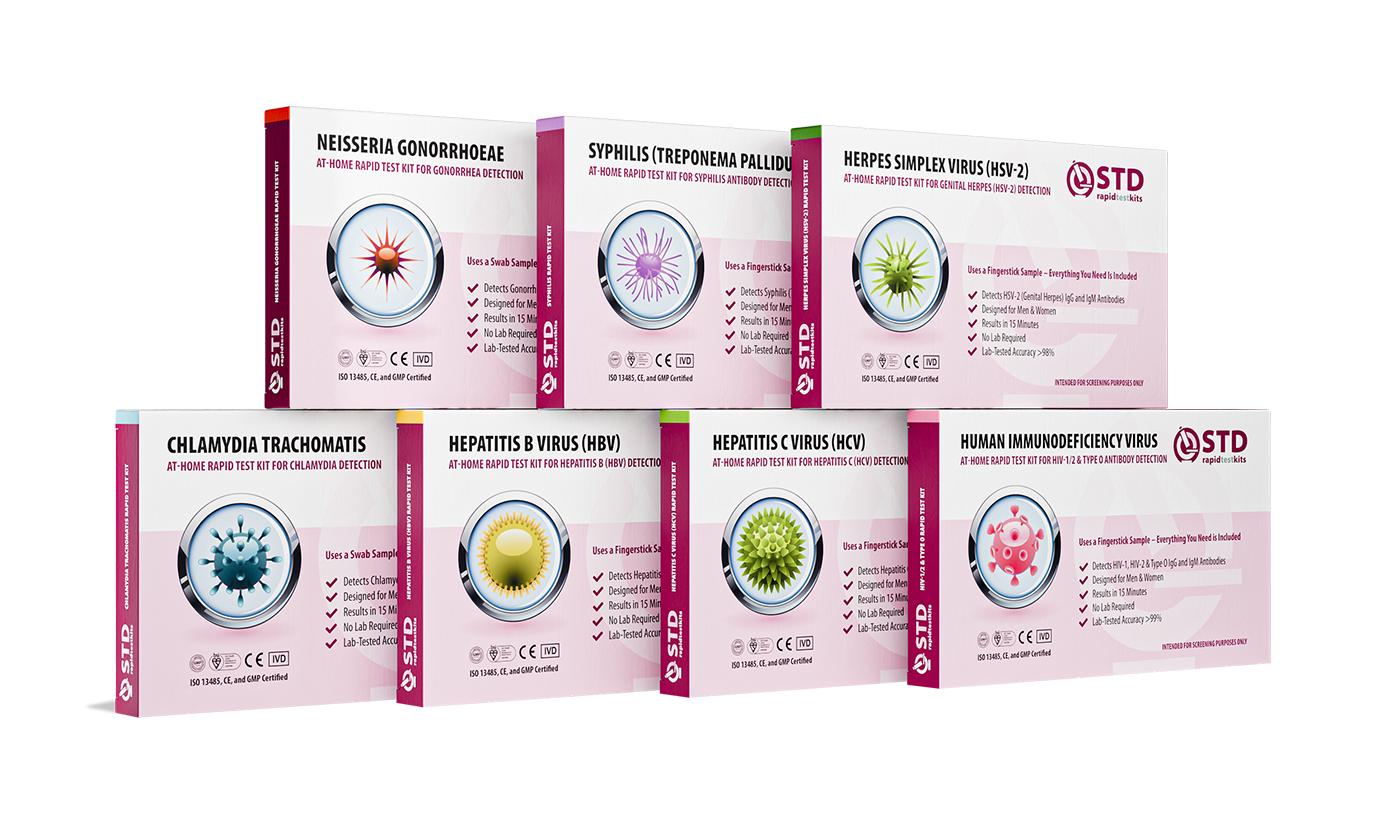
 For Men & Women
 Results in Minutes
 No Lab Needed
 Private & Discreet
Order Now $129.00 $343.00
For all 7 tests
How Anal Herpes Spreads
Anal herpes is caused by the herpes simplex virus, either HSV-1 or HSV-2. Transmission happens through skin-to-skin contact, not fluids, which means it does not require penetration. Contact between the mouth and anus, hands and genitals, or genitals and surrounding skin can all spread the virus if shedding is occurring.
This is where many people get stuck mentally. They replay their sexual history, searching for a moment that feels incriminating enough to “explain” what’s happening. In reality, herpes is often passed on without anyone knowing it, especially since many people who have it don't show any signs of it.
The virus can also be transmitted from genital to anal areas on the same body, particularly during outbreaks. This autoinoculation is uncommon yet feasible, complicating the notion that anal herpes occurs solely under specific circumstances.
How often does anal herpes happen?
Exact numbers are hard to pin down, largely because anal herpes is not always reported separately from genital herpes. What is clear is that herpes simplex infections are extremely common worldwide, and a significant portion of people carrying the virus have no idea they do.
When anal symptoms are included in herpes discussions, it’s often in narrow clinical language that doesn’t reflect real-life presentation. That gap leaves people feeling isolated, as though their experience is unusual or rare, when it’s actually part of a much broader pattern of underdiagnosis.
Understanding that anal herpes is part of the herpes spectrum and not an outlier can help you see the condition in a new light that makes you feel less ashamed and more clear.
Testing for Anal Herpes: Why Getting Answers Can Feel So Hard
Most people assume that if something is wrong, a test will clearly show it. With anal herpes, that expectation often falls apart. The virus doesn’t behave on a predictable schedule, and the tests available each answer a different question. That mismatch is why so many people walk away from appointments feeling more confused than reassured.
Herpes testing depends heavily on timing. The most definitive test is a swab taken directly from an active sore, but anal herpes does not always produce visible lesions, and when it does, they may heal quickly. If there is nothing to swab, that option disappears.
Blood tests measure antibodies, not the virus itself. They can confirm exposure at some point in the past, but they cannot tell you where the infection is located or whether current symptoms are caused by herpes. For someone dealing with anal pain right now, that distinction matters.
This is often the moment people feel stuck. They want a yes or no answer, but instead they get probability, timing, and clinical interpretation. When the symptoms don't go away, that uncertainty can be hard on your feelings.
When Blood Tests Help and When They Don’t
Herpes blood tests look for antibodies to HSV-1 or HSV-2. A positive result means your immune system has encountered the virus at some point. It does not tell you when the infection occurred, whether it is active, or where on the body it lives.
A positive blood test can help explain anal symptoms, especially if there isn't another reason that fits. It can help a clinician consider herpes more seriously as a cause. But a negative test does not always rule it out, particularly if exposure was recent and antibodies have not yet developed.
Picture someone sitting in their car after an appointment, scrolling through their test results on their phone. The numbers don’t line up with how they feel. People tell them to wait and see, but it's hard to wait when every trip to the bathroom hurts.
This is why follow-up matters. Repeat testing, symptom tracking, and honest conversations with healthcare providers often lead to answers over time, even when the first round doesn’t.
Why Anal Herpes Is Commonly Misdiagnosed
Anal herpes overlaps symptom-wise with several other conditions, and that overlap is where confusion thrives. Clinicians are trained to look for the most common explanation first, which means herpes may not be considered unless symptoms are severe or classic.
Many people are initially told they have hemorrhoids, anal fissures, yeast infections, or nonspecific inflammation. These diagnoses are not unreasonable, but when treatment doesn’t help, the original assumption should be revisited.
What complicates things further is that herpes outbreaks can wax and wane. A flare may calm down just enough to seem like healing, only to return weeks later. That pattern can be mistaken for chronic irritation rather than a viral cycle.
| Condition | Common Sensations | Key Difference From Anal Herpes |
|---|---|---|
| Hemorrhoids | Pressure, itching, swelling | Usually improves with topical treatment and lifestyle changes |
| Anal fissure | Sharp pain during bowel movements | Pain is typically tied closely to passing stool and healing is gradual |
| Yeast infection | Itching, redness, irritation | Often responds quickly to antifungal treatment |
| Anal herpes | Burning, itching, nerve pain, sores | Symptoms tend to recur and may not respond to standard creams |
Table 1. Symptom overlap between anal herpes and common misdiagnoses. Persistent or recurrent symptoms necessitate reevaluation.
Living in the Gap Between Symptoms and Certainty
For a lot of people, the hardest part isn't the pain in their bodies, but the emotional limbo. They know something is wrong, but they don't know how to say it yet. Every search result seems either too extreme or too dismissive.
Some people stop talking about it altogether. They avoid intimacy. They delay follow-ups. The silence grows heavier the longer answers feel out of reach. That emotional weight is part of the condition, even though it never shows up on a lab report.
It’s important to say this plainly: needing time to reach a diagnosis does not mean you are doing anything wrong. Anal herpes often requires patience, persistence, and self-advocacy. Those are not failures. They are realities of how this virus behaves.
When to Push for Further Evaluation
If symptoms continue despite treatment for other conditions, it is reasonable to ask whether herpes has been fully considered. That conversation can feel awkward, but it is part of advocating for your own health.
Recurrence is a major clue. Pain or irritation that flares, calms, and then returns in a similar pattern deserves a second look. So does nerve-like pain that doesn’t match typical hemorrhoid or fissure discomfort.
Keeping a simple symptom timeline can help. Noting when pain appears, how long it lasts, and what seems to trigger or relieve it gives clinicians better information than a single snapshot visit.
The Role of Stigma in Delayed Diagnosis
Stigma doesn’t just live in society. It seeps into exam rooms, chart notes, and the questions people are afraid to ask. Anal herpes carries an extra layer of silence because it touches on parts of the body many people were taught not to talk about.
Some patients minimize their symptoms because they don’t want to be judged. Others fear that asking about herpes will change how they’re seen. That hesitation can delay care even when access exists.
Breaking that silence, even quietly with one provider, can shorten the path to clarity. Herpes is a medical condition, not a character flaw. It deserves the same straightforward attention as any other infection.
What Treatment for Anal Herpes Actually Looks Like
There is no cure for herpes, but treatment is not about erasing the virus. It is about controlling how it behaves and how much space it takes up in your life. For many people, that shift in perspective is the most important part of management.
Antiviral medications can shorten outbreaks, reduce symptom severity, and lower the likelihood of future flares. Some people take them only when symptoms appear. Others take them daily as suppressive therapy, especially if outbreaks are frequent or particularly painful.
There is often a moment of relief when someone realizes that treatment does not mean constant medication or medical supervision. It means options. It means having tools instead of guessing.
When you have an active anal outbreak, comfort is the most important thing. Gentle cleaning, avoiding friction, and letting the area heal without irritation can make a big difference. Pain during bowel movements usually goes away as the inflammation goes down, even if the virus is still there.
How Long Do Anal Herpes Outbreaks Last?
The first outbreak is usually the most intense and the longest. It can last several weeks and may come with more noticeable discomfort, swelling, or sores. Subsequent outbreaks tend to be shorter and less severe, though this varies from person to person.
Some people experience only one outbreak and never notice another. Others have recurrences that follow a pattern, often tied to stress, illness, lack of sleep, or immune changes. Learning those patterns takes time and attention, not perfection.
Someone might realize, months later, that their symptoms now last days instead of weeks. The fear fades before the virus does, and that matters more than most people expect.
What “Forever” Really Means With Herpes
The word forever is often where panic lives. It suggests constant pain, constant disclosure, and constant limitation. In reality, herpes tends to quiet down over time for most people.
The virus is still in the body, but that doesn't mean it's always working. A lot of people don't have any symptoms for a long time. Some people have mild flares that they can handle and that happen at the same time every time.
Living with herpes often becomes less about the virus itself and more about unlearning the fear attached to it. That process is gradual, and it looks different for everyone.
Treatment Options and What to Expect
| Treatment Approach | How It’s Used | What It Helps With |
|---|---|---|
| Episodic antiviral therapy | Taken at the first sign of symptoms | Lessens discomfort and shortens the length of the outbreak |
| Daily suppressive therapy | Taken consistently every day | Reduces frequency of outbreaks and viral shedding |
| Supportive care | Comfort-focused measures during flares | Eases pain, irritation, and inflammation |
Table 2. Common treatment approaches for anal herpes and their primary benefits.
Sex, Intimacy, and the Fear of Passing It On
One of the most common worries after a herpes diagnosis is what it means for sex. People imagine a future defined by rejection or risk. Those fears are understandable, but they are not the full picture.
Transmission risk is highest during active outbreaks, which is why many people choose to avoid sexual contact during those times. Outside of outbreaks, antivirals and barrier methods significantly reduce risk, though they cannot eliminate it entirely.
There is often a quiet moment before intimacy resumes, when someone checks in with their body and their comfort level. That awareness becomes part of their sexual language, not a limitation.
Disclosure is a personal choice, and there is no single correct script. Many people find that honest conversations strengthen trust rather than weaken it. Others take time to decide what feels right for them. Both approaches are valid.

People are also reading: Yes, You Can Have Herpes and a Healthy Relationship
Living Normally With Anal Herpes
Normal life does not end with a herpes diagnosis. It shifts, recalibrates, and then continues. People work, travel, date, exercise, and sit through long meetings without thinking about their symptoms most days.
At some point, herpes becomes background information. It matters when it needs attention and fades when it does not. That balance is learned, not forced.
Many people say the hardest part was never the physical symptoms. It was the period before understanding, when fear filled in every unknown. Clarity changes that, even when answers are imperfect.
When Testing Still Matters
Even after a diagnosis, testing can play a role. Some people choose confirmatory testing to learn more about their type of HSV. Some people test their partners to be open and honest about their health.
For those still uncertain, at-home testing options can provide a starting point, especially when access to in-person care feels limited or intimidating. Testing is not about proving something wrong with you. It is about reducing uncertainty.
Knowing more often brings relief, even when the answer is not what you hoped for. Information turns fear into planning.
When Testing Can Bring Peace of Mind
For some people, the most stressful part of anal herpes is not knowing. If your symptoms don't fit perfectly with a diagnosis, testing can help you narrow down your options. Answers that aren't perfect can still help calm the mental noise that comes from not knowing.
At-home testing can be helpful when it seems hard or impossible to get care in person. They give people a private way to get information and make decisions about what to do next, especially those who have been fired or misdiagnosed before.
Testing is not about labeling yourself. It is about understanding your body well enough to care for it.
Check Your STD Status in Minutes
Test at Home with Remedium8-in-1 STD Test Kit
 For Men & WomenResults in MinutesNo Lab NeededPrivate & Discreet
Order Now $149.00 $392.00
For all 8 tests
What to Do If You Think You Might Have Anal Herpes
If symptoms persist, recur, or don’t respond to standard treatments, it’s reasonable to ask for further evaluation. Keeping track of patterns and advocating for yourself can change the course of care.
You deserve to be taken seriously, even when symptoms are subtle. Pain that keeps returning is your body asking for attention, not permission.
When clarity feels out of reach, discreet testing options from STD Rapid Test Kits can offer a private starting point. Some people also choose combination test kits to rule out other infections that can cause similar discomfort.
FAQs
1. Can anal herpes really happen without visible sores?
Yes, and this is one of the most frustrating parts. A lot of people expect herpes to look dramatic, like textbook photos, but anal herpes often doesn’t perform on cue. It can show up as itching that won’t quit, a burning sensation that flares after bowel movements, or a deep soreness that feels more internal than skin-level. That’s why so many people live with symptoms for months before herpes is even mentioned.
2. Is it possible to get anal herpes without ever having anal sex?
Absolutely. This trips people up all the time. Herpes spreads through skin-to-skin contact, not penetration, and the virus doesn’t care about how you label your sex life. Oral-to-anal contact, genital contact near the anus, or even transferring the virus from another part of your own body during an outbreak can be enough. This isn’t about doing something “wrong.” It’s about how viruses work.
3. Why does it hurt more when I go to the bathroom?
Because that area is already inflamed, sensitive, and full of nerve endings. When tissue stretches during a bowel movement, herpes-related irritation can feel sharper or more raw, even if there’s no visible sore. A lot of people describe this as the moment they realize something isn’t adding up, especially when hemorrhoid treatments don’t help.
4. If my doctor didn’t see anything, does that mean it’s not herpes?
Not necessarily. Anal herpes doesn’t always cooperate with appointment timing. Lesions can heal quickly, and some outbreaks never produce obvious sores at all. If symptoms come and go, or follow a repeating pattern, it’s reasonable to revisit the conversation even if an exam looked normal the first time.
5. What if my herpes blood test was negative?
Timing matters more than most people are told. Antibodies can take weeks to develop, so a recent infection may not show up right away. A negative result can be reassuring, but it isn’t always the final word, especially if symptoms continue. This is where follow-up testing and symptom tracking actually matter.
6. Does having anal herpes mean I’ll be dealing with constant outbreaks?
No. The first outbreak is usually the loudest, longest, and most unsettling. After that, many people find outbreaks become milder, less frequent, or stop happening altogether. Herpes tends to quiet down over time, even though the virus itself stays in the body.
7. Can stress really trigger anal herpes outbreaks, or is that just something people say?
Stress is very real here. Emotional stress, poor sleep, illness, and even major life changes can affect the immune system enough to let the virus reactivate. A lot of people notice patterns only in hindsight, like flares during burnout periods or after being sick. That awareness becomes useful, not something to blame yourself for.
8. Is anal herpes dangerous?
For most people, no. It can be painful and emotionally heavy, but it’s not life-threatening. The real harm usually comes from delayed diagnosis, unmanaged pain, and the mental spiral that happens when no one explains what’s going on. Once those pieces are addressed, most people regain their footing.
9. Do I have to tell every partner immediately?
There’s no universal script, despite what the internet loves to suggest. Many people choose to disclose when there’s a meaningful risk of transmission, especially before sexual contact during or near outbreaks. Others take time to process before deciding how and when to share. Disclosure is about honesty and consent, not punishment.
10. Will this always be “a thing” in my life?
At first, it might feel like it. Everything feels louder when it’s new and unnamed. Over time, anal herpes usually becomes background information, something you manage when needed and forget about most days. The fear fades faster than most people expect, especially once symptoms make sense.
You’re Not Late, Broken, or Alone
Many people wish they had known sooner. That regret can linger, but it doesn’t define what comes next. Anal herpes thrives in silence, not because it’s severe, but because people aren’t warned it exists.
Once named, it often becomes manageable. Fear turns into understanding. Patterns replace mysteries when symptoms appear. Life resumes its rhythm.
You’re allowed to ask questions, take your time, and decide what care looks like for you. Nothing about this makes you less deserving of comfort, intimacy, or peace of mind.
If you're ready for answers, an at-home STD test kit can help you move on without having to wait.
How We Sourced This Article: This guide was built using current medical guidance, peer-reviewed research, and real-world reporting on how herpes is diagnosed and experienced.
Sources
1. CDC – Genital Herpes Fact Sheet
2. Mayo Clinic – Genital Herpes Overview
3. World Health Organization – Herpes Simplex Virus
4. Planned Parenthood – Herpes Information
5. Herpes Simplex Virus Infections – StatPearls (NIH)
About the Author
Dr. F. David, MD is a board-certified infectious disease physician specializing in sexually transmitted infections. His work focuses on clear communication, stigma reduction, and expanding access to accurate sexual health information.
Reviewed by: K. Reynolds, RN, BSN | Last medically reviewed: December 2025
This article is only meant to give you information and should not be used as a substitute for professional medical advice.


