







Quick Answer: You can’t tell if someone has an STD just by looking. Many STDs have no visible symptoms, and relying on appearance alone can lead to serious risks. The only way to know is to test.
The Myth That Looks Safe
It’s not just teenagers or first-timers who fall into this trap. Adults with decades of sexual experience still make snap decisions based on vibes and visual cues. Someone with clear skin, no odor, and clean clothes? Must be good to go. Right?
In real life, things are messier. Herpes can be contagious even when no blisters are present. HPV often shows no symptoms at all, especially in men. Chlamydia and gonorrhea can live silently in the throat or rectum. You could be kissing, having oral sex, or sharing toys with someone carrying an infection they don’t even know about.
Take Jonah, 26. “I was careful,” he says. “We used condoms. She looked healthy. No sores, no smell. Nothing.” But after two weeks of mild discomfort and no obvious discharge, he tested positive for gonorrhea. “I was shocked. I thought you could tell. But apparently not.”
That assumption, “I would know if they had something”, fuels the spread of silent infections. It also creates stigma, as if only visibly “dirty” or “irresponsible” people get STDs. In truth, STDs don’t discriminate. They don’t respect aesthetics. They hide.
What Symptoms Actually Look Like (When They Show Up)
When STD symptoms appear, they rarely look how we expect. There's no neon sign screaming, "Infection here!" Instead, symptoms might blend in with everyday skin reactions. Here’s how the visible (and invisible) signs of some common STDs actually show up:
| STD | Visible Symptoms (If Any) | How Often They Appear |
|---|---|---|
| Chlamydia | Sometimes clear discharge or mild pain when peeing | ~70% of cases in women, ~50% in men show no symptoms |
| Gonorrhea | Thick discharge, sore throat (oral), redness or itching | Over 50% of oral/rectal cases show no visible signs |
| Herpes (HSV-1/2) | Tingling, small blisters, dry cracks, burning | Most people are contagious even with no outbreak |
| HPV | Warts (rarely painful), but often no signs at all | Over 90% of HPV infections are asymptomatic |
| HIV | Flu-like illness in early stage (often missed) | Years may pass with no visible signs |
Table 1. Common STDs and their “invisible” nature. Many remain contagious with no outward symptoms.
Notice the pattern? Even when symptoms appear, they’re vague, easily confused with other common conditions. A yeast infection, shaving rash, or UTI can look (and feel) nearly identical.
This is why people get blindsided. They’re not ignoring symptoms, they’re misreading them. Or they’re not seeing any signs at all.

People are also reading: The STD That Hides in Men: 9 Gonorrhea Signs You Might Miss
Can You Tell If Someone Has Herpes Just by Looking?
This one comes up constantly in DMs, group chats, and Reddit threads: “Can I tell if someone has herpes by looking?” Short answer: not reliably. Longer answer? Let’s talk about viral shedding.
Herpes Simplex Virus (both HSV-1 and HSV-2) can be transmitted even when the person has no visible sores, no tingling, no dryness, nothing. This is called asymptomatic shedding, and it’s extremely common.
Sasha, 31, learned this the hard way. “He told me he’d only had one outbreak years ago. He hadn’t had anything since. I thought it was safe.” A week after unprotected oral sex, Sasha developed what she thought was a canker sore. It turned out to be her first outbreak of HSV-1. “I had no idea you could catch it from someone who looked totally normal.”
In fact, one study from the Journal of Infectious Diseases found that up to 70% of herpes transmissions occur during asymptomatic periods, when the infected person has zero visible signs. You don’t need a blister to be contagious.
And you definitely don’t need to look “dirty” to carry the virus. That’s stigma talking, not science.
Check Your STD Status in Minutes
Test at Home with Remedium7-in-1 STD Test Kit
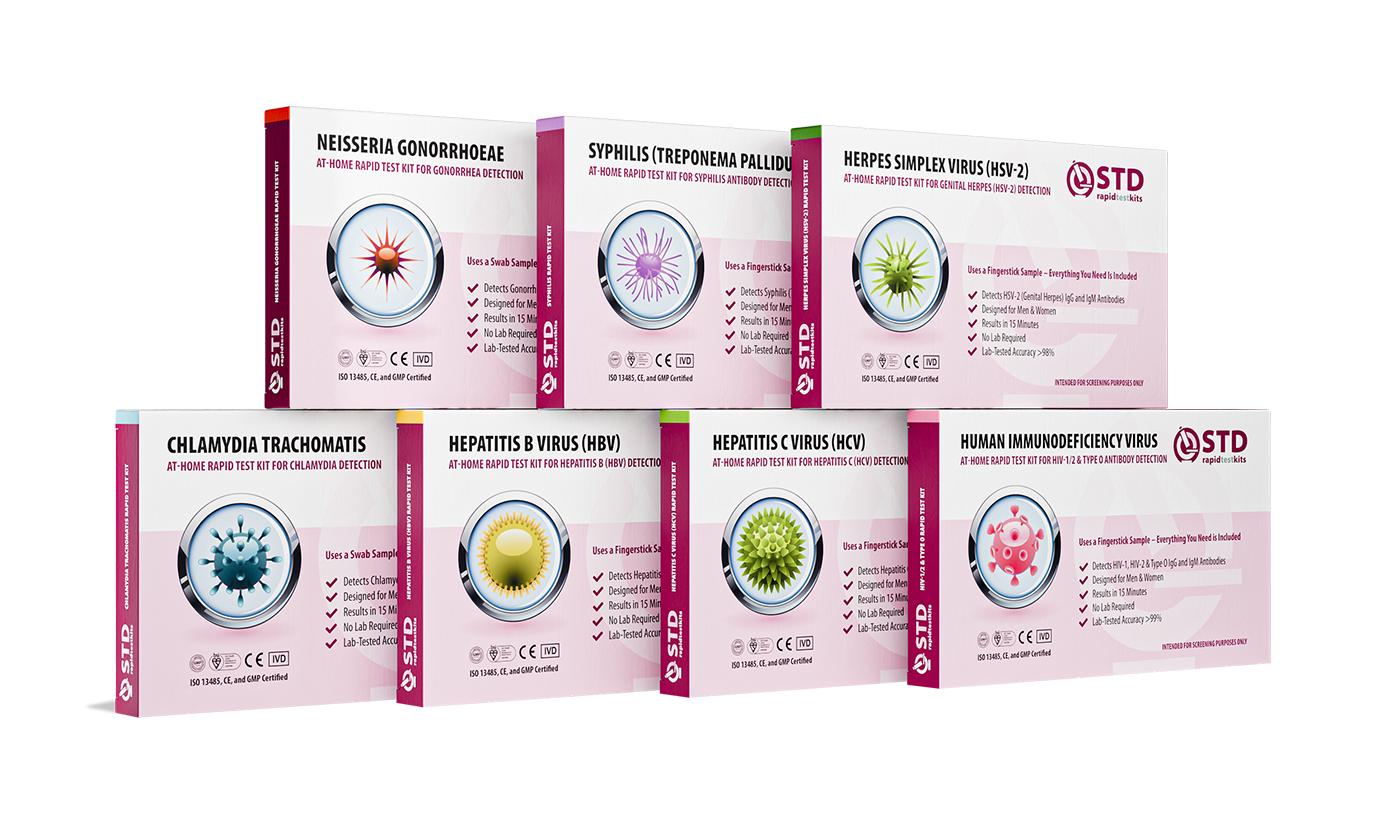
 For Men & Women
 Results in Minutes
 No Lab Needed
 Private & Discreet
Order Now $129.00 $343.00
For all 7 tests
Why People Trust Their Eyes (and Why That’s Dangerous)
We’re wired to make snap judgments. Our brains scan for danger, does this person look sick? Unsafe? Out of place? That instinct might work when spotting someone with the flu, but STDs are stealthy. They don’t play by visible rules.
There’s also the ego piece. Admitting someone might have an STD feels like accusing them of being “unclean” or untrustworthy. So we avoid the topic. We assume. We fill in the blanks with wishful thinking.
Then there’s hookup culture. You’re in a moment. It’s late. The vibe is good. Are you really going to pull out a headlamp and do a groin inspection? Probably not. But here’s what you can do: normalize testing. Make condoms and dental dams part of the plan. And remember that trust isn’t protection, only testing is.
This doesn’t mean treating every partner like a danger zone. It means recognizing that health isn’t always visible. And that assuming otherwise puts everyone at risk, including you.
Case Study: “I Thought He Was Too Hot to Be Sick”
Dina, 24, met him on a dating app. He had a clean-cut profile, a gym membership, and perfect teeth. “He looked like he drank green juice and got regular checkups,” she laughs. They hooked up after two dates. No talk of testing. No condoms.
Two weeks later, Dina noticed spotting and pain when peeing. “I thought it was a UTI, maybe stress.” Her doctor ordered a full STI panel. The results came back: chlamydia. She texted him. He ghosted.
“I blamed myself,” she says. “But also, I felt so betrayed by how normal he seemed. Like, I thought I could trust what I saw.”
This story isn’t rare. It’s not even unusual. It’s reality. And it’s why visual judgment isn’t just flawed, it’s dangerous. People are walking around with untreated infections, not out of malice, but because they genuinely don’t know. And if you’re not testing, you might not know either.
When Nothing Looks Wrong, But You Still Feel “Off”
Let’s say you don’t see anything weird on your partner. No bumps. No strange odors. No visible signs. Does that mean you’re in the clear?
Now let’s say a few days pass, and you start feeling... off. Maybe it’s an itch that comes and goes. A dry patch. A weird pressure when you pee but no real pain. This is the no-man’s-land where STDs thrive. Subtle symptoms are often dismissed as stress, dehydration, allergies, or hygiene issues.
But that “off” feeling? It could be your body responding to an early-stage gonorrhea or trichomoniasis infection. Or it could be nothing. And that’s the mindfuck, because the only way to be sure is to test.
Visual inspection won’t help here. In fact, looking too hard can make you paranoid. You’ll find normal skin variations and convince yourself they’re something. Or worse, you’ll miss a real sign because it doesn’t look like the photos you saw on WebMD.
Here’s what matters: timing, symptoms (if any), and exposure risk. Your eyes won’t tell you. But a swab or urine test will.
Table: How STD Symptoms Can Be Mistaken for Everyday Issues
| Symptom | Common Misdiagnosis | STD It Could Be |
|---|---|---|
| Red, irritated skin in genital area | Shaving rash, friction burn | Herpes, syphilis |
| Clear or white discharge | Normal arousal fluid, yeast infection | Chlamydia, gonorrhea |
| Itching or tingling | Allergic reaction, eczema | Trichomoniasis, herpes |
| Sore throat after oral sex | Common cold, strep | Gonorrhea, chlamydia |
| Spotting between periods | Hormonal imbalance | Chlamydia, gonorrhea |
Table 2. STD symptoms often overlap with normal or unrelated conditions, making visual self-diagnosis unreliable.
Why Some STDs Stay Completely Silent
Some of the most widespread STDs don’t just “look normal”, they feel like nothing. That’s the case with HPV, which can live in the body without symptoms for years, and even HIV, which may not cause signs for a decade after infection.
Trichomoniasis is another silent spreader. It’s incredibly common, especially among people with vaginas, and often completely asymptomatic. In men, it almost never shows symptoms, but it can still be passed on during unprotected sex.
Even syphilis starts with a painless sore that many people never notice, especially if it's internal or mistaken for a cut or ingrown hair. That sore goes away on its own, and the infection keeps progressing silently in the background.
Think of it like carbon monoxide: just because you don’t see it, doesn’t mean it’s not there.
Let’s Talk Testing (Because That’s the Only Way)
If we could trust our eyes, there’d be no need for labs or rapid kits. But we can’t. And that’s where testing steps in, not just as a medical tool, but as a relationship one. Testing says, “I care about you and me. I care enough not to guess.”
You don’t have to wait until symptoms show up. In fact, the most responsible people test because they don’t have symptoms. Regular screening every 3–6 months is standard for anyone sexually active with new or multiple partners, even when everything “feels normal.”
Testing at home makes it easier. No waiting rooms. No awkward chats with strangers. No guessing.
Whether you’re worried about a past hookup, a new relationship, or just want to check in on your health, this at-home combo test kit screens for the most common STDs discreetly and quickly. It’s a relief in a box, one that doesn’t judge and doesn’t assume.
People are also reading: Herpes Test at Home? Here’s How to Do It Right
What About Genital Warts or Sores, Aren’t Those Obvious?
You’d think warts or sores would make things obvious. But even visual symptoms can be confusing or hidden. Genital warts caused by certain strains of HPV are often soft, skin-colored, and painless. They can appear inside the vagina, anus, or even under the foreskin, places you’re not likely to inspect during a hookup.
Herpes sores can start as tiny fissures, dry patches, or raised bumps that look like razor burn. They can appear on the inner thigh, near the anus, or at the base of the penis. And sometimes they’re internal, especially in people with vaginas.
Plus, not everyone who gets exposed even shows those signs. Studies show that many people with herpes either never have a visible outbreak or mistake it for something else entirely. So, no, warts and sores aren’t always a dead giveaway. And just because you don’t see them, doesn’t mean they’re not there, or that you’re not at risk.
Trust the science, not the naked eye.
“But They Said They Were Clean” , The Language Problem
Let’s unpack this. What does “clean” even mean? If someone tells you, “I’m clean,” do they mean they were tested recently? For what? HPV? Oral gonorrhea? HIV?
Or are they just saying, “I don’t have symptoms,” which, as we now know, means almost nothing?
This language creates a false sense of security. It also reinforces stigma: if someone tests positive, are they now “dirty”? Of course not. But that’s how the subtext lands.
Clean doesn’t mean tested. And tested doesn’t mean recent. When someone says they’re clean, follow up: “When were you last tested? Which STDs did you screen for?” If that conversation feels awkward, remember what’s at stake, your health, your future, your peace of mind.
Normalize talking about testing the same way you talk about using protection or consent. Because it’s all part of the same conversation: safety, honesty, care.
Check Your STD Status in Minutes
Test at Home with Remedium7-in-1 STD Test Kit
For Men & WomenResults in MinutesNo Lab NeededPrivate & DiscreetOrder Now $129.00 $343.00
For all 7 tests
Sexual Health Isn’t Visual, It’s Intentional
You can’t see someone’s HIV status. You can’t spot asymptomatic gonorrhea hiding in the throat. You can’t tell if someone has trichomoniasis just because they’re hot, confident, or say they’re “safe.”
Real safety is built, not assumed. It’s built by asking questions. By getting tested. By retesting after new partners or before ditching condoms. It’s built by learning that symptoms aren’t reliable, and that looks can deceive.
And it’s built by using tools that put control in your hands. Tools like discreet STD test kits that you can use at home to get quick answers without feeling ashamed.
Because your body needs to be clear. Your relationships deserve truth. And your peace of mind? It’s way too valuable to gamble on appearance alone.
FAQs
1. Can you tell if someone has an STD just by looking at them?
Honestly? Not a chance. Someone can have perfect skin, fresh breath, zero symptoms, and still carry something like chlamydia or herpes. Some STDs don’t show signs for weeks, months, or ever. Visual cues don’t mean safety. They just mean someone hasn’t been tested recently, or hasn’t told you.
2. What if I checked them and didn’t see anything? First off, good on you for looking, but the truth is, it’s not enough. Many symptoms hide inside the body (think: cervix, throat, urethra), and some never show at all. Herpes can shed even when the skin looks totally normal. So unless you’re a lab tech with a microscope and time-travel powers, you’re not going to “spot” an STD. That’s why testing exists.
3. Do some STDs never cause symptoms at all? Yep, and that’s what makes them sneaky. HPV, trichomoniasis, and even HIV can live in your body without raising any red flags for a long time. You could feel great and still be infectious. This is how people accidentally pass STDs to partners they care about. No shame in it, just reason to test regularly.
4. So what does it actually look like when symptoms do show up? Imagine this: You think it’s a shaving bump. Maybe a heat rash from tight jeans. Or you feel a sore throat after a weekend hookup and chalk it up to bad karaoke. STDs don’t show up like textbook photos. They blend in. They mimic everyday stuff. That’s why misdiagnosis is so common, and why “just looking” isn’t enough.
5. If my partner says they’re “clean,” can I trust that? It depends. Ask when they were last tested, and for which STDs. “Clean” doesn’t mean anything unless it’s backed by recent, full-panel results. Not because people lie, but because people forget, guess, or assume. You deserve the real story, not just a sanitized one-liner.
6. I’m not seeing any symptoms, should I still get tested? 100% yes. Think of testing like brushing your teeth, it’s just maintenance. Even if nothing hurts, it’s still worth checking in. Especially if you’ve had a new partner, went condom-free, or shared toys. Peace of mind is better than playing symptom detective with your junk.
7. Are at-home STD tests legit? Yes, and wildly helpful. Just follow the instructions and check the window period for accuracy. A lot of people use rapid home tests because they don’t want to wait in clinic lines or deal with awkward small talk. And that’s valid. Privacy matters.
8. Can I get something from oral if there’s nothing visible? Absolutely. Gonorrhea and chlamydia love to hang out in the throat without saying hello. So do HSV-1 and syphilis. No visible sores doesn’t mean you’re safe. If someone’s giving or receiving oral, testing matters just as much as it does with penetrative sex.
9. How often should I test if I’m sexually active? If you’re out here living, new partners, non-monogamy, occasional condom slip-ups, aim for every 3 to 6 months. If monogamous and recently tested, once a year can work. But listen to your gut. If something feels off, test sooner. Early is better than too late.
10. What’s the bottom line? Trust is good. Testing is better. You can't see an STD, smell it, or sense it through vibes. But you can take control, quietly, quickly, and without anyone else's permission. That’s power. That’s care.
You Deserve Answers, Not Assumptions
The truth is simple and uncomfortable: you can’t tell if someone has an STD by looking at them. But you can protect yourself. You can ask questions. You can get tested, before symptoms, before risks turn into regrets.
STDs are common. Testing doesn’t mean you’re “dirty.” It means you’re responsible. It means you care about yourself and the people you connect with. Don’t wait for symptoms that might never come. This at-home combo test kit can give you peace of mind from your own space, on your own time.
How We Sourced This Article: We combined current guidance from leading medical organizations with peer-reviewed research and lived-experience reporting to make this guide practical, compassionate, and accurate.
Sources
1. STD Symptoms and Causes | Mayo Clinic
2. American Sexual Health Association – STDs and Testing
3. What Are STIs? | CDC Overview
4. Getting Tested for STIs | CDC
6. Sexually Transmitted Infections (STIs) | WHO
7. Sexually Transmitted Infections (STIs) | Cleveland Clinic
8. Factors that Contribute to the Hidden Epidemic - NCBI
9. Sexually Transmitted Disease (STD) Symptoms | Mayo Clinic
10. Testing for Sexually Transmitted Infections—How It Works | ASHA
About the Author
Dr. F. David, MD is a board-certified infectious disease specialist focused on STI prevention, diagnosis, and treatment. He blends clinical precision with a no-nonsense, sex-positive approach and is committed to expanding access for readers in both urban and off-grid settings.
Reviewed by: A. Chen, MSN, FNP-BC | Last medically reviewed: December 2025
This article is just for information and doesn't take the place of medical advice.


