







Quick Answer: Early HIV and herpes symptoms can look just like the flu, fever, body aches, fatigue, even sore throat. If you’ve had recent sexual contact and symptoms show up within 2–4 weeks, test for both as soon as the window period allows.
When the Flu Doesn’t Quite Fit
Flu-like symptoms are frustrating because they feel so familiar, and they trick the brain into default explanations. You’re tired, achy, maybe have swollen glands and a low-grade fever. That's classic flu, right? But if those symptoms show up after a new sexual partner or risky encounter, it's worth asking a harder question: Could this be an STD mimicking a virus?
Acute retroviral syndrome, the name for early HIV symptoms, often appears within 2 to 4 weeks after exposure. The CDC describes it as “flu-like” for a reason: the symptoms overlap significantly. Similarly, the first outbreak of Herpes simplex virus (especially HSV-2) can come with headaches, malaise, and low-grade fevers before any genital sores appear. That means people who are actively contagious might not realize they’re even sick with something serious.
This confusion leads many to delay testing. They wait for symptoms to resolve, assuming it's just a seasonal bug. But CDC guidance confirms that early HIV is most transmissible when people don’t yet know they’re infected. Timing matters, and so does awareness.
The Timeline That Changes Everything
So when should you start to worry? The key is aligning symptoms with exposure. Let’s break it down.
| Condition | Earliest Symptom Onset | Key Symptoms | When to Test |
|---|---|---|---|
| HIV (acute phase) | 2–4 weeks after exposure | Fever, chills, sore throat, rash, fatigue | NAAT or 4th-gen test at day 21+ |
| Herpes (primary outbreak) | 4–12 days after exposure | Flu-like symptoms, swollen lymph nodes, sores (later) | PCR or antigen test when sores appear |
| Common Flu | 1–4 days after contact | Fever, cough, fatigue, runny nose | No STD testing needed |
Figure 1. Symptom onset and testing timelines for early HIV, Herpes, and Flu.
As you can see, the timeline is crucial. If flu-like symptoms show up within a week of exposure, it’s less likely to be an STD. But if they hit after 10 to 20 days? Your body might be reacting to a virus it can't fight without help.
That’s why testing strategy matters. Rushing to a clinic on day five might be too early. But waiting too long means you could be infecting others unknowingly.
People are also reasing: I Slept with a Sex Worker, Should I Get Tested?
Case Snapshot: “I Was Told It Was Just Stress”
Natalie, 29, works in healthcare. When she started getting night sweats and muscle aches after a new relationship, she assumed she’d picked up the latest office bug. “I had no visible sores, no itching, just this weird fatigue I couldn’t shake.” A doctor chalked it up to stress. Weeks later, she got a painful sore and finally tested: it was Herpes.
“I didn’t know Herpes could feel like the flu. I always thought it had to show up on your skin right away.”
Natalie’s story is common. Many STDs don’t follow textbook presentations. In early stages, especially, they can trick both patients and providers.
If you’re unsure whether your symptoms are “just stress” or something deeper, the best next step is a targeted at-home STD test. You control the timeline, you control the privacy, and you skip the waiting room that might feed your anxiety more than your recovery.
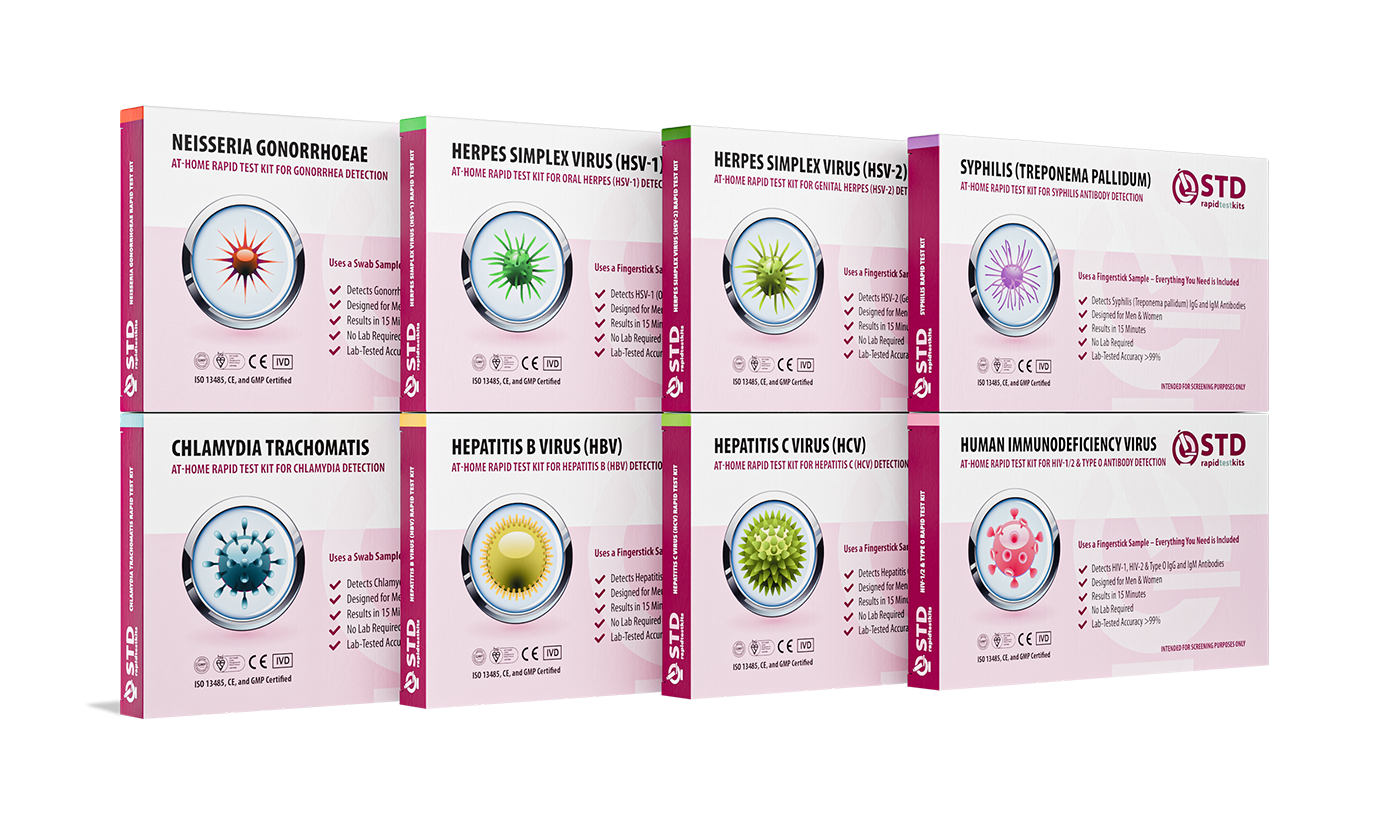
Order a discreet Combo STD Test Kit to check for HIV, Herpes, and other common infections from home.
Check Your STD Status in Minutes
Test at Home with Remedium8-in-1 STD Test Kit
 For Men & Women
 Results in Minutes
 No Lab Needed
 Private & Discreet
Order Now $149.00 $392.00
For all 8 tests
Why Your Doctor Might Miss It
Emergency rooms and urgent care centers are flooded with viral illness every cold and flu season. When you show up saying “fever, chills, sore throat,” their priority is ruling out flu, Covid, or strep throat, not HIV or Herpes. Especially if you’re not reporting visible symptoms like lesions or unusual discharge, the STD conversation often gets skipped entirely.
That doesn’t mean you’re in the clear. Early HIV seroconversion symptoms are frequently misdiagnosed or dismissed altogether. One study in the Journal of the American Medical Association found that less than 30% of primary care clinicians could correctly identify acute HIV infection in the first two weeks.
It’s even trickier with Herpes, where many providers assume there must be visible sores to justify testing. But initial outbreaks can be internal (especially in people with vaginas), and systemic symptoms like headache and muscle aches may appear before the blisters ever do, if they show up at all.
Inside the Body: What’s Actually Happening
What makes early HIV or Herpes feel like a viral illness? It’s your immune system, not the virus itself, doing most of the damage. In both infections, your body is recognizing a foreign invader and mounting a full systemic response. That response, called cytokine release, causes the chills, the aches, the crushing fatigue.
This is why flu-like symptoms alone don’t tell the full story. You have to interpret them in context: recent sexual history, condom use, partner history, and especially timing.
| Symptom | Common in Flu | Common in HIV | Common in Herpes |
|---|---|---|---|
| Fever | Yes | Yes | Yes |
| Fatigue | Yes | Yes | Yes |
| Sore throat | Yes | Yes | Sometimes |
| Muscle aches | Yes | Yes | Yes |
| Swollen lymph nodes | Rare | Common | Common |
| Cough | Common | Rare | Rare |
| Genital sores | No | No | Often (but not always) |
Figure 2. Symptom overlap between the flu, early HIV, and early Herpes.
Reading your symptoms this way isn’t about fear, it’s about being medically literate in your own body. If your symptoms overlap in a way that raises questions, testing is a simple, empowering next step.
Testing While You’re Still in the Gray Zone
You don’t have to wait weeks in anxiety limbo. Testing for Herpes and HIV is more accurate than ever, especially when you know which test to take and when.
Let’s say you had unprotected sex 10 days ago and now you feel off. A rapid HIV test might not catch an early infection yet, but a nucleic acid test (NAAT) could. Meanwhile, a swab or urine test for Herpes only works if you currently have symptoms, like sores or discharge. If you don’t, a blood antibody test becomes an option, but only after enough time has passed for your body to react.
What many people don’t realize is that the window period for accurate testing varies by test type and infection. Here’s what that looks like in real life:
Day 0–5: You can test, but results might be falsely negative. If symptoms are severe, still test. Otherwise, wait for immune response.
Day 10–21: Some HIV tests (especially NAAT) may detect early infection. Watch for symptom progression. Consider a combo test.
Days 21 to 35: Most tests that use antibodies are at their most accurate. If the first test was negative but symptoms still exist, retest.
Return to STD Rapid Test Kits for test options that match your current timeline. You don’t need to guess, you just need a window and a plan.
What If You’re Already Feeling Better?
This part’s important: just because symptoms fade doesn’t mean you’re in the clear. Acute HIV symptoms usually last one to two weeks, then disappear entirely, even as the virus continues to spread in your body. That “silent” phase can last years if undiagnosed, but during the earliest months, your viral load is sky-high, making you highly contagious.
Similarly, early Herpes can seem to resolve on its own. But if it’s your first outbreak, expect a pattern. The virus may go dormant only to return under stress, illness, or hormonal changes. What you thought was just a one-off “bug” may resurface, now with painful lesions or a confirmed test result.
This is why retesting is often part of the plan, especially if you tested early. Think of it like a follow-up photo: the first test showed you a blurry snapshot. The second confirms what’s really going on.
How Retesting Works (and When You Should)
Retesting isn’t a sign you did something wrong, it’s often the smartest move you can make. Here’s how to decide if and when to do it.
If you tested within two weeks of exposure and symptoms continue, plan to retest around the four-week mark for HIV and Herpes. If your test came back negative but you’re still worried, or your symptoms evolved after the first test, that’s a signal to recheck. You don’t need to be symptomatic to get accurate results, especially if you’re using an antibody-based HIV test or a Herpes IgG test after four weeks.
For those in ongoing sexual relationships or multiple partner networks, retesting every three to six months is recommended by health agencies worldwide, even if you feel fine.
If you’re ready to take control, peace of mind is one discreet test away. Order a rapid HIV-1/2 test here and get answers in minutes.

People are aslo reading: I Didn’t Lie, I Thought I Was Clean. Here’s What Happened Next
Shipping, Privacy, and Getting It Done
Getting tested from home doesn't mean sacrificing accuracy, and it certainly doesn’t mean giving up your privacy. At-home STD kits ship in plain packaging with no visible branding or labels. Your results stay with you unless you choose to share them.
Tests can be done with a finger-prick blood sample, oral swab, or urine collection, depending on what you order. Everything you need comes in the box, and most results are ready within 10–20 minutes (for rapid kits) or 24–72 hours (for mail-in labs).
Many users report feeling anxious while waiting for shipping, so consider planning your order before a weekend or trip. That way you’re not stuck second-guessing while living your life.
If you live in a remote area or can’t access clinics easily, home kits might be your most efficient option. They’re also a powerful way to bypass shame, awkward conversations, or long wait times.
Check Your STD Status in Minutes
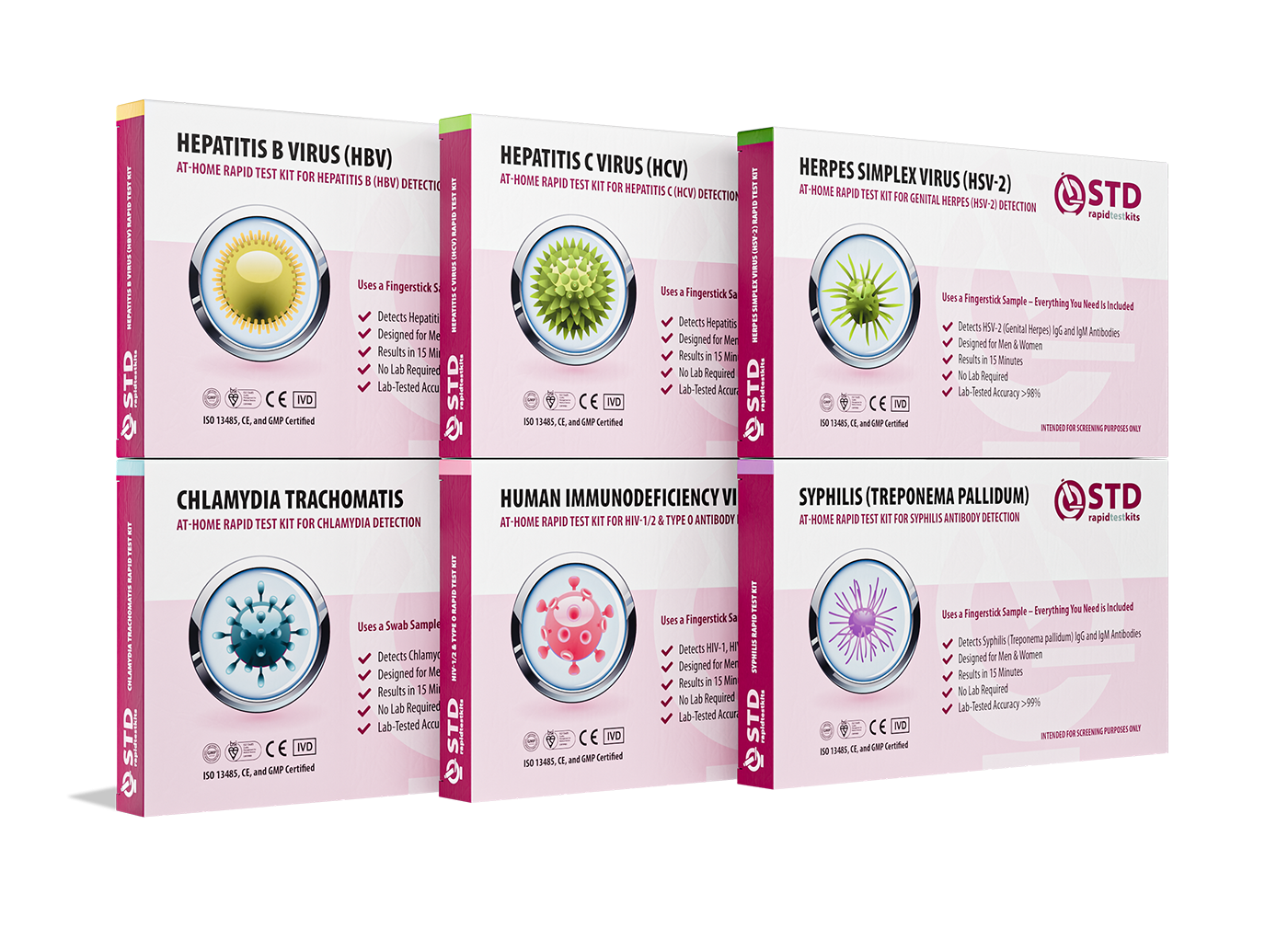
Test at Home with Remedium6-in-1 STD Test Kit
 For Men & WomenResults in MinutesNo Lab NeededPrivate & Discreet
Order Now $119.00 $294.00
For all 6 tests
Testing Positive: What Now?
If your test comes back positive, you’re not alone, and you’re not broken. Millions of people test positive for HIV, Herpes, or other STDs every year. Treatment is available, effective, and often simple. But first, breathe.
For HIV, the next step is confirmatory testing and starting antiretroviral therapy (ART) if needed. With current medications, people living with HIV can reach undetectable viral levels and live full, long lives. HIV.gov offers straightforward next steps.
For Herpes, antiviral medication can shorten outbreaks and reduce transmission. You’ll also want to notify partners (past and current), but that doesn’t mean you need to panic. Many people continue dating, having sex, and building relationships after diagnosis, with just a bit more awareness.
Picture this: You open your result, and your heart starts pounding. But instead of spiraling, you take a walk. You send one message. You call a pharmacy. Then you go on with your life, only now with more clarity, more control, and a healthier sense of what your body needs.
If you're unsure where to start, STD Rapid Test Kits has at-home kits for retesting, partner testing, or starting fresh with new awareness.
FAQs
1. Can early HIV really feel like the flu?
Yes, and that’s exactly why so many people miss it. Imagine this: you wake up with a sore throat, maybe a low-grade fever, and your muscles ache like you’ve been hit by a bus. You think, “Eh, probably caught something on the subway.” But if this shows up 2–4 weeks after unprotected sex, your immune system might be reacting to HIV. It’s called acute retroviral syndrome, and it’s sneaky.
2. Does Herpes always cause sores?
Nope. That’s the myth that catches people off guard. You can have Herpes and never see a single blister, especially during your first outbreak. Some people just feel run-down, with groin pain or swollen lymph nodes. Others don’t feel a thing until months later. So if you're holding out for "the obvious signs," you might miss the window to test.
3. How soon after sex can I get tested?
Depends on the bug. If it’s HIV, most rapid tests start picking it up around 3–4 weeks. Herpes is trickier: if you’ve got symptoms (like sores), test right away with a swab. No symptoms? You’ll need to wait around four weeks for a reliable antibody test. Earlier than that, your body might not have reacted yet, and that means false negatives.
4. Could I have both the flu and an STD?
Unfortunately, yes. We’re complex creatures. It’s totally possible to pick up the flu and also be incubating an STD. That combo makes things messier. A fever and sore throat might be a common virus...or something more. If you’ve had recent sexual contact, it’s worth testing to rule things out.
5. What if my doctor says it’s just stress?
Then it’s time to advocate for yourself. Plenty of people get brushed off, especially if their symptoms don’t match a classic playbook. But your body knows when something’s off. If you feel sick after a hookup and your gut is telling you this isn’t “just anxiety,” trust that instinct. Home testing gives you the answers without the awkward office visit.
6. Can a sore throat be from Herpes?
Yes, especially with oral Herpes (HSV-1), which a lot of people get from kissing or oral sex. Even genital Herpes (HSV-2) can cause systemic symptoms that include throat pain. The tricky part? You might never connect a sore throat to an STD unless you know to look for it. Now you do.
7. Do swollen lymph nodes mean it’s not just the flu?
They can be a red flag. The flu might make you feel wiped out, but it doesn’t usually cause the kind of hard, tender nodes you’d feel in your neck or groin with HIV or Herpes. Those little lumps? They’re your immune system sounding the alarm. If they’re sticking around, test.
8. Am I contagious if I only feel a little sick?
Yes. In fact, early HIV is one of the most contagious phases, and Herpes can be passed along even when there are no sores in sight. That “almost fine” feeling doesn’t mean you’re not a risk to others. If anything, it’s the most dangerous time because you might not even realize you’re infected.
9. How often should I test if I’m seeing multiple people?
If you’re having sex with more than one person, even with condoms, aim to test every three to six months. Sooner if something weird pops up. Testing doesn’t make you paranoid, it makes you informed. Think of it as tuning up your health, just like you would your car.
10. Can I trust a test I do at home?
Absolutely, as long as you’re using a real one, not a sketchy overseas brand with no science behind it. The kits we link to use the same tech as clinics and are over 90% accurate when used correctly. And here’s the bonus: no waiting rooms, no judgment, no “why are you here?” looks. Just answers, on your terms.
You Deserve Answers, Not Assumptions
If there’s one thing this guide should make clear, it’s this: symptoms don’t tell the full story, but they do matter. Your fatigue isn’t just in your head. That fever that won’t quit, the night sweats, the ache deep in your bones, those aren’t things to brush off just because someone else said, “It’s probably a cold.”
Too many people walk out of clinics feeling dismissed. Told it’s anxiety. Told it’s just stress. Told to wait and see. But your body knows what’s up, and your gut usually isn’t wrong. If your symptoms don’t add up, or if you’re the kind of person who Googles symptoms at 2 a.m. because something just doesn’t feel right, you’re not paranoid. You’re paying attention.
Testing isn’t about panic. It’s about clarity. And you deserve that clarity without judgment, without long waits, and without someone second-guessing your instincts. At-home tests put the power back where it belongs: with you.
Because your health shouldn’t be a mystery. And getting real answers shouldn’t require begging someone to believe you’re sick.
Order your confidential test kit now, so you can stop wondering, and start knowing.
How We Sourced This Article: We combined current guidance from leading medical organizations with peer-reviewed research and lived-experience reporting to make this guide practical, compassionate, and accurate.
Sources
1. WHO – Herpes Simplex Fact Sheet
2. HIV/AIDS – Symptoms and causes | Mayo Clinic
3. What Are the Symptoms of HIV? | HIV.gov
4. HIV and AIDS – StatPearls | NCBI Bookshelf
5. About HIV | Centers for Disease Control and Prevention
6. Overview: Genital herpes – InformedHealth.org (NCBI Bookshelf)
7. Genital Herpes | Herpes Simplex – MedlinePlus
8. Herpes Simplex Type 2 – StatPearls | NCBI Bookshelf
About the Author
Dr. F. David, MD is a board-certified infectious disease specialist focused on STI prevention, diagnosis, and treatment. He blends clinical precision with a no-nonsense, sex-positive approach and is committed to expanding access for readers in both urban and off-grid settings.
Reviewed by: Riley Sanchez, NP | Last medically reviewed: November 2025
This article is just for information and doesn't take the place of medical advice.


