







Quick Answer: STD symptoms in nonbinary bodies can look different depending on anatomy, hormone use, and surgical history. Pain, discharge, sores, or irritation may appear in the genitals, anus, mouth, or throat, even without classic signs. Inclusive at-home test kits are a safe and private way to check if you're unsure.
Who This Guide Is For (And Why It Matters)
This guide is for anyone who has ever been handed a form that asked “M” or “F” and felt a wave of dread. It’s for the nonbinary person who isn’t sure if they even need a pap smear, or what swabs apply to their body. For the trans masc teen who got chlamydia after their first hookup but wasn’t believed. For the gender-diverse adult navigating symptoms without a roadmap.
We’re also writing for people who’ve put off testing because every clinic they called used the wrong pronouns. For those on testosterone or estrogen who don’t know how hormones affect vaginal or rectal tissue. For people with mixed anatomy, like a penis but no testicles, or a neo-vagina without a cervix. Medical resources rarely cover this spectrum. So we are.
Testing isn’t about shame. It’s about care. It’s not a confession, it’s a form of protection, for yourself and your partners. This article will cover: what STDs actually are, how symptoms appear (or don’t), how to test based on your actual body, not your marker, and how to do all of that safely and privately.
STD Symptoms Aren’t One-Size-Fits-All
Let’s start here: most STD symptom lists are written for cis men and cis women. That leaves a huge portion of real people, especially those with intersex traits, post-surgical changes, or people on gender-affirming hormone therapy, without accurate or affirming information.
On testosterone? Vaginal tissue can become thinner and more prone to micro-tears. That means burning during sex or urination could be mistaken for a hormone side effect, but it might also be herpes or chlamydia. Had bottom surgery? A neo-vaginal canal may not have the same discharge profile as a natal one. Symptoms might show up more subtly, or in completely different places.
Case Example: Micah, 29, noticed bright red spotting after sex and pain when inserting their dilator. They assumed it was due to healing from vaginoplasty. But after testing, it turned out to be gonorrhea, which had been quietly present in the rectal tissue. Their partner hadn’t shown symptoms either.
Symptoms don’t just happen “down there.” Throat infections from oral sex can cause soreness, but no fever. Anal infections might cause discharge, itching, or absolutely nothing noticeable. Pain during urination can stem from chlamydia, gonorrhea, or even trichomoniasis, regardless of genital configuration.
People are also reading: Should You Get an STD Test Before Sex? What Happened When We Did
Hormones and Surgeries: What They Change (And What They Don’t)
One of the biggest gaps in STD education is how hormone replacement therapy (HRT) affects detection and symptoms. There’s no “universal” rule. Here’s what we do know:
| Factor | Impact on STD Symptoms | Testing Consideration |
|---|---|---|
| Testosterone Use (transmasc) | Vaginal dryness, thinning tissue, fewer visible discharges | Swabs may be needed even if no fluid; irritation may mimic STDs |
| Estrogen Use (transfem) | Potential for increased yeast infections; may mask signs like pain | Urine tests may miss infections, consider rectal/throat swabs |
| Top Surgery | No direct genital impact, but may alter healthcare experiences | Ensure genital exams are offered without assumption of chest anatomy |
| Bottom Surgery | Neo-vaginas or neo-penises may have unique discharge patterns | Custom swabbing sites may be needed; discuss anatomy with provider |
Figure 1. Summary of how hormones and surgeries may influence symptom presentation and testing needs.
None of this means you’re “at more risk” just for being nonbinary, but you may face more missed diagnoses if your provider doesn’t understand how your body works.
Check Your STD Status in Minutes
Test at Home with Remedium7-in-1 STD Test Kit

 For Men & Women
 Results in Minutes
 No Lab Needed
 Private & Discreet
Order Now $129.00 $343.00
For all 7 tests
This Isn’t Just Razor Burn, And Here’s Why
Andre, 23, assumed the bump was from shaving. They’d done a quick trim job with a dull blade before a party, and a few days later, there it was: a painful ingrown hair, or so they thought. But by day four, the “ingrown” had developed a small white head. Then it ulcerated. They never got a fever. They didn’t feel sick. But it wasn’t a razor burn. It was a primary syphilis chancre.
STDs often masquerade as everyday things, shaving irritation, hemorrhoids, hormonal acne. When you’re nonbinary, especially if you’re self-conscious about parts of your body or avoid regular self-checks, it’s easy to write things off. Many nonbinary folks delay care because they’re not even sure if symptoms “count” when they don’t match cis examples.
Sometimes there’s no visible sign at all. A study published in the Sexually Transmitted Diseases journal found that more than 70% of rectal chlamydia infections in people assigned male at birth were asymptomatic. That rate may be even higher among trans or nonbinary populations due to underreporting and inconsistent testing practices.
This is why testing based on behavior, not identity, is so critical. If you’ve had any kind of oral, anal, or genital contact, regardless of what your body looks like, you may be at risk for an STD. Testing is the only way to know.
Where to Test Without Being Misgendered
This may be the single biggest barrier nonbinary people face: finding a provider or test kit that won’t misgender you, question your anatomy, or use phrases like “ladies, spread your legs” in the exam room.
Let’s get real: many clinics still have gendered intake forms, providers who conflate sex with gender, or staff unfamiliar with neo-genital configurations. That’s why many nonbinary folks choose discreet, at-home test kits, no awkward conversations, no assuming pronouns, no exposure risk.
STD Rapid Test Kits offers mail-in and rapid options that allow you to test based on the exposure sites that matter, mouth, rectum, urethra, or genitals, without forcing a binary label. You can order a discreet combo kit here and test on your own terms, with instructions written for all bodies.
Inclusive clinics do exist, but they may require searching. Try tools like the GLMA Provider Directory, Planned Parenthood, or LGBTQ+ health centers in major cities. If you’re in a rural area or on a tight schedule, at-home testing may be the most emotionally safe option.
When to Test and Retest: Timing Is Everything
If you had a possible exposure (e.g., unprotected oral, genital, or anal sex) or are feeling strange symptoms, testing sooner is better, but timing matters. Not all infections are detectable right away. Here’s what the window periods look like for the most common STDs:
| STD | Window Period | Best Time to Test | Retest Needed? |
|---|---|---|---|
| Chlamydia | 5–14 days | 2+ weeks post-exposure | Yes, if tested early or exposed again |
| Gonorrhea | 2–14 days | 7+ days post-exposure | Yes, if symptoms return |
| Syphilis | 3–6 weeks | 6+ weeks post-exposure | Yes, due to long incubation period |
| HIV | 10–33 days (NAAT), 18–45 days (Ag/Ab) | 4–6 weeks for accurate results | Yes, at 3 months for confirmation |
| Trichomoniasis | 5–28 days | 2–4 weeks | Yes, especially after treatment |
Figure 2. STD testing windows help determine when an infection will be detectable. Always consider a follow-up test after new exposures or treatment.
One reader, Jayden, 32, took a rapid test five days after a risky hookup, it came back negative. But discomfort lingered. Two weeks later, they tested again with a mail-in kit and found a chlamydia infection. “I didn’t want to believe it,” they said. “But I’m glad I trusted my gut.”
Testing twice may feel excessive, but it’s often necessary. Think of the first as a checkpoint and the second as your confirmation.
What to Expect If You Test Positive
If you’ve never tested positive before, it can feel like the ground drops out from under you. But here’s what many people don’t realize: most STDs are treatable, and many are curable. What’s more, you’re not alone, and being nonbinary doesn’t make this process any harder unless someone else’s bias gets in the way.
The first step is confirming the result. Some rapid or mail-in tests may need follow-up lab testing, especially for HIV or syphilis. Clinics that understand gender diversity won’t shame you, they’ll focus on care. You’ll likely be offered antibiotics (for bacterial STDs like chlamydia or gonorrhea) or antiviral management for infections like herpes or HIV.
Scene: Alex, 26, saw the faint line appear on their at-home syphilis test. Panic bloomed. They sat in their car outside a pharmacy for 45 minutes before texting a partner: “Hey, I got a result and I’m going to the clinic. I’ll keep you posted.” That message sparked a wave of compassion, turns out, the partner had tested positive weeks before but hadn’t known how to bring it up. They both went in for treatment the next day.
This is how healing starts, with action, not shame. Many clinics now offer anonymous partner notification tools, or you can choose to have a clinician notify contacts for you. Treat, test, and move forward. You are not dirty. You are not broken. You are taking care of your body and your future.
People are aslo reading: Latex, Lube, and Lust: How Glove Play Became My Safer Sex Ritual
Private Testing, Real Answers
If the idea of walking into a clinic makes your skin crawl, you’re not alone, and you’re not out of options. Many nonbinary people opt for at-home testing because it gives them privacy, control, and the ability to test in a familiar environment.
Discreet packaging means nothing on the box gives away what’s inside. Tests can be done in your bathroom, bedroom, or even while traveling. Instructions are included and written to be inclusive, not assuming gender or body parts. Results can appear in minutes or be sent back to a lab with prepaid mailers.
If your head is spinning, peace of mind is one test away. Order a discreet combo test kit here and choose clarity on your terms.
Check Your STD Status in Minutes
Test at Home with Remedium8-in-1 STD Test Kit
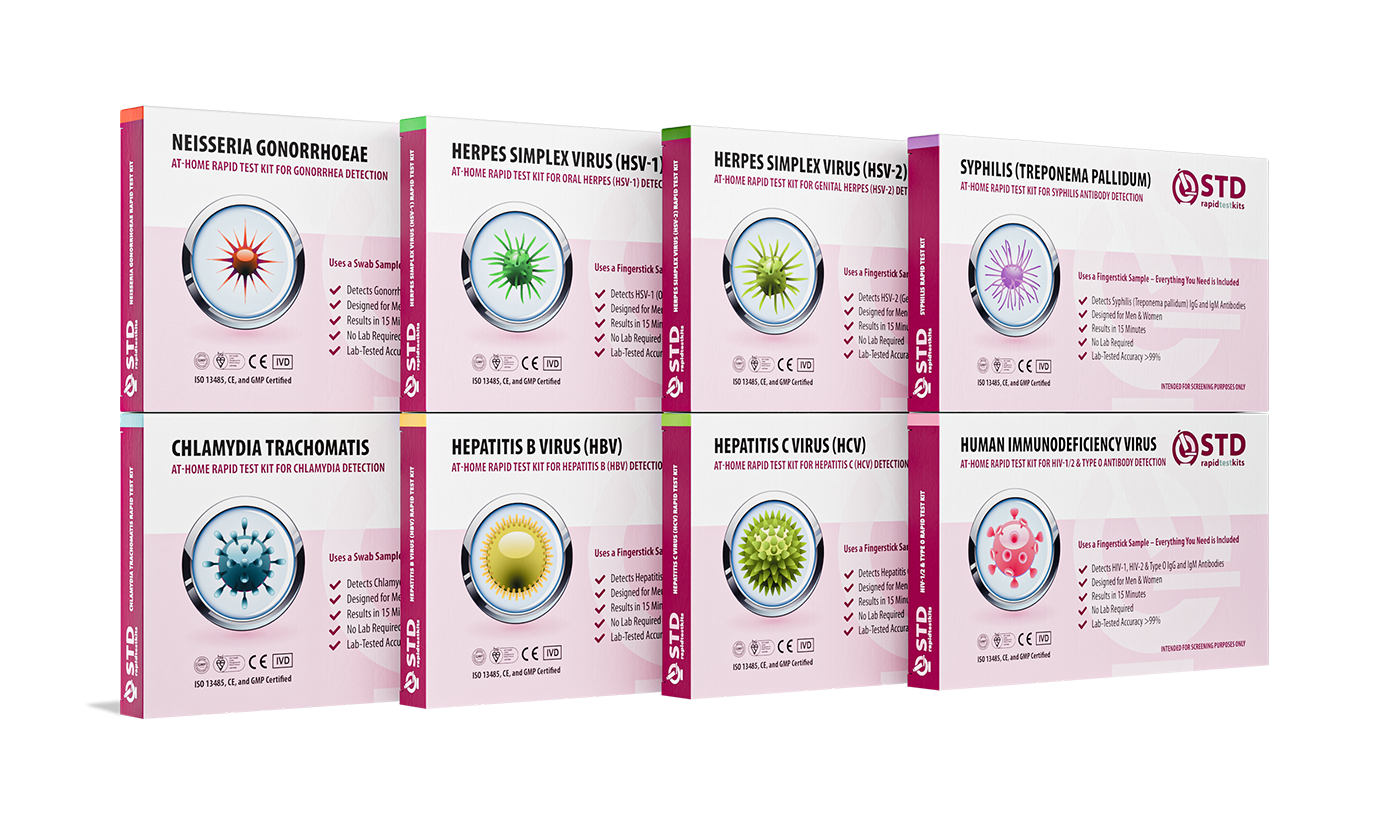 For Men & WomenResults in MinutesNo Lab NeededPrivate & Discreet
Order Now $149.00 $392.00
For all 8 tests
What Testing Actually Gives You
Let’s strip this down to what matters: testing gives you certainty. Not perfection. Not a moral label. Just answers. And for a lot of nonbinary folks, answers are the one thing we’re rarely handed freely when it comes to our health.
Ellis, 30, had lived with mild burning after sex for months. They chalked it up to friction, or lube, or maybe anxiety. Their doctor had waved it off too, twice. But when a friend mentioned rectal chlamydia can be asymptomatic or just feel like low-level irritation, they ordered an at-home test kit. It came back positive. Ellis got treated. The symptoms stopped. And more importantly, they got their peace of mind back.
This is what testing can do. It’s not just about catching something early, it’s about not carrying questions in your body like a second skin. It’s about not wondering every time you feel a sting or spot a rash. It’s about clearing the mental bandwidth so you can focus on your life, your pleasure, your safety, your joy.
You don’t need to have a symptom “bad enough” to justify testing. You don’t need to be in a relationship, or single, or celibate, or sexually active every week. If your body’s had contact with another, it deserves information. You don’t need to prove you’re “at risk” to deserve clarity.
And if something does show up? That doesn’t make you dirty. It makes you informed. It means your body communicated something real, and you listened.
FAQs
1. I’m nonbinary. Can I even get an STD?
Absolutely. STDs don’t care how you identify, they follow the body parts involved, not the box you check on a form. If you’ve had oral, anal, or genital contact (with or without visible symptoms), you could be at risk. Identity ≠ immunity.
2. Do symptoms show up differently if I’m on testosterone or estrogen?
They can. Testosterone often causes vaginal dryness or tissue thinning, which can mask pain or make irritation feel “normal.” Estrogen might increase discharge or make it harder to notice what’s new. The tricky part? Many infections don’t cause symptoms at all. So if something feels off, or even if it doesn’t, testing is still worth it.
3. What if I’ve had bottom surgery? Should I still test?
Yes, 100%. Whether you’ve had a phalloplasty, vaginoplasty, metoidioplasty, or any other procedure, STDs can still affect tissues that come into contact with fluids, fingers, mouths, or toys. Swabbing might look different depending on your anatomy, but the need to test is the same.
4. Can I use an at-home STD test without being misgendered?
Yep, and that’s one of the biggest perks. Companies like STD Rapid Test Kits don’t force you into the “M or F” trap. The kits are private, the instructions are neutral, and you can test in your own space without being judged or having to follow gendered scripts.
5. Do I need to test even if I feel fine?
Big yes. Some of the most common STDs, like chlamydia, gonorrhea, or HPV, can fly under the radar for months (or longer) with no symptoms at all. Regular testing is about staying ahead, not waiting until something burns or itches.
6. I got a faint line on my test, what now?
Faint lines still count. Think of it like a pregnancy test: if it shows up, it means something’s there. You’ll want to follow up with a confirmatory test, especially for HIV or syphilis, but don’t ignore it. It’s not a smudge. It’s a signal.
7. What if I’m not sure where I was exposed?
Totally normal. Sex isn’t always linear, oral one day, anal the next, fingers and toys somewhere in between. That’s why some test kits include multiple swabs. If you’re unsure, it’s better to test more than one site. You deserve full answers.
8. Do I have to tell my partners?
It’s your call how, but yes, it’s important. The good news is you don’t have to do it alone. Some clinics and services offer anonymous notifications by text or email. Or you can keep it casual: “Hey, I tested positive for X, just wanted to give you a heads up so you can get checked too.” No guilt trip. Just mutual care.
9. Are at-home tests accurate?
They can be super reliable, especially if you’re past the window period. Rapid tests give results in minutes; lab-based kits are often identical to what a clinic would use. If you’re testing early after exposure, though, you might need a follow-up in a few weeks just to be sure.
10. This whole thing is making me anxious. What if I just avoid it?
First of all: you’re human. This stuff can feel overwhelming, especially if you've had bad experiences with doctors, clinics, or even past partners. But testing is power. It doesn’t define your identity, your worth, or your future, it just gives you info to work with. And whatever the result? You’ve got options. You’ve got support.
You Deserve Answers, Not Assumptions
You know your body better than anyone. You know when something feels off, even if it doesn’t match the checklist in a clinic brochure. You shouldn’t have to explain your pronouns just to pee in a cup. You shouldn’t have to brace for being called “ma’am” or “sir” before asking about a throat swab. And you definitely shouldn’t have to choose between silence and stigma when all you want is clarity.
Testing isn’t about fitting into a system, it’s about taking care of yourself in spite of it. It’s choosing answers over fear. It’s saying: I get to know what’s going on with my body, on my terms. And if something is there? You’ll deal with it, one step at a time, with the tools and care you deserve.
Whether you test at home, at a clinic, or with a friend holding your hand, just know: your identity is valid, your health matters, and your safety should never be optional. You don’t have to settle for being an afterthought in someone else’s protocol. This space is for you.
How We Sourced This Article: We combined current guidance from leading medical organizations with peer-reviewed research and lived-experience reporting to make this guide practical, compassionate, and accurate.
Sources
1. Planned Parenthood – STDs and Safer Sex
2. STI Screening Recommendations – CDC
3. Sexually Transmitted Infections Treatment – CDC
4. Anatomic Site‑Specific STI Prevalence and Screening – PMC
6. Sexually Transmitted Infections: Updates From the 2021 CDC Guideline – American Family Physician
7. What to Know About At‑Home STD Tests – WebMD
About the Author
Dr. F. David, MD is a board-certified infectious disease specialist focused on STI prevention, diagnosis, and treatment. He blends clinical precision with a no-nonsense, sex-positive approach and is committed to expanding access for readers in both urban and off-grid settings.
Reviewed by: Jordan S. Lin, MPH | Last medically reviewed: November 2025
This article is for informational purposes and does not replace medical advice.


