





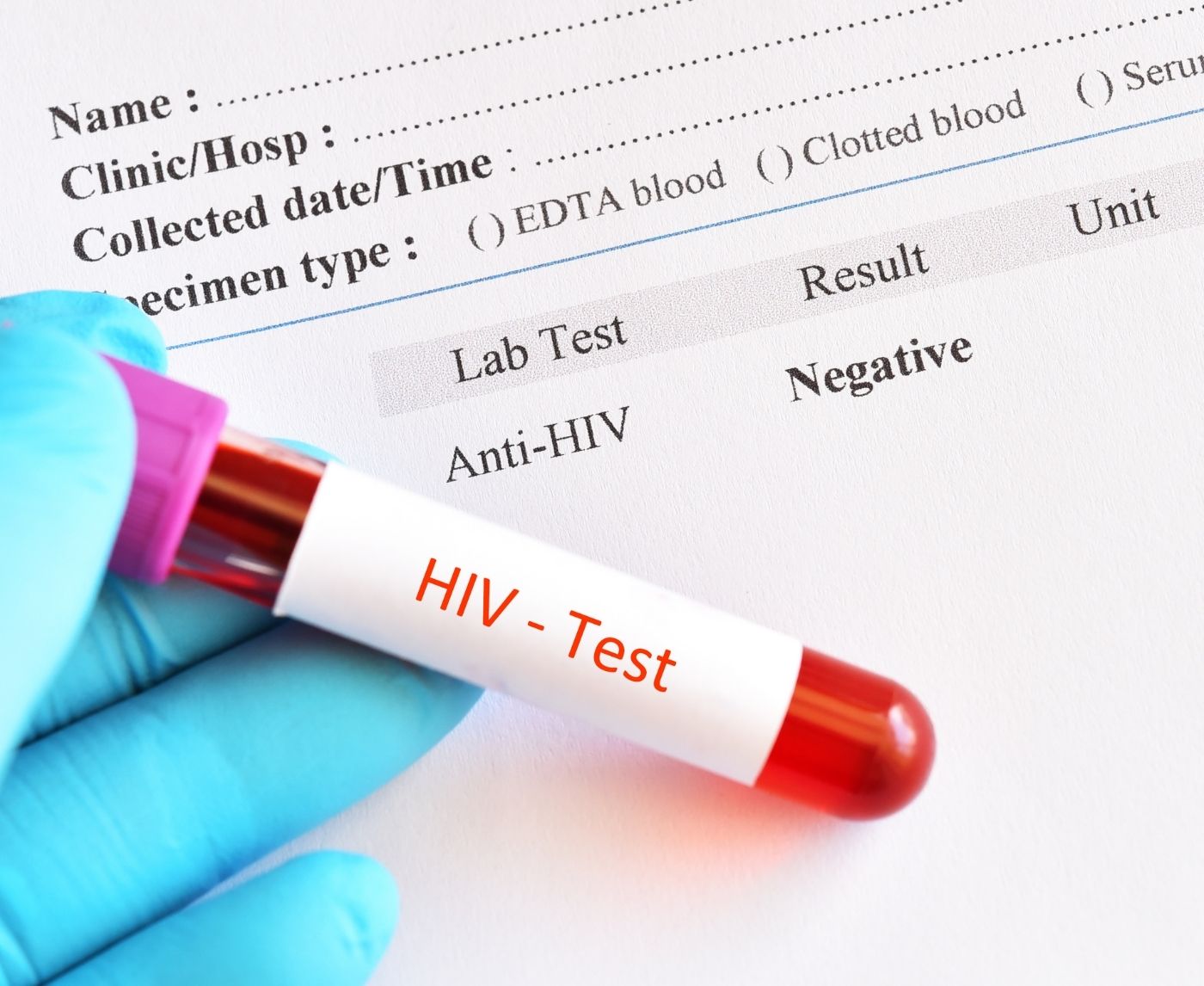

Quick Answer: A negative STD test result doesn’t always mean you’re in the clear, especially if you tested too soon, used the test incorrectly, or are still having symptoms. Retesting may be needed based on the infection's window period or new exposures.
Negative, But Still Not Okay: When Results Don’t Match Reality
Jordan, 28, stared at their rapid test cassette, willing the single control line to be enough. No second line. Negative. Still, their lower abdomen had been sore for three days, and sex had started to feel uncomfortable. “I’m clean,” they told their partner, but the pit in their stomach lingered. A week later, they got a second test. This time: positive for chlamydia.
False negatives aren’t common, but they’re not rare either. Rapid STD tests are accurate, but only within certain windows and conditions. You might feel safe if you test too soon after being exposed, don't collect the sample correctly, or if the infection is still in its early stages.
Researchers who published a study in Sexually Transmitted Diseases in 2022 found that up to 10% of people who tested positive for gonorrhea and chlamydia before day 7 after being exposed did not know they had the disease. That doesn't mean that tests don't work. It means that timing and technique are more important than most people think.
Understanding the Window: Why Timing Can Make or Break Accuracy
Most STDs don’t show up on tests immediately. That’s because your body needs time to build detectable markers, like bacterial DNA, antigens, or antibodies, that tests can find. This delay between exposure and test detectability is called the “window period.” If you test during this phase, your result could be negative even if you're infected.
Let’s break that down with a table showing the common window periods for key STDs and when rapid test accuracy peaks:
| STD | Common Test Type | Window Period | When to Trust a Negative Result |
|---|---|---|---|
| Chlamydia | NAAT or rapid antigen | 5–14 days | After day 14 |
| Gonorrhea | NAAT or rapid antigen | 5–14 days | After day 14 |
| Syphilis | Antibody or treponemal test | 3–6 weeks | After 6 weeks |
| HIV | Ag/Ab combo or NAAT | 2–6 weeks | After 6 weeks |
| Herpes | Antibody or PCR | 2–12 weeks | After 12 weeks |
Table 1: Window periods vs. trust timing for accurate negative results.
Testing during the window period doesn’t invalidate your result, but it does mean you might need a retest later. This is especially true if you're symptomatic, were exposed to a known positive partner, or have had multiple recent partners.
People are aslo reading: When Privacy Isn’t Possible: STD Testing in Rural Areas
What Can Go Wrong: Common Rapid Test Mistakes and Misses
Even the best test in the world can give you the wrong answer if something in the process is off. And in real life? Something is often off. Maybe you didn’t swab deeply enough, or your urine sample was too diluted, or you read the result 5 minutes too late.
Here’s the thing: rapid tests are user-friendly, but they’re not foolproof. A faint line might mean positive, or it might be a drying artifact. An invalid result can still show a line. One 2023 Reddit thread discussed a herpes test that showed a ghost line well after the reading window, causing three days of spiraling anxiety, until a telehealth nurse clarified that it was meaningless.
It’s not just user error, though. Sometimes it’s biological. People on antibiotics may have reduced bacterial loads, temporarily suppressing detection. People with compromised immune systems may not produce enough antibodies for tests to detect early-stage infections. And some STDs, like trichomoniasis or oral HPV, are harder to catch with certain tests, especially if the sample isn’t from the right site.
So, if your test says negative but your body says something else? Listen to both, and act accordingly. We’ll get to how.
Check Your STD Status in Minutes
Test at Home with Remedium6-in-1 STD Test Kit
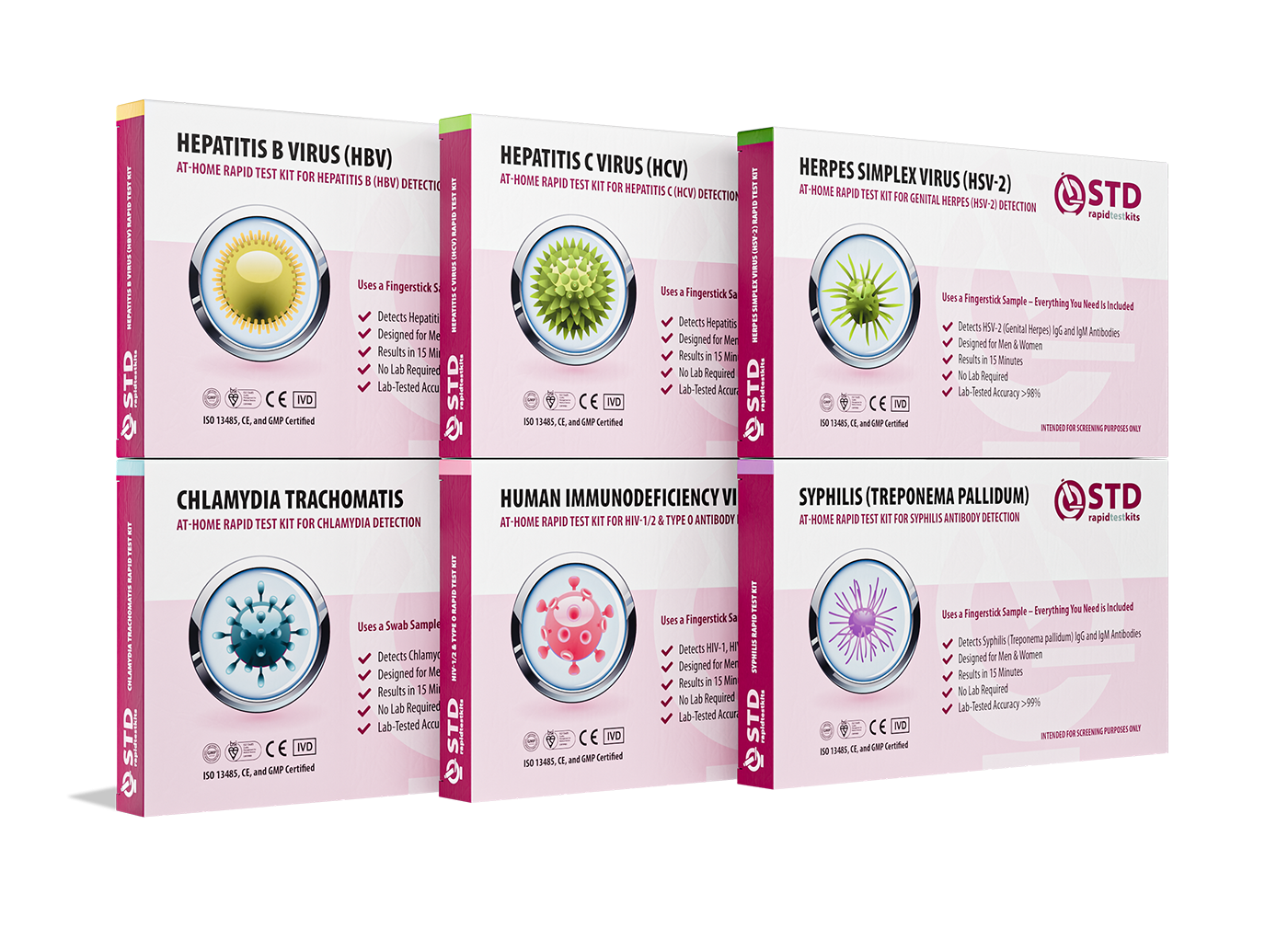
 For Men & Women
 Results in Minutes
 No Lab Needed
 Private & Discreet
Order Now $119.00 $294.00
For all 6 tests
She Tested Positive. You Didn’t. Now What?
It’s one of the most panic-inducing situations: your partner tests positive, but you test negative. The immediate thought is betrayal. But the truth is often more medical than moral.
Derrick, 35, was blindsided when his girlfriend tested positive for gonorrhea at her annual checkup. He rushed to a clinic that afternoon, got tested, and received a negative result. “She must have cheated,” he thought. But a retest two weeks later showed he was infected too. His first test had simply been too early.
Discordant results are not proof of dishonesty. They’re more often about window periods, infection timing, or different test types. If one partner has symptoms or a positive result, the other should test (or retest) based on that infection’s timeline, even if they feel fine.
According to CDC partner treatment guidelines, testing negative doesn’t exempt you from treatment if you were exposed. Some clinicians will treat you presumptively to reduce transmission risk while you wait for the right test window.
If trust is already shaky in the relationship, this becomes harder. But it’s worth knowing: your result doesn’t invalidate theirs, and vice versa. What matters is care, not catching someone out.
This at-home combo test kit can check for several STDs in one go and offers a discreet way to confirm or clarify your status without pressure.
Negative Doesn’t Always Mean Nothing: When to Retest
You took the test, followed the steps, and saw one clean line. It felt like relief. But that feeling fades when symptoms creep back, or you get that awkward text from a former partner. So when does a negative need a second look?
Retesting is not a sign of paranoia, it’s part of how real people navigate uncertainty. The CDC recommends retesting in several scenarios:
If you tested during the early window period. If you have ongoing risk factors (new partners, unprotected sex, etc.). If symptoms develop after a negative test. If a partner tests positive after your test date. If you’re unsure the test was done correctly.
Imagine this: You tested for syphilis at week three post-hookup. It came back negative. At week six, a single painless sore shows up near your mouth. That’s a textbook primary syphilis lesion, and it's your body’s way of saying it’s time to test again. Your original test wasn’t wrong. It was just early.
Here's a table that shows common recommendations for retesting based on when it should be done and how risky it is:
| Scenario | Recommended Retest Timing | Why It Matters |
|---|---|---|
| Tested within 7 days of exposure | Retest at 14–21 days | Early tests may miss the infection |
| Partner tested positive after your negative | Retest immediately + again at 2 weeks | Discordance often due to timing mismatch |
| Symptoms started after negative test | Retest as soon as possible | New symptoms = new diagnostic moment |
| Ongoing unprotected exposure | Retest every 1–3 months | Routine testing reduces undetected risk |
Table 2: When to retest after a negative STD result based on exposure and symptoms.
Testing is a snapshot, not a movie. It shows one frame in a timeline that’s always evolving. Your body’s response, exposure history, and test method all play a role in what that frame reveals. Retesting is how you keep watching the story unfold, and catch important plot points you might’ve missed.
Faint Lines, Invalid Results, and Reading Errors
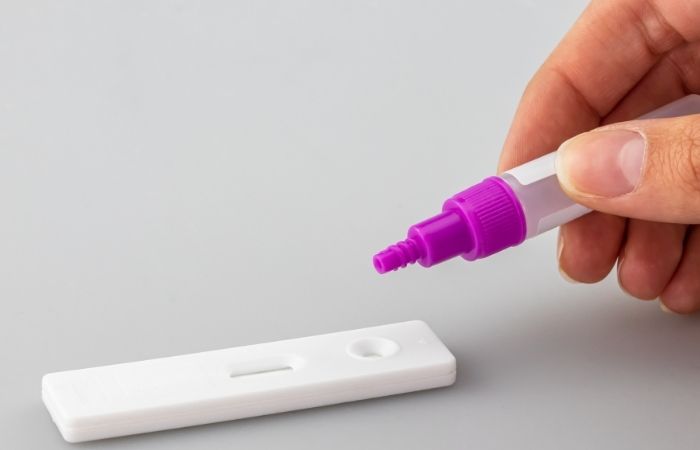
One of the most common reasons people second-guess their results? Faint lines. Especially on at-home rapid tests, it can be hard to tell the difference between a “barely there” positive and a meaningless mark left by evaporation or misreading.
Leila, 26, used a rapid test for trichomoniasis after feeling irritated post-hookup. A barely-there second line appeared just after the 15-minute window. Panic set in. Was it real? A pharmacy visit, two calls, and one telehealth consult later, she learned the line was invalid, results read after the time window are no longer reliable.
This confusion is common enough that some brands now include photos of test lines at varying intensities to help users interpret results. But not all do. And the reality is, not everyone knows that reading too early or too late can distort the outcome.
If your test line appears:
Within the window, no matter how faint → consider it positive and follow up. After the window → discard result and retest. With no control line → test is invalid and must be redone.
If you're ever unsure, assume ambiguity = retest. Or call the test company’s support line, which many users don’t realize exists. Some even have nurses available to interpret results or walk you through a retest.
Not sure which test is most reliable for you? You can explore multiple at-home test options here, including combo kits that simplify the decision-making process.
People are also reading: The Party Habit That Might Be Riskier Than You Think
The Emotional Fallout of False Reassurance
There’s a unique kind of stress that comes from trusting your test, and still feeling sick. It’s different from the fear of a positive result. This is fear with confusion. Anxiety with gaslighting undertones. You start to wonder: Is it all in my head? Am I overthinking this? Why won’t my body just be normal again?
False reassurance is a hidden risk of early testing. Not just because of biology, but because of how people interpret results emotionally. When you get a negative, it’s easy to assume everything else must be unrelated, ignore symptoms, delay care, or assume your partner’s test is wrong instead.
Dani, 21, tested at home for herpes after a bad outbreak of what looked like ingrown hairs. The test was negative. She chalked it up to shaving irritation, until the sores blistered and oozed. Her clinic test came back positive. “The worst part wasn’t the diagnosis,” she said. “It was realizing I’d ignored my body for two weeks because I trusted the first result too much.”
This is why trauma-informed sexual health guidance always emphasizes symptoms and intuition alongside test results. You’re allowed to retest. You’re allowed to get a second opinion. And you’re allowed to trust your gut even when the test says “no.”
If you’re unsure how to move forward, our homepage offers step-by-step resources and at-home kits that ship discreetly. You deserve answers without the shame spiral.
Check Your STD Status in Minutes
Test at Home with Remedium6-in-1 STD Rapid Test Kit
 For Men & WomenResults in MinutesNo Lab NeededPrivate & Discreet
Order Now $119.00 $294.00
For all 6 tests
When Negative Tests Lie, and What to Do Next
We tend to think of test results as final: positive = infected, negative = safe. But that binary doesn’t always fit the messy, human reality of sexual health. Sometimes, a negative test isn’t a clean bill of health. It’s a starting point.
Here’s what to remember if you’re holding a negative test but still feel unsure:
First, validate yourself. It’s not weird to question a test result. It’s not dramatic to retest. It’s not overreacting to take symptoms seriously, even when the data doesn’t line up. You are the expert on your own body, and your story isn’t over just because a single cassette said “no.”
Second, trust the process, not just the product. That means checking the window period for each STD, watching for symptoms, and knowing that one test doesn’t rule out everything forever. Especially in the case of herpes and syphilis, which rely on your body’s immune response to show up on certain tests, it can take weeks to get a reliable result.
And finally, be gentle with yourself. This is hard. Not because you’re dirty or broken, but because our sexual health system often teaches us to be ashamed, silent, or confused. Getting tested, again and again if needed, is one of the bravest acts of self-care out there.
Whether you need to retest now or just want peace of mind, consider trying a Combo STD Home Test Kit. It checks for multiple infections in one go, is doctor-trusted, and ships discreetly, so you can get clarity without the clinic.
FAQs
1. Can I still have an STD even if the test said negative?
Absolutely. A negative result isn’t a force field, it’s a snapshot. If you tested during the window period (aka too soon after exposure), or didn’t swab deeply enough, or the test type wasn’t sensitive for that infection, it could miss something. Think of it like taking a photo before something walks into the frame. You didn’t lie. The timing just didn’t tell the full story.
2. How long should I wait before testing again?
It depends on the STD, but most infections take 1 to 3 weeks to show up reliably on a test. If you tested within the first 5–7 days after a risky encounter, a retest around day 14 is smart. For things like syphilis or herpes, waiting 6 to 12 weeks can give you more accurate results. You’re not being extra, you’re being thorough.
3. My partner tested positive and I tested negative. Is one of us wrong?
Not necessarily. This kind of mismatch is way more common than people think. It could be about when you each tested, what kind of test you used, or just plain biology. If your partner's positive, that doesn’t automatically mean they cheated. It might mean your test was too early, or you haven’t been infected yet. Retest, and talk honestly. Judgment helps no one here.
4. Does a faint line mean I have something?
If it showed up in the correct reading window? Yes, even a faint line is usually considered positive. Your body doesn’t always throw a dramatic signal, it whispers. But if that line appeared after the test expired (like 20+ minutes later), it’s not reliable. When in doubt, trust your gut and retest with a new kit.
5. I have symptoms, but my test says I’m fine. What gives?
Your body isn’t gaslighting you. Tests can miss things, especially if you swabbed too early, didn’t collect enough sample, or if the infection is in a location the test doesn’t check (oral, rectal, etc.). STDs aren’t the only cause of irritation or discharge, but if your symptoms are sticking around, follow up. Pain is a clue, not a nuisance.
6. Can stress or anxiety mess with my test results?
Stress won’t change your blood or urine chemistry, but it can make every tingle, bump, or itch feel 100x louder. That said, we never recommend chalking everything up to anxiety unless you’ve ruled out infection first. You’re not “crazy” for checking, just human.
7. Do at-home STD tests really work?
Yes, if you’re using a reputable brand and following instructions like a pro. Many use the same technology clinics do. Just be honest with yourself: did you swab right? Was the sample fresh? Did you time the result correctly? A test is only as good as the moment you used it in.
8. What if I messed up my test?
Happens all the time. Maybe you dripped outside the well, waited too long to read it, or forgot to shake the solution. You’re not doomed, but you should retest with a new kit. And next time, breathe. Go slow. You’re not being graded.
9. Is it possible to test too early for every STD?
Pretty much. Each infection has its own timeline. Chlamydia and gonorrhea usually show up within 5–14 days. HIV and syphilis can take weeks longer. That’s why combo kits often suggest retesting a few weeks after exposure, even if your first test was negative. Early testing gives you a head start. Retesting gives you the full picture.
10. Should I tell my partner even if I tested negative?
If there’s been any risky exposure or if you’re dealing with symptoms, honesty is a good move, especially if they haven’t tested yet. You don’t have to come in with doom vibes. Try something like, “Hey, I tested negative, but I’m still feeling weird, and I think we should both retest soon.” Framing it as care, not blame, keeps everyone safe without shame.
You Deserve Answers, Not Assumptions
If your test said negative but something still feels off, believe yourself. You don’t need anyone’s permission to question a result, ask for a retest, or say, “this doesn’t feel right.” Your body is your evidence. A rapid test is a tool, not a final verdict.
STDs don’t always follow neat timelines or obvious symptoms. Sometimes they hide. Sometimes they show up later. And sometimes they get missed by tests that are rushed, mistimed, or just not built for the exact moment you’re in. That’s not your fault. That’s not failure. That’s just real life.
So if you're stuck in that uncomfortable in-between, symptoms but no answers, worry but no proof, know this: you’re not overreacting. You’re doing exactly what smart, careful people do. You're investigating your health instead of ignoring it.
Don’t wait and wonder, get the clarity you deserve. This at-home combo test kit checks for the most common STDs discreetly and quickly. It’s one more step toward peace of mind, and one less night spent spiraling on Google.
How We Sourced This Article: We combined current guidance from leading medical organizations with peer-reviewed research and lived-experience reporting to make this guide practical, compassionate, and accurate.
Sources
1. CDC – Sexually Transmitted Diseases Treatment
2. Mayo Clinic – STD Testing Overview
3. Sexually Transmitted Infections: Treatment Guidelines, 2021 — CDC
4. HIV Testing | HIV Partners — CDC
5. Results — Screening for Chlamydial and Gonococcal Infections — NIH/NCBI
7. Home STD Tests Are Convenient — UAB Medicine
8. Tested Negative for HIV but Still Scared: What to Know — Medical News Today
9. Relative Accuracy of Serum, Whole Blood, and Oral Fluid HIV Tests — ScienceDirect
10. HIV Test Accuracy, Results and Further Testing — i-Base
About the Author
Dr. F. David, MD is a board-certified infectious disease specialist focused on STI prevention, diagnosis, and treatment. He blends clinical precision with a no-nonsense, sex-positive approach and is committed to expanding access for readers in both urban and off-grid settings.
Reviewed by: L. Cho, MSN, FNP-BC | Last medically reviewed: November 2025
This article is meant to give you information, not to give you medical advice.


