







Quick Answer: Getting chlamydia again doesn’t automatically mean your partner cheated. It could be reinfection, untreated infection, or even a false negative from the first test. The only way to know is through retesting, treatment timing, and open communication.
This Isn’t Always a Betrayal, And That Matters
Latrell, 28, thought he was in the clear. His doctor had prescribed one round of antibiotics after a positive chlamydia test two months ago, and he took the meds exactly as directed. He even convinced his girlfriend to get tested too, just to be safe. Her results came back negative. But now, the burning sensation when he pees is back, and so is his panic.
“I don’t want to accuse her,” he said. “But I haven’t been with anyone else. So… either she lied or something went wrong with the test.”
Sound familiar? It should. Studies show that repeat chlamydia infections are extremely common, even in monogamous relationships. In fact, up to 20% of people who are treated once for chlamydia will test positive again within six months, according to the CDC. But the reasons aren’t always shady. Sometimes, it’s a matter of biology, not betrayal.
Can You Really Get Chlamydia Twice?
The short answer? Yes. Chlamydia doesn’t make your body immune once it’s been treated. It’s not like chickenpox. You can get it again, over and over, especially if a partner wasn’t treated properly, or if they were treated too late.
Reinfection can happen in three common ways:
| Reinfection Scenario | What It Means |
|---|---|
| Partner wasn’t treated | You got treated, they didn’t, and passed it right back during sex. |
| Treatment failure or delay | They got meds, but not in time. Or didn’t take them fully. |
| False negative on earlier test | They were positive, but their test missed it. Yes, this happens. |
Table 1. Common scenarios where chlamydia reinfection occurs, without infidelity.
All of this complicates trust. Because from the outside, it looks simple: if you’re both “clean,” and you test positive again, someone must have lied. But the body isn’t that black-and-white. And neither is STD testing.

People are also reading: The Syphilis Surge No One Saw Coming
When Testing Lies to You (Without Meaning To)
Here’s the cruel twist: chlamydia tests aren’t perfect. Even the most accurate ones, like NAAT (nucleic acid amplification tests), can miss early or low-level infections. If your partner tested during the incubation period or had minimal bacterial load, their test might’ve come back negative when they were actually positive. It’s not their fault. And it’s not yours either.
Priya, 34, found this out the hard way. She and her boyfriend had both been tested after she got a UTI that wouldn’t quit. He tested negative, she tested positive. He was angry, she was confused. Two weeks later, he developed symptoms and retested. This time: positive.
“We almost broke up over a lab delay,” she said. “Turns out, his first test was just too early.”
This is why timing matters, more than most people realize. Below, we break down when to test (and retest) to get the most reliable results.
Check Your STD Status in Minutes
Test at Home with Remedium6-in-1 STD Test Kit
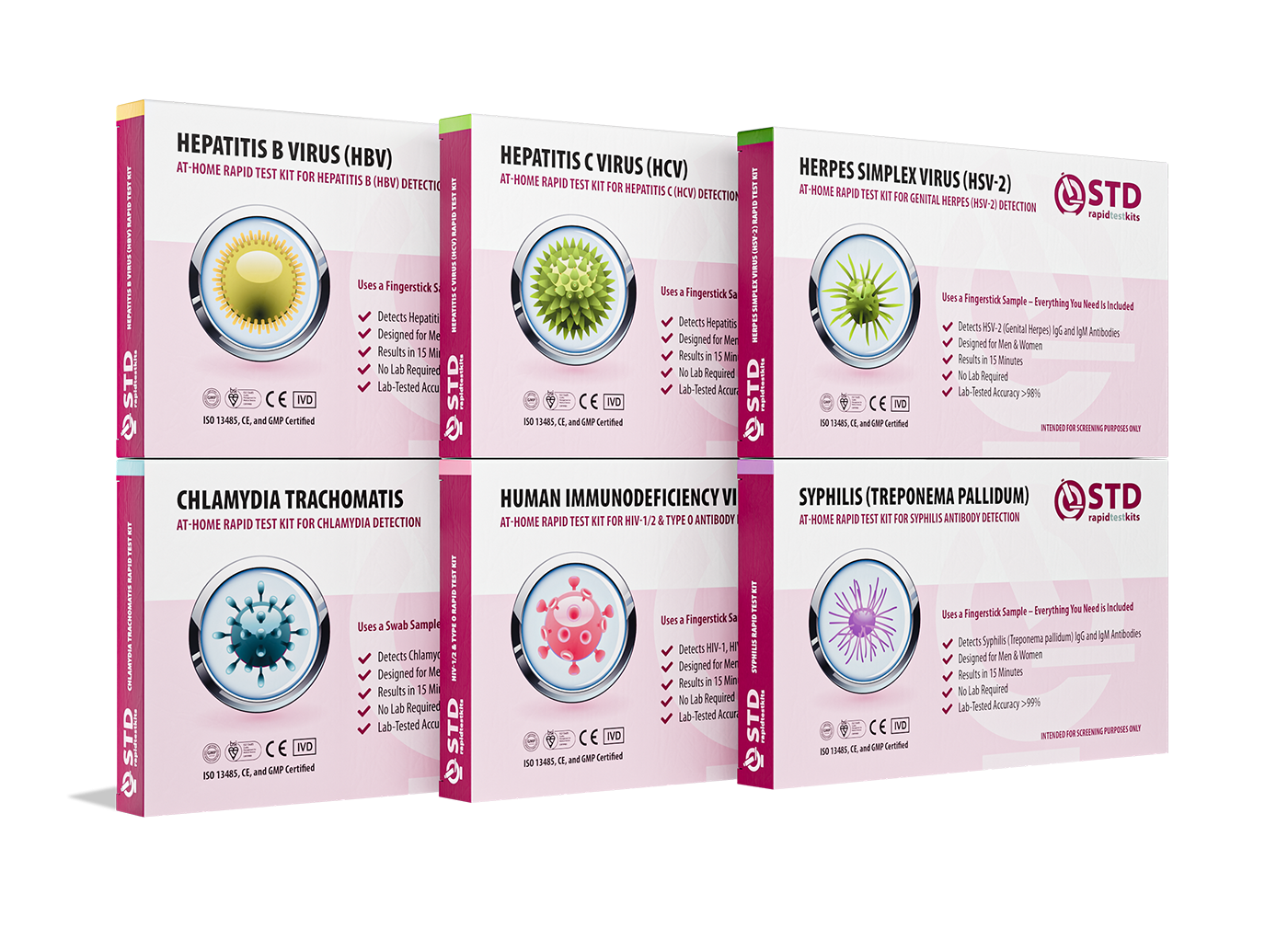
 For Men & Women
 Results in Minutes
 No Lab Needed
 Private & Discreet
Order Now $119.00 $294.00
For all 6 tests
Why Timing Is Everything: Chlamydia’s Window Period
Imagine testing too soon and breathing a sigh of relief, only to get blindsided weeks later. That’s what the window period is all about. It’s the time between exposure and when an STD test can actually detect the infection. For chlamydia, that window is about 7 to 14 days, but it varies by test and by body.
Testing on day three after a risky encounter? The result might be negative even if you’re infected. Testing at day ten? More reliable, but still not 100%. Waiting until day 14 or later? Now you’re in the sweet spot.
| Timing Since Exposure | What a Test Result Means |
|---|---|
| 0–5 days | Too early. Most tests can’t detect infection reliably. |
| 6–13 days | Possible detection, but false negatives still common. Retest advised. |
| 14+ days | Ideal window. High accuracy for chlamydia detection. |
Table 2. Chlamydia test timing: when results are trustworthy, and when they’re not.
If you or your partner tested during the first week after exposure, the result might’ve come back negative even if the infection was there. That can explain a “surprise” reinfection later. It also underscores the importance of follow-up testing, especially in couples trying to figure out what went wrong.
The Problem with Assumed Monogamy (And Untreated STDs)
Here’s another reality: monogamy doesn’t protect you if one partner is asymptomatic and untreated. Chlamydia can linger in the body for weeks or months without symptoms, especially in people with vaginas. So even if no one’s cheating, someone could still be carrying the bacteria.
Isaiah, 31, and his partner both assumed they were fine. No new partners, no symptoms, and one round of testing a year earlier that showed nothing. But when Isaiah started experiencing mild discomfort during urination and took a test out of precaution, it came back positive. His partner’s test followed, also positive. But she had zero symptoms. No discharge. No pain. Nothing.
“We went through every possibility,” he said. “Turns out, she probably had it for months. Neither of us knew.”
Silent infections like this are more common than most people think. According to Mayo Clinic, around 70% of people with vaginas and 50% of people with penises have no symptoms at all when infected. That means a couple could pass it back and forth indefinitely without realizing it.
This isn’t about blame, it’s about biology. And understanding that can help you ask better questions, get better treatment, and avoid the kind of shame spiral that makes people hide instead of heal.
How Reinfection Happens (Even When You Think You’re “Clean”)
Let’s say you tested positive. You took your meds. You even waited the full week before having sex again. So how did you end up with chlamydia a second time?
Here’s a short walkthrough of what might’ve gone wrong:
You were infected. You got treated. But your partner didn’t, or their treatment didn’t work, or their test missed the infection. You had sex again. Boom, reinfected. And this time, it might take longer to show symptoms, especially if the dose you received was smaller. You feel betrayed. But is it betrayal… or just broken timing?
This is why doctors recommend that both partners be treated at the same time, even if only one tests positive. It's called “expedited partner therapy,” and it's standard practice in many U.S. states. If your provider didn’t mention this, or your partner refused treatment, the risk of reinfection stays sky-high.
Even condoms aren’t 100% protective against chlamydia, especially if they’re not used perfectly or consistently. So if the only barrier between you and reinfection was a single condom on a single night, the odds weren’t exactly stacked in your favor.
That’s why at-home testing isn’t just about privacy, it’s about practicality. You can retest at the right time, without waiting for a clinic appointment or dodging insurance questions. And if your gut is still spinning, the fastest path to clarity is usually one click away.
Order a discreet chlamydia test kit here and get results in minutes.
When Trust Breaks Before Truth Arrives
It’s hard not to go there. You get a second positive result and your heart slams shut. You remember a strange text. A fight you had last month. The way they said they were “too tired” for sex. The suspicion boils fast, and if you’ve been cheated on before, it’s even harder to pause.
But in the world of STDs, cause and effect don’t always follow logic. Chlamydia doesn’t wait for lies to grow. It spreads quietly, survives silently, and often shows up just in time to trigger the worst version of ourselves. Which is why this isn’t just about science, it’s about protecting your peace while navigating a deeply emotional landmine.
Sasha, 25, nearly ended her relationship over a surprise chlamydia diagnosis. She was monogamous. Her partner swore he was too. She got treated. They moved on. Then, three months later, the symptoms came back. She confronted him. He swore again. She didn’t believe him.
“I was ready to walk,” she said. “But we went back through the timeline, and realized I never got retested. I’d assumed it was gone after the meds.”
Sasha’s story highlights something essential: treatment isn’t a guarantee. If the antibiotics don’t fully clear the infection, or if a partner isn’t simultaneously treated, the cycle continues, and the damage compounds.
People are also reading: Misdiagnosed and Ignored: How Medical Gaslighting Delays STD Treatment
What’s Biology, and What’s Betrayal?
To separate suspicion from science, it helps to map out what could actually be going on. Below is a breakdown of possible reinfection explanations, some biological, some emotional.
| Reinfection Cause | Biological or Behavioral? |
|---|---|
| Partner didn’t take meds correctly | Biological (medication failure) |
| You resumed sex too soon after treatment | Biological (transmission before clearance) |
| They tested too early and got a false negative | Biological (testing window issue) |
| They slept with someone else | Behavioral (infidelity) |
| They were asymptomatic from the start | Biological (carrier state) |
Table 3. Distinguishing between betrayal and biology in chlamydia reinfection.
Of course, cheating is possible. But if the only “evidence” is a positive test, you deserve more context before leaping to conclusions. Testing errors, timeline confusion, and asymptomatic carriage are all frustratingly real. So is the emotional fallout when no one explains that reinfection can happen even in the most loyal partnerships.
What to Do If You Just Got Chlamydia Again
First, breathe. Then remember: this doesn’t define you. Chlamydia is one of the most common STDs in the world, and one of the most easily treated. But to close the loop for good, you’ll need more than a single pill.
Here’s a trauma-informed roadmap:
- Retest now. Even if you’re sure, confirm it. Testing from home allows you to act quickly and privately.
- Treat again, both you and your partner(s). No exceptions. Even if they say they’re “fine.”
- Wait the full 7 days after finishing meds before any sexual contact.
- Consider a 3-month follow-up test. That’s standard recommendation from CDC for anyone who has had chlamydia before.
- Talk it out. With your partner, your doctor, your therapist, anyone who helps you process.
Sex is human. Mistakes are human. Reinfection is human. What matters is what you do next, and how you take back your power.
Explore confidential testing options here and retake control on your own terms.
Check Your STD Status in Minutes
Test at Home with RemediumChlamydia Test Kit
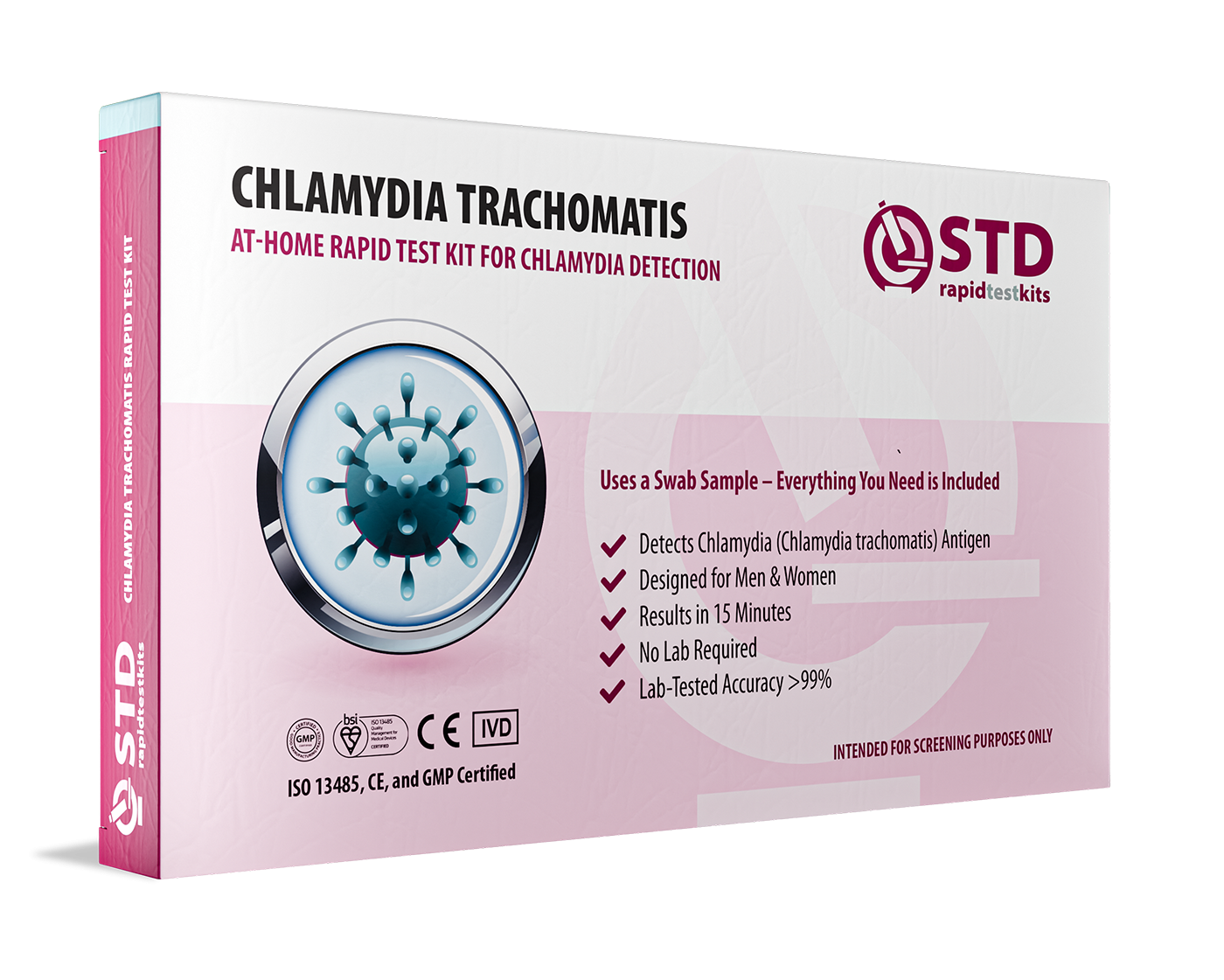 For Men & WomenResults in MinutesNo Lab NeededPrivate & Discreet
Order Now $33.99 $49.00
How to Talk About STDs in a Relationship Without Lighting a Fire
This is where things get sticky, not medically, but emotionally. One positive STD test in a monogamous relationship is enough to crack the surface. But a second? That’s when silence becomes a grenade. And yet, the only way to stop the guessing, the gaslighting (intentional or not), and the slow decay of trust... is to talk.
The problem? Most of us were never taught how. Not by our parents, not by sex ed, and certainly not by rom-coms. So instead of leaning in with clarity, we withdraw, accuse, or implode. And chlamydia, as common and curable as it is, can feel like a betrayal, even when it’s not.
Diana, 30, knew the moment she saw the positive test that it was going to get ugly. She’d had no new partners. Neither had her boyfriend. But this was her second time in six months. “I couldn’t even ask him calmly,” she said. “I just blurted out, ‘Who the hell did you sleep with?’”
He hadn’t slept with anyone else. What he had done was delay taking his antibiotics after she was treated. He’d convinced himself he didn’t need them since he felt fine and his test had been negative. They had sex five days after her treatment ended. The bacteria was still there. So it came back, to her.
There’s a better way to handle these conversations. But it starts with something counterintuitive: assuming care, not conflict.
Try opening with curiosity, not blame. “Hey, I just got a positive result for chlamydia again, and I’m really confused. Can we talk about timelines and when we both tested?” That one sentence opens the door to science, not shame. It shows you’re not accusing, you’re investigating, together.
Even if the truth is hard, the conversation will land better if it’s framed around health, not hurt. “I want us both to be okay. I know this isn’t easy, but we need to be honest if we’re going to stop this from happening again.” It’s not about guilt, it’s about getting clarity and care on the same team.
And if you’re not ready to talk face-to-face? Text works. Voice note works. A shared Google Doc (yep, people do it) works. What matters is that you don’t stay silent. Silence doesn’t protect trust. It buries it.
Which brings us to some of the most common questions people ask at this point, the part where you’re trying to untangle symptoms from secrets and biology from betrayal.
FAQs
1. Can someone really give me chlamydia twice?
Yes, unfortunately. Even if you both took meds, if your partner skipped a dose, didn’t get treated at the same time as you, or you hooked up again too soon, reinfection can sneak right back in. Chlamydia doesn’t build immunity. Think of it like the flu, just way less fun and way more relationship-damaging.
2. Does testing positive again mean they cheated?
Not always. It might mean that, sure, but it also might mean they tested too early and their results missed it. Or they were asymptomatic and never knew. Or one of you got treated, but the other didn’t. Cheating is a possibility, but it’s not the only one. Biology’s a messy beast.
3. Could I still have it even if I already took the antibiotics?
Totally possible. If you took the meds but had sex again before the bacteria was fully cleared, or if your partner was untreated, you could get reinfected fast. Also, treatment sometimes fails if you don’t follow it exactly or if there's resistance (rare, but not impossible).
4. Why did their test come back negative if I was positive?
Timing, mostly. If they got tested during the “window period” (the time before the infection shows up on tests), it might’ve missed it. Also, depending on the kind of test and where the bacteria is hanging out (genitals, throat, rectum), it can fly under the radar.
5. How long should I wait before retesting?
Best practice is to wait about three months after treatment for a retest, even if you feel fine. But if you’re experiencing symptoms again, you don’t need to wait. At that point, test ASAP. You can use an at-home kit to skip the awkward clinic convo if you’d rather.
6. Can you have chlamydia with zero symptoms?
Oh, absolutely. In fact, most people do. Especially those with vaginas, up to 70% never feel a thing. That’s how it keeps spreading: silence, false confidence, and no symptoms to tip you off. That’s why regular testing matters, even when nothing feels “off.”
7. How soon can chlamydia show up on a test?
Most tests start picking it up reliably around day 7 after exposure. Testing before that? Risky. You might get a false negative and think you’re fine when you're not. Ideally, test at day 14 if you can wait, but use protection in the meantime either way.
8. Should I get tested again even if we both got treated?
Yes. A retest is your safety net. You don’t want to get caught in the ping-pong game of reinfection. Make sure treatment actually worked, and make sure nobody’s unknowingly carrying it still. Testing is care, not overreacting.
9. What’s the best way to talk about this with a partner?
Begin with facts, not accusations. Don't say what you think; say what you know. Try saying, "My test came back positive again, and I'm trying to figure out why." Can we both get tested and talk about this? You're not just protecting yourself; you're also inviting honesty and care into the conversation.
10. Where can I get tested without all the awkward questions?
Right here. At-home chlamydia kits from STD Rapid Test Kits are fast, discreet, and accurate. No waiting room stares. No “what brings you in today?” Just clarity, quietly.
You Deserve Answers, Not Assumptions
Getting chlamydia once is frustrating. Getting it again can feel devastating, especially when it shakes your trust in someone close. But before you implode your relationship or spiral into shame, pause. Let the facts speak. Let time give you clarity.
Reinfection doesn’t always mean betrayal. It means there’s more to uncover: timing, treatment, biology, maybe behavior, but not always. What you do next matters more than what happened before.
Don’t wait and wonder, get the clarity you deserve. This at-home combo test kit checks for the most common STDs discreetly and quickly.
How We Sourced This Article: We made sure the guide is correct, helpful, and kind by looking at peer-reviewed research, the most recent guidelines from top medical groups, and the stories of people who have been through the challenges.
Sources
1. Mayo Clinic – Chlamydia Symptoms and Causes
3. Chlamydial Infections ‑ STI Treatment Guidelines (CDC)
4. Retesting After Treatment (CDC)
5. The Role of Reinfection and Partner Notification in Chlamydia trachomatis Infections (NIH/PMC)
6. Chlamydia: Causes, Symptoms, Treatment & Prevention (Cleveland Clinic)
7. Determinants and Prediction of Chlamydia trachomatis Reinfection (PMC)
8. Expedited Partner Therapy and Chlamydia Reinfection (BMC Medicine)
9. Can You Reinfect Yourself with Chlamydia During Treatment? (Medical News Today)
About the Author
Dr. F. David, MD is a board-certified infectious disease specialist focused on STI prevention, diagnosis, and treatment. He blends clinical precision with a no-nonsense, sex-positive approach and is committed to expanding access for readers in both urban and off-grid settings.
Reviewed by: J. Valente, RN MPH | Last medically reviewed: November 2025
This article is meant to give you information, not to give you medical advice.


