
Published: August 2025 | Last updated: May 2026 | Editorial review and quality control: Martina N.
Walking out of a doctor's office feeling unheard, what patient-advocacy researchers now call medical gaslighting, isn't just an emotional bruise. In sexual health, that dismissal can quietly turn a treatable infection into pelvic inflammatory disease, secondary syphilis, or long-term reproductive harm. Many of the most common sexually transmitted infections are silent enough that a confident “it's probably nothing” from a clinician can feel reassuring, until weeks later when symptoms worsen or a partner gets a positive result.
The patterns in this piece are drawn from peer-reviewed research on medical gaslighting and patient invalidation in clinical settings, public-health surveillance data, and consumer health surveys. By the end you should be able to recognize when a brush-off is happening, why it happens more often to some patients than others, and what concrete next steps will get you the screening you came in for.
Key takeaways
- Most chlamydia and many gonorrhea infections cause no symptoms at all, so a clinician who only tests when patients look sick will miss large numbers of routine cases.
- If a provider declines to screen you, asking for the refusal in writing, switching to a sexual-health clinic, or ordering a rapid at-home kit are all reasonable next steps.
When Your Symptoms Don't “Look Like” an STD
The first version of medical gaslighting tends to be small. A tired clinician glances at a rash, calls it heat irritation, hands over a tube of hydrocortisone, and reaches for the door. A scenario clinicians see often in their post-visit follow-ups: a man in his late twenties is sent home with a steroid cream for a faint rash on his thigh, and two weeks later the rash has spread while his partner tests positive for genital herpes. By the time he is tested himself, treatment is straightforward, but the delay already meant additional transmission risk and weeks of avoidable worry.
Patterns like this aren't statistical outliers. A consumer health survey published by Mira Care found that 72% of millennial women said they felt gaslighted by a medical professional, and 60% said a doctor had ignored, dismissed, or minimized the severity of their concerns. Similar dynamics affect men whose symptoms get filed under “hygiene” or “stress.” For sexually transmitted infections specifically, the dismissal is quiet rather than dramatic. According to CDC sexual-health guidance, most chlamydia infections produce no symptoms, and a sizeable share of gonorrhea cases behave the same way. If your provider only screens when something looks textbook, large numbers of cases will slip through.
Research from Quest Diagnostics found that about one in four clinicians does not routinely screen sexually active young women for chlamydia and gonorrhea, even though both infections are often silent and cause long-term reproductive harm when missed. The same survey found that providers under-estimate risk when patients report monogamy or condom use, despite the fact that STIs can transmit from a single past partner or during oral sex.
When symptoms do appear, they're easy to misread. A patch of redness can be mistaken for eczema. Pelvic pain can be filed under menstrual cramps or anxiety. Sexual-health clinicians and patient-advocacy case reports describe women going through months or years of normal-result visits for recurring vaginal irritation before an urgent-care swab finally confirms trichomoniasis. The infection had been quietly affecting health and relationships the whole time it went un-tested.

Who Gets Hit Hardest by Medical Gaslighting
Dismissal in sexual-health care isn't randomly distributed. Public-health and academic-medicine research, including CDC health-equity reporting, consistently shows that gender, race, and sexual orientation all shift how seriously a patient's symptoms get taken. Women's somatic complaints are more often categorized as psychosomatic. Black patients are systematically under-treated for pain. LGBTQ+ patients more often describe feeling judged when they raise sexual-health concerns.
Gender bias is one of the most studied threads. Peer-reviewed work on emergency-room pain management has shown women waiting longer than men for analgesics and having heart-attack symptoms misattributed to anxiety. The same pattern surfaces in sexual health. Pelvic pain that turns out to be pelvic inflammatory disease from untreated chlamydia is repeatedly miscategorized as period cramps or stress in case reports. Meanwhile, men with low-grade discharge or testicular discomfort are sometimes waved off as “hygiene-related” rather than tested for gonorrhea or chlamydia.
Race and ethnicity layer on top of this. Studies of clinician decision-making describe Black women being told they're overstating pain at higher rates than white women in identical reported scenarios. For sexual health specifically, that dynamic can mean providers assume a patient already knows what their symptoms point to, or assume a patient in a long relationship doesn't need testing.
LGBTQ+ patients describe a different version of the same problem. A clinician who is uncomfortable with the conversation may avoid asking about sexual history at all, then base testing decisions on the visible default rather than the actual exposure. Men who have sex with men, for example, may need anal or pharyngeal screening that isn't offered unless the patient asks for it specifically. Most of this isn't malicious. Health-services research consistently points to provider burnout, time pressure during short appointments, EHR-driven cognitive load, and unconscious bias as the systemic drivers. Intent doesn't change the impact for the person sitting on the exam table.
Some clinicians are visibly uneasy with sexual-history questions. You don't have to fix that for them. A direct sentence works: “I'd like a full STI screen today, including chlamydia, gonorrhea, trichomoniasis, syphilis, and HIV.” If the response is still vague, requesting the visit notes through your patient portal usually shifts the dynamic, because a written refusal looks different from a verbal one.
Medical Gaslighting Myths That Delay an STI Diagnosis
A handful of myths quietly do the heavy lifting in keeping STIs undiagnosed. The biggest is the assumption that if symptoms aren't obvious, an infection isn't there. The CDC's own data on chlamydia indicates the opposite. Most chlamydia cases produce no symptoms at all. A significant share of gonorrhea infections behave the same way, especially in women, where the cervix can carry an infection silently for months. While the bacteria are present they can scar fallopian tubes and damage fertility without giving any clear warning sign.
The second myth is that certain types of people don't get STIs. Married couples, monogamous partners, and older adults get waved off with a quick “unlikely.” Sexually transmitted infections don't consult relationship status. According to the same Quest Diagnostics survey, false beliefs about who is at risk are one of the most reported reasons doctors skip screening, despite the reality that many infections are passed by a long-trusted partner who didn't know they were carrying.
The third myth is that a quiet symptom is a minor symptom. In sexual health, the reverse tends to be true. Infections that are loudest, with painful sores or visible warts, often drive people to the clinic quickly. Infections that are quietest, asymptomatic chlamydia, untreated gonorrhea, early syphilis, are the ones most likely to cause irreversible damage because they go unscreened. The CDC explicitly recommends annual chlamydia and gonorrhea screening for sexually active women under 25 regardless of symptoms, precisely because waiting for symptoms doesn't work.
The fourth myth is the hardest to dismantle because it sounds like care: “let's just watch and see.” For an acute viral pharyngitis or a mild rash from a new soap, that approach makes sense. For symptoms that could be sexually transmitted, watching means the infection keeps doing what it does. Trichomoniasis, for example, is generally curable with a single antibiotic course. Left in place, it raises the risk of HIV acquisition and has been linked in CDC literature to pregnancy complications including preterm delivery.
So what counts as medical gaslighting in sexual health?
It's when a clinician minimizes, dismisses, or psychologizes a symptom you've raised without doing the workup that would answer the question. The driver is usually discomfort, time pressure, or bias rather than bad intent, but the result is the same: an STI that could have been caught early stays uncaught. Recognizing the pattern is the first protection. The next is asking for specific tests by name.
What Untreated STDs Do to Your Body
The downstream consequences are the part of the conversation that gets cut from short appointments. They're worth knowing concretely, because the gap between “a minor irritation” and “a serious medical problem” is sometimes just a few months of being ignored.
Untreated chlamydia and gonorrhea can ascend the female reproductive tract and cause pelvic inflammatory disease (PID). CDC information on STIs and reproductive complications describes how PID can damage fallopian tubes, raising the risk of infertility, ectopic pregnancy, and chronic pelvic pain. In men, the same untreated infections can cause epididymitis, with testicular pain and swelling that occasionally affects fertility. None of this requires dramatic early symptoms. The silent stretch is what allows the damage.
Syphilis follows a different trajectory but the same shape. Early syphilis is straightforward to treat with a single dose of penicillin per CDC syphilis guidance. Left untreated, it moves through secondary and latent phases and can ultimately affect the brain, eyes, heart, and nervous system. Congenital syphilis cases in newborns have risen sharply in recent years in the United States according to CDC surveillance, and most of those cases trace back to missed or delayed maternal screening rather than to lack of treatment options.
Herpes is rarely dangerous in healthy adults but is uncomfortable to live with, and untreated infection increases the chance of passing the virus to a partner during asymptomatic shedding. HIV, when caught early, is now a manageable chronic condition with daily medication per CDC HIV treatment guidance. When it goes undetected for years, the immune-system damage compounds, opportunistic infections become more dangerous, and treatment becomes harder. Even trichomoniasis, which clinicians sometimes class as minor, is linked in CDC literature to higher HIV-acquisition risk and to pregnancy complications.
Most STIs are easier to treat the earlier they're caught. The cost of waiting through a missed screening compounds in ways the original “it's probably nothing” visit never captures.
Pushing Past Medical Gaslighting to Get Tested
The most useful change in posture after a brush-off is to stop waiting for the provider to bring up testing and instead arrive with a specific request. “I'd like to be tested for chlamydia, gonorrhea, trichomoniasis, and syphilis, plus HIV” is a reasonable opening at any sexual-health visit. If your symptoms point to one infection in particular, name it: “I had unprotected sex three weeks ago and I'd like a herpes test if it's in window.” Concrete asks tend to land differently than vague concern.
It also helps to know the timing. Different infections have different window periods, the stretch between exposure and when a test can reliably detect the infection. Chlamydia and gonorrhea NAATs are generally accurate within a couple of weeks of exposure. Fourth-generation HIV tests typically detect new infection by about 45 days post-exposure. Antibody tests for syphilis are usually positive within 3 to 6 weeks. Herpes antibody tests can take 12 weeks or longer to seroconvert. The CDC's screening recommendations are a useful reference when you want to walk into an appointment with the testing windows already in mind.
Keep a written log of symptoms before the visit: dates of exposure, dates symptoms started, dates symptoms changed, and any partner information you have. Concrete written records make it harder for a provider to file the complaint under “stress” without engaging with the specifics. If a provider still declines to test, ask for the reason in the visit summary or through the patient portal. A documented refusal makes it easier to escalate to a second opinion or to a sexual-health clinic that runs panels routinely.
Sexual-health clinics, including those affiliated with Planned Parenthood and many county health departments, generally test on request and are oriented to the conversation. So are most urgent-care clinics for the common panels. The contrast with a rushed primary-care visit is often striking. If you've been brushed off, switching settings is a legitimate and effective response, and one that most public-health guidance actively encourages.

When the Clinic Isn't Working, Test at Home
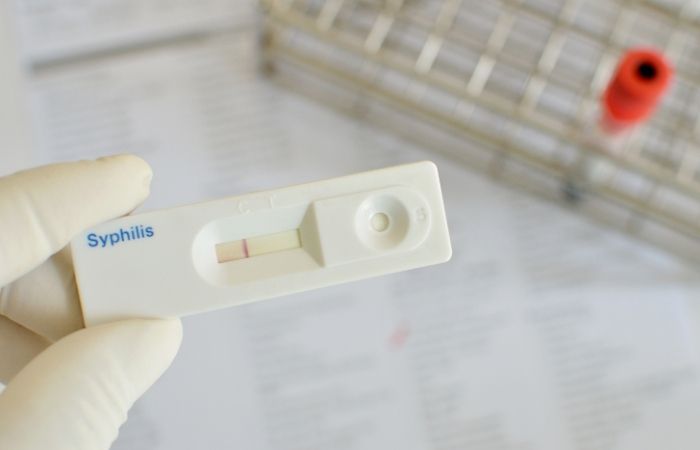
At-home rapid testing is a useful third option, especially when access to a sympathetic clinic is limited or when the experience of asking for a test feels like another barrier. The rapid lateral-flow kits sold on this site cover chlamydia, gonorrhea, syphilis, HIV, hepatitis B and C, trichomoniasis (women), HPV (women), HSV-1, and HSV-2, either as single-infection tests or in combination panels.
A few practical caveats matter. Our at-home kits are lateral-flow immunoassays rather than NAATs. NAAT (lab-based PCR) is the analytical gold standard for chlamydia and gonorrhea screening, with the highest sensitivity in asymptomatic infections. The home rapid test uses the same self-collected swab sample type and is built for screening and convenience: faster results, no clinic appointment, no chain of conversations with a provider who might brush you off. A positive home result is worth confirming with a lab NAAT if treatment will hinge on it. A negative result inside the relevant window period is generally reassuring, though it doesn't replace a follow-up test if exposure happened too recently to detect.
The trichomoniasis and HPV self-swab kits are validated for vaginal anatomy only, so they're a women-only option. If you have a penis and want to be tested for trichomoniasis or HPV, that workup currently has to happen at a clinic with a urethral, anal, or oral swab depending on exposure type, because we don't sell a male-compatible kit for those two infections. The HIV, syphilis, herpes, and hepatitis kits are blood-based (fingerstick) and work for any anatomy. The chlamydia and gonorrhea swab kits are also any-gender.
Most people who have chlamydia have no symptoms. The only way to know for sure if you have chlamydia is to get tested.
You Deserve to Be Taken Seriously
Gaslighting in sexual-health care isn't just an uncomfortable visit. For some patients it means months or years of an untreated infection doing the damage that catching it early would have prevented. For others it means a missed diagnosis at exactly the point a partner could have been protected. Recognizing the pattern is the first protection. Asking for specific tests by name is the second. Knowing that walking into a different clinic, or ordering a discreet home test, is a legitimate next step is what makes the difference between staying stuck and getting answers.
An STI diagnosis is a medical event, the kind that responds to treatment when caught. The shame that gets attached to it is cultural baggage that doesn't change what your body needs. Whether the path to a test is a sexual-health clinic, a second primary-care provider, or a rapid kit you open on your kitchen counter, the route exists. Your symptoms are real enough to warrant the workup, and your concerns warrant being heard.
FAQs about medical gaslighting and STD diagnosis
- Can a doctor really mistake an STI for something harmless?
- Yes, and routinely. A genital rash gets called heat irritation; cervical or urethral discharge gets labeled a yeast infection; pelvic pain gets filed under stress. Many STIs share visible features with non-sexual conditions, so unless the clinician is screening on purpose, infections like chlamydia, gonorrhea, and trichomoniasis can sit for months without ever being named.
- What exactly counts as medical gaslighting?
- It describes a recognizable pattern, not a single rude comment. The visit feels rushed, your concern gets reframed (often as anxiety, stress, or hygiene), and the swab or blood test that would settle the question never gets ordered. You leave with a label rather than a result. Naming the pattern matters because it changes what you do next: ask again in writing through the patient portal, switch to a sexual-health clinic, or run a self-collected panel.
- Is this really common for sexual-health complaints?
- Common enough that the CDC publishes specific screening guidelines because provider judgment alone misses too many cases. In sexual-health visits the dismissal usually takes the form of skipped testing rather than overtly rude language, which is part of why it's hard to spot in the moment. The most reliable counter is naming the tests you want and asking for any refusal to appear in the visit notes.
- Why wouldn't a doctor test me if I asked?
- A few reasons that come up often: outdated thinking that only “high-risk” people get this; discomfort with sexual-history conversations; short appointment slots; or under-estimating risk because you reported monogamy or condom use. None of those are reasons to skip a test you've asked for. If the answer is still no, ask for the refusal in the visit notes.
- What happens if an STI goes untreated?
- It depends on the infection. Chlamydia and gonorrhea can cause pelvic inflammatory disease and infertility in women and epididymitis in men. Syphilis can move from a treatable early phase to systemic disease affecting the brain and heart. HIV's damage compounds the longer it goes undetected. Even trichomoniasis, often labeled minor, raises HIV acquisition risk and has been linked to pregnancy complications.
- Do I have to wait for symptoms before getting tested?
- Waiting for symptoms misses most cases, because most cases are silent. The CDC recommends annual chlamydia and gonorrhea screening for all sexually active women under 25 and for older women with new or multiple partners. For men who have sex with men, more frequent screening across multiple anatomic sites is recommended.
- What if my doctor still won't test after I've asked directly?
- You have three options that all work. Ask again in writing through the patient portal, which creates a paper trail. Book a visit with a sexual-health clinic such as Planned Parenthood, a county health department, or an urgent care for the common panels. Or use a rapid at-home kit so you can self-screen without going through another provider conversation.
- Can I trust an at-home STI test?
- Yes, with two caveats. The rapid kits sold here are lateral-flow immunoassays, which means they're built for screening and give fast results, but lab-based NAAT is more sensitive especially in asymptomatic infections. So a positive home result is worth confirming with a lab test if treatment will hinge on it. Inside the correct window period, a negative result is generally reassuring.
- U.S. Centers for Disease Control and Prevention. Sexually transmitted infections: prevention, screening, symptoms, and treatment guidance.
- U.S. Centers for Disease Control and Prevention. Chlamydia public information: most cases are asymptomatic and only confirmed by testing.
- U.S. Centers for Disease Control and Prevention. HIV treatment, testing, and outcomes information.
- U.S. Centers for Disease Control and Prevention. Health equity in public health: data and reporting on disparities by gender, race, and sexual orientation.
- Quest Diagnostics newsroom. Survey on false beliefs about sexual risk and poor physician-patient communication impeding STD screening in young women (2018).
- Mira Care. Consumer health survey on medical gaslighting reported by millennial women, including the 72% gaslighting figure and the 60% dismissal figure.
