





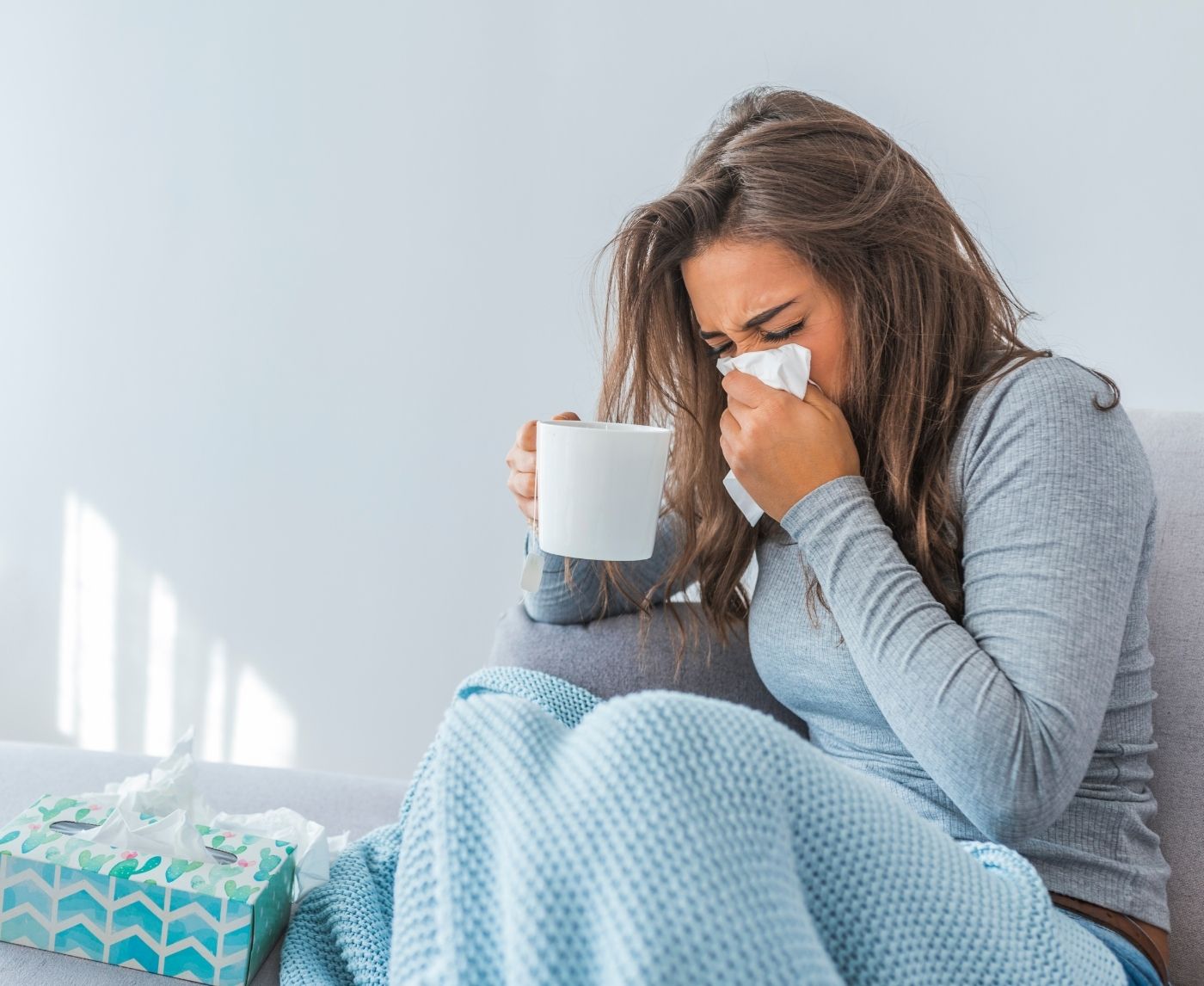

Quick Answer: Gonorrhea can infect your throat through oral sex, often mimicking a common sore throat. Many people have no symptoms, but when present, it may feel like strep without the fever. A throat swab STD test is the only way to confirm it.
When a Sore Throat Isn’t Just a Sore Throat
Andre, 23, had been careful, or so he thought. He’d used condoms during sex, but didn’t think twice about going down on someone new. Three days later, he felt a burning sensation in his throat and assumed it was allergies. But by day five, the pain was sharp, and he had trouble swallowing. No fever. No white patches. Just discomfort. A clinic tested him for strep and COVID, both negative. It wasn’t until a savvy nurse asked about oral sex that a throat swab for gonorrhea was finally done. It came back positive.
Andre’s case isn’t rare. According to the CDC, oral gonorrhea is on the rise, especially in populations with frequent oral-genital contact. The infection often goes undiagnosed because it masquerades as minor throat irritation. But left untreated, it can spread or become resistant to common antibiotics.
That’s why it matters: your sore throat could be your body’s only warning sign that an STD is brewing beneath the surface.
The Science of Throat Gonorrhea (And Why It’s Sneaky)
Gonorrhea is caused by the bacteria Neisseria gonorrhoeae. While most people associate it with genital infections, the bacteria can colonize mucous membranes in the mouth and throat just as easily. Oral transmission typically occurs through unprotected oral sex, mouth-to-penis, mouth-to-vulva, or mouth-to-anus, but even kissing may pose a minor risk if open sores or gum issues are involved.
What makes throat gonorrhea especially tricky is that it often shows no symptoms at all. A 2016 study in the Sexually Transmitted Diseases journal found that up to 90% of oral gonorrhea cases in men who have sex with men were asymptomatic. But just because there are no symptoms doesn’t mean it’s harmless. Asymptomatic carriers can unknowingly pass the infection to others, or worsen their own health over time.
Even when symptoms do show up, they’re often vague:
| Common Symptoms | Gonorrhea | Cold/Strep Throat |
|---|---|---|
| Sore or scratchy throat | ✔️ Common | ✔️ Common |
| Swollen lymph nodes | Sometimes | Often |
| White patches or pus | Rare | Common (esp. with strep) |
| Fever or chills | Uncommon | Common |
| Persistent after antibiotics | Yes, if misdiagnosed | No, if correct antibiotic given |
Table 1: How oral gonorrhea symptoms overlap with common throat infections. If symptoms persist after standard treatment, a specialized STD test may be needed.
This overlap is exactly why so many cases are missed. Doctors may treat you for strep or viral pharyngitis and never run a throat swab for STDs, unless you explicitly mention oral sex or request the test yourself.

People are also reading: STD in My Eye? The Truth About Herpes, Pink Eye, and That Weird Burning
Can You Really Get Gonorrhea from Oral Sex Alone?
Yes. In fact, oral sex is one of the most under-acknowledged transmission routes for gonorrhea. Because many people view oral sex as “safer,” they skip condoms or dental dams. But mucous membranes in the mouth are porous and vulnerable to bacterial entry, especially if there are small cuts, irritation, or inflamed gums.
Let’s take Rachel, 28, for example. She hadn’t had penetrative sex in months, but had a one-night encounter where she performed oral on a new partner. A week later, she felt sick but tested negative for everything, strep, COVID, even mono. It wasn’t until she googled “STD sore throat no sex” that she found info on oral gonorrhea. She had to insist her urgent care run a throat swab. Result? Positive.
What this highlights is a key flaw in both perception and practice: many people, and many providers, don’t think to test the throat. Yet, the bacteria doesn’t care where it enters. Oral exposure is exposure.
How Do You Test for Gonorrhea in the Throat?
If you go to your local clinic and ask for an “STD test,” odds are they’ll collect a urine sample or vaginal swab. That works great for genital infections, but not for your throat. To diagnose oral gonorrhea, you need a specific throat swab, ideally using a nucleic acid amplification test (NAAT), which is considered the gold standard by the CDC.
But here’s the catch: many clinics don’t automatically include throat testing unless you tell them you’ve had oral sex. That means you have to speak up. You may even need to explain that you’re experiencing sore throat symptoms post-exposure, or explicitly ask, “Can you do a gonorrhea and chlamydia throat swab?” It shouldn’t be this hard, but it often is.
If you're using an at-home STD kit, make sure the one you order includes oral site testing. Some brands only offer genital swabs or urine testing. Others, like our Combo STD Home Test Kit, include detailed instructions and optional oral swabs for more comprehensive coverage.
Check Your STD Status in Minutes
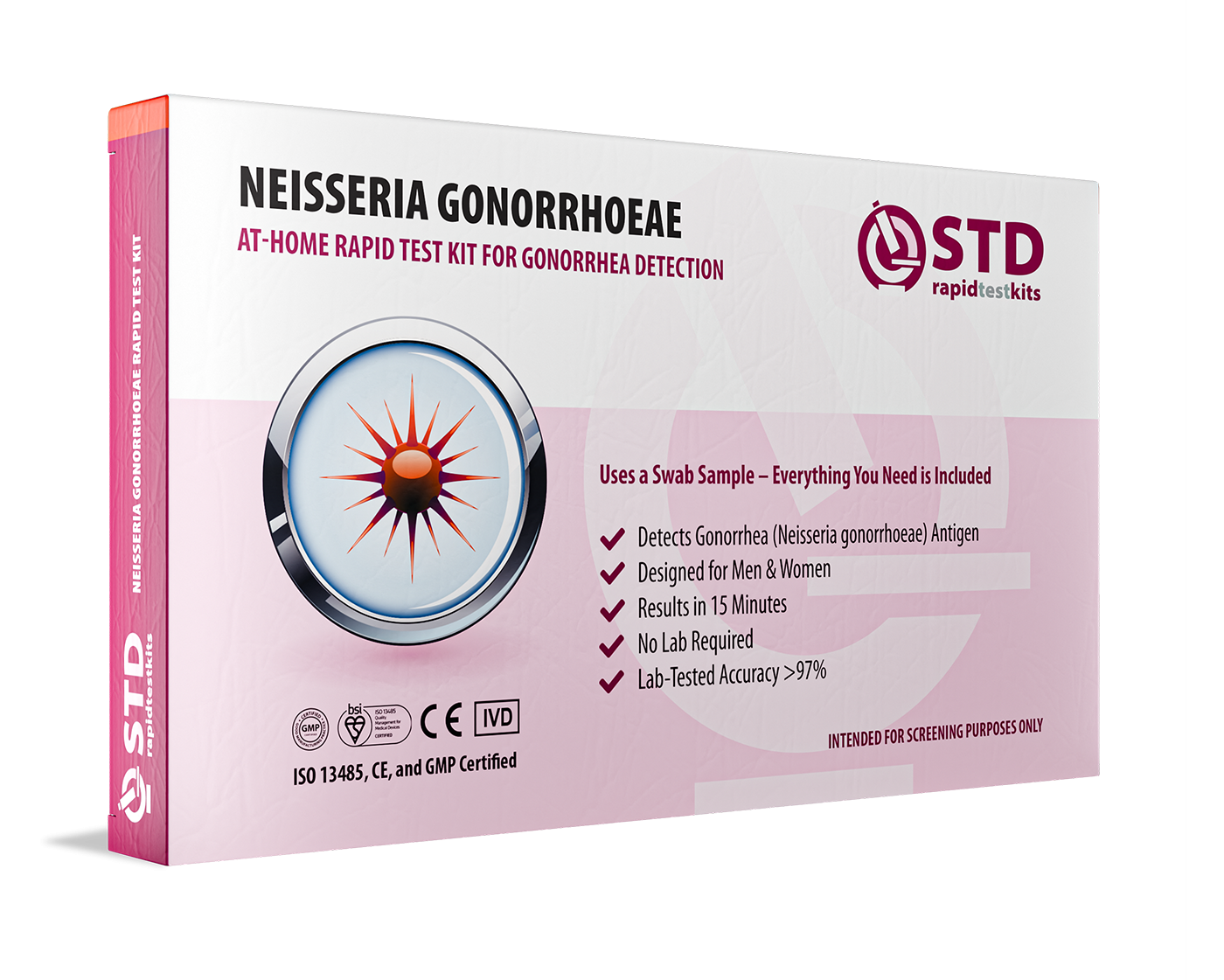
Test at Home with RemediumGonorrhea Test Kit
 For Men & Women
 Results in Minutes
 No Lab Needed
 Private & Discreet
Order Now $33.99 $49.00
What If the Test Comes Back Negative, but You Still Feel Off?
This happens more often than you’d think. A sore throat lingers, the STD test says “negative,” but something in your body still doesn’t feel right. One reason may be testing too early, before the bacteria reach detectable levels. Another? A sample that didn’t capture the infected area properly.
Gonorrhea’s incubation period in the throat is typically 1 to 5 days, but testing too soon can lead to false negatives. If you test within 48 hours of exposure, and your result is negative, a follow-up test around day 7 to 10 is often recommended, especially if symptoms continue.
To make this clearer, here’s a timeline of throat gonorrhea accuracy windows based on existing research:
| Days After Exposure | Test Sensitivity | Recommended Action |
|---|---|---|
| 1–2 days | Low (false negatives common) | Wait or retest later |
| 3–5 days | Moderate (bacteria may be present) | Test if symptoms show, plan retest |
| 6–10 days | High (most reliable detection window) | Test now for accurate results |
| 11+ days | Very high (peak accuracy) | Confirm diagnosis or retest if symptoms linger |
Table 2: Gonorrhea throat infection detection window by exposure timeline.
In other words, don’t panic if the first test says “negative” but your throat still feels raw. Listen to your body. Retest if symptoms persist, and don’t let a single result be the end of the story if your instincts say otherwise.
The Emotional Shock of a Positive STD Test (When You Only Had Oral)
Janelle, 31, stared at her phone screen. The clinic portal had just uploaded her results: “Positive for gonorrhea – throat swab.” Her heart dropped. She hadn’t even had sex with this person. Just a couple of rounds of oral during a casual night out. How could that be enough?
That moment, the one where the word “positive” smacks you in the face, can feel crushing. Not just because of health fears, but because of the mental loop it triggers: Was I careless? Am I dirty? What will they think? And of course: Who gave this to me?
Here’s what no one tells you: getting gonorrhea from oral sex is extremely common, especially among people who don’t use protection for oral contact. But because society has conditioned us to think of STDs as a “penis-in-vagina” issue, people like Janelle often feel blind-sided, and ashamed.
Let’s be very clear: catching an STD from a partner doesn't mean you're irresponsible. It means you're human. And throat gonorrhea is uniquely tricky because it hides behind symptoms we associate with the common cold. That’s not your fault. It’s a flaw in how we’re educated about risk.
Treatment Is Simple, If You Catch It
Once diagnosed, throat gonorrhea is usually treatable with a single intramuscular dose of ceftriaxone, according to CDC treatment guidelines. But catching it is the hard part, because if the infection isn’t suspected, it often goes untested.
In rare cases, especially where antibiotic resistance is suspected or symptoms don’t resolve, a follow-up test might be needed to confirm clearance. Your provider may also recommend abstaining from all sexual activity for at least seven days post-treatment and until any partners are treated as well.
Which brings us to a key point: partner notification. If you’ve tested positive, your current or recent oral sex partners should be informed, even if they have no symptoms. Silent transmission is a real risk, and your honesty could help stop the chain.
If that feels overwhelming, some clinics offer anonymous partner notification services. There are even text-based STD alert systems that allow you to send a heads-up without identifying yourself directly.
Still feeling unsure about how to move forward? STD Rapid Test Kits offers confidential resources and home-based retesting options for peace of mind. You don’t have to go through it alone, or publicly.
What If You Didn’t Use Protection?
Let’s be real: most people don’t use condoms for oral sex. It’s awkward, it kills the mood, and no one talks about it outside of sex-ed class. But here’s the thing, gonorrhea doesn’t care about your good intentions. It travels on skin, fluid, and contact. And if your mouth is the point of contact, that’s all it needs.
Micah, 25, thought he was being careful. He always used condoms for penetrative sex, but oral? Not once. So when his throat started burning and his rapid strep test came back negative, he figured it was just allergies. It wasn’t until he tested positive for throat gonorrhea that he realized what he'd been missing: protection matters at every stage, even the ones that don’t “feel risky.”
That said, we don’t live in a perfect world. If you didn’t use protection, you’re not alone, and you’re not doomed. The best thing you can do is test, treat, and inform. Knowing your status lets you take back control. And if you’re reading this because you’re unsure whether your sore throat is from a virus, dry air, or a stealth STD? Now’s the time to find out.
Can Mouthwash Prevent or Kill Gonorrhea?
This is a question that’s been circulating Reddit threads and TikTok videos for years: “Can Listerine kill oral STDs?” Short answer? Maybe a little, but not reliably, and definitely not as a substitute for testing.
There was one small study published in 2016 that suggested Listerine might help reduce the amount of Neisseria gonorrhoeae bacteria in the throat. But it didn’t clear the infection completely, nor did it prevent transmission long-term. In other words, it’s not a cure, and it’s not prevention. It's oral hygiene, not a medical intervention.
Relying on mouthwash alone is risky. It might lower surface bacteria briefly, but it won’t penetrate deep tissues or clear systemic infections. So if you’re using it post-oral-sex thinking it’ll "sanitize" your throat, understand that the science just doesn’t back that up.
What does work? Early detection, proper antibiotic treatment, and retesting if needed. Add in honest conversations and practical safety choices, like using protection with new partners or avoiding oral during known infections, and you’re way ahead of the curve.

People are also reading: Queer, Unvaccinated, and At Risk: How HPV Hits Gay Men Hardest
How Long Are You Contagious?
Gonorrhea doesn’t announce itself with a flashing sign. You can be contagious before you feel symptoms, and sometimes even after treatment if the antibiotics haven’t kicked in yet or if your body didn't clear the infection fully.
Based on current CDC advice and peer-reviewed studies, here's a simple progression:
| Phase | Contagious? | Details |
|---|---|---|
| Pre-symptomatic (0–3 days) | Yes | Bacteria can spread before symptoms show up. |
| Symptomatic period | Yes | Highest risk of passing to others through oral contact |
| Post-treatment (0–7 days) | Yes | You may still shed bacteria, abstain from sexual activity |
| Cleared (7+ days post-treatment) | No | Assuming no reinfection and symptoms resolve |
Table 3: When throat gonorrhea is contagious based on infection stage.
This is why most treatment protocols advise no sexual contact for at least seven full days after your injection, and until any partners are treated. Otherwise, you risk passing the infection back and forth like a bad game of ping-pong.
Check Your STD Status in Minutes
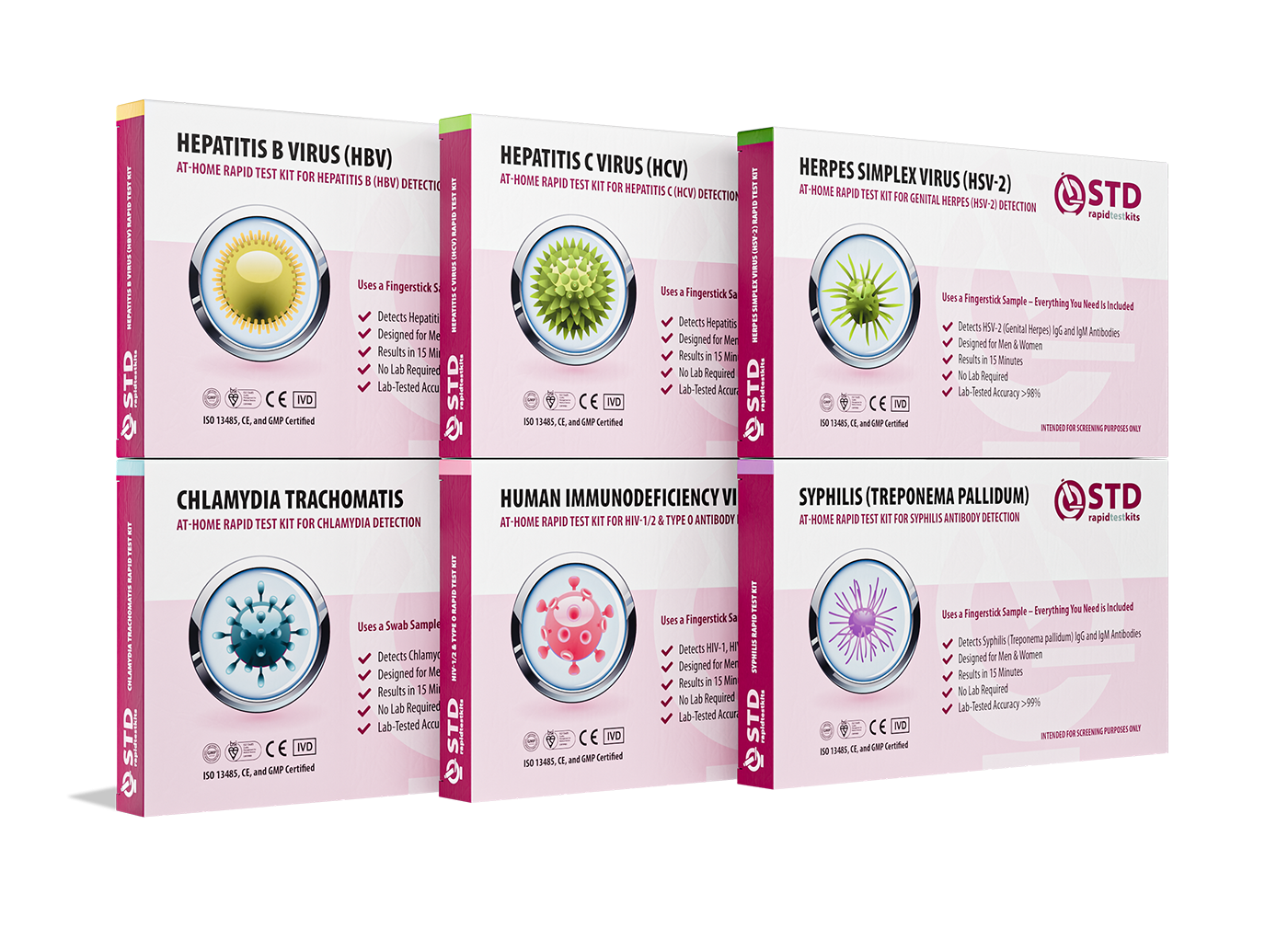
Test at Home with Remedium6-in-1 STD Test Kit
 For Men & WomenResults in MinutesNo Lab NeededPrivate & Discreet
Order Now $119.00 $294.00
For all 6 tests
Still Wondering? Here's Your Next Best Move
If you're still unsure whether your sore throat is from a virus or an STD, ask yourself one thing: did you have oral contact with someone new in the last 2 to 10 days? If yes, there’s no harm in testing, but there could be real consequences in not knowing.
Oral gonorrhea isn’t just a discomfort; it’s a public health risk. It spreads silently, resists antibiotics faster than other strains, and often flies under the radar in clinical settings. But it’s also 100% detectable, and treatable, if you know what to ask for.
Take back your clarity. You don’t need to suffer through pain, shame, or confusion. This combo at-home STD test kit lets you check for multiple infections discreetly, quickly, and with lab-level accuracy. Whether it’s just a sore throat, or something more, you deserve peace of mind.
FAQs
1. Can gonorrhea actually live in your throat?
Yep, and it’s sneakier than most people think. Gonorrhea isn’t just a “below the belt” infection. It can settle into the throat after oral sex and hang out without making much noise. Some people never feel a thing. Others get what they assume is a cold or allergies. If your sore throat showed up after a hookup, don’t rule this one out.
2. How do I tell the difference between strep, a cold, and gonorrhea?
Honestly? You probably can’t just by how it feels. All three can cause a scratchy or painful throat. But here’s the kicker: if you’re missing the usual cold symptoms (runny nose, fever, cough), and it started shortly after oral sex, gonorrhea deserves a spot on your “maybe” list. The only way to know for sure is a throat swab that checks specifically for STDs.
3. I didn’t have “real” sex, just oral. Am I still at risk?
Totally. Oral sex is sex, full stop. If your mouth made contact with genitals (or vice versa), you’ve opened the door for infections like gonorrhea, chlamydia, and even syphilis. And because people often skip protection for oral, the risk is higher than they think. No shame here, just facts.
4. Can I get tested for throat gonorrhea at any clinic?
You’d think so, but nope, not unless you ask. Most standard STD tests check urine or genital samples only. If your symptoms are in your throat or your exposure was oral, you’ll need to speak up. Ask for a throat swab specifically. If you’re testing from home, choose a kit that includes oral testing (like the combo kit we offer).
5. My test was negative but my throat still hurts. What gives?
It could mean you tested too early, didn’t get a good sample, or it’s something else entirely. Gonorrhea’s detection window is tricky, early tests (like day 2 or 3) can miss it. If your throat still feels off, test again around day 7–10. And trust your gut, your body knows when something’s not right.
6. Will antibiotics I got for something else cure throat gonorrhea?
Not unless you hit the jackpot by accident. Gonorrhea needs very specific treatment, usually an injection of ceftriaxone. Common antibiotics like amoxicillin or Z-paks probably won’t touch it. Worse, they can mask symptoms and make diagnosis harder later. Best move? Get the right test, then get the right meds.
7. How long do I have to wait after treatment before I’m not contagious?
Most people are in the clear 7 days after treatment, assuming symptoms are gone and partners were treated too. But don’t rush it. No kissing, no oral, no sexy stuff until you hit that one-week mark. Otherwise, you might just pass it back and forth like a bad secret.
8. Should I tell my partner if I tested positive?
Look, it’s awkward, but it’s also necessary. You’d want to know, right? A quick heads-up can help them get tested, treated, and avoid passing it on. If face-to-face feels too intense, there are even anonymous text services that’ll do the heavy lifting. You’re not throwing anyone under the bus, you’re doing the grown-up thing.
9. Can mouthwash prevent throat STDs?
Funny enough, someone actually studied this. Listerine showed a little promise in reducing gonorrhea bacteria temporarily, but don’t swap it for real prevention or treatment. Think of it like flossing after cake. It’s nice... but it won’t cancel out the sugar. Use protection, get tested, and keep that mouthwash for fresh breath.
10. Is oral gonorrhea dangerous?
Left untreated? It can be. Besides spreading it to others, it could eventually cause more serious issues or become resistant to treatment. But when caught early, it’s totally manageable. The real risk is not knowing it’s there, which is why testing matters so much.
You Deserve Answers, Not Assumptions
When your throat hurts, it’s easy to reach for cold meds or cough drops and carry on. But when that sore throat lingers, and especially when it follows intimate contact, it might be your body’s quiet way of asking you to pay attention.
Gonorrhea in the throat doesn’t look like the old textbook cases. It doesn’t always cause pain, doesn’t always show up on standard tests, and doesn’t always feel “serious.” But untreated, it can complicate your health, your relationships, and your peace of mind.
Don’t guess. Don’t wait. This discreet combo test kit gives you clarity, confidentiality, and control, all from home.
How We Sourced This Article: We combined current guidance from leading medical organizations with peer-reviewed research and lived-experience reporting to make this guide practical, compassionate, and accurate.
Sources
1. Planned Parenthood: Gonorrhea Overview
4. The Staying Power of Pharyngeal Gonorrhea: Implications for Public Health – PMC
5. Clinical Treatment of Gonorrhea – CDC
6. Drug‑Resistant Gonorrhea – CDC
7. The Management of Gonorrhea in the Era of Emerging Drug Resistance – PMC
About the Author
Dr. F. David, MD is a board-certified infectious disease specialist focused on STI prevention, diagnosis, and treatment. He blends clinical precision with a no-nonsense, sex-positive approach and is committed to expanding access for readers in both urban and off-grid settings.
Reviewed by: T. Nakamura, MPH | Last medically reviewed: November 2025
This article is only for information and should not be used as medical advice.


