







Quick Answer: Many STDs like chlamydia, gonorrhea, HPV, and HIV can cause zero symptoms for months or even years. You can feel completely fine and still carry, and transmit, the infection. That’s why regular testing matters, no matter how you feel.
“I Felt Fine”, Famous Last Words
Camille, 25, had been in a situationship for months. They weren’t exclusive, but he “seemed clean.” She hadn’t been tested in over a year, mostly because nothing felt wrong. Then came the test, routine, really, and the call: positive for chlamydia.
“I was shocked. I didn’t even know women could have chlamydia without symptoms. I thought you’d at least get some pain or a weird smell. But I felt completely normal.”
Her story isn’t rare, it’s the rule. According to the CDC, about 70% of women and 50% of men with chlamydia report no symptoms. Yet left untreated, it can lead to pelvic inflammatory disease, infertility, and painful complications during sex. Gonorrhea, HPV, and even HIV can all simmer silently until they cause permanent damage.
People are also reading: How HIV Affects Your Immune System, Brain, Gut, and Skin
Which STDs Hide the Longest? (And What They Can Do While Hiding)
Some infections show up fast and loud, like trichomoniasis, which often causes a strong-smelling discharge or itching. Others are stealthy. Here’s a look at the most commonly “silent” STDs and what they can do behind the scenes:
| STD | Typical Symptoms (If Any) | Risk of Going Undetected | Potential Complications |
|---|---|---|---|
| Chlamydia | Often none; maybe discharge or burning when peeing | High (especially in women) | Infertility, pelvic inflammatory disease, ectopic pregnancy |
| Gonorrhea | Mild discharge, often missed or blamed on other causes | Moderate | Joint infection, eye issues, infertility |
| HPV | No symptoms unless warts or cancer appear | Very high | Cervical cancer, throat cancer, genital warts |
| HIV | Flu-like symptoms at first, then silent for years | High without regular testing | Immune system collapse (AIDS), higher STD transmission risk |
| Herpes (HSV-2) | No sores at all in some carriers | Moderate | Transmission risk during sex, painful outbreaks |
Table 1. Common STDs that often cause no symptoms, and what happens if they’re left untreated.
Why “No Symptoms” Doesn’t Mean “No Infection”
To make this easier to understand, think of STDs as termites. You can't see them, but that doesn't mean they're not eating away at the foundation. Before they show any signs, many infections damage reproductive organs, immune systems, or mucous membranes without anyone knowing.
Even worse? You could feel fine, look fine, and still pass the infection to someone else. That’s why symptom-based testing decisions are dangerous. By the time you feel sick, you may have already exposed multiple partners, or developed complications that are harder to treat.
This is why testing based on exposure, not just symptoms, is the new standard in sexual health. And that includes oral sex, too. Infections like gonorrhea and herpes can live in the throat without symptoms. So if you’ve had skin-to-skin contact, oral, anal, or vaginal sex, and you haven’t tested in 6 months or more? It’s time.
The Real Reasons People Don’t Test, And Why It Backfires
Most people don’t avoid STD testing because they don’t care. They avoid it because it’s wrapped in fear, shame, and a thousand what-ifs. What if I test positive? What if I have to tell someone? What if they don’t want me anymore? What if it ruins everything?
But here’s the wild part: the not knowing is what really ruins things. That gnawing anxiety you feel after a hookup? The late-night Google spirals? The half-hearted “yeah, I’m clean” text you send while praying it’s still true? That’s the emotional tax of not testing, and it costs more than a swab ever will.
“I Didn’t Want to Know, Until It Was Too Late”
Lucas, 31, avoided testing for years. He figured he’d know if something was wrong. He’d only had a few partners. He used condoms most of the time. But then came the fatigue, the sore throat that wouldn’t go away, the night sweats. By the time he got tested, his viral load was sky-high, he had untreated HIV.
“If I had just gone in earlier, I could’ve started meds right away. Instead, I spent months feeling like crap and not knowing why. I wish someone had told me that you can feel totally fine and still be positive.”
Lucas is now undetectable, on daily meds, and thriving. But his story is a gut punch reminder: testing is a tool, not a punishment. It gives you a head start, not a scarlet letter.
Check Your STD Status in Minutes
Test at Home with Remedium7-in-1 STD Test Kit
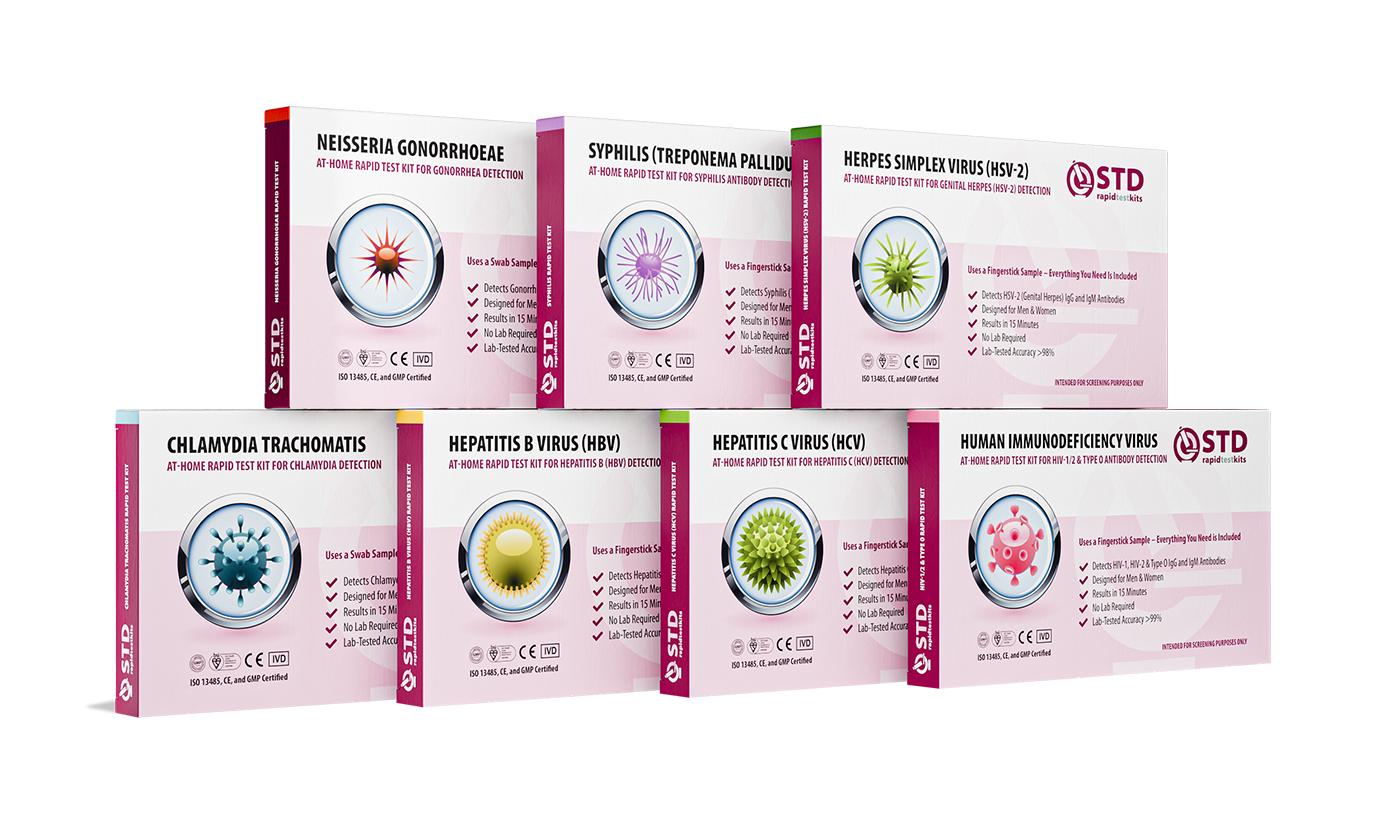
 For Men & Women
 Results in Minutes
 No Lab Needed
 Private & Discreet
Order Now $129.00 $343.00
For all 7 tests
“But My Partner Said They Were Clean”
This one deserves its own section. So many people rely on partner reassurances instead of testing. But here’s the problem: people aren’t lab results. Your partner could be telling the truth as they know it, and still have an undiagnosed infection.
According to the CDC’s 2023 data, nearly 1 in 5 people in the U.S. has an STI at any given time. Most don’t know it. That’s not because they’re dirty or dishonest. It’s because the majority of infections cause no symptoms at first. So when someone says, “I’m clean,” what they often mean is, “I haven’t felt anything weird.” That’s not the same thing.
Risk Isn’t Always About Behavior, It’s About Timing
People tend to think testing is only necessary if something “sketchy” happened. But even in monogamous, low-risk relationships, STDs can slip through. Why? Because exposure often happens before the relationship, not during it. And most STDs don’t show up instantly on tests. That’s where window periods come in.
| STD | Typical Window Period | Can Be Symptom-Free? | When to Test |
|---|---|---|---|
| Chlamydia | 7–14 days | Yes, very often | 2 weeks after exposure, retest in 3 months if high-risk |
| Gonorrhea | 2–7 days | Yes, especially in throat/rectum | 1–2 weeks after exposure |
| HIV | 10–33 days (NAAT), 18–45 days (Ag/Ab) | Yes, for years | 1 month after exposure, retest at 3 months |
| Syphilis | 3 weeks to 3 months | Yes, especially in early stages | 1 month after exposure, follow up as needed |
| HPV | Weeks to years | Almost always | Pap smear (if applicable), no universal screening for men |
Table 2. Common STD window periods and when to test, even without symptoms.
Even if your last hookup was weeks ago, testing today can still catch a silent infection. And if you’re negative now but recently exposed? You may need a retest at the 3-month mark. This isn’t about judgment, it’s about timing.
What Testing Actually Looks Like (Spoiler: It’s Not That Bad)
If you’re avoiding testing because you picture a medieval torture device or some humiliating lecture in a paper gown, breathe. Modern at-home STD tests are discreet, fast, and designed for privacy. Some use fingerprick blood. Others use urine or swabs. Most don’t require you to talk to a single person.
This combo test kit checks for multiple infections, ships discreetly, and gives you results within days, without setting foot in a clinic. No lectures. No assumptions. Just answers.
Testing Isn’t Just for You, It’s for Everyone You Care About
When people finally decide to get tested, it’s rarely just about themselves. It’s about a partner they love. A friend they hooked up with. A future they’re not ready to mess up. STD testing is private, yes, but its impact is communal.
Every infection you catch early is one you don’t pass on. Every partner you protect is a step toward breaking the silence. You might not feel sick, but you could be carrying something your immune system handles better than someone else’s. That’s the part we don’t talk about enough, STD testing is a love language. It says: I care about you. I care about us.
“I Got Tested for Them, Not Me”
Alicia, 29, was preparing to try for a baby with her partner when her OB-GYN asked about her last STI screening. She realized it had been years. No symptoms, no risks, or so she thought. Her results showed an old, untreated chlamydia infection.
“I was lucky. It hadn’t scarred my tubes yet. But I thought about all the people who wouldn’t catch it in time. I never felt sick. I only found out because someone asked the right question.”
Now Alicia gets tested twice a year, because her future matters more than her temporary fear. And that mindset shift is everything.
People are also looking for: Should You Get Tested After Every Hookup? Here’s the Real Answer
FAQs
1. Can I really have an STD and feel totally fine?
Yes. In fact, that’s the most common scenario. You could have chlamydia, HPV, or even HIV and feel as healthy as ever. No weird discharge. No burning. Nothing. That’s what makes them so good at spreading, people don’t know they’ve got them until weeks, months, or even years later. Feeling fine doesn’t mean you’re in the clear. It just means the infection hasn’t made itself loud yet.
2. If my partner says they’re clean, why would I need to test?
Because “clean” often just means “nothing looks weird down there.” Most people haven’t tested recently. They’re not lying, they just don’t know. And let’s be honest, testing isn’t something people brag about on dating apps. If you’ve had any sexual contact (yes, even oral), testing is how you take care of your health, not a sign you don’t trust someone.
3. I’ve only had one partner. Am I still at risk?
You are, if that one partner ever had another partner before you. Most of us aren’t starting from scratch, and that’s okay. But infections travel through networks, not just one-on-one situations. It’s like getting caught in traffic even though you left on time, sometimes it’s just who you’re connected to.
4. How often should I get tested if I’m not showing any symptoms?
If you’re sexually active with new or multiple partners, aim for every 3 to 6 months. In a long-term, monogamous relationship? Once a year is smart. And if something sketchy happened, or if your gut just won’t chill, sooner is better. You don’t have to wait for something to burn before you take care of yourself.
5. What if I’m scared to test because I don’t want to know?
That fear is real, and you’re not alone. But here’s the truth: knowing gives you options. Not knowing gives you anxiety, and sometimes consequences. Most STDs are treatable. Many are curable. What’s scarier than a positive result? Letting an infection hurt you or someone you care about because you waited too long.
6. Do I really need to test if I used protection?
Yes. Protection does decrease the risk, but that doesn’t mean it’s armor. Skin infections such as herpes or HPV can still pass when someone has skin-to-skin contact, especially when grinding or oral sex. Testing isn’t about being irresponsible. It’s about being thorough. Thorough people deserve peace of mind.
7. What happens if I test positive but have no symptoms?
You get treated. It’s usually straightforward, antibiotics for bacterial STDs like chlamydia and gonorrhea, daily meds for long-term management if it’s something like HIV or herpes. No shame. No lectures. Just a plan that gets you back in control.
8. Will I have to tell my past partners?
Yes, but you don’t have to do it alone. There are anonymous notification tools, support groups, and even clinics that can help. And you’d be surprised: most people would rather know than keep spreading something unknowingly. Telling them isn’t about guilt, it’s about breaking the chain.
9. What’s the point of an at-home test if I’m not feeling sick?
The point is exactly that, you don’t have to feel sick to be infected. At-home tests like this combo STD kit give you clarity, privacy, and speed. You swab, send, and get results without stepping into a waiting room. It’s the easiest way to cut the guesswork out of your sex life.
10. Is it ever too late to test?
No. Testing late is better than not testing at all. Whether you had a hookup last weekend or a relationship last year, it’s never “too late” to get answers. You’re not behind, you’re right on time. And the moment you take that step, you’re back in charge.
You’re Not Late. You’re Right on Time.
It doesn’t matter if you waited a month, a year, or a decade. If you’re reading this, and your gut is saying “maybe I should check,” then now is the perfect time. You don’t need to feel sick to take action. You just need to care enough about your body, and your people, to want the truth.
Peace of mind is one test away. Order your at-home STD combo test kit today and get answers in days, not months.
How We Sourced This Article: We combined current guidance from leading medical organizations with peer-reviewed research and lived-experience reporting to make this guide practical, compassionate, and accurate. In total, around fifteen references informed the writing; below, we’ve highlighted some of the most relevant and reader-friendly sources.
Sources
2. About Sexually Transmitted Infections (STIs) | CDC
3. Getting Tested for STIs | CDC
4. Sexually Transmitted Diseases (STDs): Symptoms & Why You Might Not Know You Have One | Mayo Clinic
5. Sexually Transmitted Infections – StatPearls | NCBI Bookshelf
6. Sexually Transmitted Infections (STIs) Fact Sheet | WHO
About the Author
Dr. F. David, MD is a board-certified infectious disease specialist focused on STI prevention, diagnosis, and treatment. He blends clinical precision with a no-nonsense, sex-positive approach and is committed to expanding access for readers in both urban and off-grid settings.
Reviewed by: Simone Ray, MPH | Last medically reviewed: October 2025
This article is for informational purposes and does not replace medical advice.


