






Quick Answer: STD symptoms can absolutely exist without discharge. Burning, itching, pain, or internal irritation may still indicate infections like chlamydia, gonorrhea, herpes, or trichomoniasis. Testing is the only way to know.
Why Discharge Isn't the Whole Story
Discharge tends to get all the attention in STD symptoms, but it’s just one of many possible signs. Think of it as the tip of the iceberg. Beneath the surface, there’s pain, inflammation, itching, and even internal tissue changes that don’t produce anything visible.
Take chlamydia, for instance. Up to 70% of infected women and nearly half of infected men show no obvious signs. When symptoms do appear, they’re often subtle: a dull ache in the pelvis, discomfort during sex, or that inexplicable sting when urinating that never quite escalates to a full-blown UTI. And still, no discharge.
With herpes, it’s not uncommon for the virus to activate without producing classic sores. Some people report tingling, nerve pain, or redness. Others feel nothing until their partner tests positive, and only then do they recall a mysterious rash they dismissed as friction or sweat irritation.
Waiting for discharge to appear before taking action is like waiting for a fever to confirm the flu. It might come. It might not. But the infection could already be active, spreading, or causing long-term damage.
The Stealth STD Symptoms You Might Be Missing
If you're feeling off “down there” but not seeing anything dramatic, you’re not imagining things. The body can scream in subtler ways. A low throb in the testicles. A dry itch that doesn’t go away with creams. Vaginal discomfort that feels like dryness, but isn't. Let’s talk about what these stealth symptoms often signal.
| Symptom | Possible STD Causes | Why It Might Occur Without Discharge |
|---|---|---|
| Burning when urinating | Chlamydia, Gonorrhea, Trichomoniasis | Irritation of the urethra can occur before discharge builds up |
| Itchy or irritated genitals | Herpes, HPV, Chlamydia | Early inflammation of skin or mucosa, especially during viral shedding |
| Pelvic or testicular ache | Chlamydia, Gonorrhea, HIV (early) | Internal swelling can press on nerves without producing fluids |
| Rectal pain or bleeding | Chlamydia, Gonorrhea, Syphilis | Rectal infections often lack visible discharge, especially in early stages |
Table 1. Common “quiet” symptoms that may signal an STD even in the absence of discharge.
These symptoms can show up alone or in weird combinations. One reader described a “buzzing feeling” near her clitoris that wouldn’t stop, no rash, no discharge, just a phantom vibration. A week later, she tested positive for herpes type 1.
Others, like Jason, experience discomfort only after urination, thinking it’s a minor irritation. But if symptoms persist for more than 48 hours, or appear after a new sexual partner, testing is not just a good idea, it’s the only way to move from anxiety to clarity.

People are also reading: My Throat Hurt for Weeks, Turns Out It Was Syphilis
Is It an STD or Something Else?
One of the most frustrating parts of having STD-like symptoms without discharge is figuring out what’s really going on. Could it be a UTI? A yeast infection? Allergic reaction to latex or soap? The confusion can stretch on for days, sometimes weeks, while people search for comparisons online, self-diagnose in forums, and delay getting tested.
While only a diagnostic test can confirm an STD, here’s what makes many infections distinct from non-sexual health issues:
| Condition | Typical Clues | Overlap with STD Symptoms |
|---|---|---|
| UTI | Frequent urge to urinate, burning, urgency, sometimes blood | Very similar to chlamydia and gonorrhea |
| Yeast Infection | Thick white discharge, intense itching, redness | Itching can mimic herpes or trich |
| Allergic Reaction | Itchy rash after latex, soap, or clothing exposure | Can resemble early herpes irritation or friction burns |
| Bacterial Vaginosis | Fishy odor, gray discharge, mild discomfort | Overlaps with trichomoniasis, but usually more discharge |
Table 2. Symptom overlap between STDs and other genital conditions. Testing is often the only way to tell the difference.
Sometimes it’s not even about the symptoms, it’s the context. If you’ve recently had a new partner, unprotected sex, or noticed your partner has symptoms (even if you don’t), that’s your clue to test. Waiting for your body to leak something just delays care.
Check Your STD Status in Minutes
Test at Home with Remedium7-in-1 STD Test Kit

 For Men & Women
 Results in Minutes
 No Lab Needed
 Private & Discreet
Order Now $129.00 $343.00
For all 7 tests
You Deserve Certainty, Not Guesswork
If your head is spinning with "what ifs," you’re not alone. Testing doesn’t mean you’re dirty. It means you care enough to check in with your body and protect your partners. This at-home combo STD test kit gives you results fast, privately, and without judgment. It’s your health. You call the shots.
When Symptoms Are Delayed, or Don’t Show at All
For Jen, things got complicated after a music festival hookup. She felt fine for two weeks, no discharge, no itching, no pain. Then she noticed a faint sore near her vulva that looked more like a shaving nick than anything dangerous. But it didn’t heal. By the time she saw a doctor, she had a full-blown herpes outbreak. The virus had been quietly replicating the whole time.
This is the frustrating reality of incubation periods. Just because something doesn’t show up immediately doesn’t mean it’s not there. Many STDs have lag times between exposure and symptoms, or never show symptoms at all.
Here’s what that looks like in terms of timing:
| STD | Average Incubation Period | Symptoms With or Without Discharge? |
|---|---|---|
| Chlamydia | 7–21 days | Often none, but burning, pain, and spotting can occur without discharge |
| Gonorrhea | 2–10 days | Discharge is common in men, less so in women; burning may be the only clue |
| Herpes (HSV-1 & HSV-2) | 2–12 days (or longer if asymptomatic) | Visible sores aren’t guaranteed; itching, tingling, or nerve pain may come first |
| Trichomoniasis | 5–28 days | Discharge is possible, but some cases only show irritation or burning |
| Syphilis | 10–90 days | Early sores may be internal or mistaken for cuts; discharge is rare |
Table 3. Incubation periods and symptom types for common STDs. Not all produce discharge.
The takeaway? If it’s been a few days or even a couple weeks since exposure and you’re feeling off, even without discharge, you’re still in the right window to test. Some tests can pick up infections within 5–7 days, while others may need longer to yield accurate results. When in doubt, test once early, then again at the ideal window (usually two weeks or more).
Internal vs External: Why You Might Not “See” the Problem
People often assume no discharge means no infection because they’re scanning for something visual. But many STDs affect tissues you can’t see, like the cervix, urethra, rectum, or deep within the vaginal canal.
For example, in cisgender women and AFAB (assigned female at birth) individuals, chlamydia and gonorrhea often infect the cervix first. These infections may produce no discharge at all, or just mild spotting after sex. You might feel a weird pressure, bloating, or a shift in sensation during intercourse. That’s it.
In cisgender men, gonorrhea often causes discharge, but not always. And urethritis from chlamydia might just feel like a razor blade moment during the first pee of the morning. No visible signs, no leak, just a flash of discomfort that vanishes... until it comes back stronger.
Infections in the rectum, common among those who engage in receptive anal sex, are even more silent. Rectal chlamydia or gonorrhea might only cause slight itching, fullness, or a feeling of incomplete bowel movements. Some people mistake this for hemorrhoids or bad digestion.
Here’s the hard truth: absence of discharge does not mean absence of infection. It often means the infection is sitting in a place where discharge doesn’t naturally flow, or hasn’t built up yet.
Should You Wait for More Symptoms Before Testing?
Short answer: No. Waiting for discharge, sores, or unmistakable symptoms is like waiting for a check engine light while driving with a cracked radiator. If something feels off, especially after unprotected sex or a new partner, you’re already in the testing zone.
One of the most damaging myths is that “real” STDs always involve pus, blood, or a nasty smell. That’s not only outdated, it’s dangerous. You can carry, transmit, and suffer complications from an STD without ever leaking a drop. In fact, most transmissions happen during asymptomatic periods, when people feel “fine” but are actually contagious.
Testing doesn’t mean you’re sure something is wrong. It means you care enough to check. Whether you’re feeling subtle irritation or just have a gut feeling, at-home tests give you control without the pressure of an in-clinic experience.
Feel Something? Test Something.
Whether it’s a whisper of discomfort or just a nagging worry, don’t ignore your body. STD Rapid Test Kits offers discreet, accurate tests you can use from the privacy of your home. Stop guessing. Start knowing.
Real Talk: When Your Body Sends Mixed Messages
Not every STD story starts with fireworks. Sometimes it’s a slow burn, like the reader who described a “velvet ache” in her pelvis, not quite pain, but enough to keep her up at night. She saw no discharge, no sores, no redness. But something felt off. It took three weeks and a false-negative test before she confirmed she had trichomoniasis. The second test caught it.
Others describe feeling gaslit by their own bodies, wondering if their symptoms are psychosomatic or just stress-related. This is especially true for people socialized to distrust their pain (e.g., women, queer folks, BIPOC communities). The medical system often minimizes ambiguous symptoms. But those symptoms matter.
Your story doesn’t have to match anyone else’s to be real. If something feels wrong, it probably is. And if it isn’t? Testing brings peace of mind, which is its own form of healing.
Retesting and False Negatives: What If Your First Test Says “No”?
Let’s go back to Jason. Remember the guy who felt the sting but saw no discharge? He took an at-home test on day five post-exposure. Negative. Relieved, he moved on. Two weeks later, the discomfort returned, this time sharper, with a faint swelling in one testicle. The second test? Positive for chlamydia.
Here’s what happened: he tested too early. Some infections, especially bacterial ones like chlamydia and gonorrhea, take time to show up in a test. The window period is the time between when you were exposed and when the test can reliably detect the infection. Testing within that window can lead to a false negative, not because you’re clean, but because the infection hasn’t matured enough to be detected.
If your symptoms persist after a negative test, or if your exposure was high-risk (like condomless sex or a partner with known symptoms), retesting after 14 days is smart. That second test can mean the difference between untreated infection and peace of mind.
And remember, having no discharge doesn’t mean you don’t need to retest. If anything, stealth symptoms make repeat testing even more important, because you’re navigating blind.
People are also reading: STD or Hemorrhoid? How to Decode Anal Burning Without Freaking Out
After Treatment: Can Symptoms Linger Even Without Discharge?
After treatment, it’s common to wonder: if I still feel weird, does that mean the STD is still there? Discharge is an easy metric, it comes or it doesn’t. But burning, tingling, or discomfort can linger even after antibiotics or antivirals do their job.
This is especially true with herpes. The virus hides in nerve roots and can reactivate subtly. You might feel irritation in the same spot you had an outbreak, even if there are no sores, no discharge, nothing visible. That’s nerve inflammation, not active infection. It doesn’t always mean you’re contagious, but it can mean your body is still adjusting post-flare.
With chlamydia and gonorrhea, it’s possible for the tissues to remain inflamed for a few days even after successful treatment. Burning or soreness may persist as your body repairs itself, especially if the infection was internal (like in the cervix or prostate).
If symptoms last more than a week after finishing treatment, retesting is reasonable, just make sure it’s outside the window where false positives from leftover DNA are common. Most guidelines suggest waiting at least three weeks post-treatment to avoid misleading results.
Check Your STD Status in Minutes
Test at Home with Remedium8-in-1 STD Test Kit
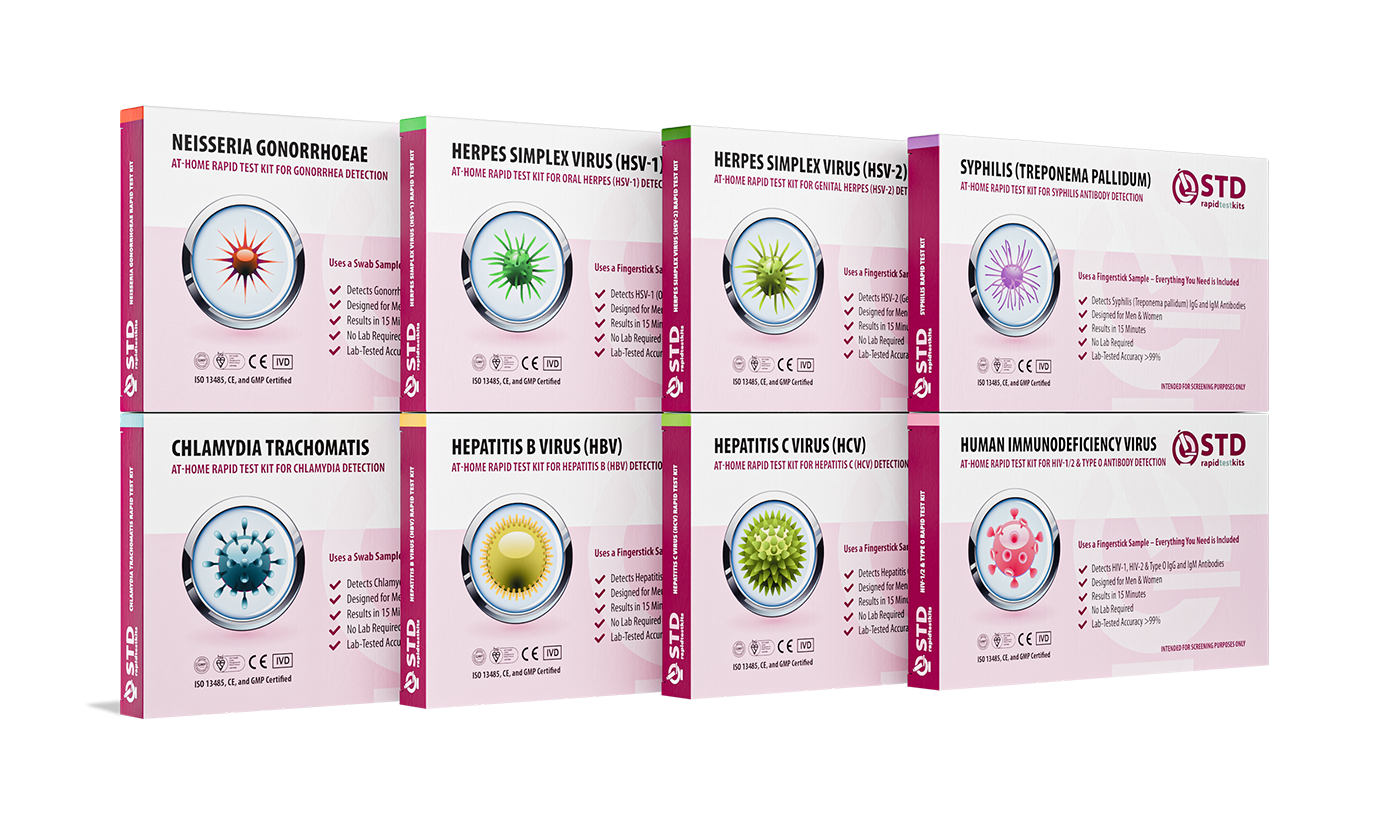 For Men & WomenResults in MinutesNo Lab NeededPrivate & Discreet
Order Now $149.00 $392.00
For all 8 tests
What About Your Partner? Even If They Have No Discharge?
This is the part most people avoid. You get tested. You’re positive. You tell your partner, and they say, “Well, I feel fine.” No discharge. No itching. Nothing.
That doesn’t mean they’re clear.
STDs don’t always show up at the same time, or in the same way, for everyone. One partner might have obvious symptoms. The other might never develop any at all. That’s especially true for trichomoniasis, which often shows no signs in men but causes major inflammation in women. HPV can live silently for years in someone without ever producing a wart.
Even if your partner has zero symptoms, they should test. Discharge or not. It’s not about blame, it’s about stopping a quiet cycle of reinfection. Many couples pass infections back and forth for months because only one person got treated, or because they assumed the other one would “feel it” if something was wrong.
And here’s something else: treating both partners, even if only one tests positive, is common practice in public health clinics. It’s called expedited partner therapy. It’s preventative, protective, and smart.
Why It’s Not “Paranoia” to Test Without Discharge
You’re not overreacting. You’re not being dramatic. You’re being responsible. The cultural script that says “you’ll know” if you have an STD is wrong. It erases the people who don’t get symptoms, or who get symptoms like the ones we’ve talked about: subtle, quiet, easy to dismiss.
If you’ve ever gone down a 2AM Google rabbit hole trying to compare “mild urethral irritation” to “STD symptoms no discharge,” you’re not alone. You’re exactly who this article is for. Because you’re paying attention. Because something feels off. And because you’re done waiting for pus, sores, or smell to validate your gut instinct.
Testing is never just about results. It’s about certainty. And certainty, especially in a world full of misinformation, hookup culture, and confusing signals, is priceless.
Normalize the Check-In
Testing isn't about being reckless. It's about being informed. Grab a combo STD test kit today, it's fast, discreet, and designed for moments exactly like this. No discharge? No problem. You still deserve answers.
FAQs
1. Can I really have chlamydia and not know it?
Totally. Chlamydia is basically the introvert of STDs, it often hides in the background. You could be carrying it for weeks with no clue: no discharge, no burning, nothing. Then one day, maybe you feel a weird ache in your pelvis or you spot after sex, and suddenly you’re Googling “can chlamydia be silent?” Yes. Yes, it can.
2. Is no discharge actually normal for an STD?
More normal than you think. The Hollywood version of STDs, green pus, painful warts, burning fire every time you pee, is only part of the picture. Plenty of people get infected and never see a drop of discharge. Your body might just show irritation, tingling, or... nothing at all. That’s why waiting for visible signs is risky business.
3. Why do guys always hear that discharge = STD, but I have nothing?
Because most public health messaging was written for dramatic symptoms in dudes. But in reality, male-bodied people don’t always leak either. You might just feel a pinch when you pee, or soreness in your testicle that doesn’t add up. That’s enough. Trust your body, not the stereotype.
4. I have itching but nothing’s coming out. Could it still be herpes?
Yep. Herpes is sneaky like that. You might never get the iconic cluster of blisters. Instead, you get a tingling patch, maybe a small red spot, or even just a nerve-zap that comes and goes. No discharge doesn’t rule it out, it just means it’s early or internal.
5. So if it’s not an STD, could it be a UTI or something else?
Sure, it could be. But the symptoms overlap a ton. Burning, urgency, pelvic pain, all those show up in both UTIs and STDs. If you’ve had recent sex, especially unprotected, testing is the only way to separate “pee pain” from “possible infection.” And honestly? Sometimes it’s both.
6. I tested negative, but I still feel weird. Now what?
First, take a breath. A single test is a snapshot, not a crystal ball. If you tested too soon, like under a week post-exposure, it might miss the infection. If you still feel off, retesting after two weeks is smart. No shame in double-checking. You know your body better than anyone.
7. Do at-home STD tests still work if I don’t have discharge?
100%. These tests aren’t reading your discharge under a microscope. They’re detecting DNA, antigens, or antibodies depending on the type. Whether your body is producing fluids or not doesn’t matter. Swab, pee, or prick your finger, and boom, still accurate.
8. Do I have to tell my partner even if they have zero symptoms?
Short answer: yes. Long answer: if you care about them (or even just respect their health), give them a heads-up. Plenty of people carry infections silently. No discharge doesn't mean they’re safe, it just means they’re asymptomatic. And reinfection sucks, trust me.
9. Is it okay to test even if I think I’m just being paranoid?
Yes. Paranoia is your body’s way of saying, “Let’s not roll the dice here.” Testing is clarity, not confession. Even if it’s nothing, the peace of mind is worth it. No discharge? No obvious signs? Still totally valid to check.
10. What’s the best timing for a test if I have mild symptoms but no discharge?
Ideally, around 10 to 14 days after the hookup, or sooner if things are really bothering you. You can always retest if it’s too early. Think of the first test as a flashlight and the second as a floodlight. Both useful, just in different ways.
You Don’t Need to Wait for a Mess to Know Something’s Wrong
The myth that STDs always come with discharge, pus, sores, or smell keeps people from getting tested. It delays care. It feeds shame. And it’s just not true. Whether you’re dealing with unexplained burning, a weird ache, or simply a gut feeling, your symptoms matter, even if they don’t come with visual “proof.”
You’re allowed to be cautious. You’re allowed to check. And you’re definitely allowed to test, even if no one else sees anything wrong. Order a discreet combo STD test and take the next step toward clarity. No appointments. No waiting rooms. Just answers.
How We Sourced This Article: We combined current guidance from leading medical organizations with peer-reviewed research and lived-experience reporting to make this guide practical, compassionate, and accurate.
Sources
1. About Sexually Transmitted Infections (STIs) | CDC
6. Sexually Transmitted Diseases (STDs) Fact Sheet | NICHD
About the Author
Dr. F. David, MD is a board-certified infectious disease specialist who works to stop, diagnose, and treat STIs. He combines clinical accuracy with a straightforward, sex-positive attitude and wants to make his work available to more people, both in cities and in rural areas.
Reviewed by: T. Sinclair, RN, MPH | Last medically reviewed: October 2025


