






Quick Answer: A “clean” STD test result isn’t always the final word. Many infections don’t show up immediately, and test accuracy depends on timing, sample type, and which STD you're testing for.
When Negative Doesn’t Mean Nothing’s There
Let’s talk about the trap of early reassurance. You have a risky hookup, or even a protected one that still leaves you uneasy. Maybe a condom slipped. Maybe it was oral. Maybe it was just a feeling. So you test. And it says negative. Clean. Safe. Done. Right?
Not quite. What most people don’t realize is that STD tests aren’t magic wands. They’re tools, and like any tool, their performance depends on how and when they’re used. Test too soon after exposure and you might not catch the infection, even if it’s already starting to take hold. This delay is known as the “window period”, a built-in blind spot in every test, no matter how accurate.
There’s also the silence of the infection itself. Many STDs, including chlamydia, herpes, and HPV, can live in your body without a single noticeable symptom. You feel fine, you test “clean,” and yet you’re still contagious. Still at risk. Still waiting for reality to catch up to your results.
What Tests Can (and Can’t) Tell You
You must first determine the type of test you took in order to comprehend the true meaning of a negative result. Not every test is made equally, and not every test looks for the same thing. Some look for antibodies your body produces in response to the infection, while others identify the genetic material of the infection. Additionally, one approach might be more dependable than another based on how recently you were exposed.
Here’s a breakdown of common test types and their limitations:
| Test Type | What It Detects | Typical Use | Limitations |
|---|---|---|---|
| NAAT/PCR (Lab Test) | Genetic material (DNA/RNA) | Chlamydia, Gonorrhea, Trichomoniasis | Very accurate, but requires lab processing; may miss early if sample quality is poor |
| Rapid Antigen | Pathogen proteins | Trichomoniasis, HIV (some kits), Herpes | Faster, but lower sensitivity; false negatives more likely in early stages |
| Antibody (IgG/IgM) | Body’s immune response | HIV, Syphilis, Herpes | May not detect recent infections; relies on your body reacting first |
| Combo (Antigen/Antibody) | Both viral proteins and immune response | 4th Gen HIV Tests | Very sensitive but still has a 2–6 week window period |
Table 1: Different test types and why they may fail to catch early or hidden infections. Timing and test selection matter as much as the result itself.
So if your test was a rapid test based on antigens, but you took it five days after exposure? You might have gotten a false negative. If it was an antibody test and your body hadn’t started reacting yet? Same risk. And that’s not even factoring in test handling errors, expired kits, or reading the results too early or too late.
People are also reading: My Mouth Is Tingling. Is That Oral Herpes Coming Back?
The Window Period: When Tests Can’t See Yet
The window period is the time between when you were exposed to an infection and when a test can actually detect it. It’s not a maybe, it’s a medically confirmed reality. Each STD has its own window, depending on how the infection behaves in your body and what kind of test is being used. This is where the illusion of “clean” begins to unravel.
Here’s how it works: You have sex on a Friday. You test on Monday. But your body hasn’t had time to develop antibodies. The bacteria haven’t replicated enough to show up in your urine. The virus isn’t yet present in the blood levels the test looks for. So your result is “clean”, but it’s also incomplete. And that’s where danger creeps in, not just for you, but for your partners.
In the next section, we’ll explore actual window periods per STD and what that means for your testing timeline.
Check Your STD Status in Minutes
Test at Home with Remedium7-in-1 STD Test Kit
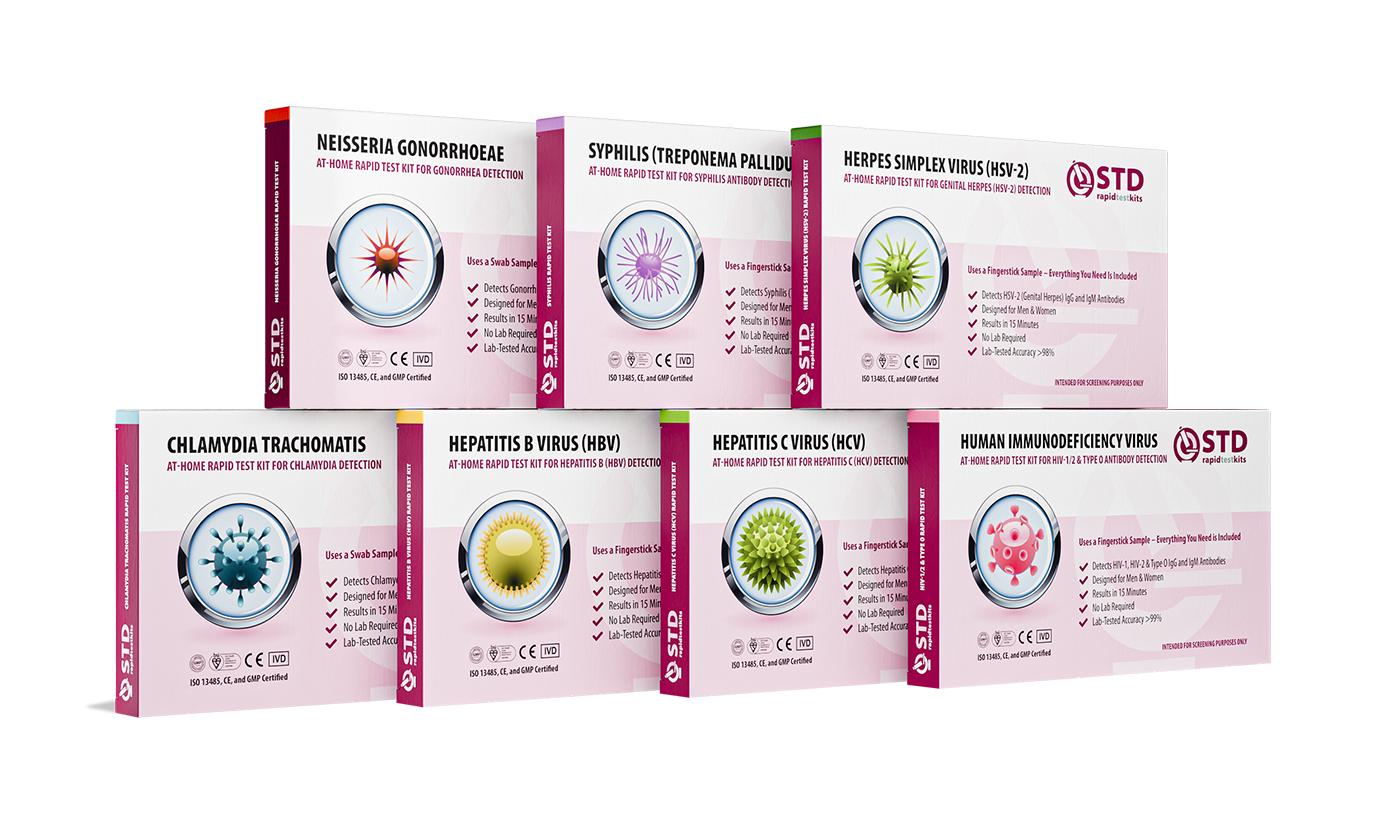
 For Men & Women
 Results in Minutes
 No Lab Needed
 Private & Discreet
Order Now $129.00 $343.00
For all 7 tests
Timing Is Everything: Window Periods by STD
Think of your body like a stage, and the infection like an actor hiding behind the curtain. The test is the spotlight, but if you shine it too early, there's nothing to see. Each STD takes a different amount of time to “step into the light,” depending on the pathogen and the type of test used. That’s the window period in a nutshell, and it’s why testing too soon can backfire, emotionally and medically.
Below is a breakdown of when different STDs typically become detectable using common test methods. These are averages, not guarantees. Bodies vary, as do immune responses and viral behaviors. But they offer a starting point for understanding why one “clean” result might not be the truth.
| STD | Test Type | Earliest Detection | Recommended Retest Point |
|---|---|---|---|
| Chlamydia | NAAT (urine/swab) | 5–7 days | 14+ days |
| Gonorrhea | NAAT (urine/swab) | 5–7 days | 14+ days |
| Syphilis | Antibody (blood) | 3 weeks | 6–12 weeks |
| Herpes (HSV-2) | IgG antibody or swab | 4–6 weeks | 12+ weeks |
| HIV | 4th Gen Ag/Ab Test | 2–4 weeks | 6+ weeks |
| Trichomoniasis | NAAT or antigen | 5–10 days | 14–21 days |
Table 2: Estimated detection windows for common STDs using the most sensitive available testing options. Testing too early may yield false negatives, even with high-quality kits.
It’s easy to see how false reassurance creeps in. Someone like Jamal, who tested just five days after a high-risk encounter, may have missed the window entirely. Even if he took the test correctly, the pathogen simply wasn’t detectable yet. That “clean” result might feel like a safety net, but in his case, it was more of a trapdoor.
Case Story: “I Trusted the Result , But I Wasn’t In the Clear”
Mira, 26, got tested after a one-night stand where the condom broke. She was panicked. She used an at-home combo kit and got a negative result for everything. Three weeks later, she developed an unusual discharge and discomfort during sex. When she went to a clinic, she tested positive for chlamydia.
“I was furious. I thought I’d done the right thing. I even showed them the test. But they said I tested too early. That first result didn’t mean I was clean, it just meant the bacteria hadn’t fully grown yet.”
Mira’s story is a painfully common one. She followed instructions. She wanted to do the right thing. But she didn’t understand the lag between exposure and detection, and no one had told her. The test worked. But the timing failed her. This is why retesting matters. This is why one result, no matter how neat it looks on paper, isn’t the end of the conversation.
So... When Should You Retest?
If you’ve had a potential exposure and tested within the first week, retesting isn’t just recommended, it’s essential. Even the most accurate tests can miss infections during their window period. That’s not a failure of the test. That’s just biology.
Let’s look at a general timeline:
➤ Days 1–6: Most STDs will not yet show up on any test. Testing now may feel productive, but it’s often too soon to trust results.
➤ Days 7–14: This is a gray area. Some infections, like chlamydia and gonorrhea, may now be detectable with a good NAAT test. But the results should still be seen as early.
➤ Days 15–28+: Retesting here gives a clearer picture. This is when most STDs can be reliably found, and it's also when your body has had time to react to an infection if one is present.
For those who tested early and still feel symptoms, or even just worry, getting retested around the three-week mark is often the safest, smartest move. And if you’re starting a new relationship or navigating non-monogamy, building retesting into your routine can help keep everyone informed and protected.
Still feeling unsure? Peace of mind may be one discreet kit away. Try a combo test kit with detection coverage for the most common STDs, all without a clinic visit.

People are also reading: Your Balls Are Swollen and It’s Not Sexy: It Might Be Orchitis
But I Feel Fine , Can I Still Be Infected?
This is where the real danger lies. Most people don’t get tested unless something feels wrong. So when they do test, and get a negative, they interpret it as proof that they’re fine. But the truth is messier. Many STDs are silent, especially in their early stages. No pain. No discharge. No lesions. No warning. And yet, the infection quietly continues, capable of being passed to others without a single outward sign.
This silence isn’t rare. In fact, it’s the norm.
Here’s how common asymptomatic infections are by STD:
| STD | Estimated Asymptomatic Cases | Symptoms When Present |
|---|---|---|
| Chlamydia | ~70% in women, ~50% in men | Burning urination, discharge, pelvic pain |
| Gonorrhea | ~50% in women, ~10% in men | Painful urination, green discharge, rectal symptoms |
| Herpes (HSV-2) | ~80% undiagnosed/asymptomatic | Blisters, tingling, ulcers |
| HPV | 90% clear on their own without symptoms | Genital warts, abnormal pap smears |
| Trichomoniasis | ~70% asymptomatic | Foul-smelling discharge, itching, irritation |
Table 3: Silent STDs are more common than symptomatic ones. You can carry and transmit infections without ever knowing.
So yes, you can feel completely normal and still test positive later. That’s why the absence of symptoms after a risky encounter is not a reason to skip or dismiss testing. It’s also why a negative result, especially when taken early or with the wrong test type, doesn’t always equal safety.
Check Your STD Status in Minutes
Test at Home with Remedium10-in-1 STD Test Kit
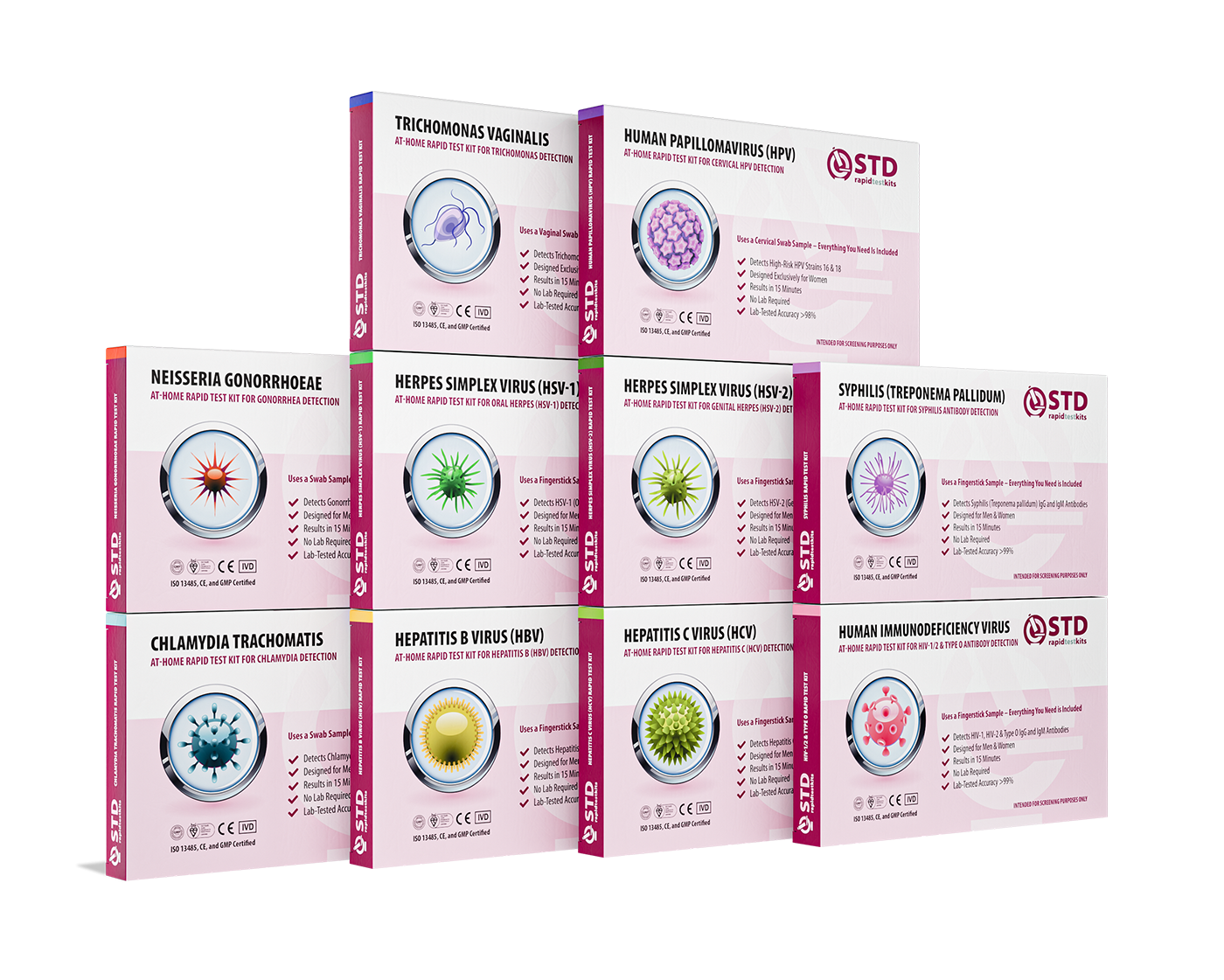
 For WomenResults in MinutesNo Lab NeededPrivate & Discreet
Order Now $189.00 $490.00
For all 10 tests
Why “Clean” Isn’t a Diagnosis
Let’s talk about language. Saying someone is “clean” because they tested negative isn’t just misleading, it reinforces stigma. It suggests that anyone who tests positive is “dirty,” which is flat-out wrong. STDs are infections, not moral failures. They’re treatable. Common. And often invisible.
The word “clean” gives people a false sense of safety. They might skip condoms. They might avoid conversations about testing or status. They might even shame partners who do disclose something, assuming that their own “clean” status is superior. But that “clean” result may be a snapshot from a flawed timeline, a missed infection, or a test that simply wasn’t designed to catch everything.
And then there’s the deeper cost: missed opportunities to protect oneself and others. If you think you're “done” after one test, you might not retest after symptoms show up. You might write them off as something else. You might delay treatment. And that can turn a minor, treatable infection into something more serious, like pelvic inflammatory disease, infertility, or transmission to partners who trusted your word.
It’s not about fear. It’s about truth. And truth means understanding what your test really told you, and what it didn’t.
The Retest Mindset: From One-and-Done to Ongoing Awareness
We need a cultural shift. Instead of seeing STD testing as a one-time clearance badge, we need to view it like any other health metric, something that evolves, that reflects your present, not your forever. Think of it like brushing your teeth. One brush doesn’t mean your mouth is clean forever. One negative test doesn’t mean you’re invincible.
This doesn’t mean testing every week out of fear. It means knowing when to test, why to test again, and how to interpret results in the context of real life. Had a new partner? Got symptoms a few weeks after testing? Exposed during a trip or party weekend? Those are moments when retesting makes sense. It’s not paranoia. It’s precision. It’s protection.
And if you're not sure when or how to retest, tools like the STD Risk Checker or combo test kits can help you navigate it without needing to go to a clinic.
FAQs
1. Can I still have an STD even if my test came back “clean”?
Yes, for sure. The test didn't find anything at that time, so that result doesn't mean you're immune to infection. If you took the test too soon or used the wrong one, it might have missed something that was going on below the surface.
2. What exactly is the “window period” I keep hearing about?
It’s the time your body needs before an infection shows up on a test. Think of it like waiting for film to develop (if you’re old enough to remember that). Test too soon, and the picture’s blank, even if something’s there. For some STDs, that window is just a few days. For others, it’s weeks.
3. I feel totally fine, why would I need to test again?
That’s the tricky part: most STDs don’t cause obvious symptoms. You could have chlamydia, herpes, or trich and never feel a thing. But that doesn’t mean your body isn’t infected, or that you can’t pass it on. Symptoms aren’t the green light you think they are.
4. Okay, but how many times do I really need to test?
There's no magic number, but here’s a baseline: test once around 2 weeks post-exposure, then again at 4–6 weeks if you had a risk or any weird symptoms pop up. If you're dating, non-monogamous, or just like peace of mind, test regularly like you check your credit score. No shame in being sure.
5. What if I tested early, do I really have to do it again?
If you care about accuracy, yes. A test taken within a few days of exposure is like checking your oven five minutes into baking cookies. Nothing’s ready yet. You should retest when the infection is actually present. Depending on the STD, this usually happens between two and four weeks after the first test.
6. What does it mean that I got a faint line on my test?
You are not the only one who wonders, "Is that a line or am I seeing things?" A faint line usually means a weak positive. It’s not a for-sure yes, but definitely not a for-sure no either. Treat it like a maybe that deserves a retest with a more sensitive lab test just to be safe.
7. Can I stop using protection once I get a negative test?
Not if you tested early or aren’t in a mutually monogamous, retested situation. Protection is still your best friend, especially since some STDs, like herpes and HPV, can be spread through skin contact as well as fluids. Your status is only as current as your last partner's.
8. My partner says they’re “clean.” Should I just trust that?
Trust is great. Testing is better. “Clean” is a vague term that could mean anything, from “I tested two years ago” to “I feel fine so I must be fine.” Ask when they tested, what they were tested for, and if they’ve had new partners since. That’s not rude, that’s respect.
9. Are at-home STD tests even accurate?
They can be very accurate, if you use them at the right time and follow instructions closely. Think of them like pregnancy tests: powerful tools, but timing and technique matter. For best results, use them after the window period or follow up with a lab-based option.
10. I can’t afford to keep buying tests, what should I do?
Totally valid. If you're testing on a budget, focus on timing. Wait until you’re past the most accurate detection window and use a combo test to check for several STDs at once. Also, look for community clinics offering free or low-cost testing, you deserve answers, not financial stress.
Don’t Let One Test Decide Your Truth
Your health isn’t a single moment. It’s an ongoing story. And when it comes to STDs, the difference between a false sense of security and true peace of mind is knowledge, and timing. That one “clean” test might’ve meant nothing was visible yet. It didn’t mean you were invincible. It didn’t mean you were done.
If you’ve tested early, feel unsure, or just want to be safe, not sorry, give yourself the gift of certainty. Order a combo STD test kit that checks for multiple infections at once, privately, quickly, and discreetly.
How We Sourced This Article: We combined current guidance from leading medical organizations with peer-reviewed research and lived-experience reporting to make this guide practical, compassionate, and accurate.
Sources
2. HIV Testing: Know Your Options | CDC
5. Point‑of‑Care Testing for Sexually Transmitted Infections: Performance and Limitations | PMC
8. CDC Laboratory Recommendations for Syphilis Testing | MMWR
About the Author
Dr. F. David, MD is a board-certified infectious disease specialist focused on STI prevention, diagnosis, and treatment. He blends clinical precision with a no-nonsense, sex-positive approach and is committed to expanding access for readers in both urban and off-grid settings.
Reviewed by: Lauren Vega, NP | Last medically reviewed: October 2025
This article is only for informational purposes and should not be taken as medical advice.


