






Quick Answer: Antibiotics only work on bacterial STDs, like chlamydia, gonorrhea, and syphilis. Some, like herpes or HPV, need antivirals or ways to deal with the symptoms. If symptoms don't go away after taking antibiotics, you might need to get tested again or try a different treatment.
What Symptoms Send People Searching for STD Antibiotics?
It usually starts with something small. A little sting when you pee. A white bump you thought was an ingrown hair. A weird, musty smell that lingers even after two showers. For many people, the search for STD antibiotics doesn’t begin with a doctor, it begins with a Google search: “Can I treat chlamydia at home?” or “What antibiotic for burning after sex?”
Let’s be real: most people aren’t asking this because they’re curious about microbiology. They’re asking because they’re panicked. Because something feels wrong, and they’d rather quietly figure it out on their own than face a waiting room, a judgmental stare, or a clinic voicemail they don’t want to return. But symptom matching can be tricky, and misleading. Burning could be gonorrhea, sure. But it could also be a UTI, trichomoniasis, or irritation from a latex allergy. Discharge doesn’t just belong to chlamydia. And no, a sore throat doesn’t mean you’re imagining things, some strains of gonorrhea do settle in the throat, and antibiotics may or may not knock them out depending on resistance levels.
Case in point: Ty, 24, got a text from a former partner who tested positive for chlamydia. He had no symptoms, but panicked and grabbed antibiotics off a friend who had leftover meds. “I figured it’d save me a trip,” he admitted later. Two weeks later, Ty was still asymptomatic, but also still infected. The antibiotics he took weren’t the right kind, or the right dose. DIY medicine gave him peace of mind but zero protection.
Symptoms are loud, confusing, and often overlap between infections. That’s why real diagnosis matters, and why knowing which antibiotic works for what is about more than just a Google search.
People are also reading: Tested Positive for Chlamydia: What Happens Next?
The Bacteria Behind the Burn: What Antibiotics Target STDs?
Let’s clear up one thing right now: antibiotics don’t cure every STD. They’re powerful, yes. But they only target bacterial infections, not viral ones. So if you’re trying to treat herpes or HPV with leftover penicillin, you’re wasting time, and possibly delaying care that actually works.
The most common bacterial STDs, chlamydia, gonorrhea, and syphilis, respond to specific antibiotics that have been tested, studied, and recommended by major medical organizations like the CDC and WHO. But even within those guidelines, treatment isn’t one-size-fits-all. Dosages, drug choice, and resistance patterns shift depending on your location, your symptoms, and whether you’re dealing with a new infection or one that’s been hiding out for a while.
| STD | Recommended Antibiotic | Typical Dose | Notes |
|---|---|---|---|
| Chlamydia | Doxycycline | 100mg twice daily for 7 days | Preferred over azithromycin due to improved efficacy |
| Gonorrhea | Ceftriaxone | 500mg IM single dose | Must be injected; oral options are no longer first-line |
| Syphilis | Benzathine Penicillin G | 2.4 million units IM single dose | Dosage increases with stage of infection; requires clinic visit |
| Trichomoniasis | Metronidazole | 2g oral single dose or 500mg twice daily for 7 days | Often missed in men; retesting may be needed |
Table 1. Common STD infections and the antibiotics used to treat them. Always consult a provider before starting or reusing antibiotics.
So what happens if you take the wrong antibiotic, or take the right one the wrong way? We’ll get into that next, including the real deal on antibiotic resistance, what happens when symptoms persist, and why treatment sometimes has to be repeated even if your test was positive weeks ago.
When the Pills Don’t Work: Antibiotic Failure and What’s Behind It
Let’s say you did everything right. You saw a provider, got a test, followed instructions. And still, something’s off. Maybe your discharge changed color but didn’t disappear. Maybe the itch is less intense but not gone. Maybe a new sore showed up, and now you're wondering if the first infection masked something else entirely. You’re not imagining it. Antibiotic treatment can fail, and it’s not always because you did something wrong.
Reasons for treatment failure include: misdiagnosis, wrong drug choice, incorrect dosage, re-infection from an untreated partner, antibiotic resistance, or a second, undiagnosed infection masquerading as the same one. In one CDC report, antibiotic-resistant gonorrhea was flagged as an urgent threat, with some strains now requiring dual therapy or follow-up testing even after symptoms resolve.
Take Nina, 32, who was prescribed azithromycin for what was assumed to be chlamydia. She’d complained of cramping and discharge. After a single dose, her symptoms dulled, but they came back hard a week later. A second test revealed she’d had co-infection with gonorrhea, and the original dose wasn’t enough to knock it out. Worse, the gonorrhea strain showed reduced sensitivity to the usual treatments, requiring a higher dose of injectable ceftriaxone to clear it.
This kind of back-and-forth isn’t uncommon. Antibiotics aren’t magic. They’re tools. And they work best when the diagnosis is accurate, the strain is responsive, and all partners are treated simultaneously. That last point trips up a lot of people: treating yourself without telling your partner, or assuming their symptoms would show if they had anything, sets up a ping-pong cycle of re-infection that can drag on for months.
Check Your STD Status in Minutes
Test at Home with Remedium7-in-1 STD Test Kit

 For Men & Women
 Results in Minutes
 No Lab Needed
 Private & Discreet
Order Now $129.00 $343.00
For all 7 tests
Wait, Was It Even the Right Infection?
Here’s another twist in the tale: sometimes, what you think is an STD... isn’t. It could be a yeast infection, a UTI, or bacterial vaginosis (BV). Or it could be multiple things at once, tangled in symptoms that make no sense when Googled individually but are painfully real when combined.
In men, this often shows up as prostatitis misread as chlamydia. In women, trichomoniasis gets misdiagnosed as yeast so often it’s practically a meme in some clinics. The trouble is, misdiagnosis doesn’t just mean wasted meds, it means a delayed correct treatment, prolonged symptoms, and a higher chance of complications. And since many of these infections don’t show up on standard STD panels (especially at urgent cares), they go untreated for too long.
That’s why we’re giving you this table, not to self-diagnose, but to show the range of causes and treatments tied to common symptoms. If nothing else, it might help you walk into your next appointment with a better vocabulary, and a firmer sense of what to ask.
| Infection Type | Common STDs | Are Antibiotics Effective? | Typical Medication |
|---|---|---|---|
| Bacterial | Chlamydia, Gonorrhea, Syphilis, Trichomoniasis | Yes | Doxycycline, Ceftriaxone, Penicillin, Metronidazole |
| Viral | Herpes, HIV, HPV, Hepatitis B/C | No (managed with antivirals) | Acyclovir, Antiretrovirals, Interferon-based therapies |
| Parasitic/Fungal | Yeast infections, Scabies, Pubic lice | No (require antifungals or antiparasitics) | Fluconazole, Permethrin cream, Ivermectin |
Table 2. STD vs non-STD infection types and their treatment categories. Note: Trichomoniasis is caused by a parasite but is treated with antibiotics.
Here’s the bottom line: if the antibiotic didn’t work, it’s worth asking whether you were treating the right thing in the first place. A new test, ideally one that checks for multiple infections, might give you a clearer picture and a cleaner path to relief.
What About Re-Infection? (Aka, You Got Better, But They Didn’t)
It sucks to say this, but a lot of people get reinfected by the same person they caught it from in the first place. Not because that person is evil or dirty or irresponsible, but because they didn’t know they were infected, or didn’t get treated at the same time. The CDC has long pushed for expedited partner therapy, which lets providers prescribe antibiotics for partners without an in-person visit. But not all states allow it. And not all providers do it. Which leaves people fumbling with awkward text messages like “Hey, maybe you should get tested too?” while dealing with their own symptoms alone.
When this happens, the bacteria comes back before your body has a chance to fully heal. Worse, it may become resistant if it’s been partially suppressed multiple times without being fully eradicated. That’s how “resistant chlamydia” and “super gonorrhea” start, not in labs, but in everyday hookups where only one person gets treated at a time.
If you got better, then got worse again, consider your timing. Did your partner get treated too? Did you wait the full abstinence window (usually seven days after completing antibiotics)? Did you use protection afterward, or assume treatment was enough? None of this is about blame. It’s about breaking a cycle that antibiotics alone can’t stop.
Why Antibiotics Don’t Work for Everything (And What Does)
This is where things get blurry, especially for anyone raised on the idea that a pill fixes the problem. Antibiotics, by definition, fight bacteria. They don’t touch viruses. So if you’ve got herpes, HPV, HIV, or hepatitis, antibiotics won’t help at all. That doesn’t mean you’re stuck or untreatable. But it does mean the rules change.
Antiviral meds, not antibiotics, are what control viral STDs. For herpes, medications like acyclovir or valacyclovir can shorten outbreaks and lower your risk of passing it on, even if they can’t “cure” you. For HPV, your immune system usually clears the virus over time, but in some cases, intervention is needed to remove abnormal cells. HIV is managed with daily antiretroviral therapy (ART), which can suppress the virus to undetectable levels, meaning untransmittable. These aren’t fringe ideas; they’re well-documented in global guidelines and the lived experience of millions of people who are managing their sexual health without shame or fear.
Ray, 27, learned this the hard way. He thought he had syphilis, but after a full STD panel, his provider told him it was actually herpes simplex virus type 2. “I asked for antibiotics,” he said, “and when the doctor said they wouldn’t help, I felt like I’d been handed a death sentence.” But after a year of outbreaks, suppressive therapy, and a partner who stayed by his side, Ray’s understanding changed. “It’s not gone, but it’s under control, and that’s enough for now.”
Stories like Ray’s reveal how deeply we associate antibiotics with healing, and how betrayed we feel when they don’t apply. But viral STDs aren't moral failures or punishments. They're infections, like the flu or mono. And like those, they can be managed, even if they don’t disappear with seven pills and a good night’s sleep.
Cure, Control, or Confusion? The Language We Use Matters
Here's something most people don’t realize until they’re in the exam room: doctors rarely use the word “cure” unless they’re 100% certain the infection is gone and will not return. With STDs, that certainty depends on what you're dealing with. Chlamydia? Curable. Gonorrhea? Usually, unless it’s resistant. Syphilis? Yes, if caught early and treated fully. Trichomoniasis? Usually, though men may need to be retested. But with herpes or HPV, there’s no definitive “cure.” Just control. Just management.
That distinction can feel like a gut punch when you’re hoping for closure. It also explains why so many people feel confused or lied to after treatment. They think they’re cured, until the next outbreak hits, or a partner tests positive, or a symptom returns and suddenly everything is back on the table.
Part of the solution is shifting how we talk about STDs in the first place. Instead of pretending treatment is a straight line from infection to recovery, we need to normalize the loop: test, treat, retest, manage, prevent. There’s no shame in needing long-term care for a condition that came from something as human as sex.

People are also reading: Is That Faint Line a Positive Chlamydia Test? What It Really Means
What Real STD Treatment Looks Like (And Where Testing Fits In)
Let's be clear: there is no magic pill. Real treatment is more than just taking medicine. It means being aware of what you have. It also means being nice to your partner(s). It means making sure that your symptoms match your test results and not thinking that one swab or urine sample is enough. It means knowing the window period (the time between exposure and when a test can find an infection) and when to test again.
Some infections might not show up yet if you were exposed recently, especially in the last week or two. That is why it is often suggested that people get tested again 3 to 6 weeks after being exposed, even if they have already taken antibiotics. It's not too much. It's clear. And clarity is power, especially when your health, your relationships, and your peace of mind are at stake.
At-home STD tests can be very helpful in this situation. You can check privately, at the right time, without having to wait or go to the clinic. They cover all types of infections, including bacterial, viral, and parasitic. You can make real decisions with the information you get from a combo panel or a targeted test. You don't just take random antibiotics and hope for the best.
Sex, Safety, and Starting Fresh: What Comes After Treatment
So, you’ve taken the meds. Maybe you’ve retested. You’re symptom-free, or you’re managing things with antiviral treatment. Now comes the big question: when is it safe to have sex again?
Medically, most guidelines say wait seven days after completing antibiotic treatment for bacterial STDs, and make sure your partner has been treated too. But emotionally? It’s a little more complicated. Some people feel anxious about infecting someone again. Others feel resentful, confused, or ashamed. All of that is normal. But the best antidote to fear is information, and the best way to protect your future partners is with honesty and timing, not avoidance or silence.
If your symptoms are gone, your treatment is complete, and your partner(s) have been addressed, yes, you can have sex again. Just don’t rush your healing. Your body needs time, and so does your mind. Testing again in 3–6 weeks adds another layer of confidence, especially if your exposure risk is ongoing or your diagnosis wasn’t clear the first time.
You deserve pleasure without panic. But getting there sometimes means pausing for precision, and getting your facts straight before diving back in.
Check Your STD Status in Minutes
Test at Home with Remedium8-in-1 STD Test Kit
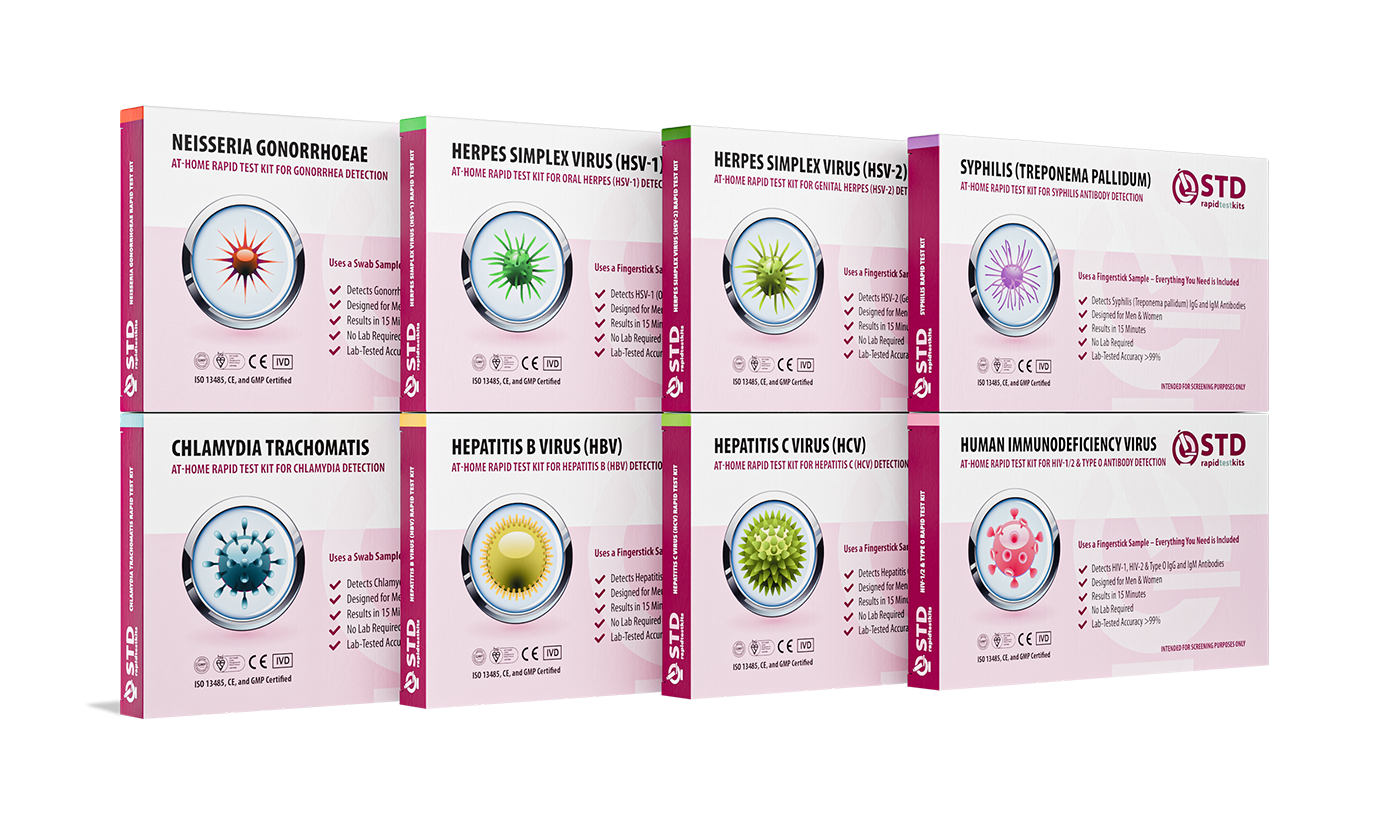 For Men & WomenResults in MinutesNo Lab NeededPrivate & Discreet
Order Now $149.00 $392.00
For all 8 tests
FAQs
1. Do antibiotics cure all STDs?
Nope, not even close. Antibiotics are bacteria-killers, so they’ll take care of things like chlamydia, gonorrhea, syphilis, and trichomoniasis (yes, that last one’s a parasite but still plays nice with antibiotics). But if we’re talking herpes, HPV, HIV, or hepatitis, antibiotics won’t touch them. Those need antivirals, or just time and immune muscle.
2. What if I took antibiotics and I’m still having symptoms?
First, deep breath. Doesn’t always mean treatment failed. It could mean the infection is resistant, or maybe it wasn’t what they thought it was in the first place. Maybe you got re-exposed. Maybe the timing of your test was off. You’re not cursed, but you might need a retest or a second opinion. Bodies are messy like that.
3. Can I just take my friend’s leftover STD meds?
Let’s not. You wouldn’t use someone else’s half-finished birth control or blood pressure pills, right? Same logic. What worked for them might do zilch for you, or worse, it might cover up your symptoms without clearing the infection. Then you’re walking around thinking you’re good while the bacteria is planning its comeback tour.
4. How soon after treatment can I get back to having sex?
Seven days after your last dose is the usual rule, but only if your partner’s been treated too. Otherwise, it's a two-player game where one of you keeps hitting "reset." And honestly? If your body’s still healing, give it the respect it deserves. Jumping back in too fast isn’t just risky, it might be downright uncomfortable.
5. Wait, some STDs never actually go away?
Yeah. Herpes sticks around like a toxic ex, dormant but still there. HPV often clears, but some strains hang out in stealth mode. HIV doesn’t leave, but it can be shut down to the point of being untransmittable with treatment. So no, not everything ends with a final dose. But “chronic” doesn’t mean doomed. It just means learning the rhythm of your own body.
6. Why did I get symptoms again after treatment?
Because bacteria are petty. Or because your partner didn’t get treated. Or maybe you hooked up again before the meds finished doing their job. Reinfection is common and doesn’t mean you’re dirty or reckless. It just means you’re human, and maybe a little underinformed, which this guide is fixing in real time.
7. Can I treat syphilis without going to a clinic?
Sorry, but no. Syphilis needs a fat shot of penicillin in your backside, usually administered by a professional who does not accept Venmo. There’s no oral substitute. So if you’re reading this and suspect syphilis, don’t DIY it. Get the real thing before it turns into something much worse.
8. Do antibiotics help with herpes?
Only if you're trying to waste them. Herpes is a virus. Antibiotics aren’t even invited to that party. If you’re having outbreaks, antivirals like valacyclovir or acyclovir are your crew. They won’t make herpes disappear, but they can shut it up and keep it from crashing your weekend plans.
9. What’s the best antibiotic for chlamydia?
Currently? Doxycycline. Taken twice daily for seven days. Used to be azithromycin, but resistance and recurrence have knocked it off its pedestal. Don't just guess though, get tested first so you're not tossing pills at the wrong infection.
10. Should I test again even if I already took antibiotics?
Yeah, in most cases, yes. Especially if you’ve got new symptoms, a new partner, or just that little voice in your head saying “something’s off.” A second test doesn’t mean the first was wrong, it just means you’re smart enough to double check. And that’s a flex, not a flaw.
How We Sourced This Article: We combined current guidance from leading medical organizations with peer-reviewed research and lived-experience reporting to make this guide practical, compassionate, and accurate. In total, around fifteen references informed the writing; below, we’ve highlighted some of the most relevant and reader-friendly sources.
Sources
1. CDC 2021 STI Treatment Guidelines
2. Sexually Transmitted Infections Treatment Guidelines, 2021 | CDC MMWR
3. Chlamydial Infections - STI Treatment Guidelines | CDC
4. Gonococcal Infections Among Adolescents and Adults - STI Treatment Guidelines | CDC
5. Syphilis - STI Treatment Guidelines | CDC
6. Trichomoniasis - STI Treatment Guidelines | CDC
About the Author
Dr. F. David, MD is a board-certified infectious disease specialist focused on STI prevention, diagnosis, and treatment. He blends clinical precision with a no-nonsense, sex-positive approach and is committed to expanding access for readers in both urban and off-grid settings.
Reviewed by: Jamie Ekwensi, MPH | Last medically reviewed: October 2025
This article is for informational purposes and does not replace medical advice.


