You Can Get Chlamydia in Your Eye, Here’s What It Looks Like
Sara woke up with one eye crusted shut and assumed it was just her contacts acting up again. But when the over-the-counter drops didn’t help, and her eye started oozing yellow-green gunk, she got worried. She hadn't had a cold, no new makeup, no pink eye outbreak at work. But she had gone down on someone new the weekend before. What she didn’t know? You can absolutely get chlamydia in your eye, and it’s more common than most people realize.
23 October 2025
17 min read
818
Quick Answer: Yes, you can get chlamydia in your eye. It’s called adult inclusion conjunctivitis and usually spreads when infected genital fluids come into contact with the eye, often via fingers, towels, or oral sex. It mimics “pink eye” but lasts longer and needs antibiotics.
It’s Not Just Pink Eye, Here’s What Chlamydia Looks Like in the Eye
Adult inclusion conjunctivitis, the medical term for eye chlamydia, is caused by the same Chlamydia trachomatis strains that infect the genitals (typically serovars D-K). The bacteria can travel from genitals to eyes during oral sex, rimming, hand contact, or even shared towels. It often shows up days to weeks after exposure, and can persist for a month or longer if untreated.
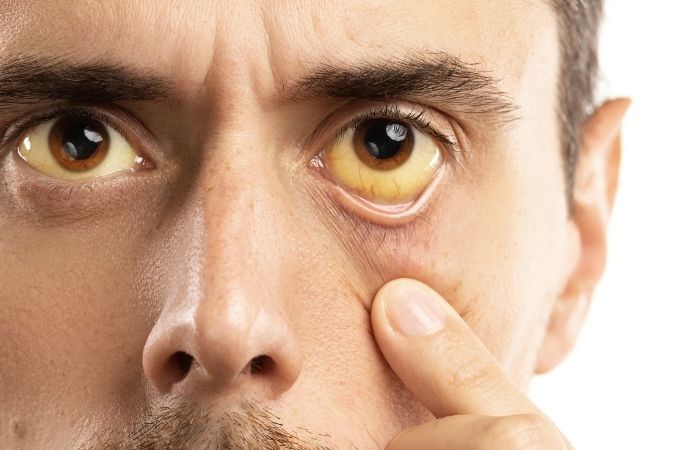
Unlike typical viral or allergic conjunctivitis, eye chlamydia tends to affect just one eye at first, with a gritty or scratchy feeling, swelling, redness, and mucous discharge that sticks your eyelashes together in the morning. You may also feel like there’s sand under your eyelid when you blink. Over time, it can move to the other eye.
Here’s how eye chlamydia compares to other common causes of red, irritated eyes:
Table 1. How Eye Chlamydia Compares to Other Red Eye Causes
Symptom
Eye Chlamydia
Typical Pink Eye (Viral/Bacterial)
Onset
Gradual, usually in one eye
Sudden, often both eyes
Discharge
Sticky yellow or green, thicker in the morning
Watery (viral) or thick (bacterial)
Duration
Lasts 2–6 weeks without treatment
Usually clears in 7–10 days
Sensation
Gritty, sandy feeling under the lid
Itchy or burning, less grittiness
Other Clues
History of recent oral/genital contact
Recent cold or flu symptoms common
Case Study: “I Thought It Was Allergies. It Was an STD.”
Marcos, 32, didn’t think twice when his right eye turned pink and watery after a long shift at the bar. He assumed it was from working in smoky rooms or maybe dust in his contact lenses. Two days later, his eyelid felt puffy, and a yellowish gunk stuck to his lashes every morning. He used over-the-counter drops, and they did nothing. When it spread to his other eye, he finally went to urgent care, where the provider asked if he’d recently had unprotected sex. Marcos had. And his eye swab tested positive for chlamydia.
“It blew my mind. I’d never heard of getting an STD in your eye. I was embarrassed, but more than that, I was shocked the other clinic didn’t even ask about it.”
Marcos’s story isn’t rare. According to ophthalmology reviews, adult inclusion conjunctivitis is still frequently missed, especially in heterosexual patients who don’t report same-sex activity or high-risk behavior. It’s not just about who you sleep with, it’s about how STDs can travel.
How Does It Happen? Fingers, Fluids, and False Assumptions
Let’s get real: chlamydia doesn’t teleport. It moves via secretions. That means if someone with a genital chlamydia infection ejaculates or leaks fluid near your face, or if you touch their fluids and then rub your eye, you can absolutely get infected. You can also get it from oral sex if their secretions contact your eyes.
One CDC case study describes an infant treated for eye chlamydia after birth, but adult infections happen more often than people think. In fact, a 2021 review in the Journal of Clinical Medicine highlights that eye chlamydia can be stubborn and easily mistaken for regular pink eye or allergies.
Here’s a second table showing how chlamydia spreads to the eye through real-world routes:
Table 2. Common Transmission Routes for Eye Chlamydia
Transmission Method
Description
Finger-to-eye contact
Touching genitals or fluids, then rubbing your eyes
Oral sex (giving)
Exposure to vaginal or penile fluids during contact
Shared towels or pillowcases
Infected fluids transferred to surfaces, then to your eye
Most people, and even some doctors, don’t immediately consider STDs when evaluating an eye infection. That’s partly because the symptoms of eye chlamydia overlap with more common conditions like viral conjunctivitis or seasonal allergies. Unless a provider specifically asks about recent sexual contact or exposure, the patient might be sent home with antihistamines or antibiotic eye drops that don’t treat the real issue.
That delay matters. Without systemic treatment (usually oral azithromycin or doxycycline), the infection can persist and even cause scarring or corneal involvement. There have been cases where prolonged infection led to vision complications. The CDC notes that eye chlamydia should be treated as a full-body infection, not just a local irritation.
So if your red eye doesn’t get better after 3–5 days of typical treatment, and you’ve had any type of sexual contact recently, especially oral or genital-to-face, it’s time to ask your doctor to consider STD testing. Be direct. You should get the right care, not guesses.
How can you test for eye chlamydia?
A swab of the lower eyelid conjunctiva is commonly employed to identify ocular chlamydia, similar to a throat or genital swab. The sample is sent for the nucleic acid amplification test (NAAT), which is very specific and sensitive for Chlamydia trachomatis. If the provider thinks there is a genital infection at the same time, which is common, they may also ask for urine or vaginal/cervical swabs.
Here’s what testing typically looks like depending on your access and situation:
Table 3. Testing Methods for Suspected Eye Chlamydia
Test Type
Sample Collected
Who Should Use It
NAAT via eye swab
Lower eyelid conjunctiva
Used in clinics when eye symptoms are present
Genital NAAT test (urine or swab)
Urine, vaginal, cervical, or penile swab
For identifying possible source of infection
At-home chlamydia test kits
Urine or genital swab mailed to lab
Good option if you suspect genital infection and need privacy
Note: Most at-home STD kits don’t collect eye swabs directly, but they are excellent for checking genital chlamydia, especially if you suspect eye symptoms are a result of genital-to-eye contact. If your genital test is positive and you have eye symptoms, your provider will likely assume ocular involvement and treat accordingly.
Unlike bacterial pink eye, which often responds to topical antibiotic eye drops, eye chlamydia requires oral antibiotics. That’s because the infection isn’t just on the surface, it’s systemic, even if it’s only showing symptoms in your eye. The CDC says that a single dose of 1 gram of azithromycin is usually enough, but if you have a history of certain infections, you may need to take doxycycline for seven days.
Importantly, your sexual partner(s) should be treated too, even if they have no symptoms. Chlamydia is notorious for hiding silently in the genital tract. If you don’t treat both ends of the chain, you risk passing the infection back and forth.
And no, flushing your eyes out or using over-the-counter drops won’t fix it. That might relieve discomfort temporarily, but the bacteria will stay active and contagious without systemic antibiotics.
How Long Does Eye Chlamydia Last?
Most people feel better in 3 to 5 days and are completely better in 1 to 2 weeks with the right antibiotic treatment. If you don't get treatment, the infection could last for a month or more. It's not just chronic redness that is a risk; it could also damage your eyes in the long run.
There’s also the emotional toll. Patients who don’t know what’s wrong may isolate themselves, avoid intimacy, or feel deep shame. That’s why diagnosis matters. It’s not just about medicine, it’s about reclaiming peace of mind.
If you’ve had unprotected sex and your eye symptoms feel “off,” it’s okay to ask: could this be more than allergies?
When in doubt, test. You’re not overreacting, you’re advocating for your health.
Retesting after treatment isn’t always required for eye chlamydia, but it can offer peace of mind. If you’ve completed antibiotics and symptoms are fully resolved, a follow-up may not be necessary unless you’re pregnant or your provider recommends it.
But if your symptoms don’t improve after 7 days of oral antibiotics, or they come back weeks later, you may need a second round of testing. Reinfection is common, especially if your partner wasn’t treated at the same time.
Here’s a general timeline to follow:
Start antibiotics → Symptoms should begin improving within 3–5 days
Still red or irritated after 7–10 days? → Contact your provider
Had sex with untreated partners? → Retest in 3–4 weeks
Pregnant or immunocompromised? → Follow-up is often recommended
“I thought I was clear after taking the pills,” said one patient we interviewed anonymously, “but two weeks later my eye was red again. I hadn’t told my partner, and I got reinfected.”
Retesting isn’t about judgment. It’s about making sure your body has cleared the infection, and that you’re not silently passing it along to someone you care about.
Prevention: Don’t Let Shame Stop You From Protecting Yourself
Eye chlamydia might sound like a punchline, but it’s not. It’s an infection that can happen to anyone, in any relationship, regardless of gender, sexuality, or number of partners. What matters is understanding your risks and taking steps to protect your health.
If you’re engaging in oral, anal, or genital sex, barrier protection (like condoms or dental dams) lowers your risk. Washing your hands after sex, even solo play, is one of the easiest ways to prevent eye infections. Avoid sharing towels, washcloths, or pillowcases if you or a partner has an active STD.
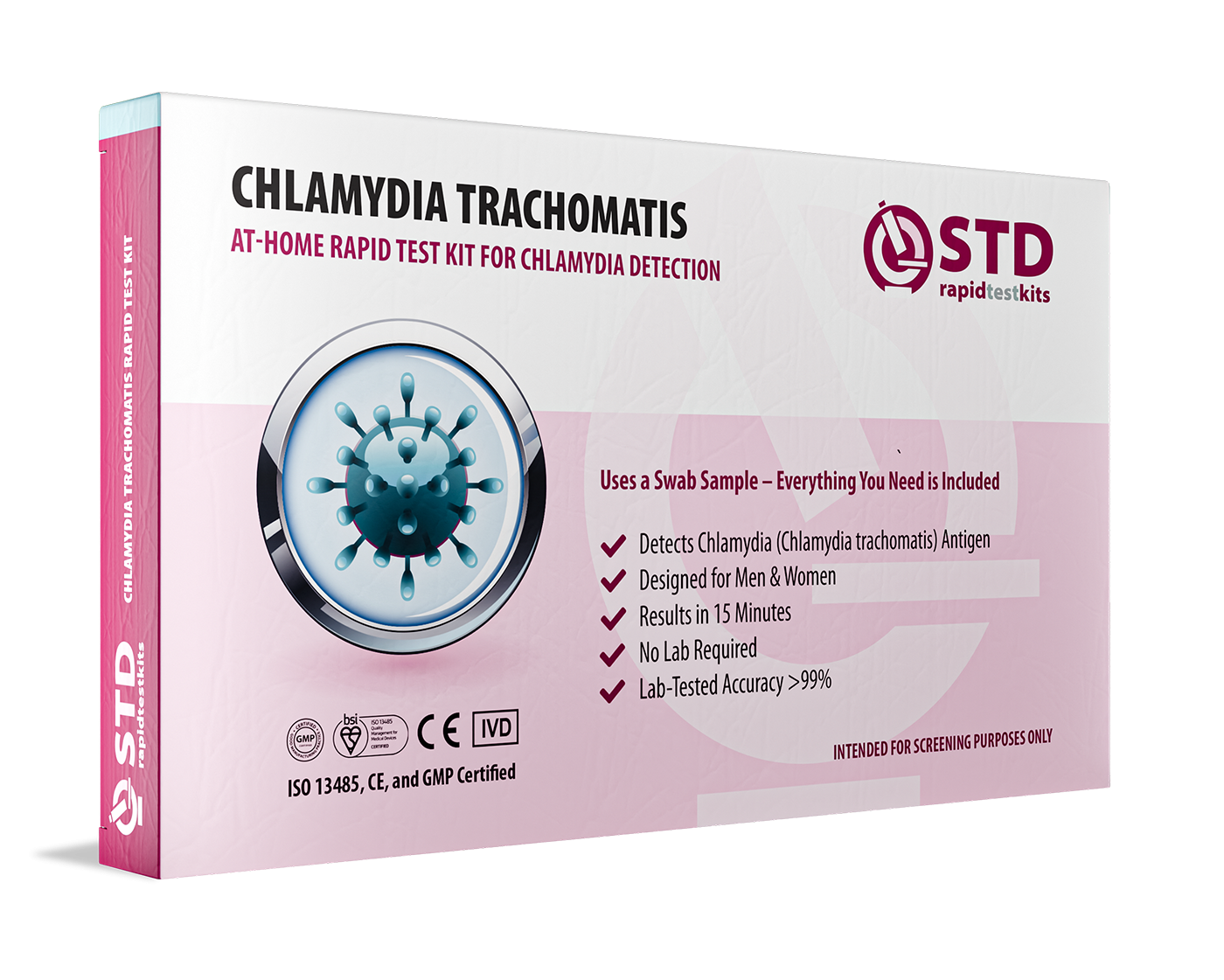
And most importantly: if something feels off, get tested. You deserve answers, not assumptions. STD Rapid Test Kits offers discreet, at-home options that put your privacy and clarity first.
Whether it’s a burning sensation or just a weird feeling in your eye, trust yourself. Peace of mind is just a test away.
You’re not alone. Many people delay care because they feel ashamed or don’t want to explain their sex life to a stranger. But untreated eye chlamydia won’t just go away, and waiting makes it worse.
If face-to-face appointments feel impossible, telehealth options are expanding. Many providers can order tests or prescriptions without an in-person visit. You can also start by ordering an at-home test. Even if it’s not an eye-specific swab, knowing whether you have chlamydia in your genital tract gives your doctor the clues they need to treat the rest.
Your body is not dirty. Your questions aren’t shameful. And your health deserves care, without stigma.
Why It’s Not Your Fault (And Why It Still Hurts)
If your reaction to all this is somewhere between horror and “how the hell did I not know this,” you're not alone. Most people don’t learn about eye chlamydia in sex ed, if they had sex ed at all. The idea that an STD could show up somewhere as public as your face feels unfair, even violating.
We’re conditioned to think of STDs as “punishments” for bad choices. That’s a lie, and a dangerous one. STDs are infections, not moral judgments. They spread through normal, consensual behavior. And when they show up somewhere unexpected, like your eye, they can trigger embarrassment that delays care.
But here’s the truth: getting an STD doesn’t mean you’re dirty. It doesn’t mean you’re reckless. It just means you’re human, and your body encountered bacteria during something intimate. Your job now is to take care of that body, not shame it.
If you’re struggling with guilt or anger (at yourself, or someone else), that’s valid. But don't stay stuck there. Testing and treatment are tools of self-respect. Healing isn’t just physical, it’s reclaiming your agency, your voice, and your sense of safety. You’re not alone in this. And you’re not broken.
How to Talk to a Partner About Eye Chlamydia
So you tested positive for chlamydia, or your doctor suspects it, and your eye is the unexpected location. Now what? Do you have to tell your partner? Should you? Will they freak out?
First: yes, telling them is the responsible thing to do. If you got it, they might have it too, and could pass it back, even without symptoms. It’s not about blame. It’s about preventing that awkward merry-go-round of reinfection and confusion.
Not sure what to say? Try this:
"Hey, I just found out I have chlamydia, turns out it can even show up in the eye, which is wild. I probably got it before we were together or early on. I’m getting treated, but you should get tested too, just in case."
You don’t need to explain your entire history or carry shame. Keep it short, keep it kind, and focus on solutions. If you’re not comfortable speaking directly, you can use anonymous partner notification tools like TellYourPartner.org.
The key is this: silence helps STDs spread. Honesty breaks the chain. And if your partner reacts poorly? That’s about them, not you. You took care of yourself and gave them the chance to do the same. That’s strength, not weakness.
FAQs
1. Can you really get chlamydia in your eye?
Yes, and not just in theory. If chlamydia-infected fluids (think semen, vaginal fluid, even pre-cum) come into contact with your eye, say during oral sex or if you touch down there and then rub your face, you can end up with a full-blown eye infection. It’s called adult inclusion conjunctivitis, and it’s more common than most people realize.
2. What does it feel like when chlamydia is in your eye?
Like you slept with your contact lenses in for three days straight. Gritty, sticky, red, and crusty. The discharge might start watery, then turn goopy and yellow-green. Some people say it feels like sandpaper under their eyelid when they blink. And unlike a typical case of pink eye, this one tends to drag on for weeks if untreated.
3. Is eye chlamydia just pink eye with an STD label?
Not quite. It may look like simple conjunctivitis at first, but regular eye drops don't work on it. You need oral antibiotics because the bacteria lives inside your cells, not just on the surface. It's like trying to put out a fire in your house with a squirt gun: the wrong tool and the wrong depth.
4. Can I get tested for eye chlamydia without going to an eye clinic?
Kind of. Eye swabs need to be done in-person, but if you think the infection came from sex, you can use an at-home genital test to confirm you have chlamydia in your system. If it’s positive and your eye is acting funky, a doctor may treat both without needing to swab your eye directly.
5. How long does it take to heal?
Once you’re on the right antibiotics, most people start feeling relief within 3–5 days. Full healing might take up to two weeks. But if you don’t treat it at all? It can last for a month or longer, and may even scar the inside of your eyelid or affect your vision long-term. Not worth the risk.
6. Is it contagious through eye contact?
Not from looking at someone, but yes if there’s fluid involved. Shared towels, pillowcases, fingers, or sex toys can all pass the bacteria. If someone with genital chlamydia wipes and then touches your eye, boom, transmission.
7. What happens if I ignore it?
Best case? It just lingers and annoys the hell out of you. Worst case? You could end up with permanent damage to your cornea, ongoing eye pain, and still be infectious to others. Plus, untreated chlamydia in any part of the body can lead to complications like pelvic inflammatory disease or infertility.
8. Do I have to tell my partner?
If you tested positive for chlamydia, even if it’s showing up in your eye, yes, you should tell them. It’s a genital STD too, and there’s a decent chance they’re infected without symptoms. It doesn’t have to be dramatic. You can keep it short, honest, and even use anonymous notification tools if that’s easier.
9. Can I still wear contact lenses if I have it?
You shouldn’t. Not until the infection is gone and your doctor clears you. Contacts can trap bacteria under your lid and make things worse. Switch to glasses for now, and give your eyes a break in every sense of the word.
10. Will people be able to tell I have an STD just by looking at me?
Nope. Red, irritated eyes don’t scream “chlamydia” to most people. You might look tired, hungover, or allergic to pollen. The stigma is real, but the symptoms are often invisible or misread. You don’t owe anyone an explanation, but you do owe yourself a proper diagnosis.
You Deserve Answers, Not Assumptions
Even though it sounds strange, eye chlamydia isn't a medical mystery. It's a real infection with real symptoms that are often misdiagnosed and misunderstood. The truth is that STDs don't always stay "down there." They can hurt your whole body, including your eyes, throat, and skin.
If something feels off, trust yourself. Ask questions. Get tested. Whether you're dealing with eye irritation after a hookup, or just need clarity, testing is the first step toward taking back control of your health.
Don’t wait and wonder, get the clarity you deserve. This at-home combo test kit checks for the most common STDs discreetly and quickly.
How We Sourced This Article: To make this guide helpful, compassionate, and accurate, we drew on peer-reviewed research, real-world experience reports, and the most recent recommendations from leading medical organizations.
Dr. F. David, MD is a board-certified infectious disease specialist focused on STI prevention, diagnosis, and treatment. He blends clinical precision with a no-nonsense, sex-positive approach and is committed to expanding access for readers in both urban and off-grid settings.
Reviewed by: [Reviewer Name, Credentials] | Last medically reviewed: October 2025
This article is for informational purposes and does not replace medical advice.







 For Men & Women
 Results in Minutes
 No Lab Needed
 Private & Discreet