
Published: July 2025 | Last updated: May 2026 | Editorial review and quality control: Martina N.
The headline numbers are tough to read. In some parts of the United States, primary and secondary syphilis cases among 15 to 19 year olds have climbed sharply over the last decade. Chlamydia and gonorrhea are still the most common bacterial infections in 15 to 24 year olds. HPV is nearly universal in the first years after sexual debut. If you are a parent reading this, the worst response is panic, and the most useful one is what you are doing right now: paying attention. That alone is what the disclosure literature keeps pointing at as the move that actually changes outcomes.
This article walks through what the surveillance reports actually say, why teen STI rates are rising even as the kids themselves are not behaving more recklessly than the previous generation, and what the research says works for parents who want to help. No fear, no judgment, no five-step magic script. Just the facts and the playbook.
Why are teen STD rates rising, and what can parents do about it?
Teen STD rates have climbed in most countries that publish surveillance data, with the steepest rises for syphilis, chlamydia, and gonorrhea. The drivers are systemic: incomplete sex education, stigma around testing, and patchy access to confidential care. Most teen infections show no symptoms, so visible health is not a reliable signal. The most effective parent moves are unglamorous. Normalize annual screening for any sexually active teen, keep conversations ongoing rather than one big sit-down, and make low-friction options like at-home testing available without confrontation.
Key Takeaways
- About half of new sexually transmitted infections in the United States occur in people aged 15 to 24, and most teen infections are silent. No symptoms, no warning, no obvious sign your child is at risk.
- Annual screening for sexually active teens, framed as routine health care rather than punishment, is the single most actionable step parents can take. At-home rapid tests remove the clinic-visit friction that keeps teens from screening at all.
The global teen STD spike: what the data actually shows
Syphilis, gonorrhea, chlamydia, and HPV are all rising among adolescents in countries that publish surveillance data. This is not a U.S. only story, and it is not a story about teens making different choices than their parents made. It is a story about screening systems failing to catch infections early, combined with a generation of antibiotic resistance pressure, sex-ed retreat, and uneven healthcare access.
Here is what the most recent surveillance reports show:
- People aged 15 to 24 account for roughly half of new sexually transmitted infections diagnosed each year in the United States, according to the CDC's STI surveillance overview, even though they make up only about a quarter of the sexually active population.
- Primary and secondary syphilis cases among adolescents have climbed sharply in the last decade, with notable increases among 15 to 19 year olds in multiple U.S. states (CDC syphilis surveillance data).
- Globally, the World Health Organization's 2022 data estimate over 390,000 adverse birth outcomes from maternal syphilis worldwide, a figure the organization tracks as a downstream marker of undiagnosed infection in young people.
- HPV is extremely common in the first years after sexual debut. Routine HPV vaccination is recommended through age 26, with shared clinical decision-making available through age 45.
- Many teen infections are asymptomatic. Chlamydia in particular shows no symptoms in most cases, which means a teen can pass it to a partner without ever feeling sick.
Why HPV deserves a paragraph of its own. HPV is the cause of nearly all cases of cervical cancer and is also linked to throat, anal, and penile cancers. Vaccination before first sexual exposure dramatically reduces lifetime cancer risk, which is why the CDC's recommended schedule targets 11 and 12 year olds with catch-up through age 26. For girls and women, routine Pap and HPV co-testing in adulthood catches precancerous changes early, when treatment is straightforward and effective.
This is not fear-mongering. It is what the surveillance numbers say, year after year. The rise is not because today's teens are riskier than their parents were.

What's driving the rise in teen STDs
Incomplete or abstinence-only sex education
In many parts of the world, including high-income countries, teens still receive sex education that is outdated, ideologically narrow, or medically inaccurate. UNESCO reviews of comprehensive sexuality education have consistently found that most countries fall short of curricula that cover consent, LGBTQ+ inclusion, contraception, and real-world risk reduction together. The downstream effect is predictable. Teens are not told what symptoms to watch for. They are not taught that infections like chlamydia can be entirely silent. They rarely learn how to navigate testing or partner notification.
Stigma around testing
Teens often fear being judged, punished, or outed by clinicians, school staff, or their own families. In jurisdictions that require parental consent for confidential STI services, the practical effect is that teens hide. They wait until something hurts. Sometimes they wait longer than that. Shame is not a prevention strategy. It is a silence strategy, and silence is exactly what allows infections to spread unchecked.
Underrepresented teens face extra barriers
Risk is not evenly distributed. LGBTQ+ teens face sex education that erases their identities, judgment in healthcare settings, and the very real fear of being outed if they seek care. Teens in rural areas or in lower-income countries often have limited access to providers who offer screening or basic reproductive health services. Black and Latino teens face structural inequities that show up clearly in surveillance data.
In jurisdictions that require parental consent for STI services, teens are significantly less likely to seek screening until symptoms force them to. By that point, early treatment opportunities and partner-notification windows have often passed. The right policy response and the right parent response point in the same direction: make confidential testing easier to access, not harder.
How parents can step in without making it weird
You do not need to be a doctor. You do not need to be comfortable talking about sex on day one. What you need is to be open, calm, and consistent. The research on teen disclosure is clear. Kids tell parents who do not punish disclosure with panic. Here is the playbook the evidence supports.
Trade "the talk" for ongoing conversation
The single sit-down talk is a myth. What works is small, casual, repeated mention of health and relationships, woven into normal life. Use a real-life story or news headline as the entry point. You might say, "I read something interesting today. Syphilis cases are climbing in teens. Did your school cover that at all?" Curiosity is disarming. Confrontation is not. The aim is not a single dramatic conversation. The aim is a relationship in which your teen can ask you anything without rehearsing the question for a week first.
Normalize testing the way you normalize the dentist
Frame testing as routine health, not punishment. Try, "If you ever want peace of mind, there are at-home STI test kits that are completely private. No judgment, ever." That single sentence shifts the dynamic from secrecy to safety. The data is consistent. Teens who know testing is available without confrontation get tested earlier and treat earlier.
Use tools that respect privacy
Many teens want help accessing care without a parent in the exam room. At-home rapid test kits cover that gap. They are mailed in unmarked packaging, the sample is self-collected, and results come in 15 to 20 minutes. Disclosure: stdrapidtestkits.com sells the kits linked here, and we recommend them based on fit for the situation rather than commercial benefit. For a single-infection concern, see our guides for syphilis, chlamydia, gonorrhea, or HIV. For broader screening after a worry-driven exposure event, a multi-infection panel covers the common bacterial and bloodborne possibilities at once.
If your teen does open up, don't panic
Stay calm. Ask clarifying questions. Offer concrete help. If you do not know an answer, say so and look it up together. Validation is more powerful than advice. A simple "Thanks for telling me, that took guts" earns more long-term trust than a perfect medical lecture.

Why at-home testing fits this conversation
For families where a clinic visit feels like a confrontation in itself, at-home rapid tests fill a real gap. They are lateral-flow rapid tests, the same chemistry used for at-home pregnancy tests and COVID antigen tests, adapted for sexually transmitted infections. They are not a replacement for laboratory NAAT testing, which remains the gold standard for confirmatory diagnosis, but they are an excellent first-line screening tool when the alternative is no test at all.
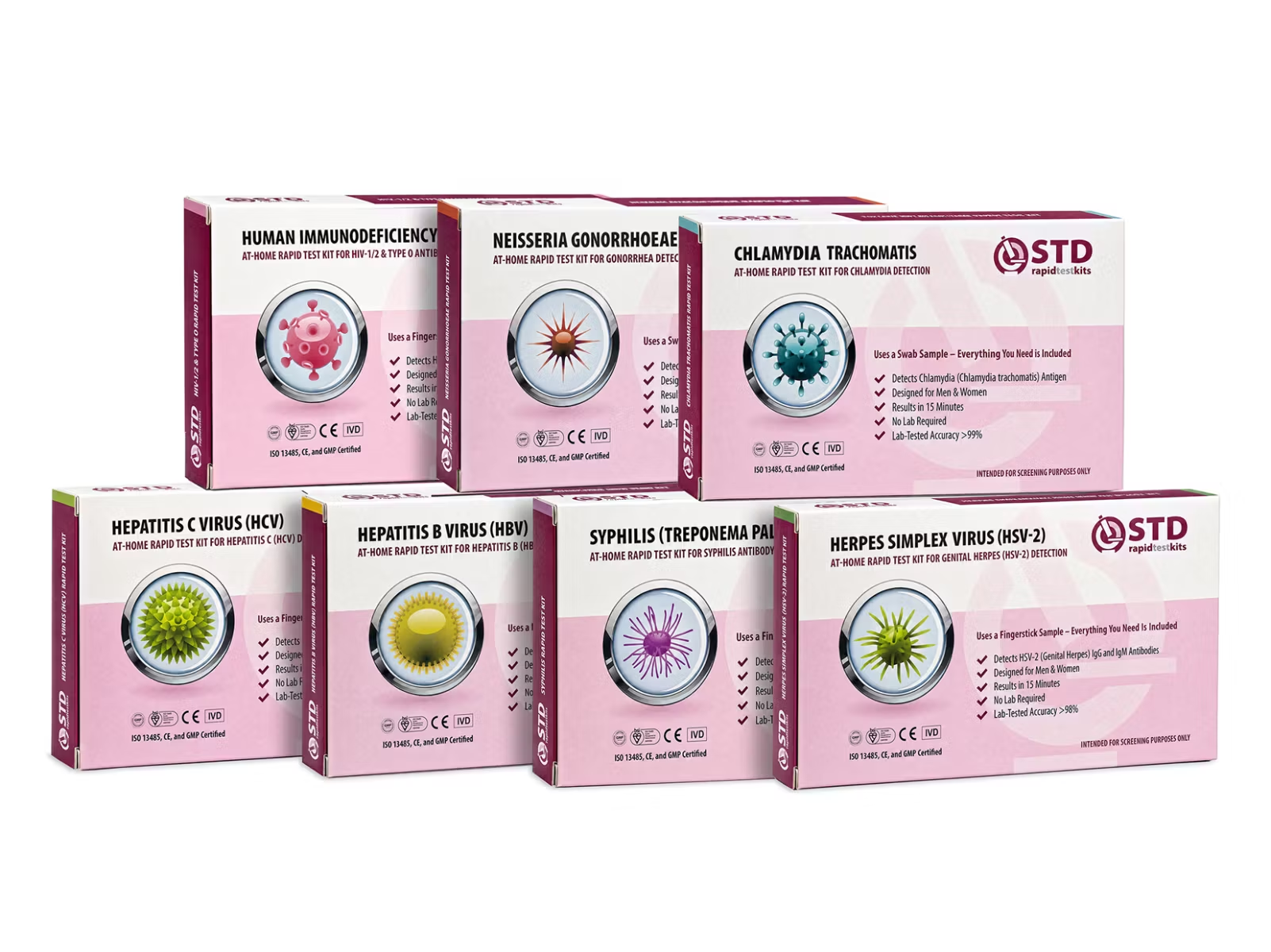
For a worry-driven moment, especially when a teen wants results before talking to anyone, the multi-infection panel below covers the most common bacterial and bloodborne risks in a single self-administered kit.
Common misconceptions parents still have
A few myths still get in the way of helping teens. Most of them sound reasonable. None of them hold up against the surveillance data.
"My teen would tell me if they were worried"
Not always. Teens hide things they are worried about, even from parents they trust, because they fear disappointment more than they fear the infection. The disclosure literature is consistent on this. Teens disclose to parents who model calm in advance, not to parents who have demonstrated the disclosure will go badly.
"They're too young for this"
The average age of sexual debut globally is between 16 and 18, and a meaningful share of teens have had some form of sexual contact, including oral sex and skin-to-skin contact, well before that. STIs do not wait for legal adulthood. The CDC recommends that providers screen sexually active people under 25 for chlamydia and gonorrhea annually, regardless of age.
"We raised them right"
Good values do not guarantee perfect choices, perfect information, or perfect partners. Even the most respectful, thoughtful teens take risks they did not realize were risks, often because of incomplete information rather than rebellion.
"No symptoms equals no problem"
This is the misconception that costs the most years of healthy life. Most STIs in teens are asymptomatic, especially in the early window when treatment is simplest. No visible signs does not mean nothing is happening.
"Only promiscuous teens get STDs"
One unprotected encounter is enough. This is not a lifestyle issue. It is biology, and the relevant variable is exposure rather than partner count.
Chlamydia, gonorrhea, and early syphilis can all be entirely silent in teens. A teen who feels completely fine can still be transmitting infection to a partner and quietly accumulating complications, including the kind of pelvic damage that affects future fertility. Annual screening exists because waiting for symptoms is not a reliable signal in this age group.
Statistical deep dive: what the numbers show in 2025 and 2026
If you make decisions as a parent with data in hand, here is the current state of the evidence:
- Chlamydia is still the most common reportable bacterial STI among teens, with rates highest in girls aged 15 to 19, per the CDC's STI surveillance reports.
- Gonorrhea cases in teens climbed substantially through the late 2010s and remain elevated, with growing concern about antibiotic-resistant strains.
- Primary and secondary syphilis cases among 15 to 19 year olds have risen by triple-digit percentages over the last decade in some U.S. regions, with similar patterns reported in parts of Canada, Europe, and Southeast Asia.
- HPV infections are concentrated in the first few years after sexual debut, which is why the CDC routine vaccination schedule targets ages 11 to 12 with catch-up through age 26.
- HIV diagnoses among adolescents have not kept pace with declines in other age groups, especially among LGBTQ+ teens in regions with limited access to pre-exposure prophylaxis. With early diagnosis, modern antiretroviral therapy allows people living with HIV to maintain an undetectable viral load, which means an undetectable level of virus in the blood and effectively no transmission risk to partners. PrEP, taken as a daily pill or longer-acting injection, is highly effective at preventing HIV in teens at elevated risk and can be discussed with any primary-care provider.
- Most of these infections are preventable, treatable, or both, but only when they are detected. The screening gap, not the infection rate itself, is what surveillance officers worry about most.
The numbers do not say teens are failing. They say screening systems are failing teens. The good news is that the gap is fixable at the household level: routine screening, low-friction testing options, and an honest conversation that does not depend on a perfect script.
Adolescents and young adults aged 15 to 24 acquire half of all new sexually transmitted infections, even though they represent just over a quarter of the sexually active population.
When syphilis hides in plain sight
Consider the following: a 16 year old notices a small red bump near her underwear line. Her first thought is ingrown hair. Her second is the new body wash she started using. The bump does not hurt. There is no itch, no burn, no blood. Within a week or two it disappears on its own. She moves on.
That story, in one form or another, is the norm for early-stage syphilis. It is exactly why clinicians have called syphilis "the great imitator" for more than a century. The first sign, called a chancre, is usually a single, round, painless sore at the site where the bacterium entered the body. It can look like a pimple, a shaving nick, a bug bite, or a small ulcer. It heals on its own in a few weeks, which is the trick. The disappearance is not recovery. The bacterium has moved deeper into the body, and stage two is on its way.
Stage two often looks like a flu episode with a rash. Reddish-brown spots on the palms or soles are classic, but the rash can show up almost anywhere. Fever, fatigue, swollen lymph nodes, sore throat, patchy hair loss, and weight loss are all on the list. Many teens by this point have been exposed to additional partners, sometimes unknowingly transmitting infection along the way.
Untreated syphilis can then enter a latent stage with no symptoms at all, sometimes for years, while quietly damaging the cardiovascular and nervous systems. A single painless bump that disappears on its own is not a reason to relax. It is a reason to test. Syphilis is curable with antibiotics in the early stages, and the treatment is straightforward when caught.
Here is what the staging looks like in plain language:
- Primary stage: One small, round, usually painless sore at the exposure site. Heals on its own in 3 to 6 weeks.
- Secondary stage: Rash on palms or soles, fever, fatigue, swollen glands, patchy hair loss. Resolves on its own but the infection persists.
- Latent stage: No symptoms at all. The infection is still there, still transmissible during early latency, still progressing inside the body.
- Tertiary stage: Years later. Cardiovascular and neurological damage that can be permanent. Treatment at this stage stops progression but cannot reverse damage.
If you are a parent and your teen mentions a bump, do not assume it is just a pimple. And if your teen will not tell you, make screening as routine as a dental cleaning.
From fear to clarity: you've got this
Reading this article is not failing your teen. It is protecting them. And it is not too late, whether they are already sexually active or have not even started thinking about it yet. The underlying premise is simple: they deserve safety, accurate information, and care that does not depend on shame.
The rise in STIs among teens is not a moral failure on their part. It is a system failure on the part of the institutions around them: schools that retreated from comprehensive sex ed, clinics that gate-keep confidentiality, and policy environments that punish teens for seeking care. Parents are often the last line of defense. The compassionate, grounded, loving voice that can make the difference between silence and prevention.
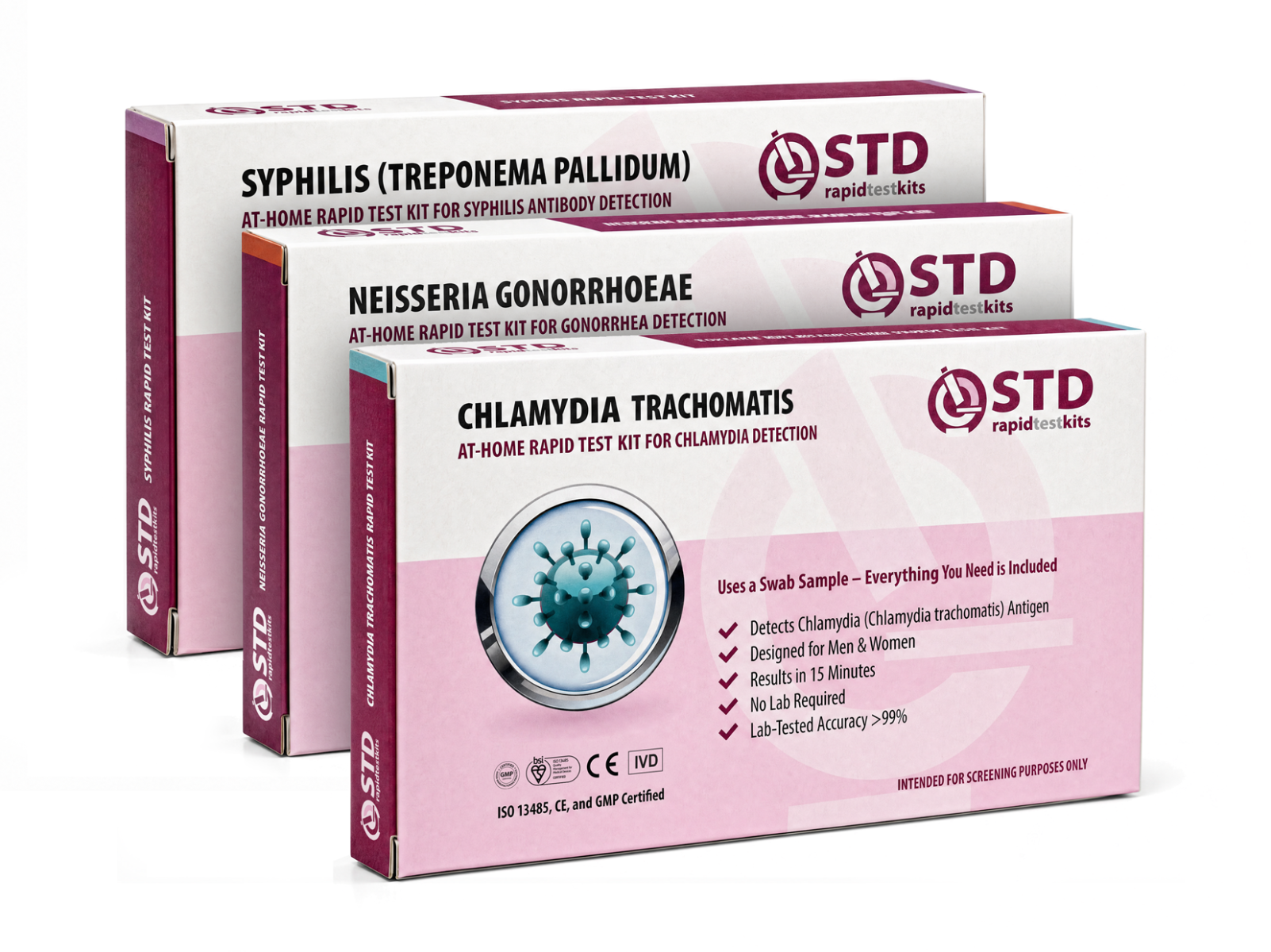
The smallest version of this is also the most effective. Bring it up casually. Make it clear that testing is normal, available, and not a punishment. Have an at-home rapid test on the shelf that your teen knows is there if they ever want it. The first time you mention it, they may roll their eyes. The fifth time, they will know exactly where to go when something feels off, and that is the entire goal.
Three concrete parent moves
- Normalize annual STI screening for any sexually active teen, framed as routine health care rather than punishment, the same way you normalize a dental cleaning.
- Trade the once-and-done sit-down talk for ongoing low-key conversations woven into normal life, using news headlines and real-life stories as casual entry points.
- Have an at-home rapid test on the shelf that your teen knows is available without confrontation, so the path from worry to answer is as short and private as possible.
FAQs
- Can my teen get an STI from a single sexual encounter?
- Yes. A single unprotected encounter is enough to transmit chlamydia, gonorrhea, syphilis, herpes, and other infections. Risk is about exposure, not frequency.
- How can I tell if my teen has an STI?
- Often you cannot tell from the outside. Most teen STIs are asymptomatic, especially chlamydia. When symptoms do appear, they may include unusual discharge, pain on urination, sores, itching, or pelvic pain. Visible health is not a reliable signal. Annual screening for sexually active teens is what catches silent infections.
- Can teens get STIs without penetrative sex?
- Yes. Oral sex transmits gonorrhea, chlamydia, syphilis, herpes, and HPV. Skin-to-skin contact can transmit herpes and HPV. Sharing sex toys without barrier methods or proper cleaning can transmit several infections. Penetration is not the only route.
- Are at-home STI tests safe and accurate for teens?
- Yes, when used correctly and after the appropriate window period for each infection. Rapid lateral-flow home tests are well-suited for teen privacy needs. They are screening tools, not lab confirmatory tests, so any positive result should be followed up with a clinician for confirmation and treatment.
- Should I test my teen without their knowledge?
- No. Testing without consent damages trust and can drive future health concerns underground. Instead, normalize testing as routine, explain why early detection matters, and let your teen choose when to use the kit. Teens who feel ownership over their testing choices are significantly more likely to follow through on results and treatment than teens who feel testing was imposed.
- How often should a sexually active teen get tested?
- The CDC recommends annual chlamydia and gonorrhea screening for sexually active people under 25, with additional testing after a new partner, after unprotected sex, or after any concerning symptom. LGBTQ+ teens and teens in higher-prevalence settings may benefit from screening every 3 to 6 months.
- Do LGBTQ+ teens need different STI information?
- They need information that includes them. Standard sex ed often skips the routes of transmission and screening recommendations most relevant for LGBTQ+ teens, which raises infection risk through information gap alone. Inclusive resources, PrEP awareness, and routes-specific screening recommendations matter.
- Can untreated STIs affect my teen's future fertility?
- Yes. Untreated chlamydia and gonorrhea can cause pelvic inflammatory disease in girls and women, leading to infertility, ectopic pregnancy risk, and chronic pelvic pain. In boys and men, untreated infections can cause epididymitis. Early detection and treatment, even of asymptomatic infections, prevents the long-term consequences.
- U.S. Centers for Disease Control and Prevention. STI Statistics and Surveillance overview, including age-stratified data for 15 to 24 year olds and primary/secondary syphilis trends.
- World Health Organization. Sexually transmitted infections fact sheet, including 2022 global incidence figures and adverse birth outcomes from maternal syphilis.
- U.S. Centers for Disease Control and Prevention. Adolescent and School Health resources, covering recommended screening intervals and youth risk behavior surveillance data.
- U.K. National Health Service. Sexually transmitted infections topic page covering symptoms, transmission routes, and recommended testing.
- U.S. Centers for Disease Control and Prevention. HPV vaccination schedule and recommendations through age 26 with shared clinical decision-making to age 45.
- American Sexual Health Association. STI education and sexual health resources for the general public, including testing guidance and policy positions.
