
Published: June 2025 | Last updated: April 2026 | Editorial review and quality control: Martina N.
A potential HIV exposure produces two strong urges at once: the urge to know, and the urge to not be sitting in a waiting room when you find out. Home HIV test kits exist exactly for that gap. They give you a private answer in your own bathroom, in about the time it takes to make coffee, and they are accurate enough that public-health agencies including the U.S. Centers for Disease Control and Prevention now actively recommend them as a screening option (CDC HIV self-testing guidance). What they cannot do is replace a clinic when a result comes back positive. This guide explains both halves of that picture.
How accurate are at-home HIV tests, and when should you take one?
FDA-approved at-home HIV tests are highly accurate when used as directed after the correct window period. Per CDC, antibody tests (the chemistry used by most rapid home kits) can detect HIV in most people 23 to 90 days after exposure; rapid fingerstick antigen/antibody tests detect HIV from 18 to 90 days; lab antigen/antibody tests from 18 to 45 days; nucleic acid (NAT) lab tests from 10 to 33 days (<a href="https://www.cdc.gov/hiv/testing/" target="_blank" rel="noopener">CDC, HIV testing</a>). A positive home screen is preliminary and must be confirmed at a clinic before any treatment decision.
Key Takeaways
- Home HIV tests deliver clinic-comparable accuracy when used as directed after the correct window period; testing too early is the most common cause of a false negative.
- A positive home test is a screening result, not a diagnosis. The next step is a confirmatory lab antigen/antibody immunoassay within 24 to 48 hours.
Why home HIV testing went mainstream
HIV testing has always run into the same wall: the people who most need a result are the ones least willing to walk into a clinic to get one. Stigma, geography, insurance paperwork, and time off work all reduce screening rates among populations with the highest HIV risk, which is exactly why the World Health Organization issued its first formal HIV self-testing recommendation in November 2016, framing self-testing as a way to reach people who would not otherwise test (WHO, 2016 HIV self-testing guidance).
Two real shifts followed. The first was regulatory: the U.S. Food and Drug Administration approved OraQuick as the first over-the-counter rapid HIV self-test, making it the first kit anyone could buy at a pharmacy without a prescription (HIV.gov on OraQuick In-Home HIV Test). The second was logistical: COVID-era telehealth expansion normalized at-home diagnostic mailers, and rapid lateral-flow blood and oral kits piggybacked on the same supply chain. Public-health agencies now distribute free home tests in many U.S. states, and global self-test access is expanding through WHO-led initiatives.
The privacy argument matters more than the convenience argument. Home tests leave no insurance trail, no medical-record entry, and (with most kits) no name on a results system. For people in environments where being seen at an HIV testing clinic carries real social risk, removing the public step removes the main reason they have not tested.
WHO formally recommended HIV self-testing in November 2016. The U.S. FDA approved OraQuick as the first over-the-counter rapid HIV self-test before that, allowing anyone to buy a kit at a pharmacy without a prescription. Together, those two decisions reframed home testing from a workaround into a recognized screening option.
The two main types of at-home HIV tests
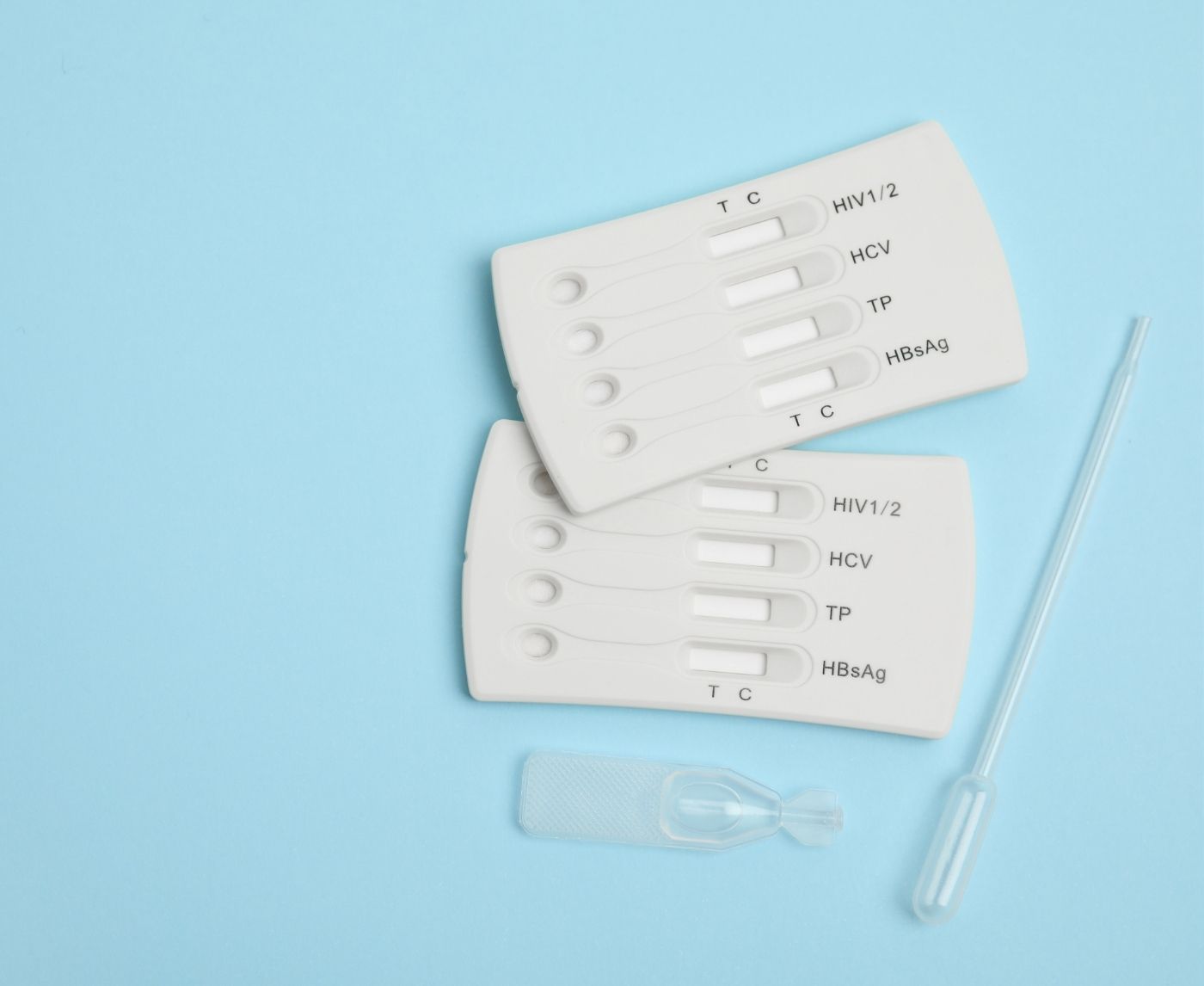
Almost every at-home kit on the market today falls into one of two categories: an oral-fluid antibody test using a gum swab, or a fingerstick blood test using a tiny drop of capillary blood on a cassette or collection card. Both detect HIV antibodies; some lab-processed mail-in kits also detect p24 antigen, which lets them shorten the window period.
The clinical question is rarely which is more accurate; both perform well within their validated windows. The pain profile, the window-period length, and the kit format are the differences that actually matter when you are choosing a kit.
| Feature | Oral antibody (gum-swab) | Fingerstick blood antibody |
|---|---|---|
| Sample type | Oral fluid swabbed from upper and lower gums | Capillary blood from a fingerstick (lancet) |
| Reliable from | About 23 to 90 days after exposure | About 23 to 90 days post-exposure (rapid antibody); rapid fingerstick Ag/Ab from 18 days; lab Ag/Ab from 18 to 45 days |
| Result time | About 20 to 40 minutes at home | About 15 to 20 minutes at home |
| Pain | None | Brief lancet sting comparable to a quick mosquito bite |
| Best for | Needle-averse readers, teenagers, travelers | Anyone wanting a slightly shorter window with rapid Ag/Ab kits, or a familiar lateral-flow blood format |
| What it does NOT replace | Lab confirmatory testing for any positive result | Lab confirmatory testing for any positive result |
The window period: why timing decides the answer
The window period is the gap between exposure to HIV and the moment a given test can reliably detect it. It is the single most important variable in home testing, because every false-negative story you have ever heard is almost always a story about testing too early.
Per CDC, antibody tests, including the oral and fingerstick antibody home kits sold over the counter, can detect HIV in most people 23 to 90 days after exposure. Rapid antigen/antibody tests done with blood from a fingerstick can detect HIV 18 to 90 days after exposure. Lab antigen/antibody tests done from a venous blood draw detect HIV 18 to 45 days after exposure. Nucleic acid tests (NAT, run only in labs) detect HIV 10 to 33 days after exposure (CDC, HIV testing).
For someone who knows the date of a single specific exposure, the simple rule is: test once at day 28 to 45 for early reassurance, and again at day 90 for definitive coverage with an antibody home kit. For people with ongoing exposure risk (a sexually active life, partners of unknown status, occupational exposure), routine periodic testing covers you regardless of any one event. CDC recommends at least annual testing for sexually active adults at higher risk and more frequent testing for people in high-prevalence networks or on PrEP (CDC HIV testing recommendations).
A negative home test before the window closes does not mean you are HIV-negative. It only means antibodies have not yet reached the threshold the test can detect. If the exposure is recent and high-risk (condomless sex with a partner of unknown status, a needle-stick, sexual assault), contact a clinic now to ask about post-exposure prophylaxis (PEP). PEP must be started within 72 hours of exposure to be effective. The home test is not the right tool for that decision.
Step-by-step: using a fingerstick blood home kit
Each kit's printed instructions are the source of truth, but the workflow for a typical at-home rapid lateral-flow blood kit looks like this. Plan about 25 to 30 minutes start to finish.
- Read the full instruction sheet before opening anything. Set out the cassette, lancet, capillary tube or pipette, alcohol pad, and buffer vial on a clean flat surface.
- Wash and dry your hands in warm water, then warm the fingertip you plan to use by shaking your hand below your waist for ten seconds. Cold fingers do not bleed enough.
- Wipe the side of a fingertip (the side, not the pad) with the alcohol pad, let it dry, then twist off the lancet cap and press it firmly to the fingertip until it clicks. The prick is brief.
- Wipe the first drop away. Use the second drop, gently milking from the base of the finger, to fill the capillary tube to the marked line, or apply directly to the cassette sample well as instructed.
- Add the buffer drops to the sample well as instructed by your kit.
- Set a timer. Most rapid lateral-flow kits read at 15 to 20 minutes. Reading too early or after the read window closes both produce unreliable results.
- Read your result against the diagram in the instructions, photograph the cassette next to the batch number on the box, and dispose of the lancet in a hard plastic container as biohazard waste.
For oral-fluid kits like OraQuick, the prep is simpler but timing-sensitive. Skip food, drink, and tooth-brushing for 30 minutes before testing. Swab the upper gum once and the lower gum once, drop the swab into the buffer vial, and read at the time the kit specifies (usually 20 to 40 minutes). Reading earlier or after the read window closes both produce unreliable results.
Reading your result: what each line actually means
Lateral-flow rapid tests use the same logic across HIV, pregnancy, COVID, and most home diagnostic categories. There is a control line (labeled C) and a test line (labeled T). The control line is a quality check on the strip; if it does not appear, the result is invalid regardless of what else you see.
- Control line only (C visible, T blank). Negative for HIV antibodies at the time of testing, assuming the window period has passed. If your possible exposure was within the past 90 days, retest at day 90.
- Both lines visible (C and T). Preliminary positive. This means HIV antibodies were detected in the sample, but it is a screening result, not a diagnosis. With specificity above 99%, in a low-prevalence population a small proportion of positive screens will turn out to be false positives, which is exactly why confirmatory testing is mandatory before any treatment decision.
- Test line only (T visible, C blank), or no lines at all. Invalid. The test failed. Use a new kit, ideally a different lot number if available.
- A faint test line. Faint is still positive. Do not assume a faint line means "barely positive" or "probably nothing." Treat it the same as a clear positive: confirm at a clinic.
Photograph your result alongside the batch number before you do anything else. Some companion apps log results automatically; even if yours does not, the photo gives you a record to bring to confirmatory testing.
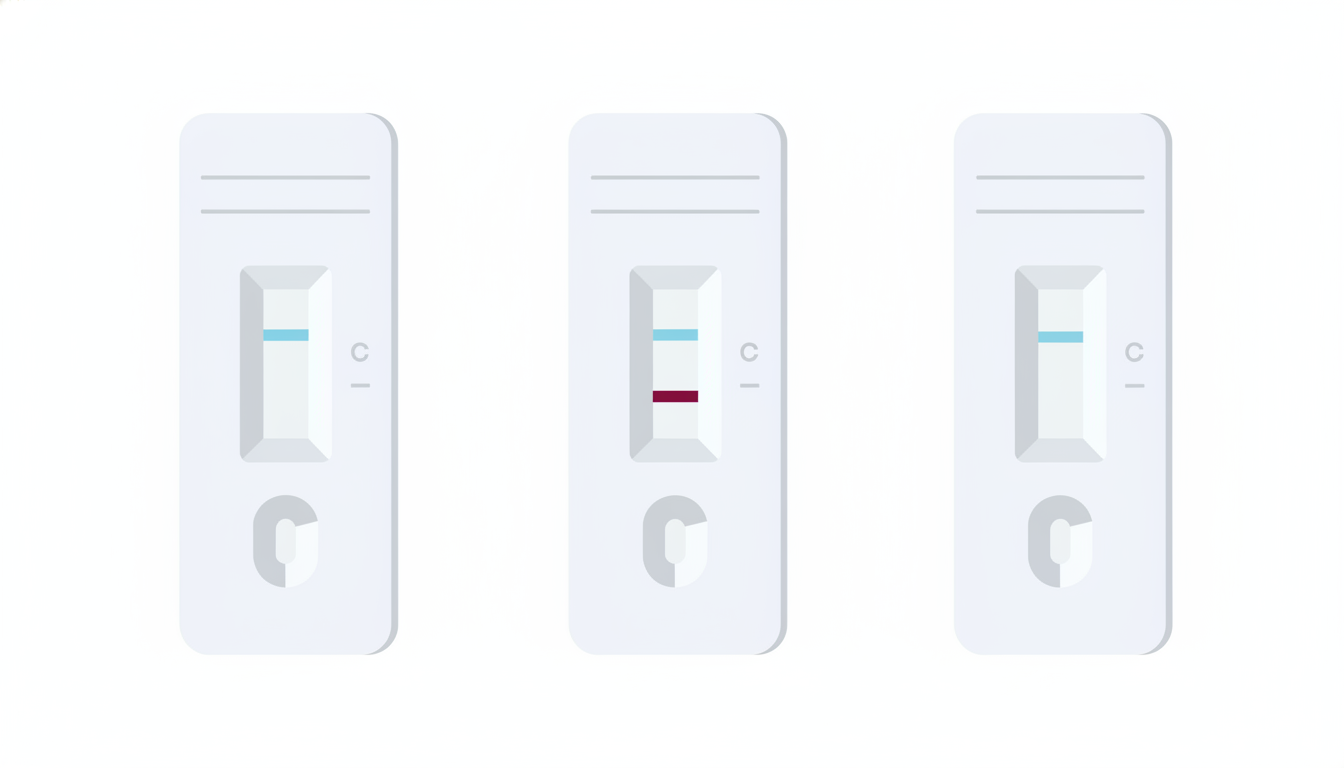
This is the single most common misread of a home HIV cassette. Any visible test line, no matter how faint, counts as a preliminary positive. Photograph it next to the batch number, then book confirmatory testing at a clinic within 24 to 48 hours.
A positive home test: exactly what to do next
The single most important fact about a positive home HIV result is that it is not a diagnosis. Modern lab algorithms require a sequence: an initial antigen/antibody immunoassay, an HIV-1/HIV-2 antibody differentiation test, and (if needed) an HIV-1 RNA test (CDC HIV diagnostic testing guidance). Only after that sequence does "positive" become a clinical diagnosis.
The protocol that gets people to confirmation fastest looks like this:
- Within 24 to 48 hours, book a confirmatory blood draw. Options include your primary care provider, a local health-department HIV clinic (most offer same-day phlebotomy), a community AIDS service organization, or a telehealth platform that mails a confirmatory venipuncture kit.
- If you do not know where to start, call your country's HIV helpline. In the United States, the CDC's national HIV/AIDS hotline (1-800-CDC-INFO) routes to local resources. In the UK, the Terrence Higgins Trust THT Direct line (0808 802 1221) does the same.
- While you wait for confirmation, treat any sexual partners as if you were HIV-positive: use barrier protection, avoid sharing needles, and consider notifying recent partners only after confirmation rather than on a preliminary screen.
- If confirmation is positive, antiretroviral therapy (ART) starts the same day in many clinics. Modern ART suppresses viral load to undetectable levels in most people within months; CDC notes that with an undetectable viral load, HIV is not transmitted through sex, the principle known as Undetectable = Untransmittable (CDC, HIV treatment).
Speed matters. Many U.S. clinics now begin ART the same day as a confirmed positive, which shortens the time to viral suppression and starts protective benefits sooner.
A confirmed positive is the start of a manageable medical pathway, not an ending. Modern antiretroviral therapy suppresses viral load to undetectable levels in most people within months. Per CDC, a person with HIV who maintains an undetectable viral load does not transmit HIV to sexual partners. Same-day ART start at the confirmation visit shortens the time to viral suppression and the time to that protective benefit.
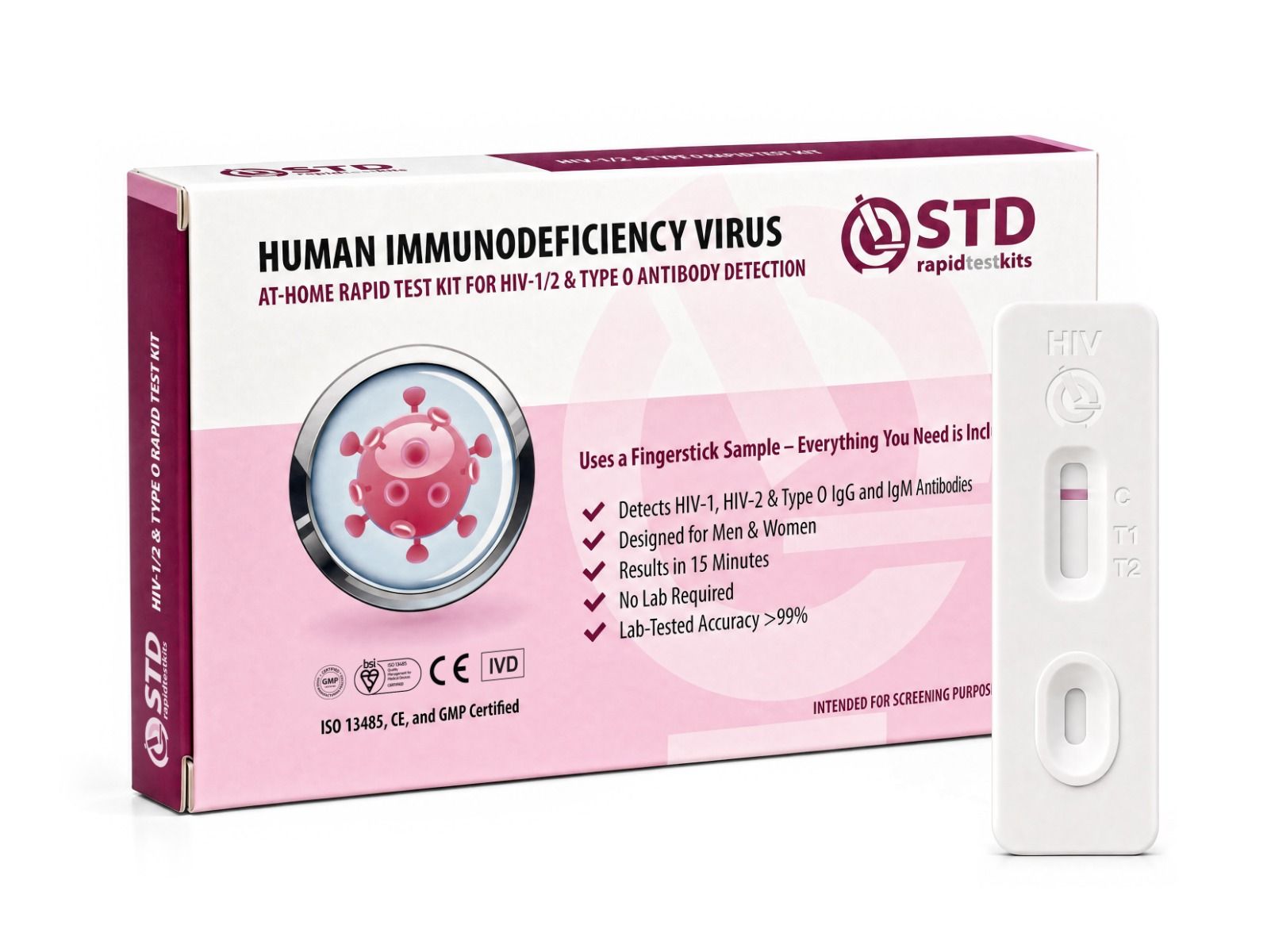
Editorial disclosure: We sell the at-home rapid HIV test below; the description is based on the kit's own labeling and the CDC guidance cited throughout this article.
Privacy: what your kit records, and what it does not
The privacy promise of a home test is real but not absolute. The basic at-home rapid kit (cassette plus lancet, no app) records nothing. You read a strip and throw it away. Most reputable suppliers also ship in plain unbranded packaging without HIV or testing terminology visible through the box.
Where privacy gets messier is with companion apps and mail-in lab kits. Companion apps may ask for an email or phone number for result tracking; mail-in kits link your sample to a name and shipping address by definition. Before you commit, check whether the manufacturer's app uses on-device encryption, whether result data is stored under a HIPAA-compliant cloud framework (in the U.S.), and whether you can scan an anonymous barcode rather than registering a profile. If you are at higher risk of being outed by a leak, including closeted teenagers, undocumented people, and anyone in a domestic-abuse situation, choose a kit with no companion app and dispose of the cassette and packaging discreetly.
Online ordering is generally discreet, but it is worth confirming the unbranded-packaging detail at checkout if discretion matters to you.
If a data leak would be high-impact for you (closeted teenagers, undocumented people, anyone in a domestic-abuse situation), use the simplest setup: a plain over-the-counter rapid kit with no companion app, no barcode scan, and no online account. Read the strip, photograph it for your own records if you wish, then dispose of the cassette and packaging discreetly.
Cost, insurance, and free-kit programs
Over-the-counter oral-fluid kits in the U.S. retail for roughly $40 USD; fingerstick blood kits typically run $40 to $70 USD; lab mail-in panels are higher because of phlebotomy and lab fees. Multi-kit subscription bundles bring per-test cost down.
Free options exist and are underused. The CDC's Together TakeMeHome program has shipped hundreds of thousands of free at-home HIV tests since 2023, available to U.S. residents who qualify (CDC Together TakeMeHome). Many U.S. state health departments also distribute free kits, and community-based organizations frequently have voucher programs for free shipping. Outside the U.S., national HIV programs in dozens of countries now distribute self-test kits at no charge to qualifying populations under WHO-supported initiatives.
If you are paying out of pocket, a single at-home test typically costs less than the average copay for a clinic visit plus the time off work, and free programs cover the cost entirely for many residents who qualify.
U.S. residents who qualify can order free at-home HIV tests through the CDC's Together TakeMeHome program at cdc.gov/stophivtogether. Many state health departments also mail free kits, search your state health department website. Community-based AIDS service organizations frequently distribute free kits at events and through walk-in pickup.
HIV self-testing for people on PrEP
Pre-exposure prophylaxis (PrEP) greatly reduces the risk of getting HIV from sex when taken as prescribed (CDC PrEP overview), but the regimen requires regular HIV testing for two reasons. First, starting or continuing PrEP while already HIV-positive risks developing drug-resistant HIV. Second, U.S. PrEP prescribing guidance requires routine HIV testing as a condition of refill, typically every three months for people on daily oral PrEP.
Self-testing fits naturally into this rhythm. Test at home in the week before your refill tele-visit, photograph the cassette beside the kit's batch number and the date, and upload to your provider's portal. Many PrEP-focused telehealth platforms now mail a self-test kit with each refill, removing the in-person visit entirely. A negative home result is sufficient for the routine check; only a positive result triggers a confirmatory lab draw and a temporary pause on PrEP pending diagnosis.
PrEP itself does not invalidate antibody home tests. The medication does not interfere with the assay's detection of HIV antibodies. In the rare case of a breakthrough infection while on PrEP, the medication can suppress viral replication enough to delay seroconversion (the appearance of detectable antibodies). For PrEP users with a specific high-risk exposure, a lab-based fourth-generation antigen/antibody test or NAT is the more sensitive choice over an at-home antibody kit.
Confirmatory testing: from home result to clinical answer
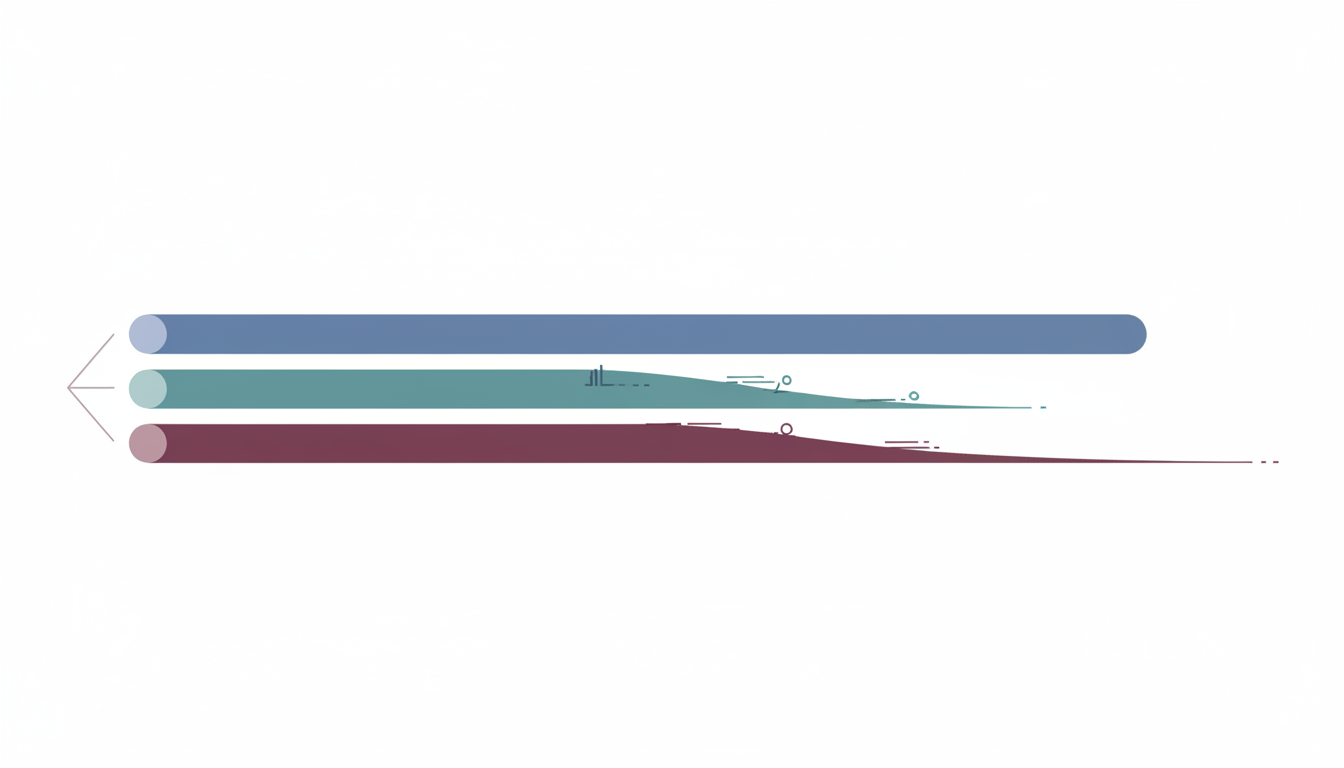
The CDC's recommended HIV testing algorithm runs in stages, and a home test sits firmly at the top of the funnel as a screen. The full sequence after a positive home result looks like this:
- Lab antigen/antibody combination immunoassay. A venipuncture blood draw, processed within hours to days. This is the same fourth-generation Ag/Ab assay used in routine clinical testing.
- If reactive, an HIV-1/HIV-2 antibody differentiation immunoassay. This identifies which strain, which guides treatment.
- If indeterminate, an HIV-1 nucleic acid test (NAT). This detects HIV RNA directly and resolves edge cases, including very recent infections where antibodies have not yet matured.
This is the gold-standard pathway, and it is what your clinic will run regardless of which home kit triggered the screen. Your home cassette photo plus batch number is helpful context but does not replace any step in this sequence.
Home oral antibody tests like OraQuick are validated to detect antibodies to both HIV-1 and HIV-2, but the differentiation step has to happen at the lab. Do not assume the home result tells you which strain you have.
If you take an HIV self-test and it's positive, go to a health care provider for follow-up testing.
Common myths about HIV home testing
"Home kits are less accurate than lab tests." FDA-approved home kits must meet the same performance benchmarks as clinic rapid tests. The accuracy gap that does exist is about user error (testing inside the window period, misreading a faint line, contaminated samples), not assay quality.
"You cannot use a home test if you are on PrEP." The opposite, actually. PrEP users are explicitly encouraged to self-test between routine clinic visits. PrEP medication does not interfere with antibody detection.
"A faint line is probably nothing." Wrong, and dangerously so. Any visible test line, regardless of intensity, is a positive screening result. Confirm at a clinic.
"A positive home test means I am doomed." No. With modern antiretroviral therapy, a positive HIV diagnosis followed by sustained ART means a near-normal life expectancy and zero sexual transmission risk to partners once viral load is undetectable. The home test is the start of a manageable medical pathway, not an ending.
"Home tests detect every kind of HIV." Most rapid antibody home kits detect both HIV-1 and HIV-2 antibodies, but check the kit's package insert. HIV-2 is rare in most regions and prevalent in some West African countries; if your exposure has a regional connection, confirm the kit covers HIV-2 explicitly.
Of the five myths above, the faint-line one causes the most real-world damage. People talk themselves out of confirmatory testing because the line was "barely there." Any visible test line is a preliminary positive. Treat it exactly the same as a bold positive: photograph it next to the batch number and book a clinic confirmation within 24 to 48 hours.
How to actually decide whether to test at home or in a clinic
The honest answer is that for most readers, both are correct in sequence. A home kit at day 28 for early reassurance, a clinic visit at day 90 for definitive confirmation if the home result was negative, or an immediate clinic visit if the home result was positive. The only situations where a home kit is not the right first step are: an exposure within the past 72 hours (call about PEP), a needle-stick or sexual assault (clinic now), and ongoing PrEP use where you need a fourth-generation lab assay rather than an antibody screen.
For anyone navigating ordinary risk, anyone overdue for a routine screen, or anyone who has been quietly anxious for weeks because the clinic feels too public, a home kit delivers the same screening result in 20 minutes with no waiting room and no insurance entry.
| Scenario | Recommended action | Timing |
|---|---|---|
| Exposure within the past 72 hours, high-risk | Contact a clinic about PEP immediately | Before the 72-hour window closes |
| Exposure 23 to 90 days ago, or routine screening | At-home antibody kit | Day 28 to 45 for early read; day 90 for definitive coverage |
| Active PrEP user with a specific high-risk exposure | Lab fourth-generation Ag/Ab test or NAT | Per the prescribing clinician |
Frequently asked questions
- How soon after a possible exposure can I use an at-home HIV test?
- Most antibody-based at-home kits, including oral-swab and fingerstick blood lateral-flow tests, are reliable from 23 to 90 days post-exposure per CDC guidance. A negative result before day 23 is unreliable and should be retested at day 90 for definitive coverage.
- What does it mean if the control line on my test does not appear?
- An absent control line means the test is invalid, regardless of what the test line shows. Discard the cassette and use a new kit, ideally from a different lot number if you have one available.
- Are at-home HIV tests as accurate as the ones at a clinic?
- Yes. FDA-approved home kits are held to the same regulatory performance thresholds as clinic rapid tests. The accuracy gap people perceive is almost always user-driven: testing inside the window period, misreading a faint line, or contaminated samples. The chemistry inside the cassette is essentially the same chemistry a clinic rapid test uses.
- If my home test is positive, what is the exact next step?
- Treat it as preliminary, not a diagnosis. Book a confirmatory lab antigen/antibody immunoassay within 24 to 48 hours through a primary care provider, a local health-department HIV clinic, or a telehealth phlebotomy service. Modern ART can begin the same day as confirmation.
- Do at-home HIV tests detect both HIV-1 and HIV-2?
- Most rapid antibody home kits detect antibodies to both HIV-1 and HIV-2, but check the package insert for explicit dual-type coverage. HIV-2 is rare in most regions and more prevalent in West Africa; mention any regional exposure context when you confirm at a clinic.
- Will being on PrEP affect my home test result?
- PrEP medication does not interfere with antibody detection on a standard home test. PrEP users are encouraged to self-test between routine clinic visits. The one nuance: in the rare event of a breakthrough infection while on PrEP, antibody seroconversion can be delayed, so a lab fourth-generation antigen/antibody test or NAT is the more sensitive option in that specific scenario.
- How should I store unused kits, and how long are they good for?
- Most kits should be stored between 2 and 30 degrees Celsius, away from direct sunlight and humidity. The kit's box prints an expiry date; reagents lose sensitivity past expiry. Avoid bathroom storage, since humidity degrades the reagent strip. A garage in summer or a freezer in winter can both push storage out of range.
- Can a single negative home test rule out HIV from a six-month-old exposure?
- Yes, if the test is run correctly past the window period. A negative antibody home test taken at least 90 days after exposure is considered conclusive for that specific exposure. For ongoing risk (a sexually active life with new partners), routine annual or more frequent testing is the right cadence regardless of any single result.
- U.S. Centers for Disease Control and Prevention. HIV self-testing guidance for consumers, including the recommendation to use self-tests as a screening option and to follow up at a clinic after a positive home result. Also covers the Together TakeMeHome free at-home HIV test program.
- U.S. Centers for Disease Control and Prevention. Overview of HIV testing types and window-period day ranges for antibody, rapid antigen/antibody, lab antigen/antibody, and nucleic acid tests.
- U.S. Centers for Disease Control and Prevention. STI Treatment Guidelines, HIV section, describing the recommended laboratory testing algorithm: antigen/antibody combination assay, HIV-1/HIV-2 antibody differentiation, then HIV-1 RNA testing for indeterminate results.
- U.S. Centers for Disease Control and Prevention. Pre-exposure prophylaxis (PrEP) overview, including the statement that PrEP greatly reduces the risk of getting HIV when taken as prescribed and the requirement for routine follow-up HIV testing.
- World Health Organization. November 2016 news release announcing WHO's first formal recommendation for HIV self-testing as a complement to facility-based testing.
- HIV.gov. Background on the OraQuick In-Home HIV Test as the FDA-approved over-the-counter rapid HIV self-test.
- U.S. Centers for Disease Control and Prevention. HIV treatment overview, including the Undetectable = Untransmittable (U=U) principle: a person with an undetectable viral load does not transmit HIV through sex.
